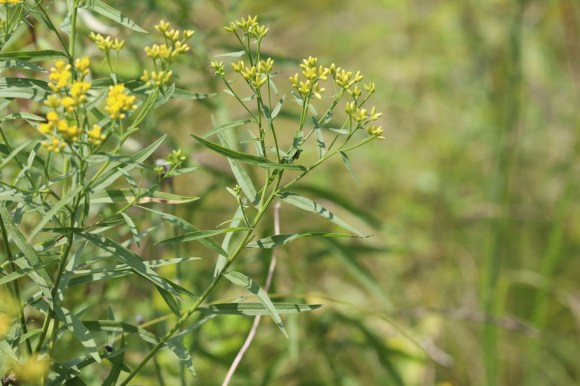
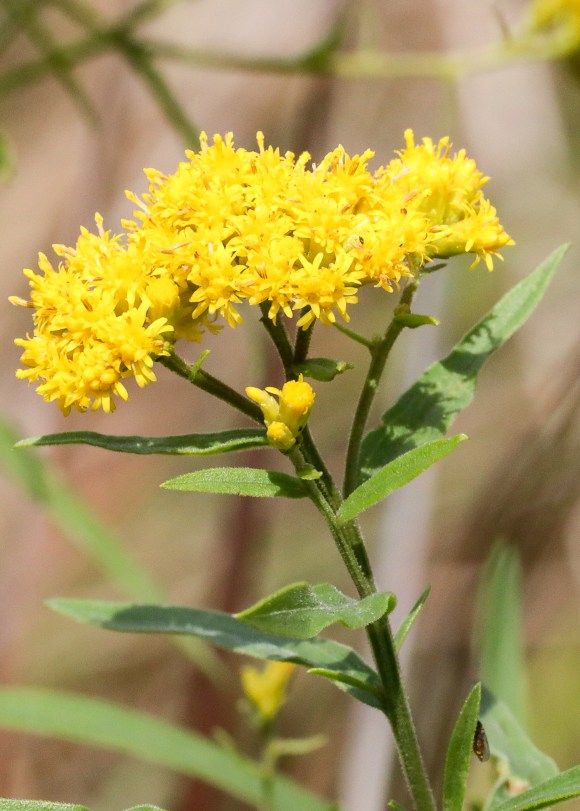
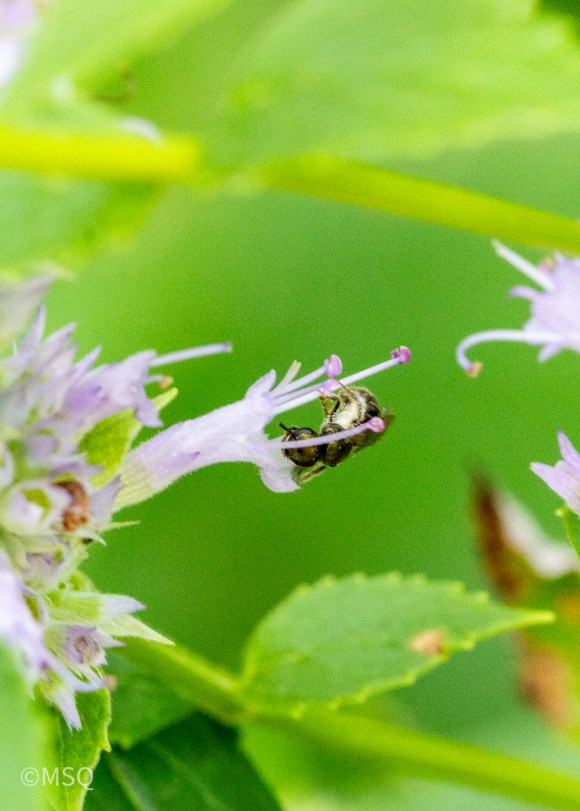
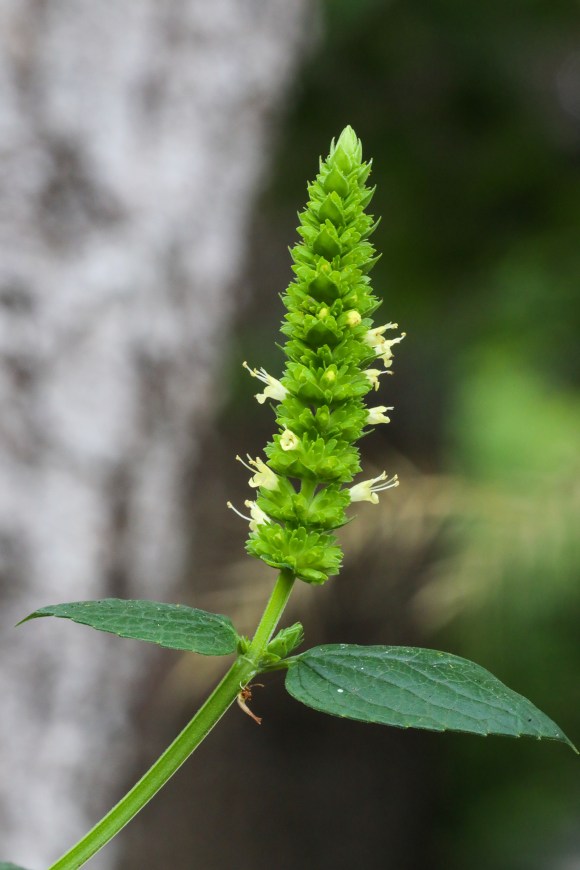
Rising high above the foliage, Yellow Giant Hyssop (Agastache nepetoides) extends its green and yellow spires. This Hyssop’s habit draws attention and offers a vertical accent to the garden. A. nepetoides supplies nectar and pollen to late season pollinators and beneficial insects.
Not as commonly used as Anise Hyssop (Agastache foeniculum), this Agastache grows from 4 to 7 feet and spreads from 1 to 3 feet. It thrives in zones 2 to 8. Yellow Giant Hyssop enjoys fertile, loamy soil and moist to medium conditions. Light shade to full sun is best.2,
It endures summer’s heat and humidity. But, in dry, sunny areas, some leaves will wilt with drought conditions. Deer and other animal grazers avoid the bitter foliage. A. nepetoides has both fibrous and rhizomatous roots and can form clonal colonies from the rhizomes. In ideal conditions, this Hyssop reseeds generously.2
In natural areas, A. nepetoides grows in meadows in wooded areas, deciduous woodlands, lowland woods, moist, open woodlands, woodland borders and openings, thickets, powerline clearances in wooded areas, open thickets, weedy or early succession areas, roadsides, railroads, limestone-derived soils, fencerows, on rich soils, on calcareous bedrock, talus and rocky slopes and rocky banks. For this plant, disturbance is helpful as long as it reduces shade.3,12,13
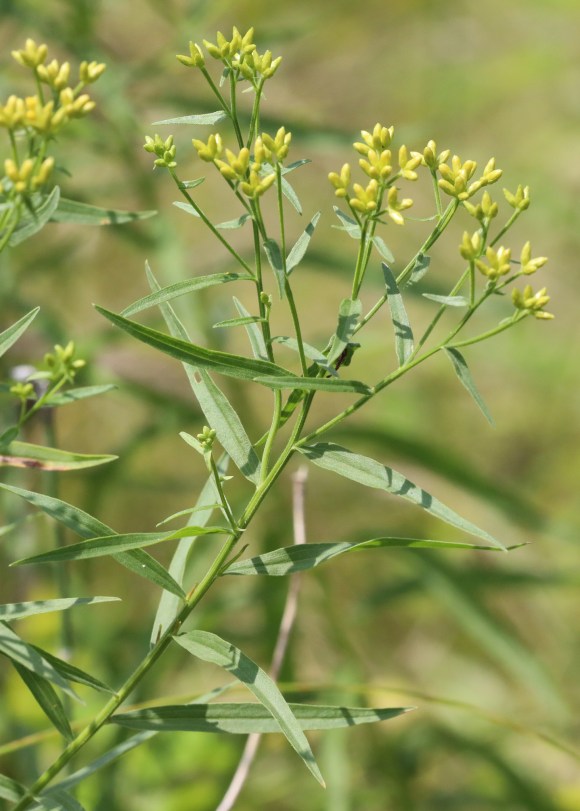
A striking plant, Yellow Giant Hyssop forms straight, upright stems. It has few branches except in older plants. They sprout flower stems from mid to upper leaf axils. In Michigan, these erect plants last through the winter weather adding interest in the landscape.12
The stems themselves are light green and smooth. Like other mints, they have four sides. Each side is angled and forms a wing-shape.12
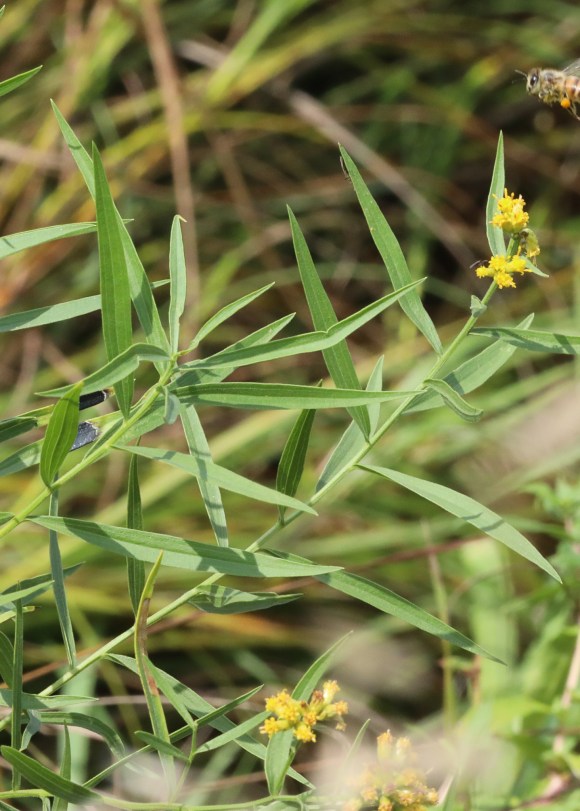
The medium to dark green, hairless foliage on Agastache nepetoides grows in opposite pairs. Edges have large serrations. Young, upper leaves may have some hair. Each leaf can be up to 6” long and 3” wide and resembles the leaves on Catmint/Catnip (Nepeta spp.). The specific epithet “nepetoides” refers to this shape.2,12
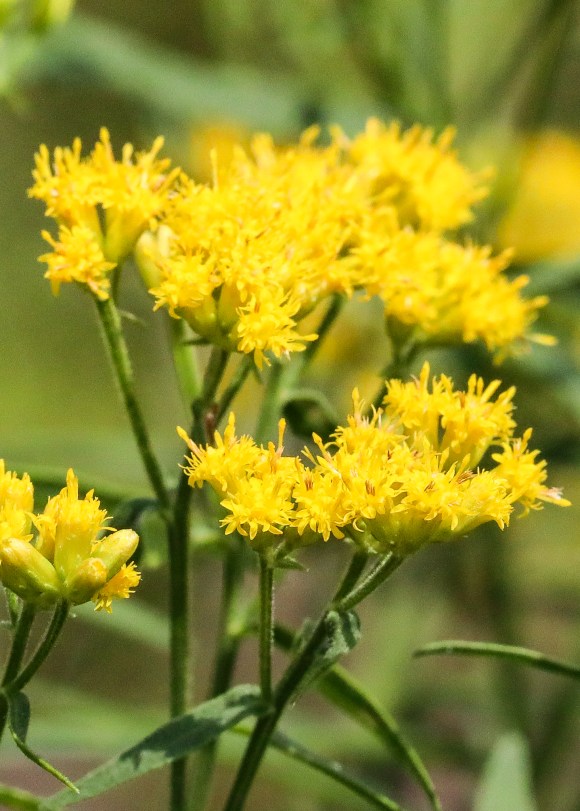
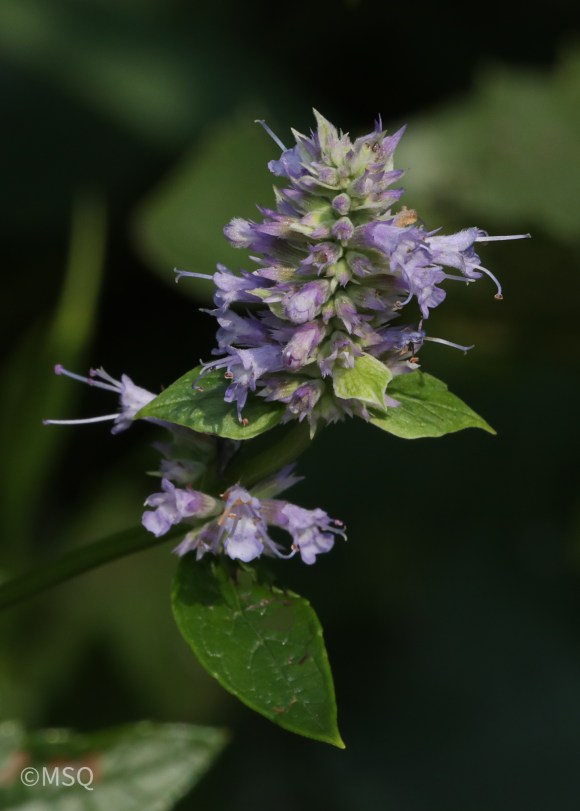
Giant Yellow Hyssop’s green and yellow flowers are the rarest color of summer native flowers. The true blooms are the delicate yellow blossoms about 0.3” long and about 0.25” wide. Only a few open at a time and fade quickly. Most of the color comes from the medium green calyxes. Essentially, the spires read green with small bursts of yellow.12
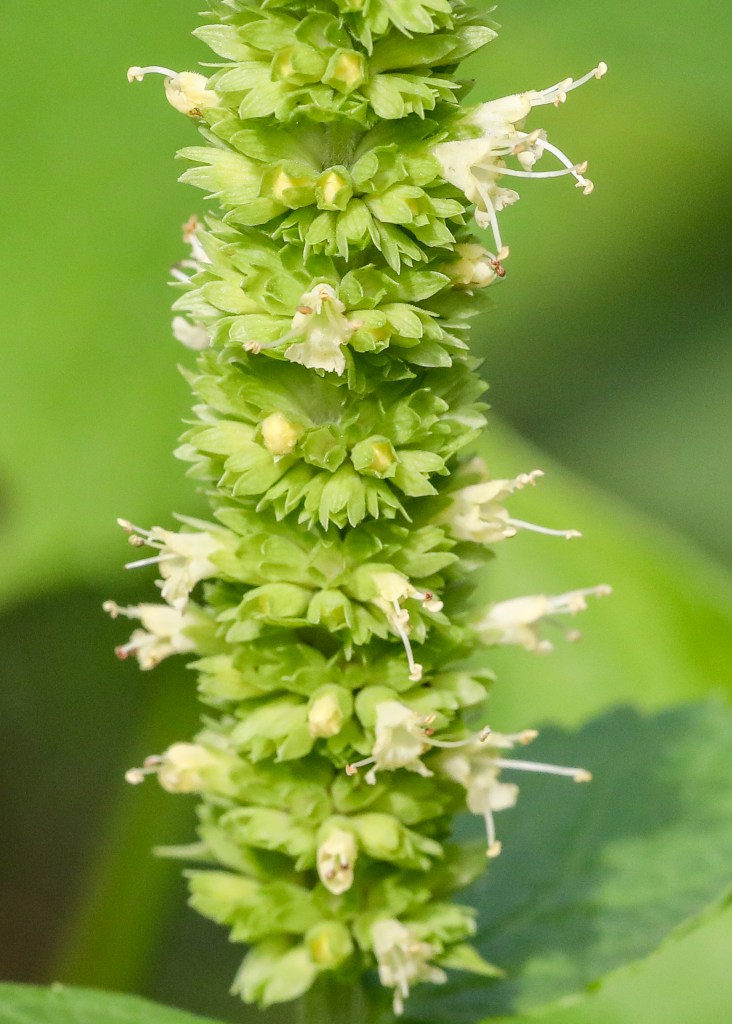
Spikes sit at the top of stems—central and side stems. They can be 4 to 16” long and 0.75 to 1” wide. Blooms have 2 upper, 2 side and 1 lower lobes. The lower lobe is largest. Each flower had 4 stamens and a divided style. They extend beyond the bloom giving a slightly fuzzy effect. Blossoming starts in mid-summer and continues until early fall. It lasts 1 to 2 months.5,12
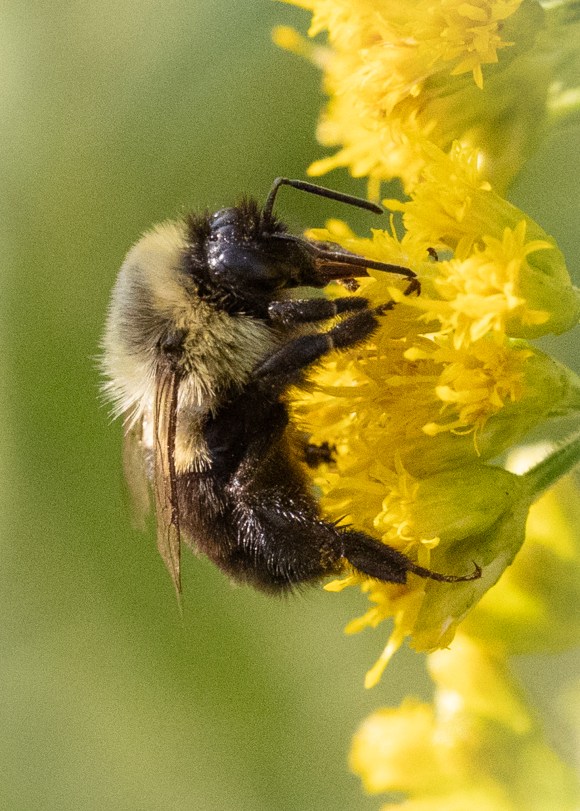
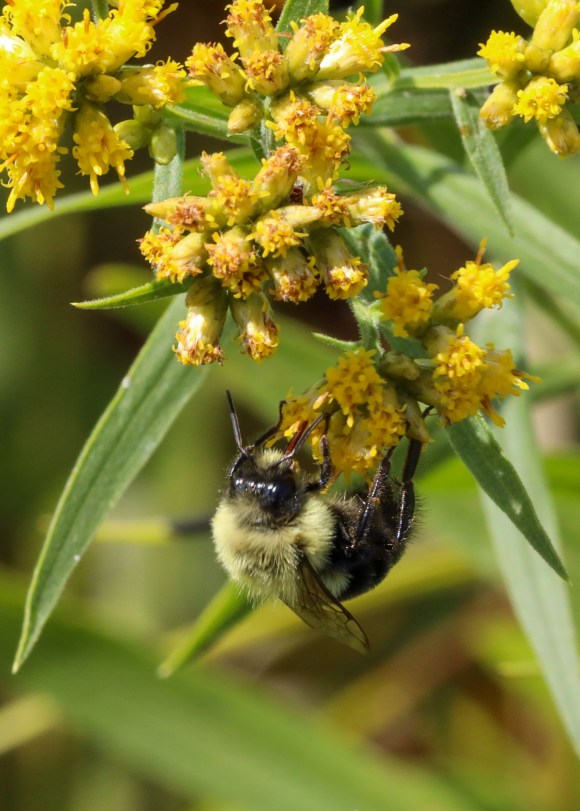
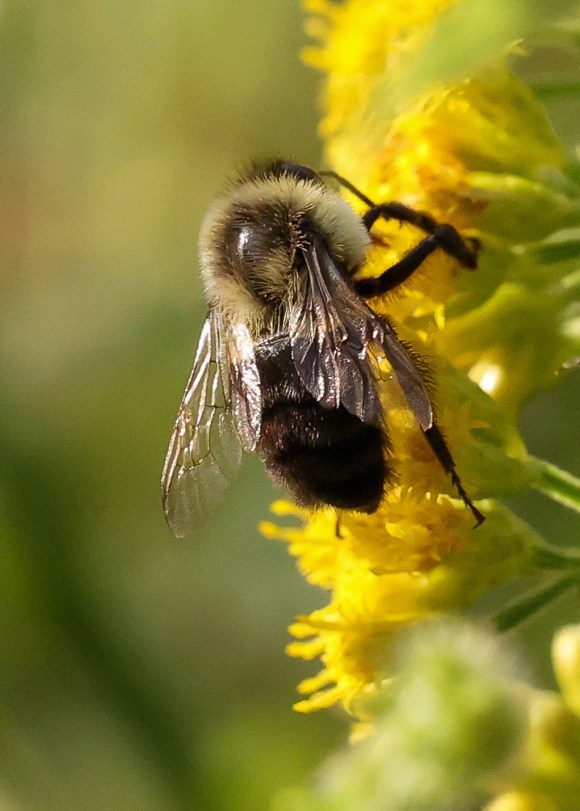
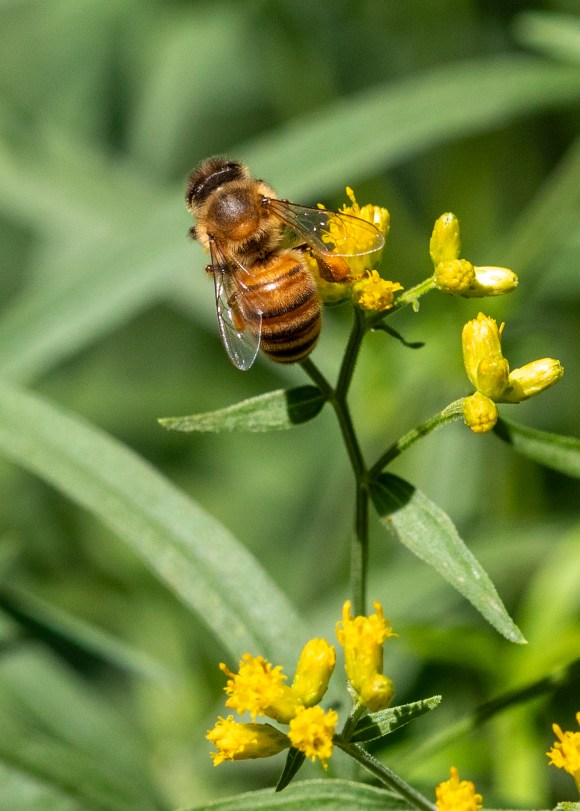
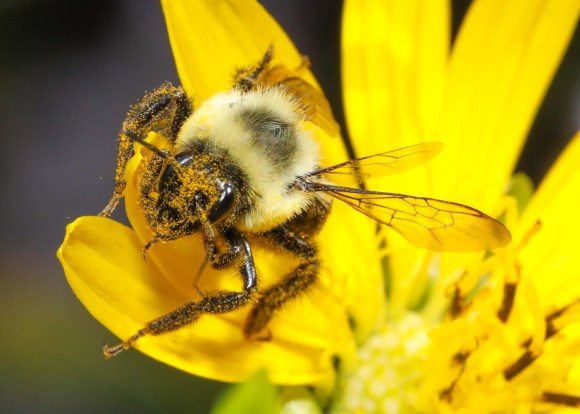
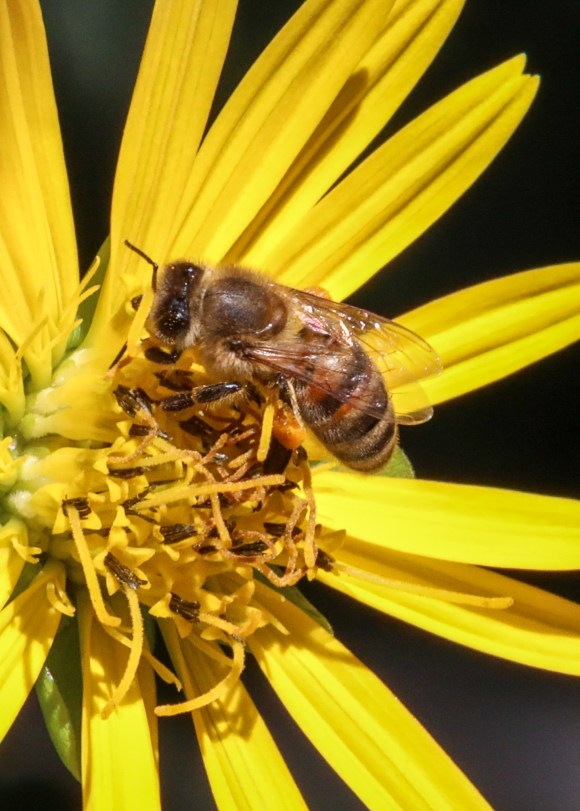
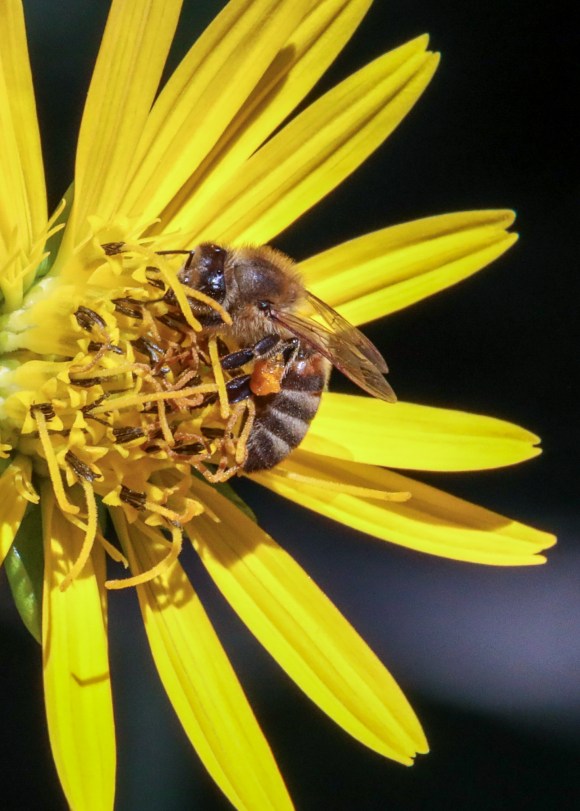
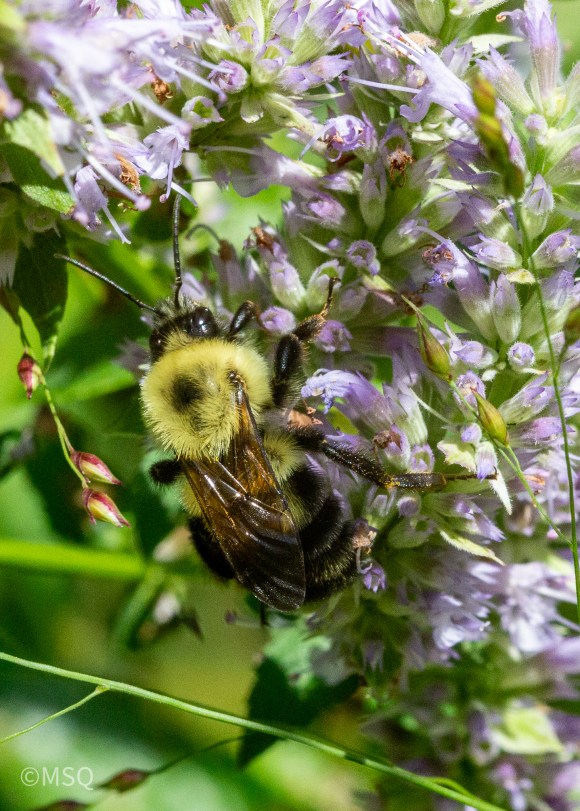
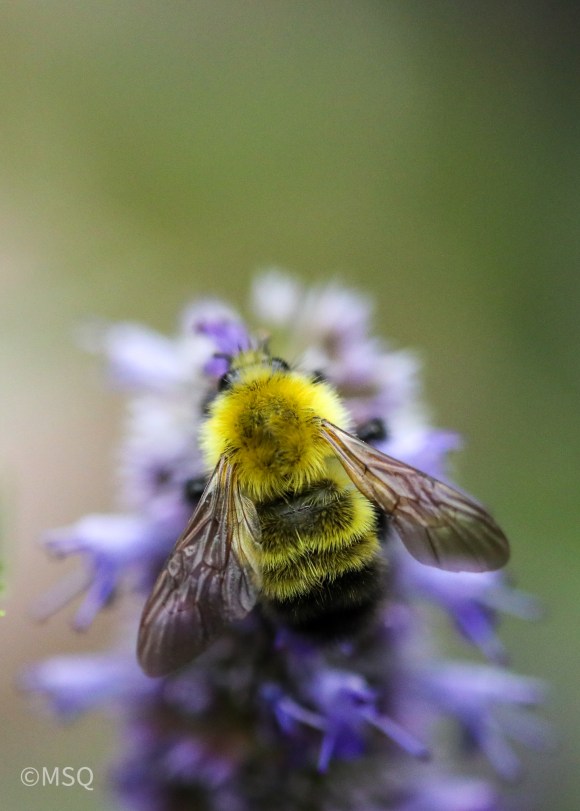
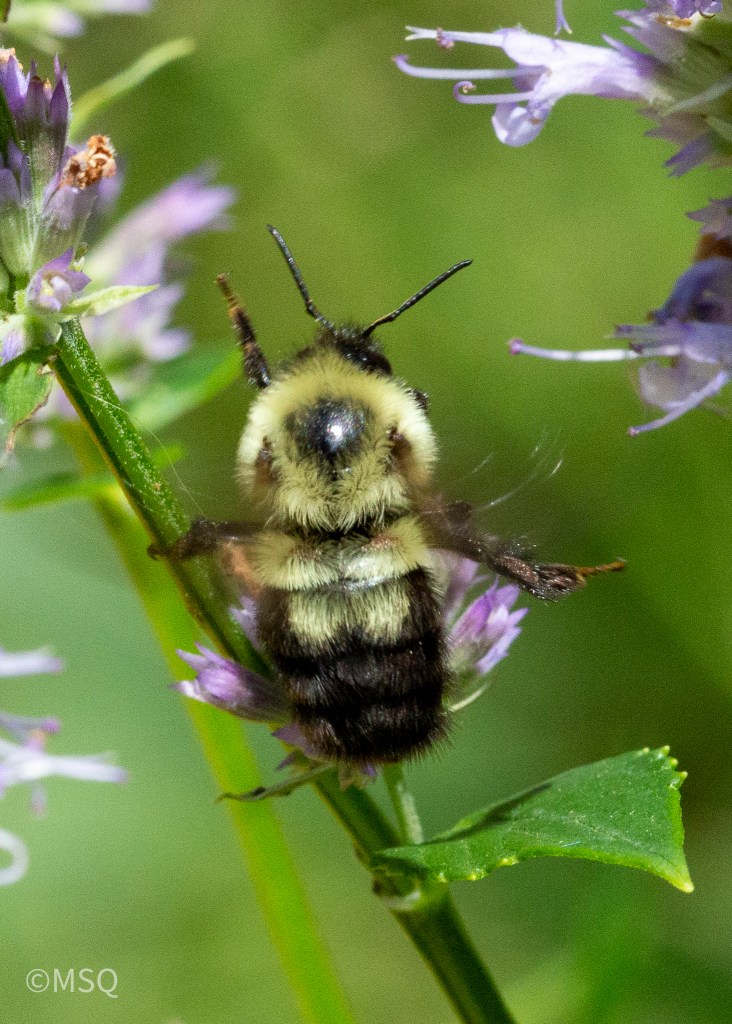
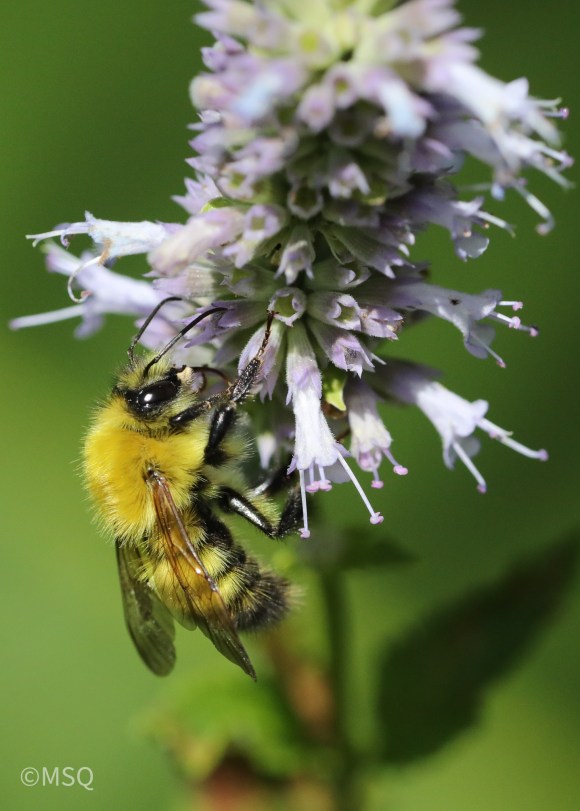
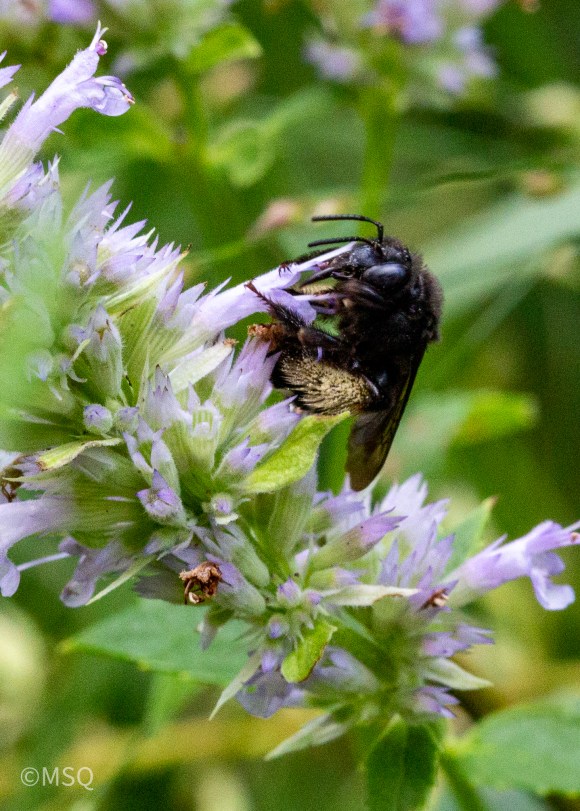
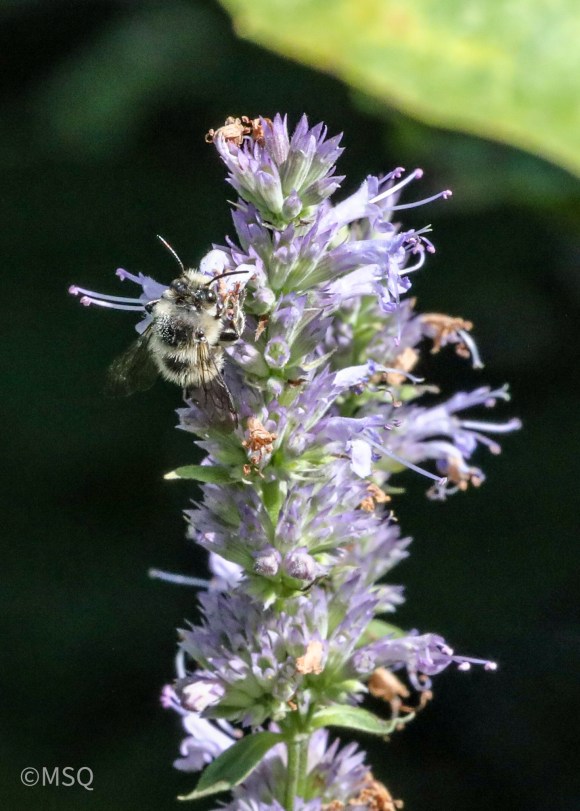
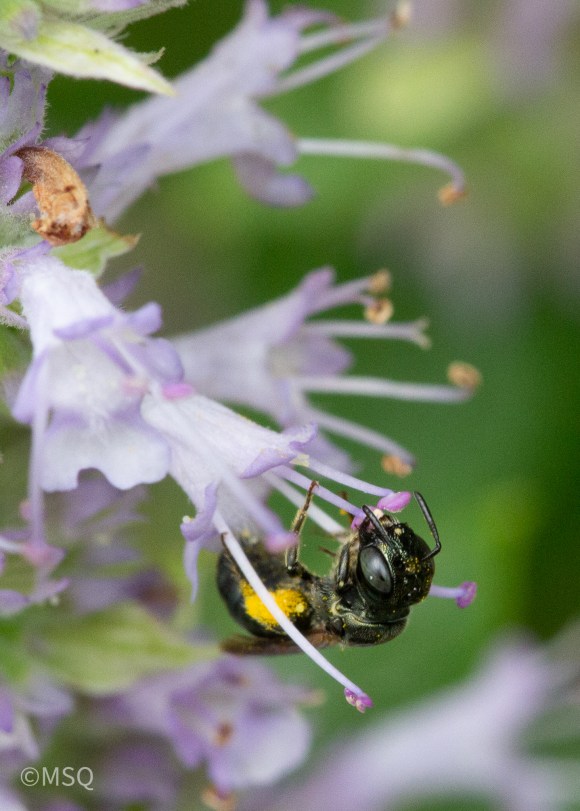
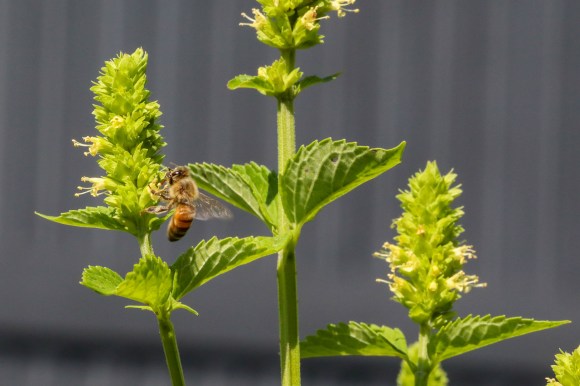
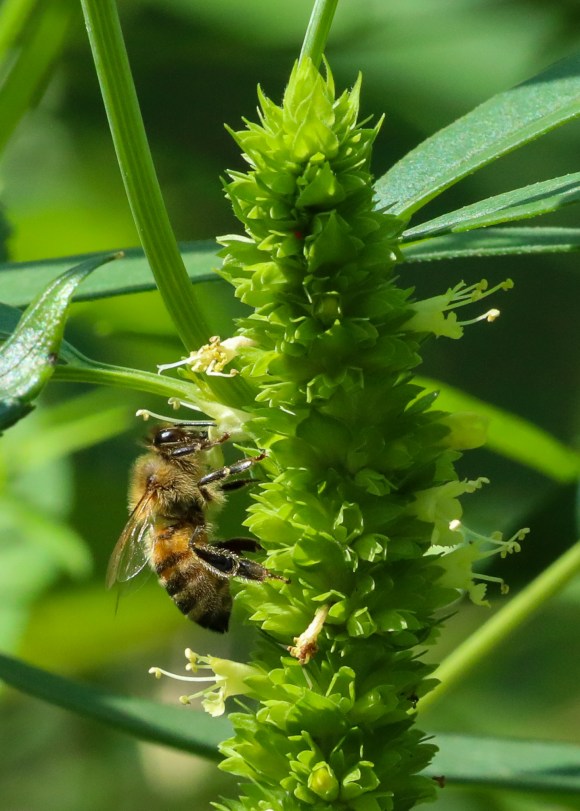
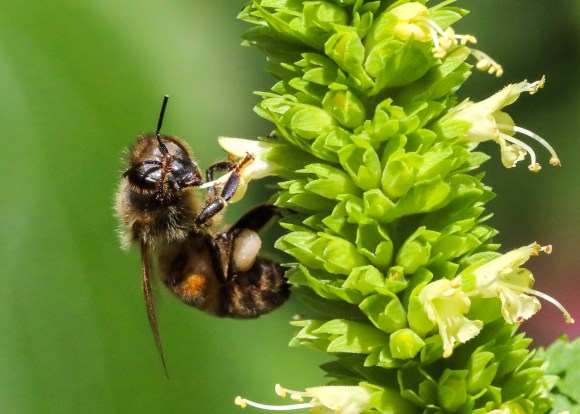
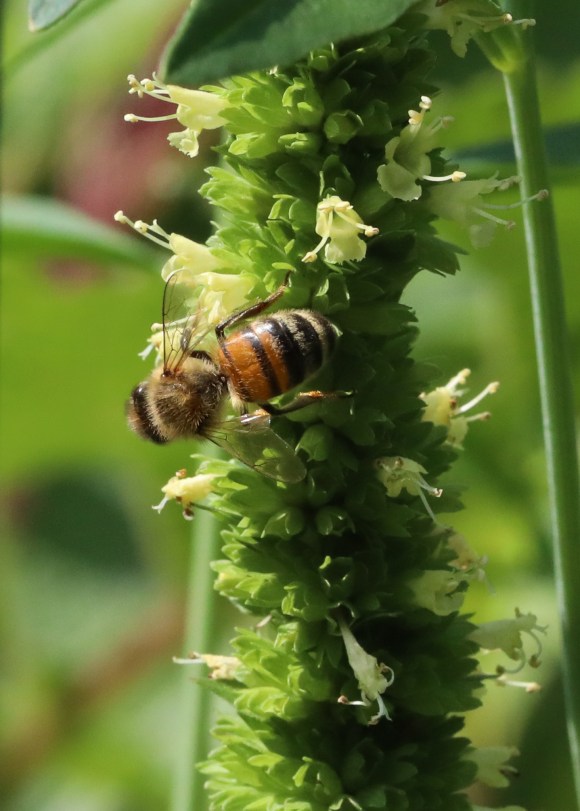
Agastache nepetoides is a stunning garden plant but that’s just part of the story. This Hyssop offers nectar and pollen to late season pollinators and beneficial insects. According to the Xerces Society for Invertebrate Conservation, it’s of Special Value to Native Bees, Special Value to Bumblebees and, also, Supports Conservation Biological Controls (beneficial insects). In my garden, these flowers always have some honeybees on them. Various butterflies, moths and skippers sip its nectar.4,12
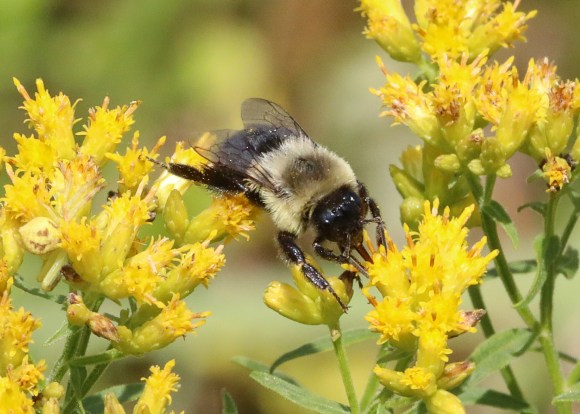
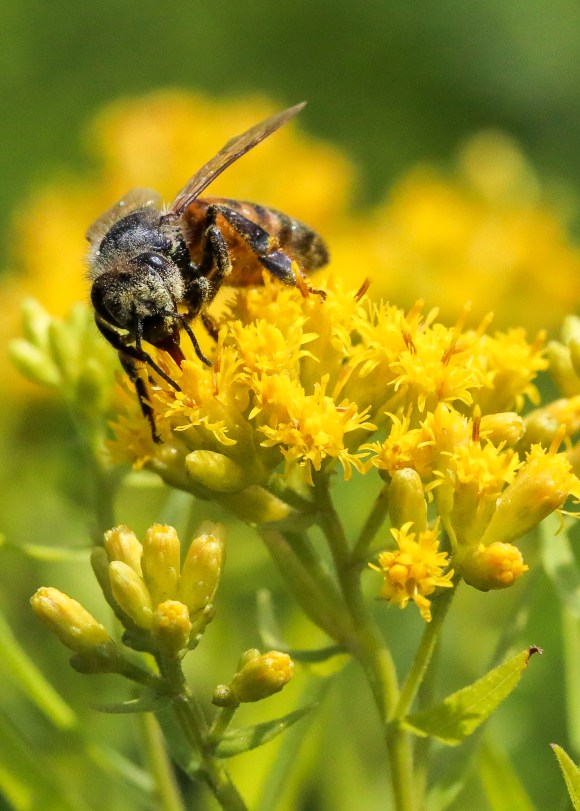
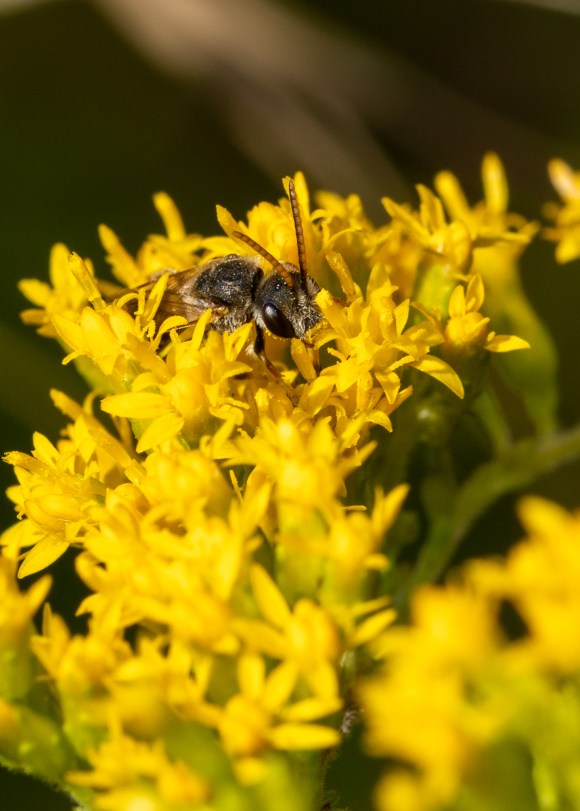
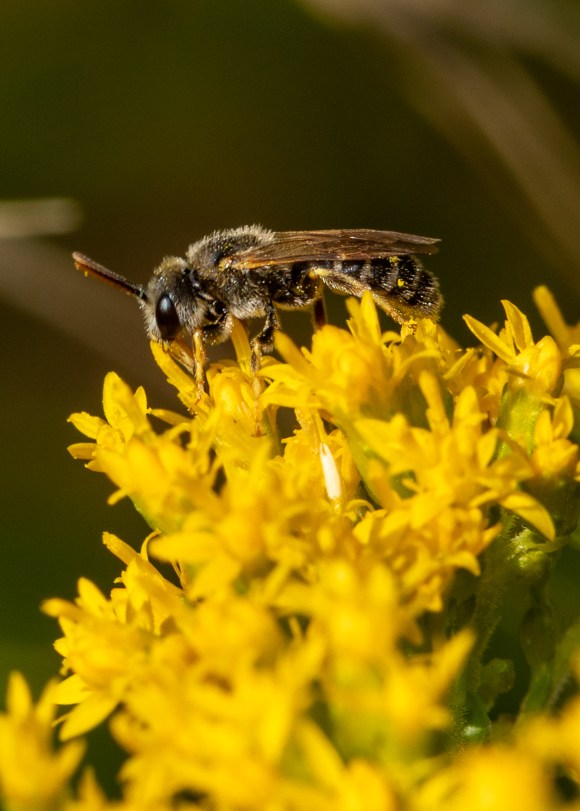
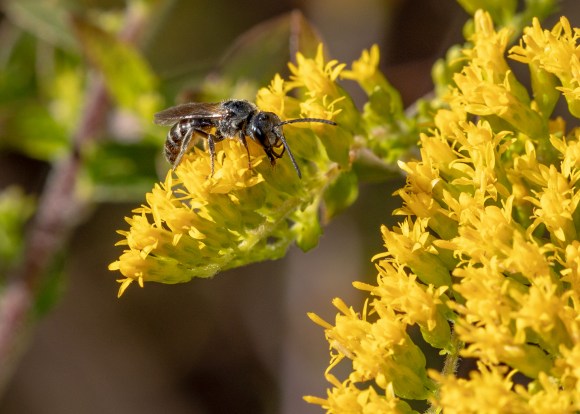
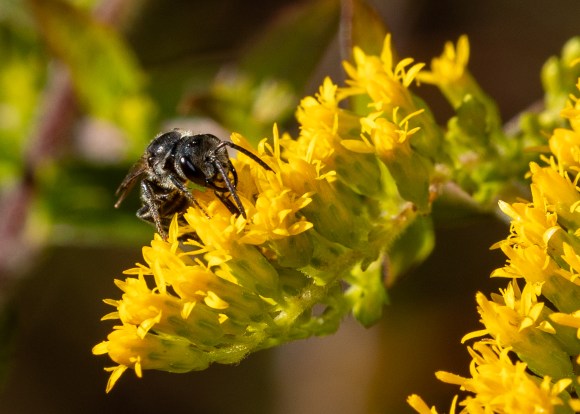
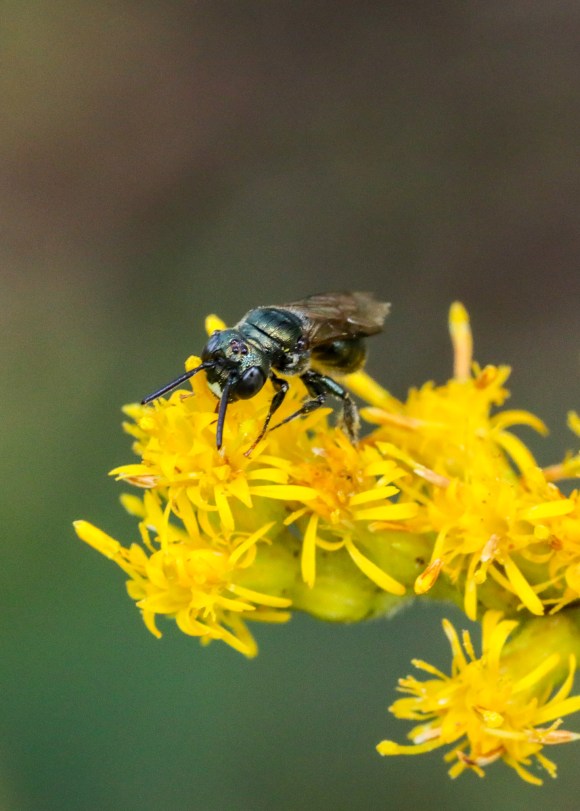
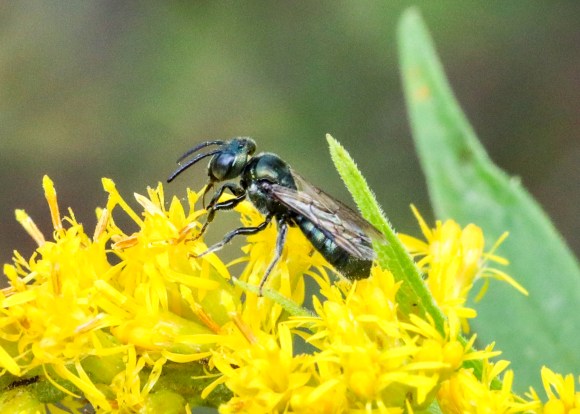
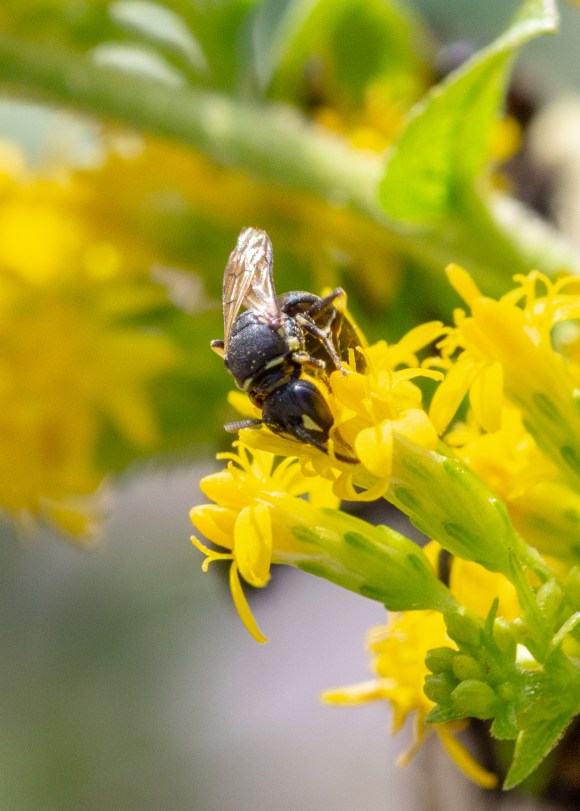
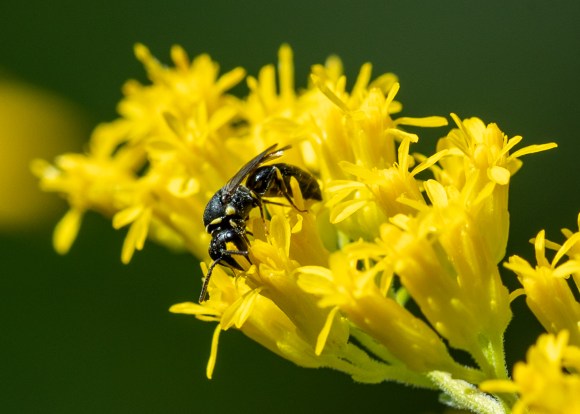
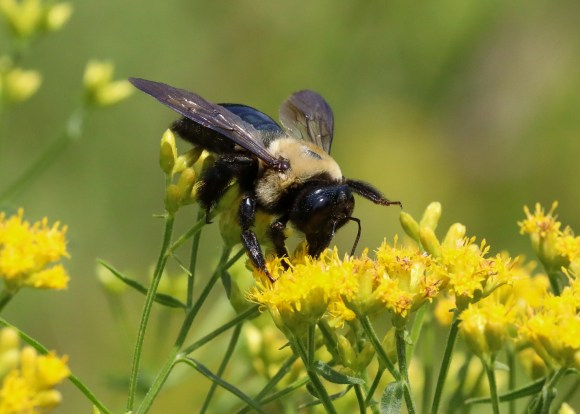
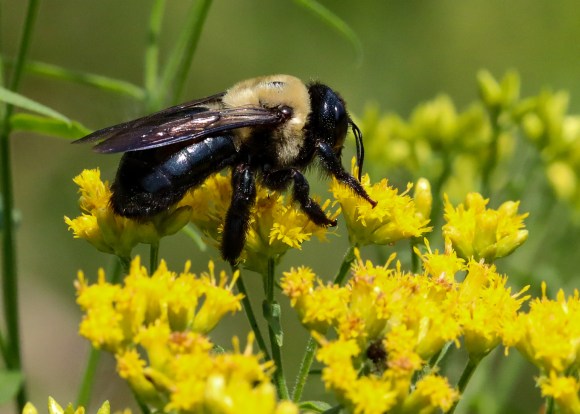
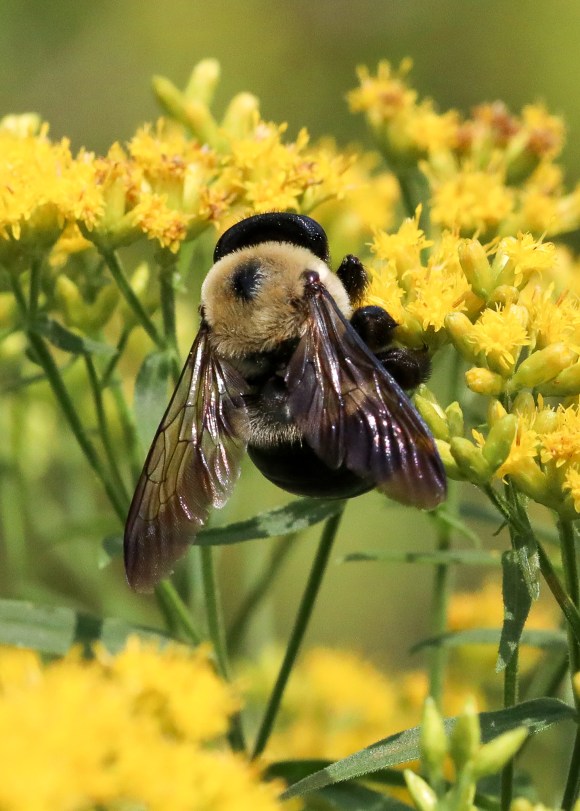
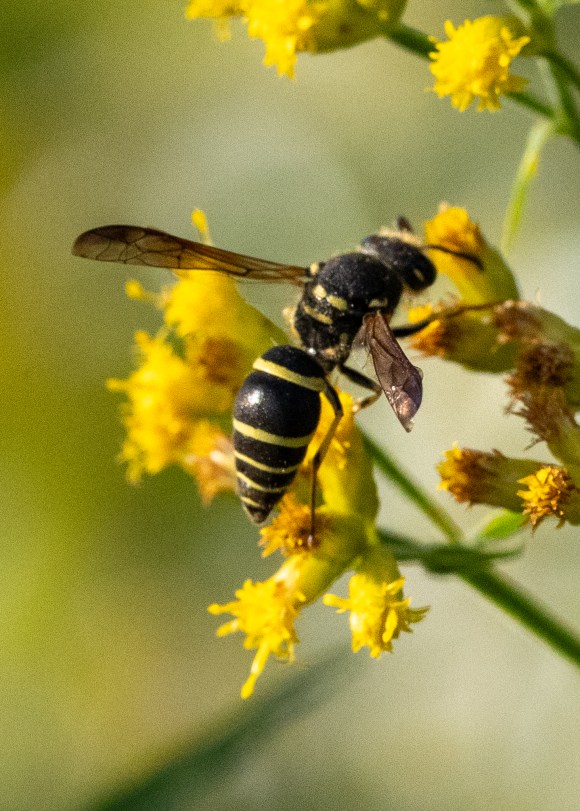
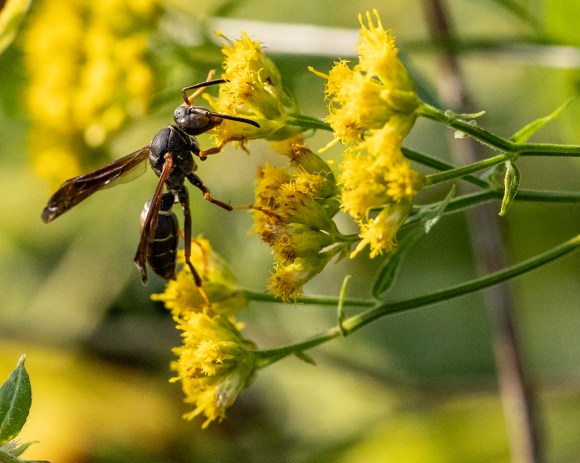
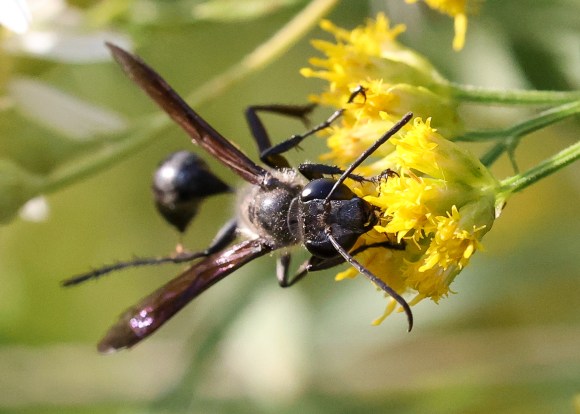
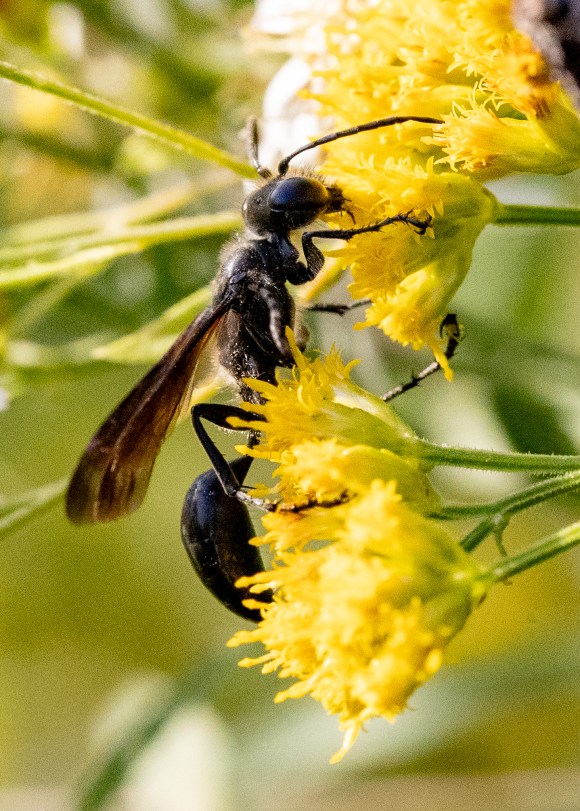
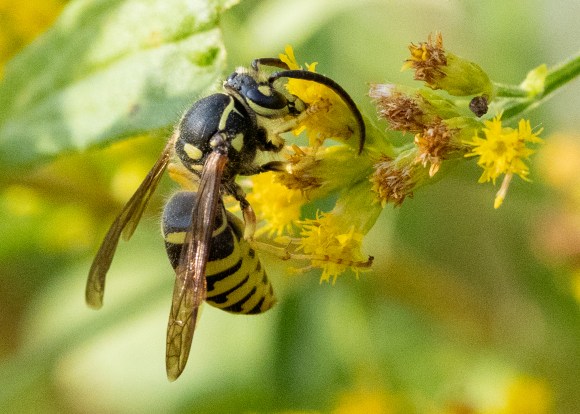
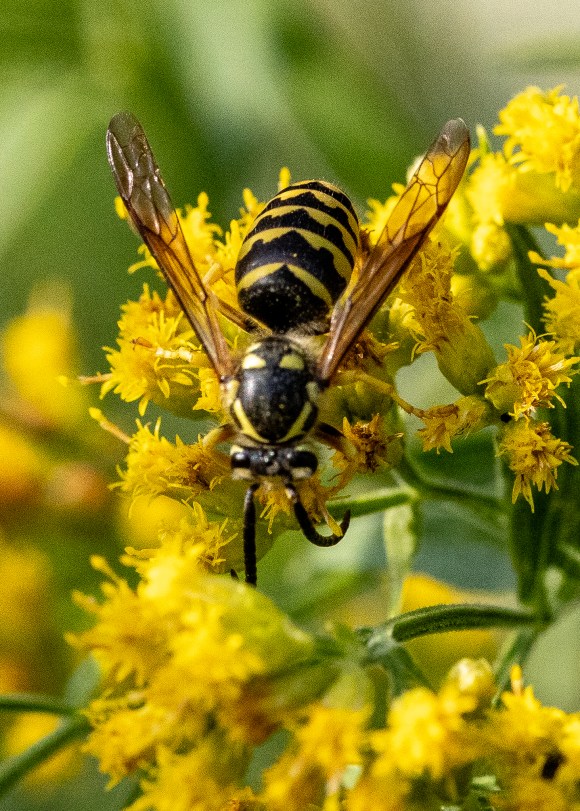
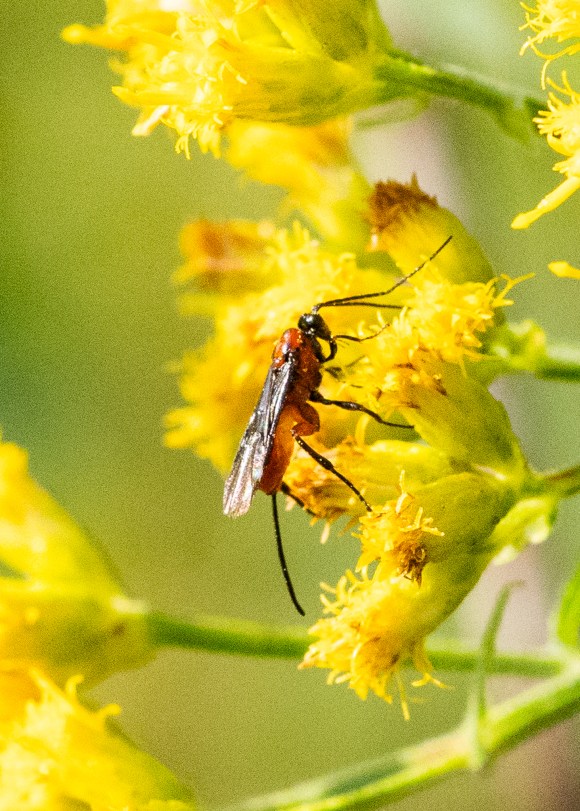
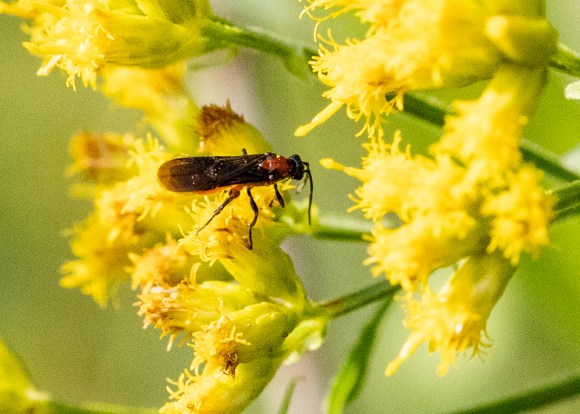
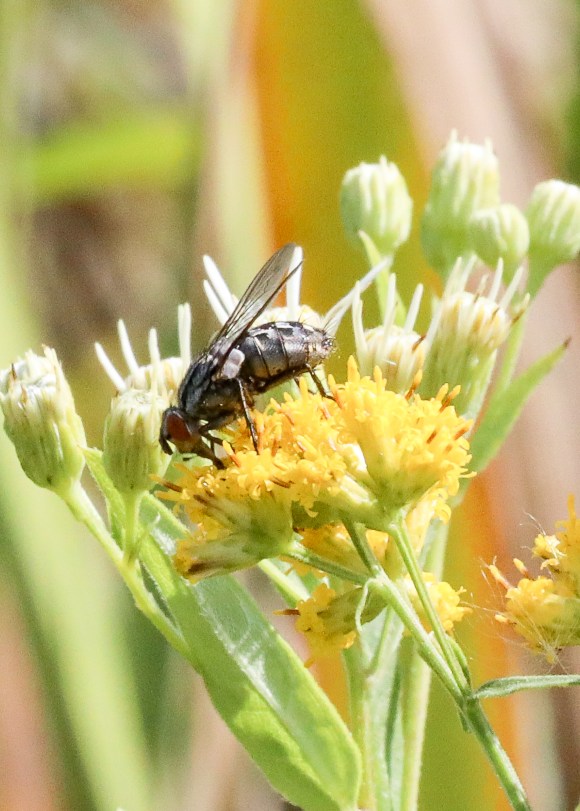
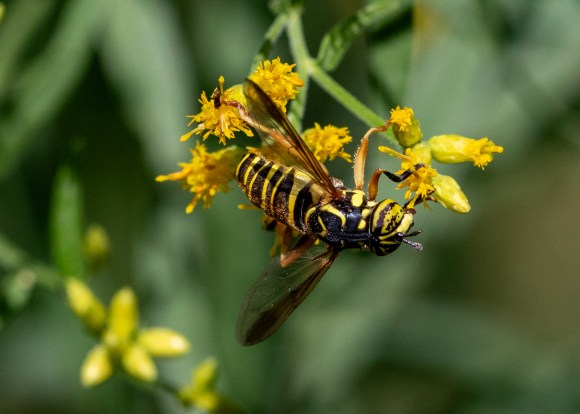
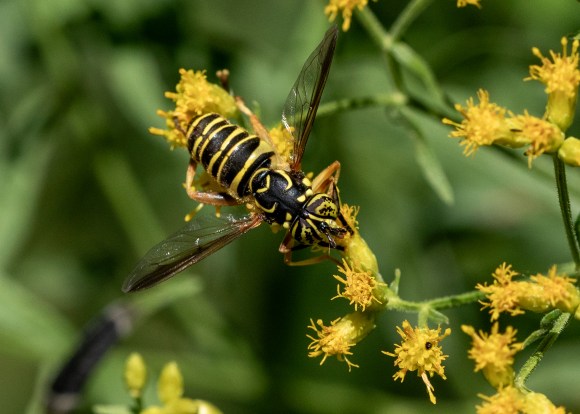
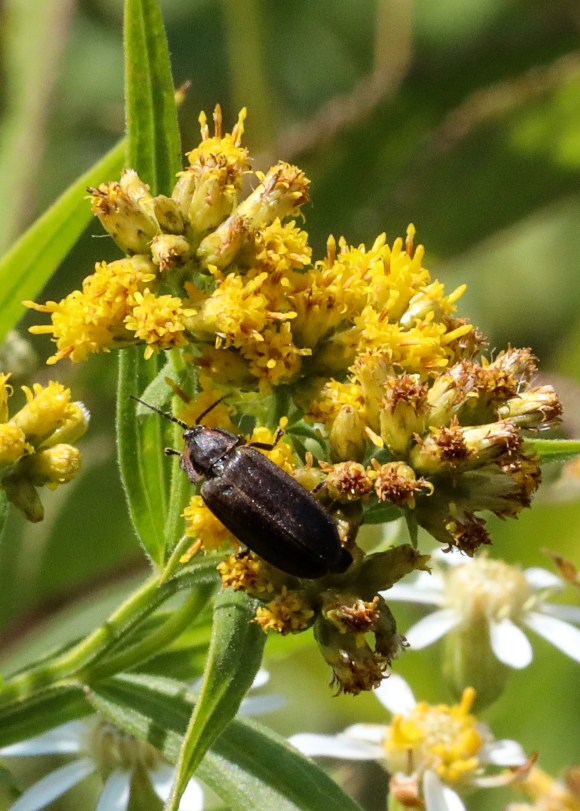
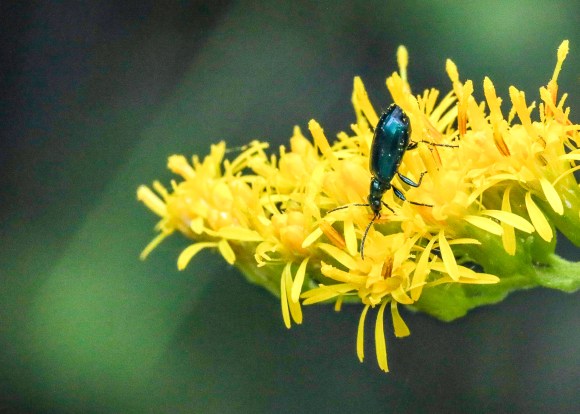
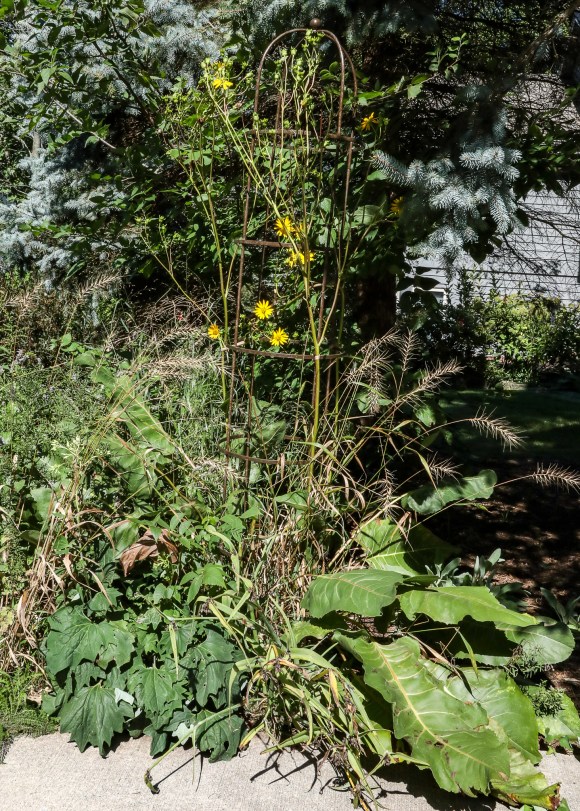
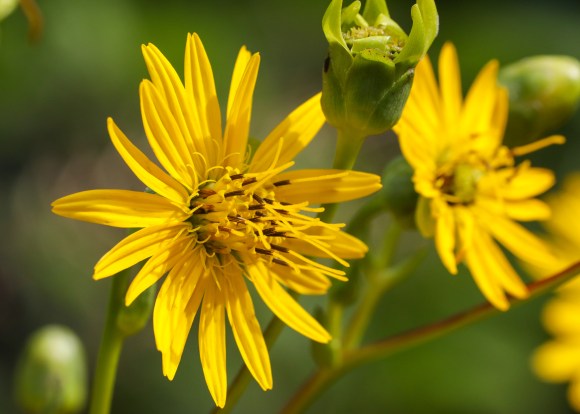
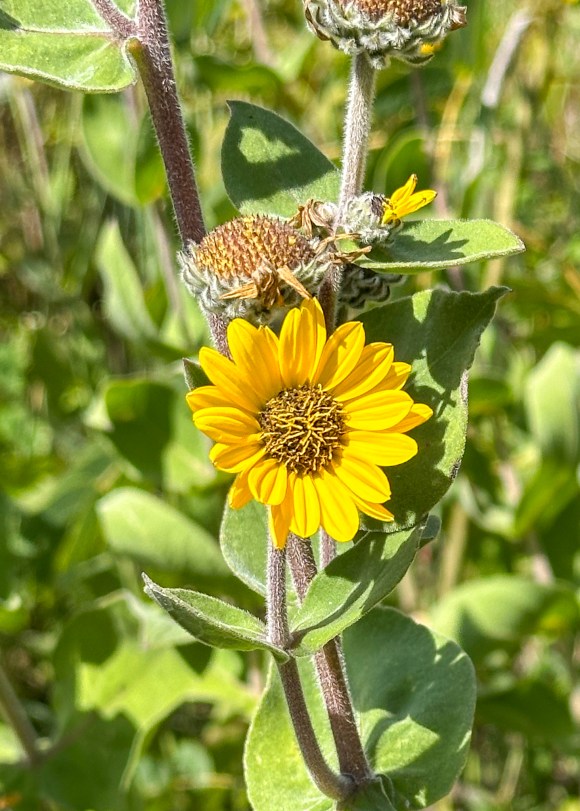
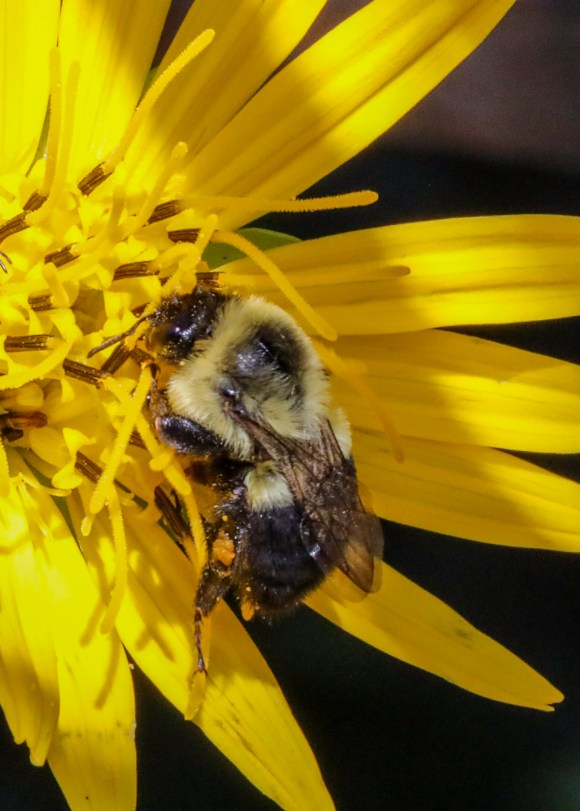
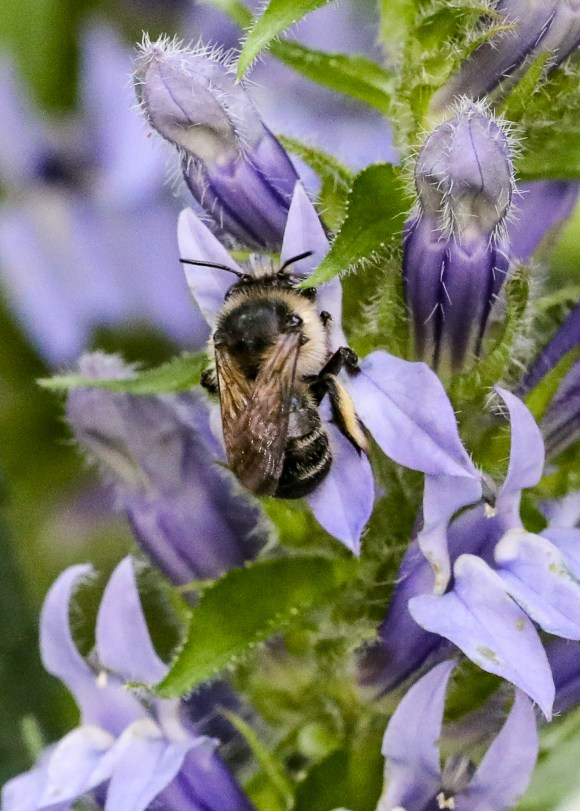
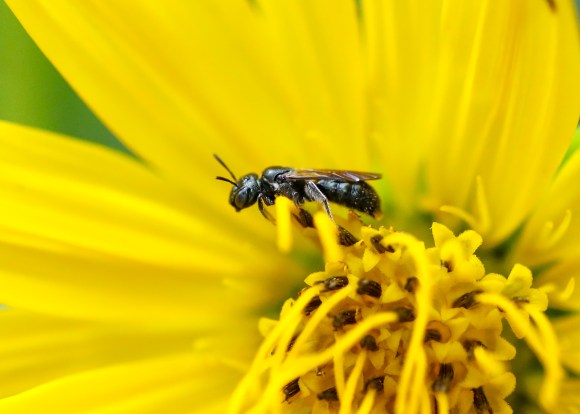
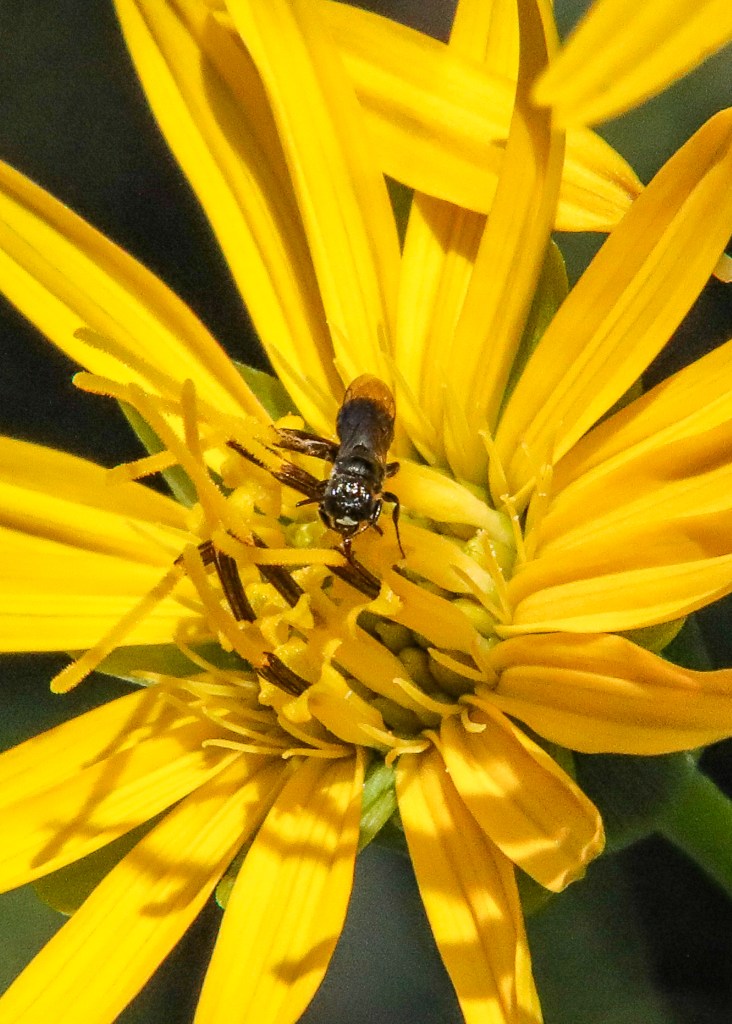
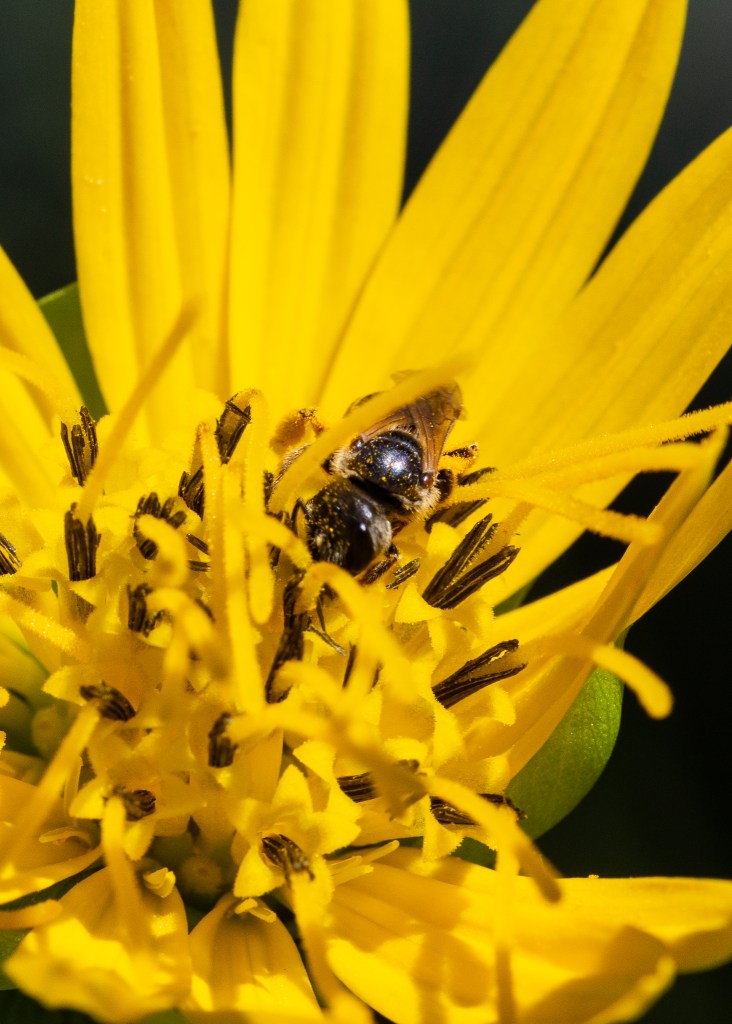
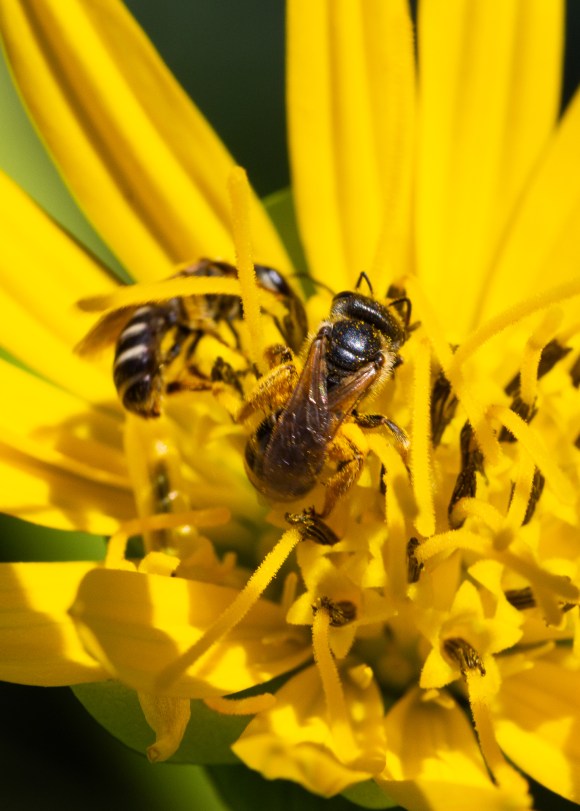
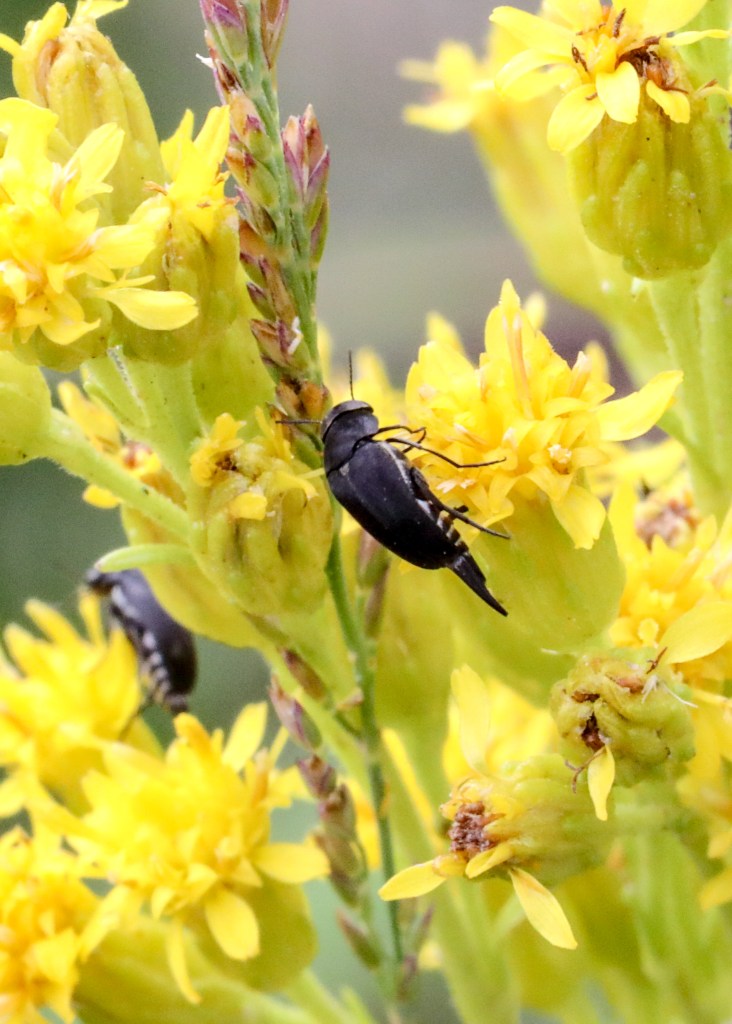
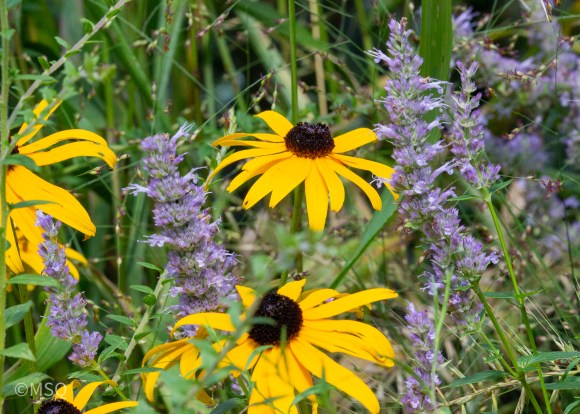
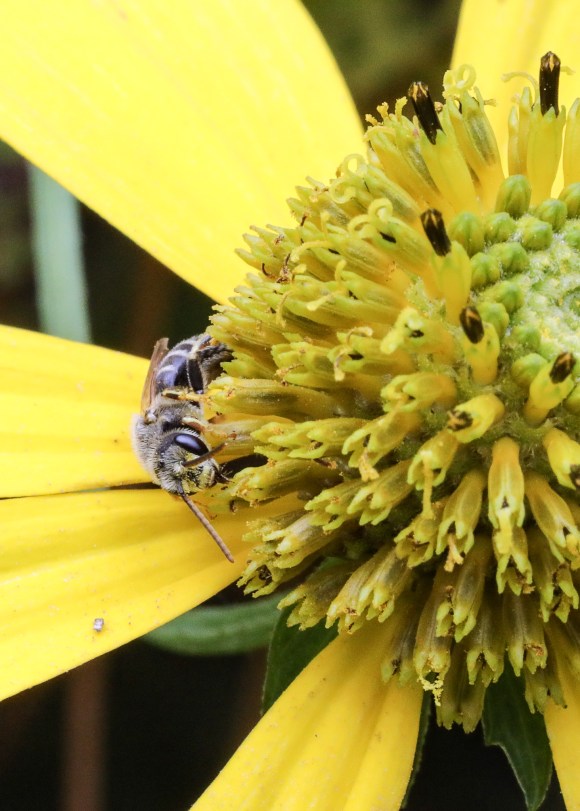
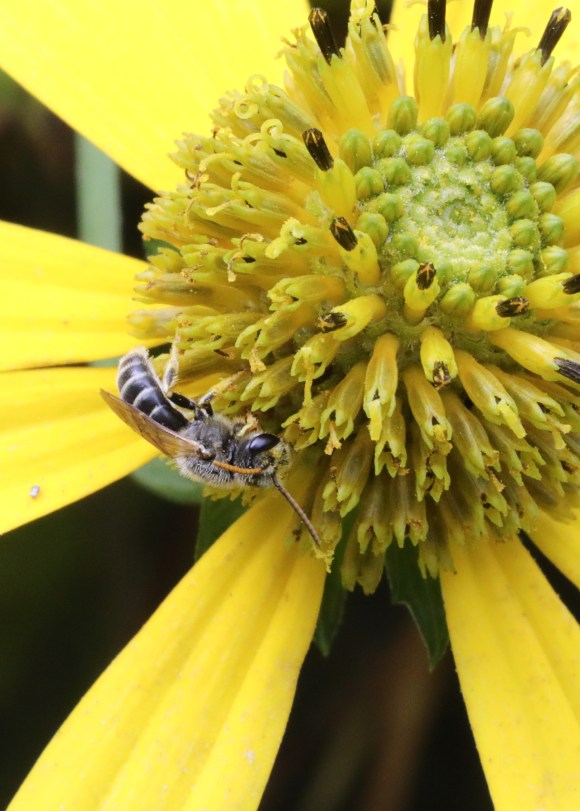
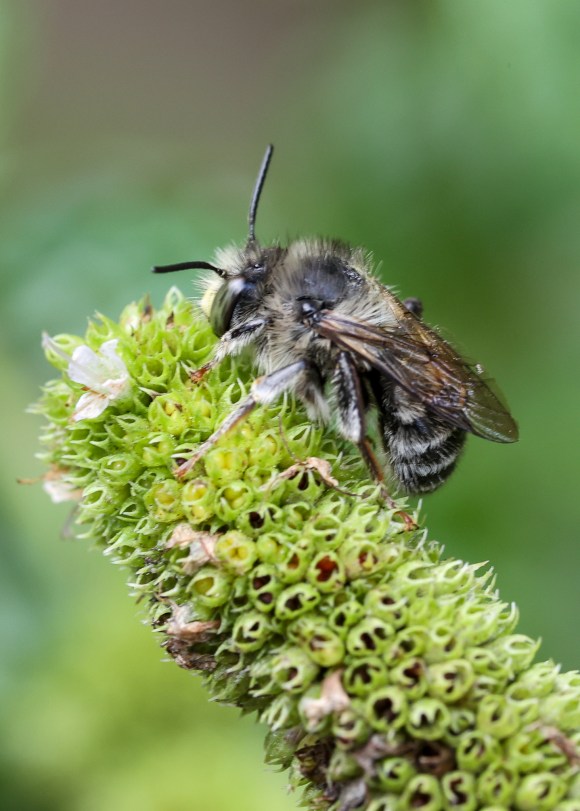
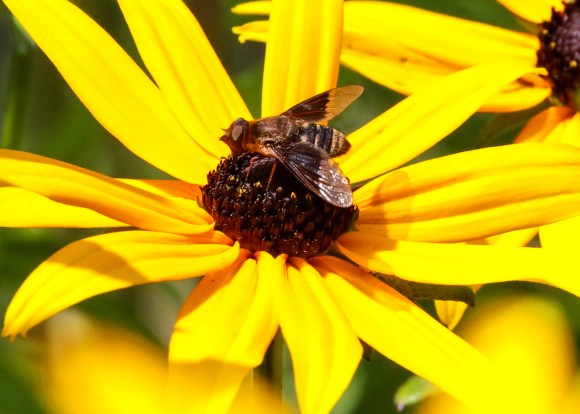
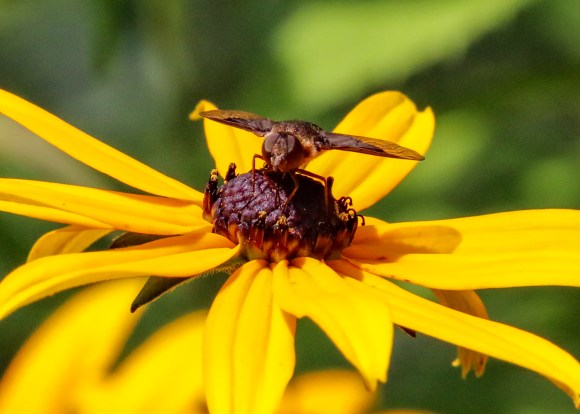
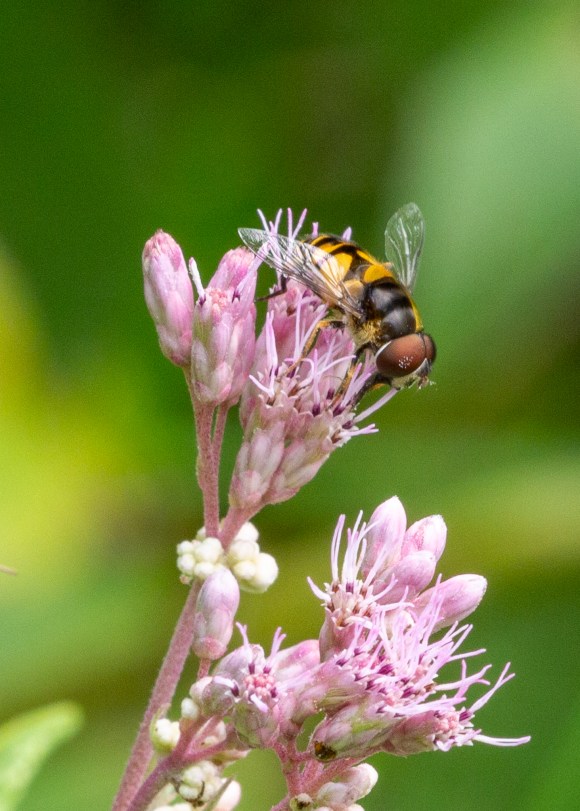
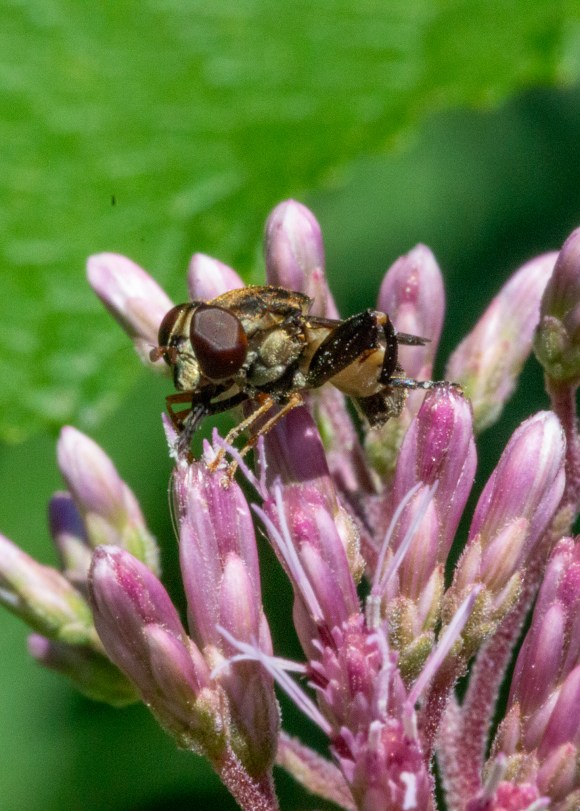
Numerous bees gather resources from Yellow Giant Hyssop including Bumblebees (Bombus spp.), Halictid bees, Yellow-Faced Bees (Hylaeus spp.), and Honeybees (Apis spp.). In my garden, many other flowers are blooming with Tall Yellow Hyssop. These plants include Tall Coreopsis (Coreopsis tripteris), Black-eyed Susan (Rudbeckia hirta), Sweet Joe-Pye Weed (Eutrochium purpureum) and Cutleaf Coneflower (Rudbeckia laciniata). The small to medium bees tend to visit these blooms. I’ve included photos for reference.8,12
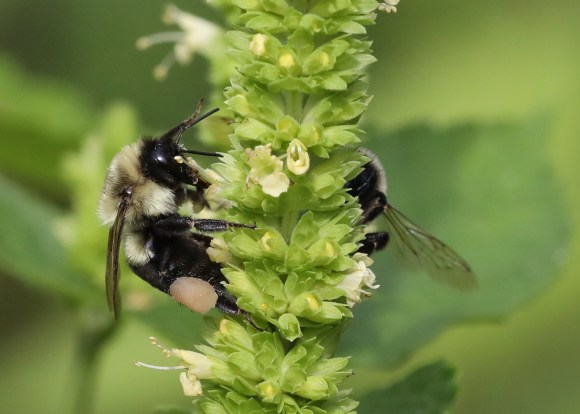
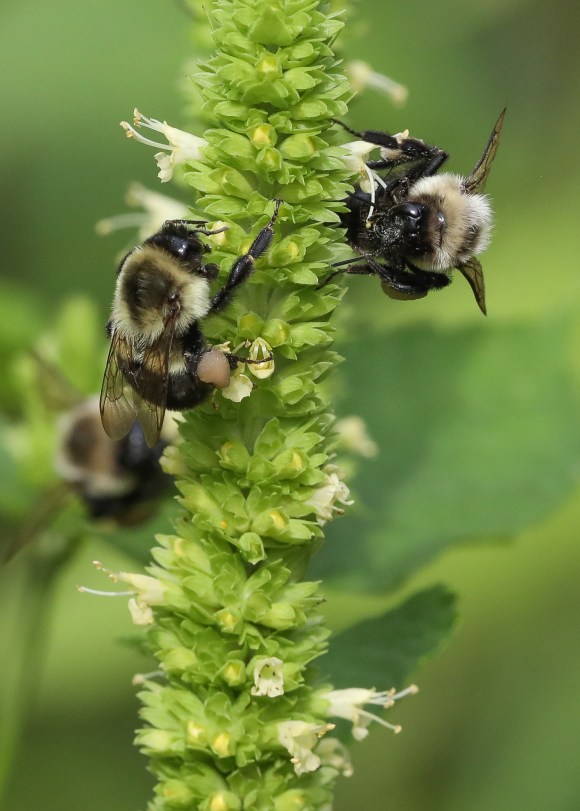
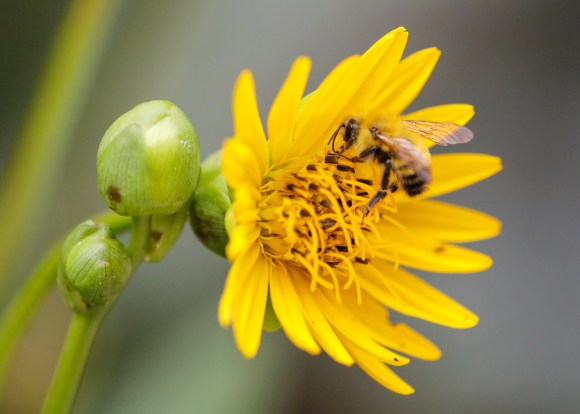
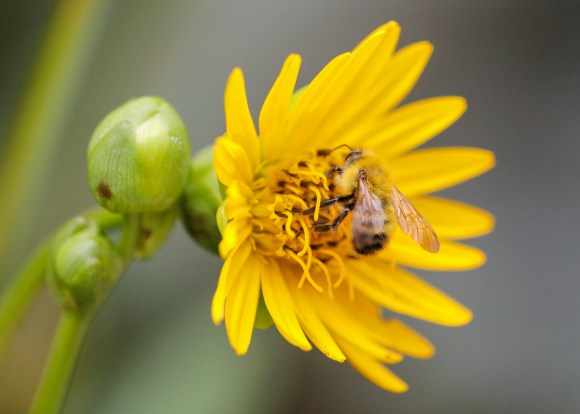
While the Xerces society doesn’t mention Honeybees, they frequent these flowers in my garden. In the past, Midwestern beekeepers grew Anise Hyssop (Agastache foeniculum) as a ‘honey plant’—a major food source for their hives. Other Agastaches are just as attractive to honeybees. The Great Lakes area has a variety of native Agastaches to choose and A. nepetoides is just one.
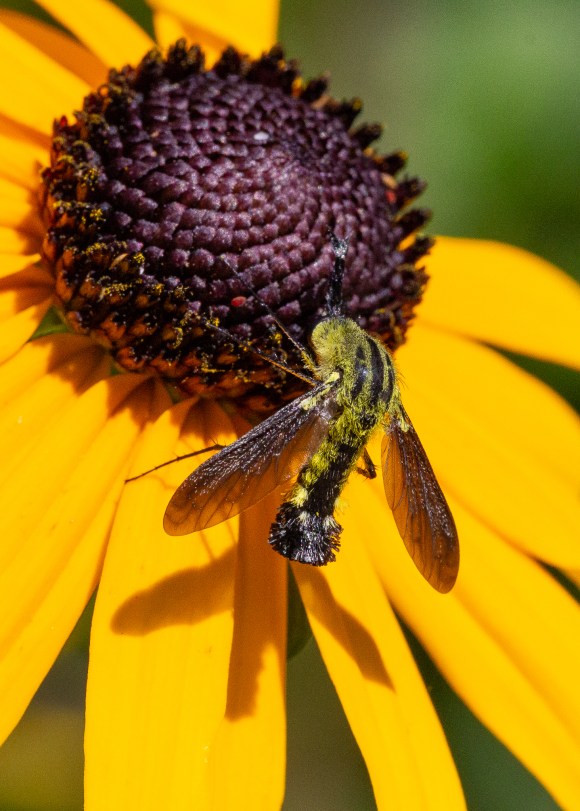
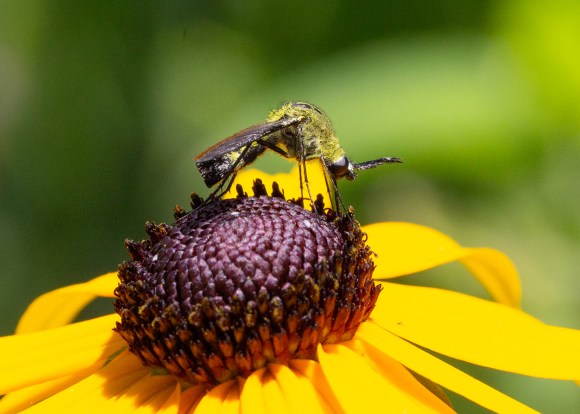
Bee flies and Syrphid flies also visit Giant Yellow Hyssop.
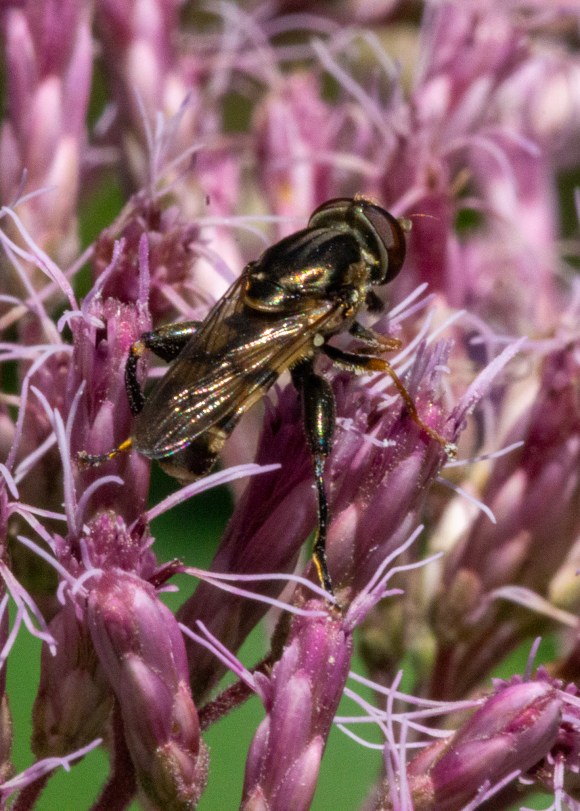
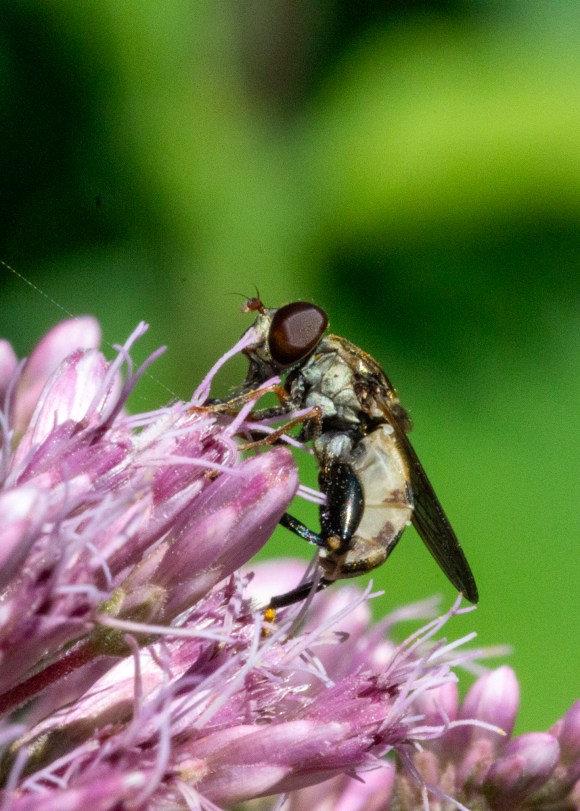
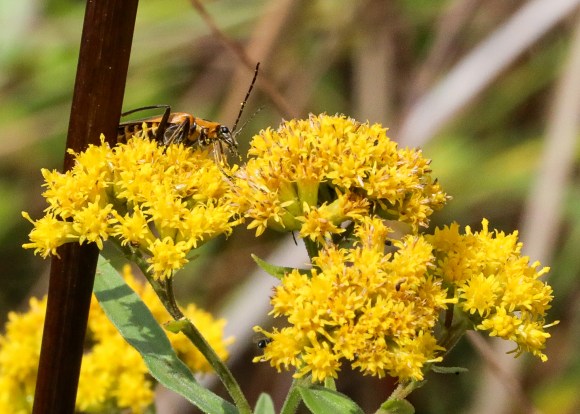
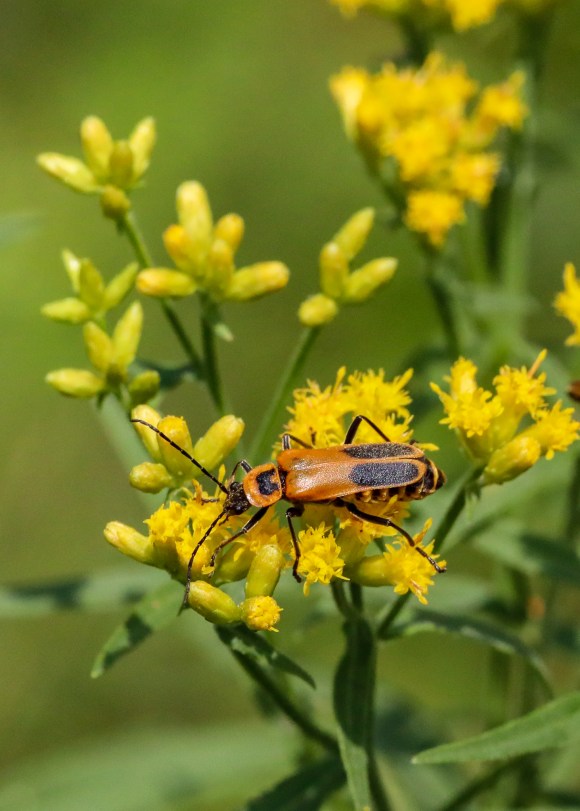
Giant Yellow Hyssop also host many beneficial insects in its foliage as well as its flowers. In a study by Michigan State University, Insidious flower bug (Orius insidious), a small plant bug (Plagiognathus politus), crab spiders (Thomisidae), dagger flies (Empididae), and tiny, parasitoid wasps (Chalcidoidea), were all moderately attracted to it. This hyssop mildly attracted lady beetles (Coccidnellidae), jumping spiders(Salticidae), damsel bugs (Nabidae), Soldier beetles (Cantharidae), green lacewings (Chrysopidae), ragweed plant bug (Chlamydatus associatus), and predatory thrips (Aeolothripidae).
In addition, the Pale Green Assassin Bug (Zelus luridus) hunts throughout A. nepetoides’ foliage. Of the 5 North American species, Z. luridus is the most common in North America. It’s native to most of North America and most common in the Eastern U.S. This assassin bug’s mostly an ambush predator waiting on leaves for prey.1.7,9
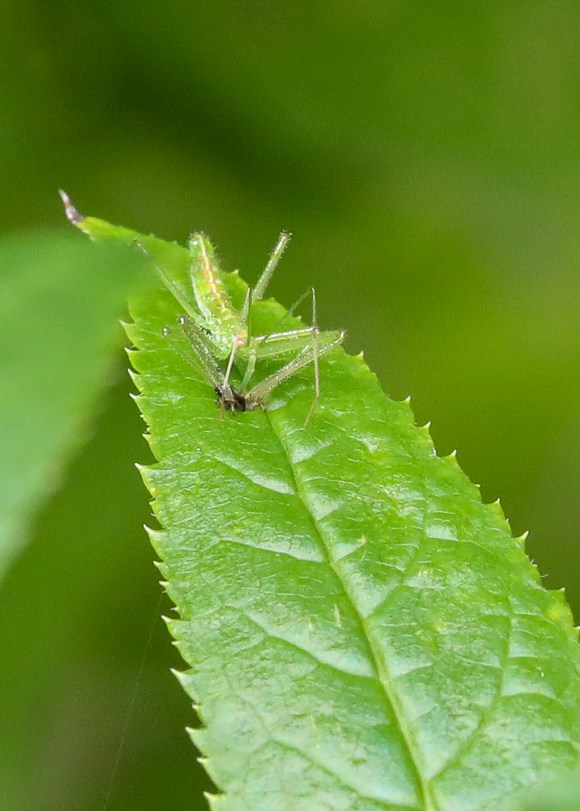
Occasionally, the Pale Green Assassin Bug hunts actively using a wonderful adaptation. It has a gland on the fore tibiae that secretes a sticky material. The gland develops in the second instar. The first instar uses the sticky secretions that held the eggs in place.1,7,9
When ready to hunt, Zelus smears the sticky substance on the small hairs on its tibia. Then it sticks them into the flower parts searching for small insects. This material also helps when hunting for flying insects. It coats its forelegs with the material and waves them in the air. When a passing fly, small wasp or other insect hit them, they stick.1
Then Zelus can use its forelegs to grasp and secure the insect. Once secured, the bug injects digestive juices using it’s beak. The prey’s internal structures turn to liquid and the assassin bug drinks the result.1,7,9
The Pale Green Assassin Bug is a general predator. Like a spider, it does kill some desirable insects but also many undesirable ones. These pest insects include aphids, leafhoppers, thrips, caterpillars, and flies. A great addition to the garden!1,7,9
With an approximate 1.5″ wingspan, the Pearl Crescent Butterfly (Phyciodes tharos) is a small but mighty butterfly. Not as large as the Monarch, this butterfly displays intricate black, orange and cream patterning worth a closer look. Where I live in Michigan, we have two very similar species—the Pearl Crescent and the Northern Crescent. I’ve used the Michigan Butterfly Network’s recommended practice of field identification and called this one a Pearl Crescent.6,10,11
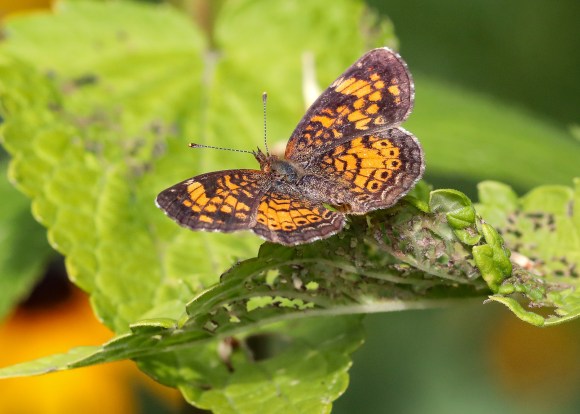
The Pearl Crescent’s active from mid-spring through fall depending on the weather. This butterfly visits a wide range of flowers. It acts as a pollinator for native and cultivated plants. 6,10,11
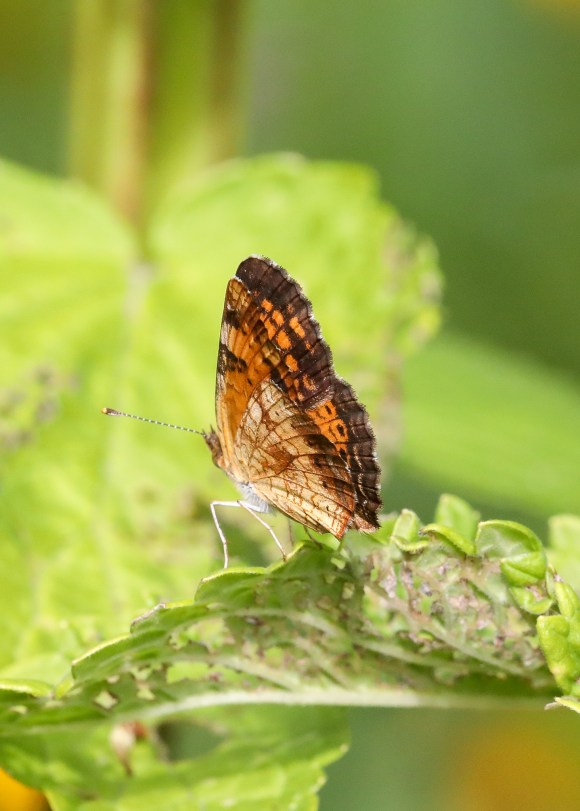
Asters are the larval host for the Pearl Crescent. There are 2 broods per year and the last group of caterpillars overwinter. Be sure to look for the Pearl Crescent as soon as the temperature warm in the spring! 6,10,11
Thanks for reading my blog! I hope you’ve enjoyed this wander through the unique plant, Giant Yellow Hyssop. Another new find to add variety to your garden!
Happy Gardening,
Mary
BIBLIOGRAPHY:
- BugKnow. 2026. “Green Assassin Bug: Identification, Habitat, and Garden Pest Control.” BugKnow, July 24. https://bugknow.com/green-assassin-bug/.
- n.d. Accessed September 23, 2026. “Agastache nepetoides.” https://plantfinder.mobot.org/PlantFinderDetails.aspx?taxonid=281383.
- “Agastache Nepetoides (Catnip Giant-Hyssop): Go Botany.” n.d. Accessed September 23, 2026. https://gobotany.nativeplanttrust.org/species/agastache/nepetoides/.
- “Agastache Nepetoides (Yellow Giant Hyssop) | Native Plants of North America.” n.d. Accessed September 23, 2026. https://www.wildflower.org/plants/result.php?id_plant=agne2.
- “Agastache Nepetoides (Yellow Giant Hyssop): Minnesota Wildflowers.” n.d. Accessed September 23, 2026. https://www.minnesotawildflowers.info/flower/yellow-giant-hyssop.
- Maidl, Rachel. 2020. “How to Identify a Pearl Crescent Butterfly.” Birds and Blooms, September 17. https://www.birdsandblooms.com/gardening/attracting-butterflies/pearl-crescent-butterflies/.
- Missouri Department of Conservation. n.d. “Assassin Bugs.” Accessed September 23, 2026. https://mdc.mo.gov/discover-nature/field-guide/assassin-bugs.
- “Yellow Giant Hyssop, Agastache nepetoides (L.) Kuntze.” n.d. Native Plant Facts, Native Plants and Ecosystem Services, Accessed September 23, 2026. https://www.canr.msu.edu/nativeplants/plant_facts/yellow_giant_hyssop.
- “Pale Green Assassin Bug (Zelus Luridus) — Minnesota Seasons.” n.d. Accessed September 23, 2026. https://www.minnesotaseasons.com/Insects/pale_green_assassin_bug.html.
- “Pearl Crescent.” n.d. Accessed September 23, 2026. https://dnr.illinois.gov/education/wildaboutpages/wildaboutinvertebrates/wildaboutbutterflies/family-nymphalidae/wambpearlcrescent.html.
- “Pearl Crescent: # 13 of ‘23 Butterflies in 2023.’” 2023. Eliza Howell Nature Walk, March 31. https://elizahowellnaturewalk.com/2023/03/31/pearl-crescent-13-of-23-butterflies-in-2023/.
- “Yellow Giant Hyssop (Agastache Nepetoides).” n.d. Accessed September 23, 2026. https://www.illinoiswildflowers.info/savanna/plants/yg_hyssop.htm.
- “Yellow Giant Hyssop Guide – New York Natural Heritage Program.” n.d. Accessed September 23, 2026. https://guides.nynhp.org/yellow-giant-hyssop/.
<br><!–<br>/* Style Definitions */<br> p.MsoNormal, li.MsoNormal, div.MsoNormal<br> {mso-style-unhide:no;<br> mso-style-qformat:yes;<br> mso-style-parent:””;<br> margin:0in;<br> mso-pagination:widow-orphan;<br> font-size:12.0pt;<br> font-family:”Times New Roman”,serif;<br> mso-fareast-font-family:”Times New Roman”;}<br>a:link, span.MsoHyperlink<br> {mso-style-priority:99;<br> color:blue;<br> text-decoration:underline;<br> text-underline:single;}<br>a:visited, span.MsoHyperlinkFollowed<br> {mso-style-noshow:yes;<br> mso-style-priority:99;<br> color:#96607D;<br> mso-themecolor:followedhyperlink;<br> text-decoration:underline;<br> text-underline:single;}<br>p.MsoListParagraph, li.MsoListParagraph, div.MsoListParagraph<br> {mso-style-priority:34;<br> mso-style-unhide:no;<br> mso-style-qformat:yes;<br> margin-top:0in;<br> margin-right:0in;<br> margin-bottom:8.0pt;<br> margin-left:.5in;<br> mso-add-space:auto;<br> line-height:115%;<br> mso-pagination:widow-orphan;<br> font-size:12.0pt;<br> font-family:”Aptos”,sans-serif;<br> mso-ascii-font-family:Aptos;<br> mso-ascii-theme-font:minor-latin;<br> mso-fareast-font-family:Aptos;<br> mso-fareast-theme-font:minor-latin;<br> mso-hansi-font-family:Aptos;<br> mso-hansi-theme-font:minor-latin;<br> mso-bidi-font-family:”Times New Roman”;<br> mso-bidi-theme-font:minor-bidi;<br> mso-font-kerning:1.0pt;<br> mso-ligatures:standardcontextual;}<br>p.MsoListParagraphCxSpFirst, li.MsoListParagraphCxSpFirst, div.MsoListParagraphCxSpFirst<br> {mso-style-priority:34;<br> mso-style-unhide:no;<br> mso-style-qformat:yes;<br> mso-style-type:export-only;<br> margin-top:0in;<br> margin-right:0in;<br> margin-bottom:0in;<br> margin-left:.5in;<br> mso-add-space:auto;<br> line-height:115%;<br> mso-pagination:widow-orphan;<br> font-size:12.0pt;<br> font-family:”Aptos”,sans-serif;<br> mso-ascii-font-family:Aptos;<br> mso-ascii-theme-font:minor-latin;<br> mso-fareast-font-family:Aptos;<br> mso-fareast-theme-font:minor-latin;<br> mso-hansi-font-family:Aptos;<br> mso-hansi-theme-font:minor-latin;<br> mso-bidi-font-family:”Times New Roman”;<br> mso-bidi-theme-font:minor-bidi;<br> mso-font-kerning:1.0pt;<br> mso-ligatures:standardcontextual;}<br>p.MsoListParagraphCxSpMiddle, li.MsoListParagraphCxSpMiddle, div.MsoListParagraphCxSpMiddle<br> {mso-style-priority:34;<br> mso-style-unhide:no;<br> mso-style-qformat:yes;<br> mso-style-type:export-only;<br> margin-top:0in;<br> margin-right:0in;<br> margin-bottom:0in;<br> margin-left:.5in;<br> mso-add-space:auto;<br> line-height:115%;<br> mso-pagination:widow-orphan;<br> font-size:12.0pt;<br> font-family:”Aptos”,sans-serif;<br> mso-ascii-font-family:Aptos;<br> mso-ascii-theme-font:minor-latin;<br> mso-fareast-font-family:Aptos;<br> mso-fareast-theme-font:minor-latin;<br> mso-hansi-font-family:Aptos;<br> mso-hansi-theme-font:minor-latin;<br> mso-bidi-font-family:”Times New Roman”;<br> mso-bidi-theme-font:minor-bidi;<br> mso-font-kerning:1.0pt;<br> mso-ligatures:standardcontextual;}<br>p.MsoListParagraphCxSpLast, li.MsoListParagraphCxSpLast, div.MsoListParagraphCxSpLast<br> {mso-style-priority:34;<br> mso-style-unhide:no;<br> mso-style-qformat:yes;<br> mso-style-type:export-only;<br> margin-top:0in;<br> margin-right:0in;<br> margin-bottom:8.0pt;<br> margin-left:.5in;<br> mso-add-space:auto;<br> line-height:115%;<br> mso-pagination:widow-orphan;<br> font-size:12.0pt;<br> font-family:”Aptos”,sans-serif;<br> mso-ascii-font-family:Aptos;<br> mso-ascii-theme-font:minor-latin;<br> mso-fareast-font-family:Aptos;<br> mso-fareast-theme-font:minor-latin;<br> mso-hansi-font-family:Aptos;<br> mso-hansi-theme-font:minor-latin;<br> mso-bidi-font-family:”Times New Roman”;<br> mso-bidi-theme-font:minor-bidi;<br> mso-font-kerning:1.0pt;<br> mso-ligatures:standardcontextual;}<br>.MsoChpDefault<br> {mso-style-type:export-only;<br> mso-default-props:yes;<br> font-family:”Aptos”,sans-serif;<br> mso-ascii-font-family:Aptos;<br> mso-ascii-theme-font:minor-latin;<br> mso-fareast-font-family:Aptos;<br> mso-fareast-theme-font:minor-latin;<br> mso-hansi-font-family:Aptos;<br> mso-hansi-theme-font:minor-latin;<br> mso-bidi-font-family:”Times New Roman”;<br> mso-bidi-theme-font:minor-bidi;}<br>.MsoPapDefault<br> {mso-style-type:export-only;<br> margin-bottom:8.0pt;<br> line-height:115%;}<br>@page WordSection1<br> {size:8.5in 11.0in;<br> margin:1.0in 1.0in 1.0in 1.0in;<br> mso-header-margin:.5in;<br> mso-footer-margin:.5in;<br> mso-paper-source:0;}<br>div.WordSection1<br> {page:WordSection1;}<br> /* List Definitions */<br> @list l0<br> {mso-list-id:1952667492;<br> mso-list-type:hybrid;<br> mso-list-template-ids:721965094 67698703 67698713 67698715 67698703 67698713 67698715 67698703 67698713 67698715;}<br>@list l0:level1<br> {mso-level-tab-stop:none;<br> mso-level-number-position:left;<br> text-indent:-.25in;}<br>@list l0:level2<br> {mso-level-number-format:alpha-lower;<br> mso-level-tab-stop:none;<br> mso-level-number-position:left;<br> text-indent:-.25in;}<br>@list l0:level3<br> {mso-level-number-format:roman-lower;<br> mso-level-tab-stop:none;<br> mso-level-number-position:right;<br> text-indent:-9.0pt;}<br>@list l0:level4<br> {mso-level-tab-stop:none;<br> mso-level-number-position:left;<br> text-indent:-.25in;}<br>@list l0:level5<br> {mso-level-number-format:alpha-lower;<br> mso-level-tab-stop:none;<br> mso-level-number-position:left;<br> text-indent:-.25in;}<br>@list l0:level6<br> {mso-level-number-format:roman-lower;<br> mso-level-tab-stop:none;<br> mso-level-number-position:right;<br> text-indent:-9.0pt;}<br>@list l0:level7<br> {mso-level-tab-stop:none;<br> mso-level-number-position:left;<br> text-indent:-.25in;}<br>@list l0:level8<br> {mso-level-number-format:alpha-lower;<br> mso-level-tab-stop:none;<br> mso-level-number-position:left;<br> text-indent:-.25in;}<br>@list l0:level9<br> {mso-level-number-format:roman-lower;<br> mso-level-tab-stop:none;<br> mso-level-number-position:right;<br> text-indent:-9.0pt;}<br><br>–><br>