Missouri Ironweed (Vernonia missurica)
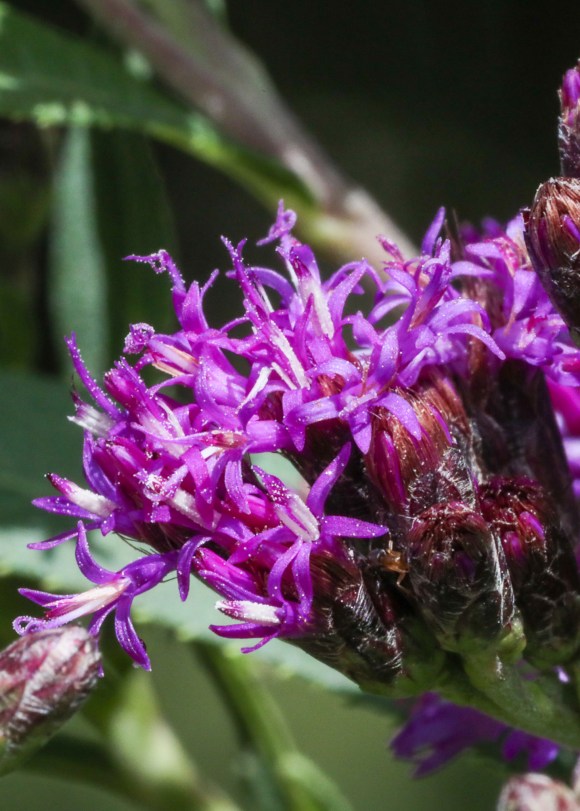
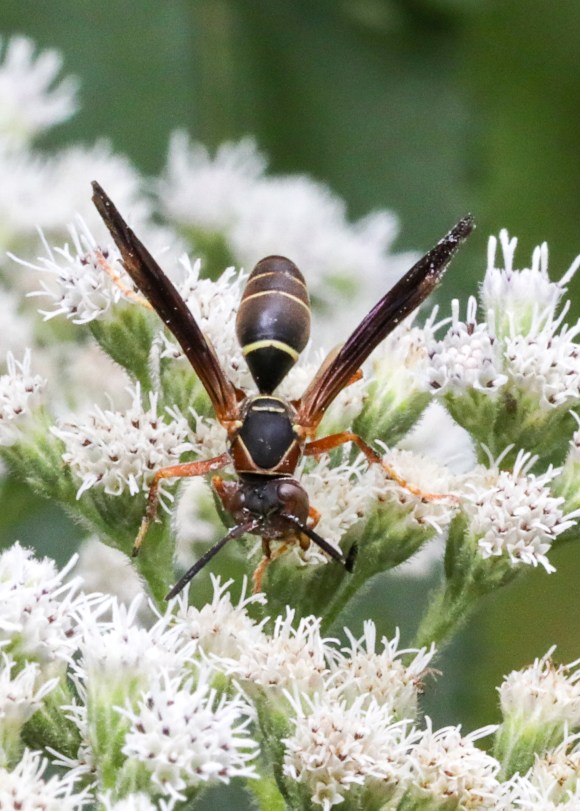
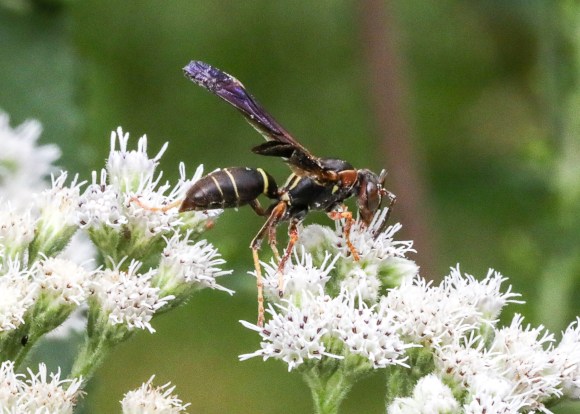
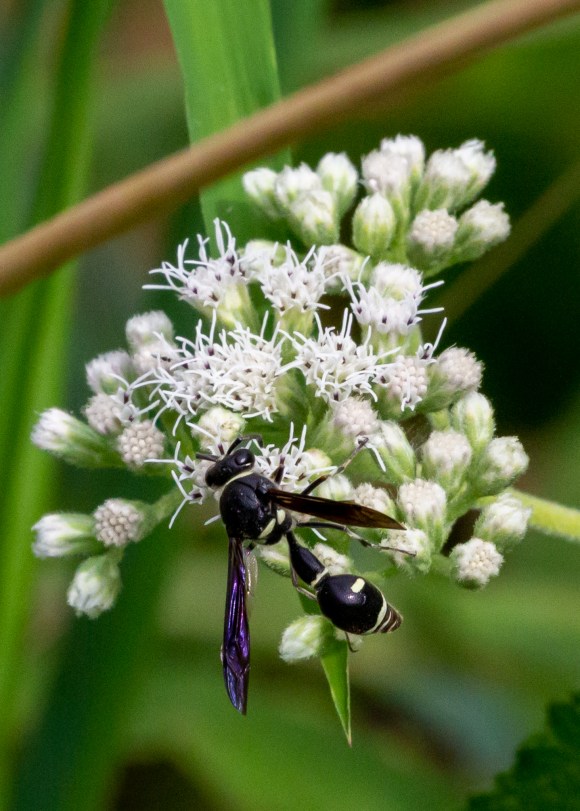
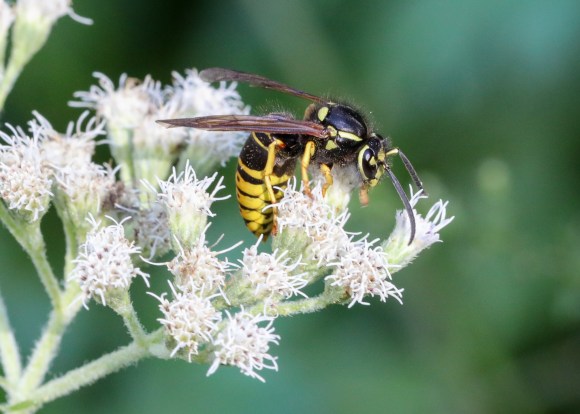
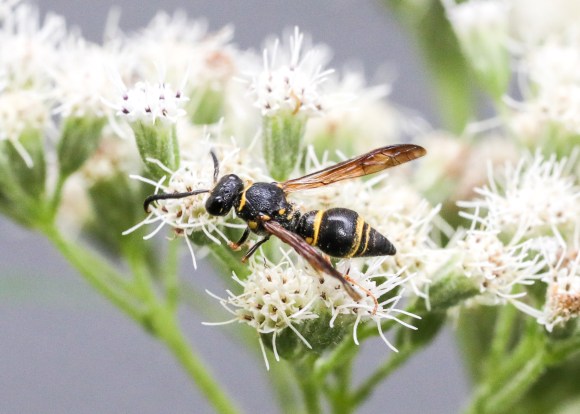
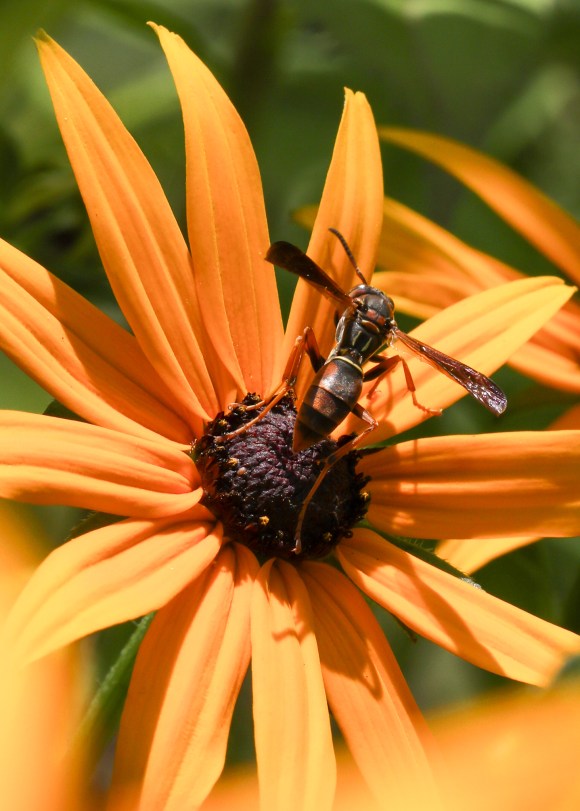
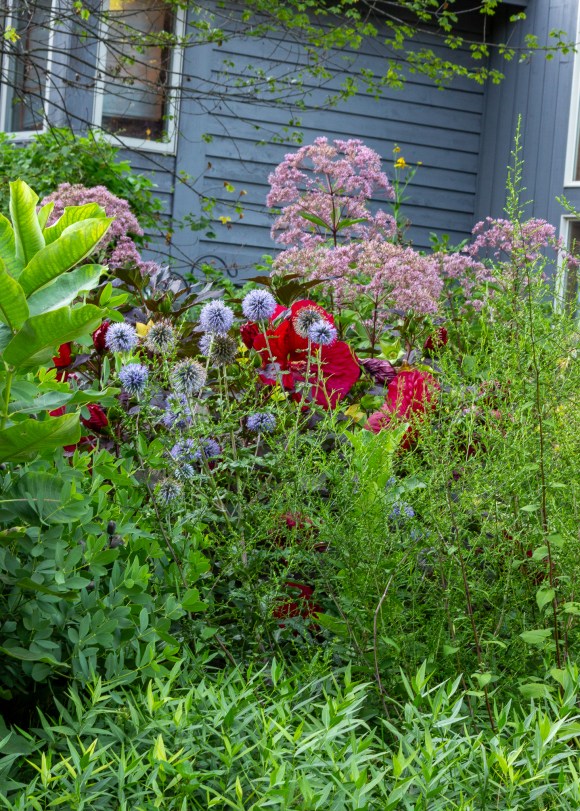
Late summer brings the furry, plum blooms of Missouri Ironweed (Vernonia missurica). These vibrant flowers draw crowds of bees, wasps, and flies. Butterflies, moths and skippers gather nectar at its flowers.
North America has several different species of Ironweed. I have Missouri Ironweed in my garden. This Ironweed is hardy from Zone 4 to 9. It grows from 3 to 6.5 feet and spreads from 3 to 4 feet. Missouri Ironweed tends to grow taller in wetter sites. 4,5,6
Vernonia missurica is a prime candidate for the June haircut. The June haircut method involve cutting a plant back by one-third to one-half at the end of June or the beginning of July. No later than July 4th in a Zone 5 garden.
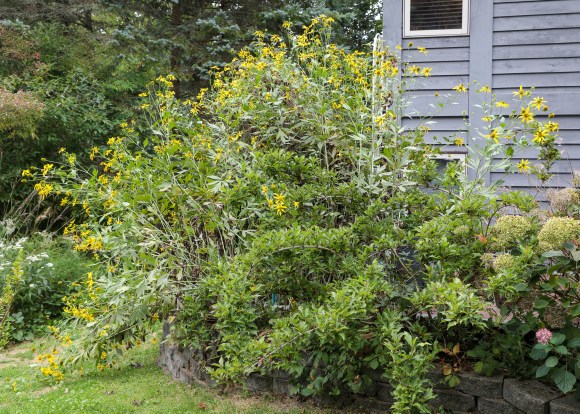
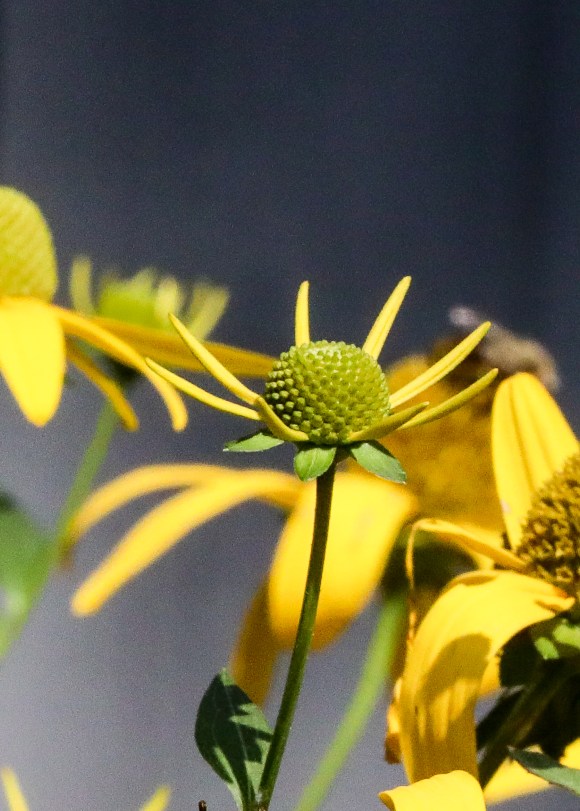
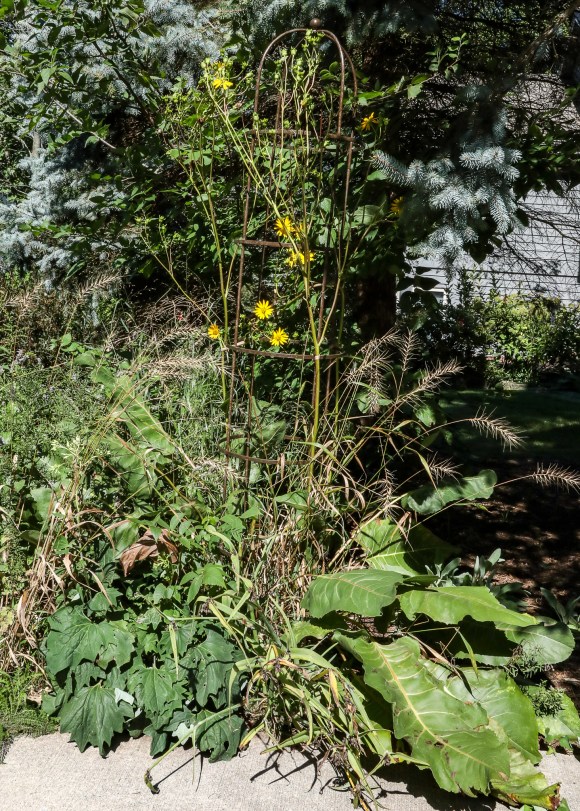
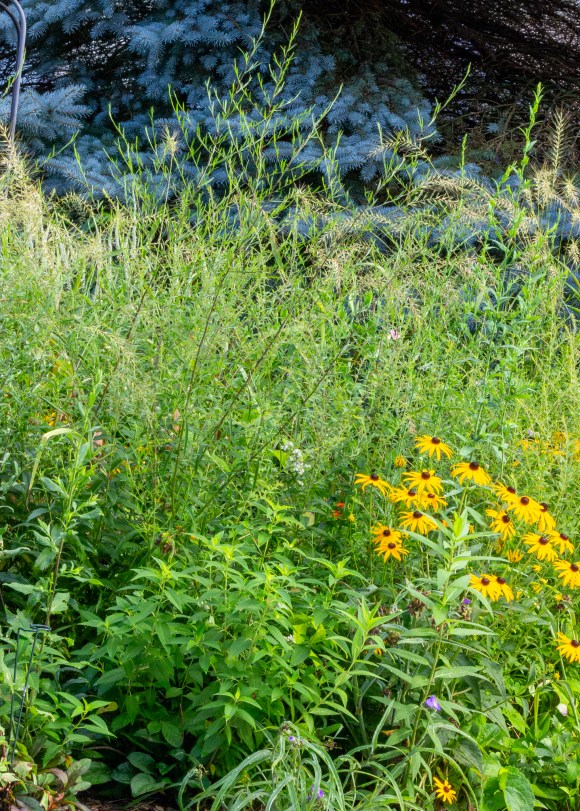
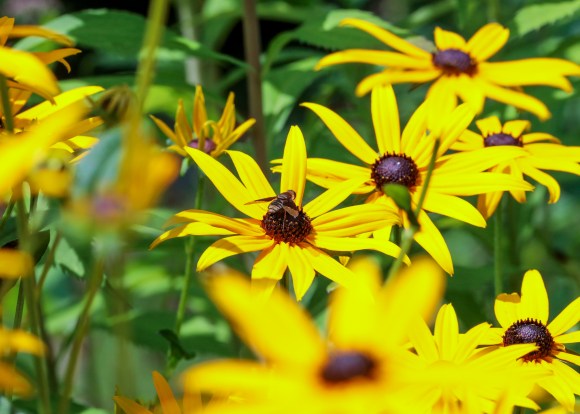
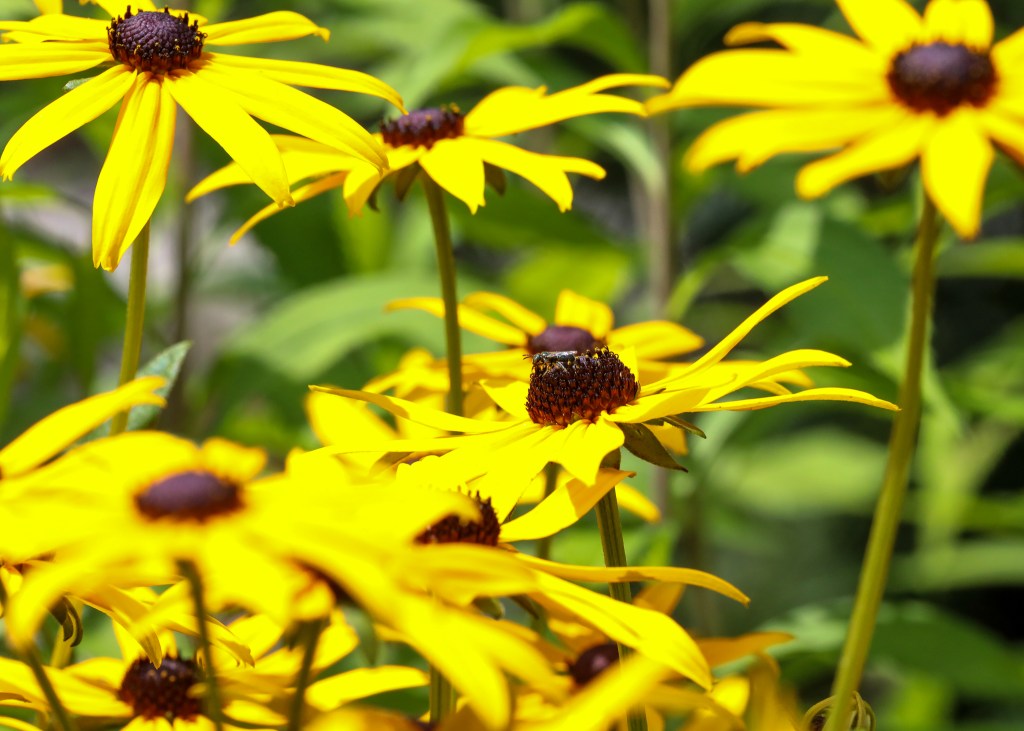
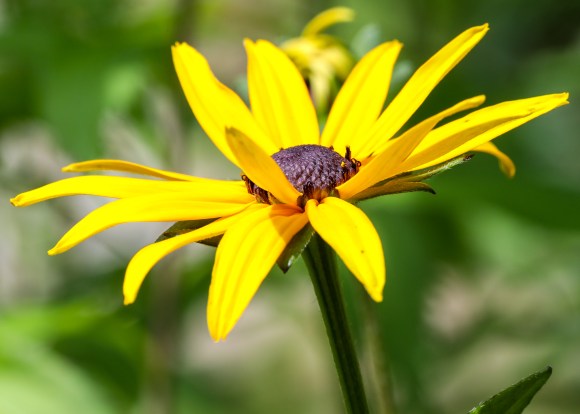
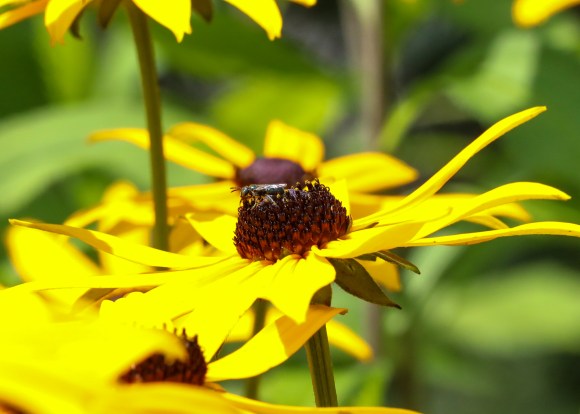
Below is a grouping of Cut-Leaf Coneflower that didn’t have a June haircut.

Several things happen after the haircut. The plant sprouts several shoots from the cut. These shoots become flowering stalks—more flowers. The plant flowers slightly later. Finally, the overall plant height is shorter. The shorter height has sturdier, stronger stems less likely to fall over.
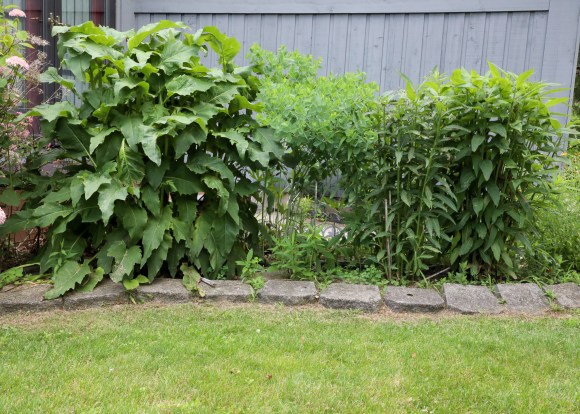
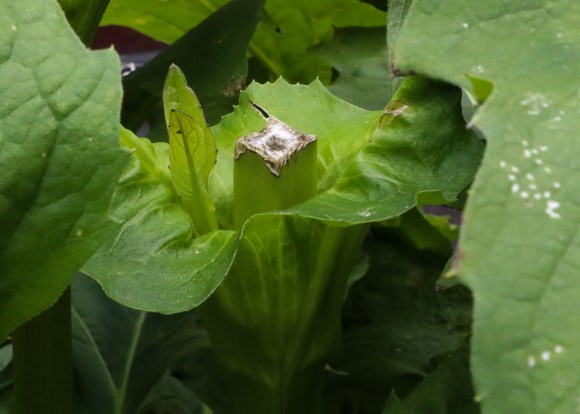
This method has made a real difference in my garden. I used to spend hours staking and caging plants in the summer and fall. Now they form beautiful, upright groupings.
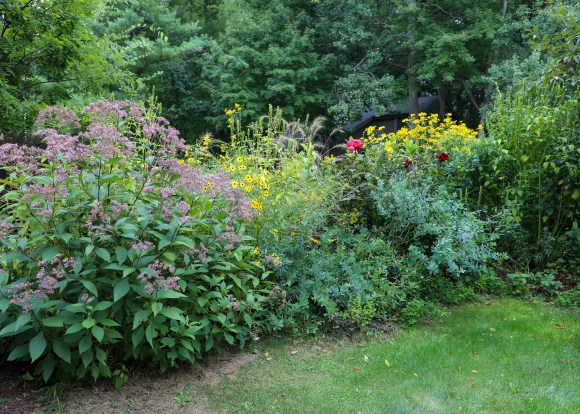
Missouri Ironweed thrives in full to part sun. It enjoys average to moist soil conditions with fertile loam. Ironweed also tolerates clay loam with grit or gravel.5
Ironweed accepts a variety of soil moistures. Vernonia missurica does well in a rain garden since it tolerates flooding. It also survives short periods of drought so can live in a drier location.5,6
Missouri Ironweed is another native with rhizomatous roots. They are densely fibrous. In time, Vernonia missurica forms small colonies.5
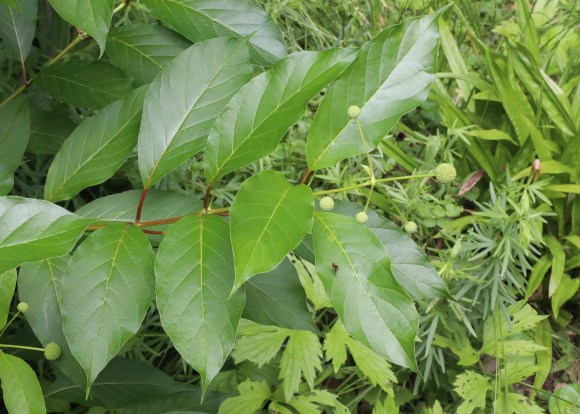
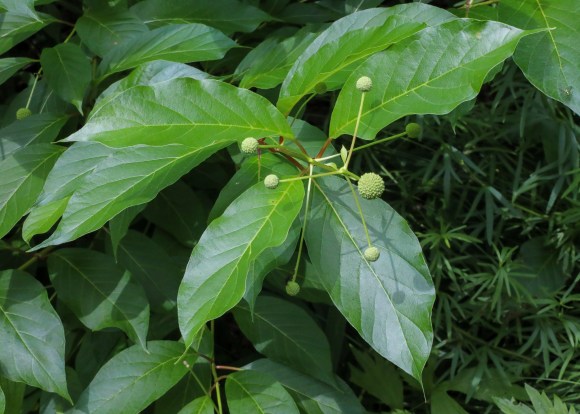
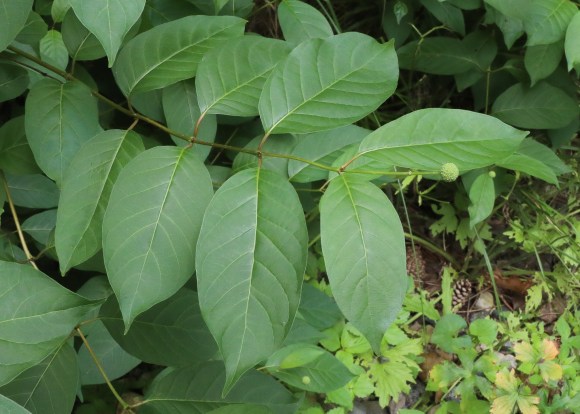
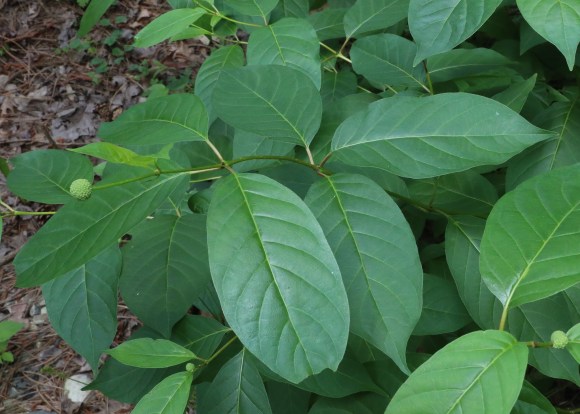
Missouri Ironweed’s dark green leaves grow alternately on its stem. The lanceolate or ovate foliate can grow up to 7 inches long and 2 inches wide. The lower side is paler with dense white, longish hairs. Conveniently, these leaves are bitter tasting. Livestock and other herbivores avoid eating it.5
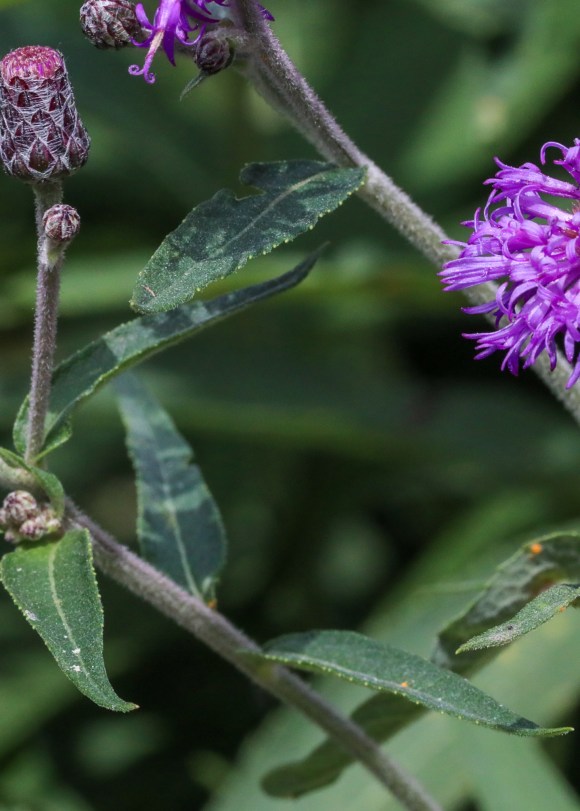
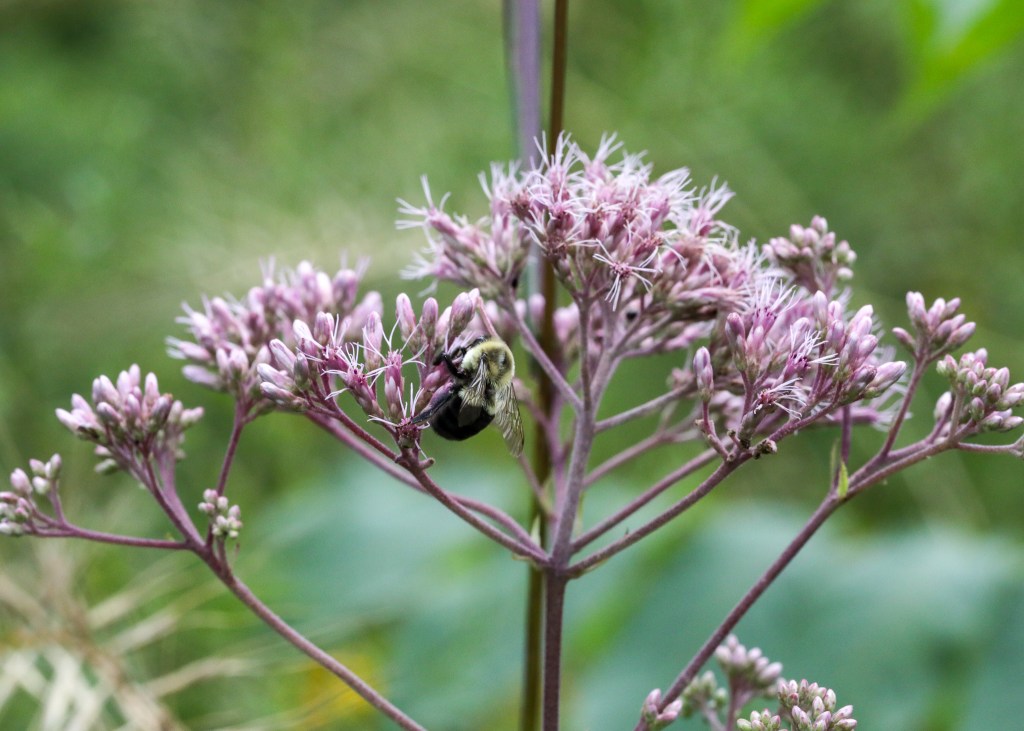
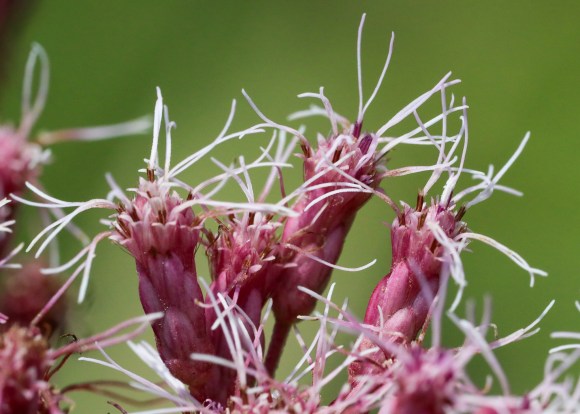
The magenta/purple flowers bloom at the top of the plant. The buds form a corymb of many blossoms 6 to 16 inches across. A corymb is a flat-topped or domed cluster of flowers.4,5,6,9
Vernonia missurica’s blossoms don’t have ray florets. This means no petals. Like Sweet Joe-Pye Weed (Eutrochium purpureum, https://wildthingsinthegarden.wordpress.com/wp-admin/post.php?post=2170&action=edit) and Boneset (Eupatorium perfoliatum, https://wildthingsinthe.garden/2025/05/30/a-white-frilly-flower/), these flowers have a fuzzy appearance. 30 to 60 disk florets make-up each bloom.4,5,6,9

Missouri Ironweed flowers in late summer. The ½ to ¾ inch blooms usually open over a month. Blossoms are usually magenta to purple but, rarely, white. 4,5,6,9
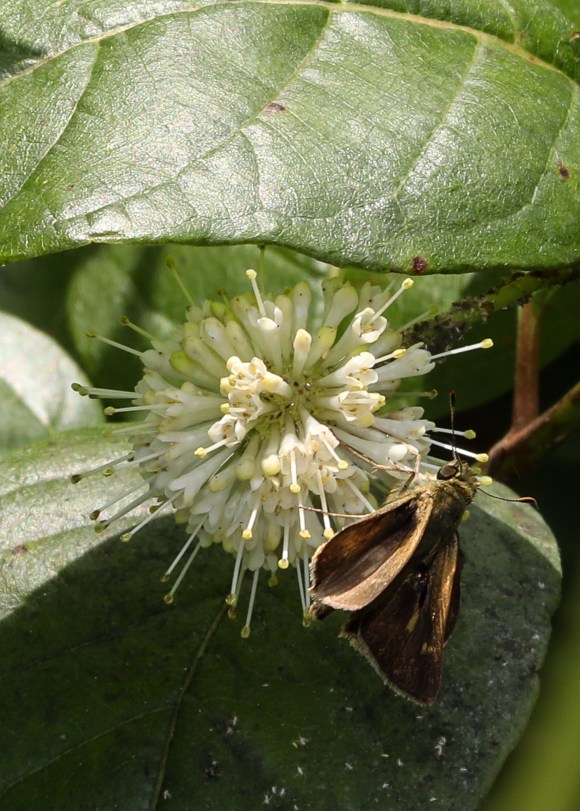
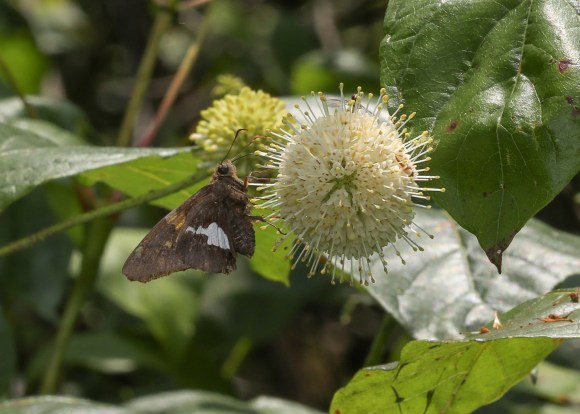
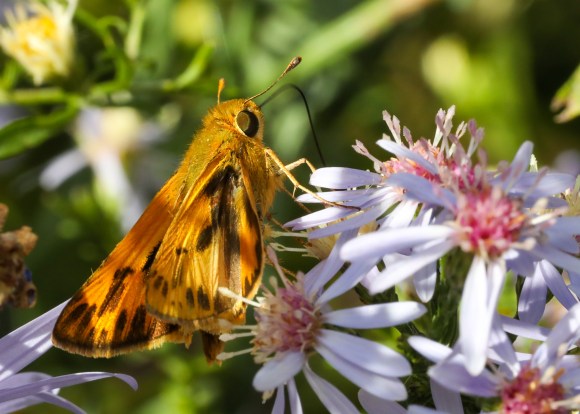
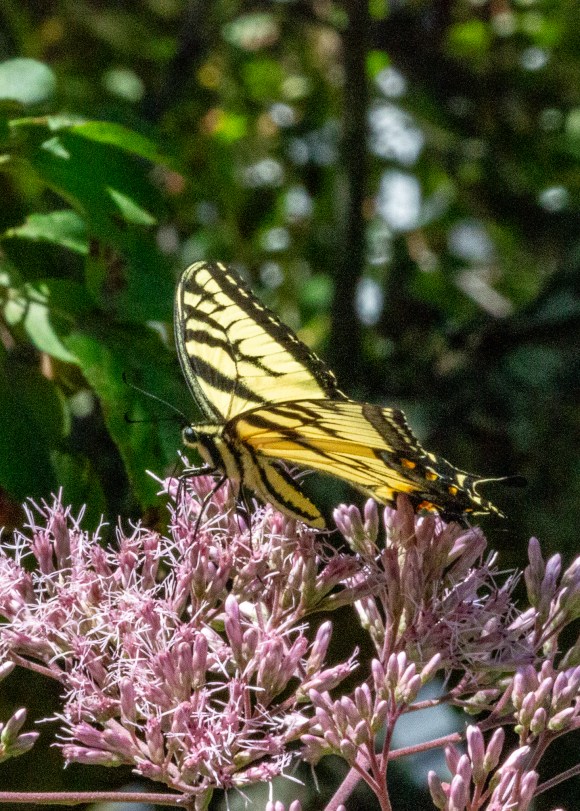
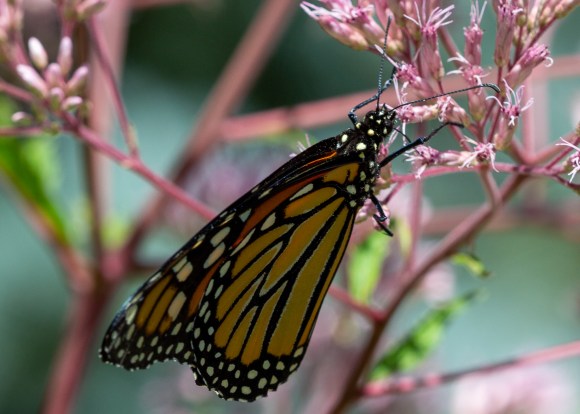
Late season pollinators and beneficial insects all harvest resources from Vernonia missurica. Butterflies, moths and skippers gather nectar from the blooms.
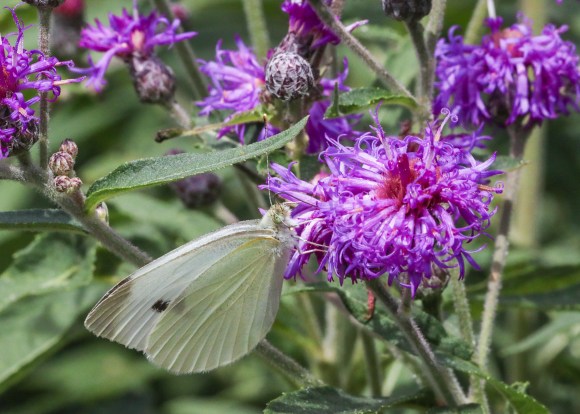
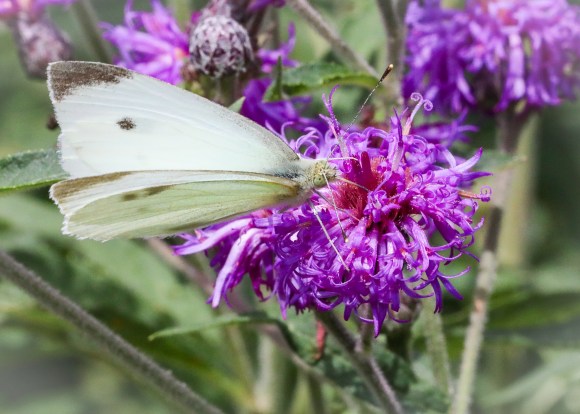
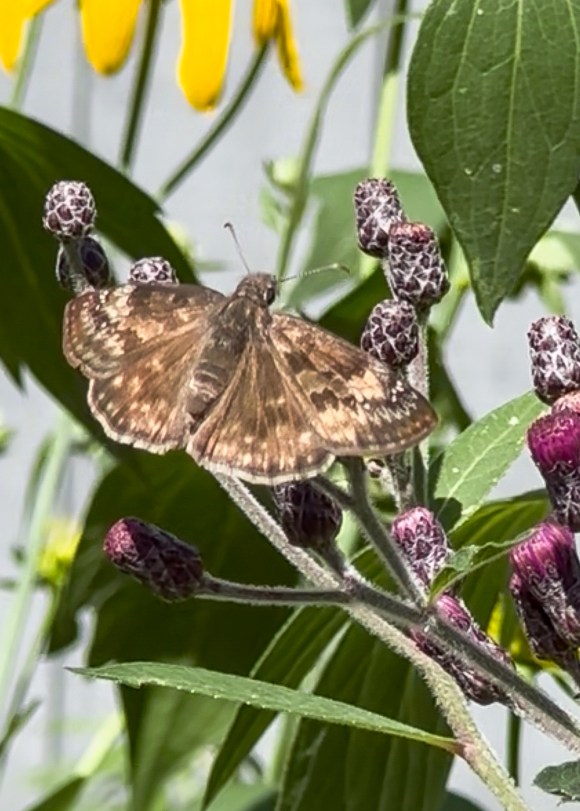
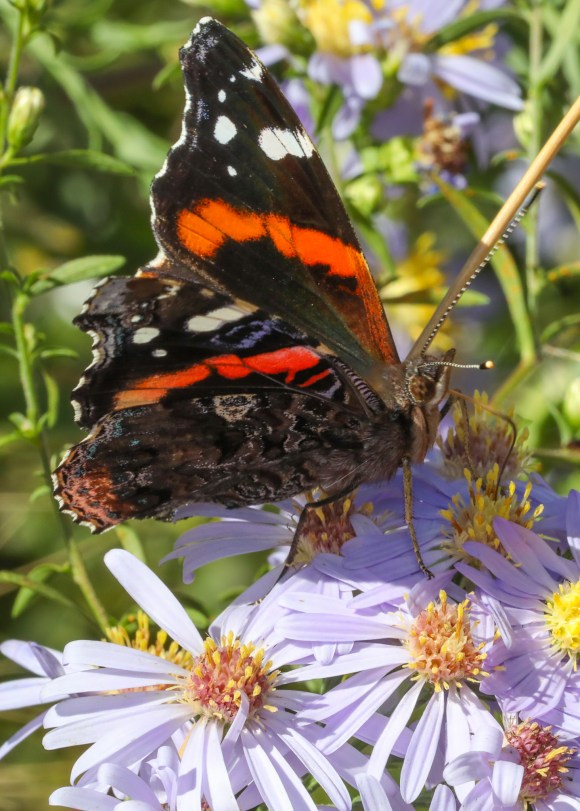
Missouri Ironweed serves as a larval host for the American Painted Lady Butterfly (Vanessa virginiensis).3,4,5,6
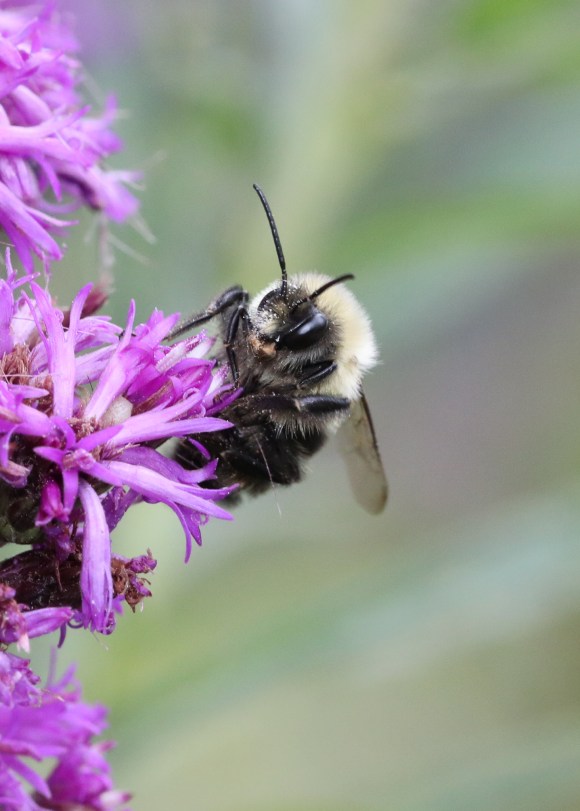
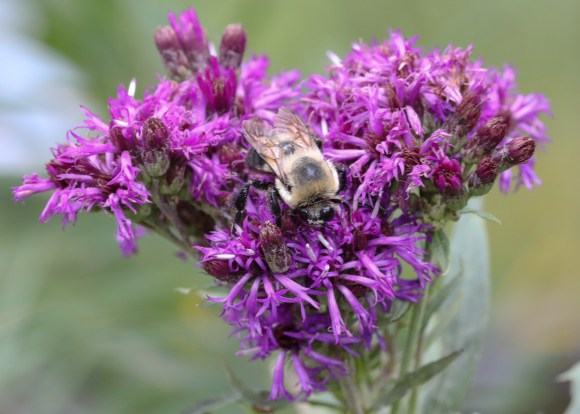
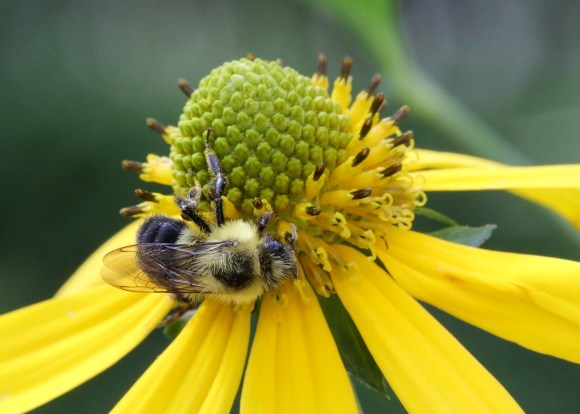
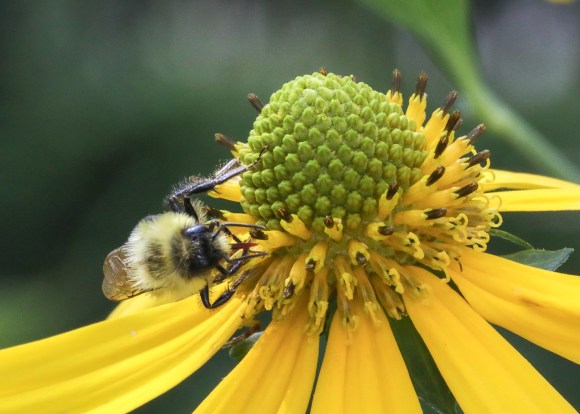
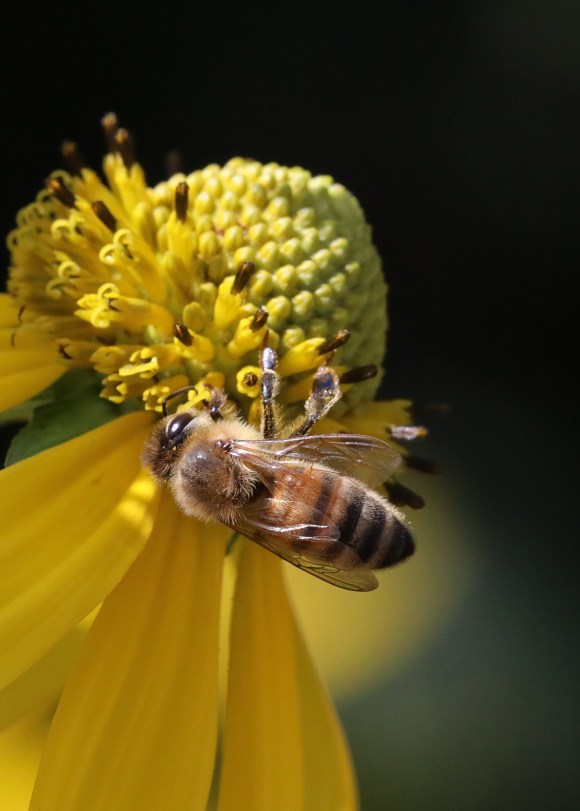
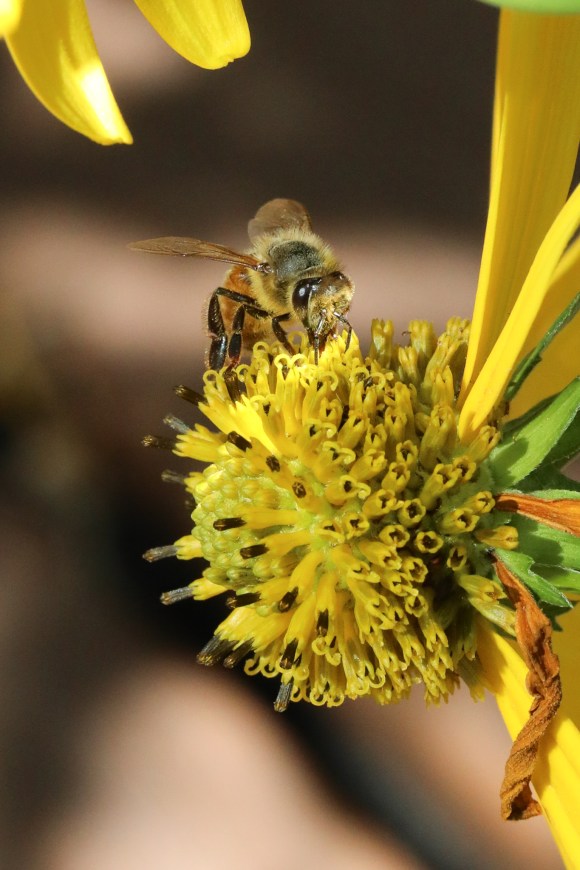
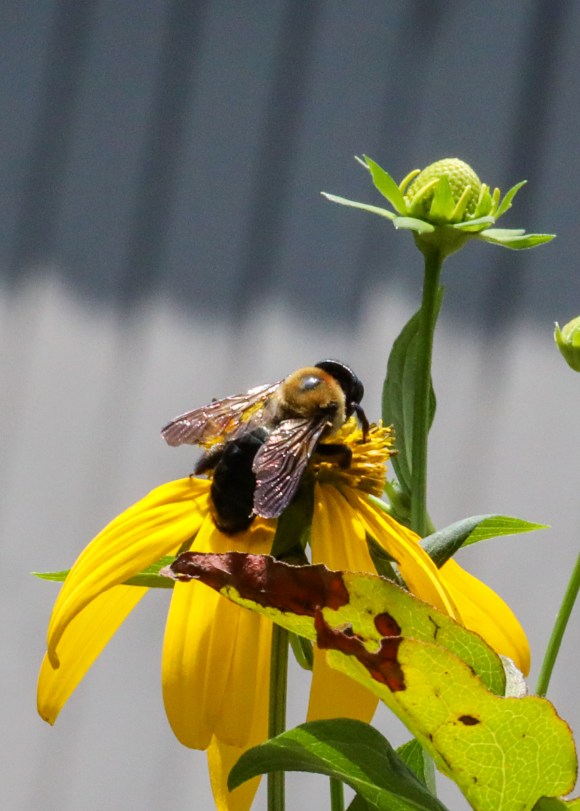
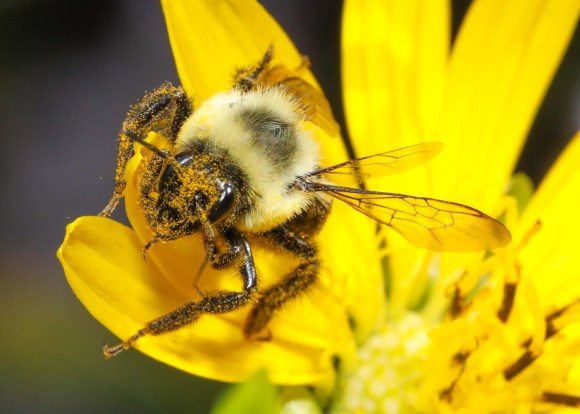
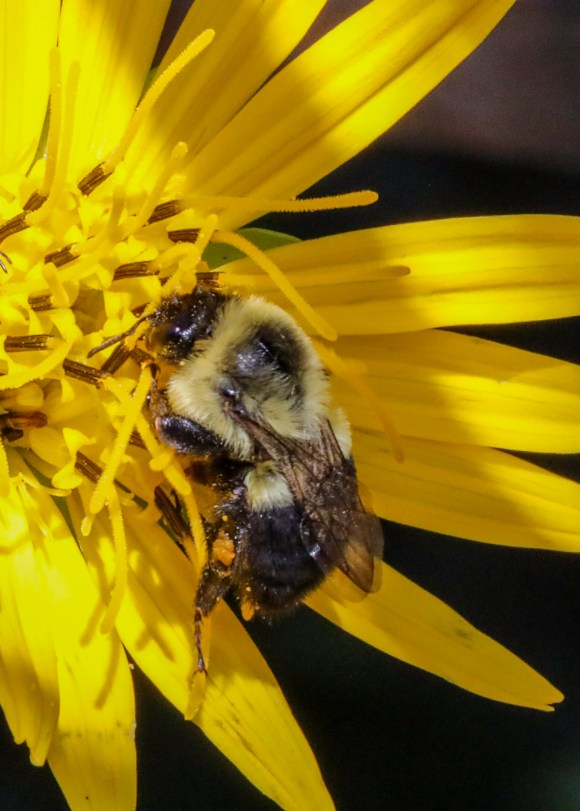
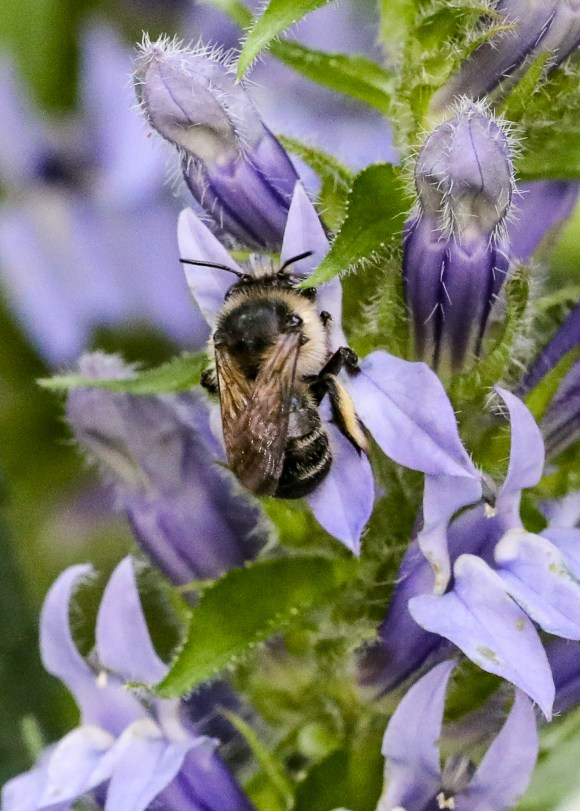
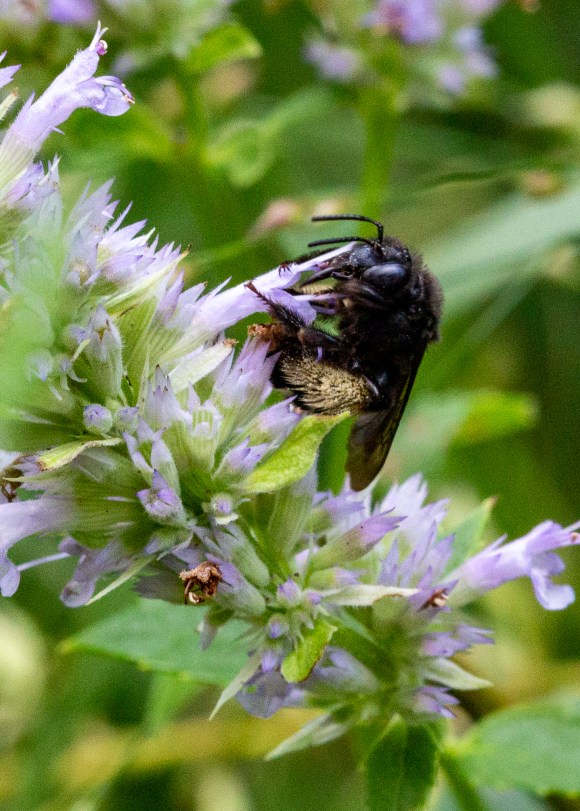
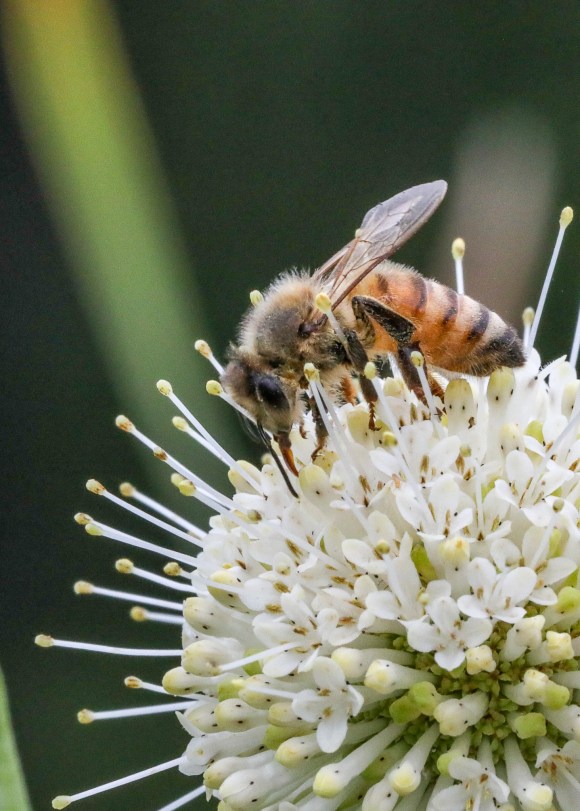
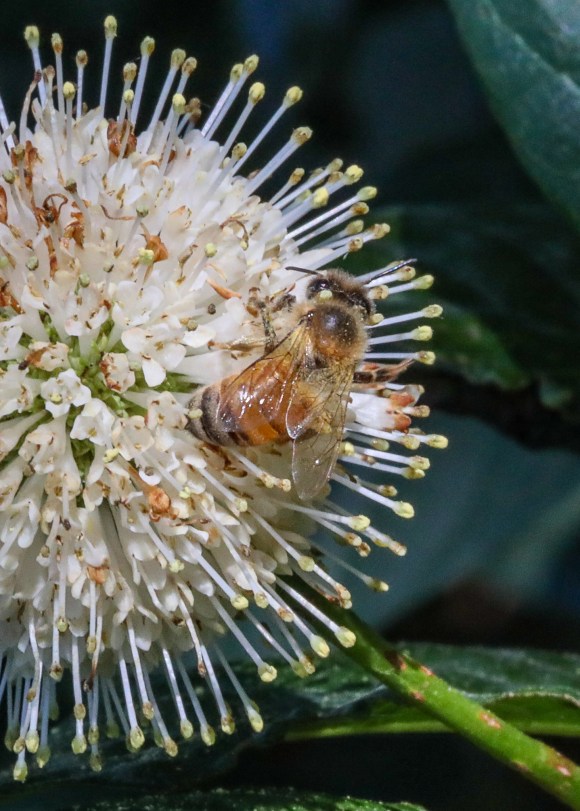
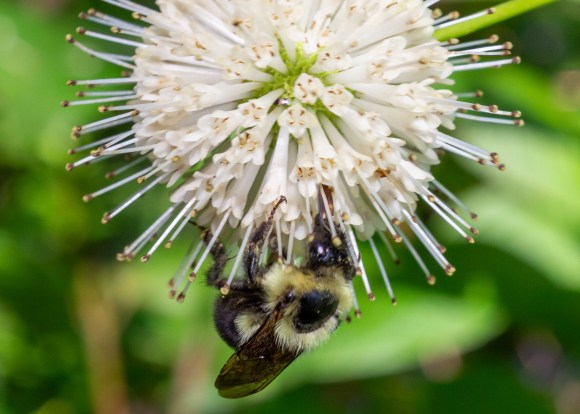
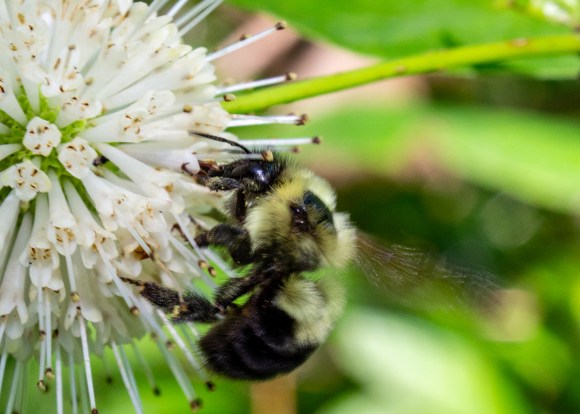
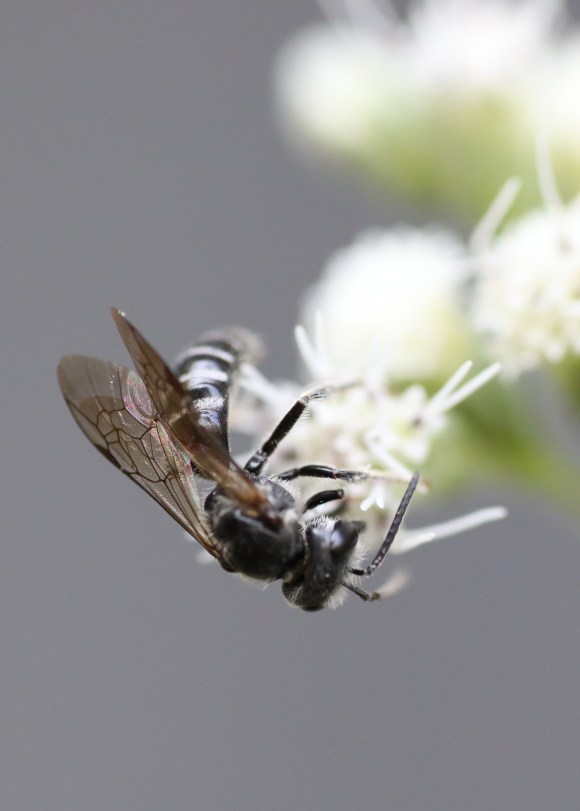
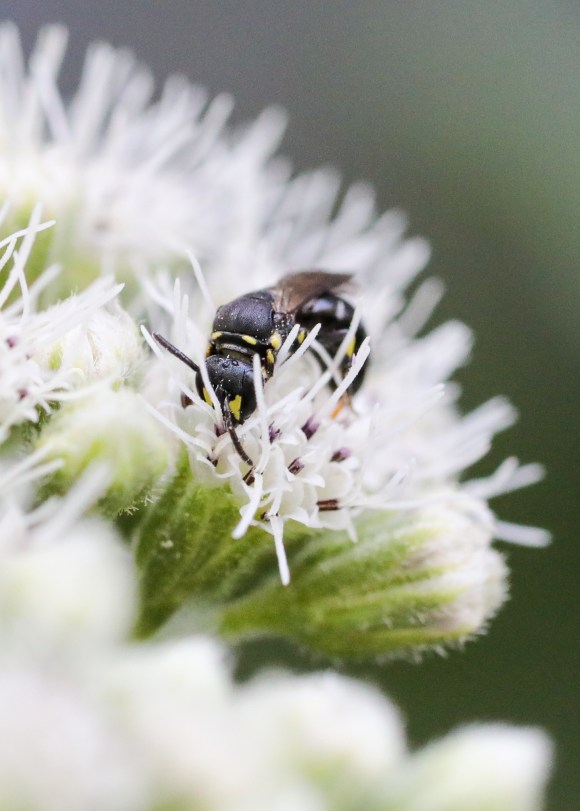
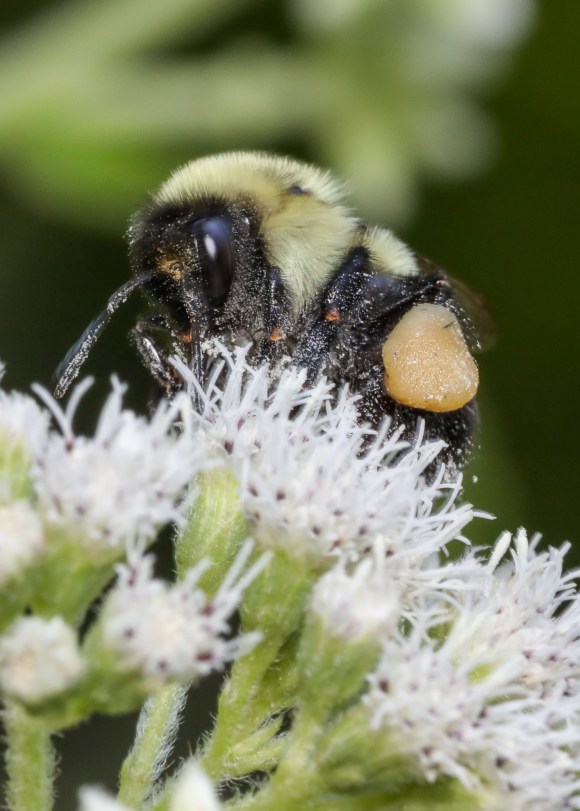
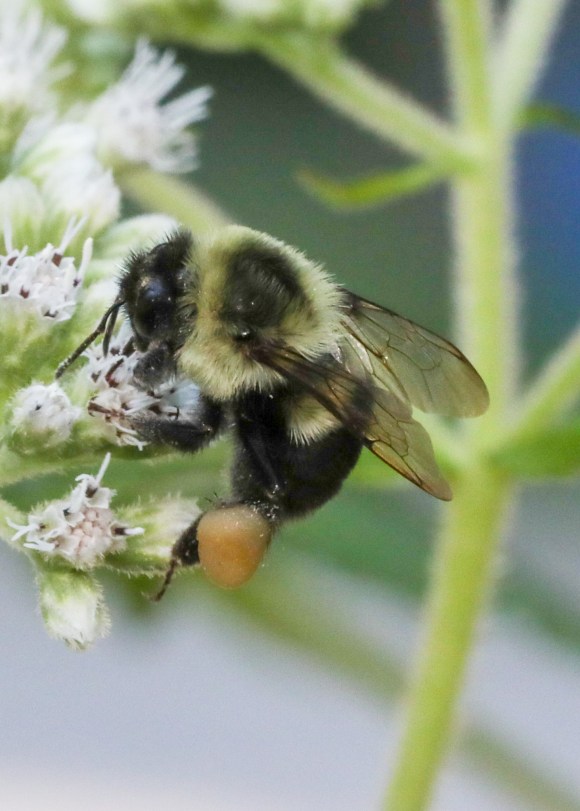
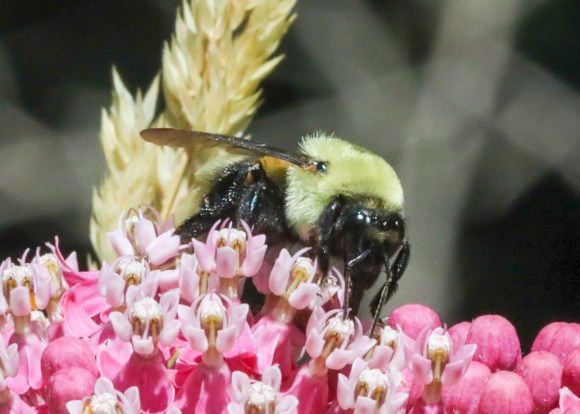
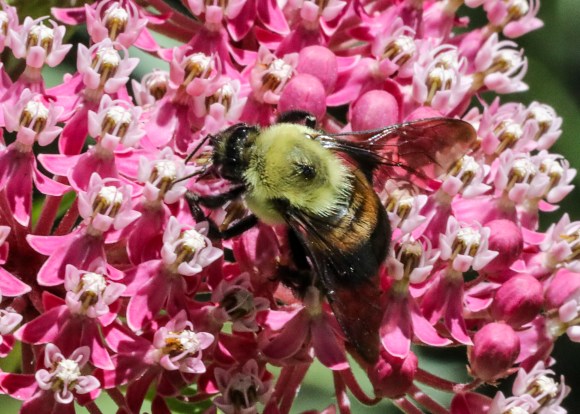
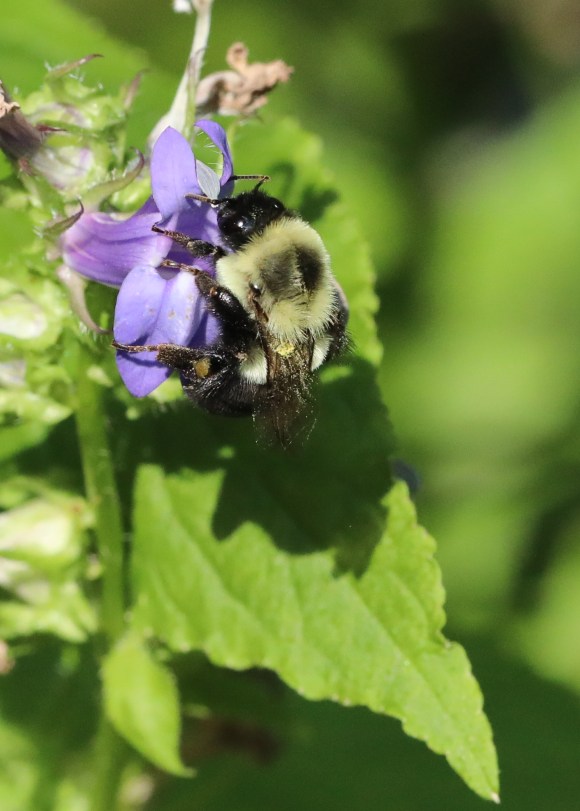
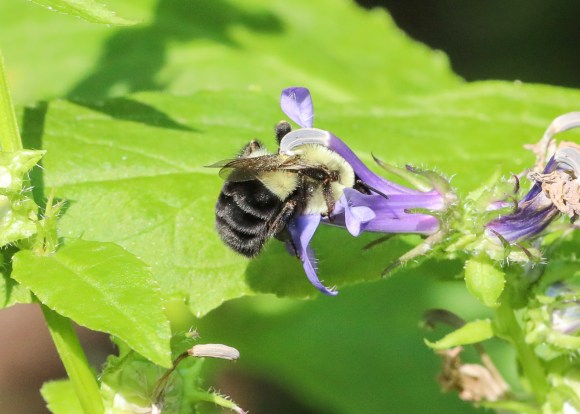
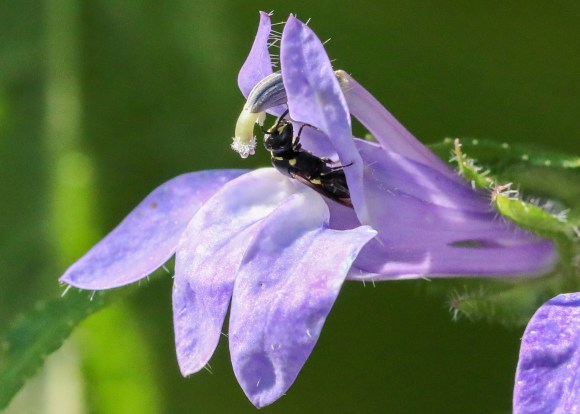
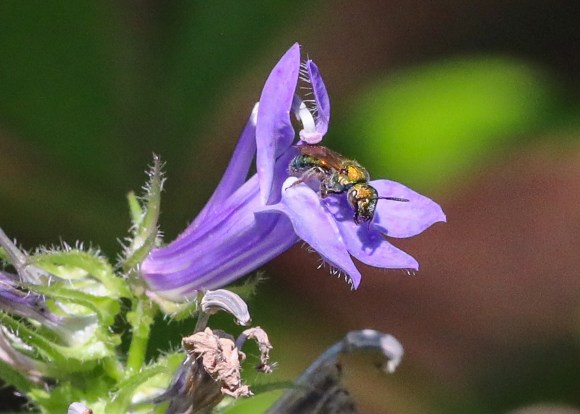
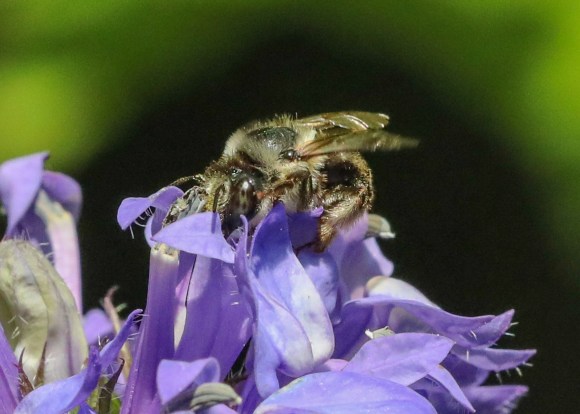
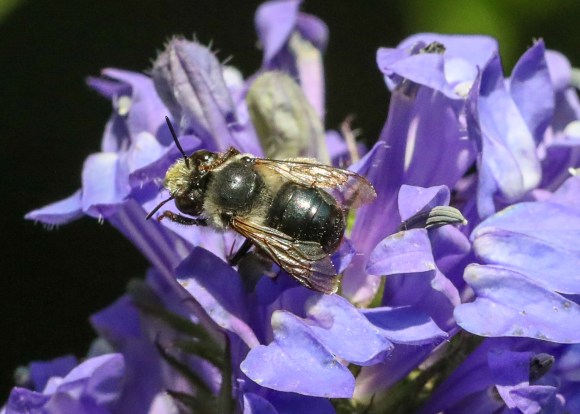
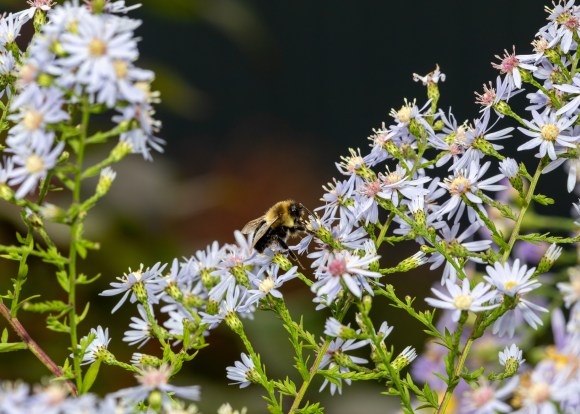
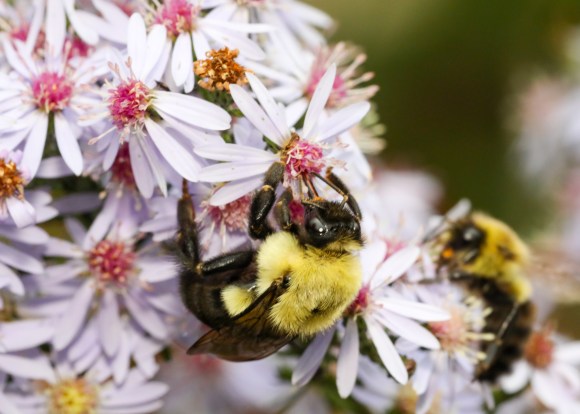
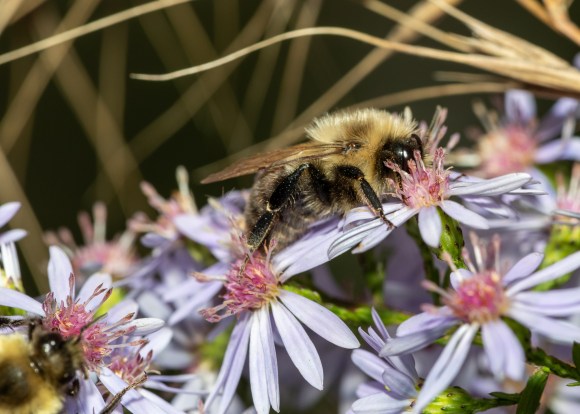
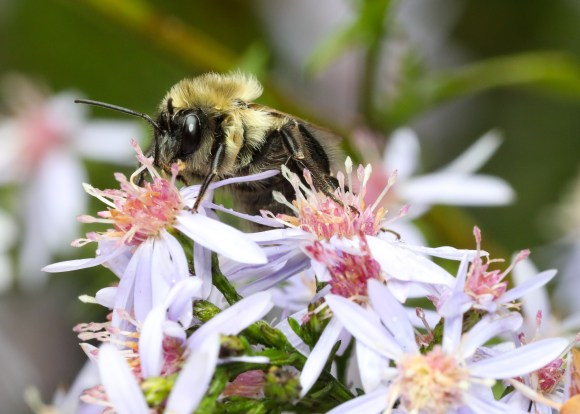
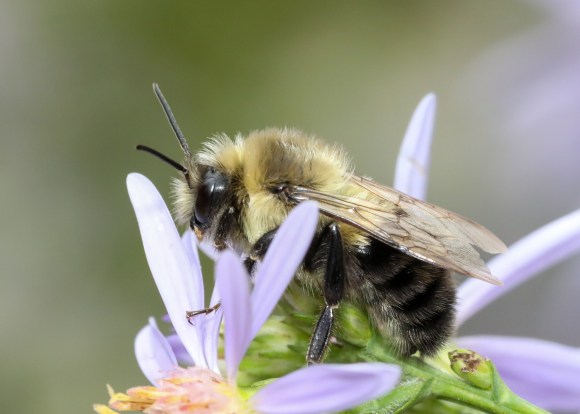
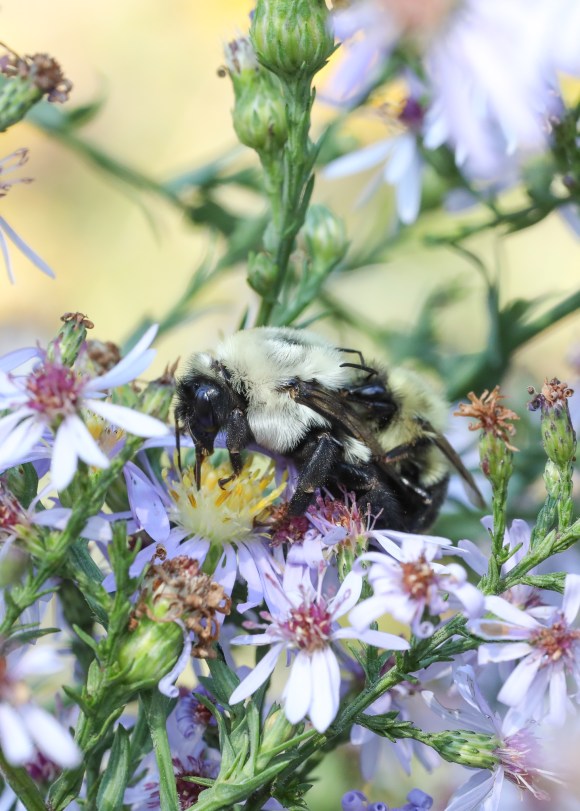
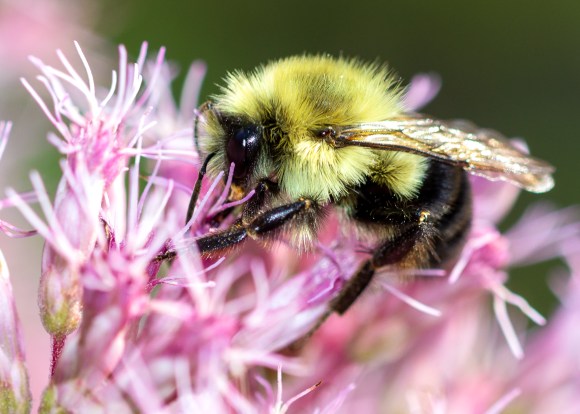
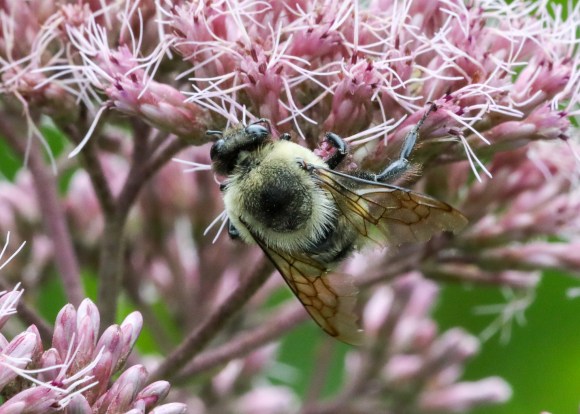
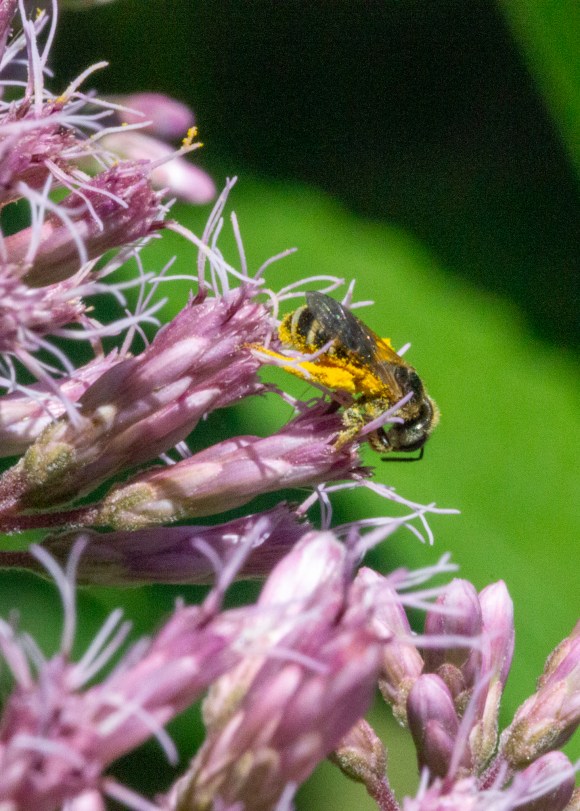
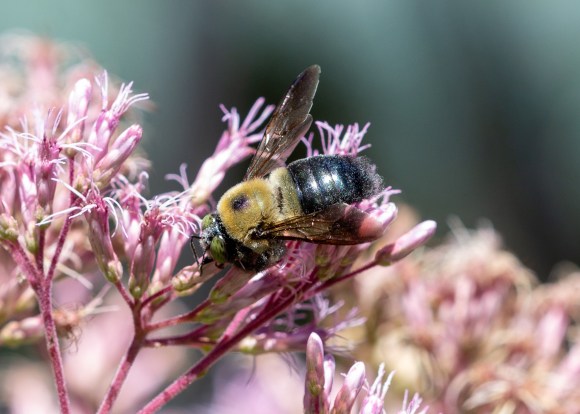
Bees gather pollen and nectar from Ironweed. These bee visitors include Bumblebees (Bombus spp.),

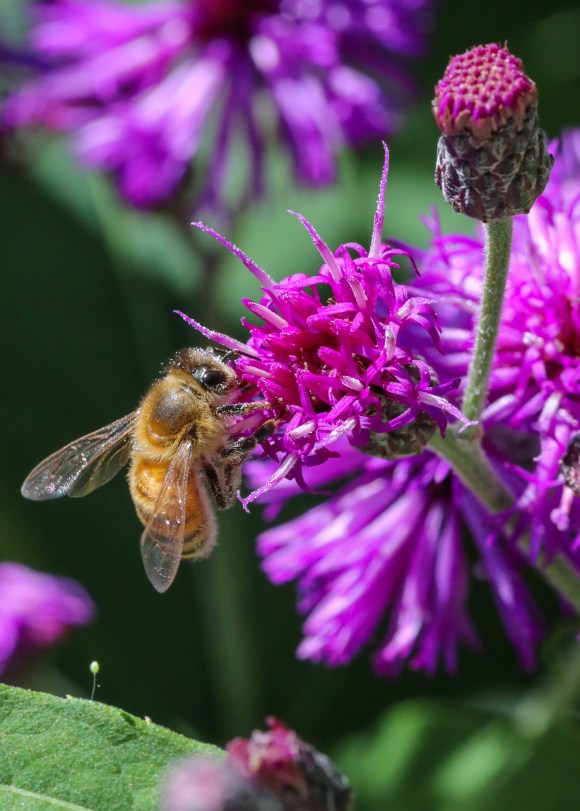
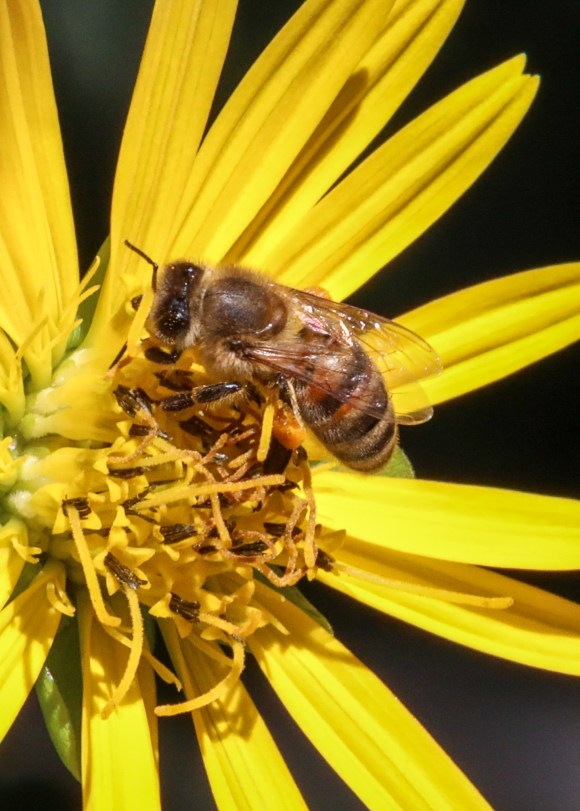
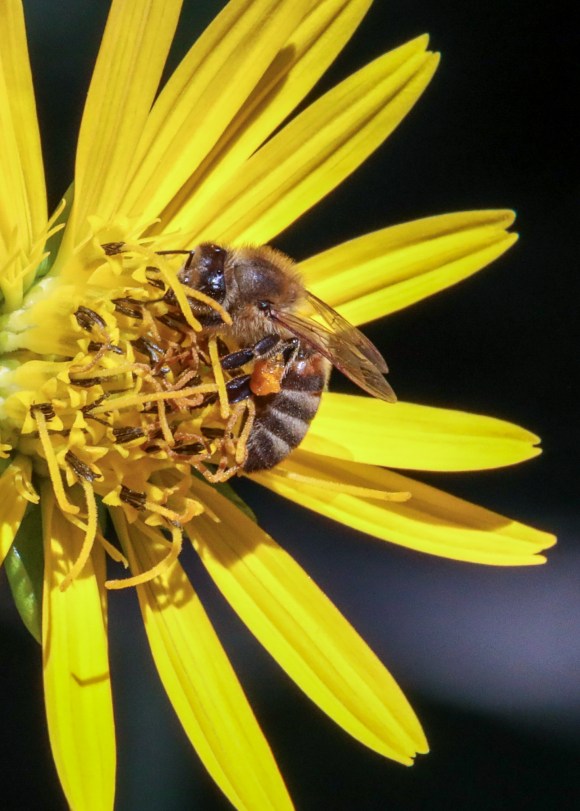
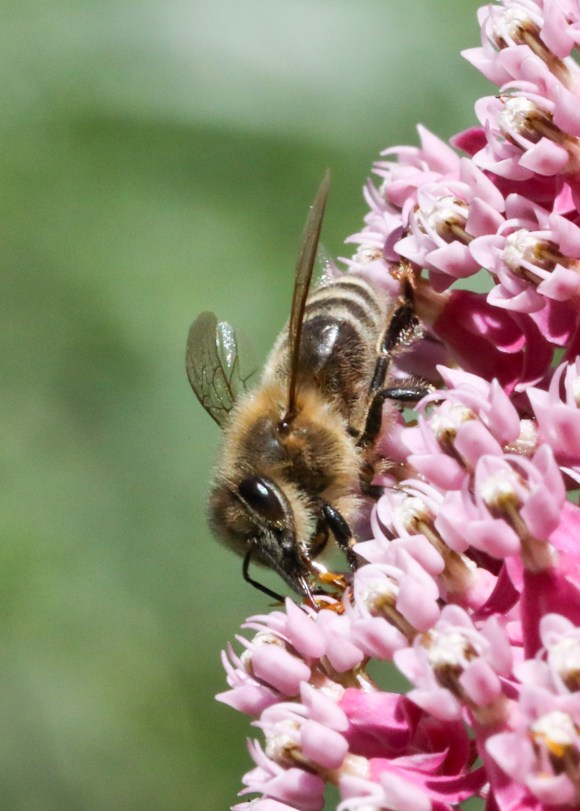
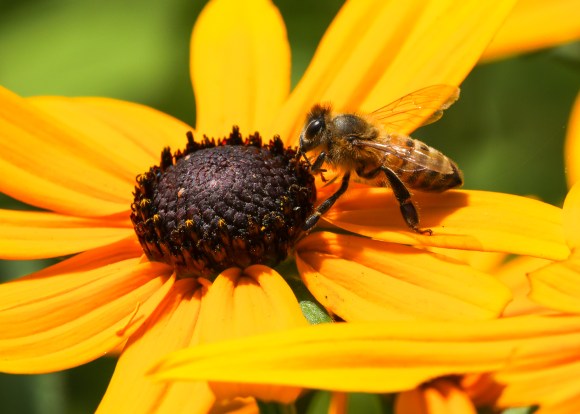
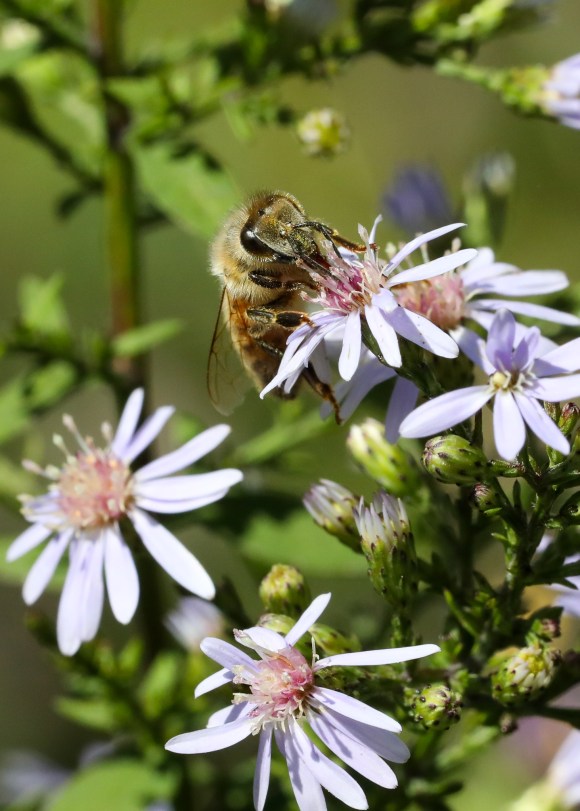
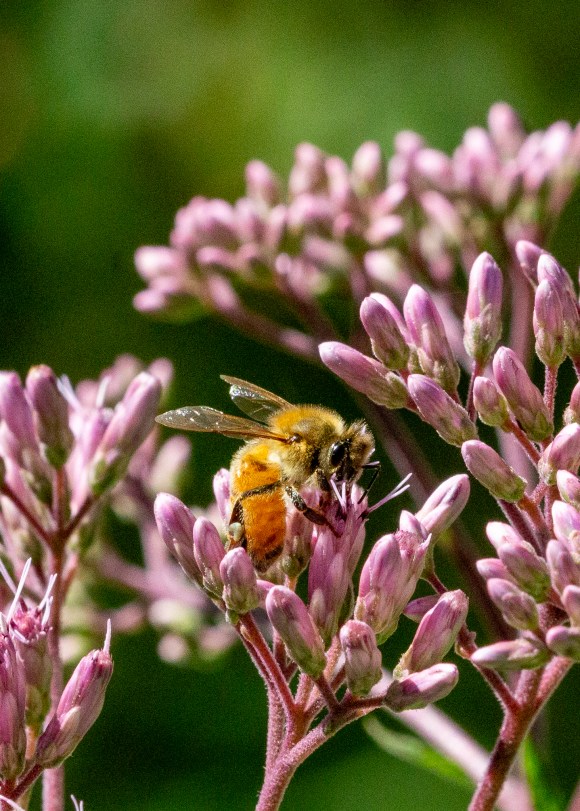
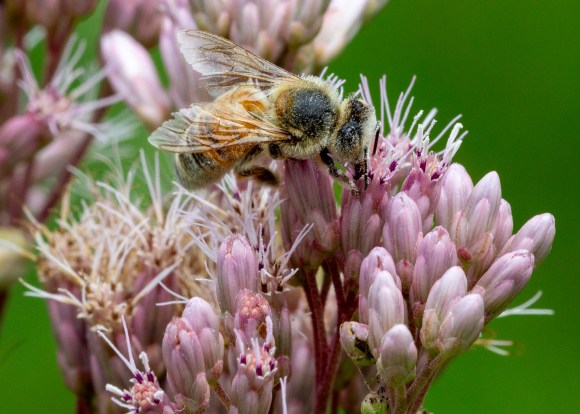
Honeybees (Apis spp.),
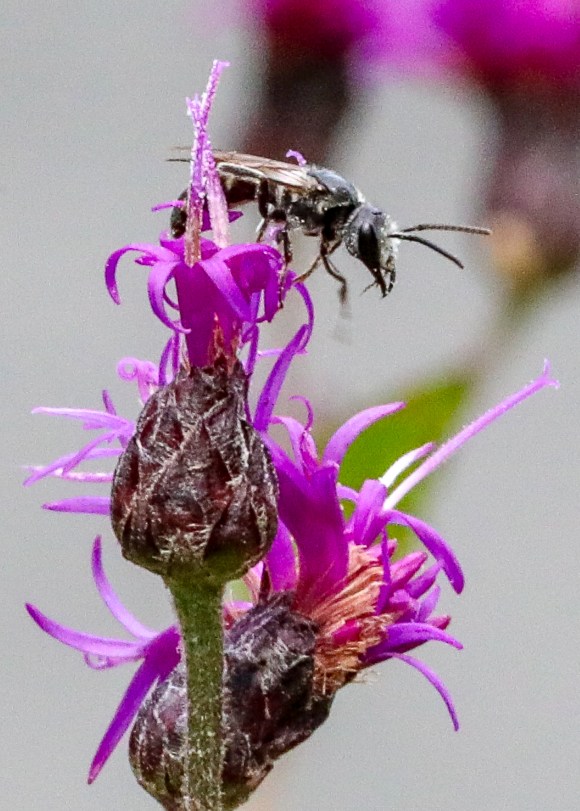
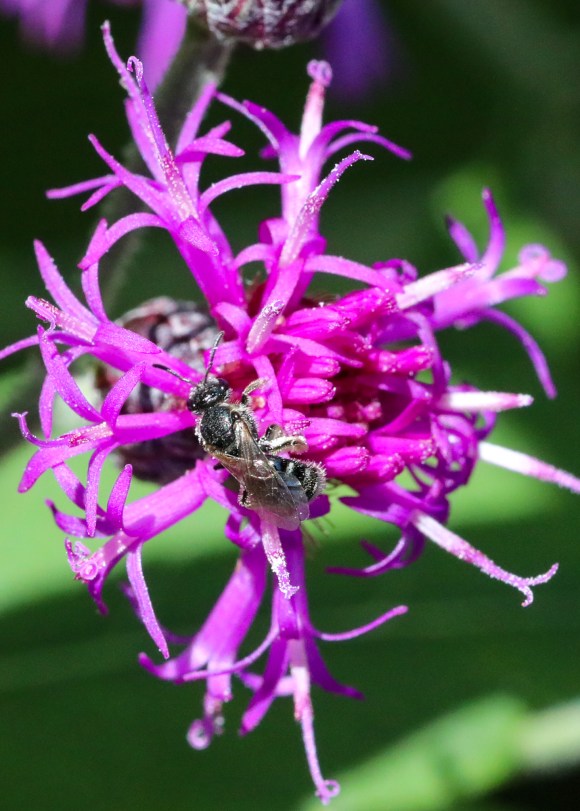
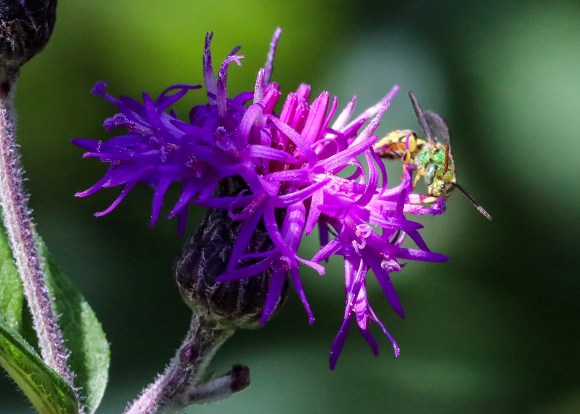
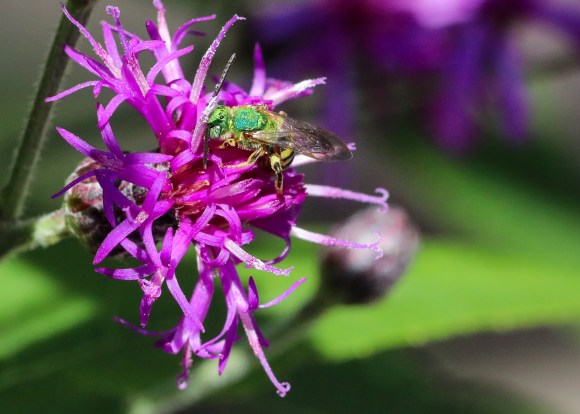
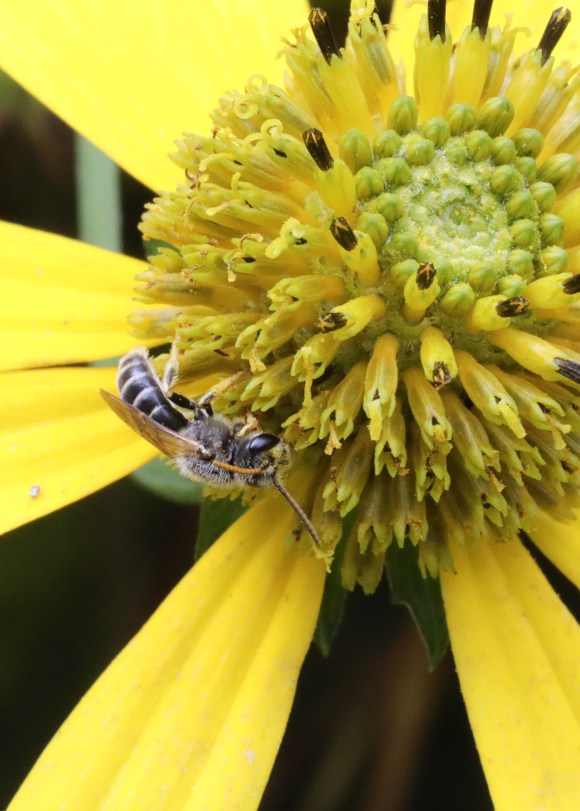
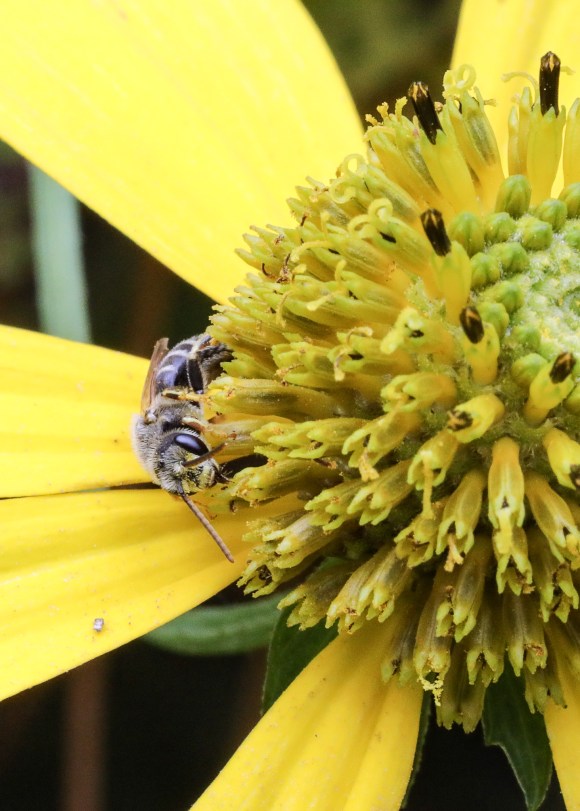
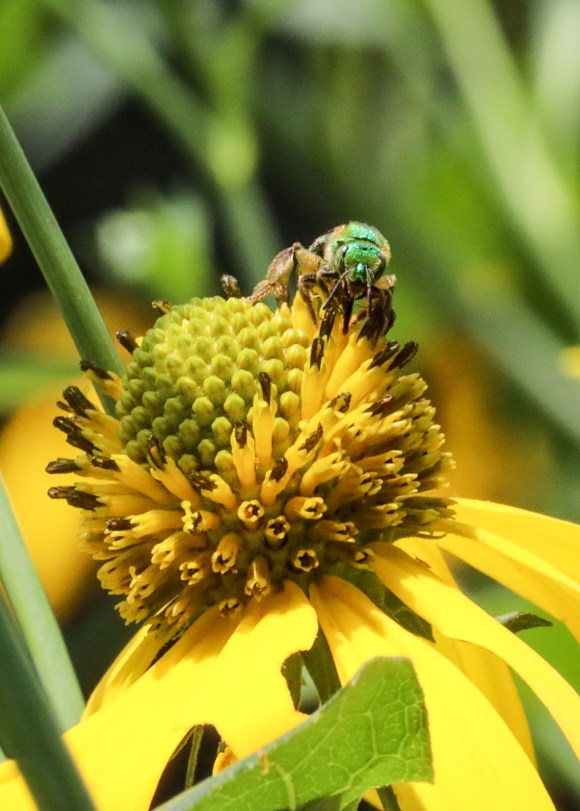
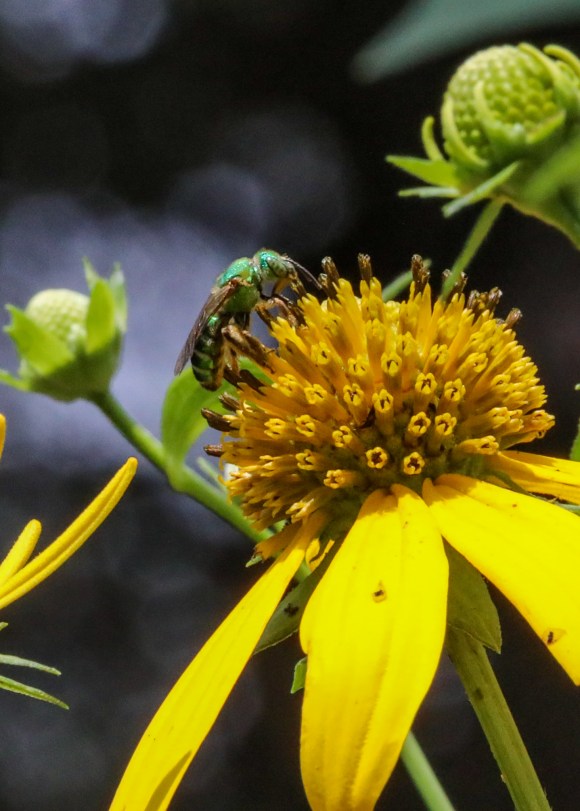
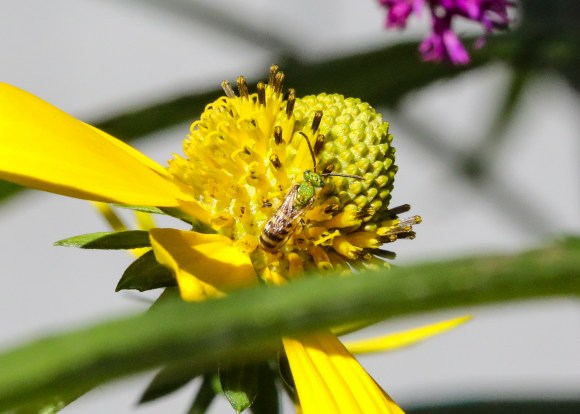
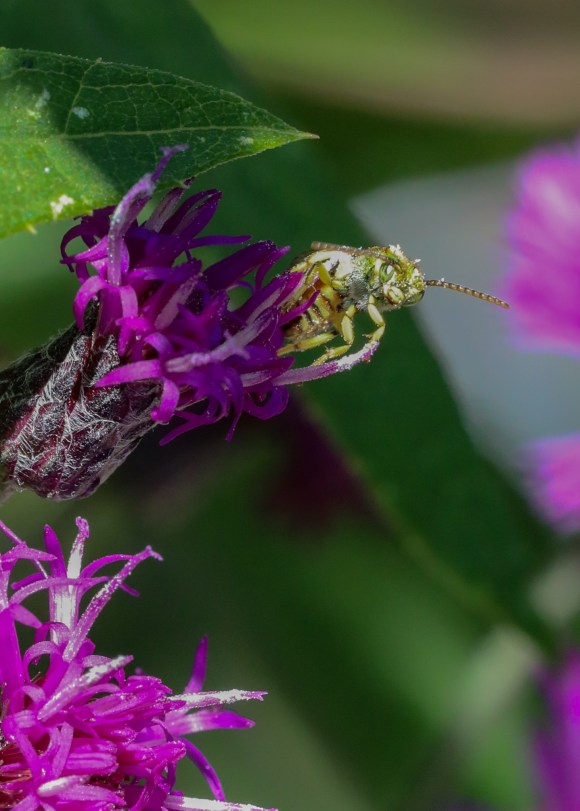
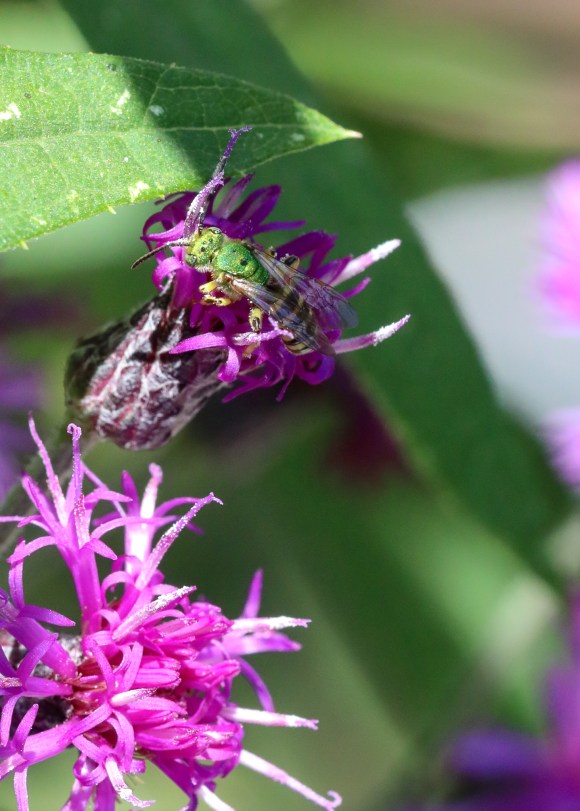
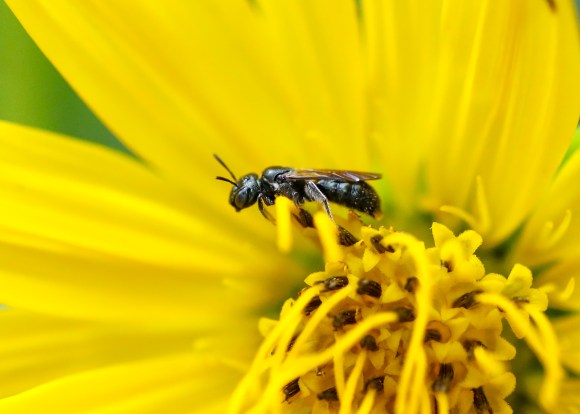
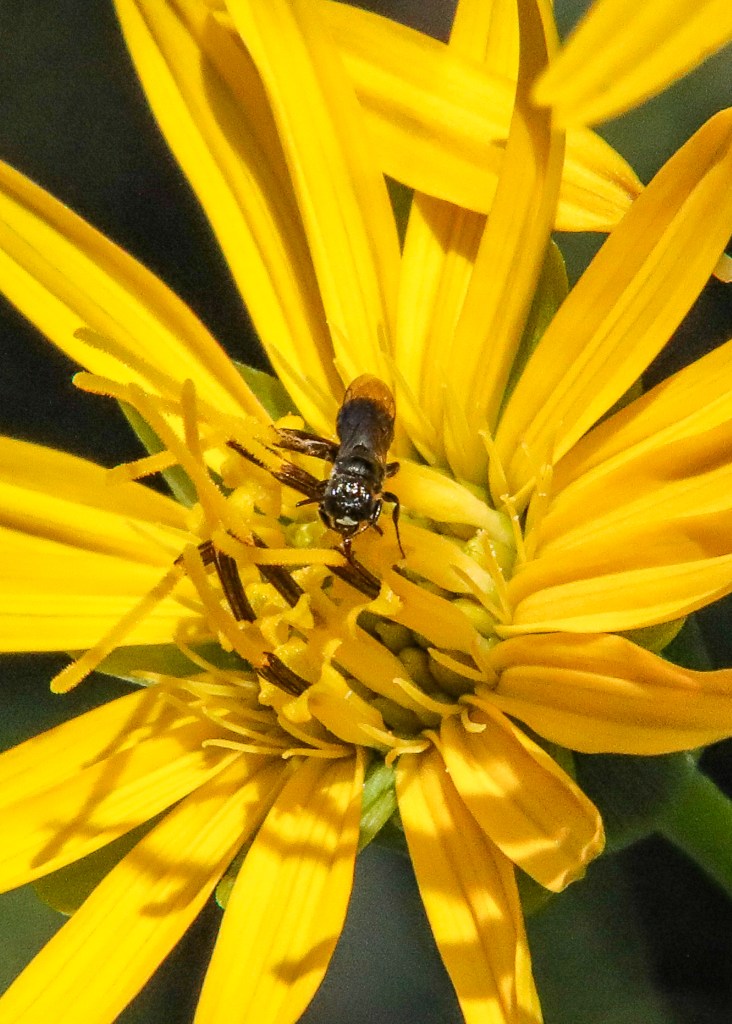
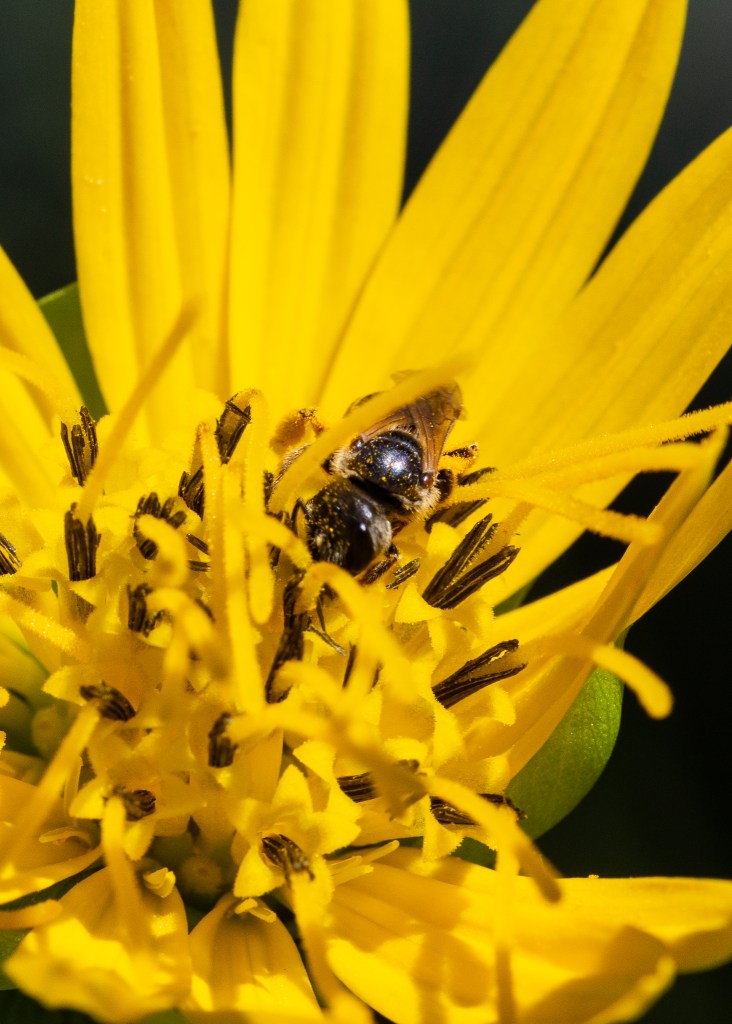
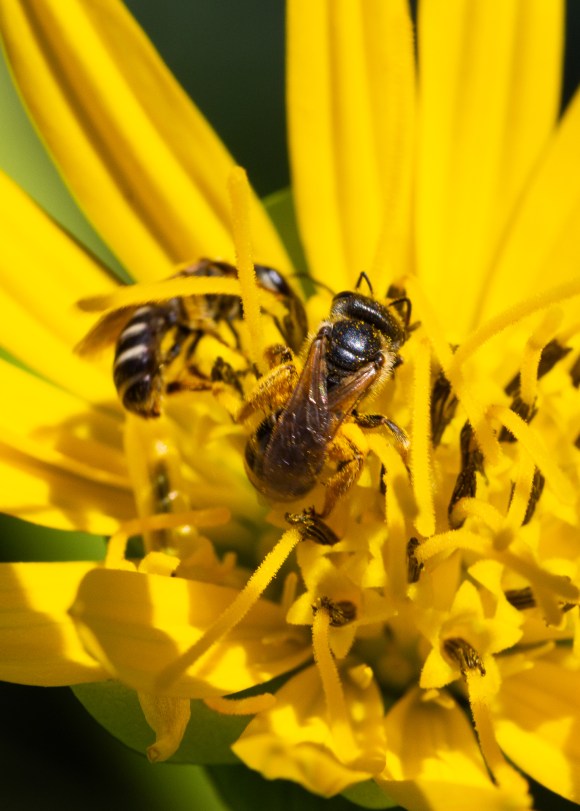
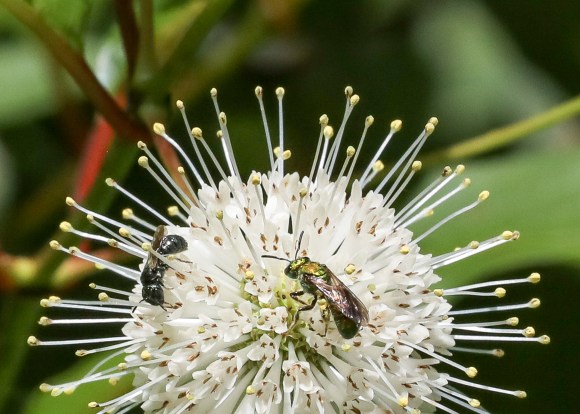
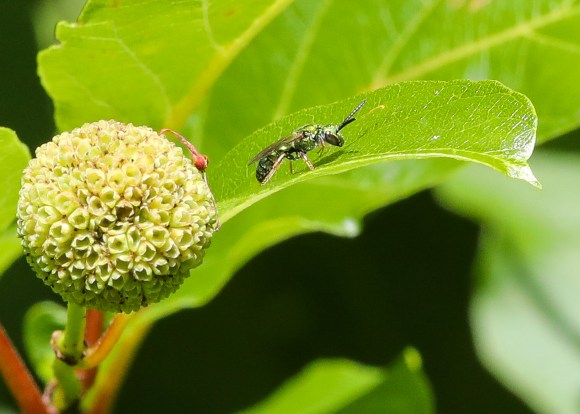
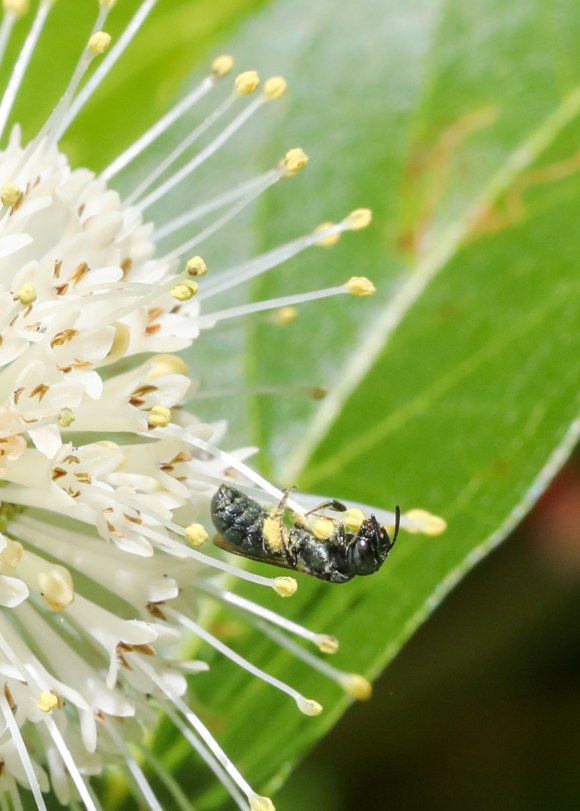
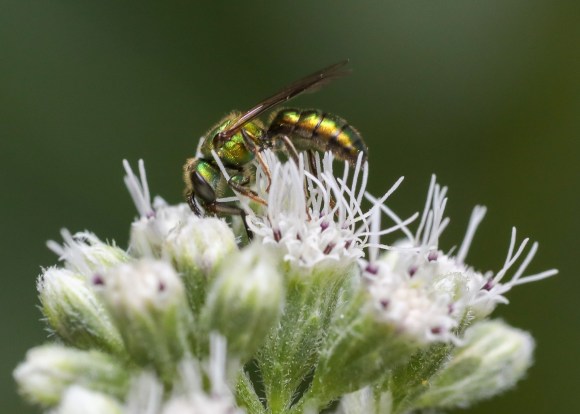
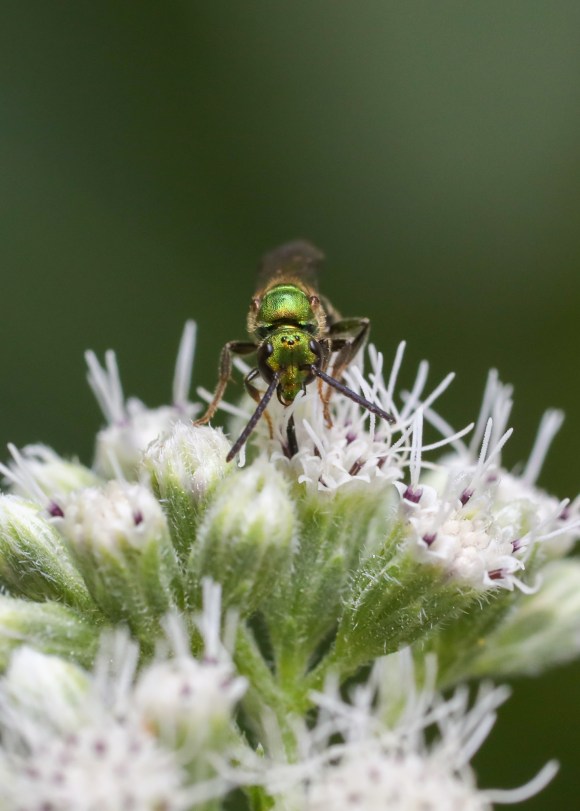
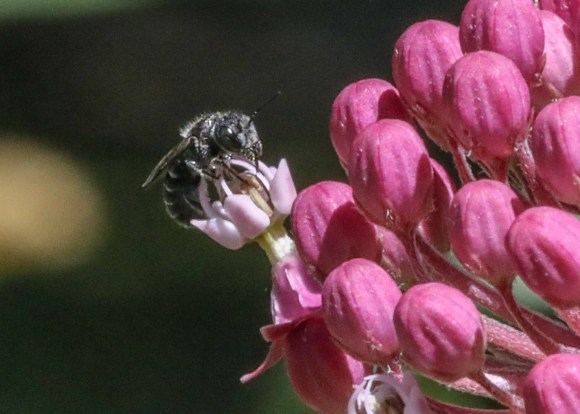
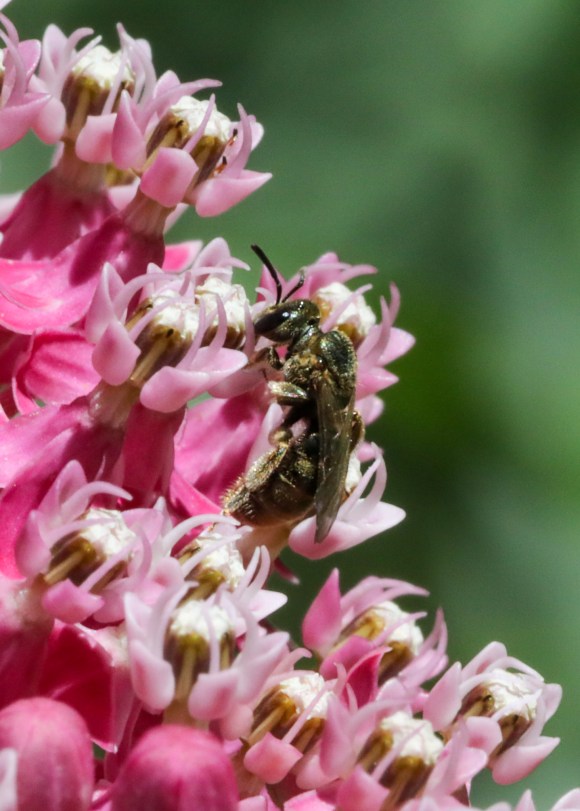
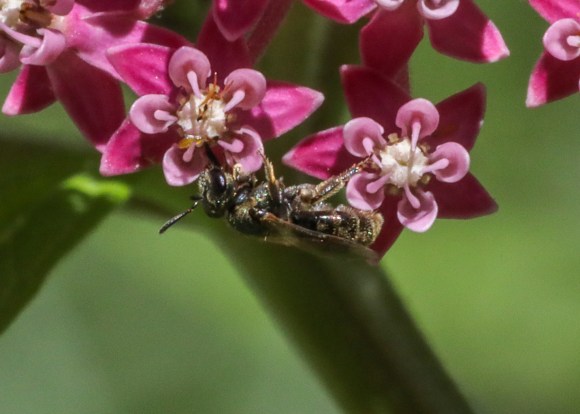
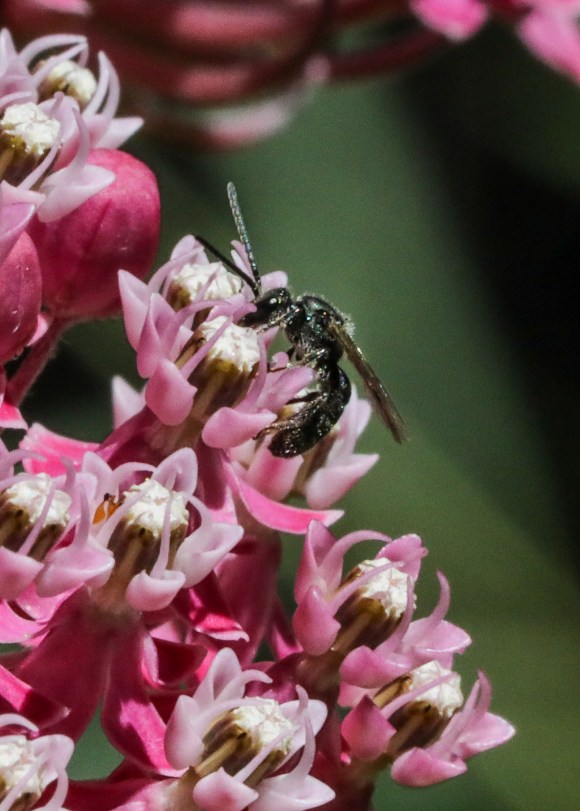
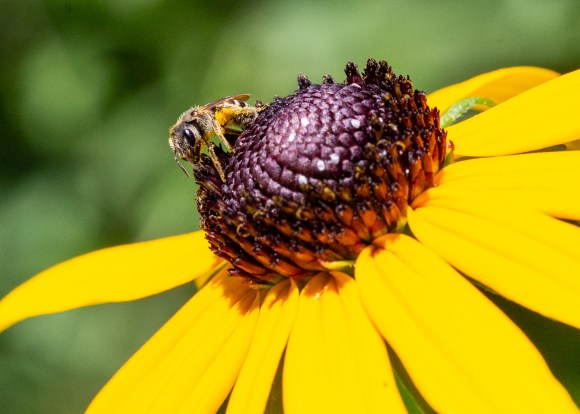
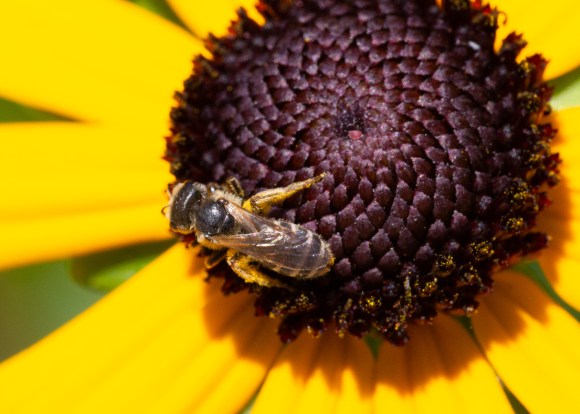
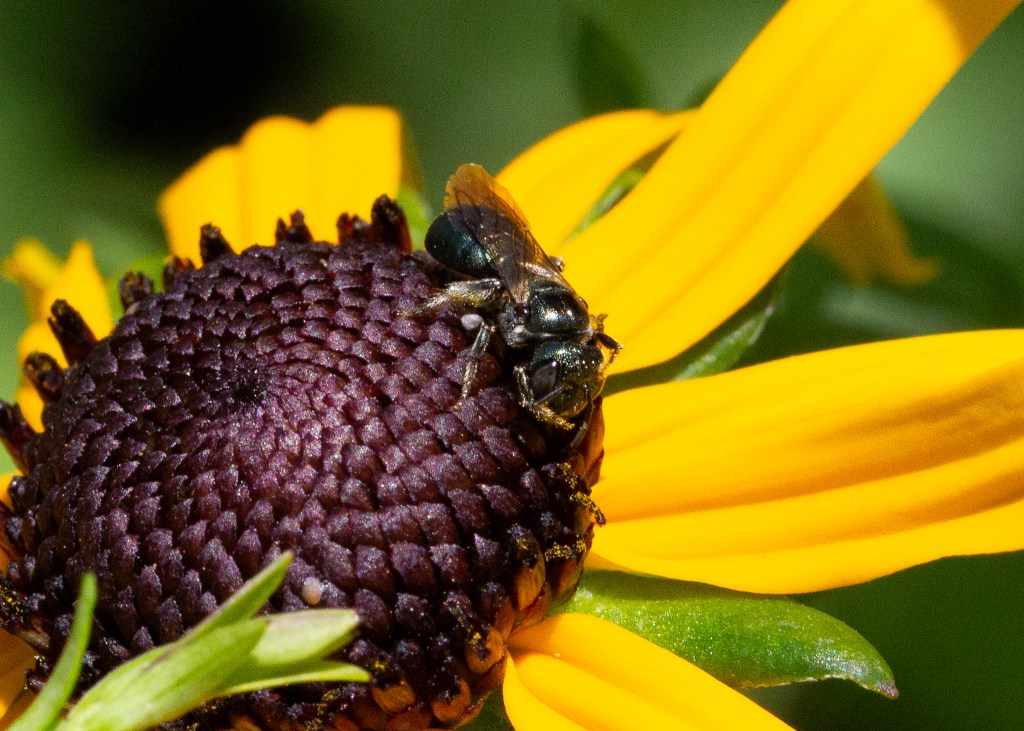
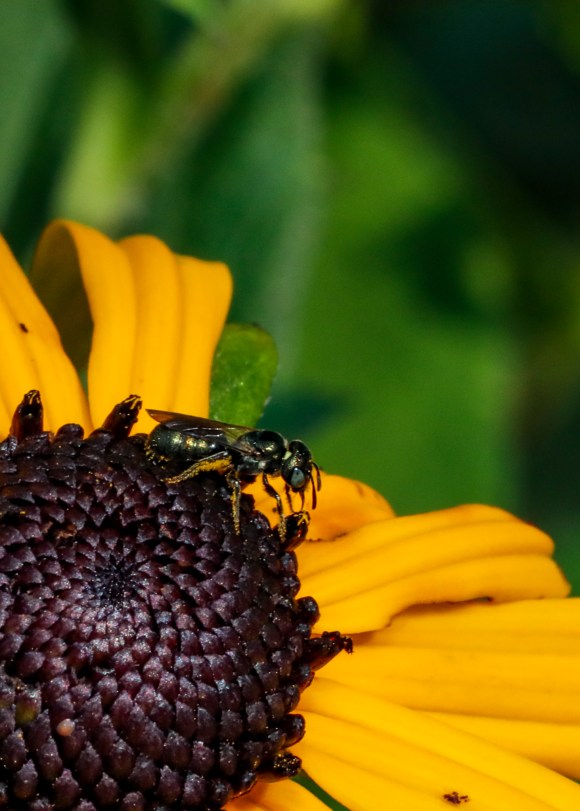
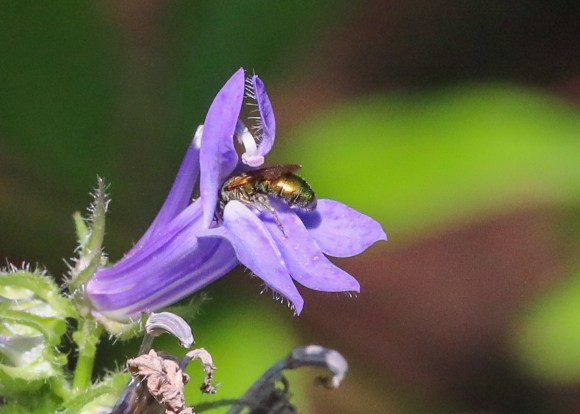
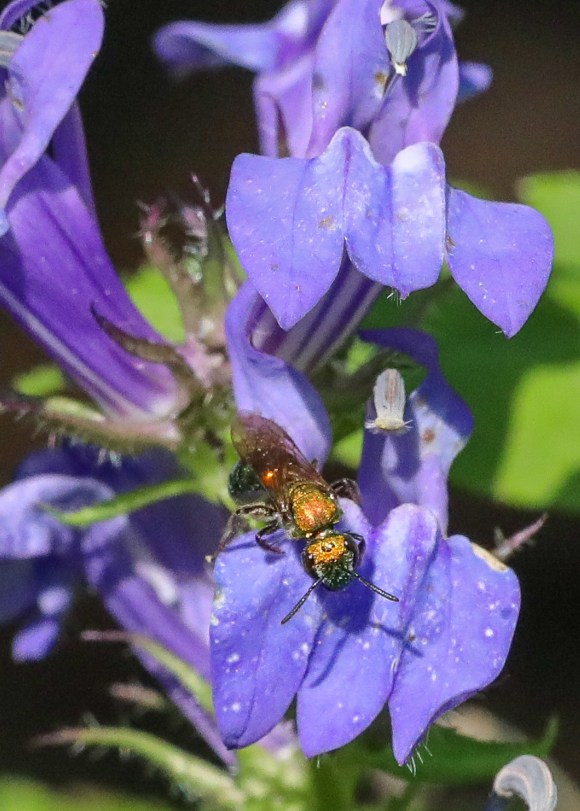
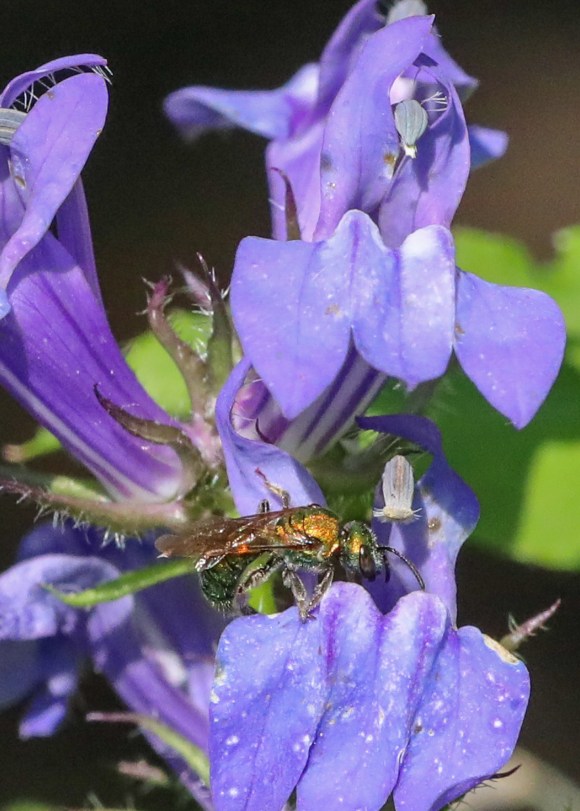
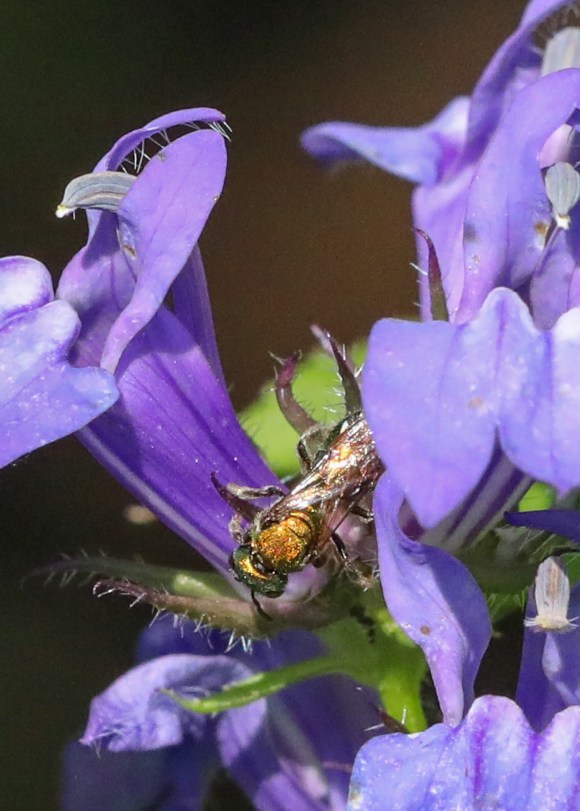
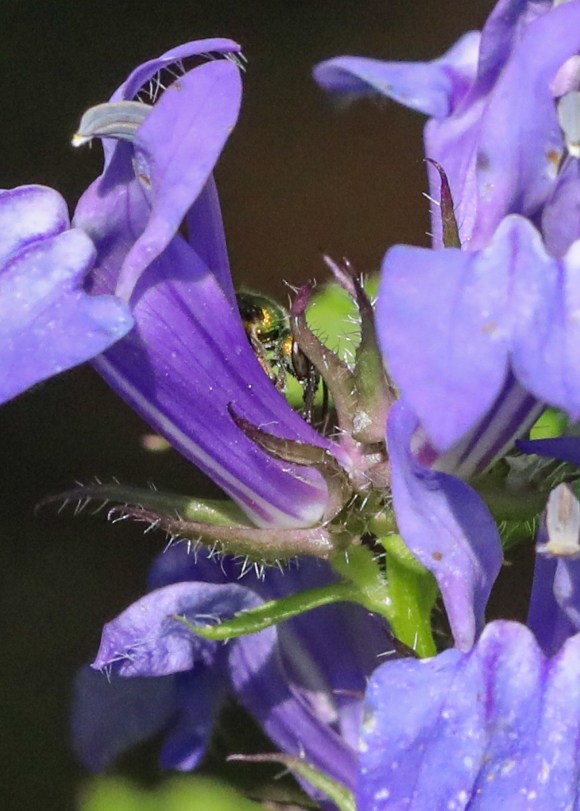
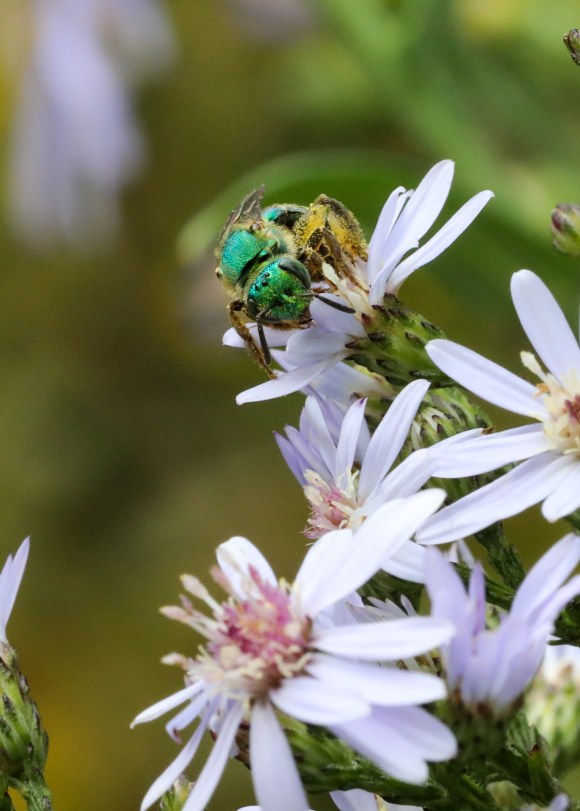
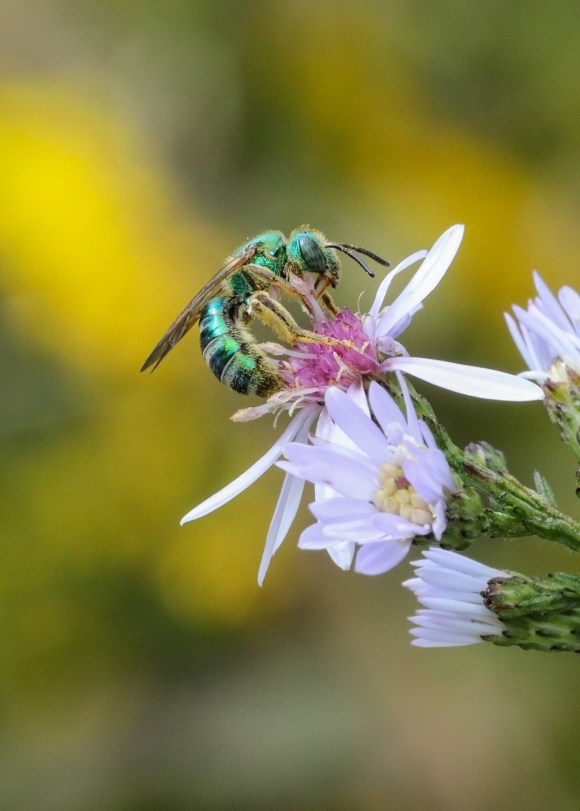
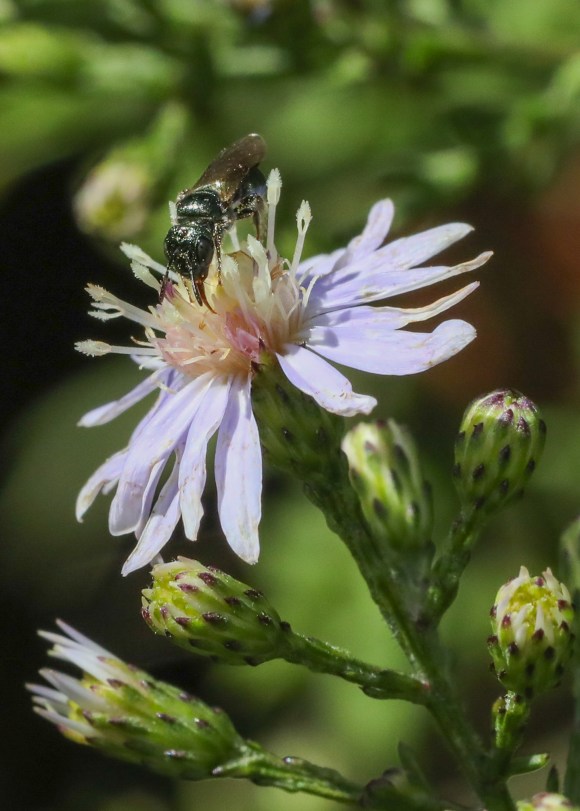
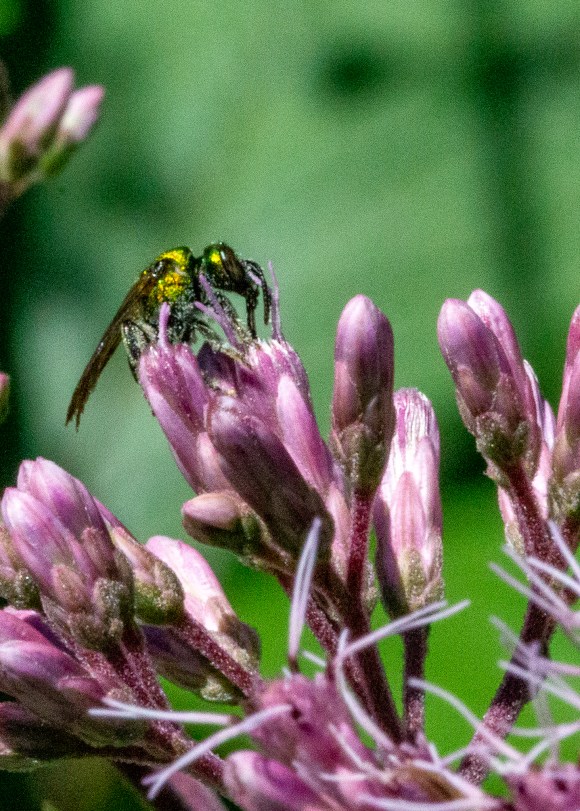
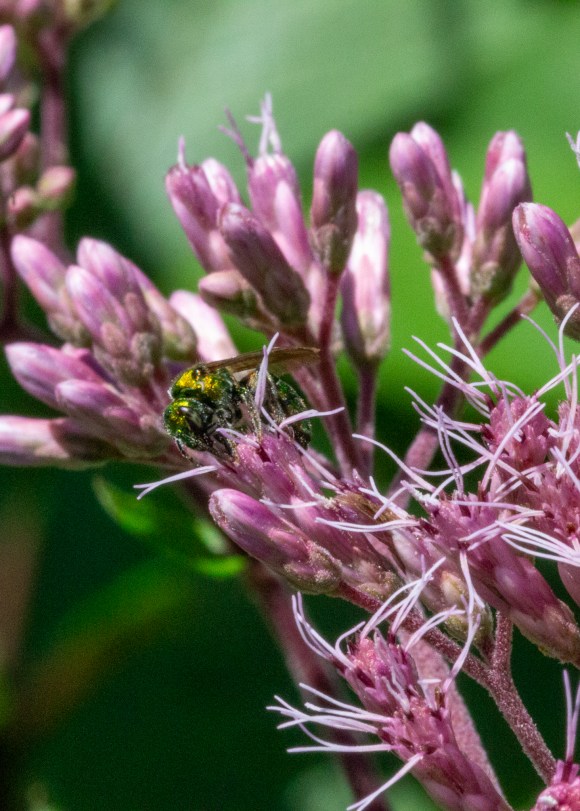
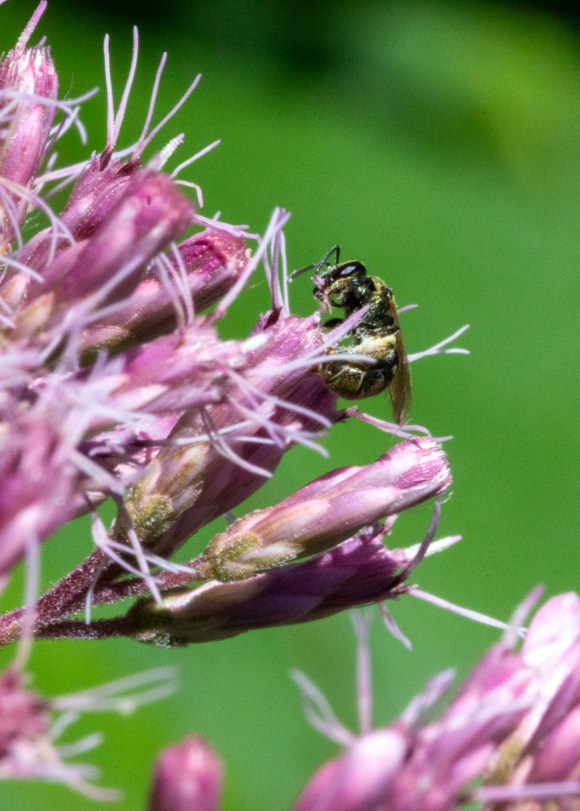
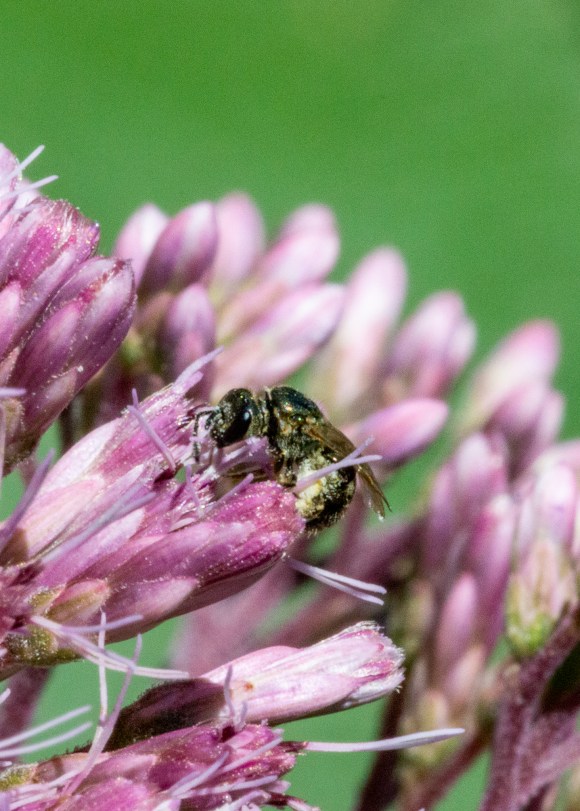
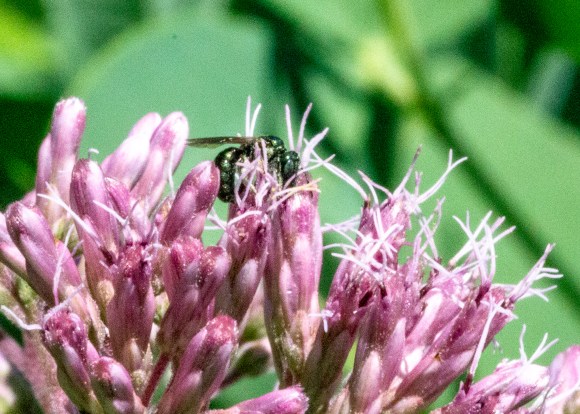
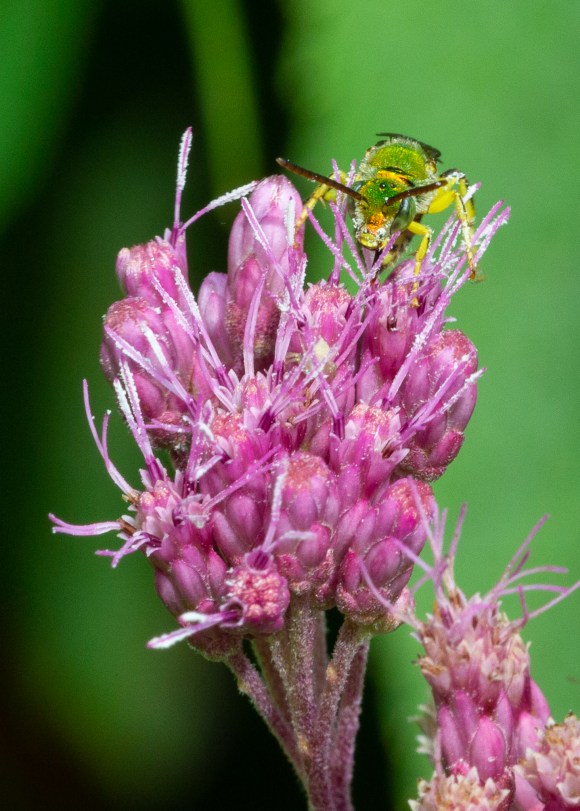
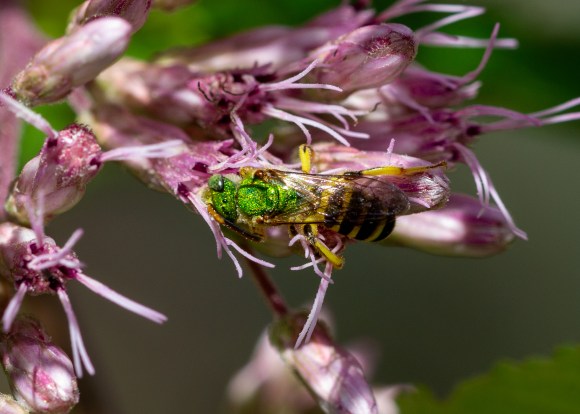
sweat bees (Halictus spp. and Lasioglossum spp), Metallic Green Sweat Bees,
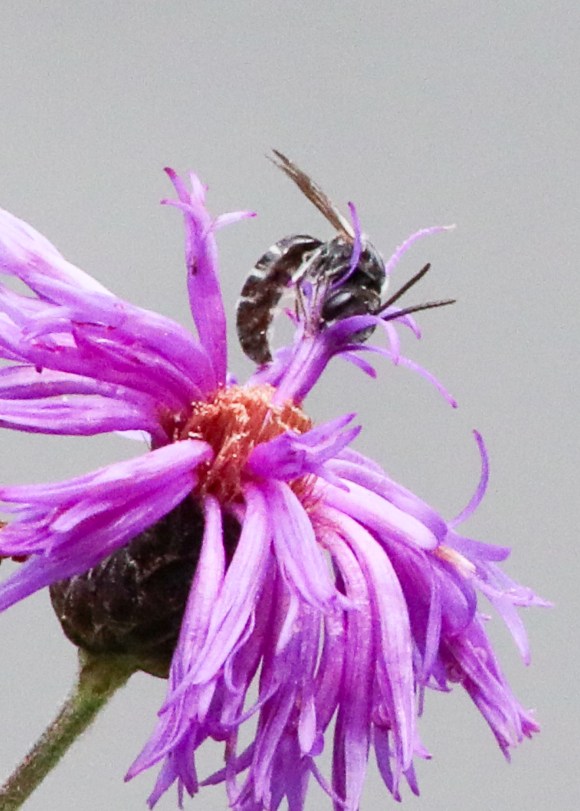
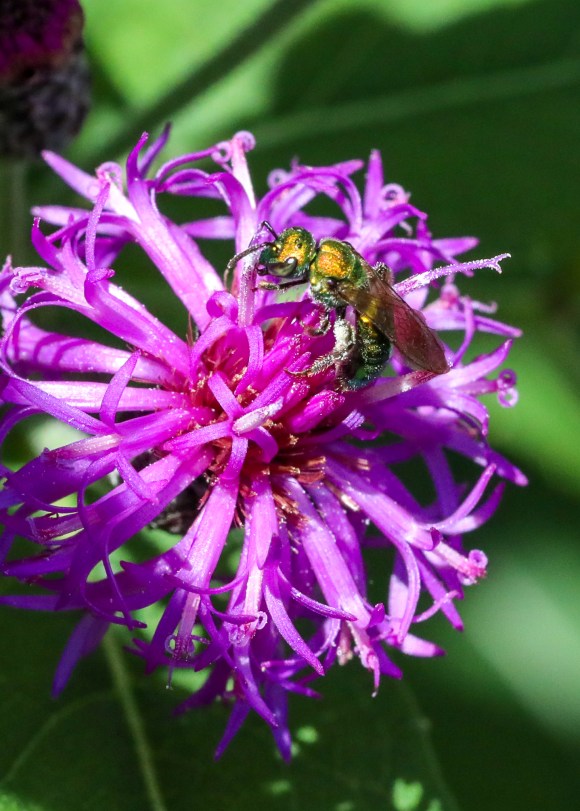
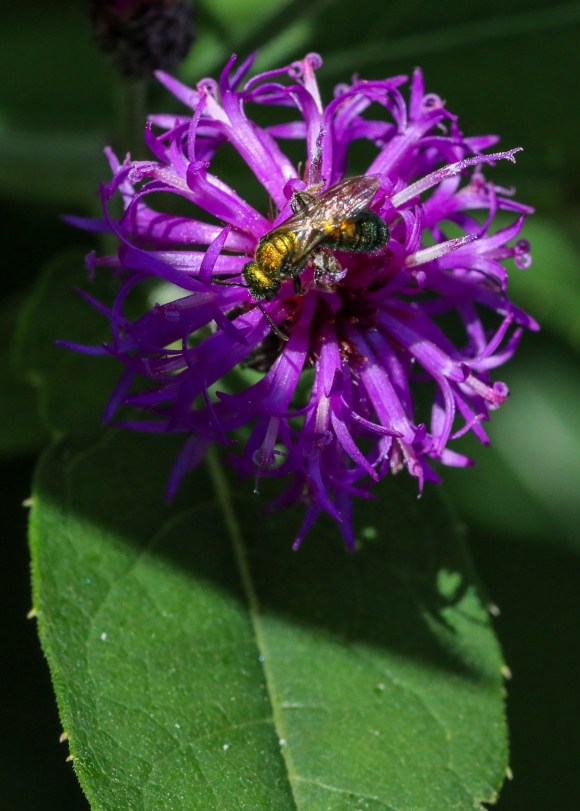
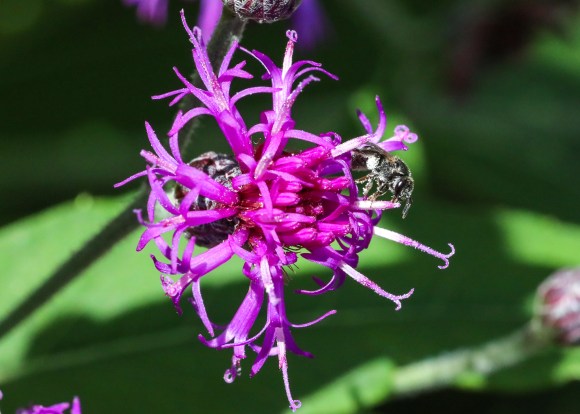
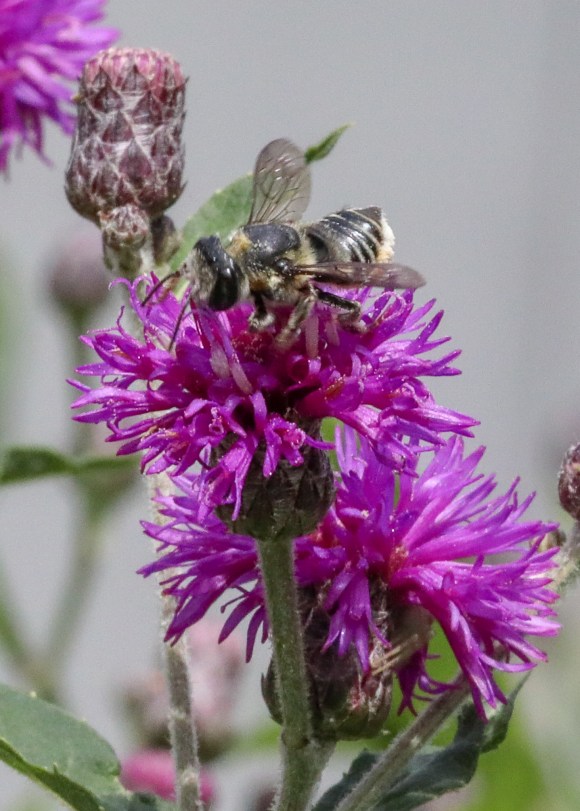
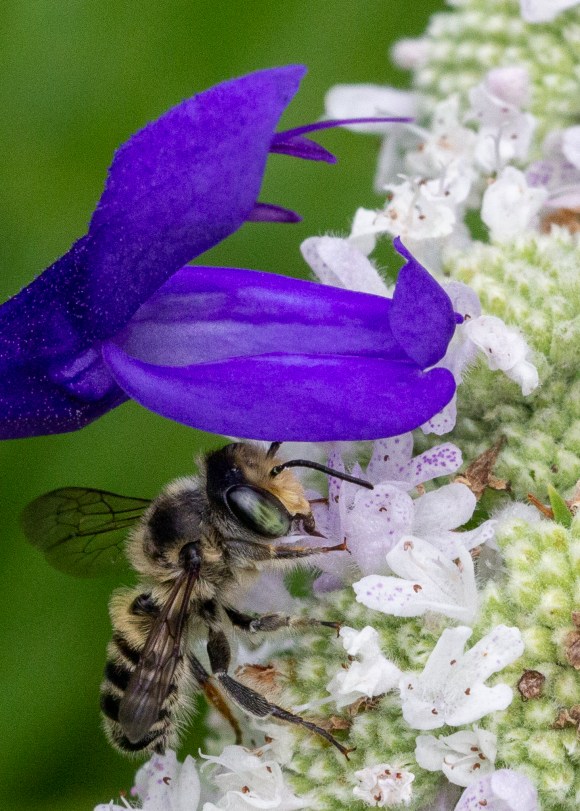
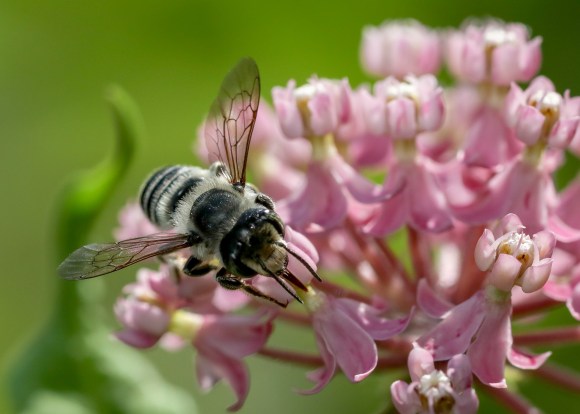
leafcutter bees (Megachile spp.),
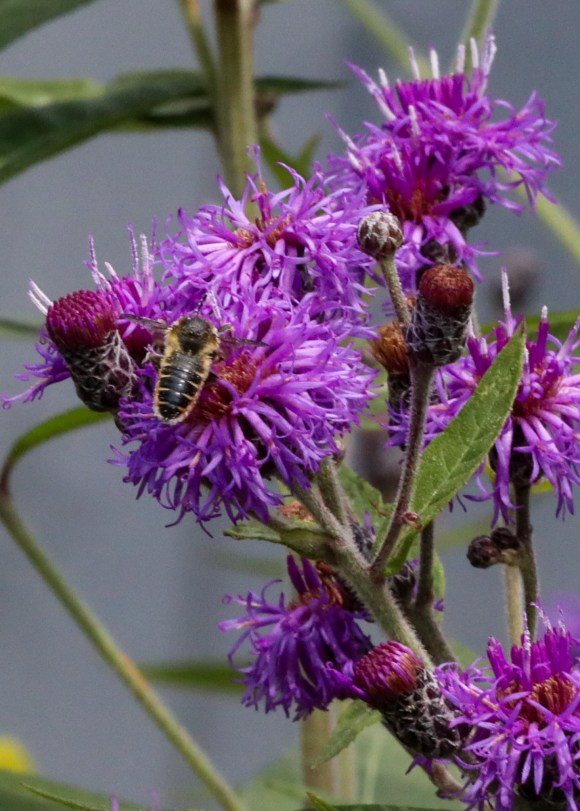
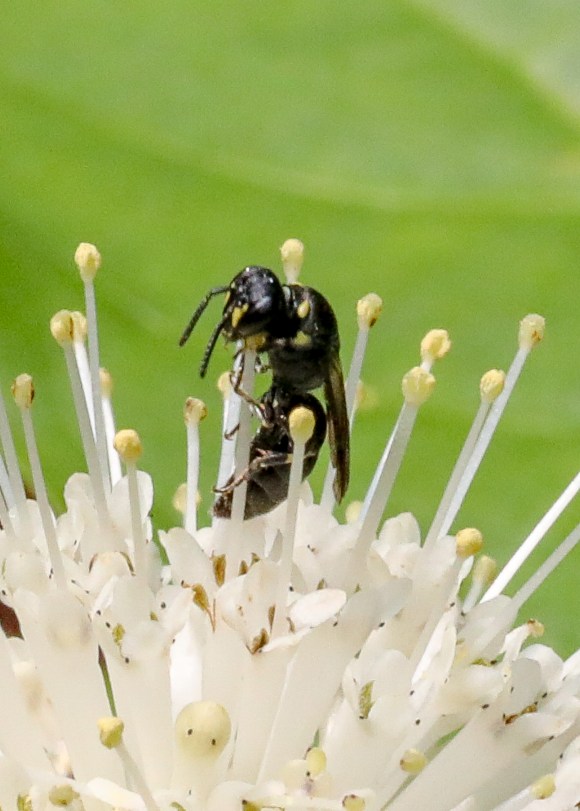
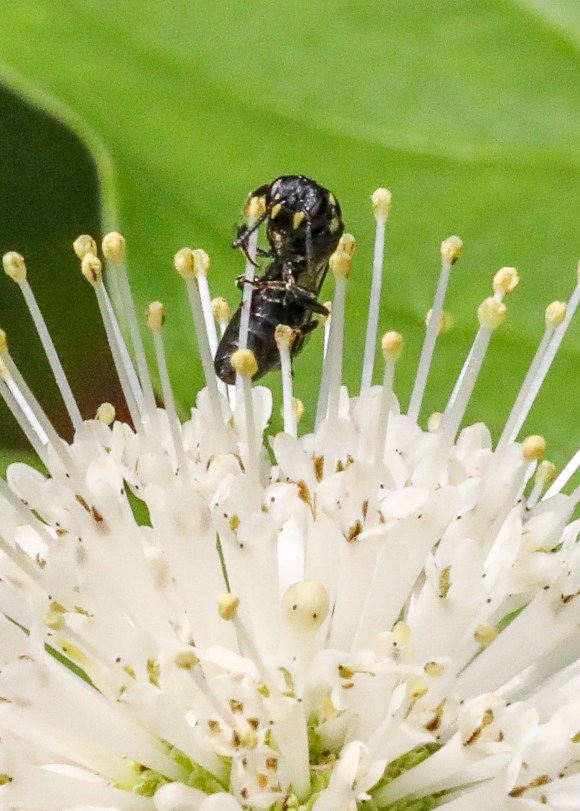
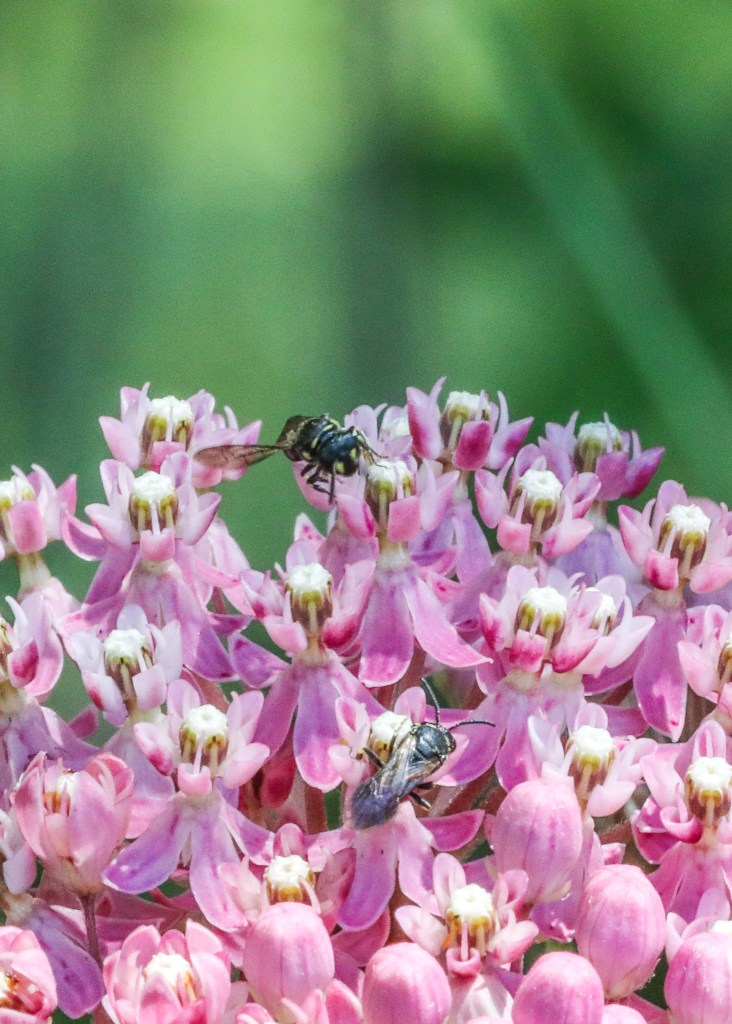
cuckoo bees, small carpenter bees (Ceratina spp.),
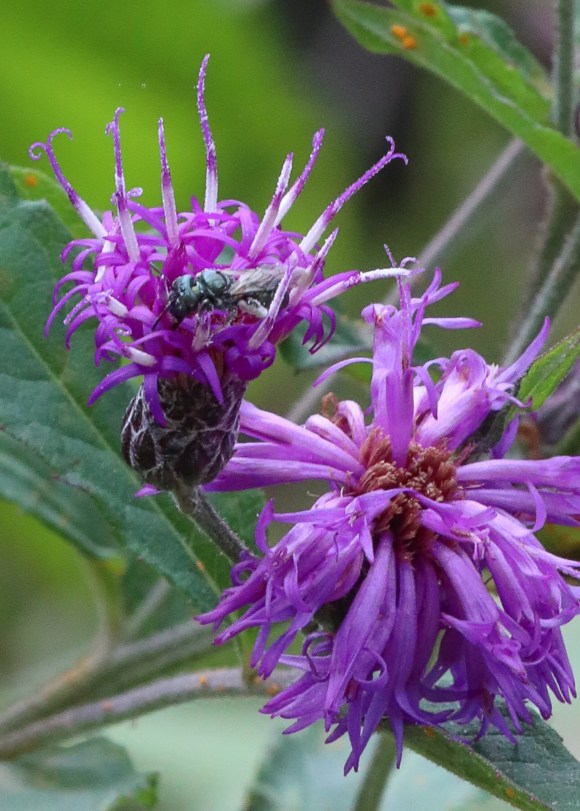

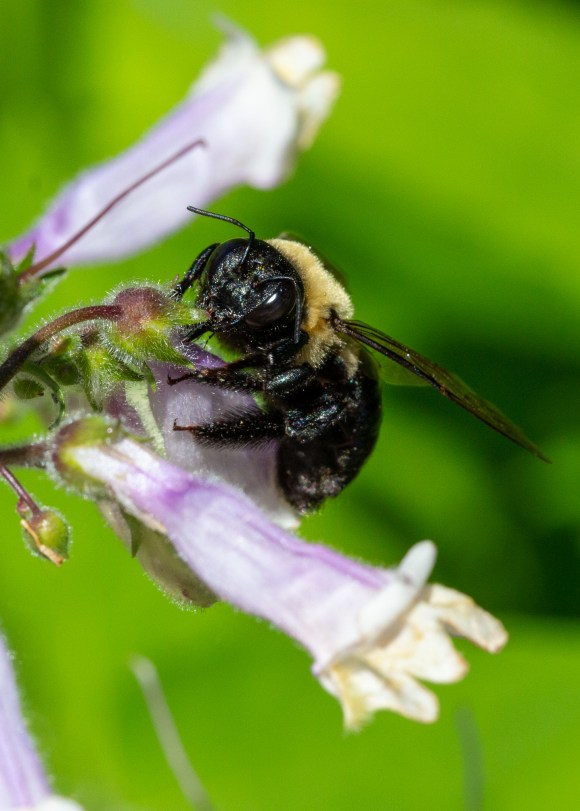
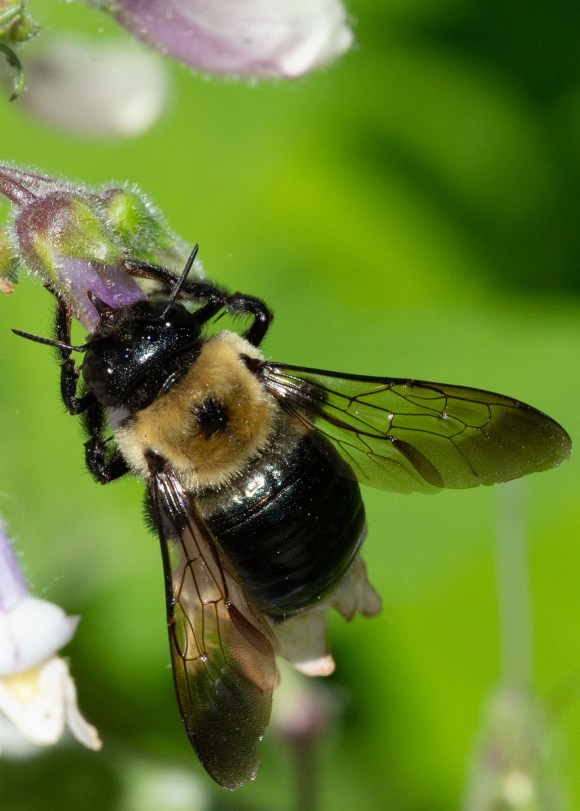
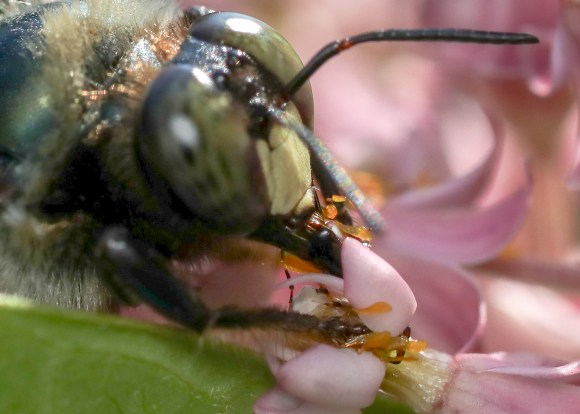
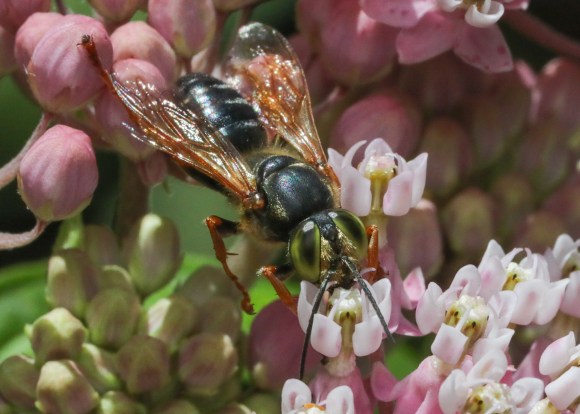
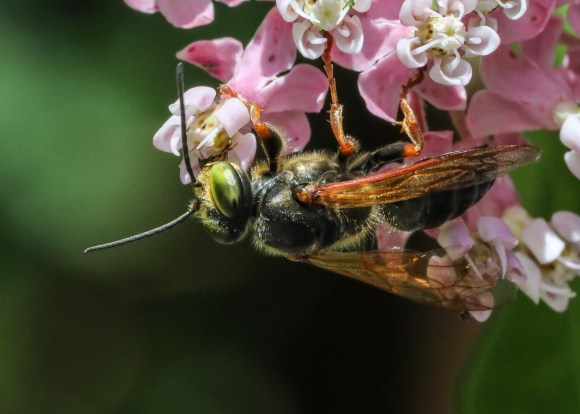
and large carpenter bees (Xylocopa spp.).

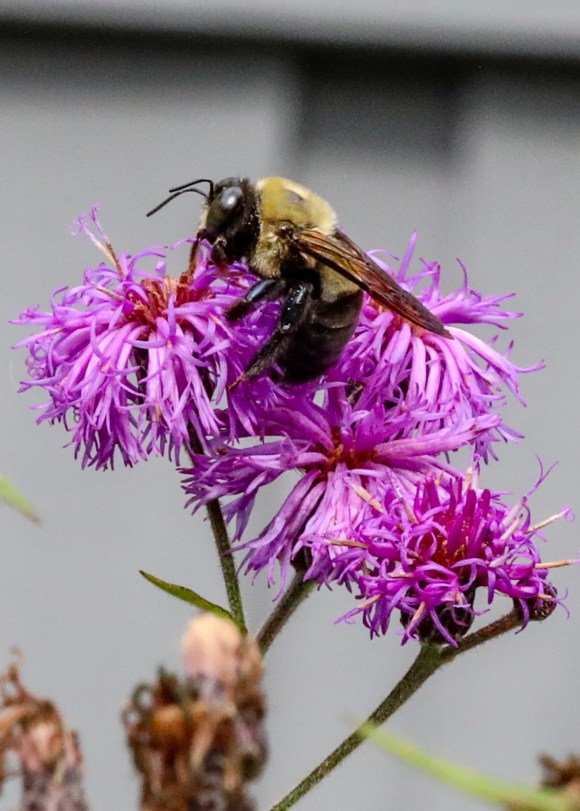
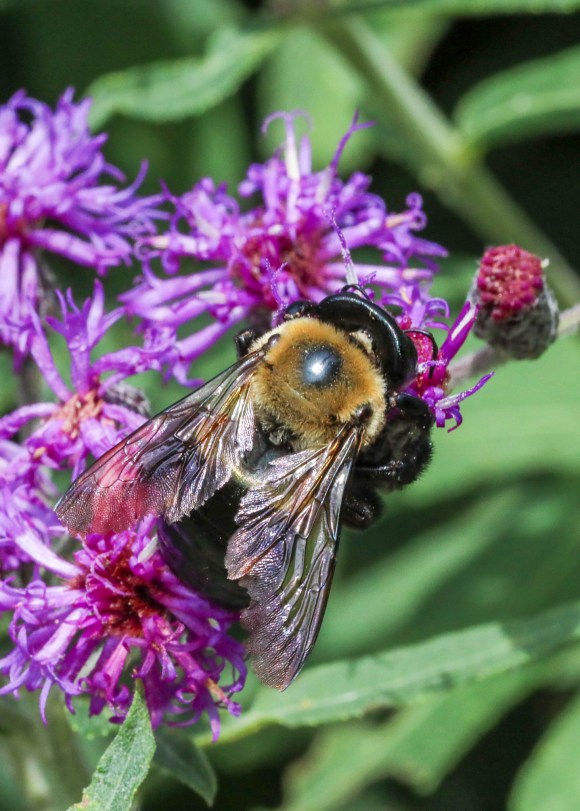
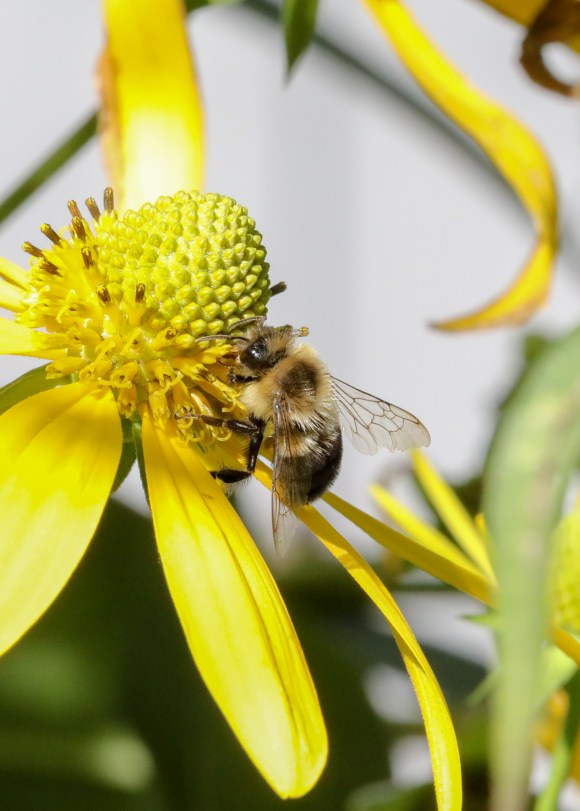
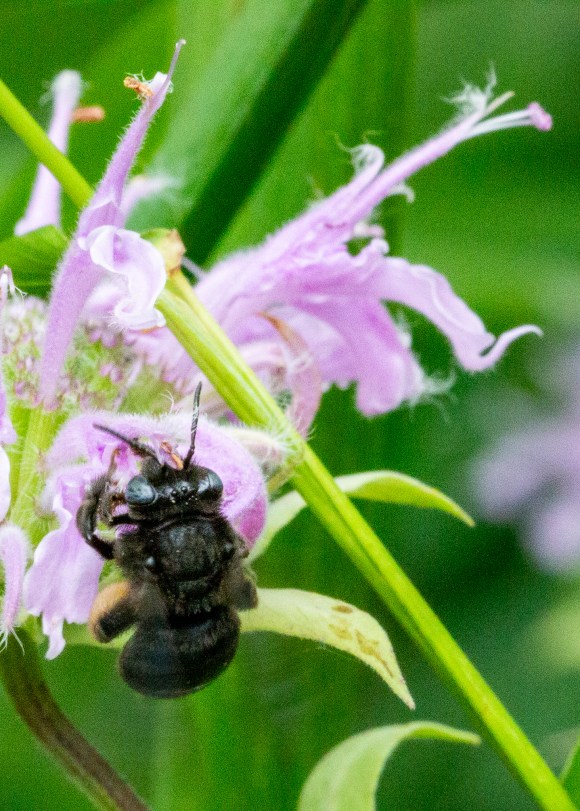
The Confused Long-Horned Bee (Melissodes confusiformis incondita) and the Denticulate Long-Horned Bee (Melissodes denticulatus) are specialist bees for Vernonia missurica.2,4,5
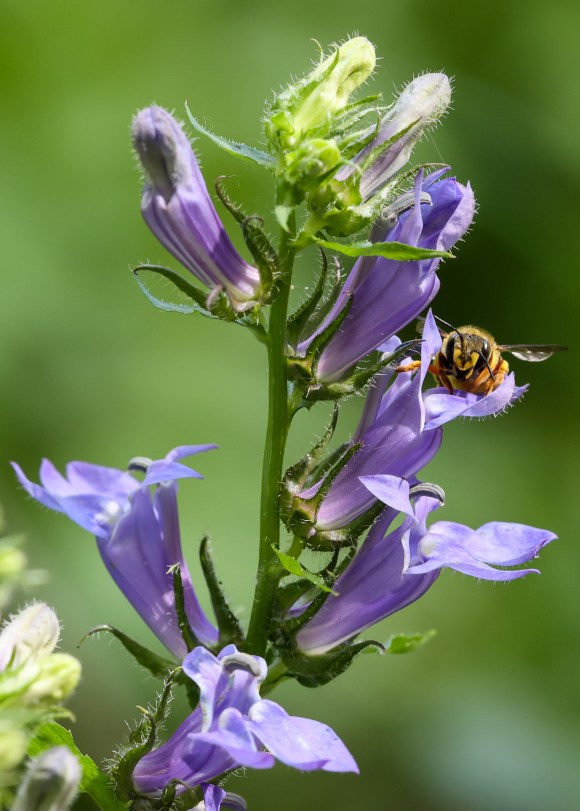
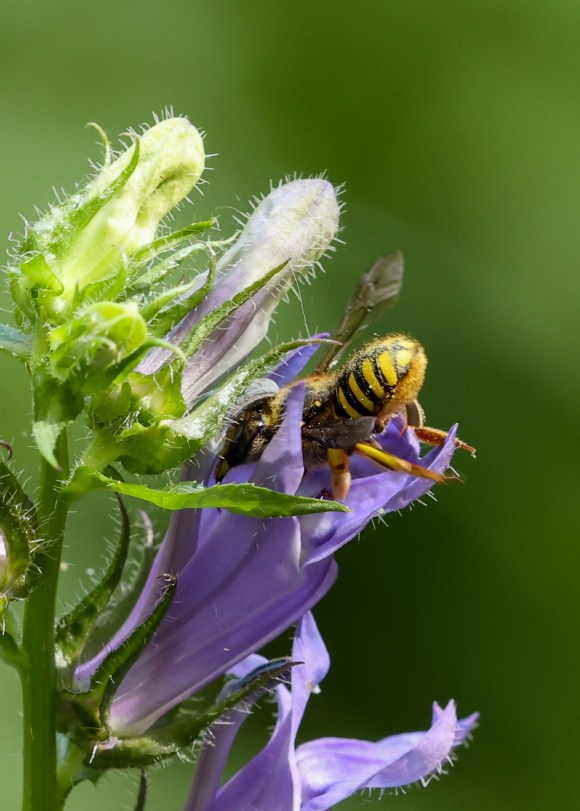
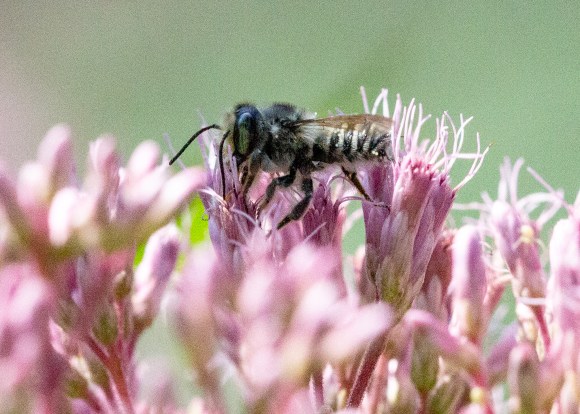
The Denticulate Long-Horned Bee is an oligolectic bee or a bee with just a few pollen sources. The females have remarkably long antennae or “horns”. Males’ antennae resemble other bees.1,2
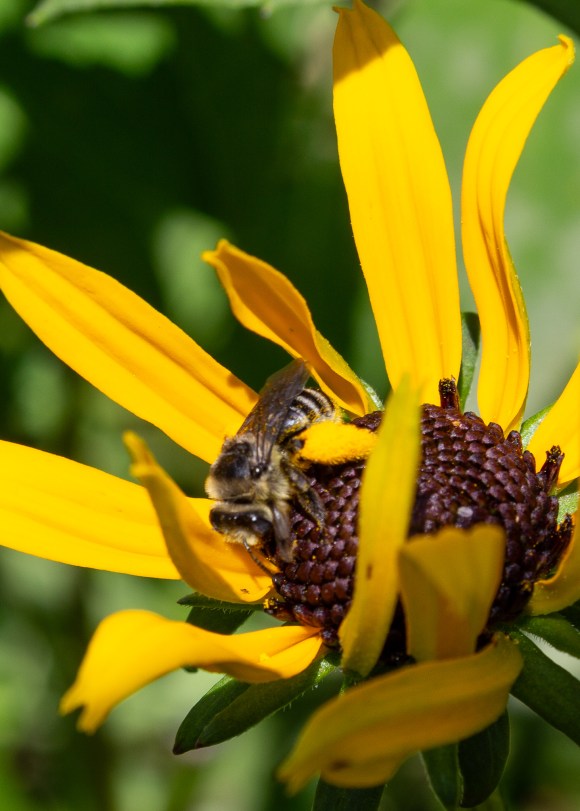
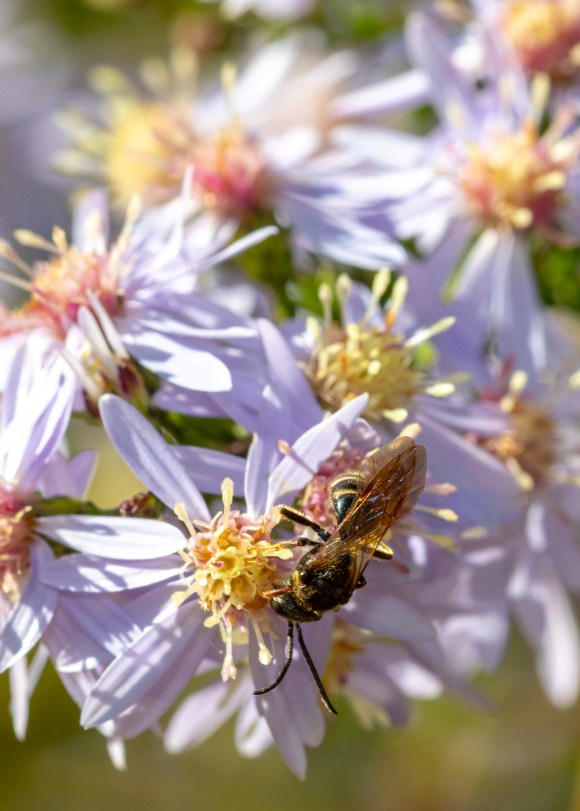
Photo of Melissodes spp.
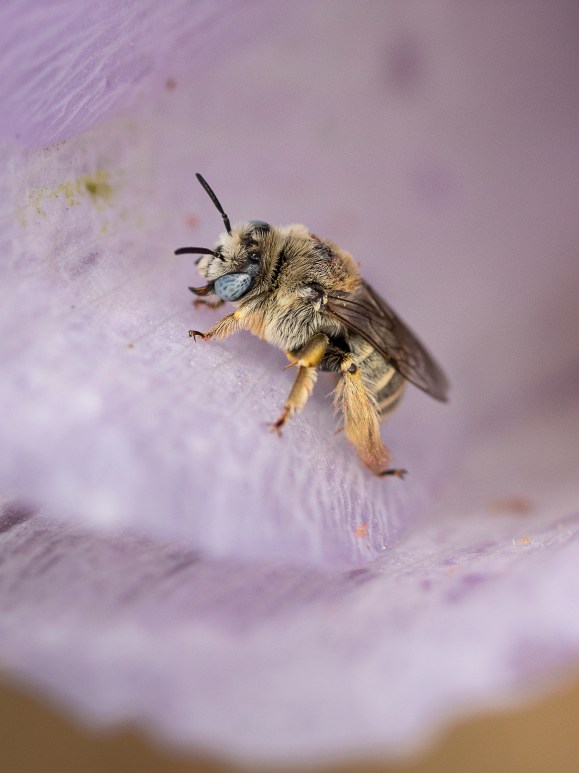
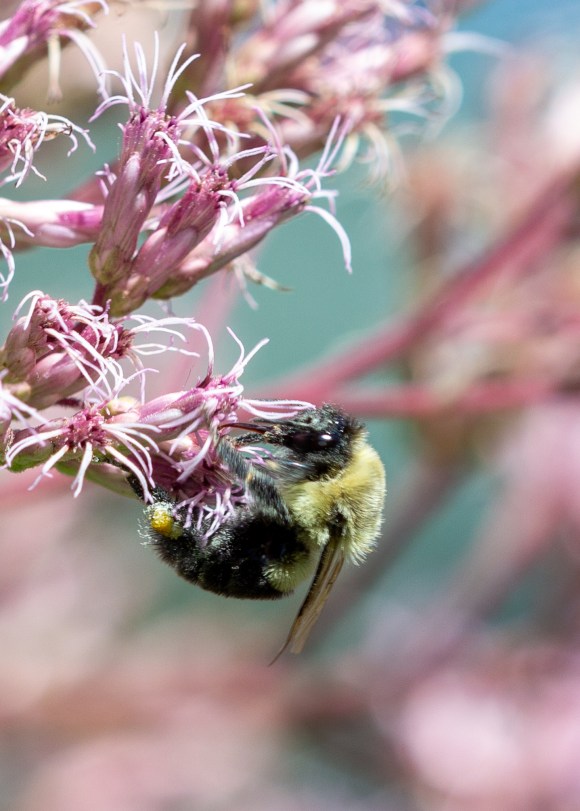
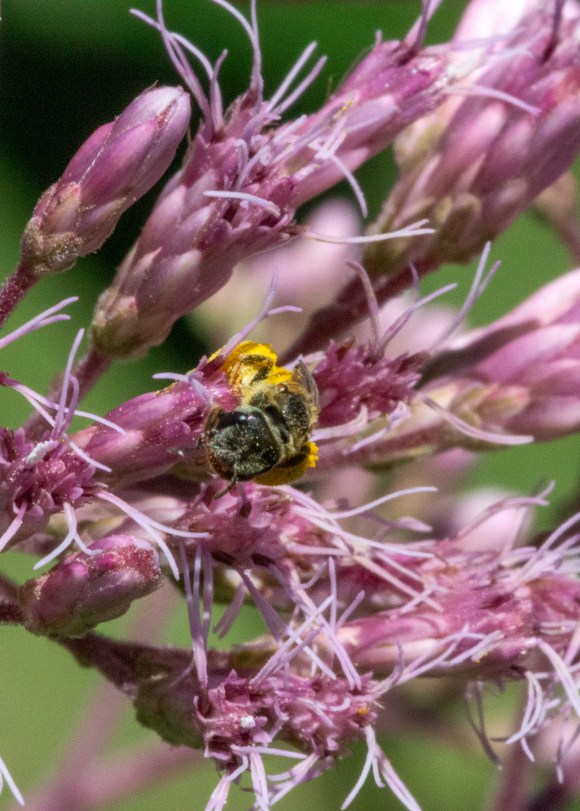
Melissodes denticulata flies from summer to early fall emerging in time for Ironweed’s bloom period. They carry pollen on a hairy structure on their back legs called a scopa. Look for Ironweed’s white pollen on their scopa, bodies and faces. 1,2
These bees are solitary, ground-nesting bees. Denticulate Long-Horned Bees line their nests with a waxy substance from their Dufour’s gland. Located near the ovipositor, the Dufour’s gland discharges pheromones and secretions. Bees mix secretions with food and/or use them to waterproof their nests. M. denticulata’s young overwinter in the nest. 1,2
Once hatched, male M. denticulata don’t return to their home nest. They spend their time eating and mating. The male bees have an interesting behavior of gathering in groups on leaves or flowers overnight. They cling there using their legs, mandibles, or both. 1,2
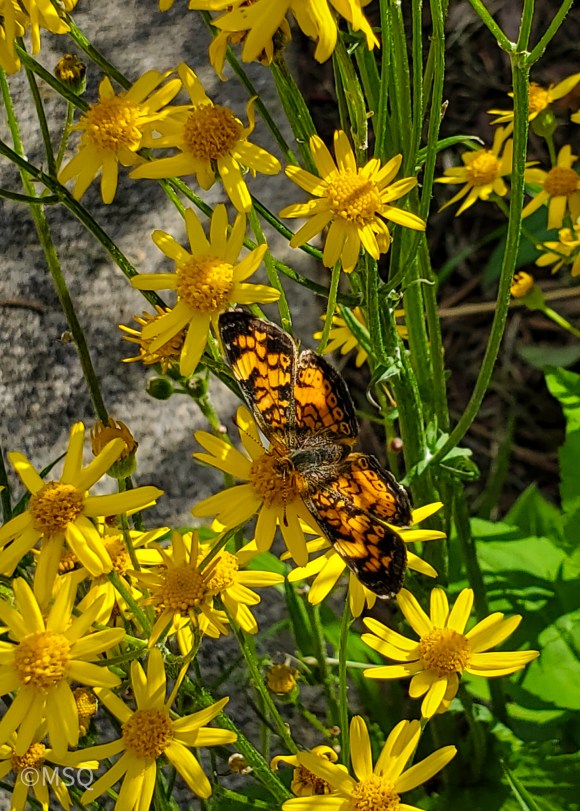
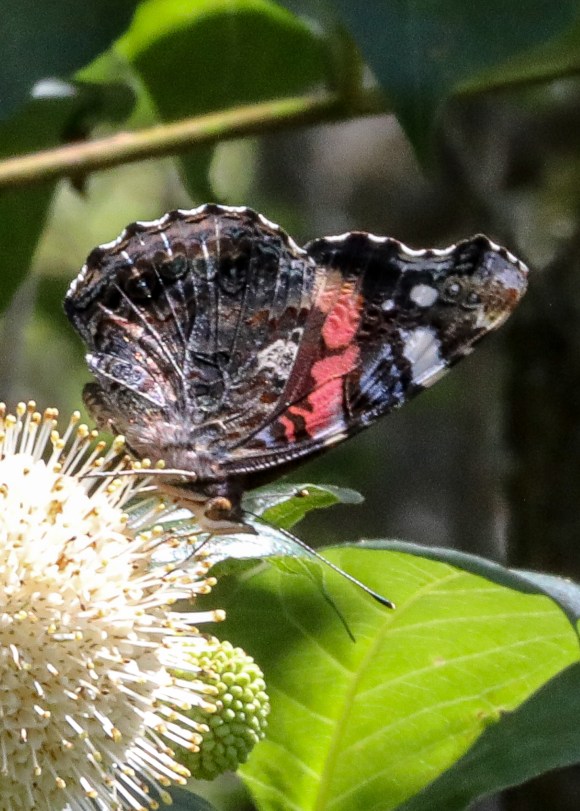
Missouri Ironweed acts as a larval host for the American Painted Lady Butterfly (Vanessa virginiensis). The American Painted Lady or American Lady Butterfly overwinter as adults. But they don’t survive very cold winters. 3,4
In colder areas, the population migrates from the south in the early spring. The adults drink nectar from different plants. They also visit tree wounds for sap and seek out the juices of decaying fruit. 3,4
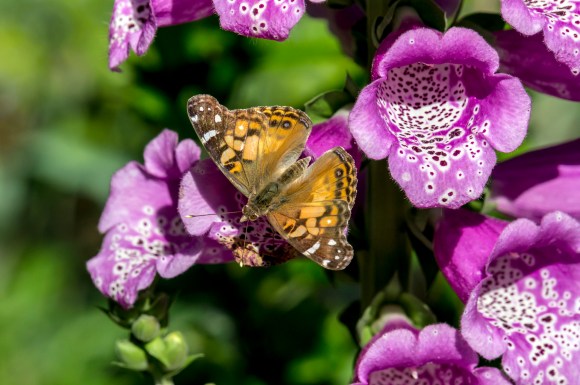
During mating periods, the males move to higher areas—hilltops or tops of large plants. These male butterflies keep watch for potential mates. They also guard and defend their territory from other males. 3,4
Females lay eggs one at time on plant leaves. When the larvae hatch, they use their silk to connect leaves together and make a shelter. This is usually at the top of the plant. The caterpillar stays in the tent eating and growing. 3,4
The American Painted Lady Butterfly looks like the Painted Lady butterfly (Vanessa cardui). To identify them, look at the eyespots on the underside of the hindwing. The American Painted Lady Butterfly has 2 large eyespots. The Painted Lady Butterfly has 4 smaller eyespots. 3,4
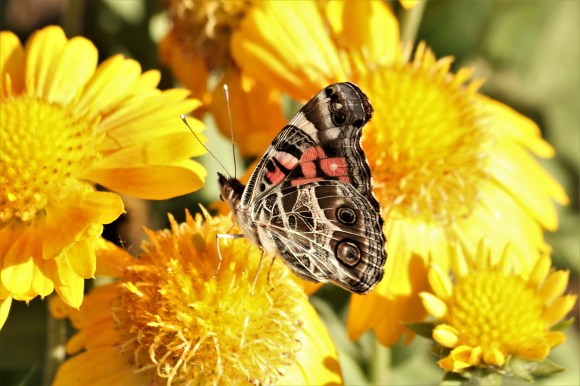
Eyespots are fascinating in nature. Currently, they’re thought to direct a predator away from the head. And, in fact, wing damage is often seen on butterfly’s with eyespots. 3,4
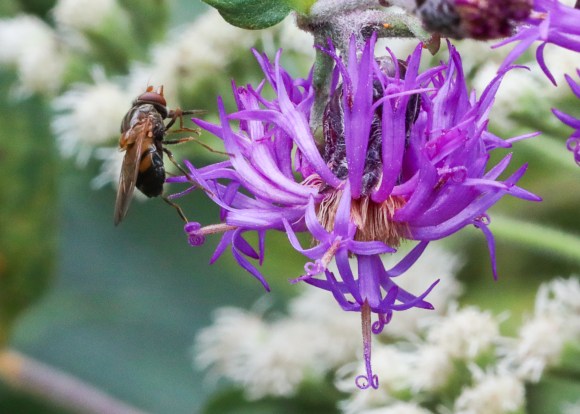
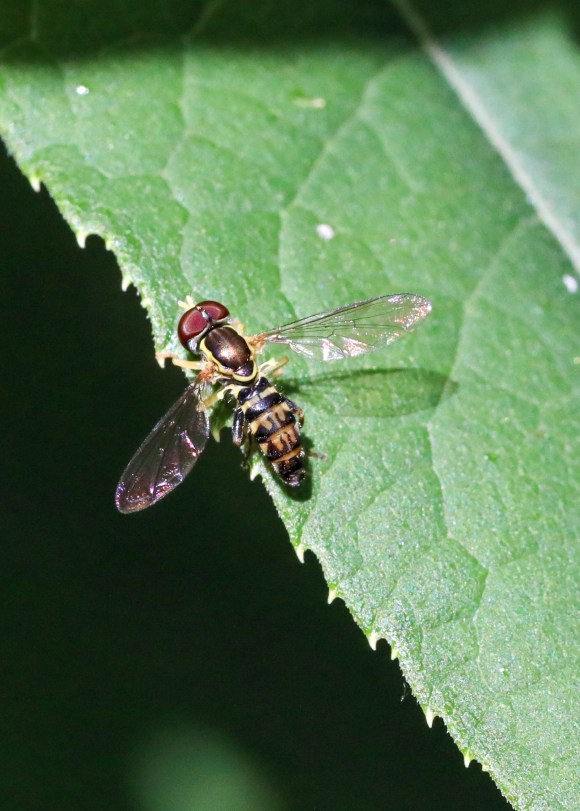
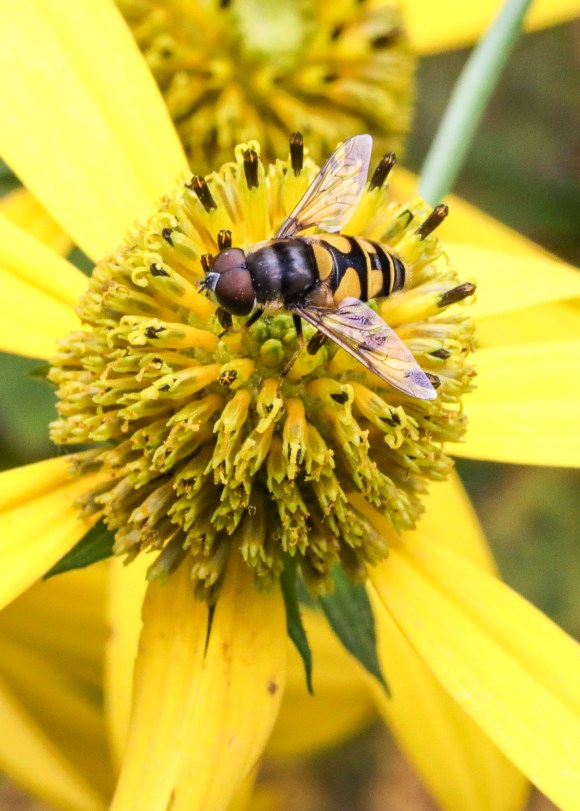
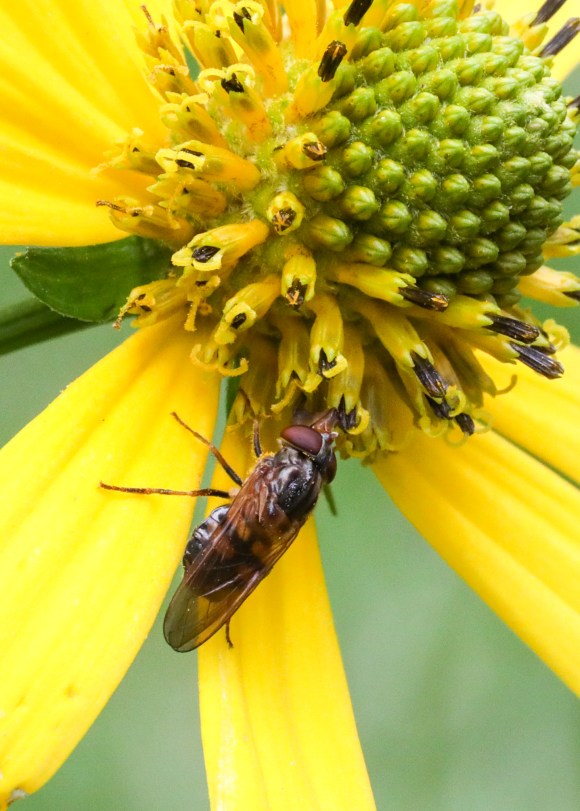
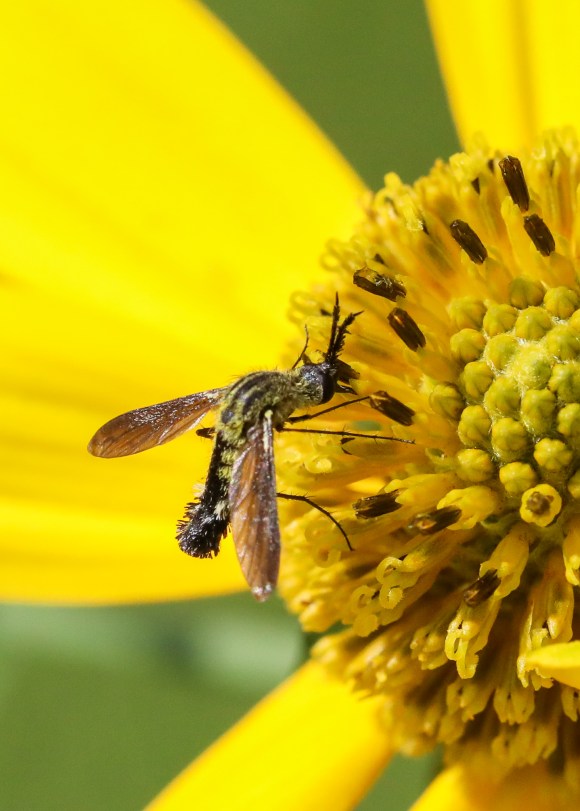
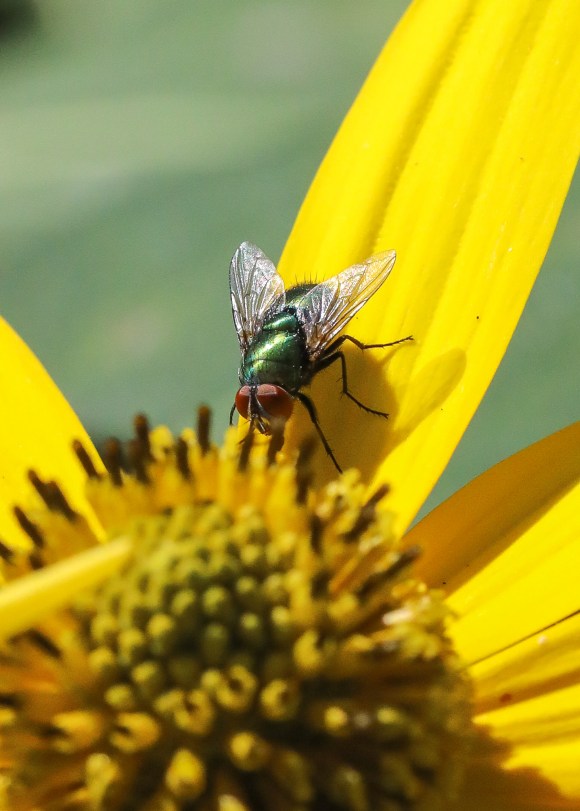
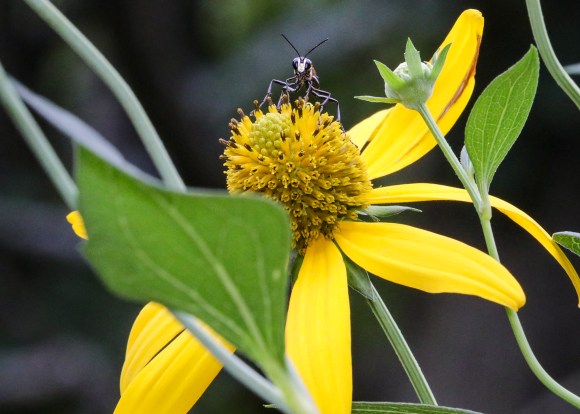
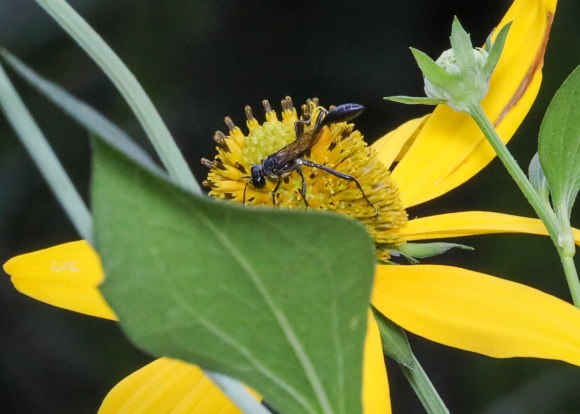
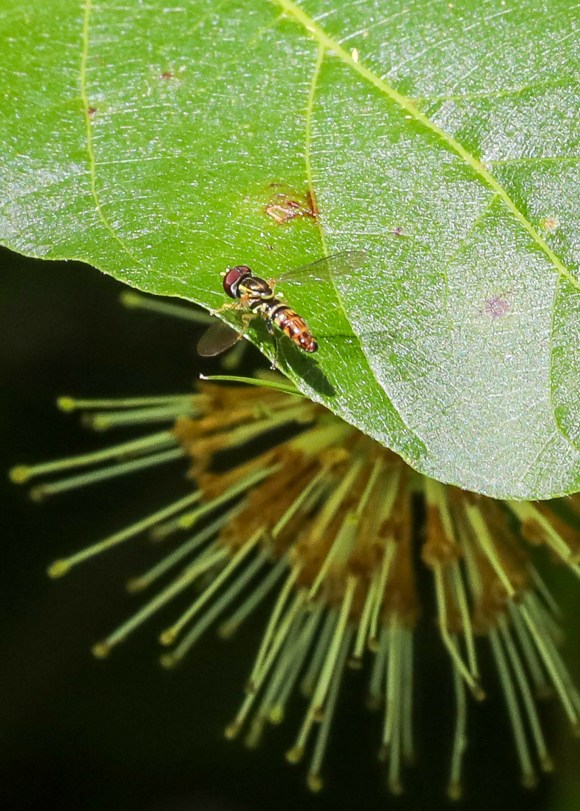
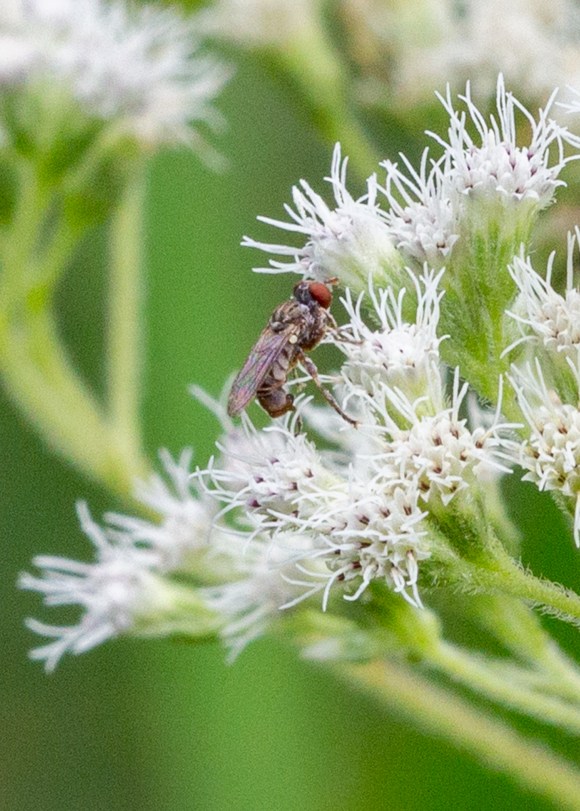
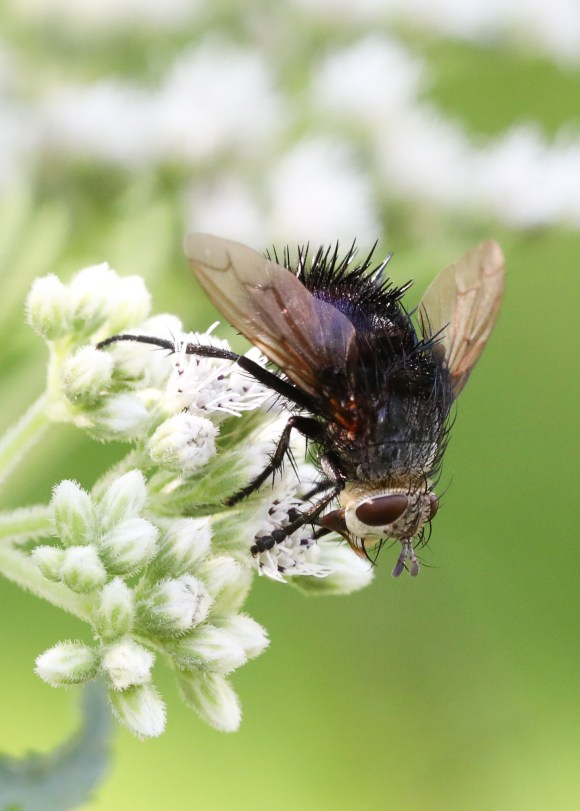
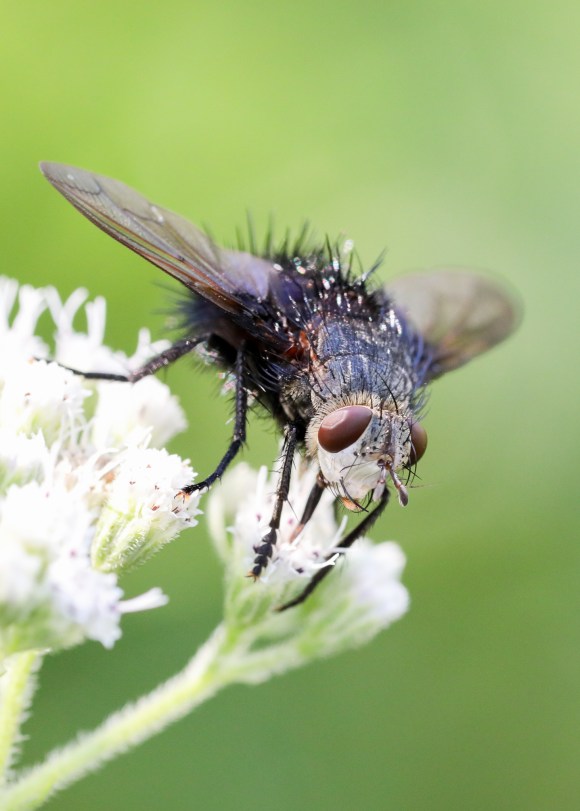
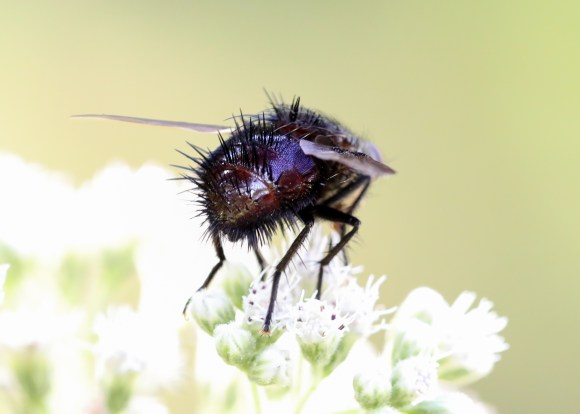
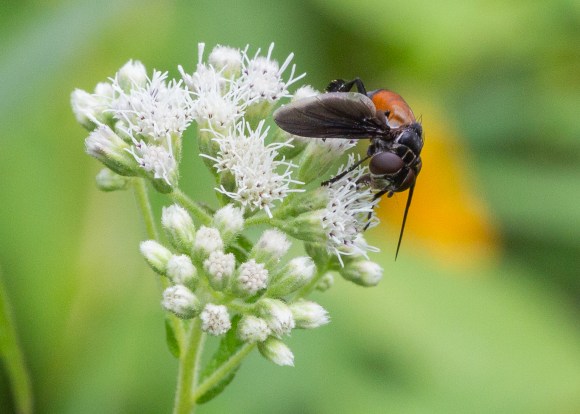
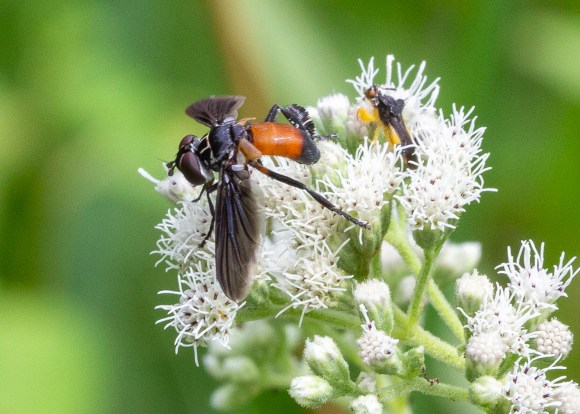
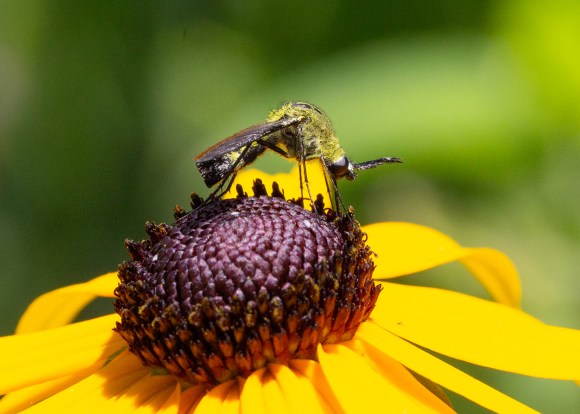
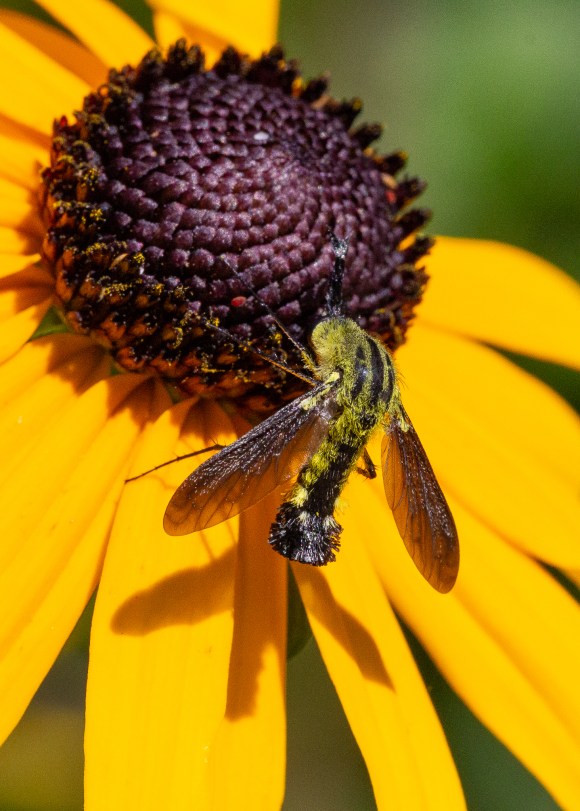
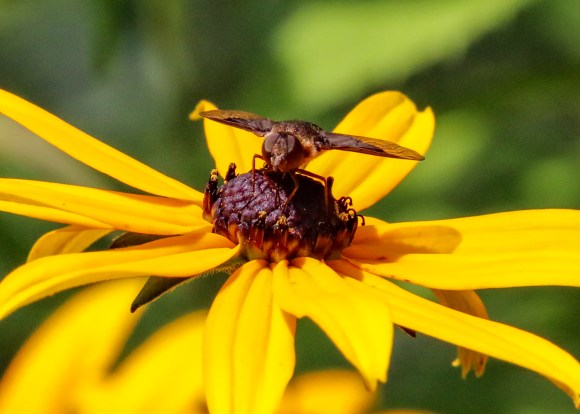
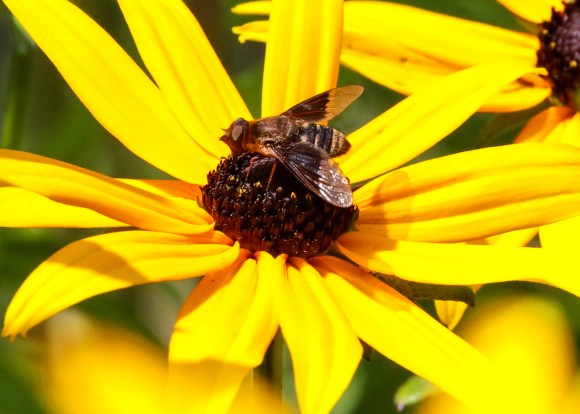
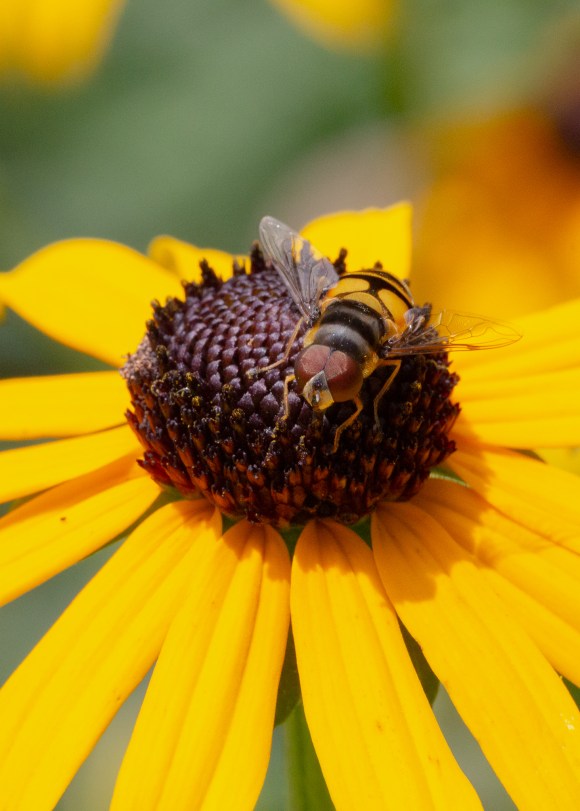
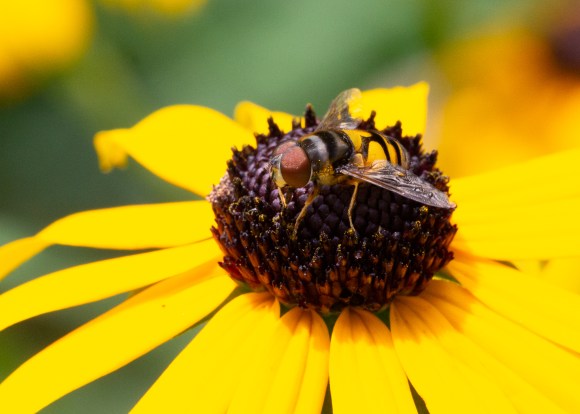
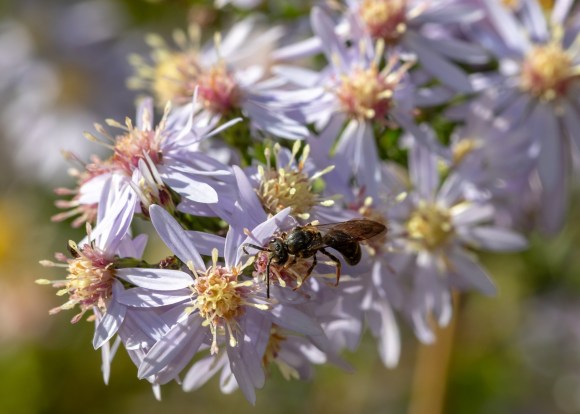
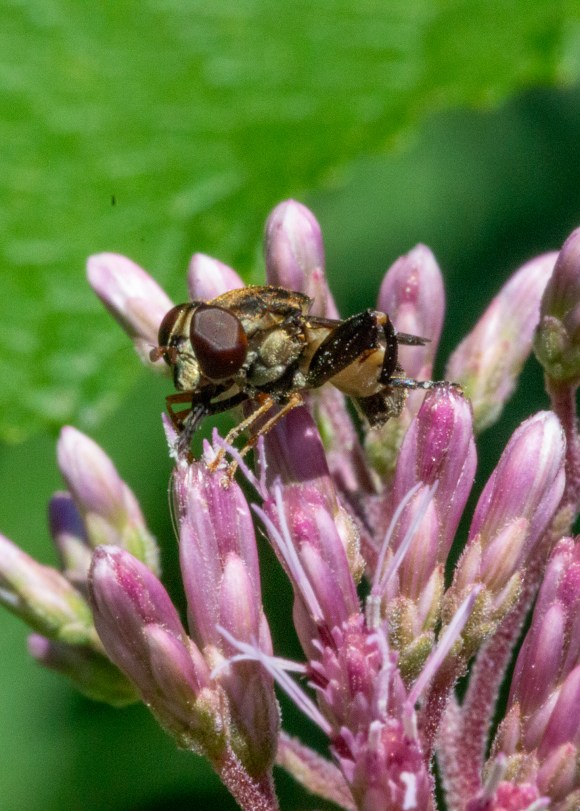
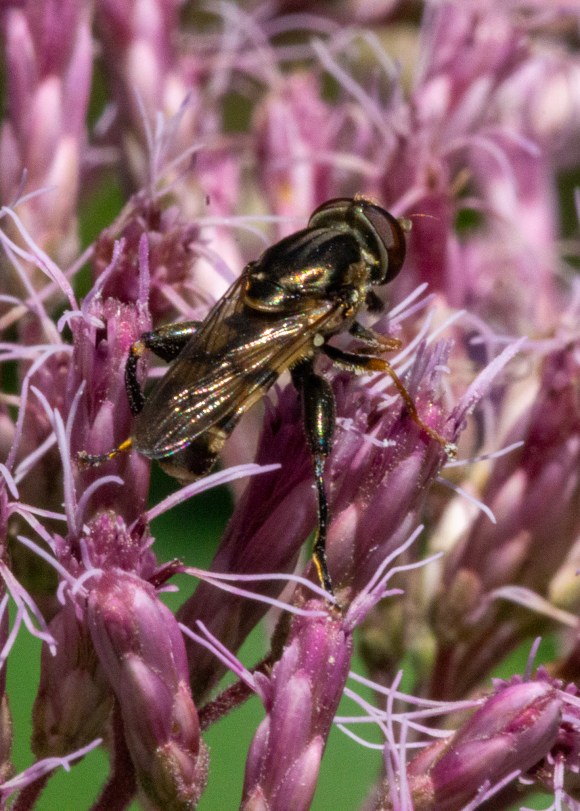
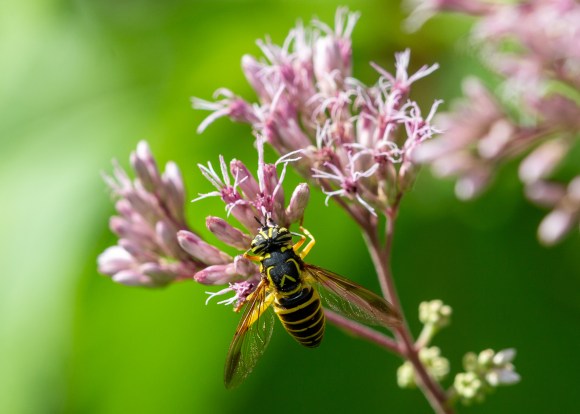
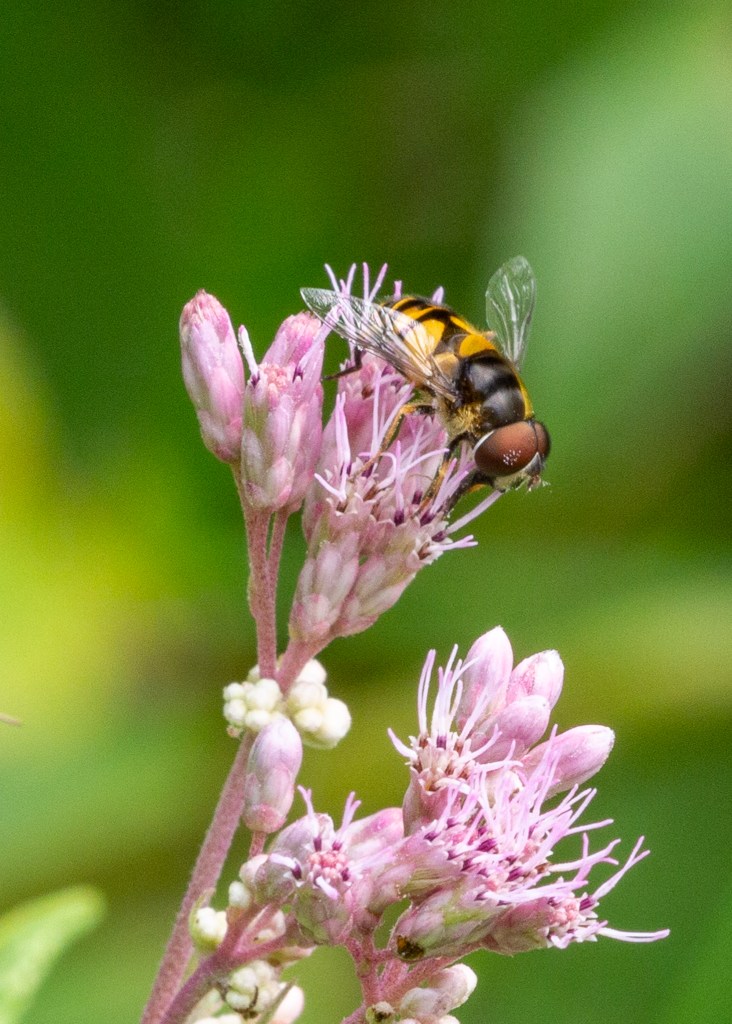
Flies also visit Vernonia missurica. These visitors include syrphid flies.

Hope you enjoyed this look at Missouri Ironweed and the creatures that share it. I’d love to hear from you with a question or comment. Hope all is going splendidly in your garden!
Warm Regards,
Mary
BIBLIOGRAPHY:
- Holm, Heather. 2017. Bees: An Identification and Native Plant Forage Guide. Pollination Press LLC.
- “Ironweed Part 2: An Ironweed Specialist Bee.” 2023. August 15. https://bygl.osu.edu/index.php/node/2227.
- Missouri Department of Conservation. 2024. “American Lady.” March 7. https://mdc.mo.gov/discover-nature/field-guide/american-lady.
- Missouri Department of Conservation. n.d. “Missouri Ironweed.” Accessed October 28, 2025. https://mdc.mo.gov/discover-nature/field-guide/missouri-ironweed.
- “Missouri Ironweed (Vernonia Missurica).” n.d. Accessed October 28, 2025. https://www.illinoiswildflowers.info/prairie/plantx/ms_ironweedx.htm.
- “Vernonia Missurica – Plant Finder.” n.d. Accessed October 28, 2025. https://www.missouribotanicalgarden.org/plantfinder/PlantFinderDetails.aspx?taxonid=277486.
- “Vernonia Missurica (Missouri Ironweed).” n.d. Mt. Cuba Center. Accessed October 29, 2025. https://mtcubacenter.org/trials/vernonia/missurica/.
- “Where Do Wild Bees Go in Winter?” n.d. Accessed November 3, 2025. https://sites.tufts.edu/pollinators/2021/11/where-do-wild-bees-go-in-winter/.
- “You Can Never Have Too Much IRONWEED! Part 1.” 2023. August 15. https://bygl.osu.edu/index.php/node/2226.




















 Wild Things in the Garden