Categories
native plants Pollinator gardening

A Constellation of Blue

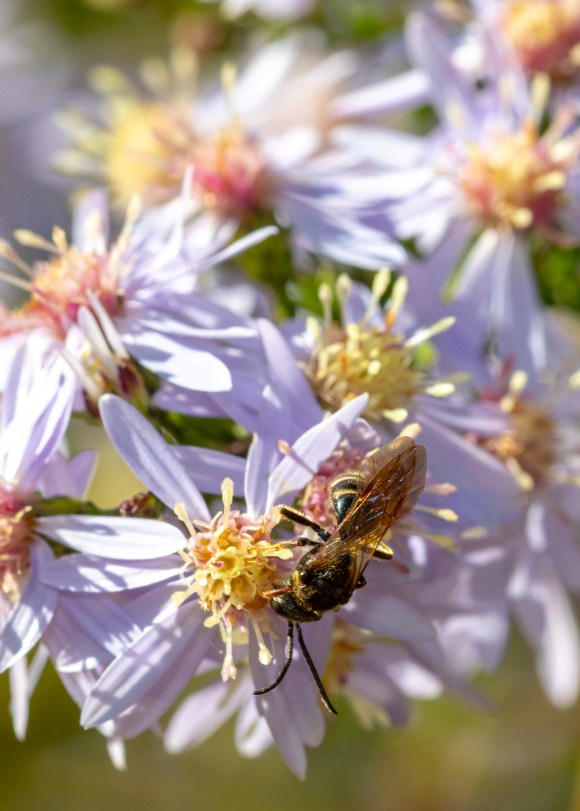
A constellation of pale blue flowers tops each Heart-Leaved Aster (AKA Blue Wood Aster or Symphyotrichum cordifolium).  Like all asters, it offers precious pollen and nectar to pollinators and beneficial insects at summer’s end.  The plant itself is a larval host for butterflies and moths.1
In nature, Heart-Leaved Aster grows in moist to dry deciduous woodlands, woodland borders, next to woodland paths, rocky wooded slopes, upland meadows, thinly wooded bluffs, shaded stream banks, and upland forests.1,5

Highly adaptable, Symphyotrichum cordifolium accepts clay, loam and sandy soils.  It grows from one to three feet tall and spreads from eighteen inches to two feet.  This aster thrives in zones three to eight.  It grows in light shade to part sun and moist to dry conditions.1

The leaves of Symphyotrichum cordifolium are highlighted by its scientific name.  Unlike the thin, lance-shaped leaves of most asters, this plant has broader, heart shaped ones.  Cordifolium  means heart-shaped and (cordi-)  means leaves (folium).  And so, the Heart-Leaved Aster!  

The leaves can reach five inches long and three inches across.  They become smaller moving up the plant. The lower leaves are fully heart-shaped (or cordate).  But the upper leaves become more oval and may be fully ovate.  They are medium green and smooth.1

The flowerheads are the highlight of the Heart-Leaved Aster!  Ranging from six inches to eighteen inches long, these conical heads shine with lavender, light-blue violet or white florets.  Each of these half inch florets has seven to fifteen petals (ray florets) and a yellow center of disc florets.1  
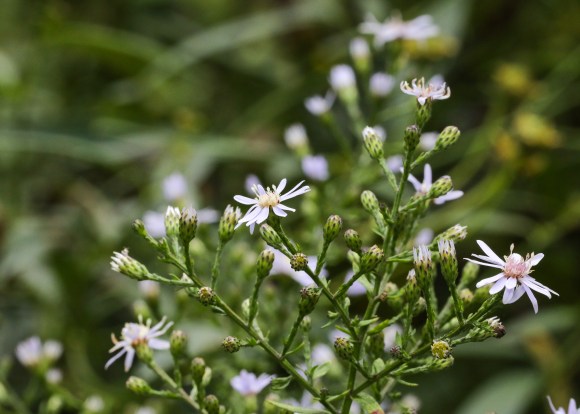
Once the disc florets are fertilized, the center turns a mauve pink adding visual interest to the flowerhead.  Floral bracts cover the base of each floret.  The bracts are pale with dark green tips.1
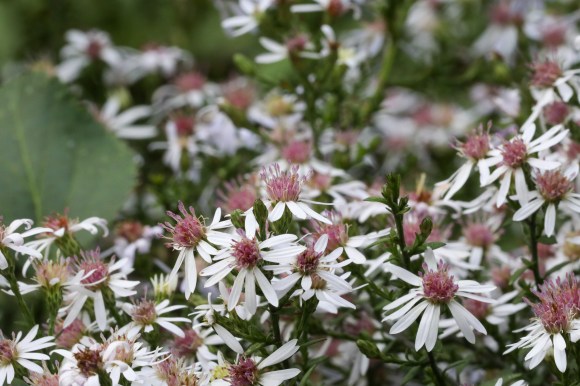
One of the first natives in my garden, I’ve grown this plant for close to 20 years.  I’ve always found is covered with flowers, pollinators and beneficials of all kinds.  That said, it has a few challenges.

It spreads by runners and by self-seeding.  When Heart-Leaved Aster’s happy, it can really colonize a garden.  It is easy to pull, and you can clip the seed heads to prevent self-seeding.1

Poorly drained soil can lead to powdery mildew, leaf spots and rust.  If the weather is too hot and dry, this aster often loses its lower leaves.  I plant it in the middle of the bed.  This location hides leaf loss and helps cover any trouble on the other leaves.4

Finally, like other asters, herbivores love it.  Rabbits, deer, ground hogs, etc., eat it, especially in the Spring.  Use whatever repellents preferred.  I also plant asters among plants animal don’t like, such as, iris.

The free herbivore pruning helps later in season though.  In fact, Symphyotrichum cordifolium benefits from pruning back several times before mid-summer.  This attention helps increases bushiness, controls height and might even eliminate the need to stake it!4

Heart-Leaved Aster draws crowds of pollinators and beneficial insects.  Like all Symphyotrichum, it is a keystone plant.  There are two types of keystone species:  one type acts as hosts for butterfly and moth caterpillars and the other feeds specialist bees.  The bee associated keystone plants also serves generalist bees.  Asters are both.2
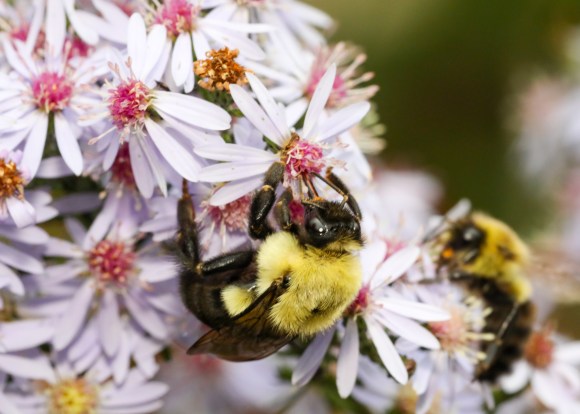
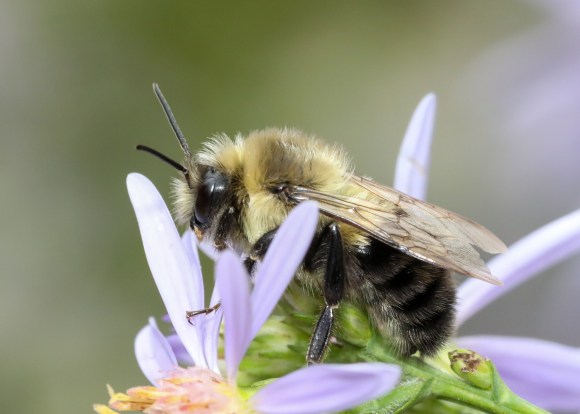
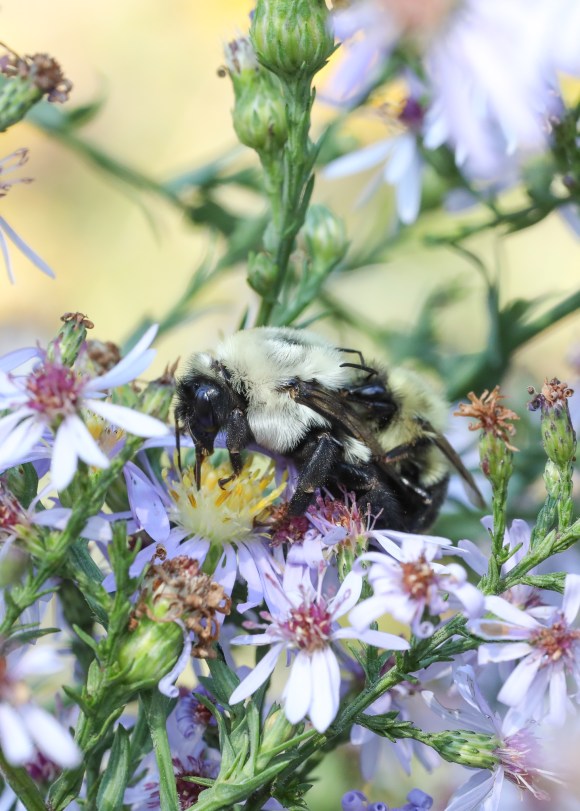
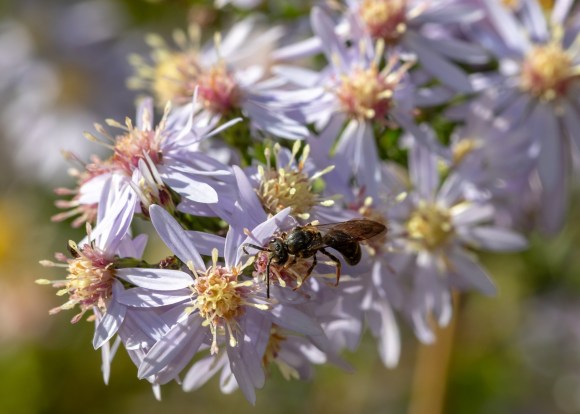
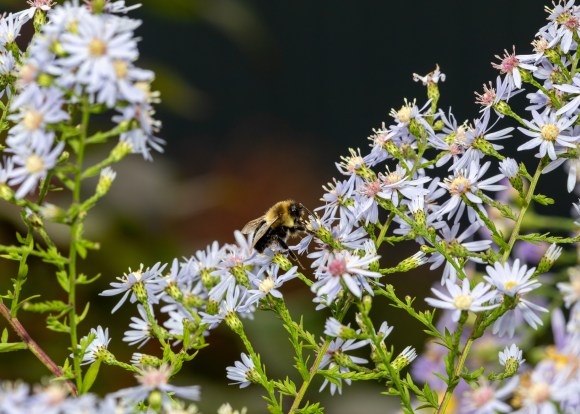
Long-tongued bees, short-tongued bees, butterflies, moths, skippers, wasps and beetles all seek out its nectar and pollen.  The Xerces Society for Invertebrate Conservation designate Symphyotrichum cordifoliumof Special Value to Native Bees and state it Supports Conservation Biological Control.  Bumblebees find it especially helpful.1,6 
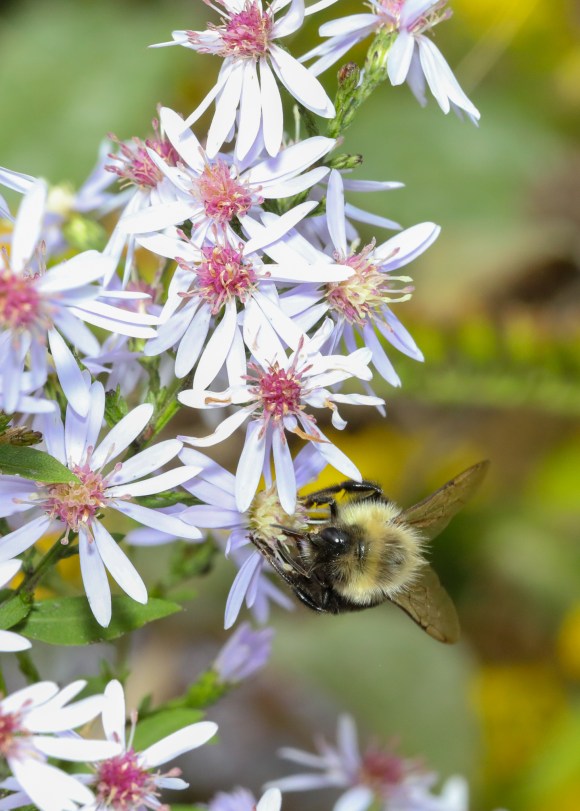
S. cordifolium blooms when new bumblebee queens emerge, males hatch and mating flights occur.  I find males sleeping on the plants on cool late summer and early autumn mornings.  The flowers provide important energy resources for successful mating flights and overwintering queens.
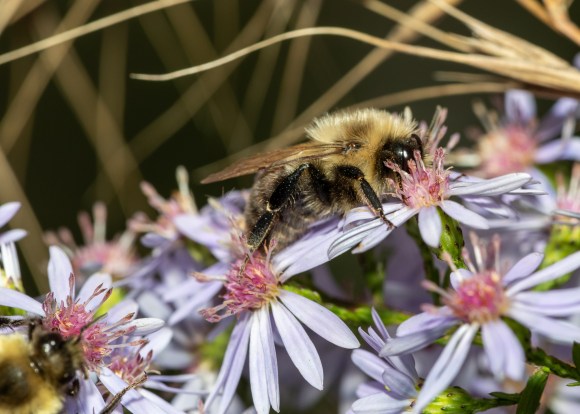
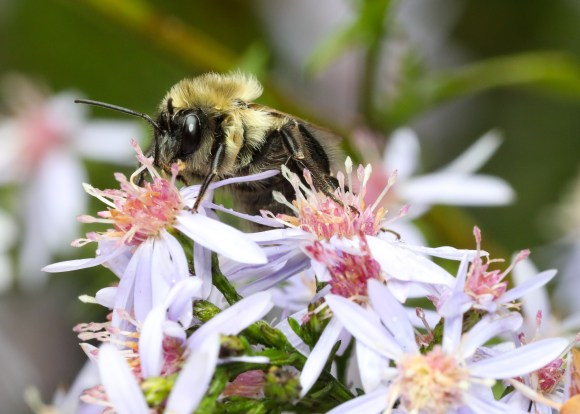
Heart-Leaved Aster support many specialist bees.  As a keystone plant for pollen specialist bees, the Symphyotrichum genus feeds several mining bees in the Andrena genus.   Specifically, these include Andrena (Callandrena s.l.) asteris, Andrena (Callandrena s.l.) asteroides, Andrena (Cnemidandrena)hirticincta, Andrena (Cnemidandrena) nubecula, Andrena (Callandrena s.l.) placata, Andrena (Callandrena s.l.simplex, and Colletes simulans.5

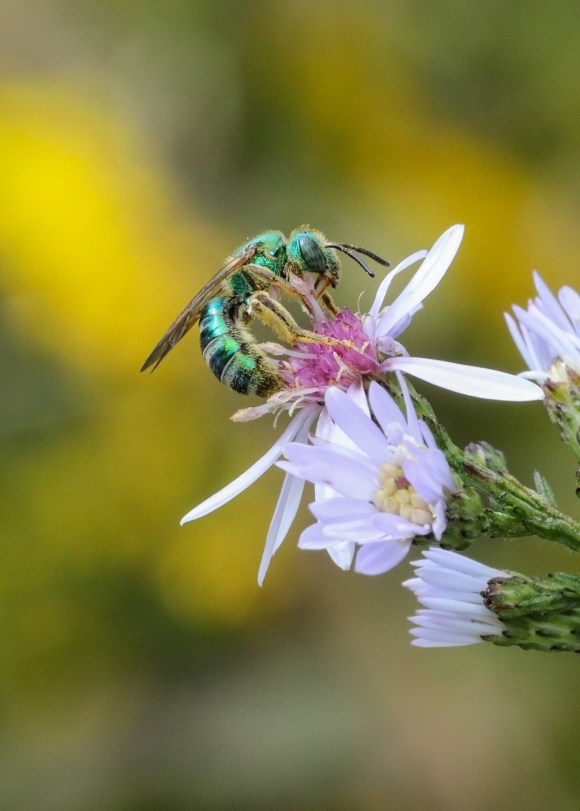
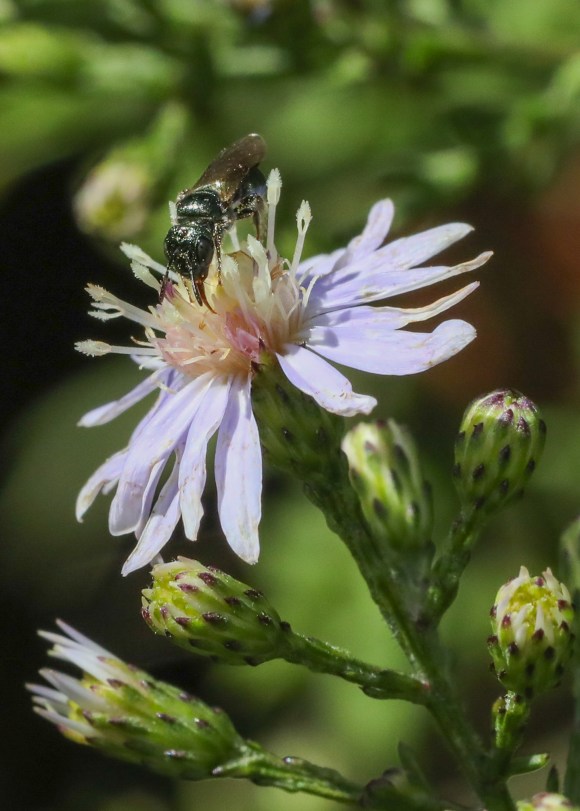
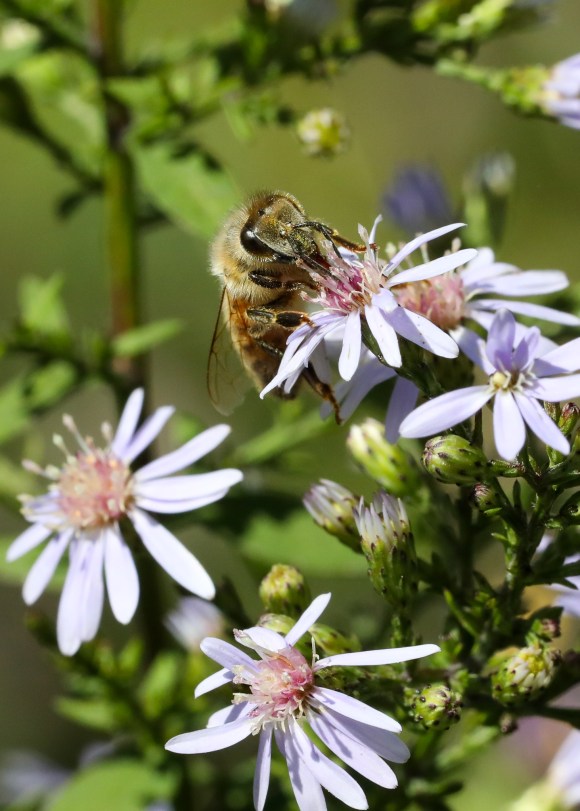
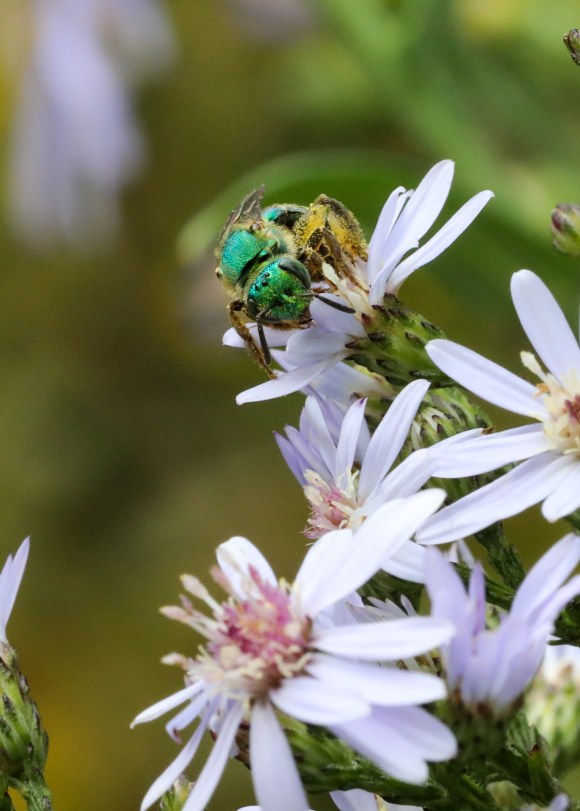
Heart-Leaved Aster is also visited by metallic green sweat bees, Halictus (sweat bees), Ceratina (small carpenter bees) and honeybees (Apis).
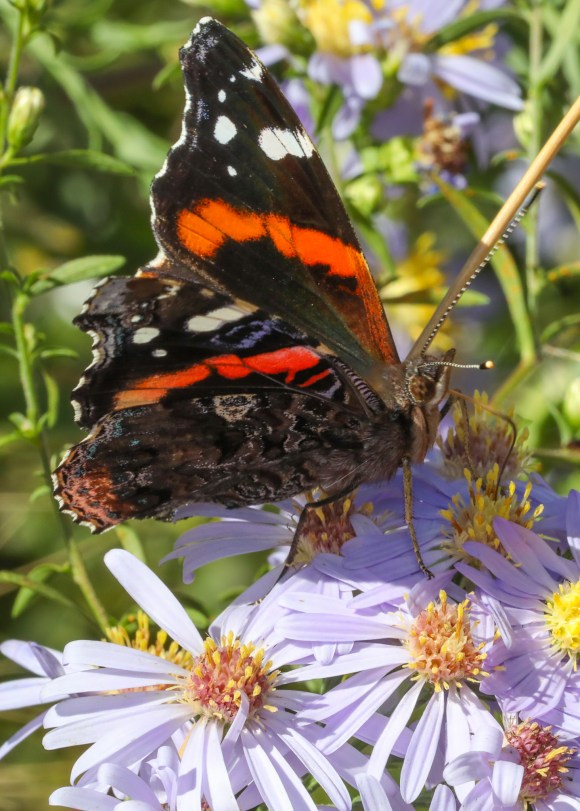
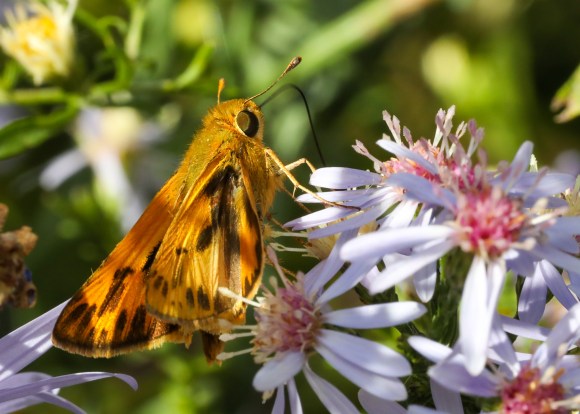
Numerous adult butterflies and skippers nectar at the Heart-Leaved Asters including migrating Monarchs (Danaus plexippus) and Red Admirals (Vanessa atalanta).  In its role as a keystone plant, it feeds many caterpillars from butterflies and, especially, moths.  Different larvae eat every part of the plant.1

By supporting moths, Symphyotrichum cordifolium contributes to pollination of wild plants overall.  Some flowers evolved a plant pollinator relationship with moths.  These flowers usually open at night, are white or pale, and have a stronger fragrance at night.  Moths use scent to find food and mates.  Yucca is a well-known example.7  

However, moths provide much more extensive pollination services.  Like generalist bees, some moths also visit different types of flowers.  Most of these plants aren’t larval hosts.  Some are also pollinated by bees.  When they’re bee pollinated, moths supplement the bee’s work.7

In addition, moths are more efficient than bees in some cases.  In the past, studies only measured pollen on mouthparts.  But moths carry a lot of pollen on their hairy underbelly.  When they land on a flower, their belly presses against the stigma to transfer pollen.7,8

Moths usually fly over longer distances than bees.  Bees tend to stay near their nest when possible.  Moths add genetic diversity by bringing pollen from distant plant populations.7

A variety of moth and butterfly caterpillars use Symphyotrichum cordifolium.  Different larvae eat flowers, seeds, and leaves while others bore through stems and/or roots.  I’ve detailed some different species and which plant parts they eat in the next few paragraphs.3

Chlosyne nycteis (Silvery Checkerspot butterflies) and Phyciodes tharos (Pearl Crescent butterflies) consume foliage.  Some moths also devour the leaves, such as, Pale-Banded Dart (Agnorisma badinodis(syn. Xestia badinodis)), Sharp-Stigma Looper Moth (Ctenoplusia oxygramma (syn. Agrapha oxygramma)), Halloween Paint (Cucullia alfarata), Rusted Paint (Cucullia postera), Confused Eusarca (Eupithecia confusaria), Lost Sallow (Euplexia devia), Green Leuconycta (Leuconycta diphteroides), Small Brown Quaker (Pseudorthodes vecors) and Dimorphic Gray (Tornos scolopacinarius).3

Leaf miners include Gracillarlid Moth sp. (Acrocercops astericola), Tischeriid Moth sp. (Astrotischeria astericolaI), Scythridid Moth sp. (Landryia impositellaI) and Bucculatricid Moth sp. (Bucculatrix staintonella).3

Some feed on developing seeds and/or flowers including Blackberry Looper (Chlorochlamys chloroleucaria), White-Dotted Groundling (Condica videns (syn. Platysenta videns)), Common Pug (Eupithecia miserulata), Spotted Straw (HeIliothis turbatus), Tortricid Moth sp. (Phaneta parmatana), Tortricid Moth sp. (Phaneta tomonana), Common Tan Wave (Pleuroprucha insulsaria), Arcigera Flower Moth (Schinia arcigera), Goldenrod Flower Moth (Schinia nundina), Northern Flower Moth (Schinia septentrionalis), Wavy-Lined Emerald (Synchlora aerate) and Striped Garden Caterpillar (Trichordestra legitima).  Some moths consume foliage in addition to developing seeds and/or flowers.  These include Black Arches (Melanchra assimilis) and Dark-Spotted Palthis (Palthis angulalis).3

And finally, moth larva that bore through stems and/or roots are  Aster Borer Moth (Carmenta corn) , Tortricid Moth sp. (Eucosma robinsonana), Burdock Borer Moth (Papaipema cataphracta), Aster Borer Moth (Papaipema impecuniosa), Tortricid Moth sp. (Phaneta essexana) and Tortricid Moth sp. (Sonia canadana).3 

I hope you enjoyed this look at the Heart-Leaved Aster as much as I have.  I’d love to hear about your plant adventures in the garden or the wild!  Please feel free to contact me with a story, comment or question!

Happy Gardening,

Mary

Bibliography:

  1. “Blue Wood Aster (Symphyotrichum Cordifolium).” Accessed December 1, 2024. https://www.illinoiswildflowers.info/woodland/plants/bl_woodaster.htm. Accessed December 1, 2024.
  2. “Keystone Native Plants:  Eastern Temperate Forests-Ecoregion 8.” https://www.nwf.org/-/media/Documents/PDFs/Garden-for-Wildlife/Keystone-Plants/NWF-GFW-keystone-plant-list-ecoregion-8-eastern-temperate-forests.ashx?la=en&hash=1E180E2E5F2B06EB9ADF28882353B3BC7B3B247D
  3. “Moth Table (Symphyotrichum Spp.).” Accessed December 1, 2024. https://www.illinoiswildflowers.info/woodland/tables/table29.html.
  4. “Symphyotrichum Cordifolium – Plant Finder.” Accessed December 1, 2024. https://www.missouribotanicalgarden.org/PlantFinder/PlantFinderDetails.aspx?kempercode=a788.
  5. “Symphyotrichum Cordifolium (Blue Wood Aster, Common Blue Wood Aster, Heart-Leaved Aster) | North Carolina Extension Gardener Plant Toolbox.” Accessed December 1, 2024. https://plants.ces.ncsu.edu/plants/symphyotrichum-cordifolium/.
  6. “Symphyotrichum Cordifolium (Broad-Leaved Aster) | Native Plants of North America.” Accessed December 1, 2024. https://www.wildflower.org/plants/result.php?id_plant=syco4.
  7. Xerces Society. “The Night Shift: Moths as Nocturnal Pollinators.” Accessed December 1, 2024. https://xerces.org/blog/the-night-shift-moths-as-nocturnal-pollinators.
  8. “Moths are more efficient pollinators than bees, shows new research.”  Accessed December 1, 2024. Ellis, Lauren, https://www.sussex.ac.uk/broadcast/read/60568.
Categories
native plants Pollinator gardening

A Summer Cornucopia

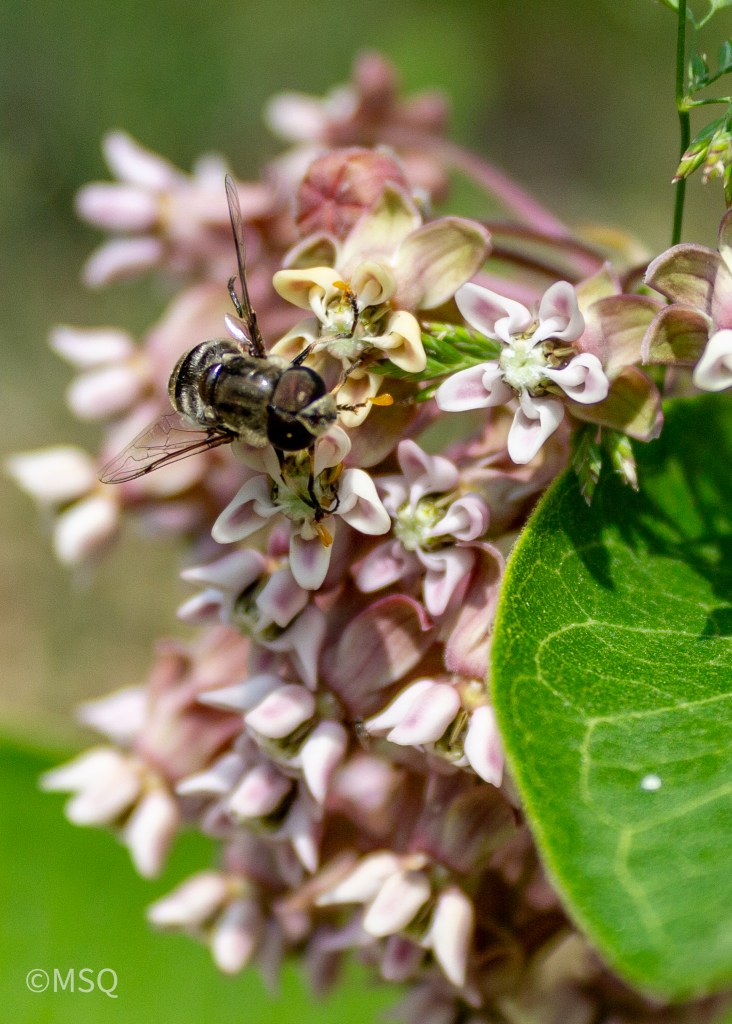
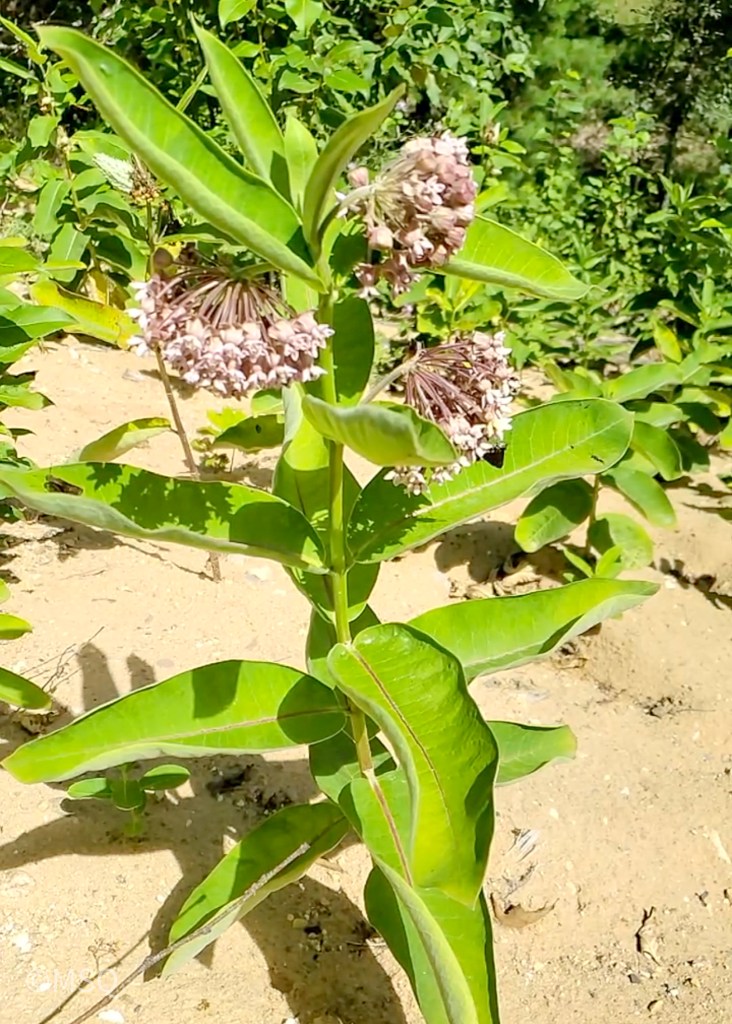
Common Milkweed or Asclepias syriaca is a superb Monarch support and a mainstay of Monarch waystations.  But it is so much more.  This plant feeds more than 450 insects at different life stages. Diverse insects consume nectar, sap, leaves, flowers and seeds5.  Admittedly weedy, its lovely blooms are fragrant and enhance any scent garden1,5.

Common Milkweed thrives in full sun and well-drained soils.  Like other “weeds”, it’s not picky about growing conditions.  A. syriaca  grows in clayey, sandy or rocky calcareous soils, loamy soils and high clay or sand soils. 

Asclepias syriaca springs up in disrupted areas.  Human activity disrupts natural areas.  But natural disruptions occur where water rises and falls, for example, along streams and lakes.  

In nature, Common Milkweed is found in moist and dry black soil prairies, sand prairies, sand dunes along lake shores, fields, pastures, abandoned fields, vacant lots and along railroads, fence rows and roadsides. 

Common Milkweed absolutely lives up to its weedy name.  It spreads by seed and by long creeping rhizomes that pop up in unexpected places.  Once established, this plant is extremely difficult to remove. 

These habits are offset by Common Milkweed’s value to insects and pollinators.  It’s best to let it grow where you don’t mind its vigorous and abundant nature—a wild area, a meadow or a prairie garden.

Asclepias syriaca offers a strong erect form in the garden.  The pale, cylindrical central stem supports opposite jade-green leaves.  These leaves range from pale to dark green on top and are pale green with short, dense hair underneath.  Each leaf has a distinctive central vein with small veins spreading to the edges.  

The milky sap, which gives Milkweed its name, oozes whenever part of the plant is broken.  The sap is called a latex and contains 2% latex.  The latex is thick and sticky.  

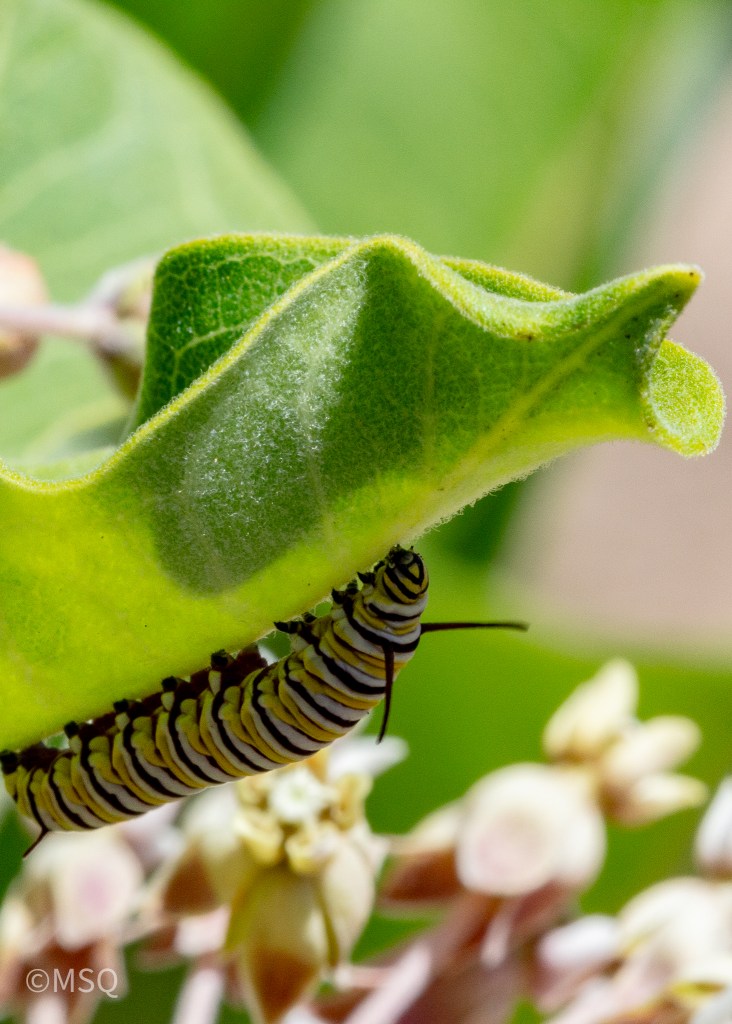
Most ingeniously, caterpillars will reduce the sap’s flow by taking tiny bites closer to the stem.  The sap leaks out there.  When the caterpillar begins to eat a leaf, there’s less latex at the feeding site.  Thus, less chance the sticky stuff will foul the larva’s mouth2,3.

For humans and other mammals, there are other concerns.  The milky sap contains cardenolides, specifically cardiac glycosides.  Contact with the skin or eyes causes irritation.  If eaten or exposed to mucous membranes, cardiac glycosides can disrupt the nervous system, the kidneys, the muscles (which includes the heart) and the human’s/animal’s acid/base balance3,4,5.  

The monarch and other insects that consume milkweed have turned this to their advantage.  As the caterpillars/insects consume milkweed their bodies store the cardiac glycosides.  If a bird or animal eats them, they taste bitter and can make the predator feel sick.  

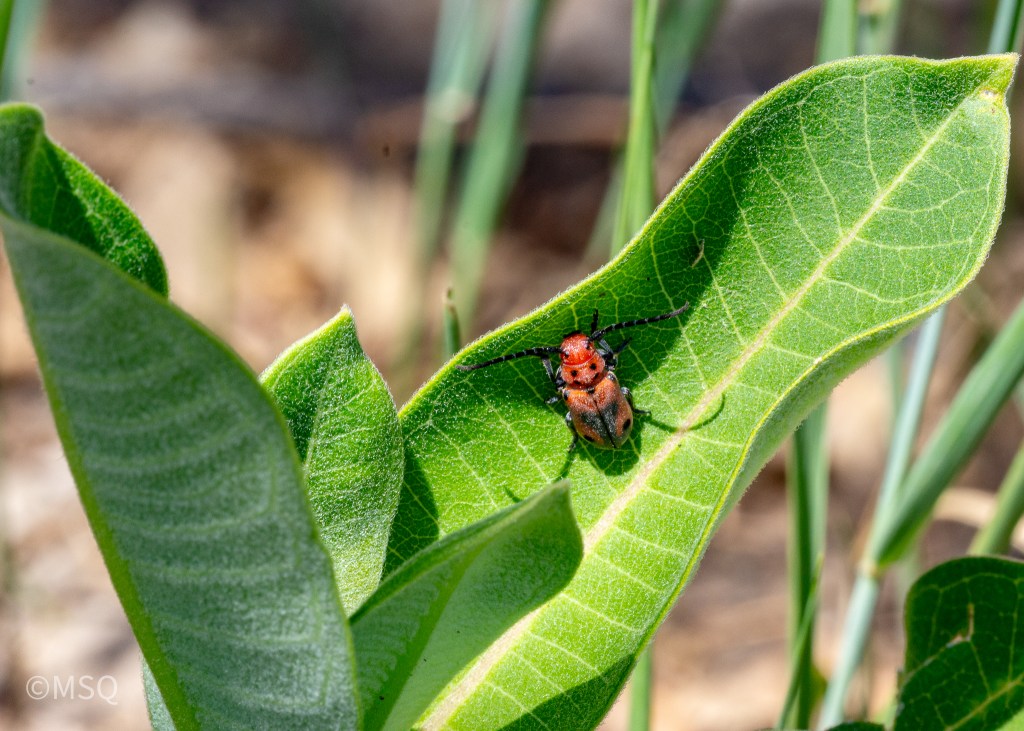
Predators soon learn to leave them alone. The orange/black or red/black coloring of milkweed insects signals, “Stay away!  Not good for you!”  The technical term for this warning coloration is ‘aposematic’5.

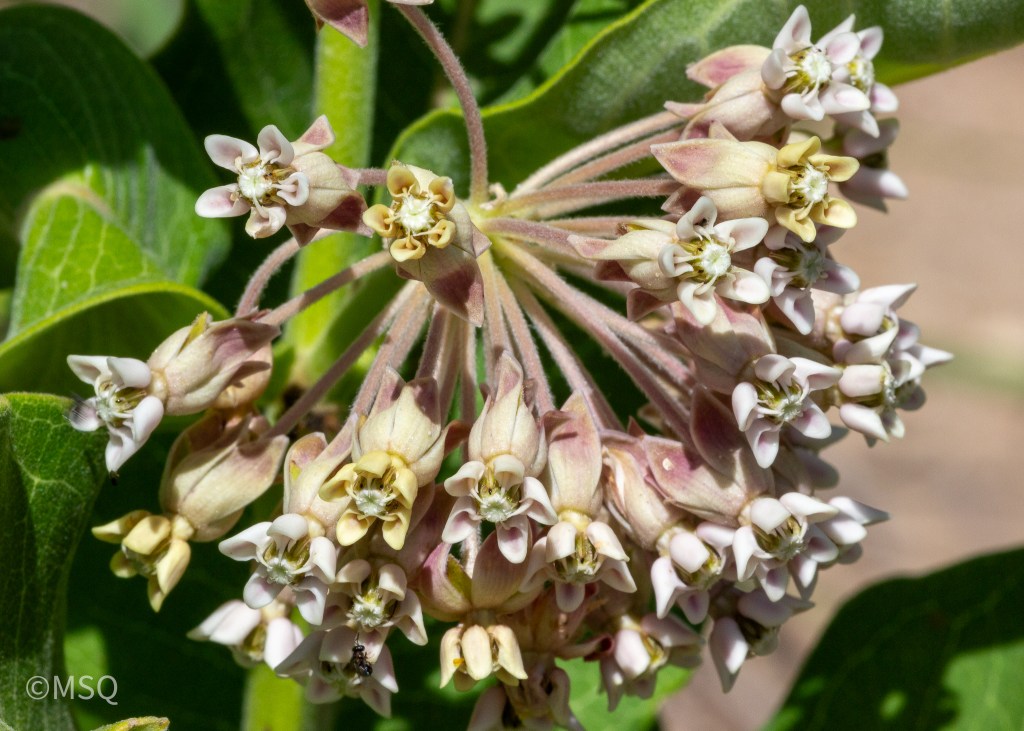
Milkweed blooms don’t dazzle but flower in 1930’s vintage shades.  The drooping balls of florets are soft and dusky lasting one to one and a half months.  Colors range from greenish white to greenish pink to rosy-pink to purplish-pink to reddish purple.  

Each cluster averages 30 individual florets but can have up to 100. Their sweet, vanilla fragrance drifts from the three to five umbels on each plant.  

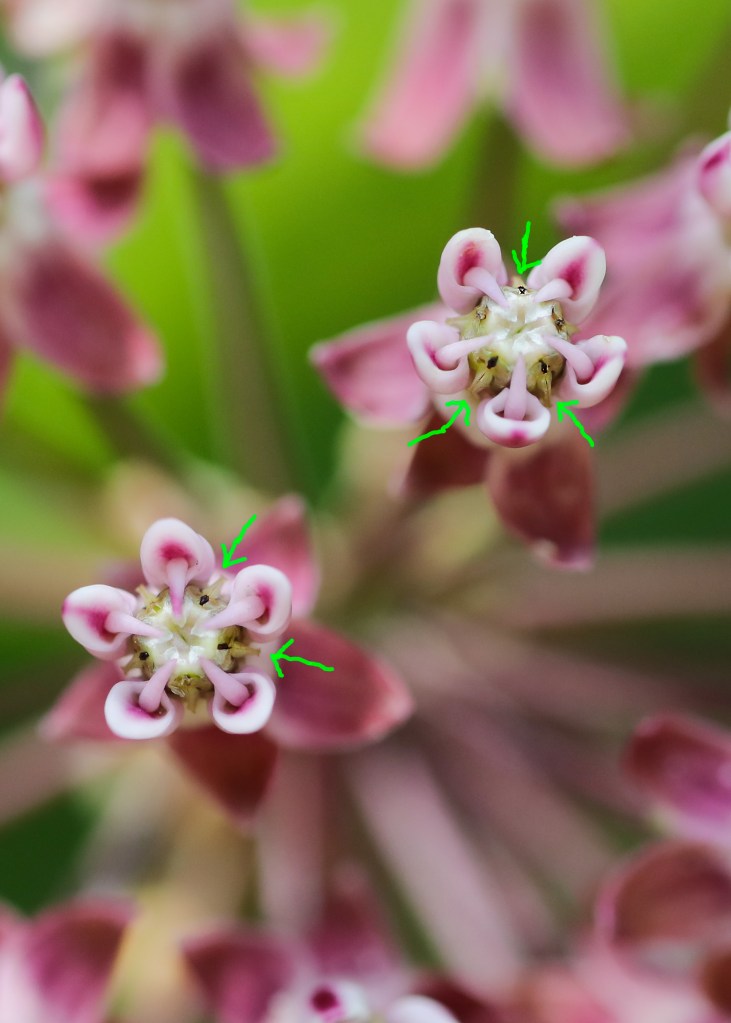
Up close, each floret is a fascinating feat of engineering all directed toward an exceptional pollination system.  Each a quarter of an inch across, the florets have five reflexed (bent back) petals and five raised hoods with curved horns.  The hoods have lighter colors than the petals.  

In the center of each floret, is a cylindrical structure formed by two fused stigmas.  It’s called the stigmatic column.  

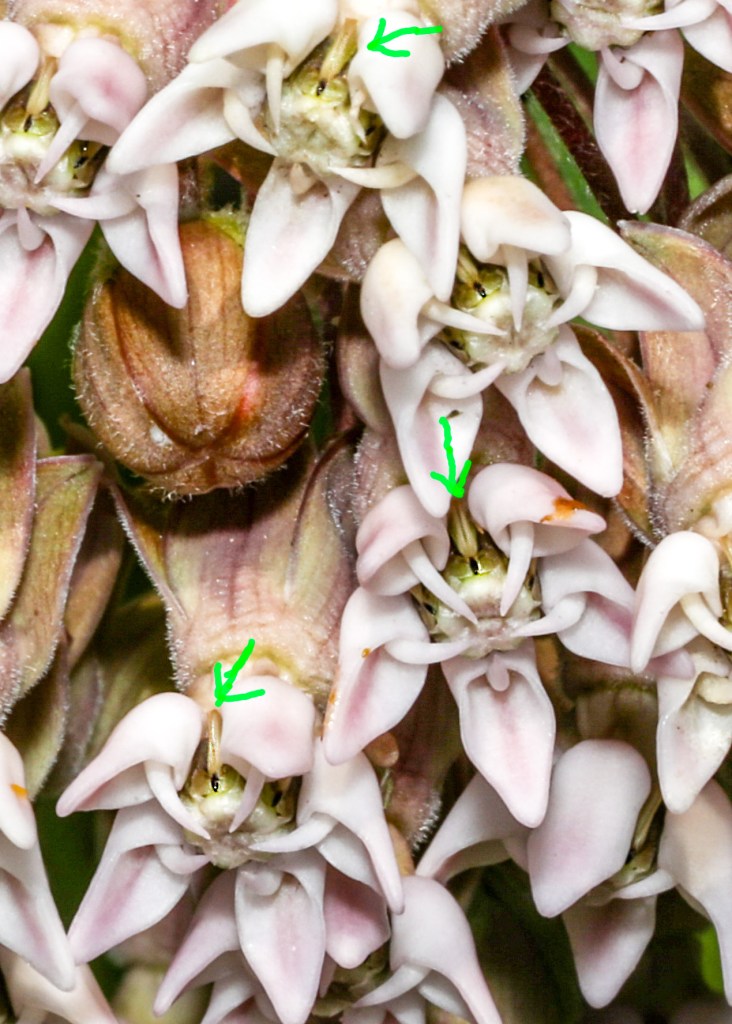
Between the hoods, are the stigmatic slits.  These slits hold the pollinaria.  Unique structures, pollinaria hold waxy sacs of pollen.  These are transferred instead of the loose, powdery pollen used by most flowers.  Milkweeds and orchids are the only known plants to have them6,7.

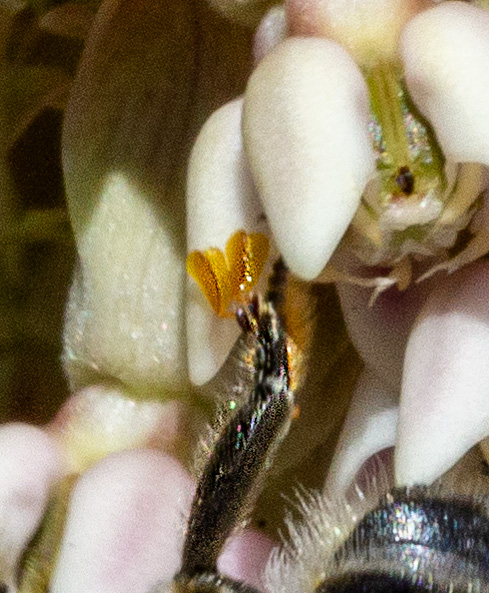
The milkweed pollinium (or pollinarium) consist of a blackish-brown oval gland (corpusculum) with a slit, two translator arms hanging from the gland and two pollinial sacs.  Before each sac, a knee bend of approximately 900 occurs in the arm.  This bend enables the rotation of each sac during pollination.

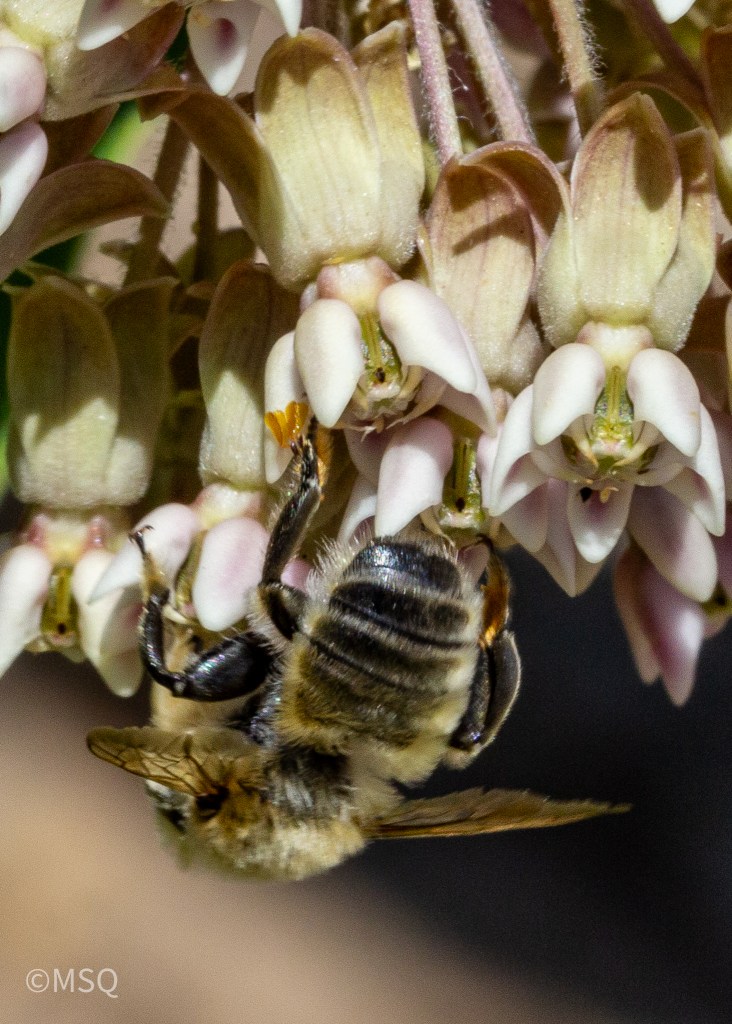
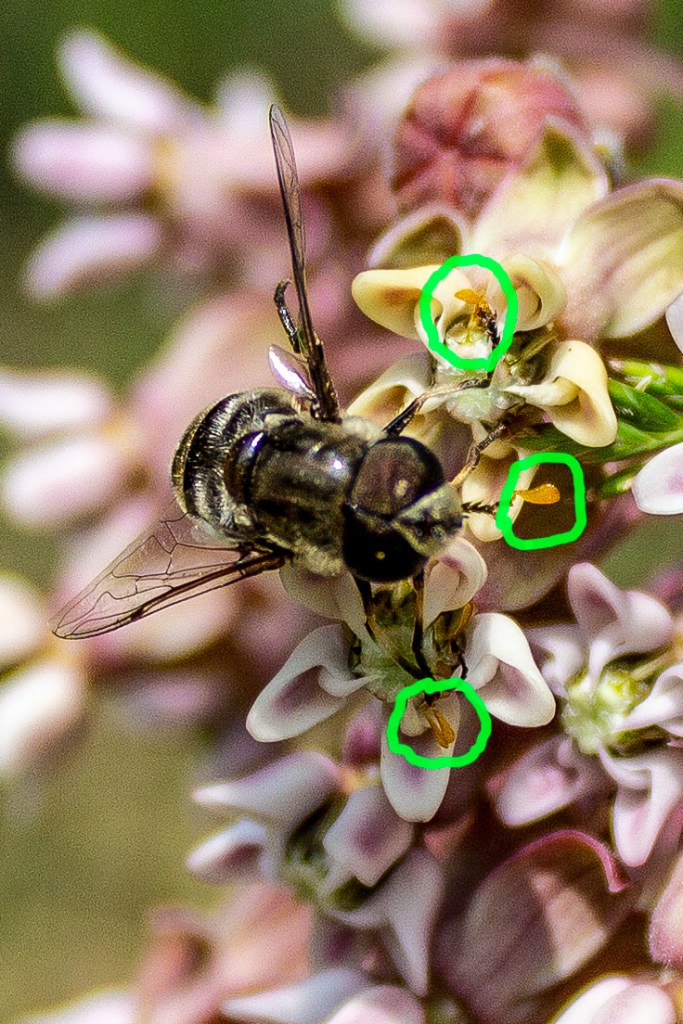
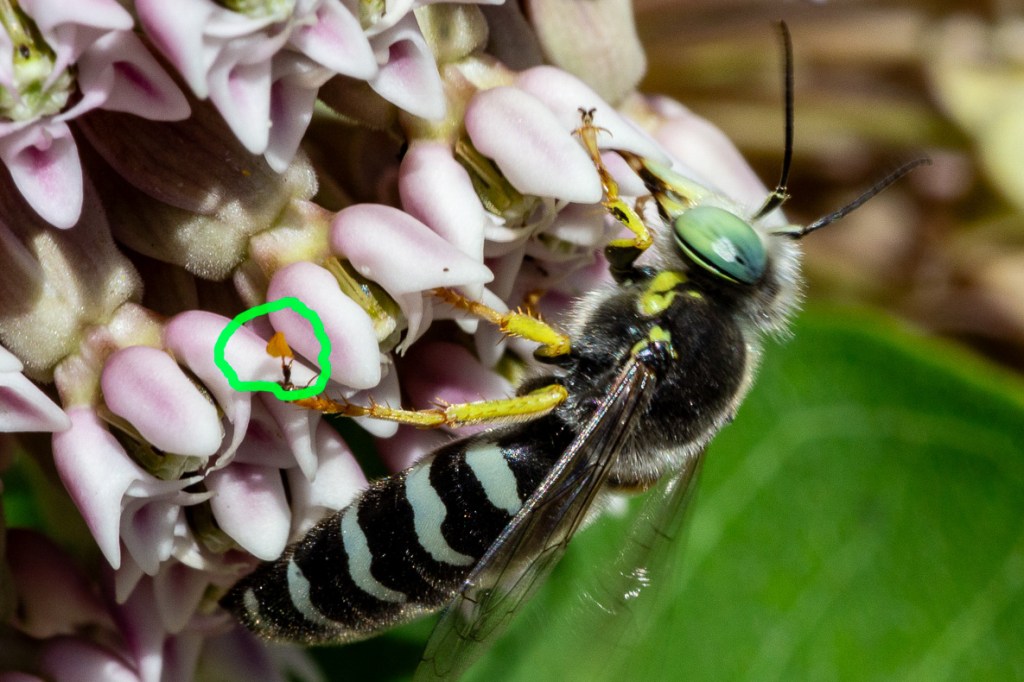
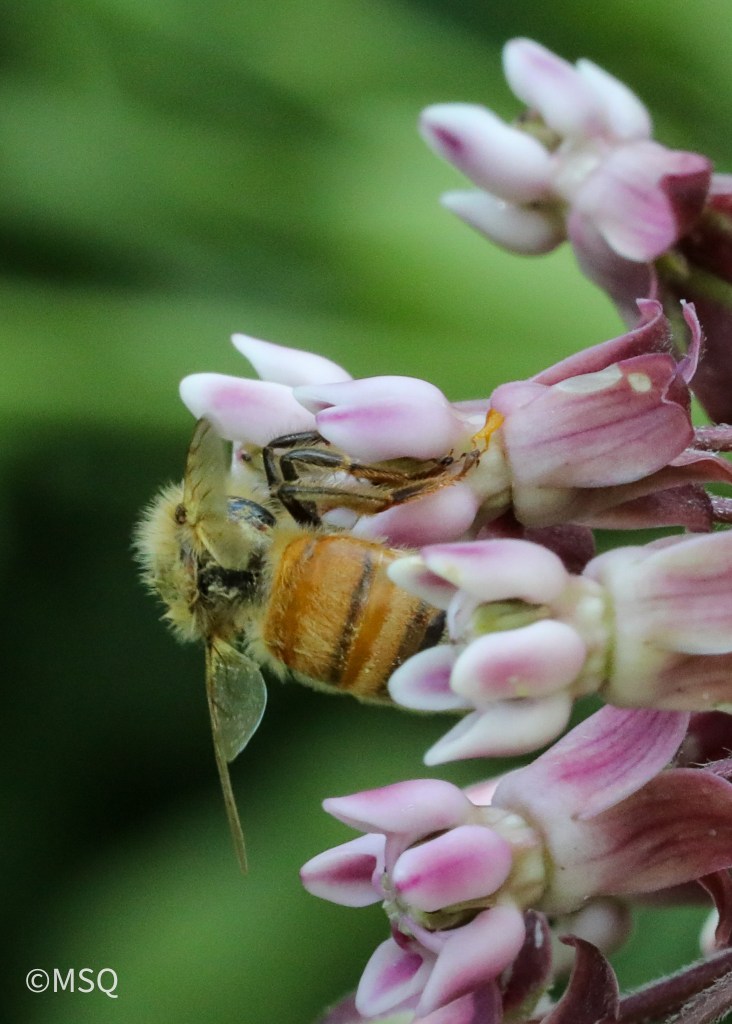
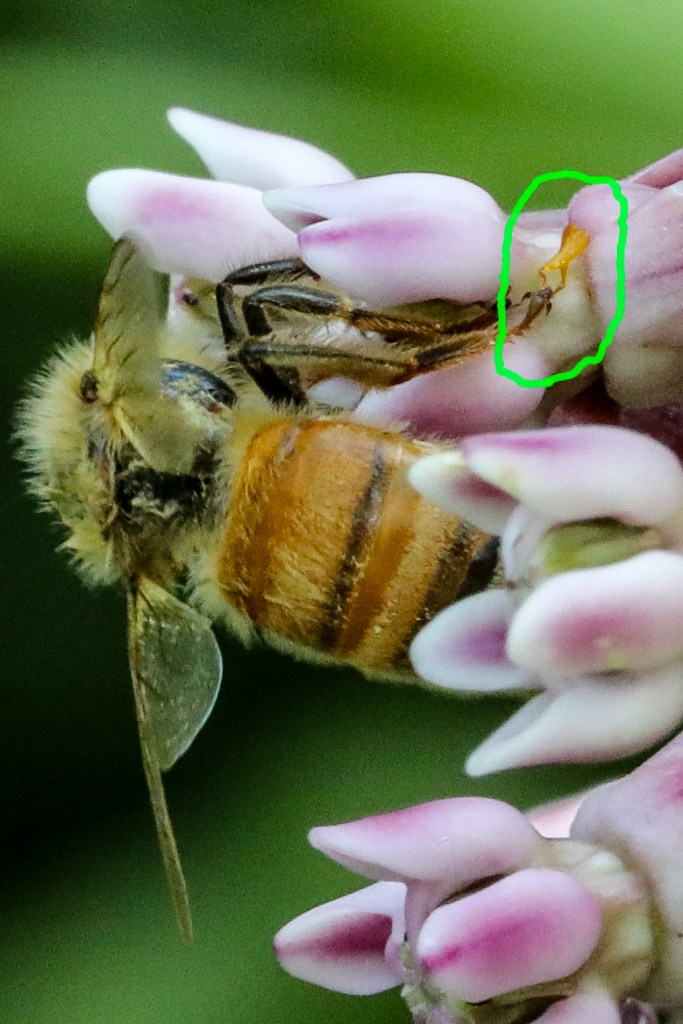
In the milkweeds, the pollinial sac sit inside the stigmatic column and only the corpusculum is visible between the hood structures.  When an insect lands on the flower, one of its legs may slip into the stigmatic slit between two hoods.   As it tries to free itself, the leg moves upward toward the slit in the corpusculum. Bristles in the chamber keep it from going back down.  

Insects must be strong to free themselves.  Large butterflies, predatory wasps and long tongue bees are most likely to remove pollinaria.  Lost legs and dead smaller insects both occur from failed escape attempts.

When a pollinaria is removed, it begins to dry.  The pollinial sacs rotate 90o during drying.  The rotation moves them into the correct position for pollination.  

When the insect lands on another milkweed,  the knee bend (not the corpusculum oval) slides into the space between the hood petals.  The translator arm follows then the rotated pollinial sac.  The pollinial sac slides into a space in the stigmatic column and pollination is completed.  

When the insect continues pulling upward, the translator arm breaks.  The insect keeps the remaining part of the pollinaria.  

It’s also possible to start a chain of pollinaria during this process.  As the broken translator arm slides between the hoods, it can hook the corpusculum slit of this floret’s pollinaria adding a fresh pollinaria to the partial remaining one.  Clumps and chains of all sorts develop this way.  These groups of pollinaria may increase chances of pollination6.7.

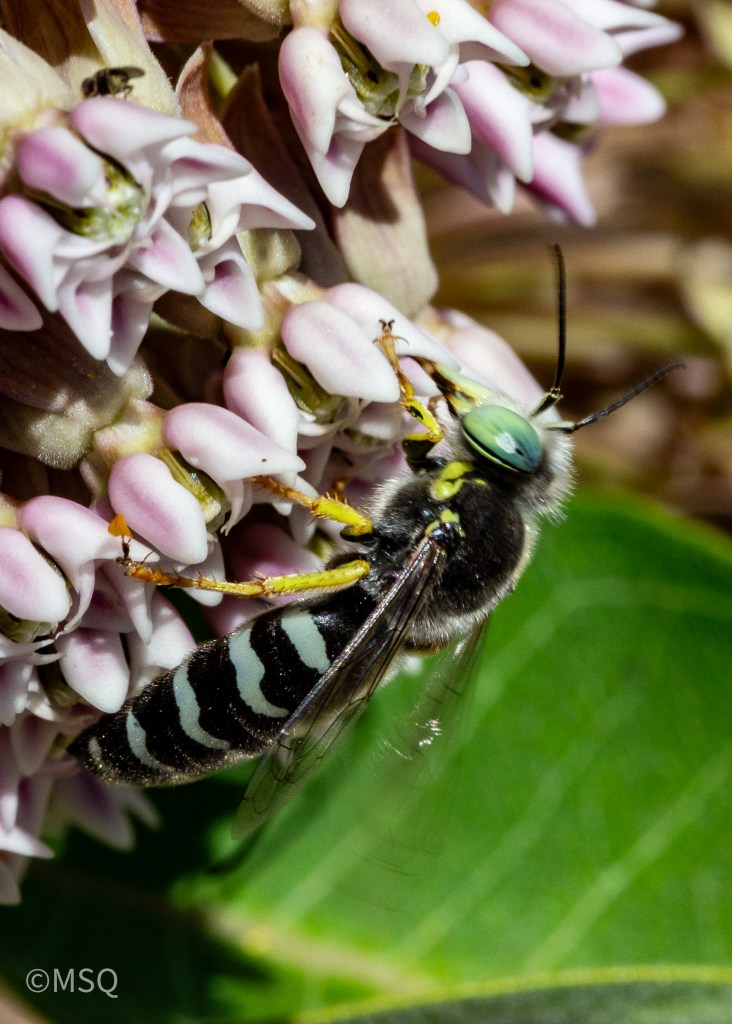
Part I, ends here, with the exciting conclusion of a fertilized milkweed.  Part II will continue with photos and information about the insects that use Common Milkweed.  What a crowd it is—including flies, wasps, bees, butterflies, moths, skippers, plant bugs and beneficial insects!

See you next time to discover what Wild Things are in the Garden!

Mary

References

  1. Hilty, J., n.d., Common Milkweed, Asclepias syriaca, Milkweed family, (Asclepiadaceae),  https://www.illinoiswildflowers.info/weeds/plants/cm_milkweed.html
  2. Berkov, A., 28.October.2010, Plant Talk:  Inside the New York Botanical Garden; Plant Profile:  The Extraordinary Common Milkweed, How Do Insects Feed on this Plant with Sticky White Latex? https://www.nybg.org/blogs/plant-talk/2010/10/science/plant-profile-the-extraordinary-common-milkweed/#:~:text=Plants%20in%20the%20genus%20Asclepias,Asklepios%2C%20the%20ancient%20Greek%20physician.
  3. Bowe, Scott, 11.September.2018, Milkweed is More Than Just a Common Weed, WXPR, https://www.wxpr.org/natural-resources/2018-09-11/milkweed-is-more-than-just-a-common-weed
  4. Nelson, M. and Alfuth, D., 24.February.2021, Milkweed (Ornamental Plants Toxic to Animals), X-number:  XHT1276, https://hort.extension.wisc.edu/articles/milkweed-ornamental-plants-toxic-to-animals/
  5. Taylor, David, n.d., Common Milkweed, (Asclepias syriaca L.), Plant of the Week, https://www.fs.usda.gov/wildflowers/plant-of-the-week/asclepias_syriaca.shtml
  6. Eldredge, E.P., 2015,11,00, Milkweed Pollination Biology, Plant Materials Technical Note NV-58, Natural Resources Conservation Service, https://www.nrcs.usda.gov/plantmaterials/nvpmctn12764.pdf
  7. Betz, R.F., Struven, R.D., Wall, J.E. & Heitler, F.B., 1994, Insect Pollinators 12 Milkweed (Asclepias) Species, T.B. Bragg and J. Stubbendieck (eds.) Proc. Of the Thirteenth North American Prairie Conference. Univ. of Nebraska, Lincoln, NE.

Categories
native plants Pollinator gardening

Grist for the Bees

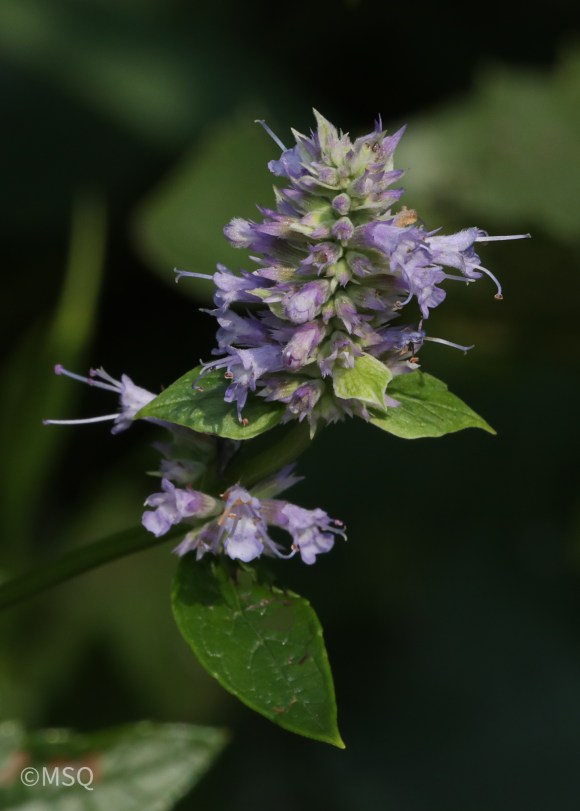
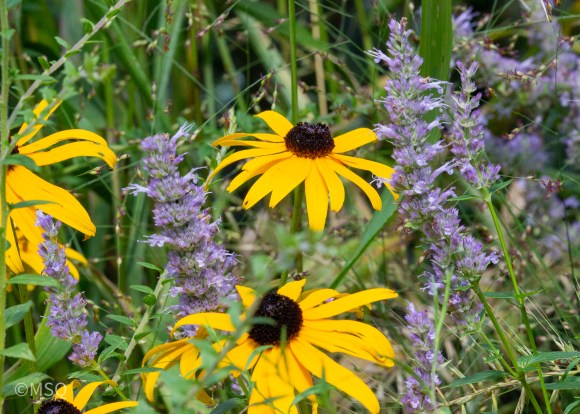
Purple Wheat in the garden?  Indeed, that’s what Agastache means ‘agan’ much, ‘stachys’ ear of grain, from the Greek.  Its flowers look like heads of wheat or rye and range from pale lavender to purple.  ‘Foeniculum’, the second part of the name, means fragrant for the scented leaves.  Agastache foeniculum (Fragrant or Anise Hyssop) is part of the mint family.  Like Pycnanthemum virginianum (https://wildthingsinthe.garden/2023/05/31/white-goes-with-everything/), also mints, it attracts an enormous variety of bees.  Fragrant Hyssop also supports numerous butterflies and skippers.

Anise Hyssop grows two to four feet tall and spreads eighteen inches to two feet.  It has an upright, clump-forming habit.  Anise Hyssop sports dark green, ovate to broadly lanceolate leaves up to four inches long.  Almost heart shaped, the leaves are one to three inches at the base and whitish underneath.  They sit opposite each other on the classic square stem of mint plants.  The foliage also gives off a strong anise or licorice-like scent that gives the plant its common and Latin name.

Agastache foeniculum can begin blooming in June and continues through August.  In zone 5, where I am, it doesn’t start until July.  Blooms appear as three- to six-inch-long flower spikes at the end of plant stalks.  The eye-catching blossoms range from pale lavender to true purple in color.  Tiny flowers make up each large spike.  They’re laid out in tightly packed rows although there can be gaps (think of an ear of corn).  This arrangement is called verticillasters or false whorls.  Each of the small flowers is tubular, 2-lipped and a 1/3’’ inch long.  Unlike the leaves, the blooms have no scent. 

Fragrant Hyssop plant grows best in full sun with dry to moderately moist soil.  Soil moisture is not a problem if the drainage is good.   Anise Hyssop is drought tolerant, more so after it is established.  It spreads by rhizomes and self-seeding especially under good conditions.  I have not found that this plant spreads obnoxiously.  I have far fewer Anise Hyssop seedlings than Monarda fistulosa seedlings.  Fragrant Hyssop may have problems with crown rot with soggy soil. Other issues include rust and powdery mildew.

Outside of cultivation, Agastache foeniculum grows in prairies, dry upland forests, plains, fields, roadsides, and other dry, open, semi-shaded areas.  In the past, it served as honeybee forage in Canada and parts of the Upper Midwest.  It works well in borders, wildflower gardens, herb gardens, butterfly gardens and meadows.

Agastache foeniculum and similar species inspire plant breeders around the world.  Too many nativars exist to explore them all, but I thought we could look at three very different plants.  Each of these was modified in a different way.

Agastache ‘Blue Fortune’ is a very popular hybrid created by crossing Agastache foeniculum with its East Asian relative, Agastache rugosa.  This compact plant has longer flower spikes than the species.  It blooms for an extended time because it’s bred to be sterile.  ‘Blue Fortune’ is widely reported to be a pollinator magnet.

Agastache ‘Golden Jubilee’ is an older hybrid with yellow-green foliage that’s pure yellow in the Spring. The flowers are identical to the species.  ‘Golden Jubilee’ received the All-American Selection Award in 2003 and is still being sold.  It will self-seed with a mix of species and golden seedlings.  There are mixed reports on how pollinators respond to ‘Golden Jubilee’.  Some sources say bees don’t seem to ‘see’ it and others say pollinators love it.

Agastache ‘Red Fortune’ has red to pink flowers.  The leaves are like the species.  Pollinators don’t like this plant as much as Agastache foeniculum.

These three plants give a nice snapshot of how natives are altered and some pollinator responses.  One idea is that nativars with flowers most like the species’ flowers would be most acceptable.1  Positive reports about ‘Blue Fortune’ and ‘Golden Jubilee seem to support this idea.2

In addition, red is a special case.  Bees see in the ultraviolet spectrum—from approximately 300 to 650 nm.  They can’t see red although they can see reddish tones like orange.  When native plants are hybridized for red flowers, bees often have trouble finding them.1,3

But wait!  There’s an exception.  Red flowers can have ultraviolet “nectar guides”  which the bees see perfectly well.  Plants use these guides to “direct” the pollinators to the nectar reward and encourage pollination.3  

It’s hard to say if a red native hybrid will still attract and support bee pollinators.  If they retain their ultraviolet nectar guides, then the bees should see them.  However, I’ve seen more than one report showing little to no bee activity on the red and pink hybrids.1,2

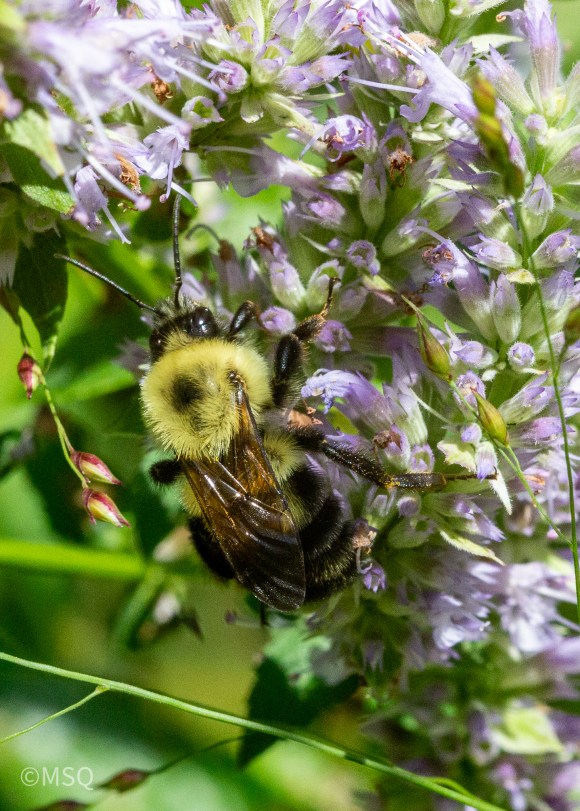
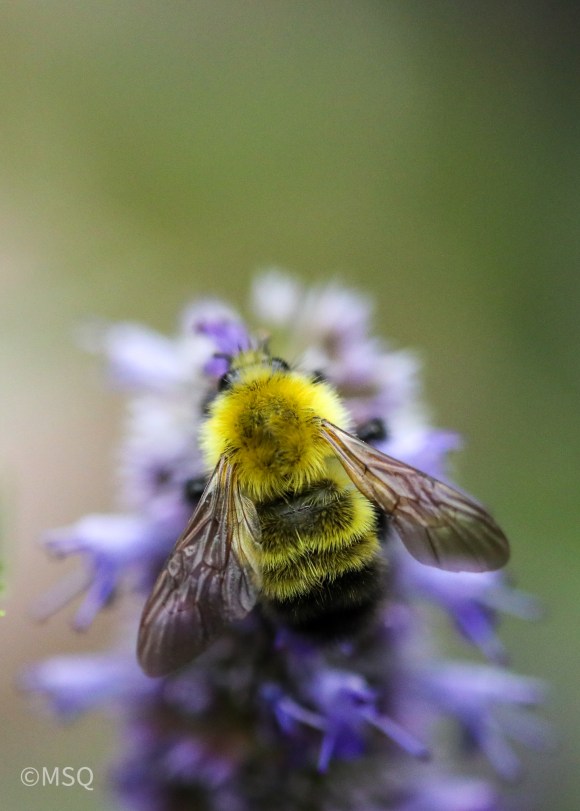
Anise Hyssop serves a multitude of pollinators providing nectar and pollen.  Like Monarda (https://wildthingsinthe.garden/2023/07/31/the-gardens-super-station/), Fragrant Hyssop has been identified by pollination ecologists as attracting large numbers of native bees.  The Xerces Society for Invertebrate Conservation also designated Fragrant Hyssop of Special Value to Bumble bees and Honeybees.  Butterflies and skippers use it for a nectar source.

Pollination in Fragrant Hyssop hinges on both the individual flowers’ structure and the different bees’ anatomies.  The nectar is secreted by a disc at the base of the flower.  Pollen-carrying anthers are located on the top lip of each flower.  When bees root for nectar, pollen rubs off onto their heads or thorax.  As they move to a bloom with a receptive stigma, female part, the pollen transfers and fertilization occurs.

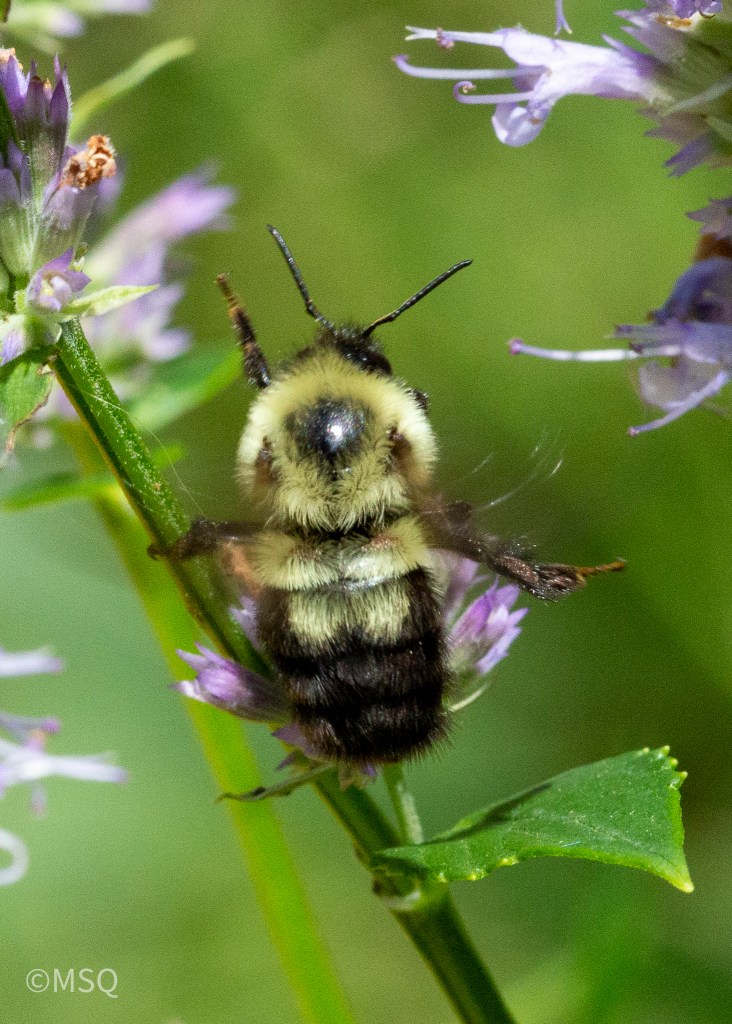
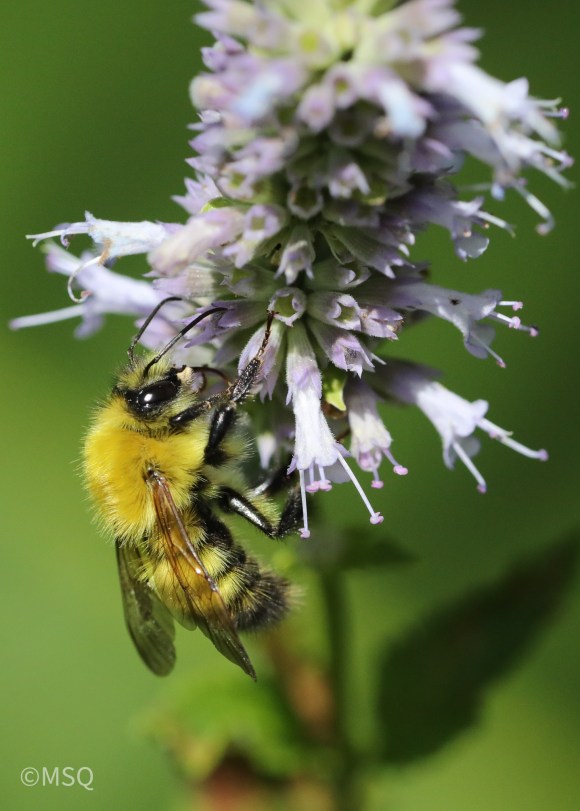
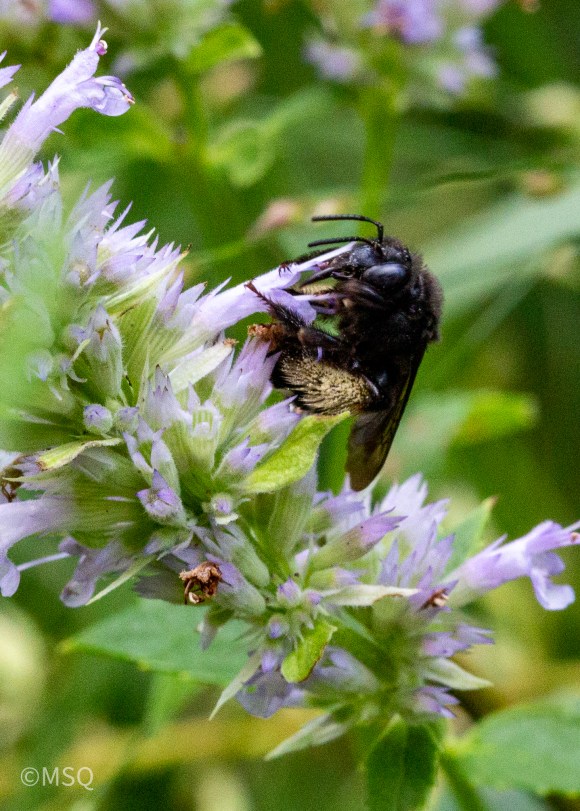
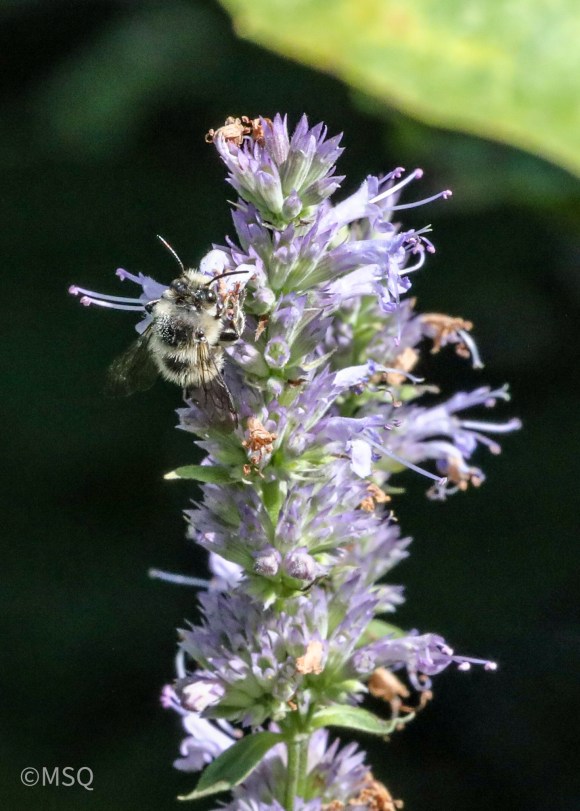
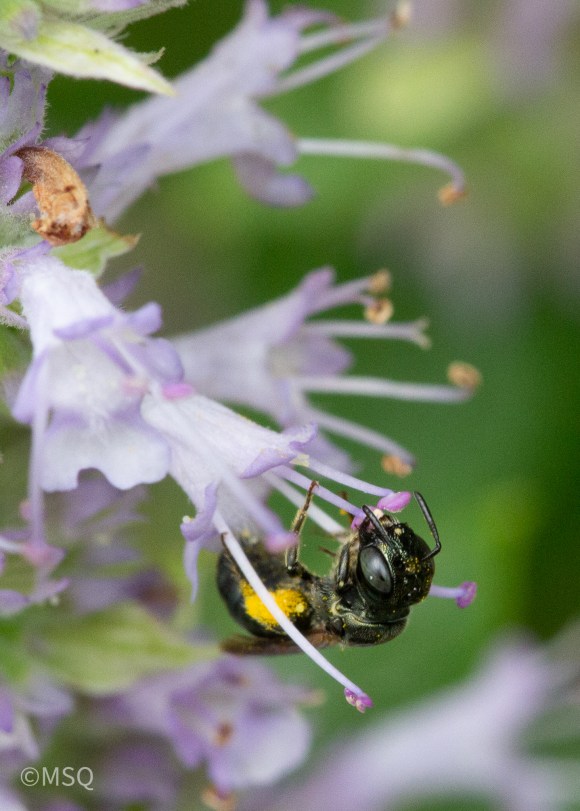
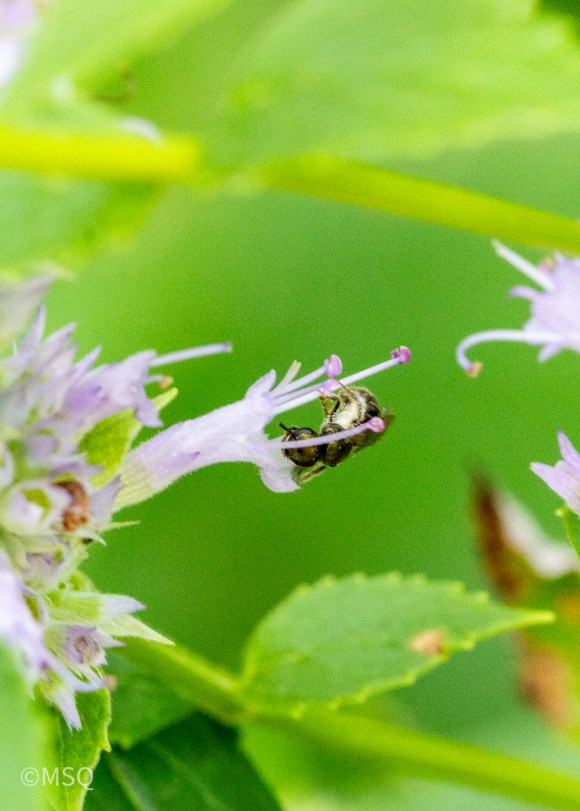
The many native bees that visit Hyssop range from large to tiny.  Bumble bees are the largest.  I’ve seen Common Eastern Bumble bee (Bombus impatiens), Brown-Belted Bumble bee, (Bombus griseocollis), Two-Spotted Bumble bee (Bombus bimaculatus), and Golden Northern Bumble Bee (Bombus fervidus) on my Fragrant Hyssop. They use both nectar and pollen for their larva.  

Large Leaf-Cutter bees use Anise Hyssop’s nectar. In the process, they are efficient pollinators. In contrast to other bees, pollen accumulates on the Leaf-Cutter bees’ abdominal scopae (specialized pollen collecting hairs).  It is transferred to the stigmas from there.


Digger bees (Melissodes) and smaller Leaf-Cutter bees (Megachile) are mid-sized bees.  They also collect both pollen and nectar from Anise Hyssop.

The Halictid bees (Lasioglossom), small Resin bees (Heriades) and Masked bees (Hylaeus) are small bees that gather resources from Fragrant Hyssop.  Dufourea monardae is included in this group.  D. monardae is a specialist or oligolectic bee that visits Monarda fistulosa and Agastache foeniculum.  These small bees can collect pollen from the anthers extending from the flowers. When harvesting nectar, they climb the style to reach the base of the flower.  (The style is the stalk connecting the stigma and the ovary.)

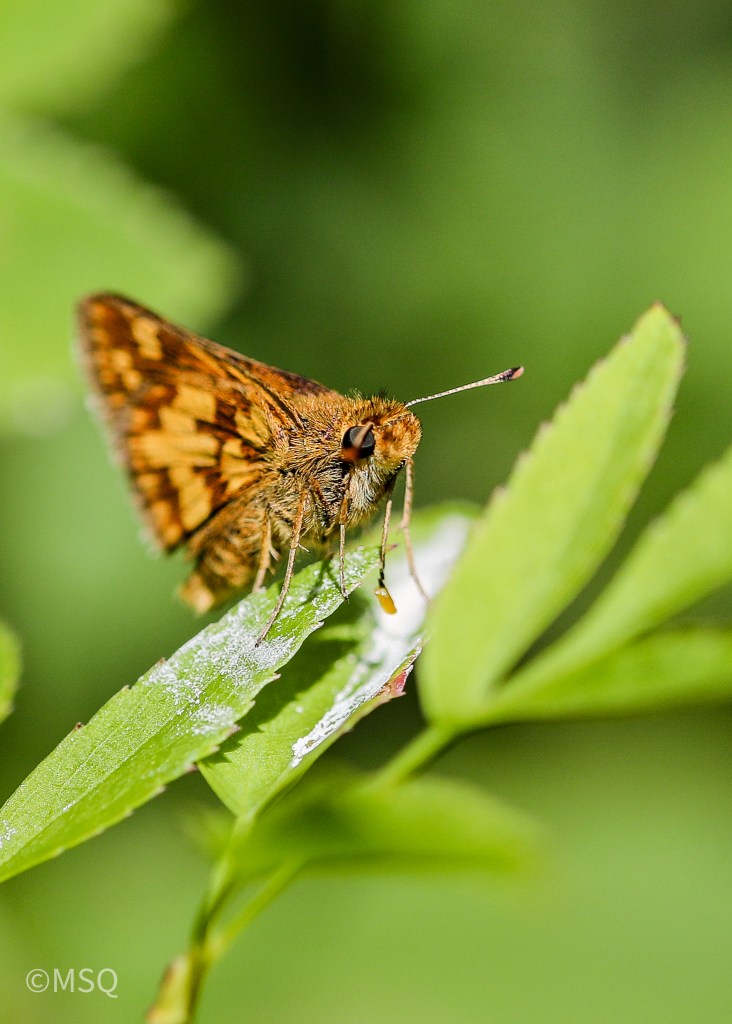
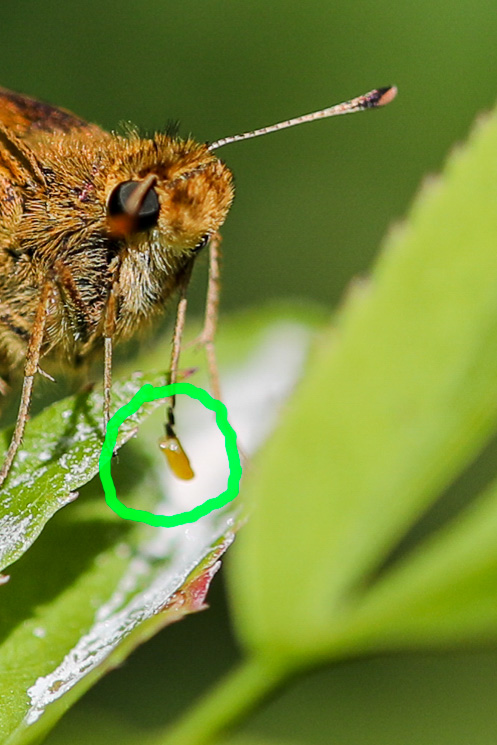
Fragrant Hyssop provides an excellent late season nectar source for butterflies, skippers and moths including Silver Spotted Skipper Butterflies (Epargyreus clarus), Peck’s Skipper Butterflies (Polites peckius) and the Great Spangled Fritillary Butterfly (Speyeria cybele).  They reach their proboscis into each tiny bloom to find the nectar.  Hyssop also works well in Monarch Way Stations providing food after most milkweed has stopped blooming.  

I hope you enjoyed this exploration of Anise Hyssop and its wonderful visitors!  I’d love to hear your thought about this blog or stories about your own experiences in the garden.  Please leave me comment and let me know your thoughts!

References:

  1. Eierman, Kim,11 April 2014,  “Ecobeneficial Interview:  Annie White on Native Plant Cultivars, Native Plants and Pollinators”, Youtube, https://www.youtube.com/watch?v=HTmuDcEzTOw
  2. Caldwell, Cathy, (2021, August-Vol.7, No.8) Anise hyssop, Piedmont Master Gardeners, https://piedmontmastergardeners.org/article/anise-hyssop/
  3. Riddle, Sharla, (2016, May, 20) How Bees See And Why It Matters, Bee Culture:  The Magazine of American Beekeeping, https://www.beeculture.com/bees-see-matters/