The vivid, mauve mouths of Obedient Plant or False Dragonhead (Physostegia virginiana) open in late summer and fall. They welcome numerous bees, butterflies, beneficial insects and, even, a bird—the Ruby-Throated Hummingbird. These creatures gather nectar and/or pollen to survive the coming winter.
Obedient Plant grows from 4 to 5 feet tall and spreads from 2 to 3 feet wide. It lives in Zones 3 to 9. This erect plant only branches near the flowers. The stem is hairless and square. The common name began because the flowers can be moved and they stay in the new position for a while.7,9,11
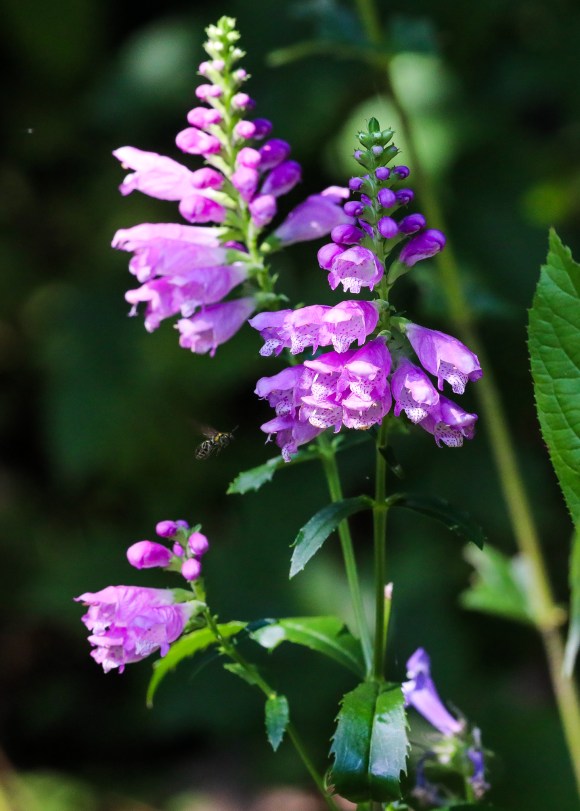
Another excellent rain garden candidate, Physostegia virginiana thrives in moist to wet conditions and can tolerate occasional flooding. During drought, the lower leaves turn yellow. It enjoys full sun to part shade. P. virginiana accepts full shade although it will need support. Rich, loamy soil is ideal. Obedient Plant tolerates some clay or gravel.7,9
False Dragonhead is usually easy to grow. But it is vulnerable under some conditions and to some pest. It flops in really hot summer temperatures. Plants can get aphids or spider mites.
Under ideal conditions, full to part sun, moist, loamy sites, Physostegia virginiana can spread aggressively. A member of the mint family, this plant creates a tap root and uses rhizomes to establish new colonies. Still, it is easy to weed out!7,9
Obedient Plant lives in many natural habitats including limestone glades, seeps, moist to mesic black soil prairies, open moist areas near railroads, wet thickets, openings in woodlands, borders of lakes, edges of woodlands, moist meadows, gravel banks, wooded bluff bases, and stream banks.7,9
The dark green leaves of False Dragonhead grow in opposite pairs along the stem. They are sessile (attached to the stem), hairless and lanceolate or oblanceolate. The margins (edges) have teeth. These teeth are sharply pointed and widely spaced. The leaves can grow up to 5 inches long and 1.5 inches wide.7
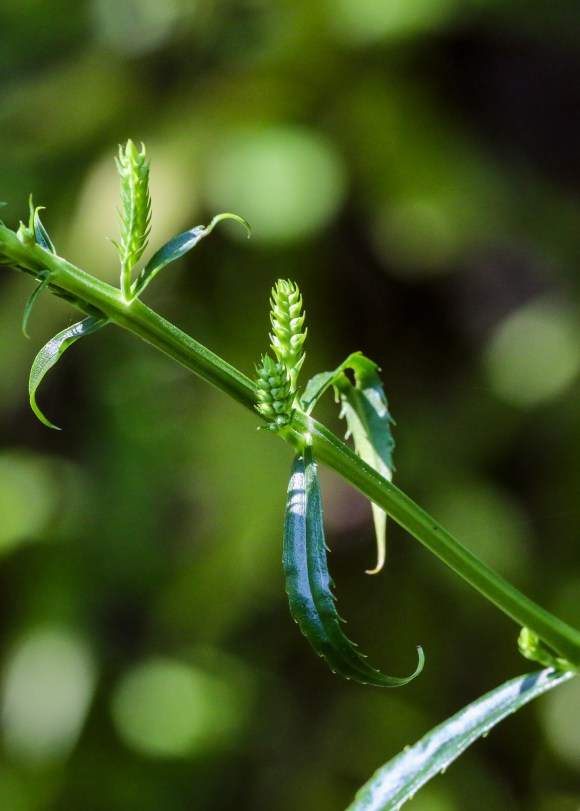
Obedient Plant’s flowers emerge in a spike at the top of the stem. The flowerhead can be 10 to 18 inches long. Individual blooms develop as 4 vertical rows, tightly packed together. They open from the bottom to the top of the spike.7
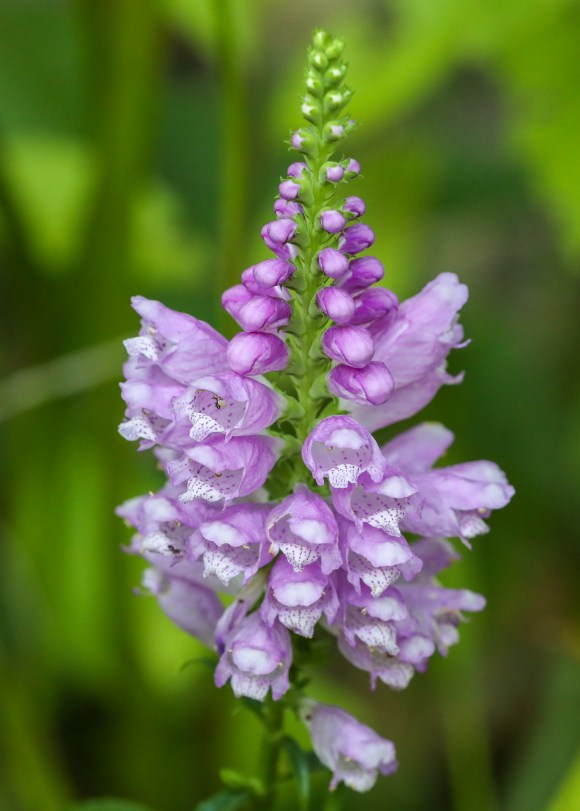
Blossoms can be white, lavender, or pinkish purple. Dots, fine stripes or swirls of a slightly darker color often decorate the flowers. About 1 inch long, each floret is tubular with 2 lips and 4 purple anthers. The upper lip forms a broad hood.7
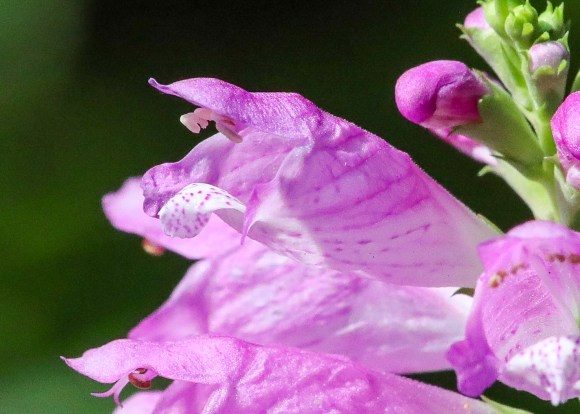
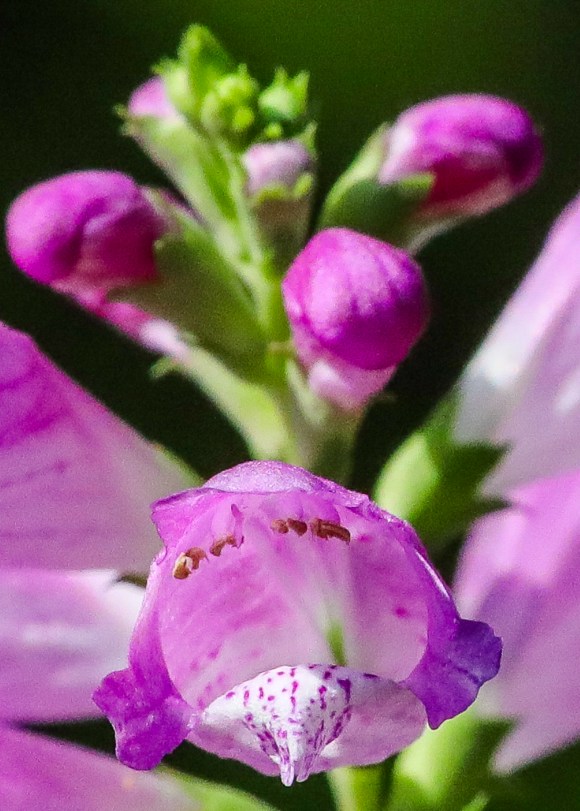
Obedient plant blooms from late summer through fall. The flowers have no scent. The bloom time lasts for about 1.5 months providing important late season resources.7
False Dragonhead’s graceful, tubular flowers host long-tongued bees, short-tongued bees, butterflies, beneficial insects and the Ruby-Throated Hummingbirds (Archilochus colubris). Long-tongued bees and hummingbirds are the primary pollinators. The short-tongued bees probably only gather pollen.3,4,7,9,10
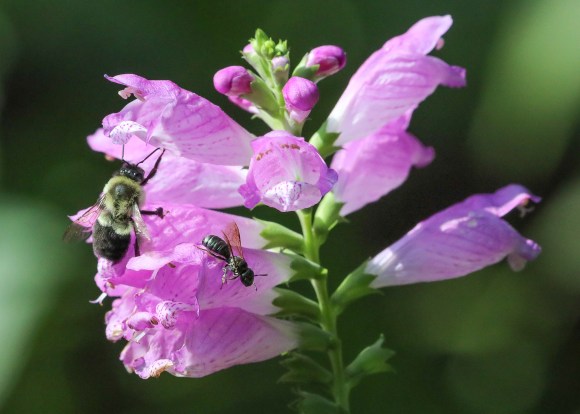
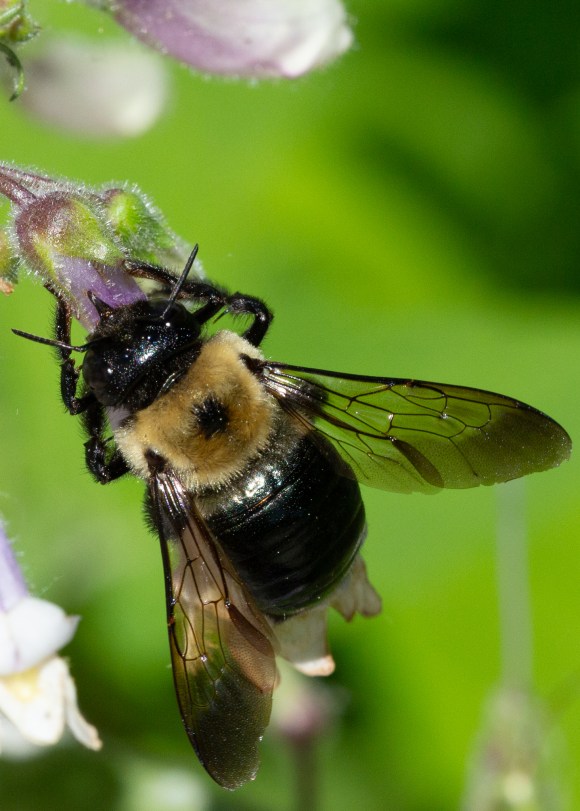
Bumblebees (Bombus spp.), Large Carpenter Bees (Xylocopa virginica), Long Horned Bees (Melissodes spp.), Leaf Cutter Bees (Megachile spp.) and Digger Bees (Anthophora spp.) are all long-tongued bees that visit Obedient Plant.
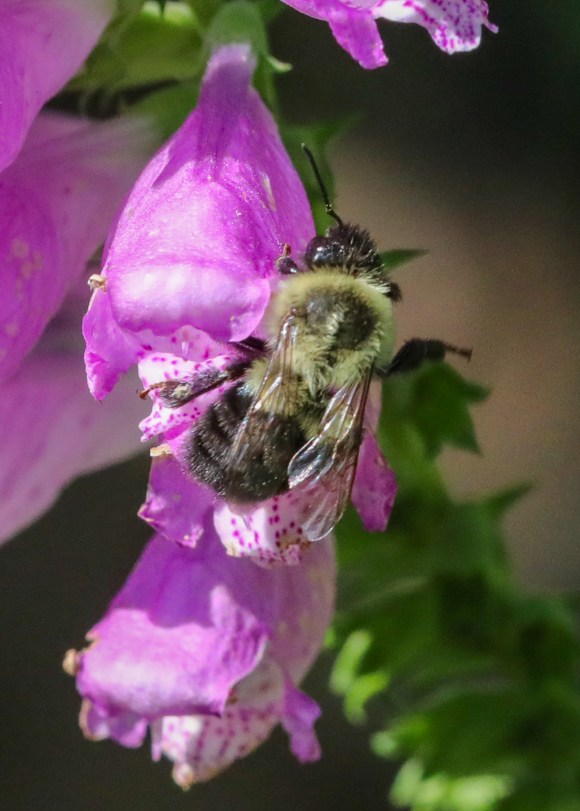
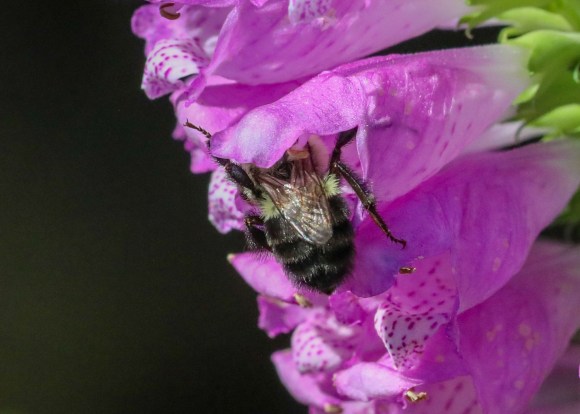
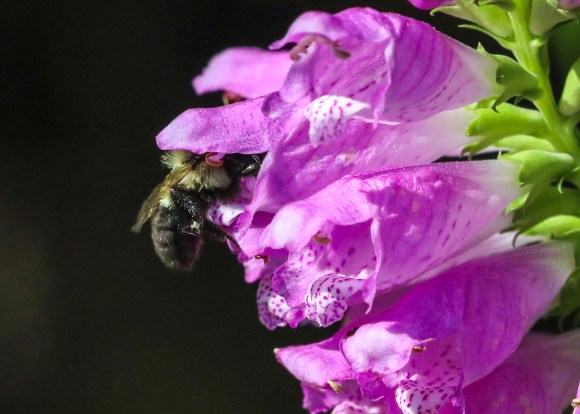
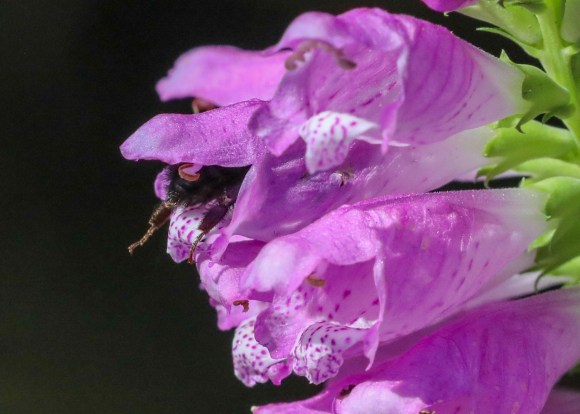
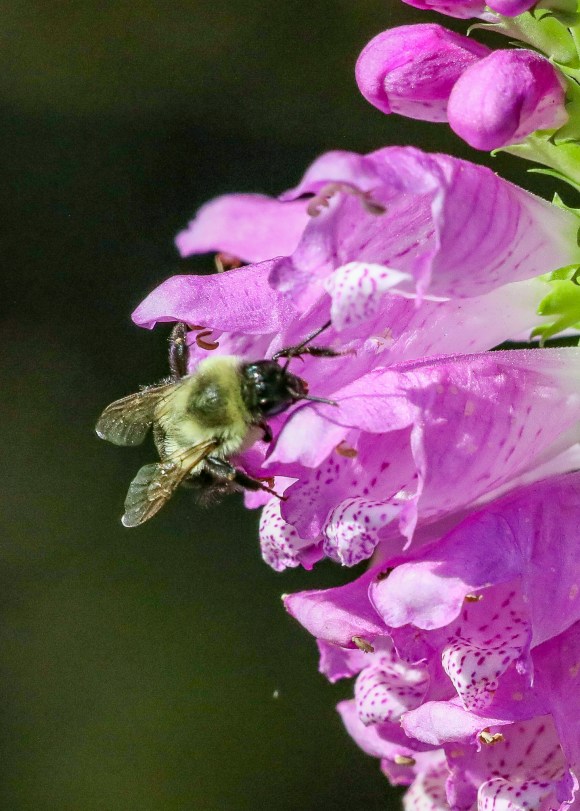
Large Carpenter Bees are included in long-tongued bees, but their tongues won’t reach the base of this plant. These bees are known for cutting holes at the base of flowers and stealing nectar. Other insects, like Bumblebees and soldier beetles (Chauliognathus pennsylvanicus.), use these holes to access nectar.3,4,7,10
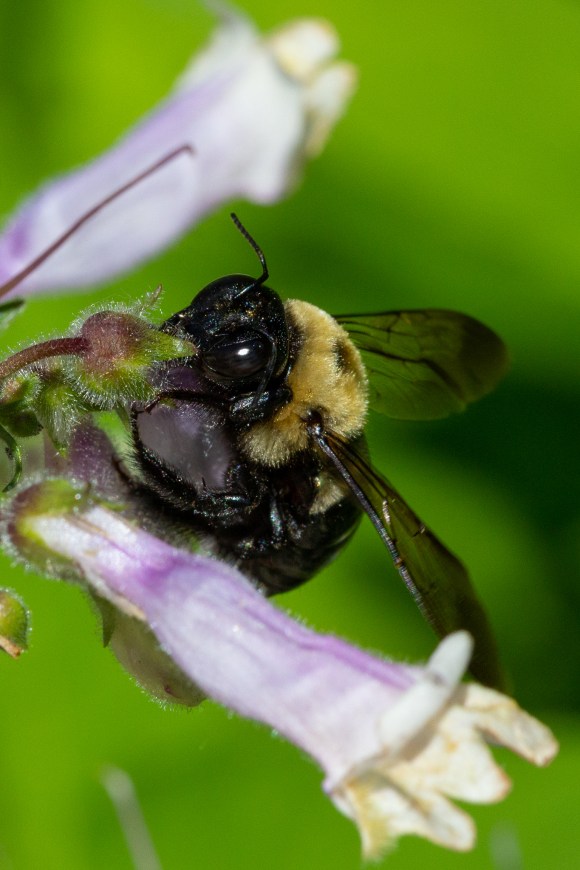
Anthophora terminalis or the Orange-tipped Wood-digger Bee is a charming, medium-sized bee that gathers both nectar and pollen from the flowers. Furry with a round, striped abdomen, this bee is a bumblebee look-alike. The orange-tip refers to a spot of orange at the end of the abdomen on females. It can be hard to see until the female has climbed into the flower.1,
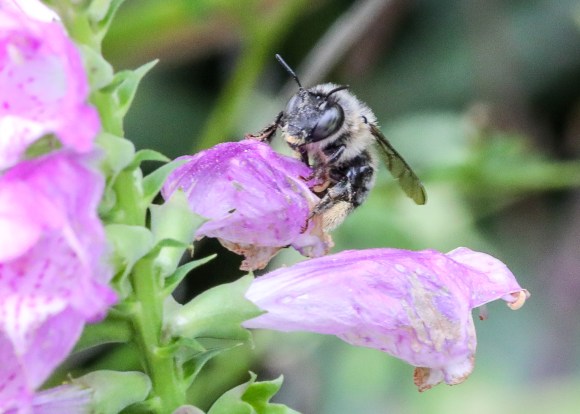
While most Anthophora bees nest in soil banks or flat ground, the Orange-tipped Wood-digger Bee nests in pithy stems or wood. It can choose fallen pine trees, sumac stems, driftwood and solid wood bee hotels/trap-nests. These bees use saw dust and chewed wood-pulp for cell divisions. A. terminalis builds nests in woodlands, wetlands near forests, and suburban and urban gardens.1
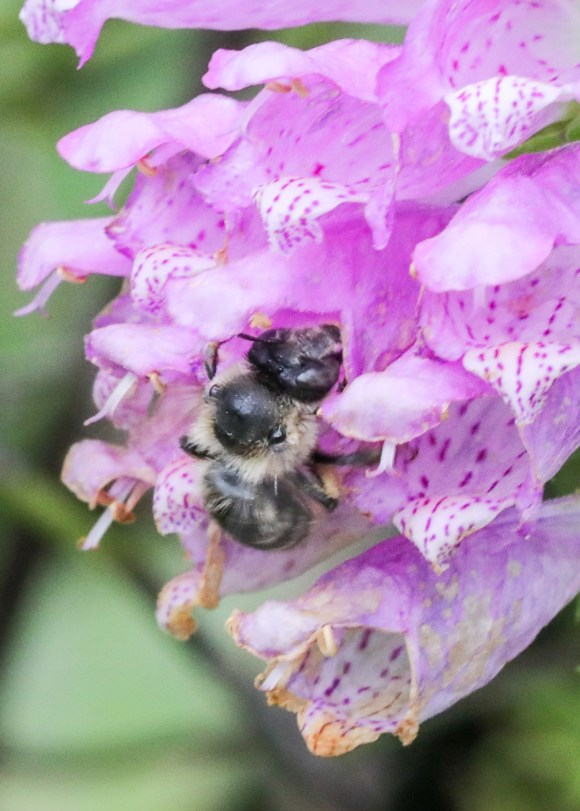
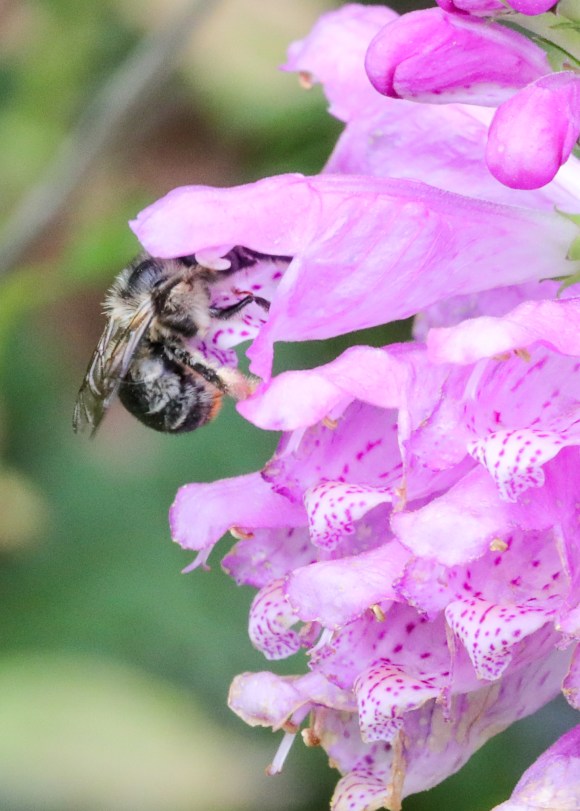
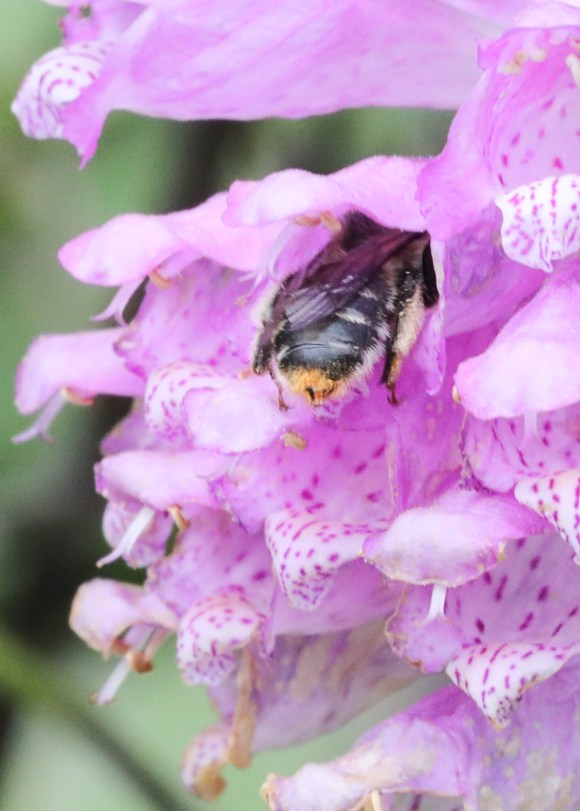
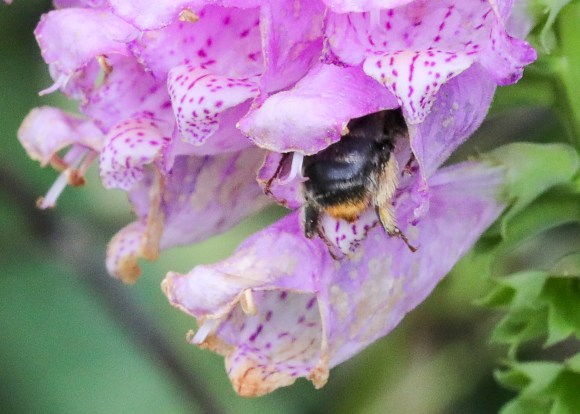
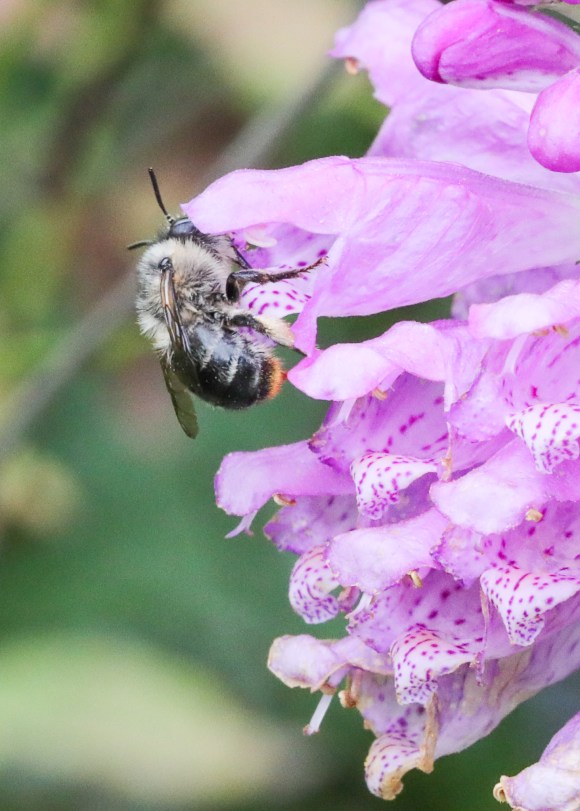
Short-tongued bees enjoy climbing into the P. virginiana’s flowers to gather pollen. Green metallic sweat bees (Augochlorella spp. and Agapostemon spp.),
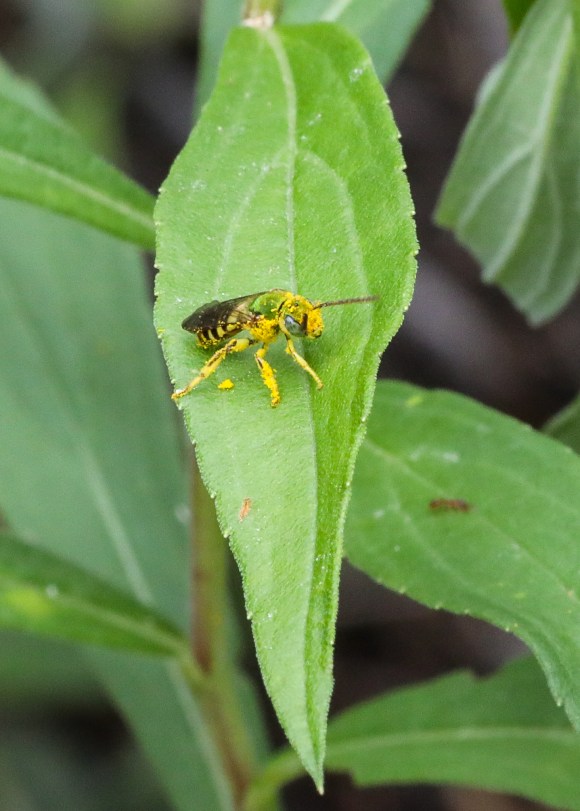
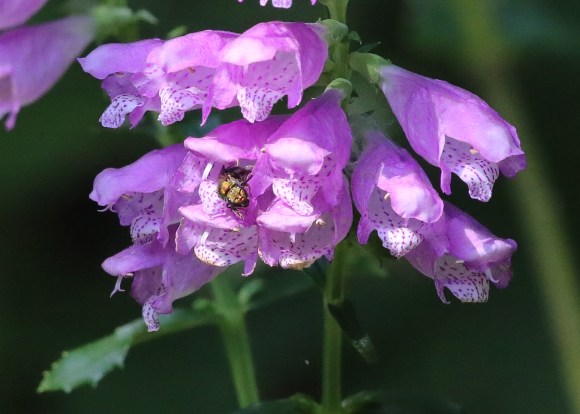
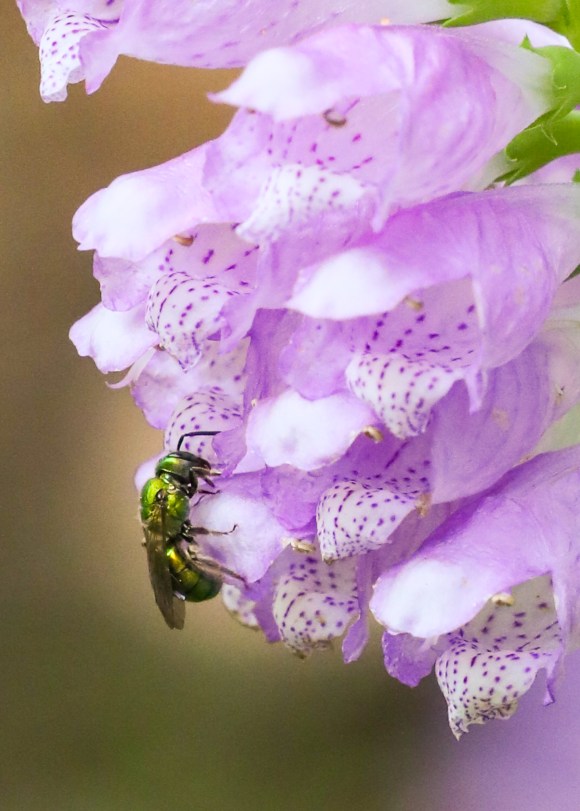
Sweat bees (Lasioglossom spp. and Halictus spp.),
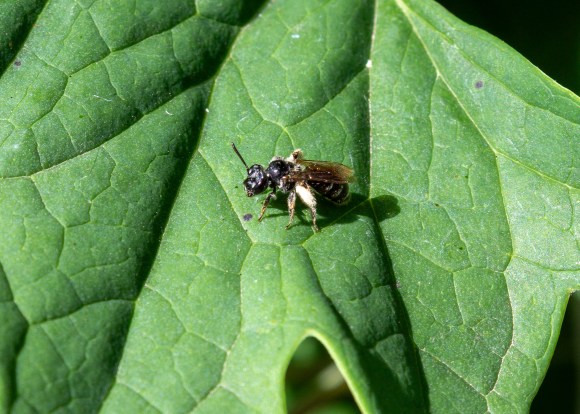
small carpenter bees (Ceratina spp.)
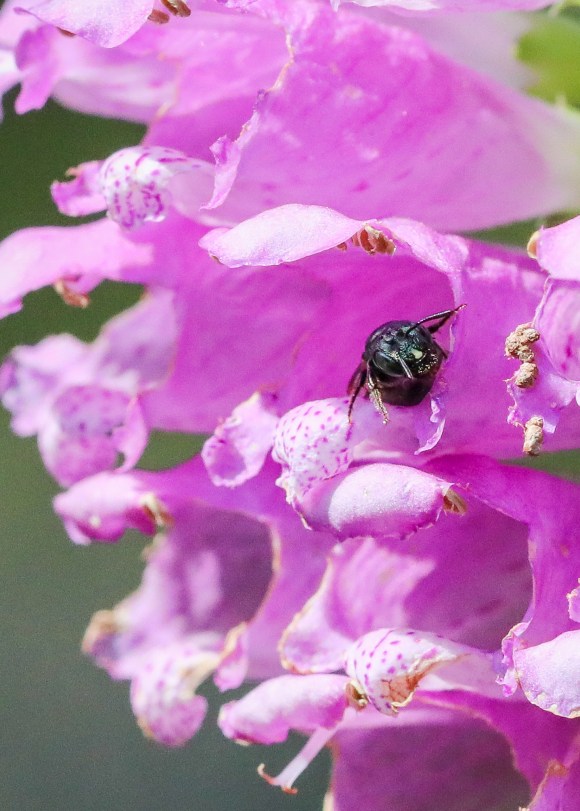
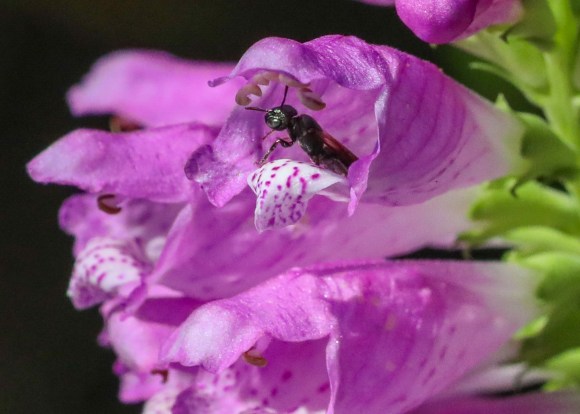
and Yellow-Faced bees (Hylaeus spp.) all harvest from Obedient Plant.3,4,10
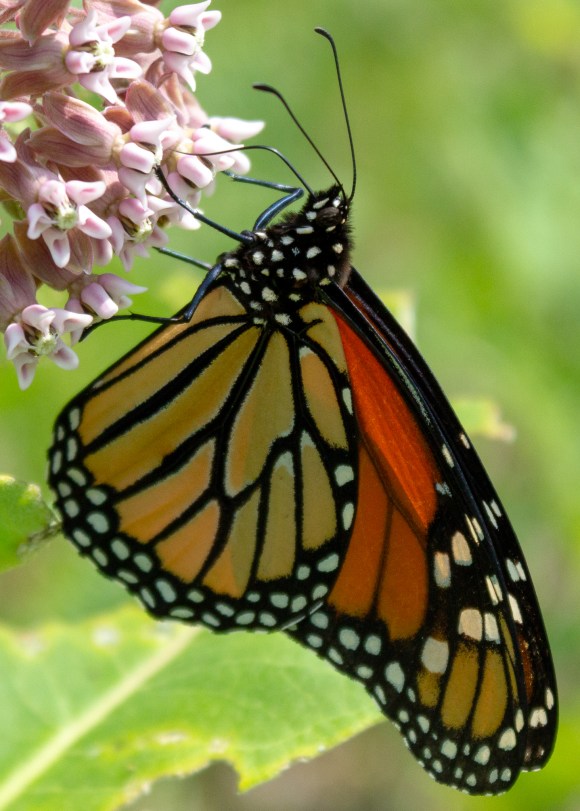
A variety of butterflies, moths and skippers nectar at Obedient Plant’s blooms. Examples include Monarchs (Danaus Plexippus),
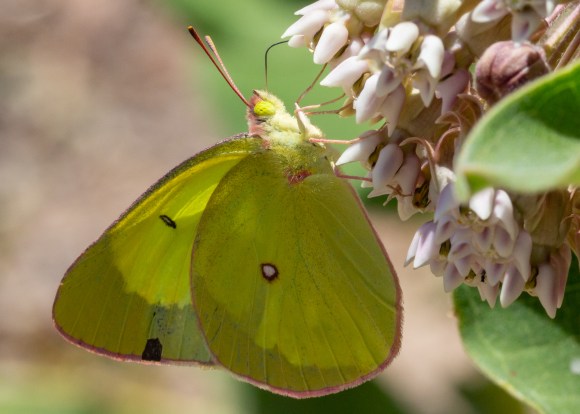
Sulfurs (Phoebis spp.),
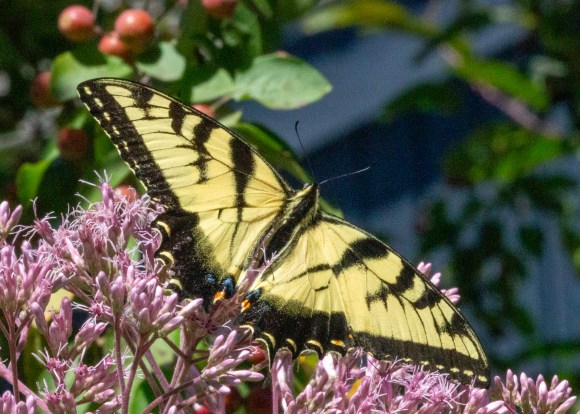
and Swallowtails, especially the Eastern Tiger Swallowtail (Papilio glaucus).
Dayflying Clearwing Moths (Hummingbird Moths (Hemaris spp.)) also visit occasionally.2,8
The Silver-Spotted Skipper (Epargyreus clarus) commonly sips nectar from False Dragonhead. This large skipper lives throughout North America. Although common, it’s not seen in groups. The Silver-Spotted Skipper lives in open woods, in fields and prairies, along forest edges and streams, on roadsides, and in gardens.2,5,6,12
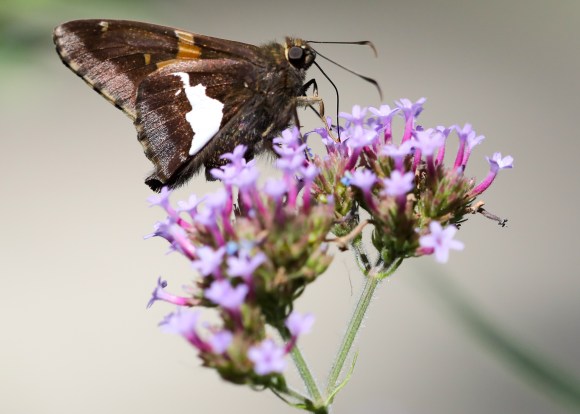
Adult skippers gather nectar from many different flowers. They markedly prefer pink, purple, red and blue blooms and rarely stop at yellow flowers. These skippers also “puddle”, stopping at mud puddles to drink.5,6,12
Most sources say they puddle for nutrients and to improve reproduction. But it turns out there’s more to the story. Here’s what we know and don’t know about puddling.6,13
- It’s more common with males than females.
- Not all skippers/butterflies do it.
- Skippers/butterflies take in nutrients, but which ones depends on their diet. Those that drink nectar are more likely to collect sodium. Tropical butterflies, who’s diet includes carrion, pollen and fruit, gather nitrogen and amino acids.
- They often gather in groups. Some groups are mixed species and others are all the same. We don’t know if it’s a social activity, predator protection, helps locate a puddling source, or some other reason.
- We don’t know how they find the puddling source—see, smell, something else?
- The nutrients are passed on in sperm packets but the effect on reproduction is unknown.
- I’ll keep an eye out for future articles and see if I can give you some more information on this fascinating behavior.13
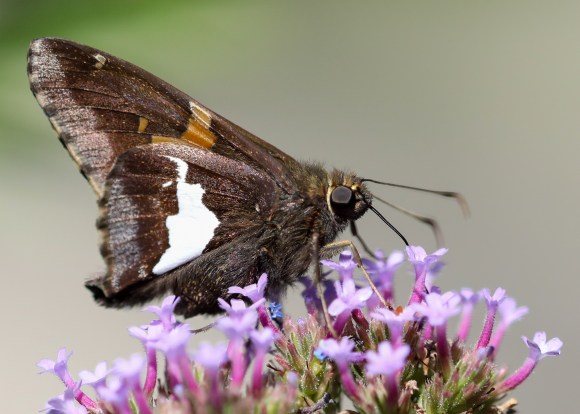
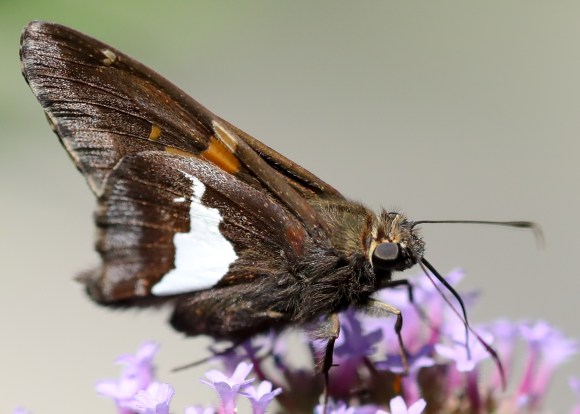
With a 1.75-to-2.5-inch wingspan, the Silver-Spotted Skipper is recognized by its flashing silvery-white spot on the lower wing. The upper wings have yellowish-gold spots on the upper forewing. Like other skippers, its black eyes are round and slightly bulging.11
This skipper’s larva starts out medium green with dark green, lengthwise strips and a reddish-brown head. As it grows, they become distinctly yellowish green, with redder heads and 2 orange eye spots. These caterpillars have a narrow band behind the head called a neck collar. They feed on members of the pea family, both woody and herbaceous. Although they feed on peas and beans, the Silver-Spotted Skipper isn’t considered a major pest. Native plant hosts include False Indigo (Baptisia spp.) and Wild Senna (Senna spp.).12
Skipper larvae have a delightful behavior of building leaf houses for themselves. The Silver-Spotted Skipper is no exception. When small, the caterpillars cut the leaf and tie the piece with silk. As they grow, the shelters become larger and larger.12
The final one consists of several leaves tied with silk. Here they pupate. When winter arrives, the entire structure, pupa and all, falls to the ground and overwinters in the leaf litter. The skipper emerges in early summer once nectar flowers are available.12
Obedient plant offers an easy to grow, late season plant for those pesky wet spots. The vibrant lavender/mauve blooms change up the late season color palette of yellow/white/pastels. Late season nectar lovers flock to the tubular blooms to prepare for their long cold winter.
BIBLIOGRAPHY:
- Bee Watching. 2023a. “Orange-Tipped Wood-Digger Bee (Anthophora Terminalis).” January 9. https://watchingbees.com/species-accounts/anthophora-terminalis/.
- Edgewater Glen Native Plant Gardening & Wildlife. n.d. “Physostegia Virginiana (Obedient Plant).” Accessed April 2, 2026. https://www.glennatives.com/plant-profiles/project-two-ky966-6lmsr.
- Holm, Heather. 2017. Bees: An Identification and Native Plant Forage Guide. Pollination Press LLC.
- Holm, Heather. 2014. Pollinators of Native Plants: Attract, Observe and Identify Pollinators and Beneficial Insects with Native Plants. Pollination Press LLC.
- Missouri Department of Conservation. 2024a. “Silver-Spotted Skipper.” March 7. https://mdc.mo.gov/discover-nature/field-guide/silver-spotted-skipper.
- Missouri Department of Conservation. 2024b. “Skippers.” March 7. https://mdc.mo.gov/discover-nature/field-guide/skippers
- “Obedient Plant (Physostegia Virginiana).” n.d. Accessed March 27, 2026. https://www.illinoiswildflowers.info/prairie/plantx/obed_plantx.htm.
- “Obedient Plant | Physostegia Virginiana.” n.d. The Morton Arboretum. Accessed March 27, 2026. https://mortonarb.org/plant-and-protect/trees-and-plants/obedient-plant/.
- “Physostegia Virginiana (Fall Obedient Plant) | Native Plants of North America.” n.d. Accessed April 2, 2026. https://www.wildflower.org/plants/result.php?id_plant=phvi8.
- “Physostegia Virginiana (Floral Visitors).” n.d. Accessed April 3, 2026. https://illinoiswildflowers.info/flower_insects/plants/obedient_plant.htm.
- “Physostegia Virginiana – Plant Finder.” n.d. Accessed March 27, 2026. https://www.missouribotanicalgarden.org/PlantFinder/PlantFinderDetails.aspx?kempercode=g620.
- “Silver Spotted Skipper, <em>Epargyreus Clarus</Em>.” n.d. Wisconsin Horticulture. Accessed April 2, 2026. https://hort.extension.wisc.edu/articles/silver-spotted-skipper-epargyreus-clarus/.
- Today, Entomology. 2025. “To Puddle or Not To Puddle: Review Highlights Unanswered Questions About Butterfly Behavior.” Entomology Today, May 13. https://entomologytoday.org/2025/05/13/puddling-butterflies-review-unanswered-questions/.
 Wild Things in the Garden