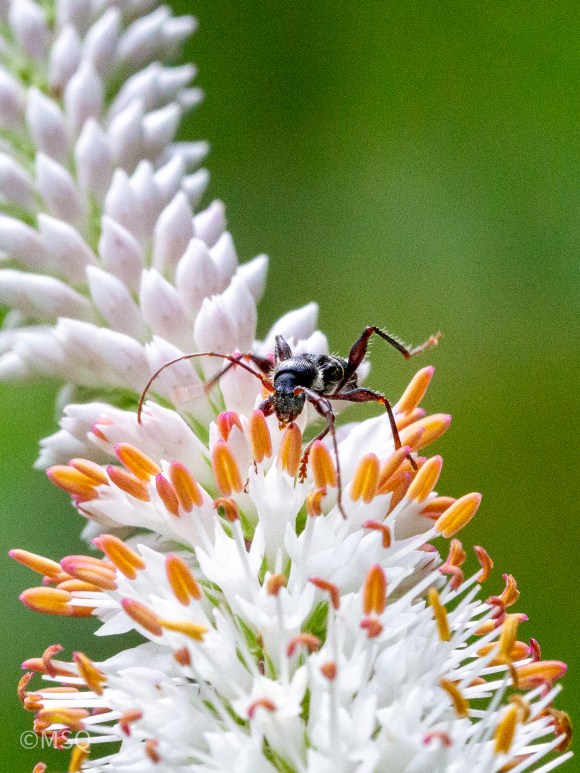
Okay, not actual candlelight, but the ethereal candelabra blooms of Veronicastrum virginicum, Culver’s Root. This striking, upright plant provides a strong vertical accent in any garden. It’s long, tapered flower spikes attract pollinators of all kinds while dark green whorls of leaves provide plenty of visual interest.
Growing in zones 3 to 8, this plant stretches from four to seven feet and spreads between two to four feet. Culver’s Root grows in medium to wet, well-drained soils. It tolerates standing water for a short time and thrives in rain gardens. Culver’s Root accepts full sun to light shade and is suited to growing at the woodland’s edge. In very warm zones, it enjoys afternoon shade.
Culver’s Root’s flowers unfold slowly in mid to late summer. Here in zone 5b, it starts in mid-July and continues to the end of August. You can deadhead to encourage rebloom.
The flower color varies slightly with the location. Primarily white, the blooms can have tones of very pale pink, lavender or blue. The blossoms are most often described as candelabra-like with four or more in a whorl at the top of each stem. In mature plants, flower spikes can be 8” in length!
Culver’s Root tends to flop without support especially in shadier areas. I’ve used a peony ring with internal supports. The deer have also trimmed my plant in mid-June by about one-third to one-half. The pruning helped and more flowers formed at each cut. Culver’s Root won’t grow to full height after being cut back.
Its leaf structure is unusual and offers a contrast to surrounding plants. The leaves are whorled in groups of three to seven. Each leaf is lance shaped with slight serrations and attached directly to the stem (sessile) or nearly so. They can be up to 6” long and 1.5” wide. The long stems and whorled leaves give the plant an upright, medium texture. Culver’s Root is not aggressive although it can self-seed. Some good companion plants include blazing star, monarda, milkweed, rattlesnake master, goldenrod, and asters.
V. virginicum has successfully entered the world of horticulture and numerous nativars exist. These nativars have been bred to prevent flopping and to bring more color to the flowers. Some are more compact to fit in small gardens. Here is a sampling of what’s available: ‘Fascination’, 5’ tall, 2’ width, lavender bloom, ‘Red Arrow’, 3-4’ tall, 2-3’ width, purple bloom, ‘Album’, 3-4’ tall, 3-4’ width, white bloom, and ‘Cupid’, 2-3’ tall, 1-2’ width, purple. Like the native plant, all these nativars can grow in zones 3 to 8.
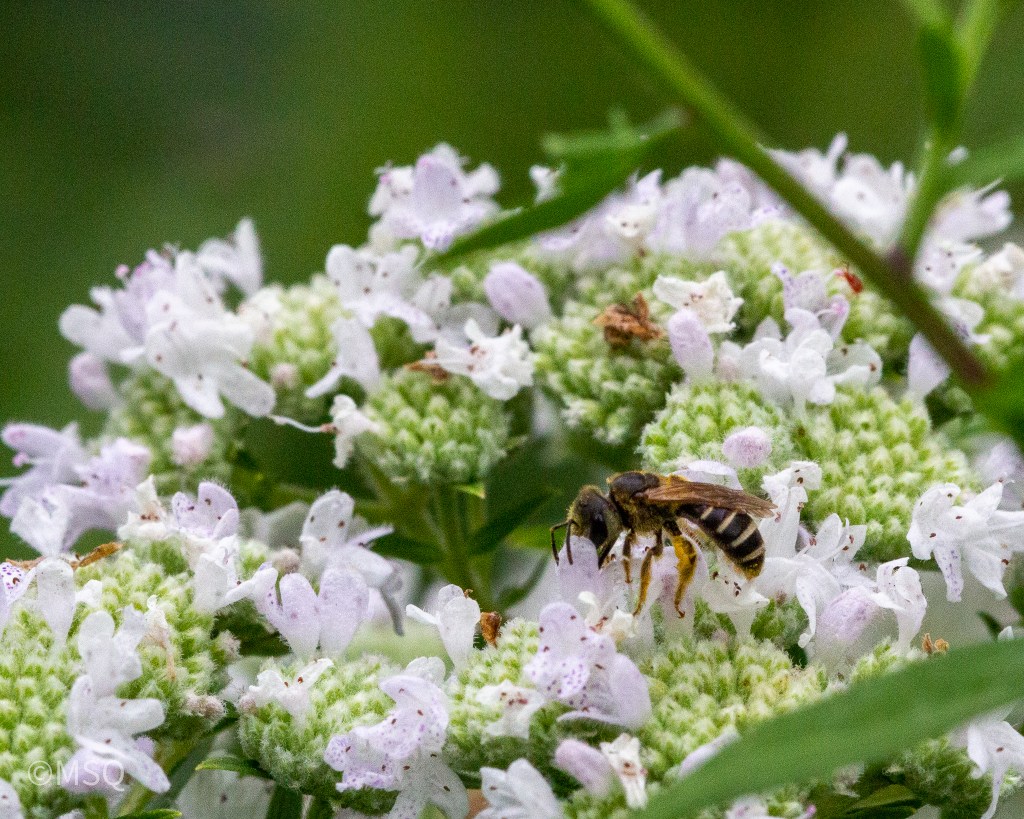
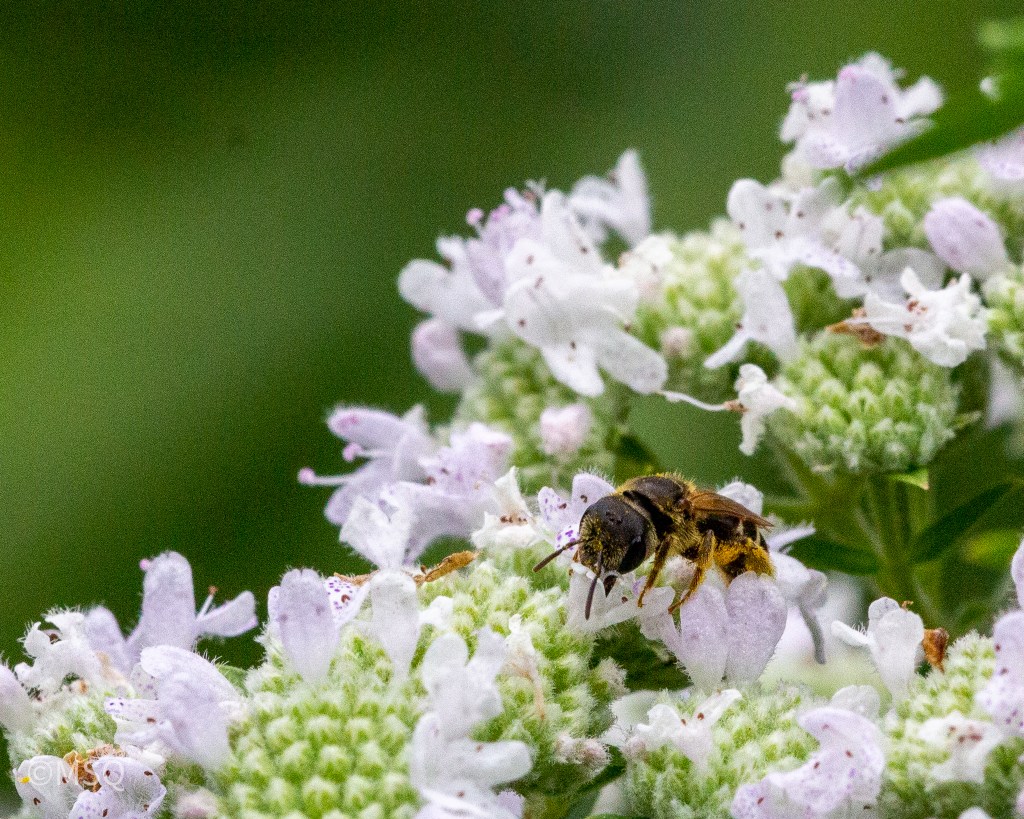
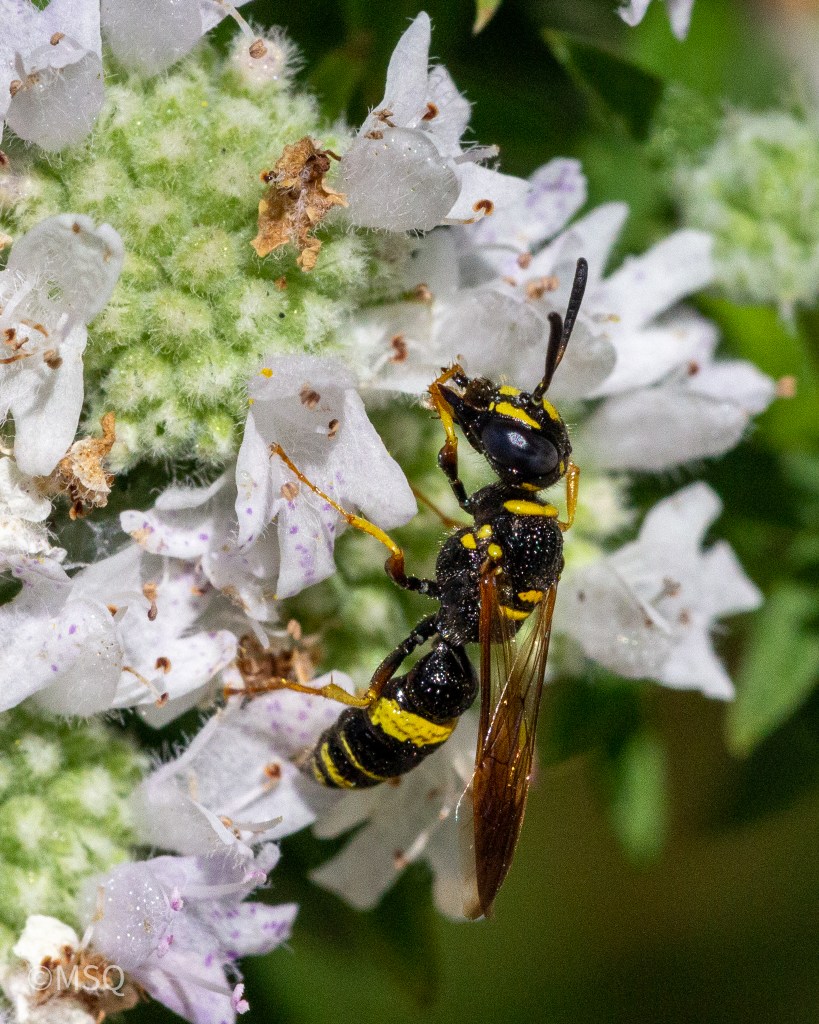
Culver’s Root feeds native bees, honeybees, and beneficial insects. A range of native bees visit it including short and long tongued bees. V. virginicum begins bloom by protruding its anthers outside the bud. Small bees take advantage of this by collecting pollen. These pollinators include Hylaeus (yellow-faced bees).
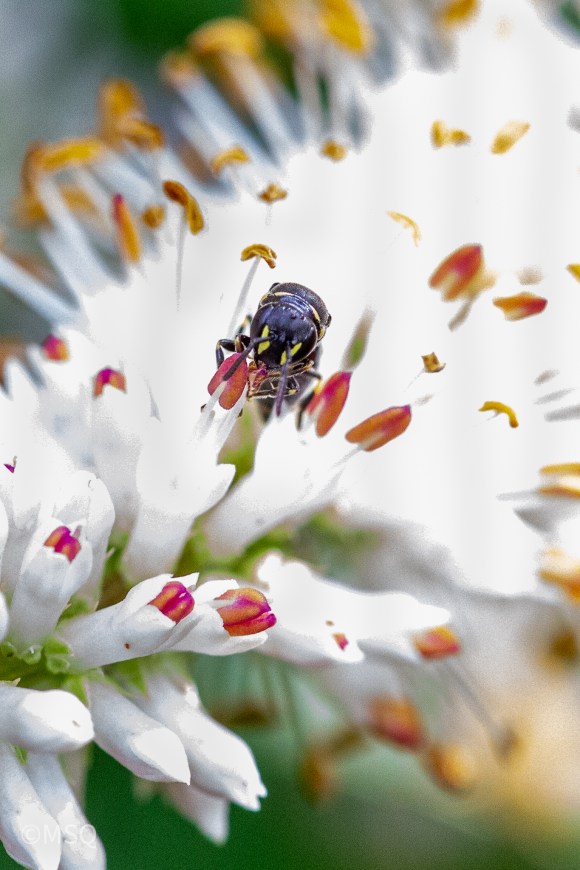
Hylaeus or yellow-faced bees are one of the most recognizable small bees. Mostly black, they have yellow or white markings on their faces. These marking make them identifiable as Hylaeus although species determination can be tricky. Yellow-faced bees grow from 5 mm (0.2”) to 7 mm (0.27”). They nest in existing hollow cavities primarily in hollow stems or holes in wood. Some have been known to nest in stone. Hylaeus line their nests with a silk or cellophane-like substance produced by the salivary gland. The bee uses her bilobed tongue to paint on the secretions. The lining is waterproof and protects the young from bacteria. Chewed stem pith mixed with saliva is used for cell divisions and salivary gland secretions seal the completed nest.
One fascinating fact, yellow-faced bees are practically hairless. Hylaeus don’t have any scopa or specialized hairs dedicated to holding pollen like other bees. They also have short tongues and so can’t reach deeply into flowers. These bees use their slender bodies to work their way into flowers to reach nectar and pollen. They also chew on anthers to extract pollen. Then Hylaeus swallow the nectar and pollen and hold it in their crop. The crop is a sac separate from the stomach. This fluid mixture is regurgitated and left for the larva to eat.
Another fun fact, yellow-faced bees occur all over the world. However, Hawaii is known for having 63 different species. The yellow-faced bee is the only bee native there. All the species found there are unique to Hawaii.
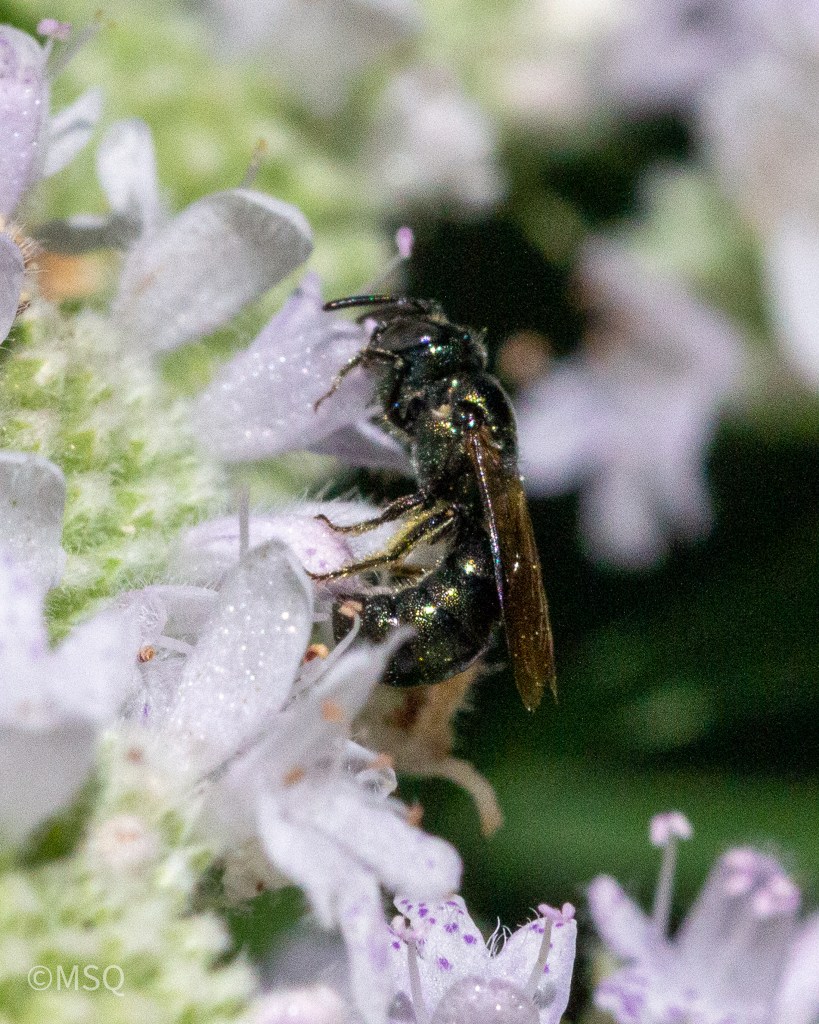
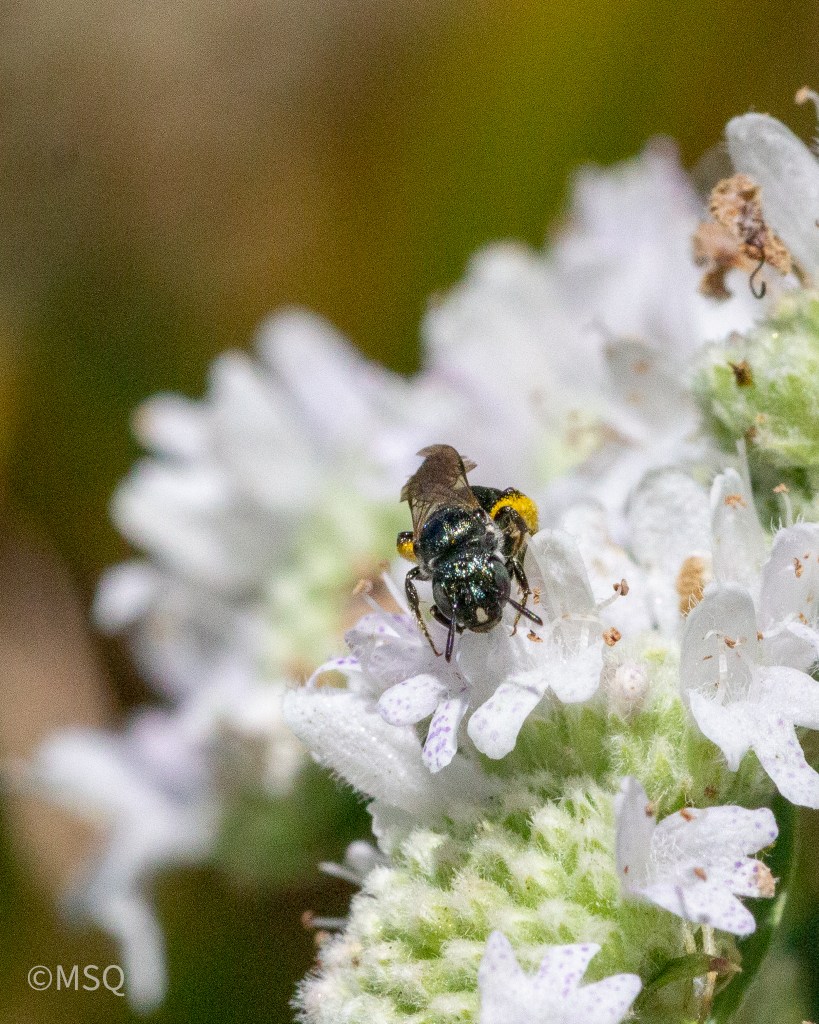
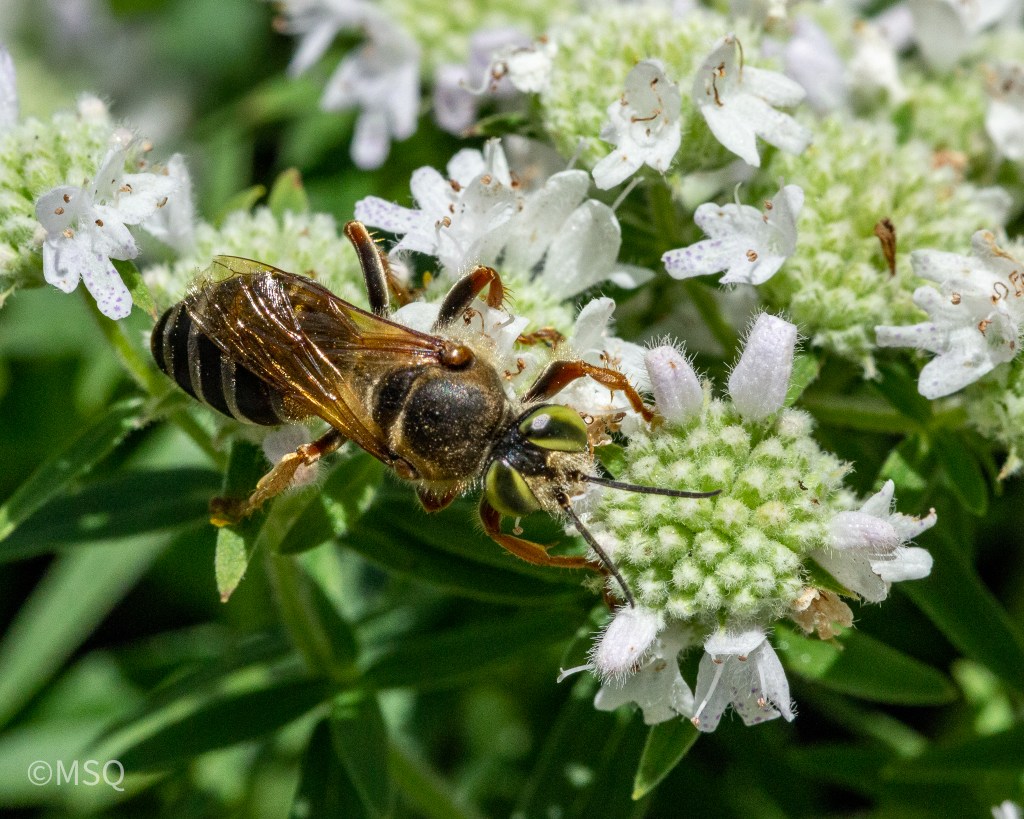
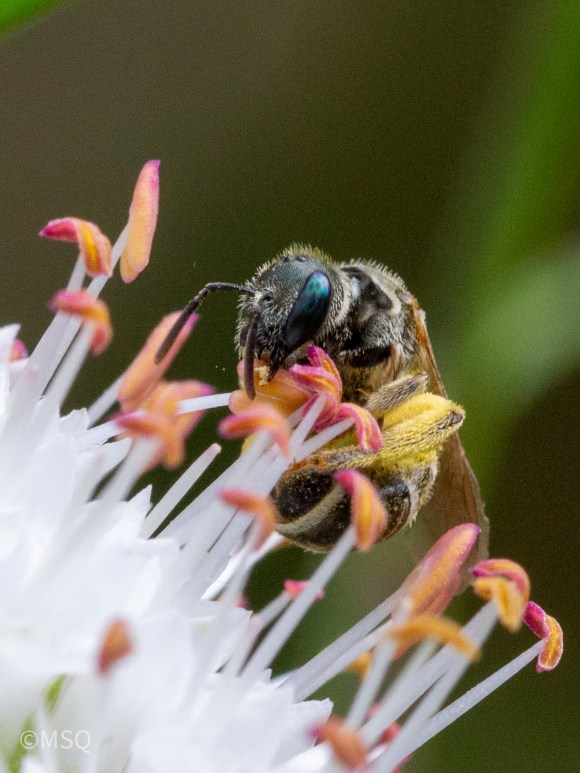
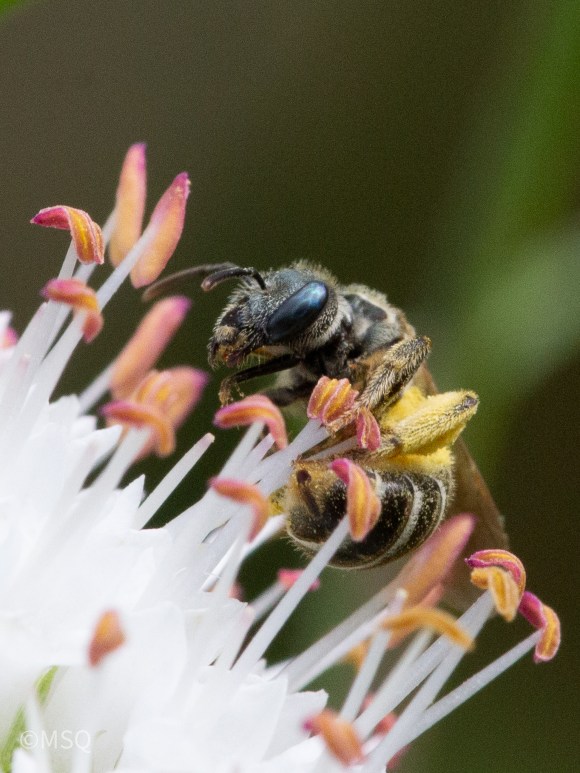
Lasioglossum (small sweat bees) visit Culver’s root and collect pollen and nectar. They use the hair or scopae on the hind femur and tibia to hold the pollen as well as the bottom of their abdomen.
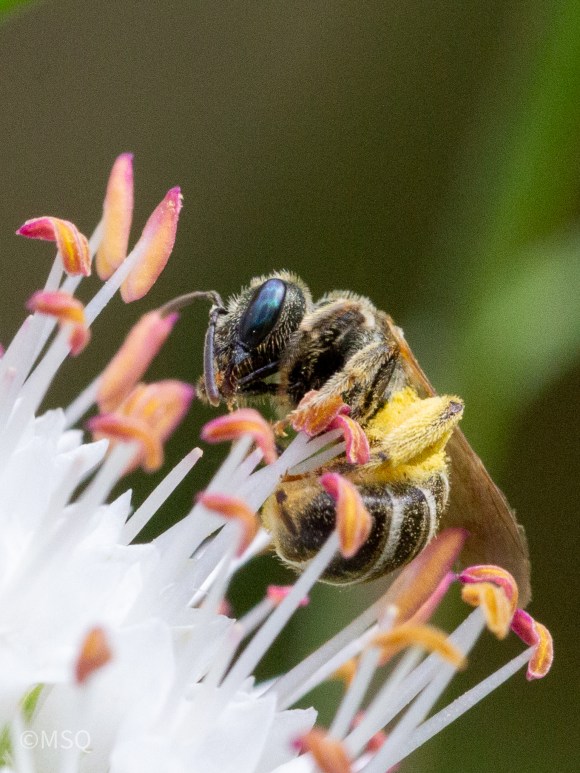
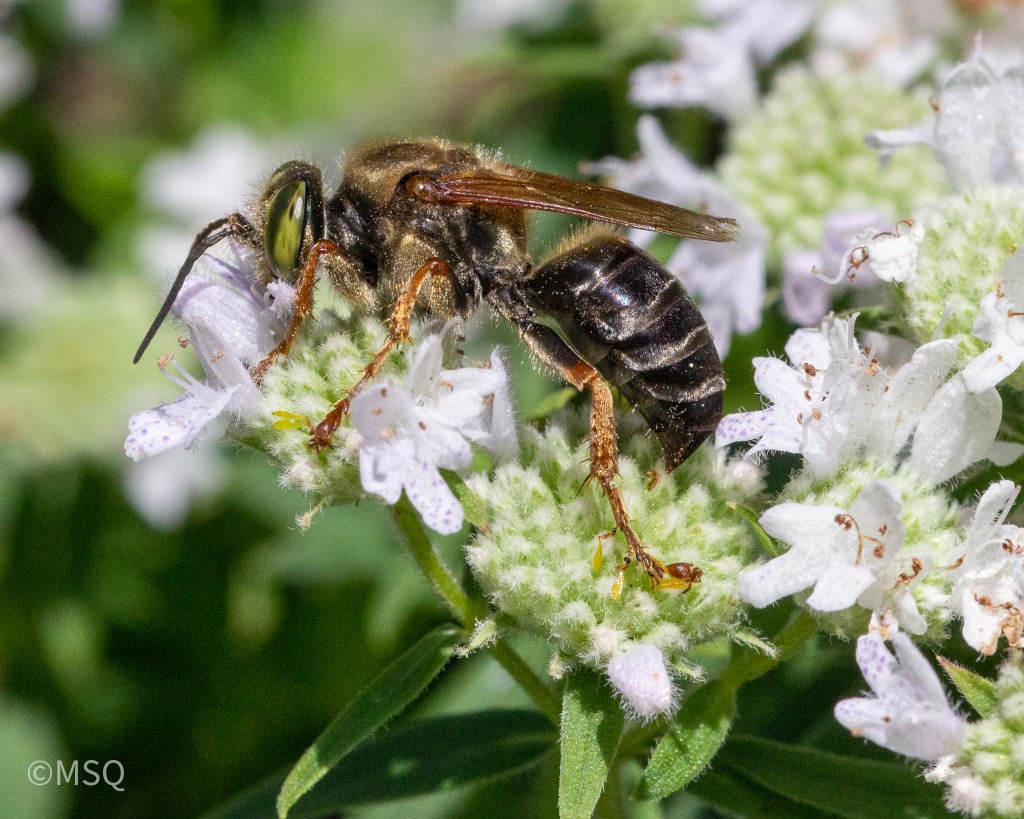
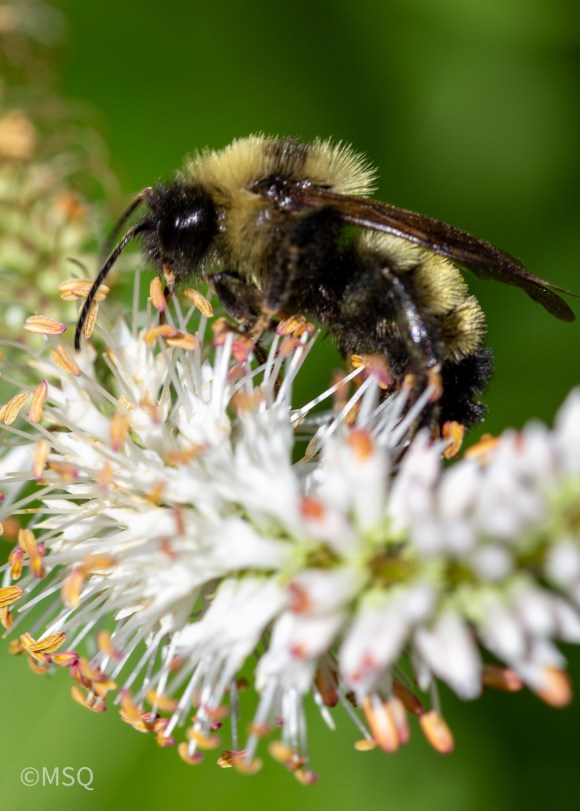
Once the flowers opens larger visitor arrive including bumblebees (Bombus)
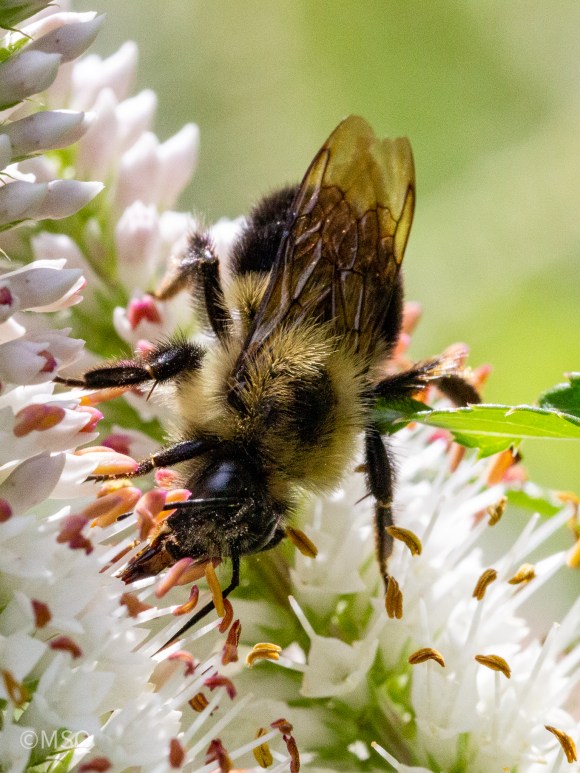
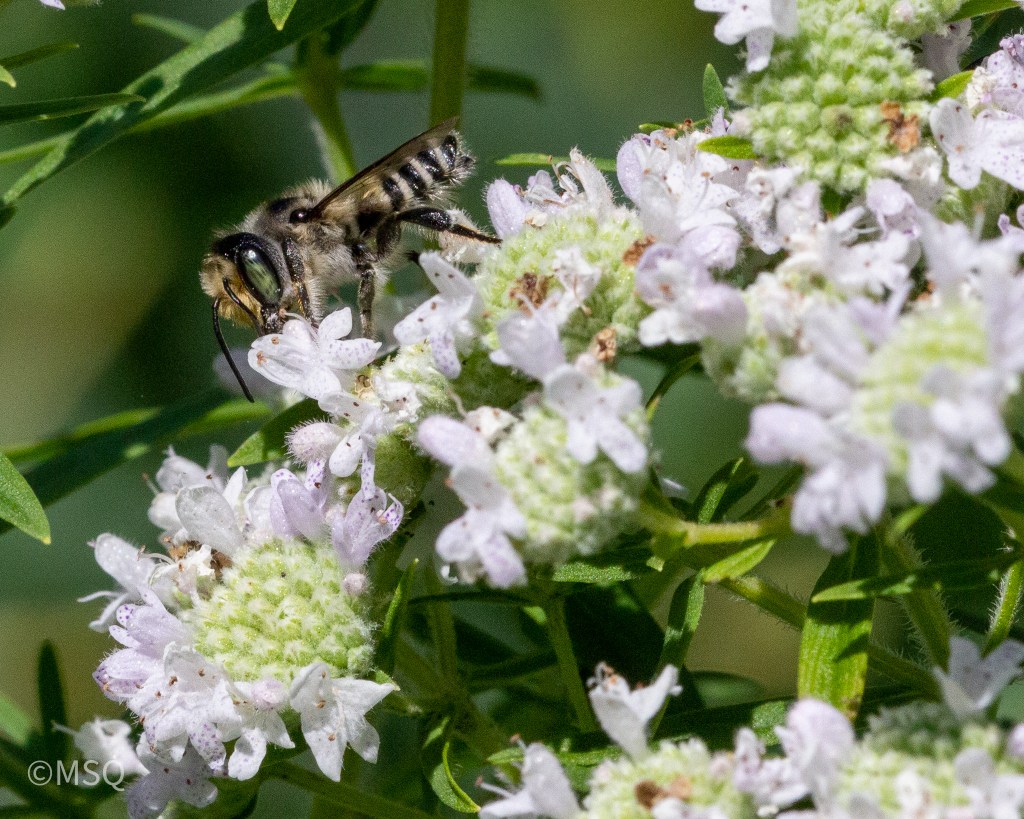
and Leaf-Cutter bees (Megachile)
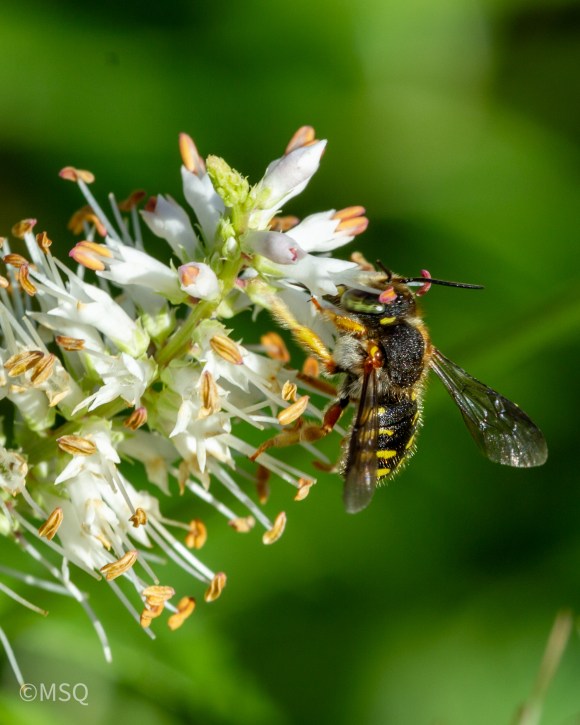
and Long Horned bees (Melissodes).
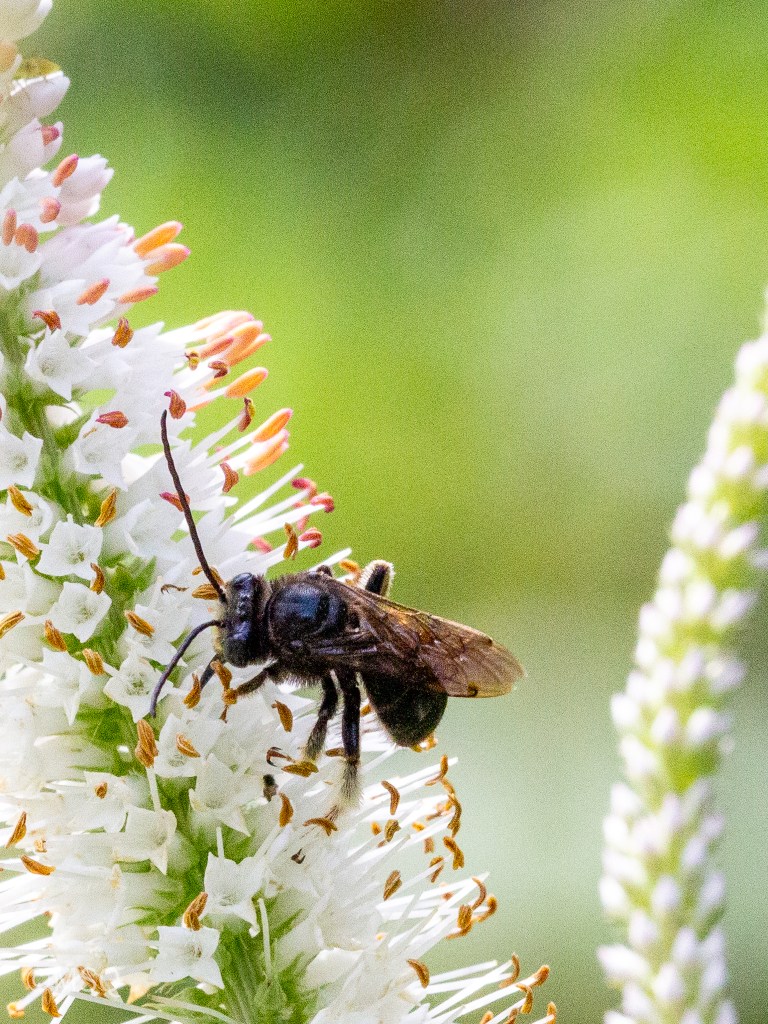
Mason bees (Osmia) stop at V. virginicum to collect resources.
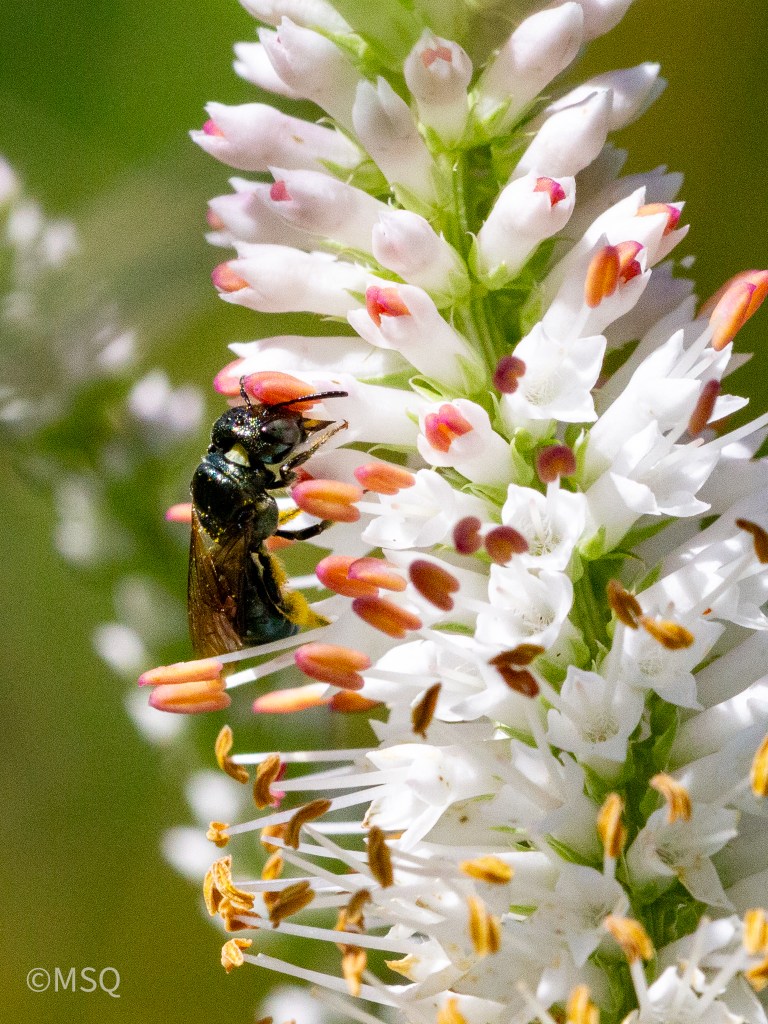
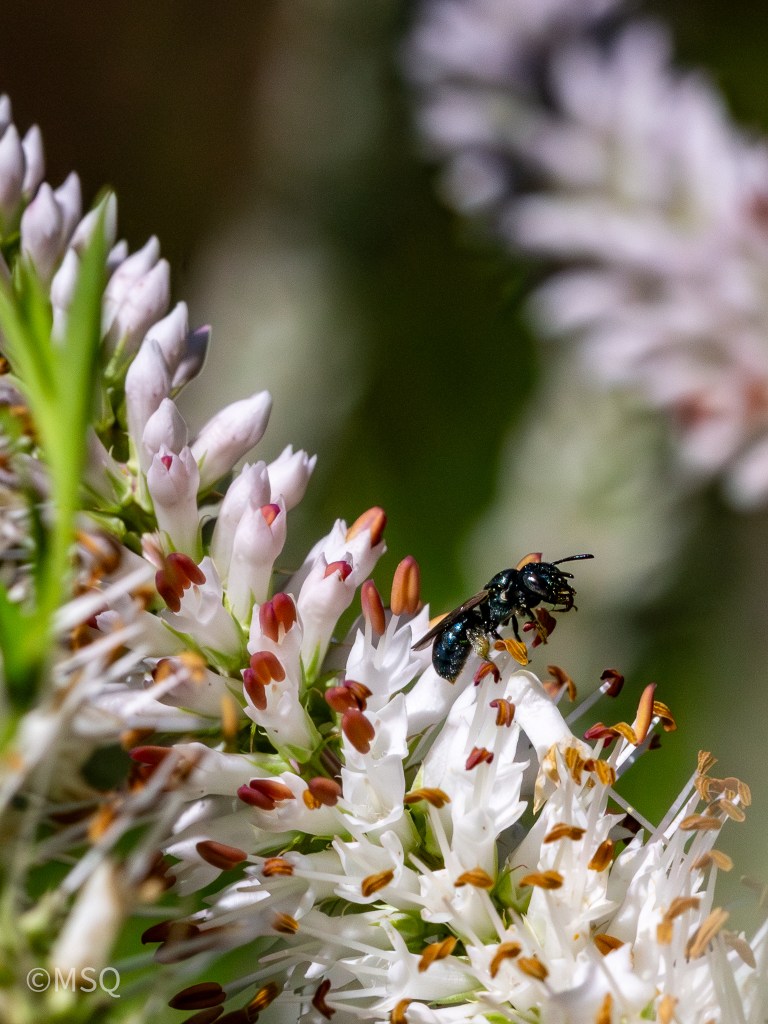
Large and small carpenter bees (Xylocopa and Ceratina) also gather nectar and pollen from Culver’s Root.
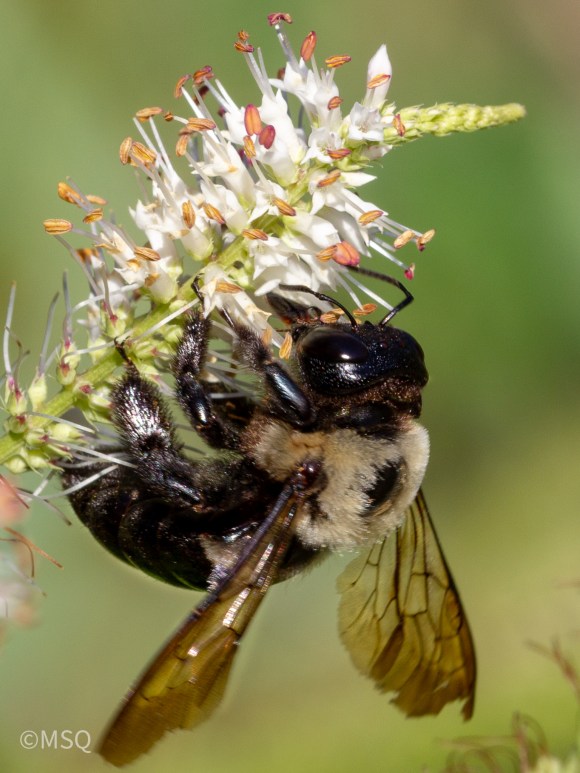
This is also a plant for beekeepers. Honeybees enjoy V. virginicum when they can find it. I’ve often seen them gathering nectar from this plant in my garden.
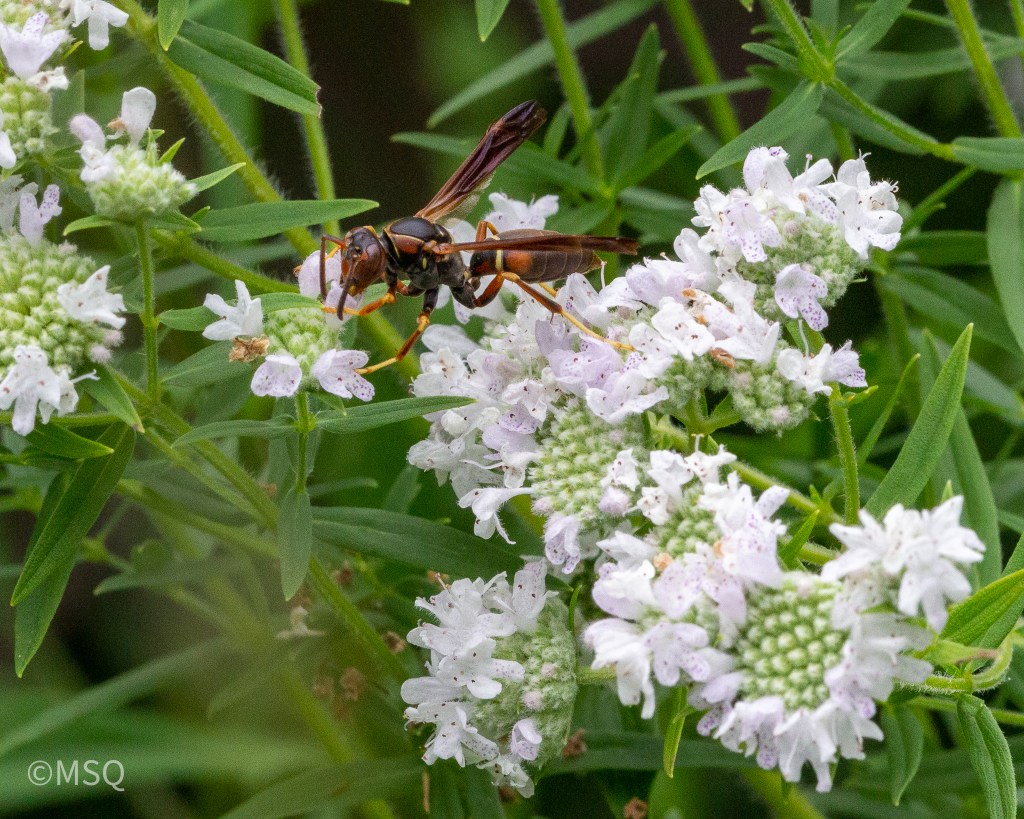
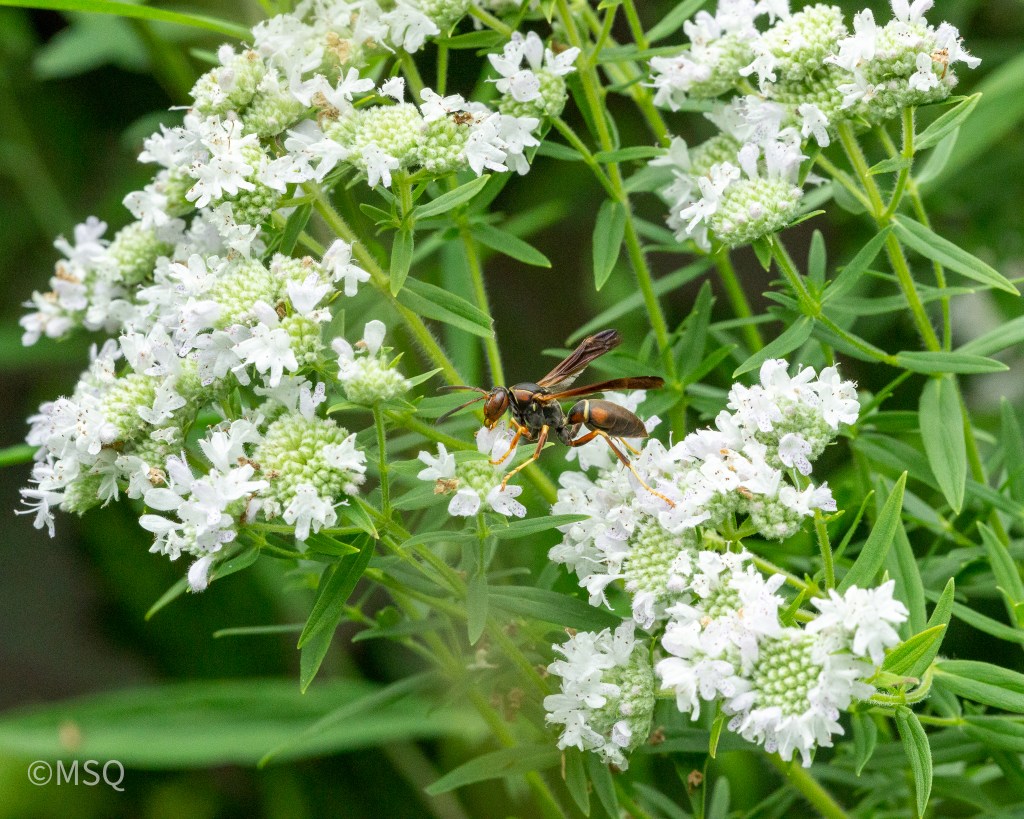
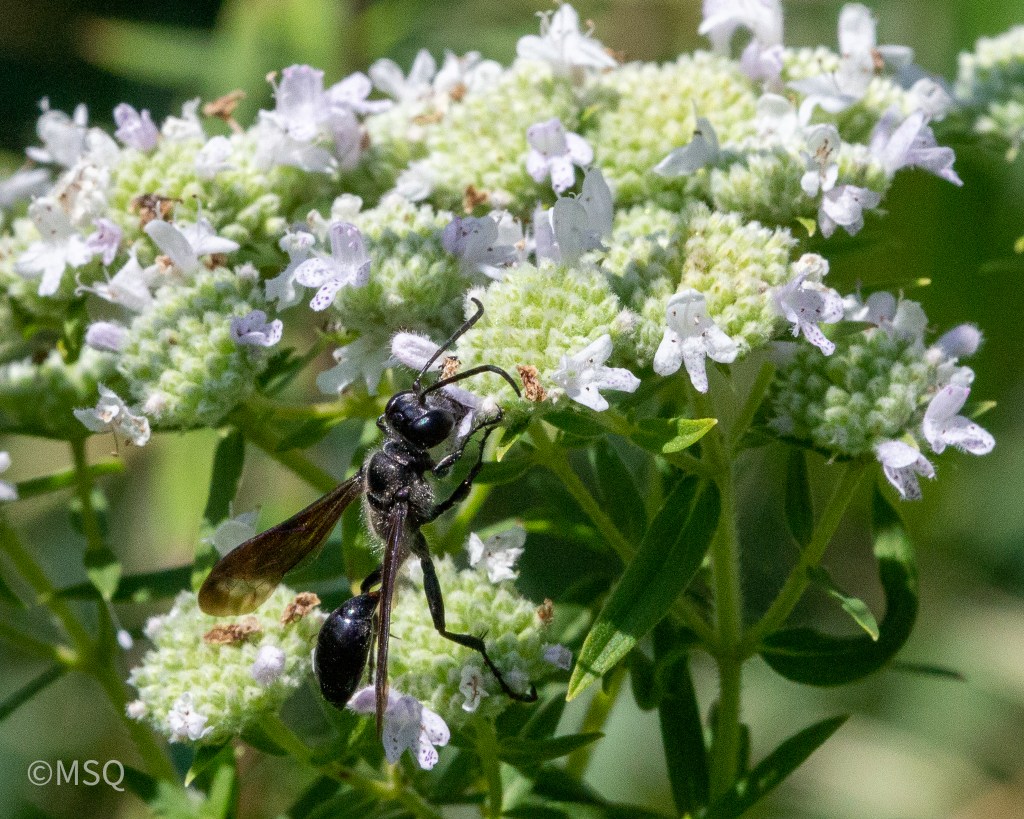
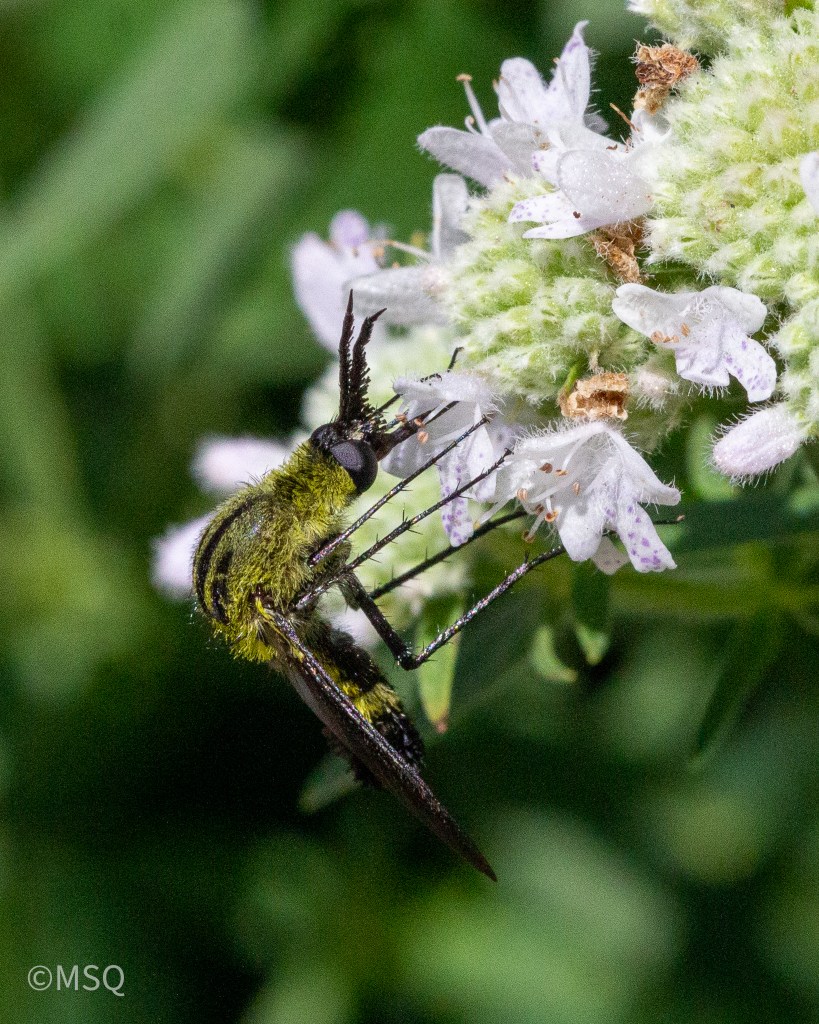
The sphecid and the potter wasps also benefit from the flowers. They gather nectar to support them while building and filling their nests. I often see the thread-waisted Mexican Grass-carrying wasp (discussed in “White Goes With Everything”, https://wildthingsinthe.garden/2023/05/31/white-goes-with-everything/) on this plant.
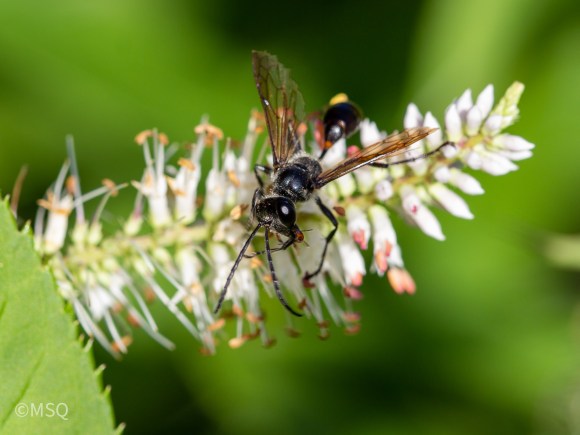
These groups of scary insects look nothing like our sweet fluffy bumblebees. Sphecid wasps resemble nightmare creations with bizarre tiny waists, long thin legs, and triangular heads. The vespid wasps, which include the potter wasp Eumenes fraternas, can resemble sphecid wasps. Sadly, they can also look like yellowjackets, hornets and paper wasps who share their family. Yet when I meet these wasps in the garden, they’re gentle and shy.
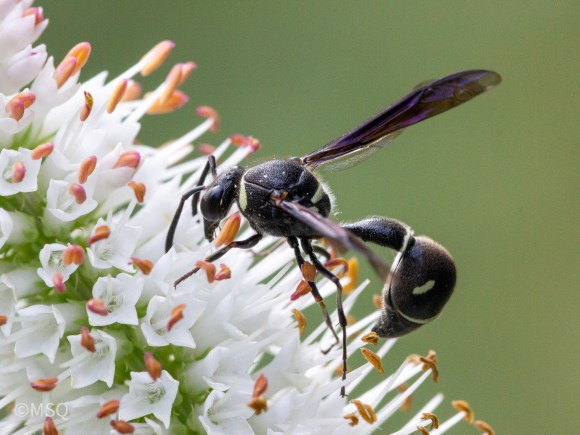
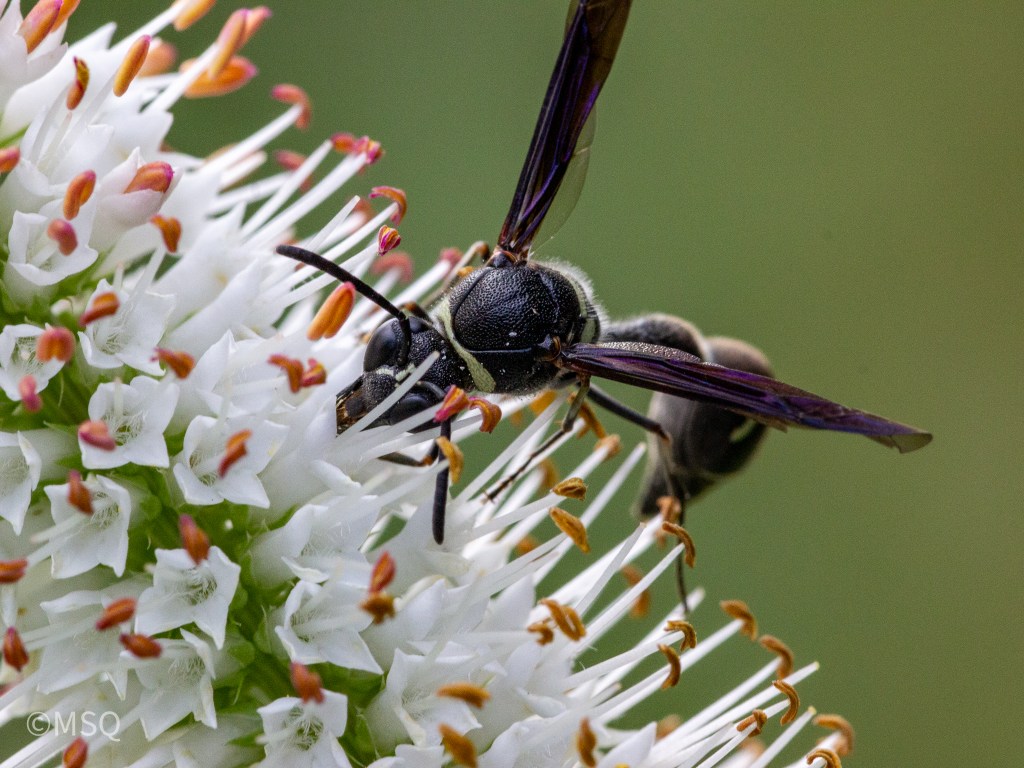
Today, let’s talk about Eumenes fraternas. This wasp is in Vespidae family, subfamily Eumeninae, also called potter and mason wasps. Eumenes fraternas is a potter wasp that regularly visits the Culver’s root in my garden. She creates her nest using soil and water. This wasp collects, mixes, and shapes her mud until she completes a small pot with a flared rim. The nest is built on a large leaf, sturdy stem, or a home/structure.
Then, the wasp lays a single egg fastening it to the top of the pot with a silk-like thread. The nest pot is provisioned with several caterpillars. E. fraternas preys on cankerworms or inchworms. The potter wasps frequently hunt moth larva in the Geometridae family. Geometer caterpillars are often pests of native trees eating large amounts of leaves, in some cases, stripping them.
Like other solitary pollinators, E. fraternas is entirely responsible for her eggs. It is in her best interest not to sting. I have found these solitary wasps to be quite cautious. This holds true for the thread-waisted wasps in my garden and the Mexican Grass-carrying wasp. If I bump a plant, they’ll fly away while bumblebees persistently keep feeding. Still, they can sting if handle roughly.
Thank you so much for joining me! I hope you enjoyed reading about Veronicastrum virginicum, Culver’s root, and consider adding it to your garden. Please let me know what you think of the post and tell me what’s going on it your garden by leaving a comment!
Many Thanks!
Mary