Cutleaf Coneflower (Rudbeckia laciniata)
Rising above the garden, bright yellow, green-coned flowers light up the garden. Magnets for bees of all sizes, Cutleaf Coneflowers (Rudbeckia laciniata) invite insects for pollen and nectar rewards. Chosen as 1995 North Carolina Wildflower of the Year, its blooms brighten the garden from mid-summer to early fall.1,11
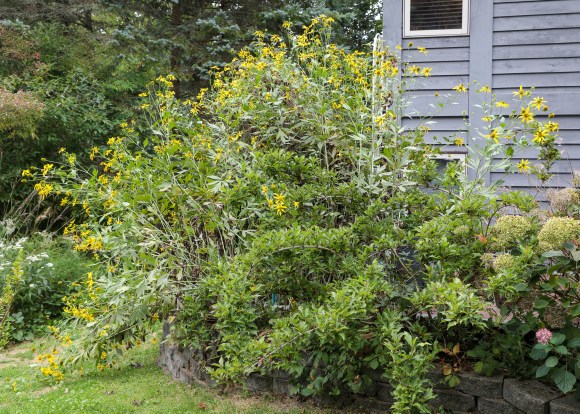
Cutleaf Coneflower grows over a wide climate range, thriving in Zones 3 through 9. It can reach 10 feet in height although it often only grows to 3 feet. Individual plants spread from 1.5 to 3 feet.1,10,12
The best growing conditions include full sun to part shade. It likes moist conditions and slightly acidic, fertile loam or silt-loam. In fact, Rudbeckia laciniata is happy in poorly drained, shaded areas with occasional flooding. If it’s too sunny and dry, the leaves droop and wither.1,10,12
Cutleaf Coneflower lives in a variety of moist natural habitats. These include bottomland forests, woodland borders, moist meadows in wooded areas, sloughs in moist areas, moist thickets, low areas along rivers, partially shaded riverbanks, alluvial thickets, calcareous seeps, low, rich woods, and margins of poorly drained fields and pastures.1
When this Coneflower is too happy, it spreads aggressively. The roots are fibrous and rhizomatous, and it can form large clonal colonies. Control this with division. Encourage rebloom by cutting spent summer flowers.1,10,12
Despite what I’ve said so far, I grow this plant in a raised bed with no irrigation. Why? It grows happily there! It does tolerate some drying out. Yes, it loses a few leaves but it’s much easier to control those rhizomatous roots. In addition, it can withstand hot, humid summers.12
Rudbeckia laciniata’s foliage varies in shape. Leaves have 3 to 7 lobes with the number increasing toward the bottom of the stalk. At the plant’s base, some leaves may even be pinnate(with separate leaflets). The flower stalks have smaller, oval or lanceolate foliage.1
Leaves grow alternate on the stem and tend to droop. They can reach 12 inches long and 12 inches across. The edges range from smooth to coarsely toothed. The upper surface is dark green and hairless to slightly hairy. The lower surface is pale to medium green and smooth to lightly hairy.1
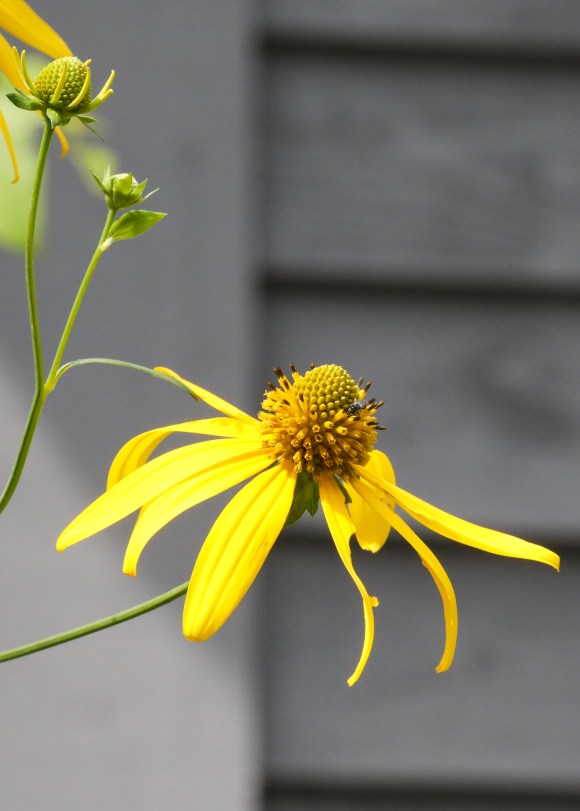
Sunny yellow flowers top this Coneflower. The flowers sit atop an upper stem or are part of a group of flower stalks which often open at different times. Each flower stalk can be 1 to 2 feet long.1,10
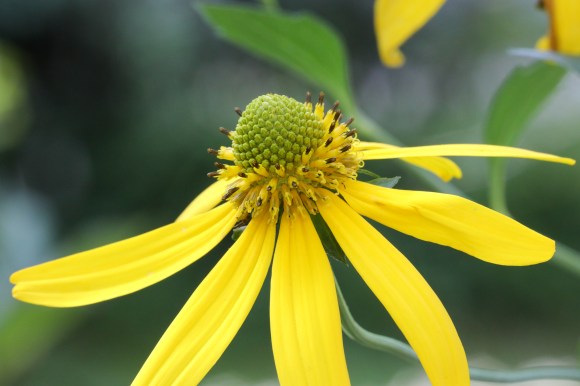
The daisy-like flowerheads open to 2 to 4 inches and have a rounded cone. 6 to 12 drooping petals (ray florets) frame the center. The cone starts as a bright green and then turns a greenish yellow as the disc florets open. Disc florets form tubular corollas producing a pin cushion like appearance. Seeds form from these florets.1
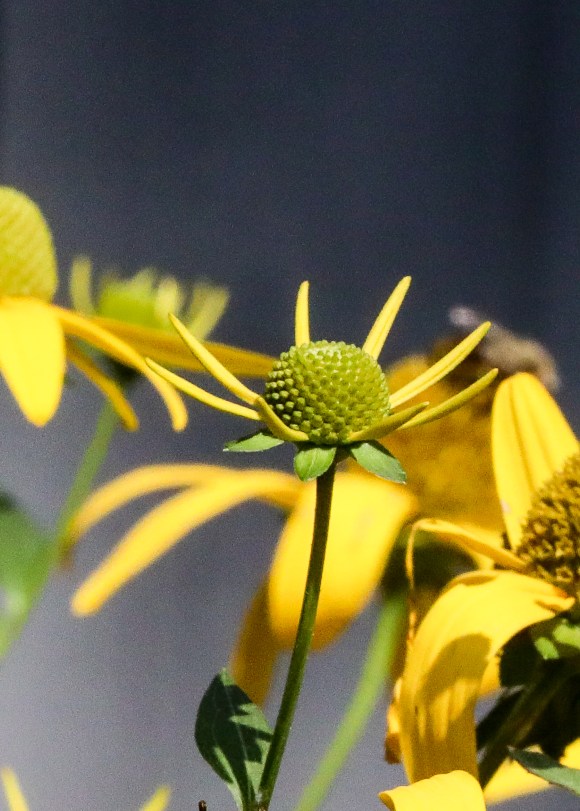
Cutleaf Coneflower blooms form mid-summer to early fall. Flowering period last from 1 to 2 month. The time is extended by buds opening at different times.1,10,12
Rudbeckia is one of the top 20 Keystone plants for EcoRegion 8. The Commission for Environmental Cooperation created theses EcoRegions. This commission is a multinational group including Canada, the United States and Mexico. EcoRegion 8 includes the eastern part of the United States through Wisconsin and Illinois and South to the border. The very tip of Florida and the Gulf coast of Texas are excluded.13
Keystone plants support specialist bees and/or are larval hosts for butterflies, moths and skippers. Cutleaf coneflower appears on both lists. It feeds 29 specialist bees and 20 different types of butterfly/moth/skipper larva.5
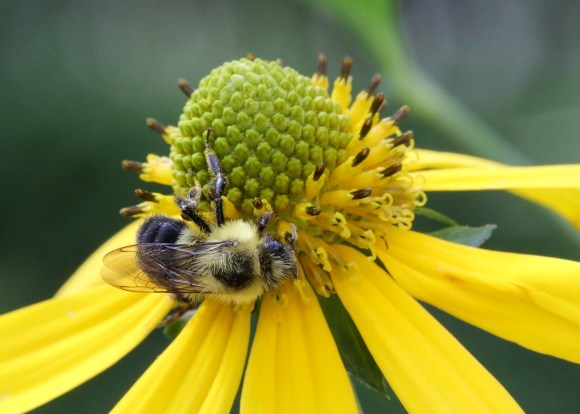
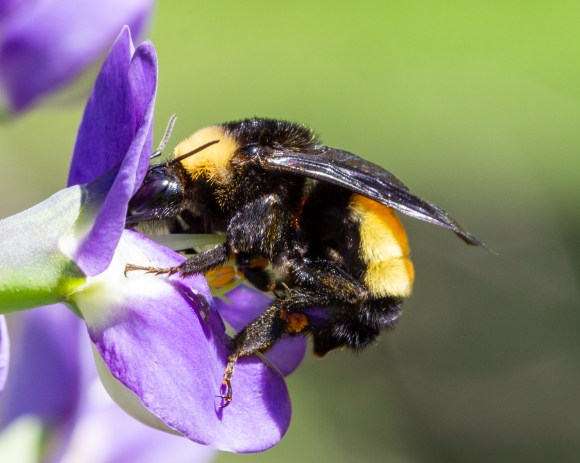
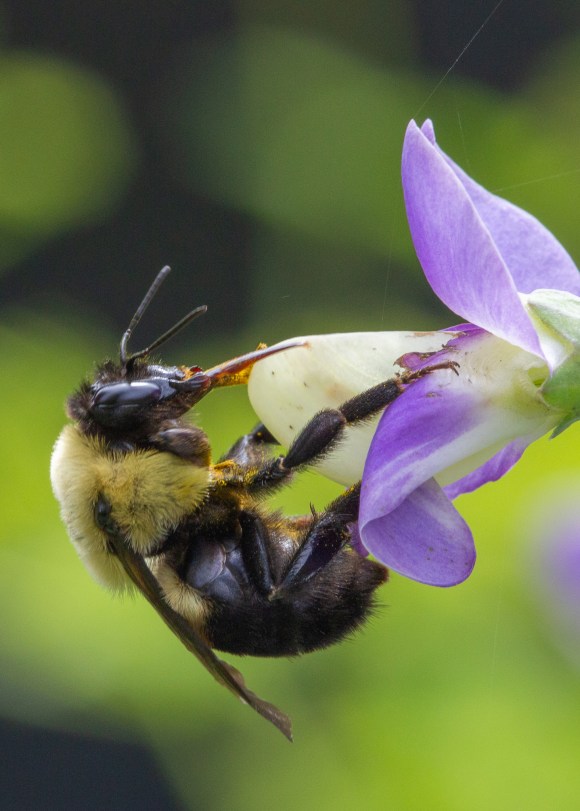
Rudbeckia laciniata attracts long- and short-tongued bees. It’s been designated of Special Value to Native Bees and Special Value to Honey Bees by the Xerces Society for Invertebrate Conservation. Bee visitors include bumblebees (Bombus),
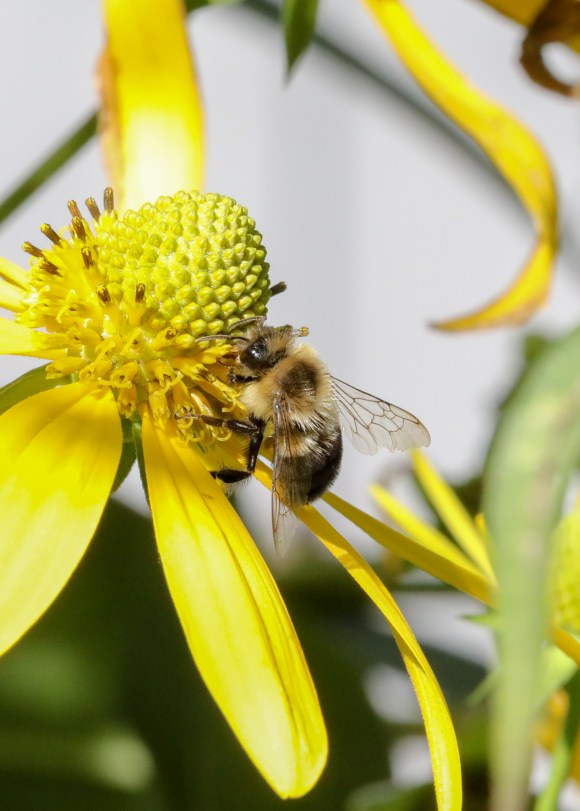
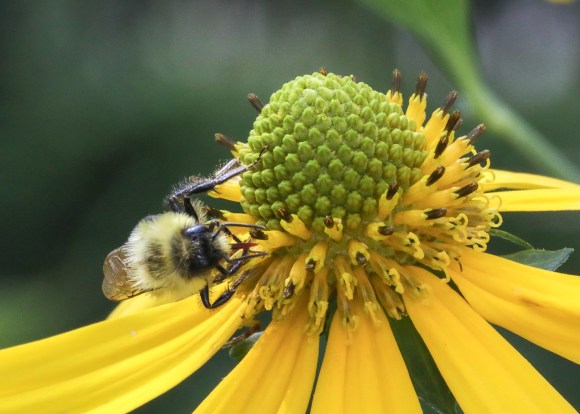
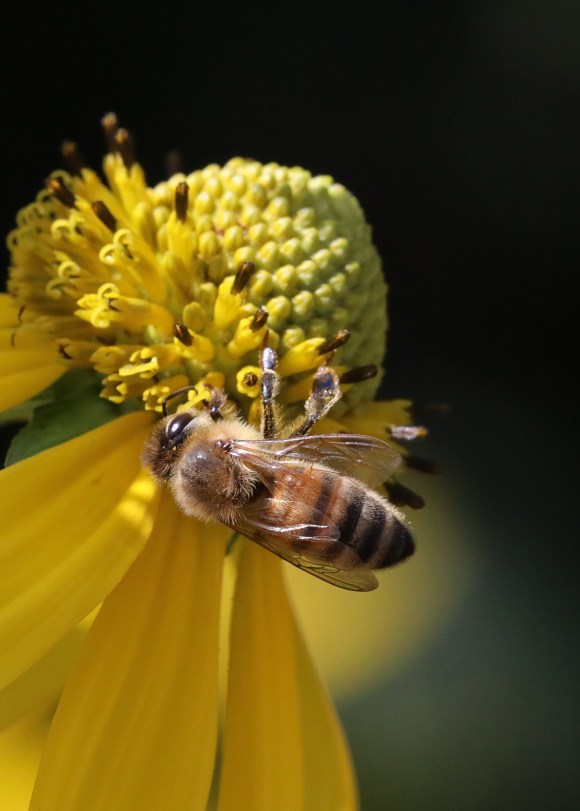
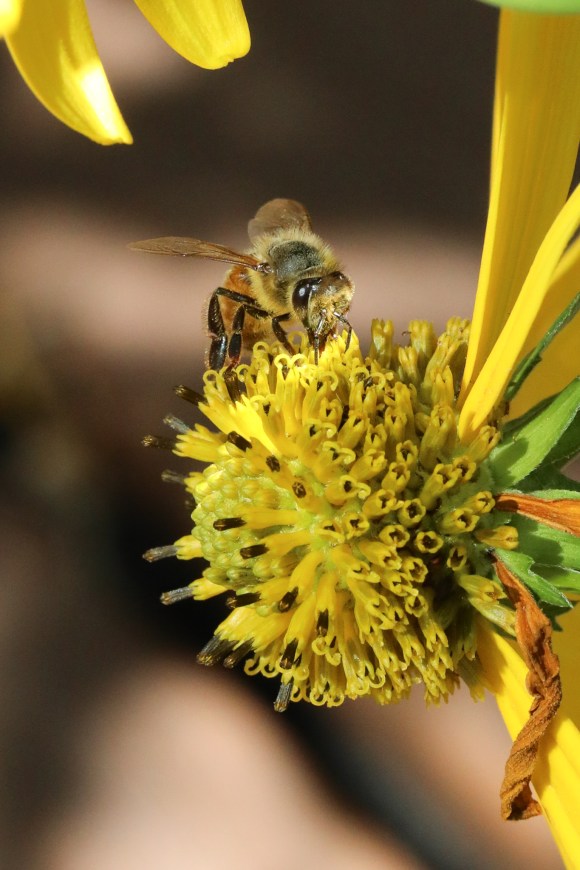
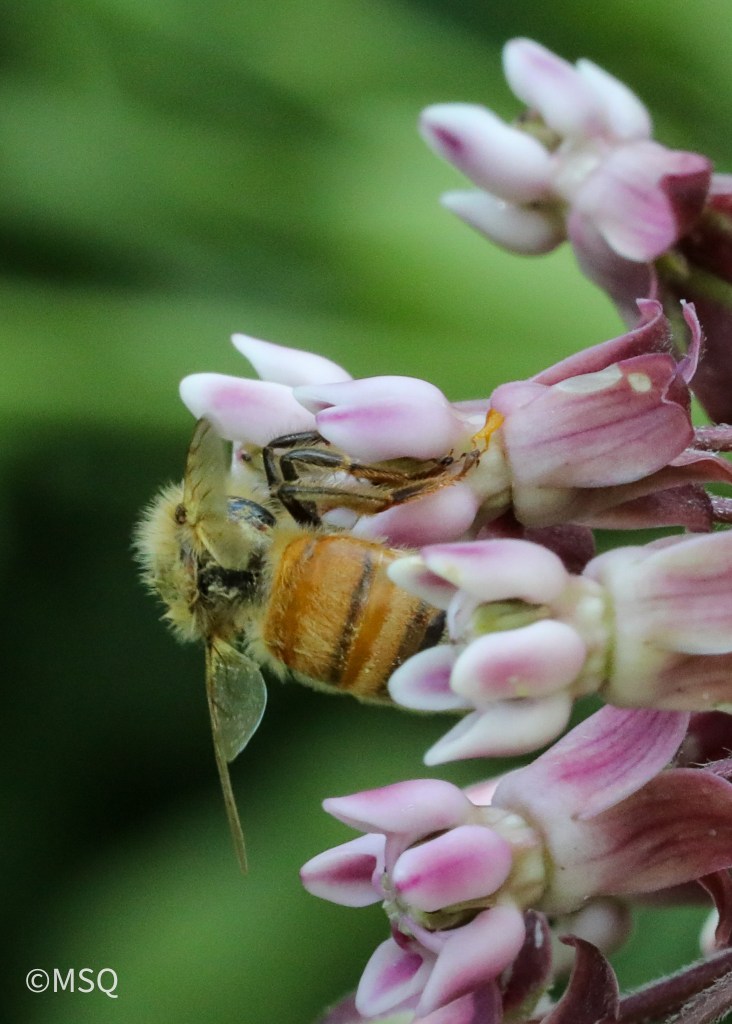
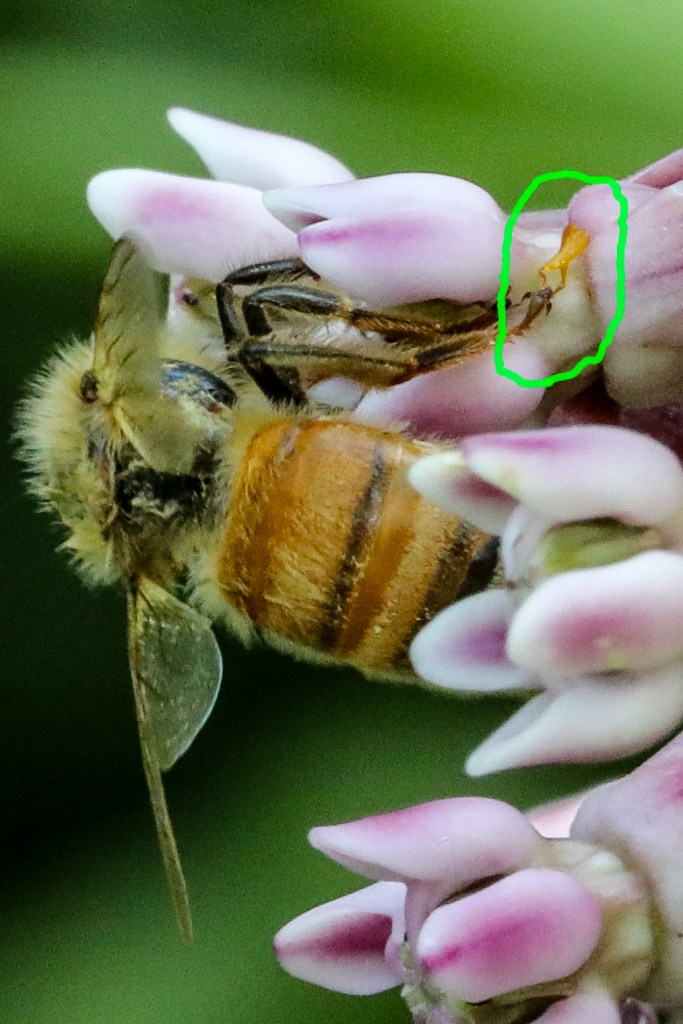
honeybees (Apis mellifera),
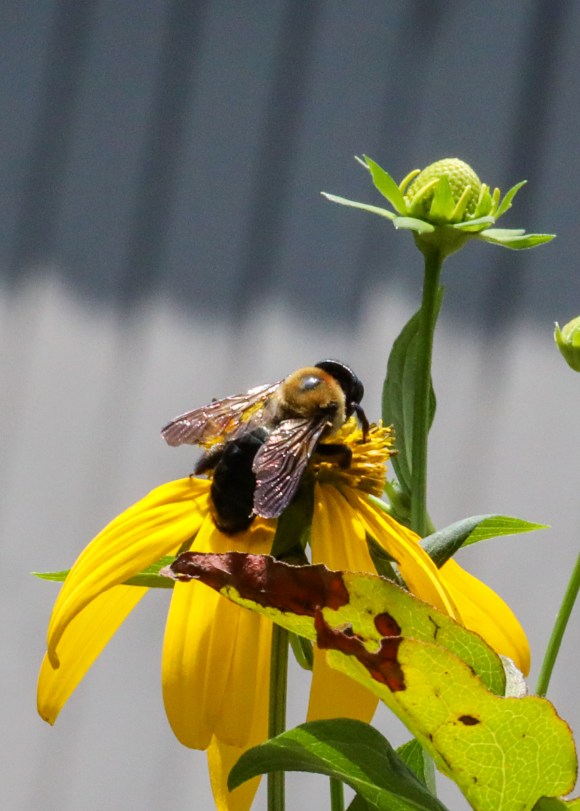
large carpenter bees (Xylocopa spp.),
Halictid bees (Halictus spp.),
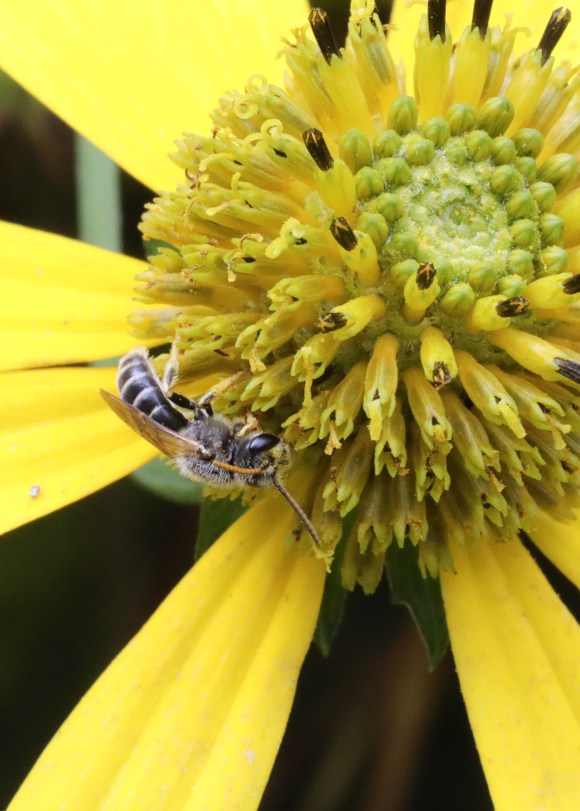
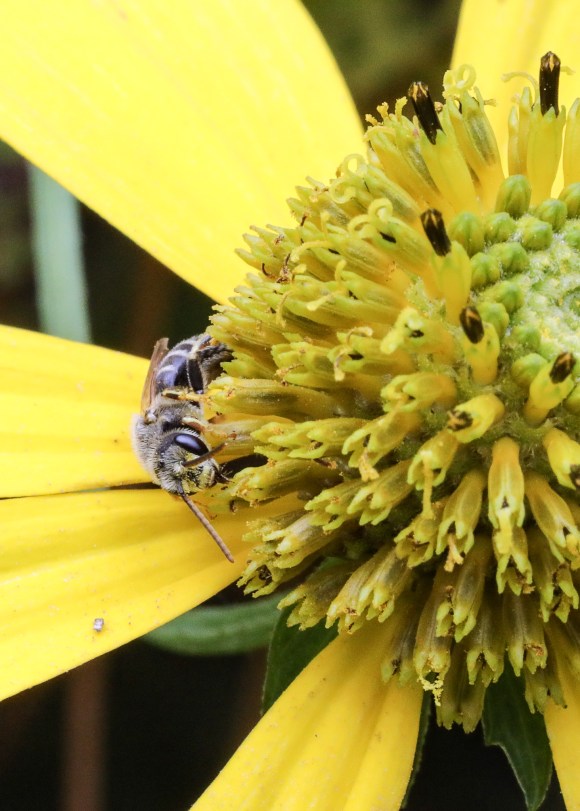
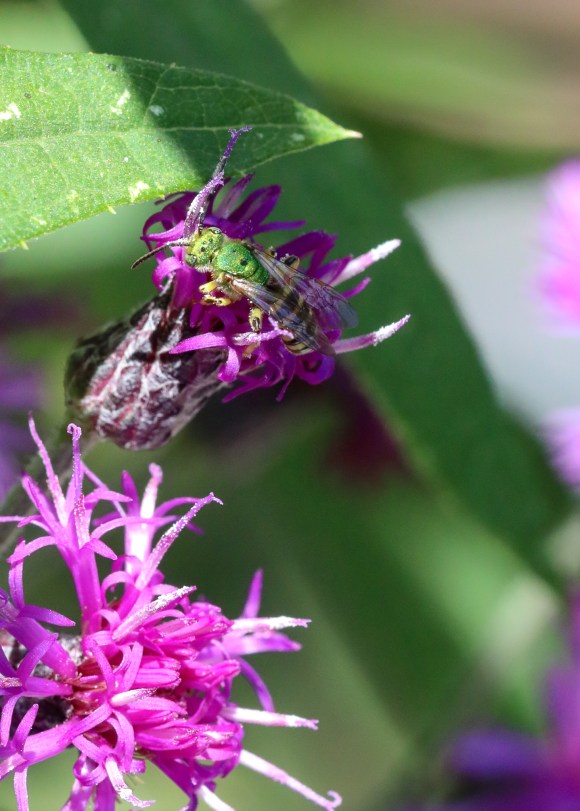
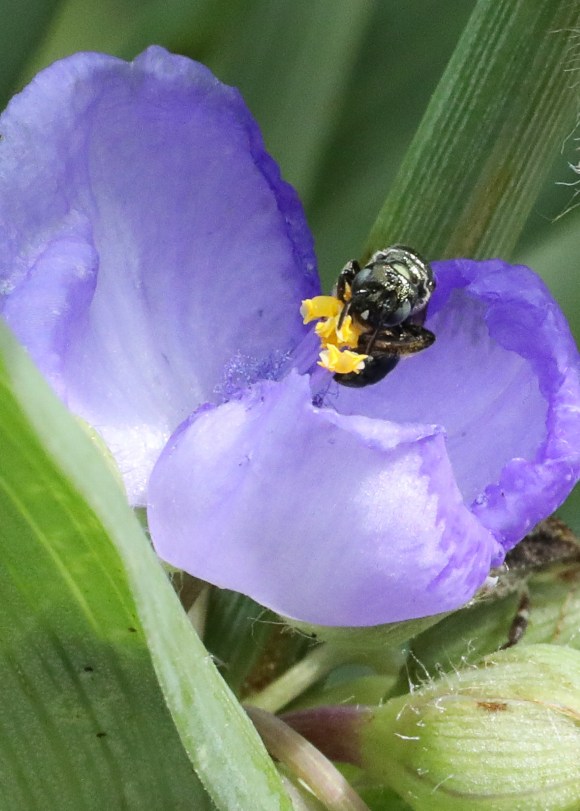
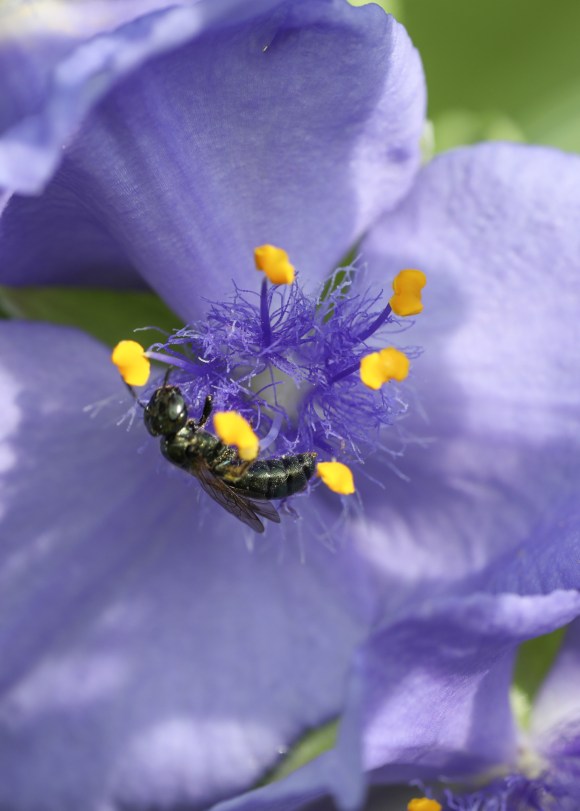
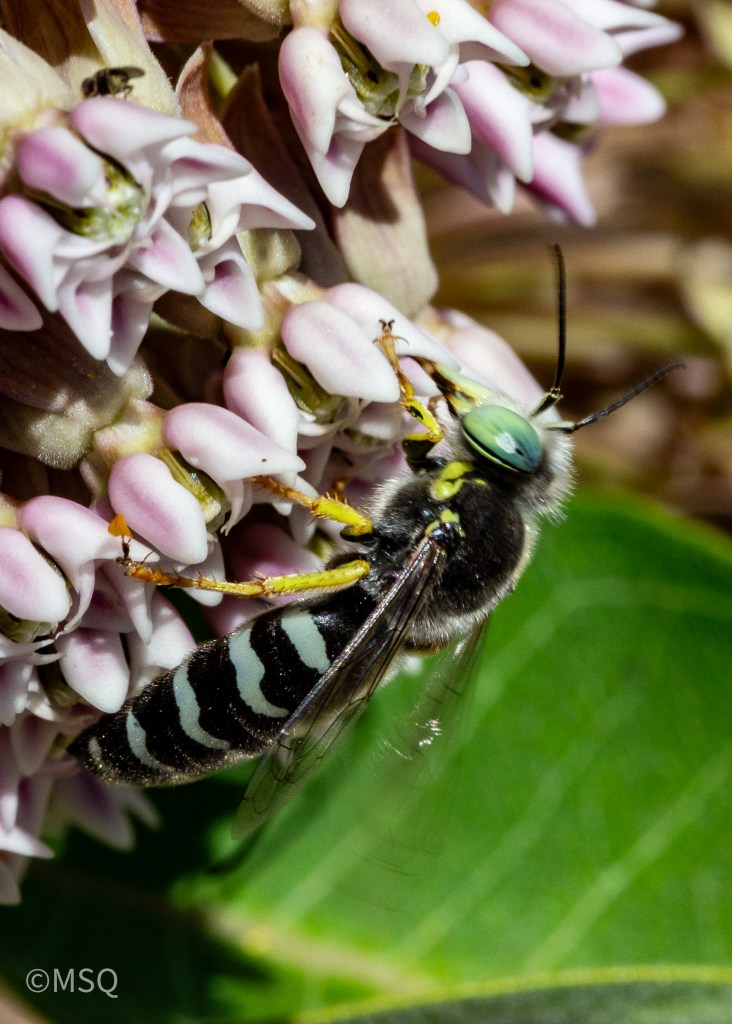
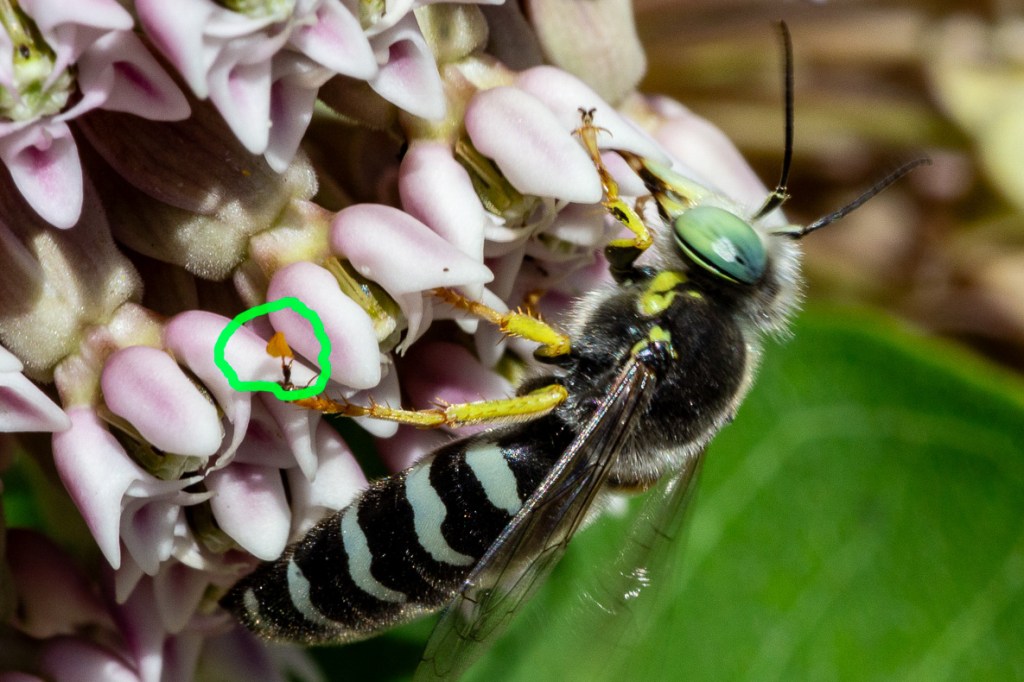
Green Sweat Bees (Agapostemon spp.) and
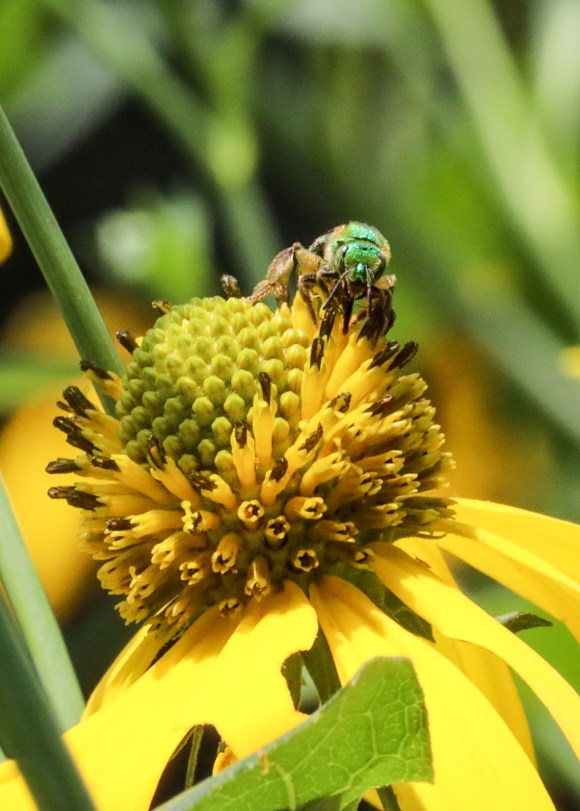
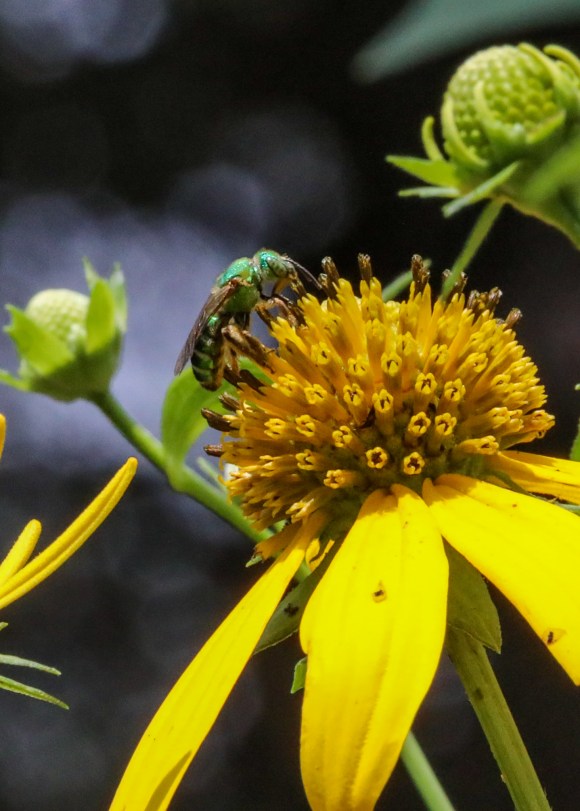
small carpenter bees (Ceratina spp.)1,2,12

Agapostemon spp., a green metallic sweat bee, are charming. With an iridescent green thorax, these bees can have a green abdomen or a striped black and white abdomen. They are generalists but enjoy flowers from the Asteraceae family. These bees are active from mid-spring to mid-fall. With fewer blooms available in spring, overwintering females often visit a greater variety of flowers then.3
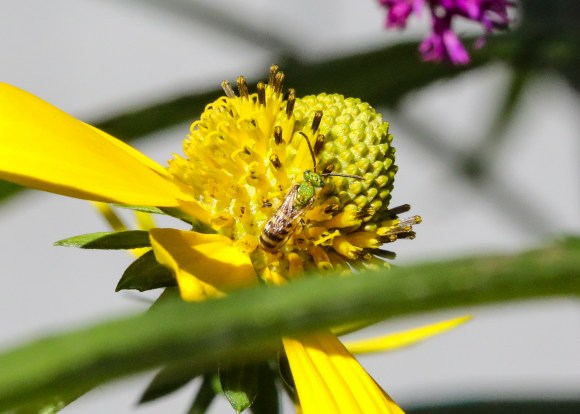
These green sweat bees are solitary or communal. When communal, the nests are spread out. They nest in the ground with 1 or 2 generations per year in the Midwest, Great Lakes and Northeast.3
The offspring sex ratio changes depending on the number of generations. With 2 generations, mated females emerge in mid-spring. This group lay mostly female eggs.3
Of the first-generation brood, some won’t mate at all. These lay unfertilized (male) eggs. Mated females lay a balanced proportion of males and females. When these young emerge, the second-generation brood forage until mid-fall, mate, and then fertilized females spend the winter underground.3
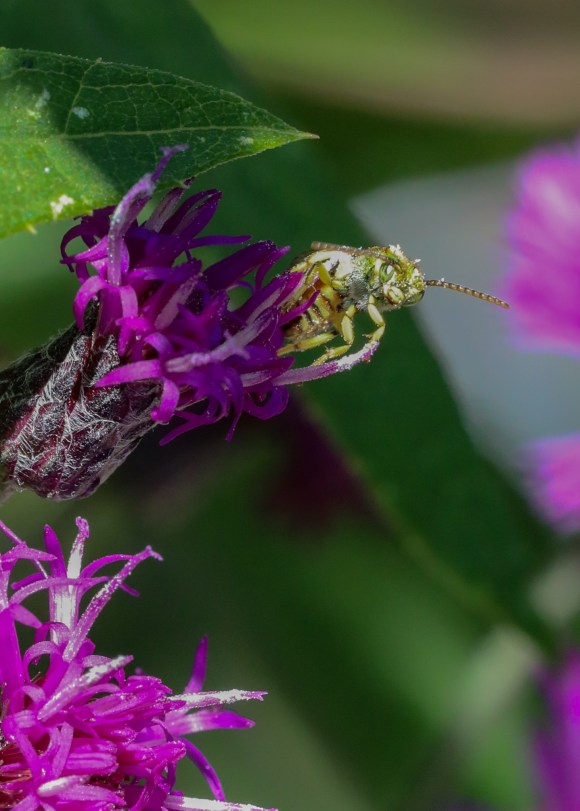
When there’s one generation, the male to female ratio is much closer. They appear in early summer. These bees live throughout the growing season and mate in mid-fall. Then fertilized females spend the winter underground.3
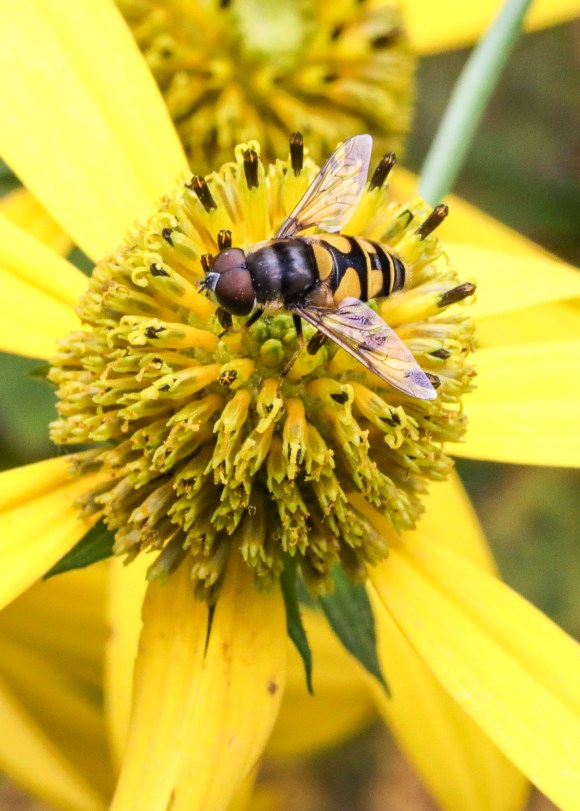
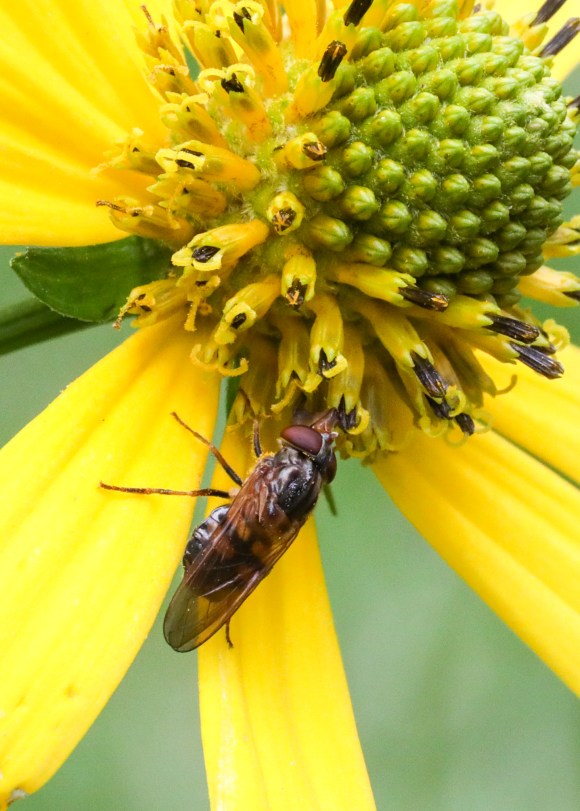
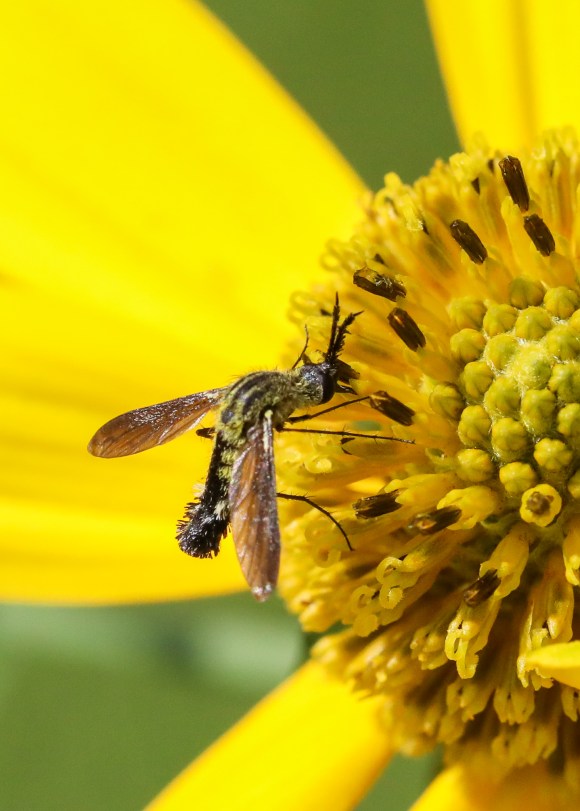
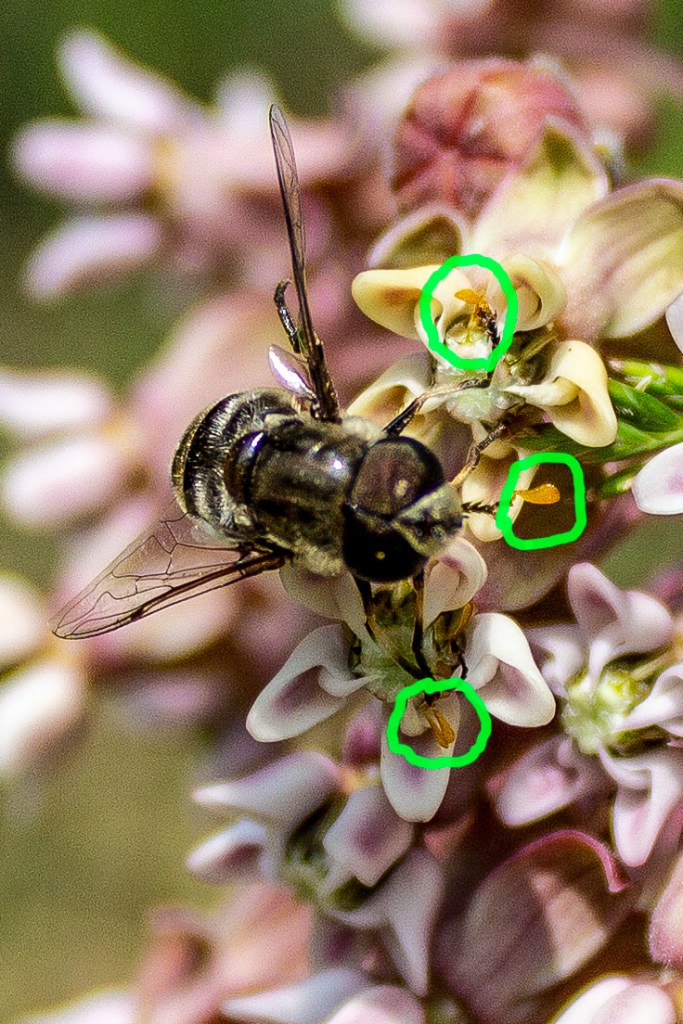
Flies also visit Cutleaf Coneflower. Bee flies (Family: Bombyliidae), Hoverflies (Rhingia) and Syrphid flies (Eristalis spp.) harvest resources.2
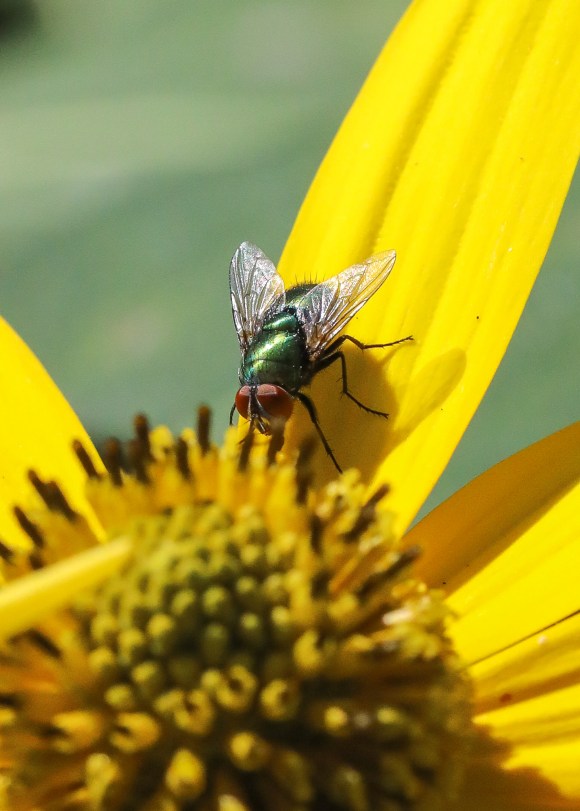
Predatory wasps also gather nectar from Rudbeckia laciniata. These include thread-waisted wasps, sand wasps, mason wasps and bee wolves.1,2
Eremnophila aureonotata or Gold-marked Thread-waisted Wasp is the only Eremnophila in North America. An elegant wasp, it has fine gold or silver hairs on its head and thorax. There are also white or silver spots on the thorax.4
Gold-marked Thread-waisted Wasp nests in compacted sandy-loam or loam soil. The nesting area is vegetated, concealed and located near a wooded area. The wasp digs a hole 2 inches deep for its nest. When leaving, she covers the entrance with fragments of plants.4
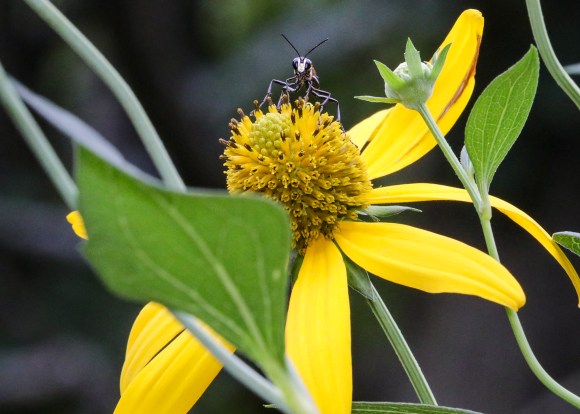
Eremnophila aureonotata hunts caterpillars to supply her nests. She searches on plant leaves for larva. Once captured, the wasp paralyzes it by stinging. She carries the caterpillar back to the nest and sets it outside.4
The wasp removes the vegetation from the entrance and flies it away. Then she drags the caterpillar into her burrow and lays one egg on it. The wasp closes the entrance with soil and pieces of plants. She tamps the entrance closed with her head.4
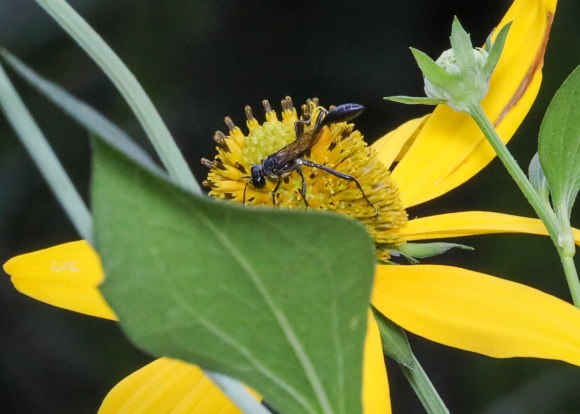
Gold-marked Thread-waisted Wasps act as beneficial insect by hunting caterpillars. They harvest noctuid moths (Noctuidae), prominent moths (Notodontidae), and sphinx moths (Sphingidae). Noctuid moths are a large and varied group. Cutworms, armyworms, corn earworms, and iris borers all belong in this group. Cutworms eat the seedling off at soil level and pull it underground to eat. Armyworms eat turf grass and cereal crops like millet and rice.4,7,8,9
The sphinx moths (Sphingidae) family include tomato and tobacco hornworms, pink-spotted hawk moth, and Pandora, Achemon, and Virginia Creeper Sphinx moth. The tomato and tobacco hornworm larva eat tomato, potato, pepper, eggplant, tobacco and other nightshade family plants. Pink-spotted hawk moth caterpillars consume sweet potato vines. Pandora, Achemon, and Virginia creeper sphinx moth caterpillars are pests in vineyards. Eremnophila aureonotata gathers all these larvae.8
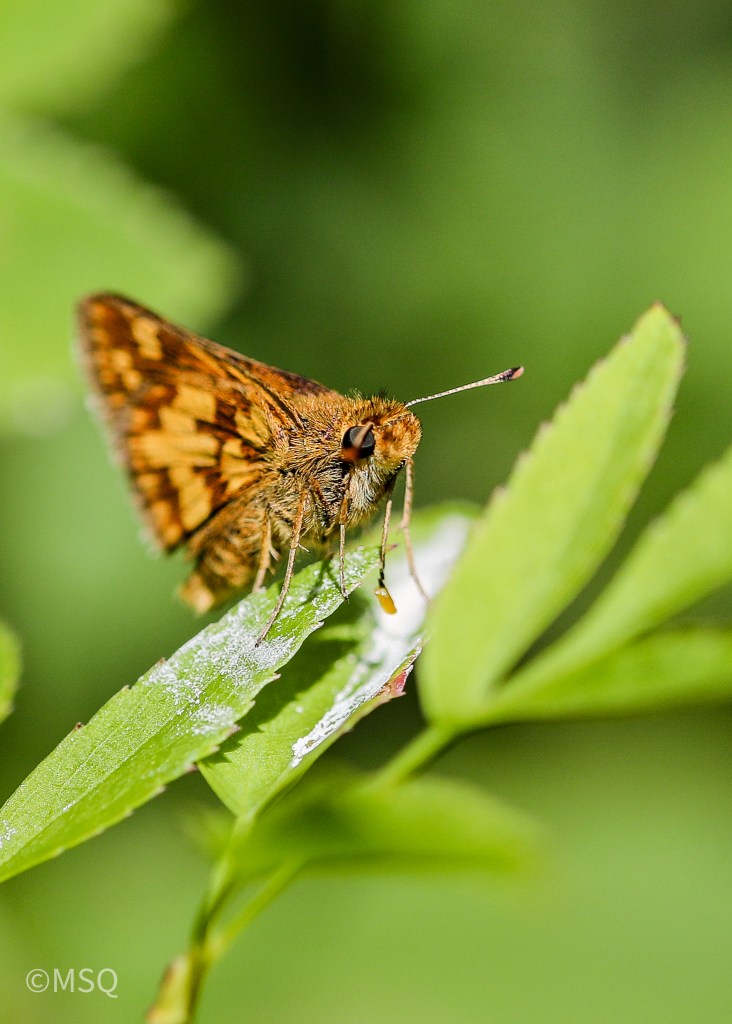
Butterflies, Moths and Skippers nectar from Rudbeckia’s flower while some use it as a larval host. Common Eupithecia (Eupithecia miserulata), Wavy-Lined Emerald Moth (Synchlora aerata), Southern Emerald Moth (Synchlora frondaria) and Silvery Checkerspot Butterfly (Chlosyne nycleis) all use this Coneflower to feed their young.1,2
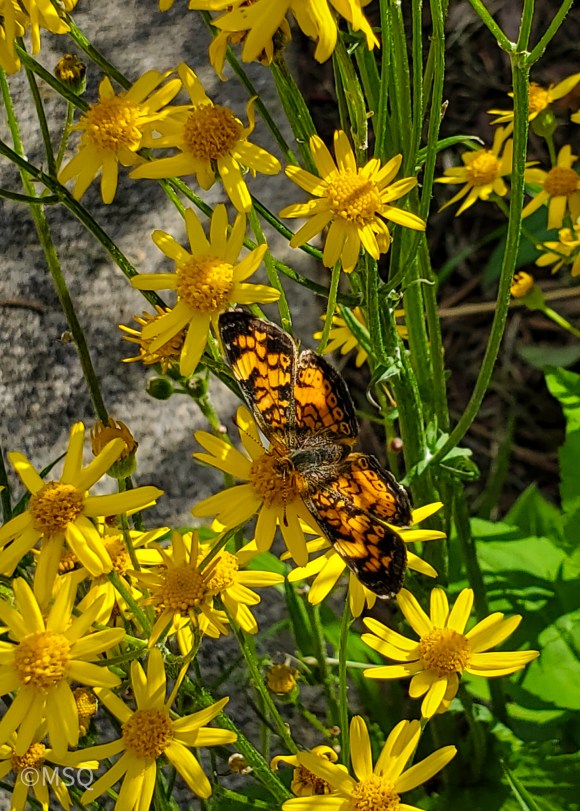
I hope you enjoyed this exploration of Cutleaf Coneflower and the insects it supports. An easily grown plant, Rudbeckia laciniata makes a wonderful addition to the moist garden. Enjoy dreaming about next year’s garden!
Happy Gardening,
Mary Quinlan
BIBLIOGRAPHY:
- “Cutleaf Coneflower (Rudbeckia Laciniata).” n.d. Accessed September 29, 2025. https://www.illinoiswildflowers.info/savanna/plants/cl_coneflower.htm.
2. Holm, Heather. 2014. Pollinators of Native Plants: Attract, Observe and Identify Pollinators and Beneficial Insects with Native Plants. Pollination Press LLC
3. Holm, Heather. 2017. Bees: An Identification and Native Plant Forage Guide. Pollination Press LLC.
4. Holm, Heather. 2021. Wasps: Their Biology, Diversity, and Role as Beneficial Insects and Pollinators of Native Plants. Pollination Press LLC.
5. Keystone Native Plants – Eastern Temperate Forests – Ecoregion 8. n.d. Accessed September 29, 2025. https://www.nwf.org/-/media/Documents/PDFs/Garden-for-Wildlife/Keystone-Plants/NWF-GFW-keystone-plant-list-ecoregion-8-eastern-temperate-forests.pdf.
6. Native Plants for Pollinators & Beneficial Insects: Midwest. Accessed September 29, 2025. 2023 The Xerces Society for Invertebrate Conservation. https://xerces.org/sites/default/files/publications/22-025_01_NPPBI—Midwest_web.pdf.
7. Missouri Department of Conservation. n.d. “Noctuid Moths.” Accessed October 1, 2025. https://mdc.mo.gov/discover-nature/field-guide/noctuid-moths.
8. Missouri Department of Conservation. n.d. “Sphinx Moths (Hawk Moths).” Accessed October 1, 2025. https://mdc.mo.gov/discover-nature/field-guide/sphinx-moths-hawk-moths.
9 “Noctuidae – Wikipedia.” n.d. Accessed October 1, 2025. https://en.wikipedia.org/wiki/Noctuidae.
10. “Rudbeckia Laciniata – Plant Finder.” n.d. Accessed September 29, 2025. https://www.missouribotanicalgarden.org/plantfinder/PlantFinderDetails.aspx?taxonid=277226.
11. “Rudbeckia Laciniata (Cutleaf Coneflower, Green-Head Coneflower, Green Headed Coneflower, Tall Coneflower, Wild Goldenglow) | North Carolina Extension Gardener Plant Toolbox.” n.d. Accessed September 29, 2025. https://plants.ces.ncsu.edu/plants/rudbeckia-laciniata/.
12. “Rudbeckia Laciniata (Green-Headed Coneflower) | Native Plants of North America.” n.d. Accessed September 29, 2025. https://www.wildflower.org/plants/result.php?id_plant=rula3.
13. US EPA, ORD. 2015. “Ecoregions of North America.” Data and Tools. December 13, 2024. https://www.epa.gov/eco-research/ecoregions-north-america.




 Wild Things in the Garden