Categories
native plants Pollinator gardening

A Summer Cornucopia

Common Milkweed or Asclepias syriaca is a superb Monarch support and a mainstay of Monarch waystations.  But it is so much more.  This plant feeds more than 450 insects at different life stages. Diverse insects consume nectar, sap, leaves, flowers and seeds5.  Admittedly weedy, its lovely blooms are fragrant and enhance any scent garden1,5.
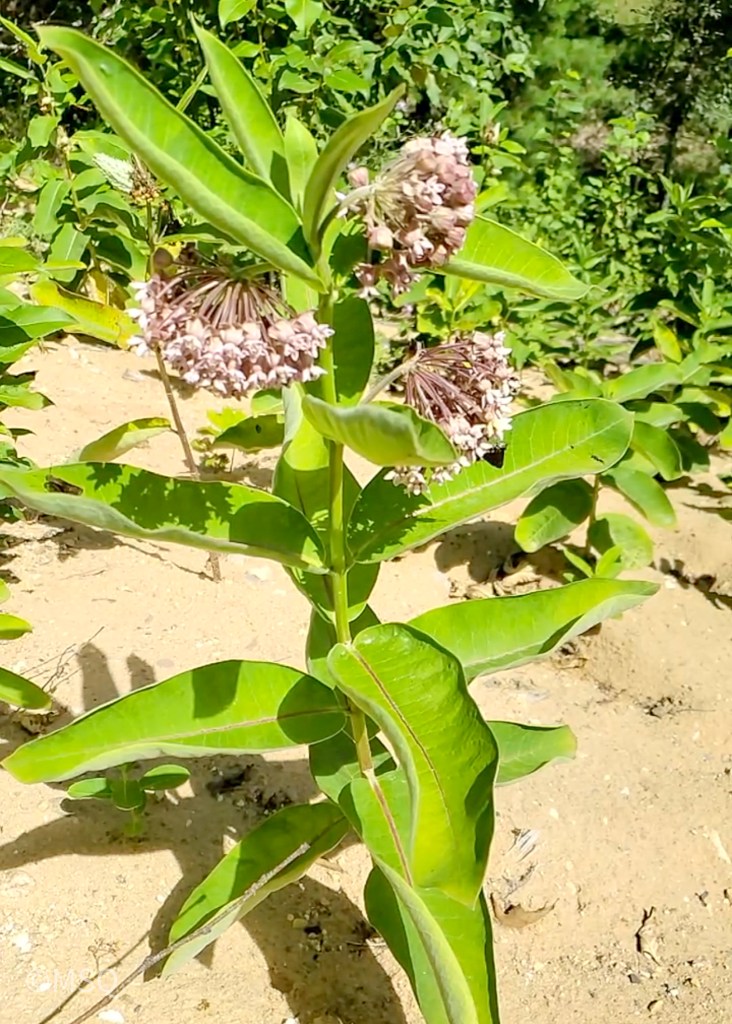
Common Milkweed thrives in full sun and well-drained soils.  Like other “weeds”, it’s not picky about growing conditions.  A. syriaca  grows in clayey, sandy or rocky calcareous soils, loamy soils and high clay or sand soils. 

Asclepias syriaca springs up in disrupted areas.  Human activity disrupts natural areas.  But natural disruptions occur where water rises and falls, for example, along streams and lakes.  

In nature, Common Milkweed is found in moist and dry black soil prairies, sand prairies, sand dunes along lake shores, fields, pastures, abandoned fields, vacant lots and along railroads, fence rows and roadsides. 

Common Milkweed absolutely lives up to its weedy name.  It spreads by seed and by long creeping rhizomes that pop up in unexpected places.  Once established, this plant is extremely difficult to remove. 

These habits are offset by Common Milkweed’s value to insects and pollinators.  It’s best to let it grow where you don’t mind its vigorous and abundant nature—a wild area, a meadow or a prairie garden.
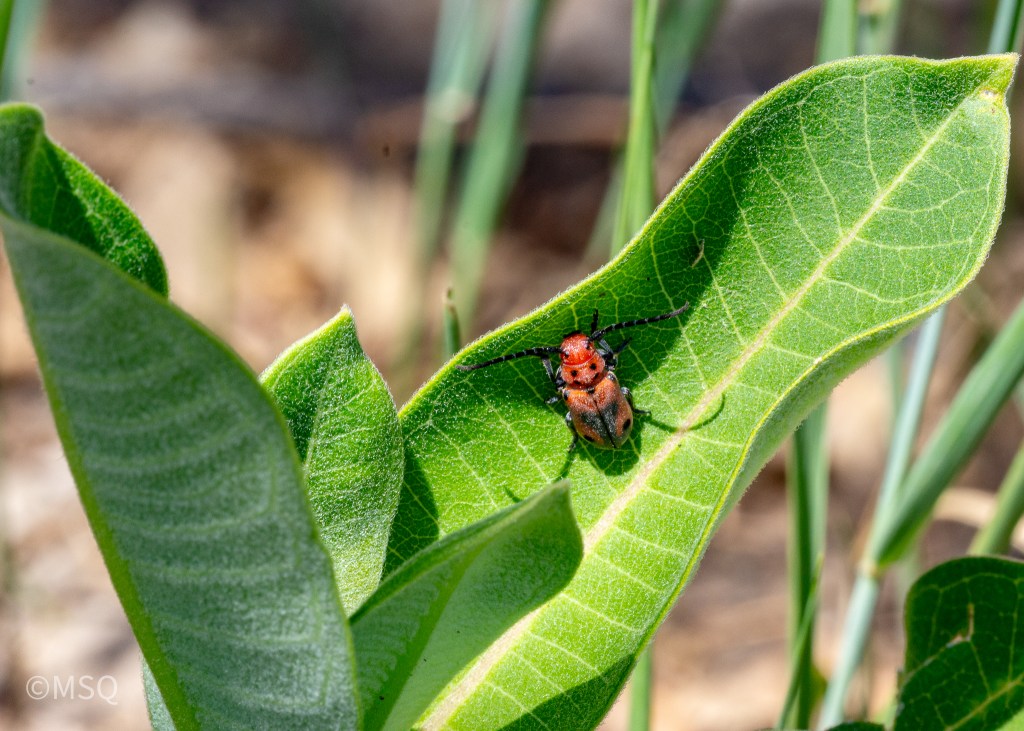
Asclepias syriaca offers a strong erect form in the garden.  The pale, cylindrical central stem supports opposite jade-green leaves.  These leaves range from pale to dark green on top and are pale green with short, dense hair underneath.  Each leaf has a distinctive central vein with small veins spreading to the edges.  
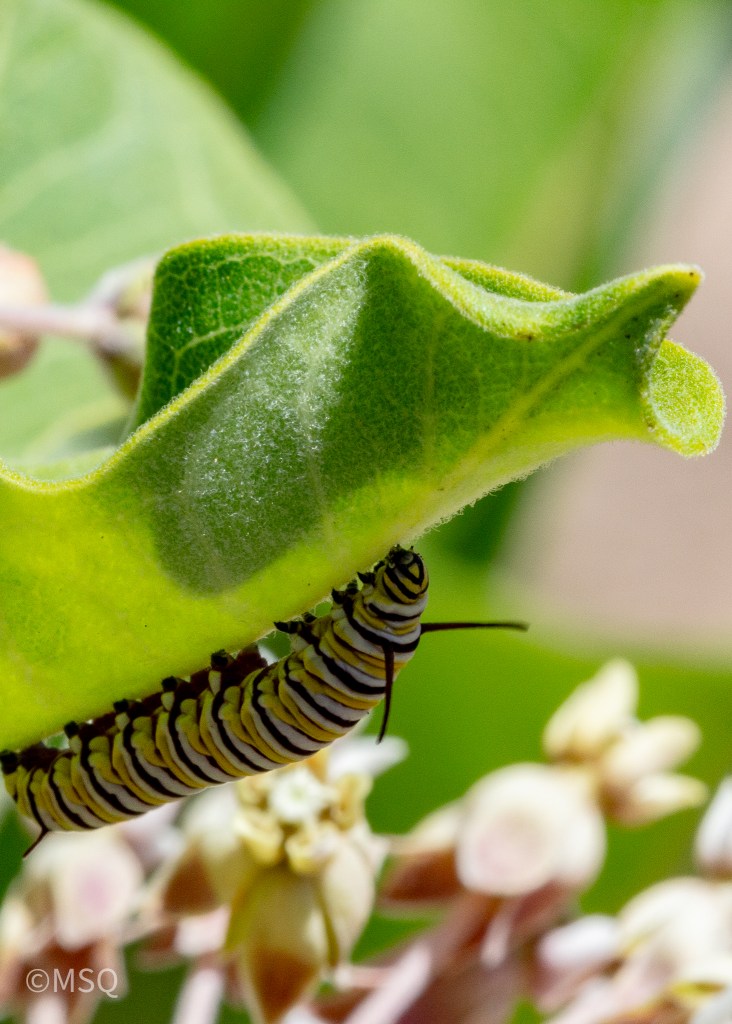
The milky sap, which gives Milkweed its name, oozes whenever part of the plant is broken.  The sap is called a latex and contains 2% latex.  The latex is thick and sticky.  

Most ingeniously, caterpillars will reduce the sap’s flow by taking tiny bites closer to the stem.  The sap leaks out there.  When the caterpillar begins to eat a leaf, there’s less latex at the feeding site.  Thus, less chance the sticky stuff will foul the larva’s mouth2,3.

For humans and other mammals, there are other concerns.  The milky sap contains cardenolides, specifically cardiac glycosides.  Contact with the skin or eyes causes irritation.  If eaten or exposed to mucous membranes, cardiac glycosides can disrupt the nervous system, the kidneys, the muscles (which includes the heart) and the human’s/animal’s acid/base balance3,4,5.  

The monarch and other insects that consume milkweed have turned this to their advantage.  As the caterpillars/insects consume milkweed their bodies store the cardiac glycosides.  If a bird or animal eats them, they taste bitter and can make the predator feel sick.  

Predators soon learn to leave them alone. The orange/black or red/black coloring of milkweed insects signals, “Stay away!  Not good for you!”  The technical term for this warning coloration is ‘aposematic’5.

Milkweed blooms don’t dazzle but flower in 1930’s vintage shades.  The drooping balls of florets are soft and dusky lasting one to one and a half months.  Colors range from greenish white to greenish pink to rosy-pink to purplish-pink to reddish purple.  

Each cluster averages 30 individual florets but can have up to 100. Their sweet, vanilla fragrance drifts from the three to five umbels on each plant.  
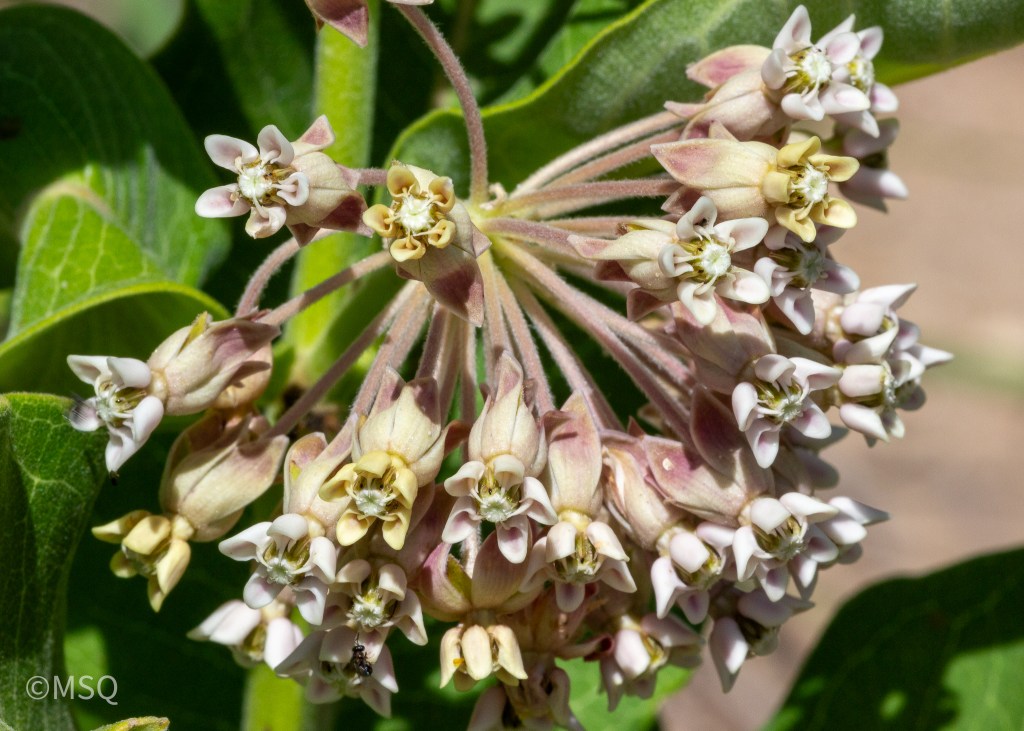
Up close, each floret is a fascinating feat of engineering all directed toward an exceptional pollination system.  Each a quarter of an inch across, the florets have five reflexed (bent back) petals and five raised hoods with curved horns.  The hoods have lighter colors than the petals.  

In the center of each floret, is a cylindrical structure formed by two fused stigmas.  It’s called the stigmatic column.  

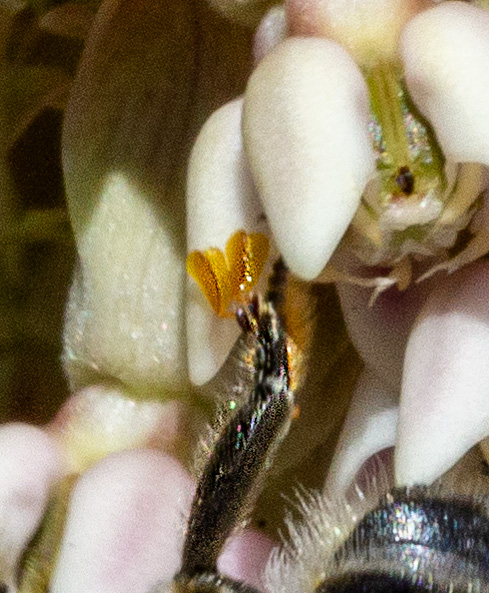
Between the hoods, are the stigmatic slits.  These slits hold the pollinaria.  Unique structures, pollinaria hold waxy sacs of pollen.  These are transferred instead of the loose, powdery pollen used by most flowers.  Milkweeds and orchids are the only known plants to have them6,7.
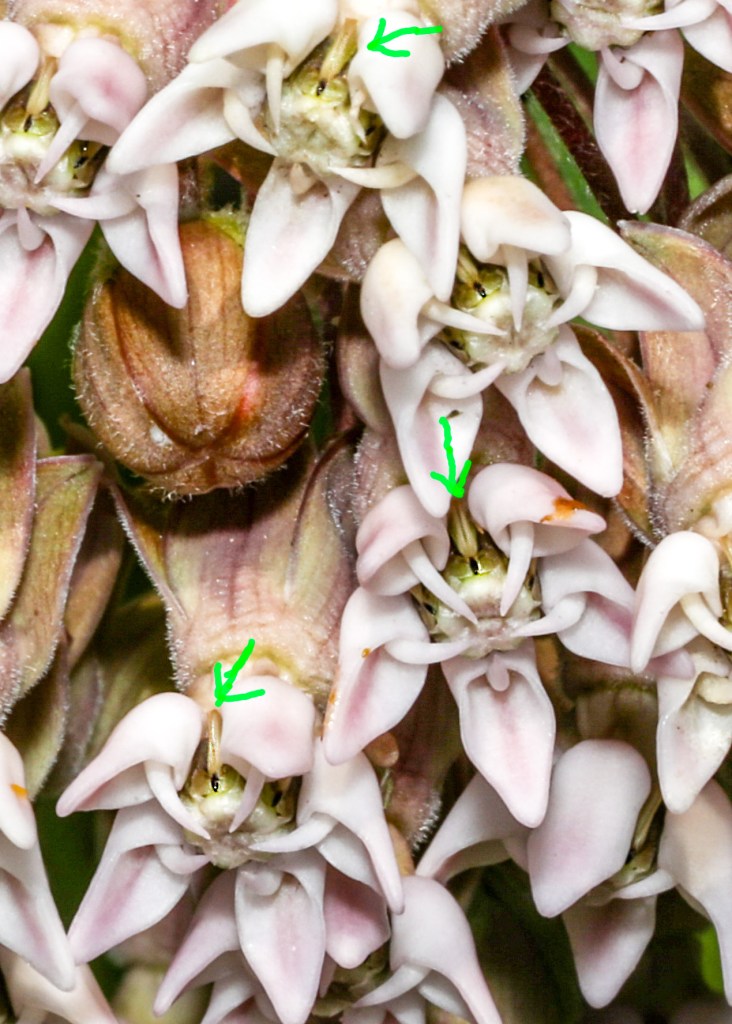
The milkweed pollinium (or pollinarium) consist of a blackish-brown oval gland (corpusculum) with a slit, two translator arms hanging from the gland and two pollinial sacs.  Before each sac, a knee bend of approximately 900 occurs in the arm.  This bend enables the rotation of each sac during pollination.
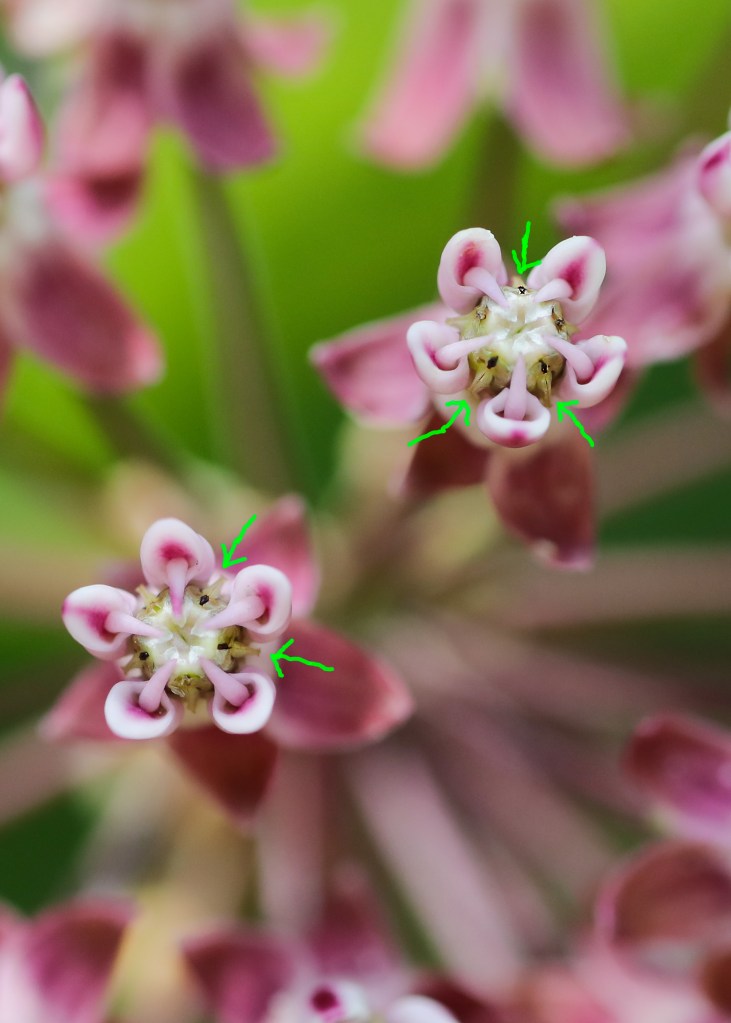
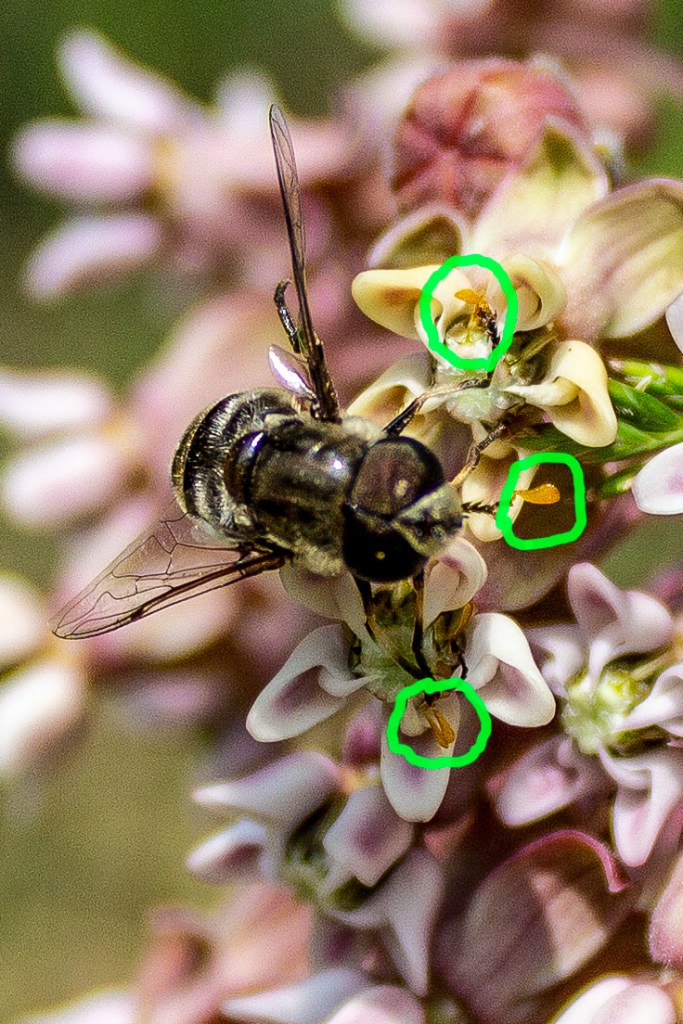
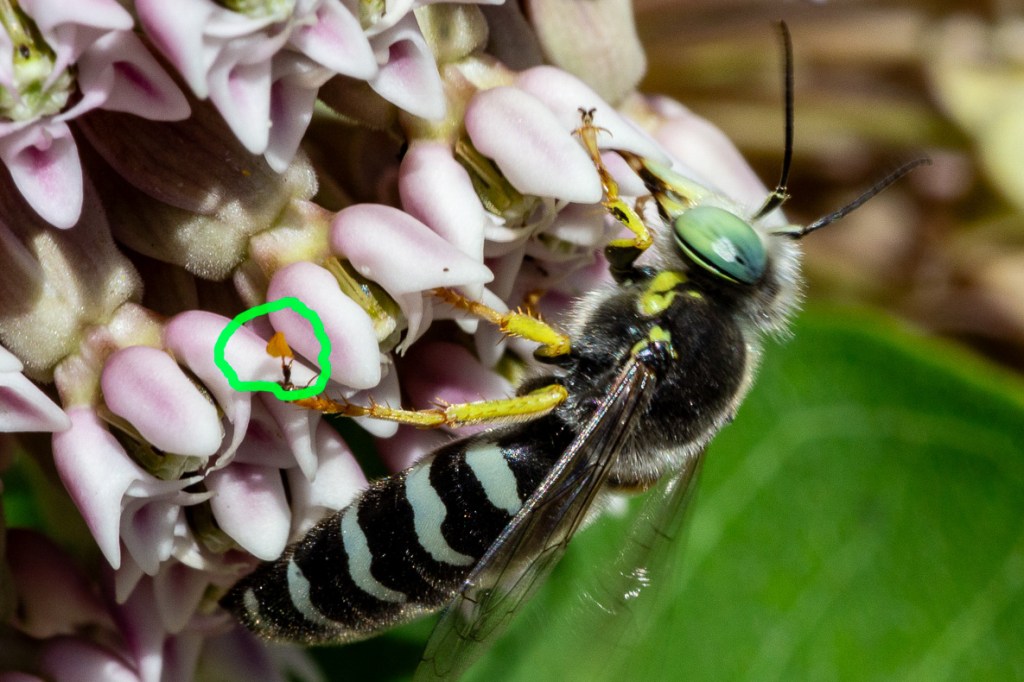
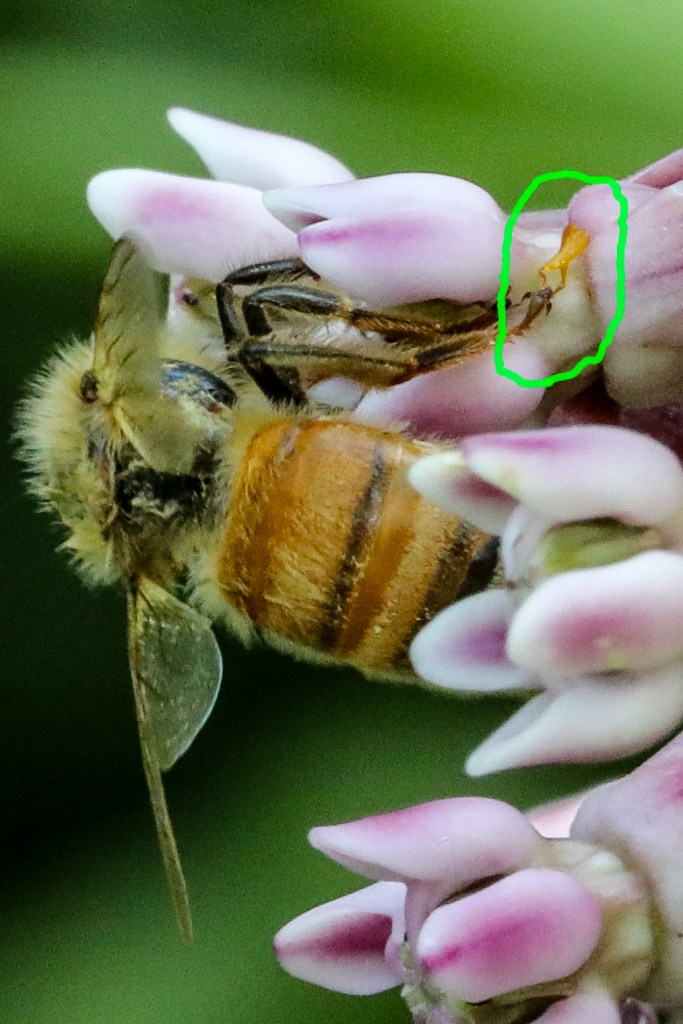
In the milkweeds, the pollinial sac sit inside the stigmatic column and only the corpusculum is visible between the hood structures.  When an insect lands on the flower, one of its legs may slip into the stigmatic slit between two hoods.   As it tries to free itself, the leg moves upward toward the slit in the corpusculum. Bristles in the chamber keep it from going back down.  
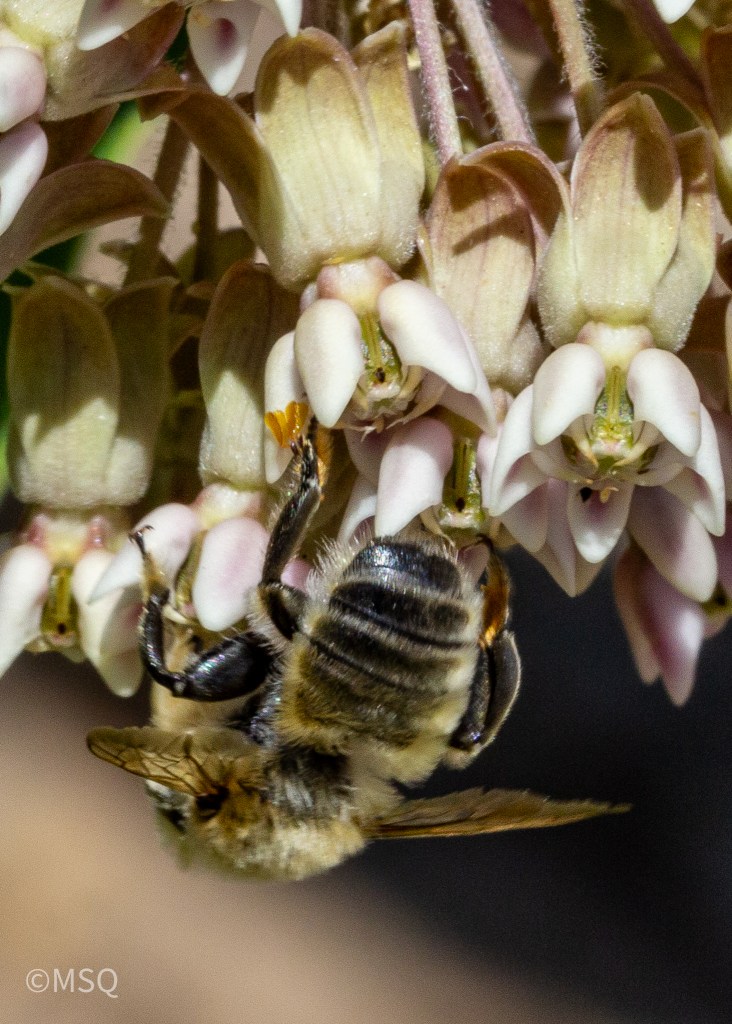
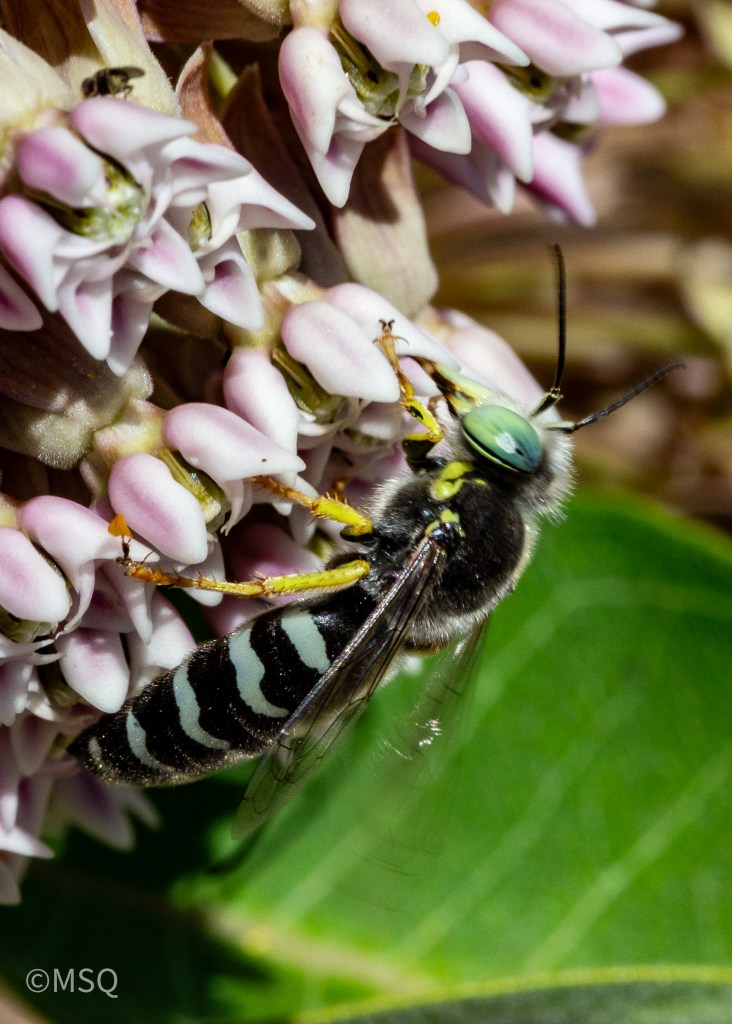
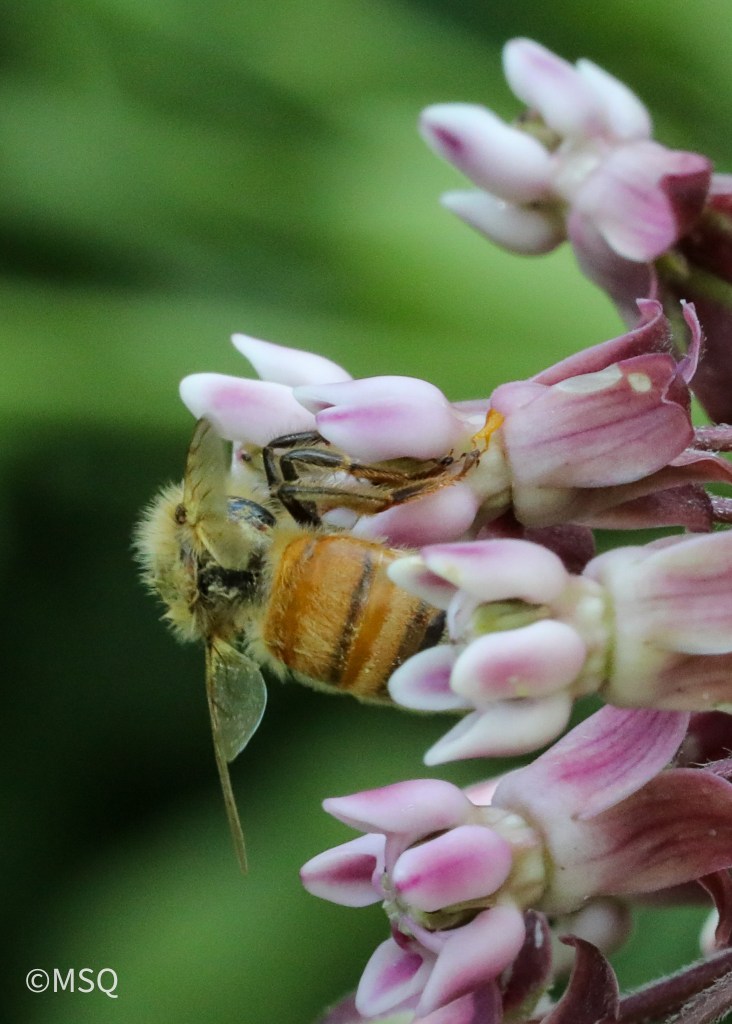
Insects must be strong to free themselves.  Large butterflies, predatory wasps and long tongue bees are most likely to remove pollinaria.  Lost legs and dead smaller insects both occur from failed escape attempts.
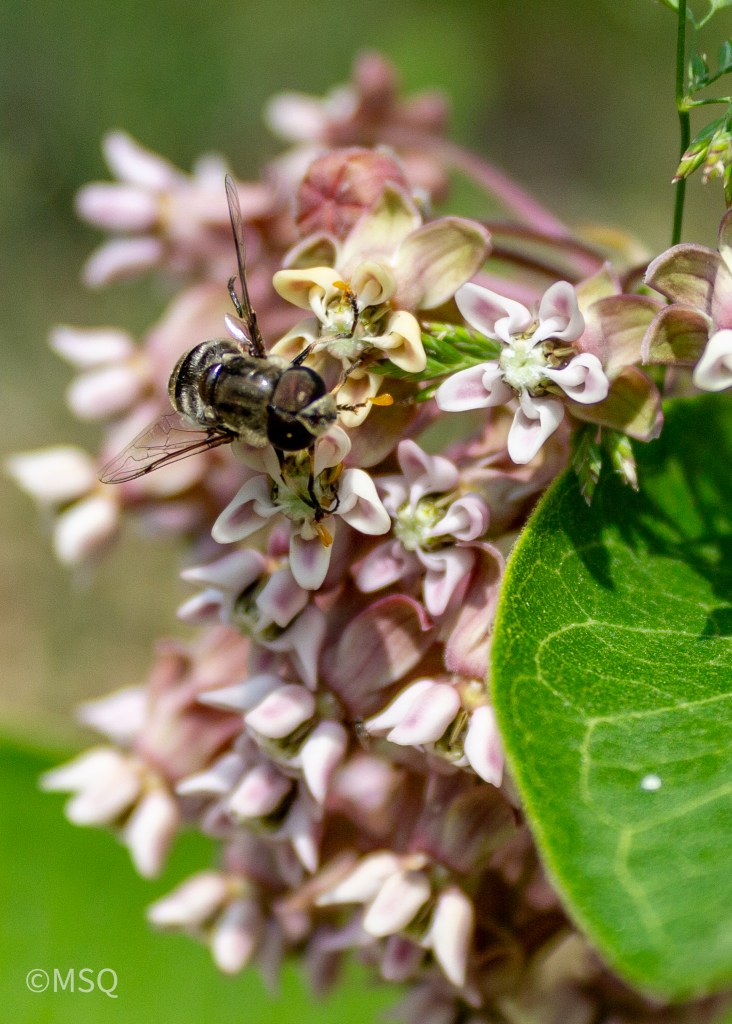
When a pollinaria is removed, it begins to dry.  The pollinial sacs rotate 90o during drying.  The rotation moves them into the correct position for pollination.  

When the insect lands on another milkweed,  the knee bend (not the corpusculum oval) slides into the space between the hood petals.  The translator arm follows then the rotated pollinial sac.  The pollinial sac slides into a space in the stigmatic column and pollination is completed.  
When the insect continues pulling upward, the translator arm breaks.  The insect keeps the remaining part of the pollinaria.  
It’s also possible to start a chain of pollinaria during this process.  As the broken translator arm slides between the hoods, it can hook the corpusculum slit of this floret’s pollinaria adding a fresh pollinaria to the partial remaining one.  Clumps and chains of all sorts develop this way.  These groups of pollinaria may increase chances of pollination6.7.
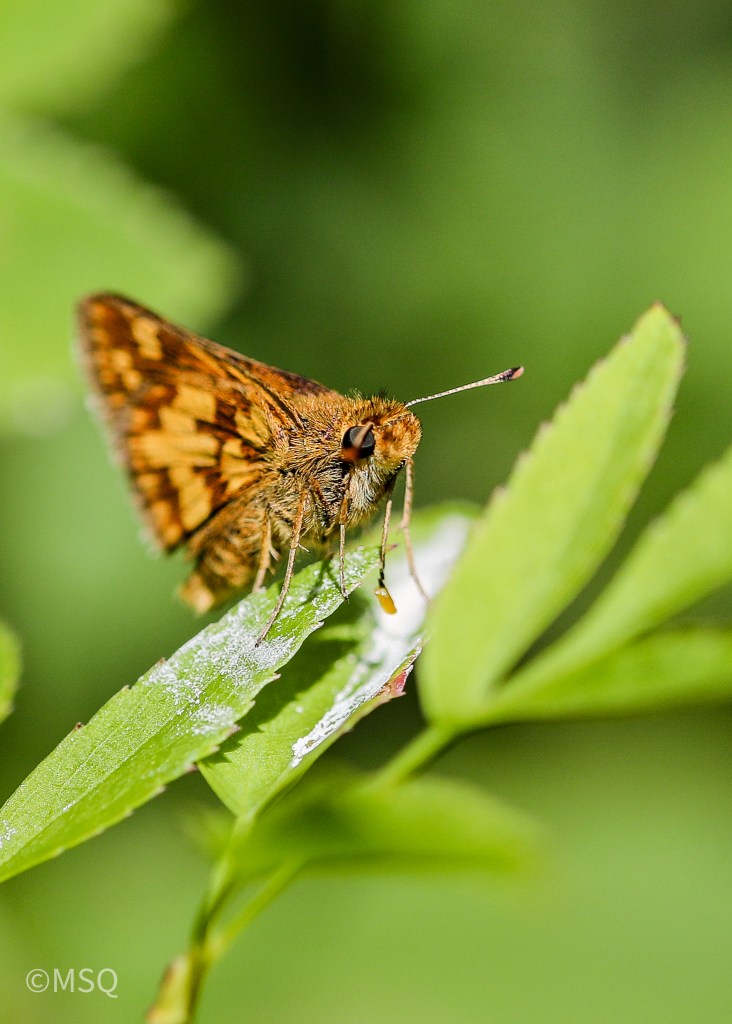
Part I, ends here, with the exciting conclusion of a fertilized milkweed.  Part II will continue with photos and information about the insects that use Common Milkweed.  What a crowd it is—including flies, wasps, bees, butterflies, moths, skippers, plant bugs and beneficial insects!

See you next time to discover what Wild Things are in the Garden!

Mary

References

  1. Hilty, J., n.d., Common Milkweed, Asclepias syriaca, Milkweed family, (Asclepiadaceae),  https://www.illinoiswildflowers.info/weeds/plants/cm_milkweed.html
  2. Berkov, A., 28.October.2010, Plant Talk:  Inside the New York Botanical Garden; Plant Profile:  The Extraordinary Common Milkweed, How Do Insects Feed on this Plant with Sticky White Latex? https://www.nybg.org/blogs/plant-talk/2010/10/science/plant-profile-the-extraordinary-common-milkweed/#:~:text=Plants%20in%20the%20genus%20Asclepias,Asklepios%2C%20the%20ancient%20Greek%20physician.
  3. Bowe, Scott, 11.September.2018, Milkweed is More Than Just a Common Weed, WXPR, https://www.wxpr.org/natural-resources/2018-09-11/milkweed-is-more-than-just-a-common-weed
  4. Nelson, M. and Alfuth, D., 24.February.2021, Milkweed (Ornamental Plants Toxic to Animals), X-number:  XHT1276, https://hort.extension.wisc.edu/articles/milkweed-ornamental-plants-toxic-to-animals/
  5. Taylor, David, n.d., Common Milkweed, (Asclepias syriaca L.), Plant of the Week, https://www.fs.usda.gov/wildflowers/plant-of-the-week/asclepias_syriaca.shtml
  6. Eldredge, E.P., 2015,11,00, Milkweed Pollination Biology, Plant Materials Technical Note NV-58, Natural Resources Conservation Service, https://www.nrcs.usda.gov/plantmaterials/nvpmctn12764.pdf
  7. Betz, R.F., Struven, R.D., Wall, J.E. & Heitler, F.B., 1994, Insect Pollinators 12 Milkweed (Asclepias) Species, T.B. Bragg and J. Stubbendieck (eds.) Proc. Of the Thirteenth North American Prairie Conference. Univ. of Nebraska, Lincoln, NE.
Categories
native plants Pollinator gardening

Sparks in the Garden

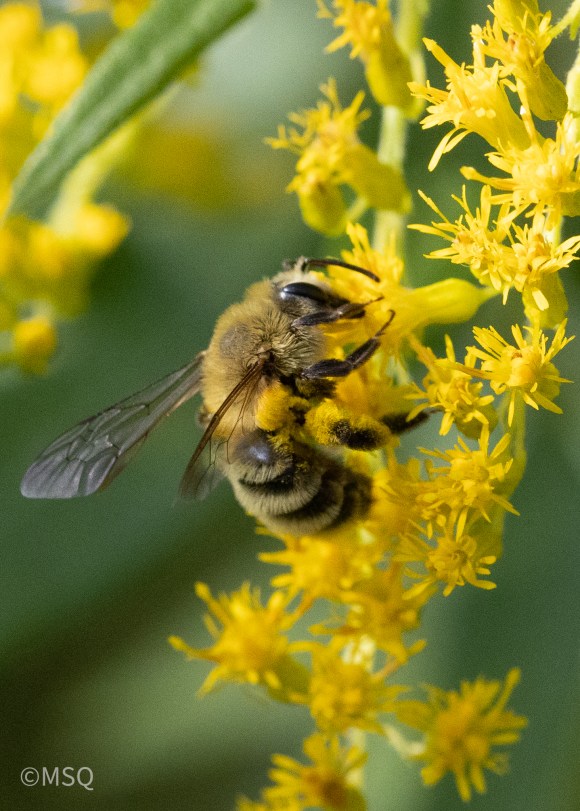
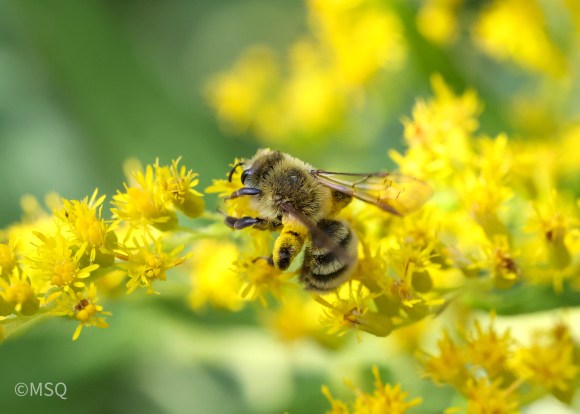
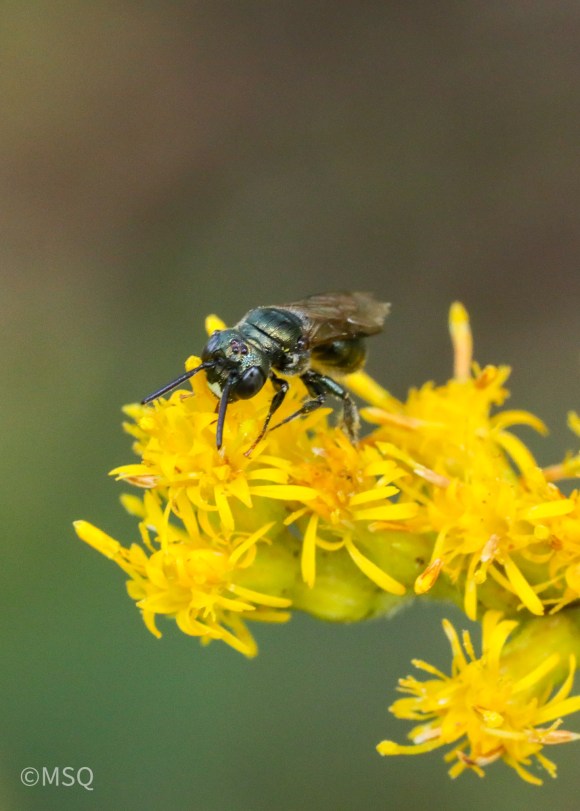
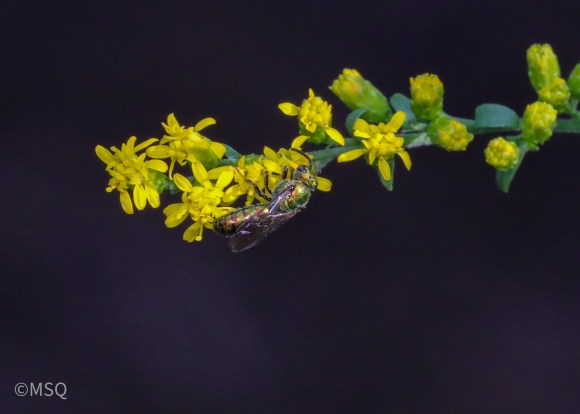
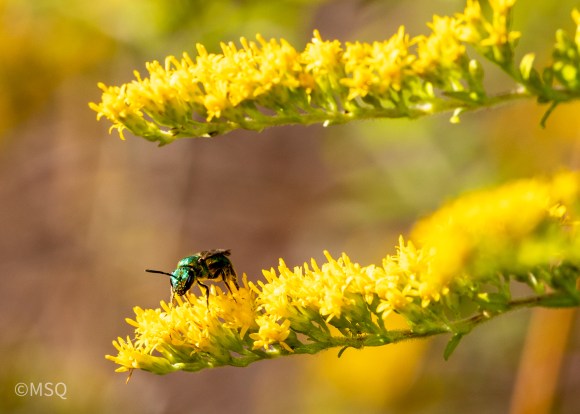
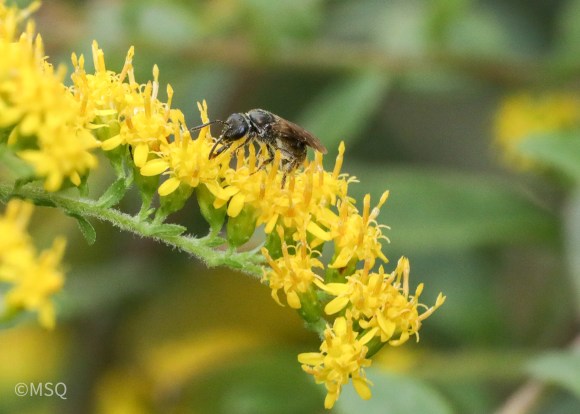
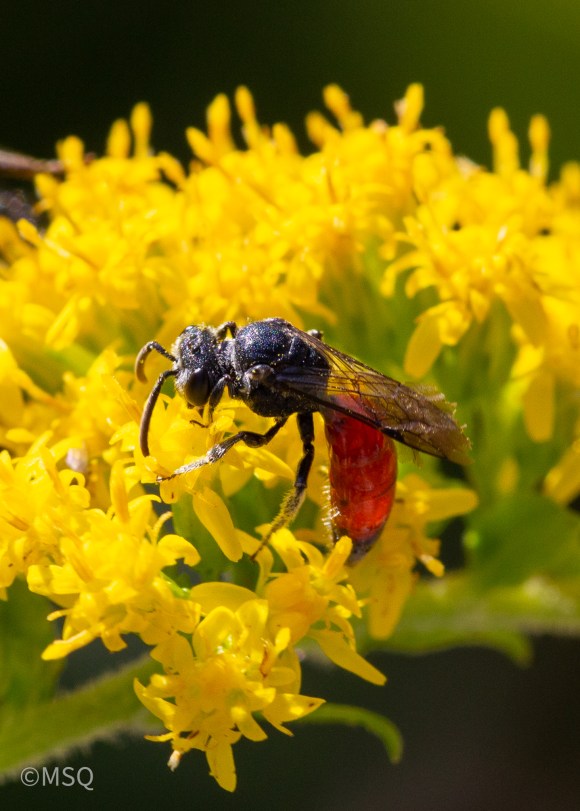
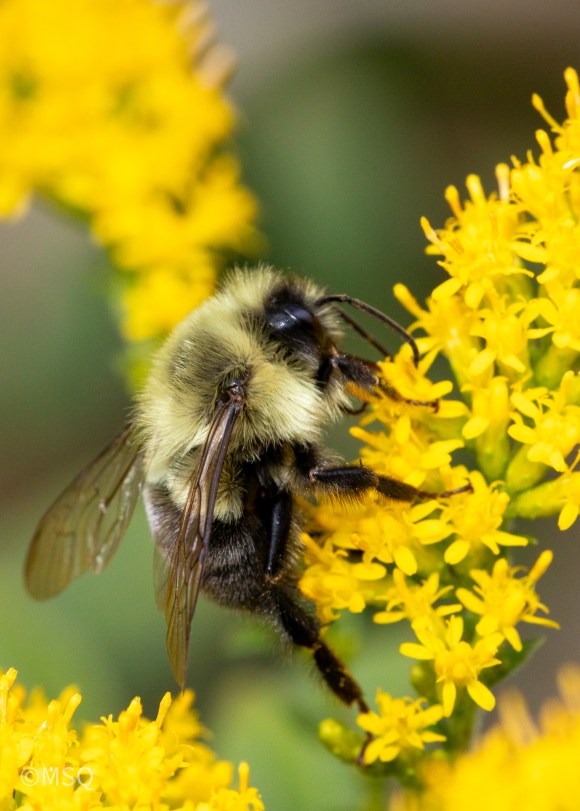
Every year in the early Fall, a glittering cloud of insects surrounds the arching stems of Solidago rugosa ‘Fireworks’.  Butterflies, moths, skippers, bees, wasps, beetles, beneficial insects, and flies all flock to this goldenrod for nectar, pollen and to use it as a larval host.  This feast helps prepare them for the cold months of winter.

The twinkling yellow flowers of ‘Fireworks’ goldenrod pop open along stems up to 18” long!  Held above the foliage, these stems resemble fireworks and give the plant its name.  Pompom blooms are tightly packed along the stems. Each one is about 1/8th inch in diameter.  The anthers are held above the stigmas and bright yellow ray flowers form the outer ring.  Peak bloom lasts two to three weeks.

Medium to dark green leaves grow alternately and are three to six inches long.  They range from ovate to lanceolate and their edges are toothed.  The deeply sunken veins in the leaves causing a wrinkled look. This feature gives them the name rugosa or wrinkled.  In fact, a common name for the native Solidago rugosa is Wrinkle-Leaved Goldenrod.

Solidago rugosa ‘Fireworks’ is a charming goldenrod cultivar.  Well-behaved, it sports abundant bloom for a grand show in the garden.  An erect plant, it forms dense clumps with slowly spreading rhizomes.  It grows three to four feet tall.  Spreading from two to three feet, ‘Fireworks’ will reseed if happy.  Space plants one to three feet apart.  

‘Fireworks’ thrives in zones four to eight.  It enjoys moist, well-drained soils although it can tolerate periods of drought or wet soil.  Highly adaptable to different soils, this goldenrod grows in clay, loam (silt), and sand as well as acid to neutral conditions. My plants have not been bothered by deer or rabbits.  It can withstand both heat and humidity. 

The genus Solidago, like Symphyotrichum, is an essential part of wildlife habitat, a keystone species.  In recent years, people have become interested in keystone species of all types.  A keystone species is one so crucial that the ecosystem will collapse without it.

How does this work with plants?  Key plants are native plants that are part of the local food web.  They play a role as a general or specific support for insects.  The general group are the 14% of native plants that support 90% of butterfly and moth Lepidoptera species.1  The specific group are the 40% of native plants that produce pollen for the 15% to 60% of North American native bee pollen specialists.1  Both these groups are listed in the Keystone Plants by Ecoregion from the National Wildlife Federation.  According to this information, Solidago sustains 104 species of caterpillars and 42 different specialist bees.2  (I have used the Eastern Temperate Forest list since this is my region.)  In addition to these categories, 145 different wasp species forage on Solidago.3

So, goldenrod offers abundant food at the end of the year, how is this valuable?  Fall is when next year’s insect generation is established.  Whether it’s healthy adults, well fed caterpillars or full provisions in nests, the foundations are laid with Autumn food harvest.  Goldenrod is one vital resource.

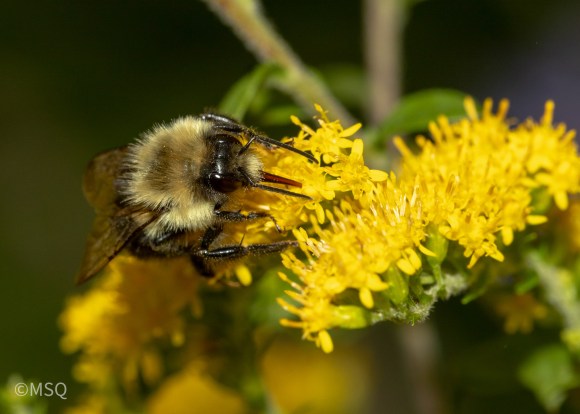
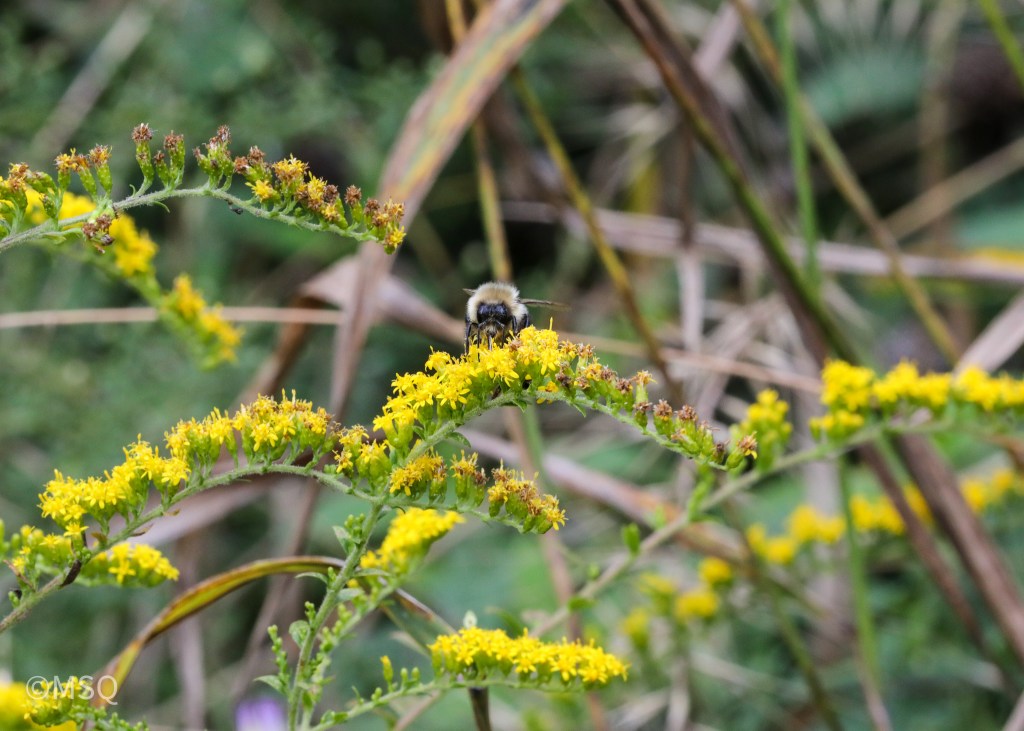
Different insects have different strategies for surviving the winter.  In the next few paragraphs, I’ll talk about what the pollinators do over the winter and where they might be.  Bumblebee and honeybee queens take mating flights in the late summer or fall.  Male bumblebees take advantage of nectar from Solidago ‘Fireworks’ to fuel up before pursuing their queen. When they’ve mated, the queens find a safe location to overwinter.  Some bumblebee queens hibernate in leaf litter and others burrow underground.4

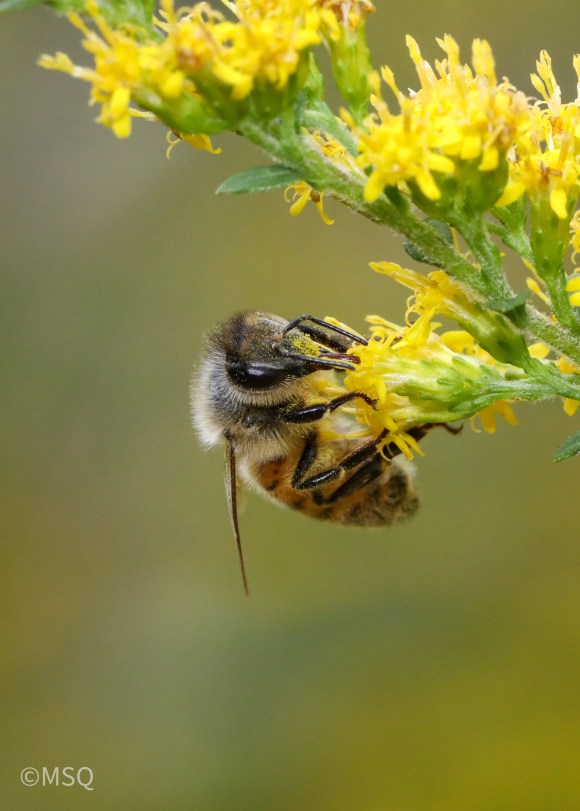
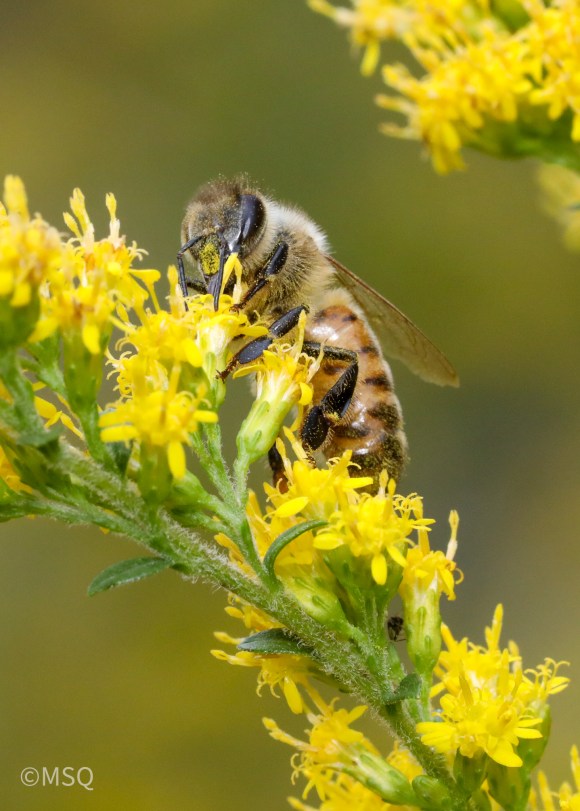
Honeybee queens return to the hive.  During the winter, the honeybees form a ball in the hive.  If they become cold, they will vibrate for warmth.  The queen stays near the center of the mass.  Any resources gathered in the fall, are converted into honey, and used to help the honeybees survive the winter.5

Native bees overwinter as young in their nests.4  Active native bee queens use the resources from goldenrods to supply their nests.  Like SymphyotrichumSolidago has numerous bee specialists including:  Andrena (Callandrena) asteris, A. (Callandrena) braceata,  A. (Callandrena) simplex, Andrena (Cnemidandrena) hirtcincta, Andrena (Cnemidandrena) canadensis, Colletes simulans, Colletes solidaginis, Perdita (Perdita) octomaculata and Melissodes (Eumelissodes) fumosus.

Where are their nests?  70% of native bees nest underground!  Now is not the time to start digging.  Others nest in old beetle burrows and other holes in dead wood and still others in hollow stems.4  It’s better to wait until spring to cut back dead stems and clean up dead wood.

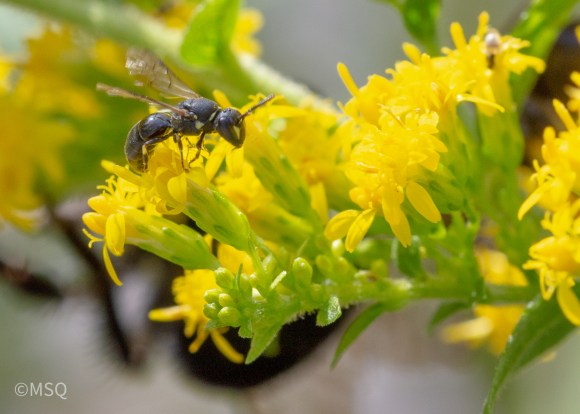
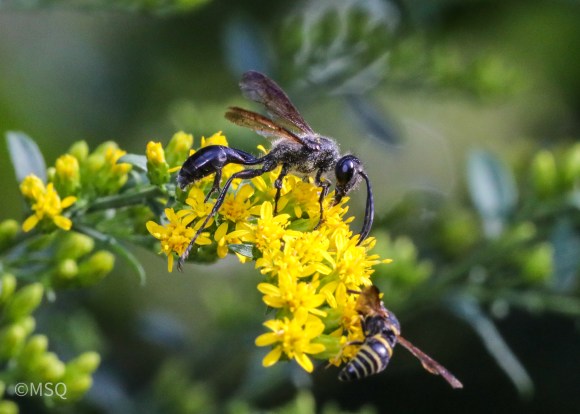
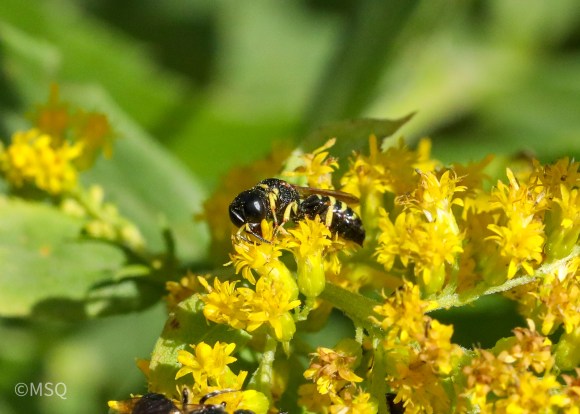
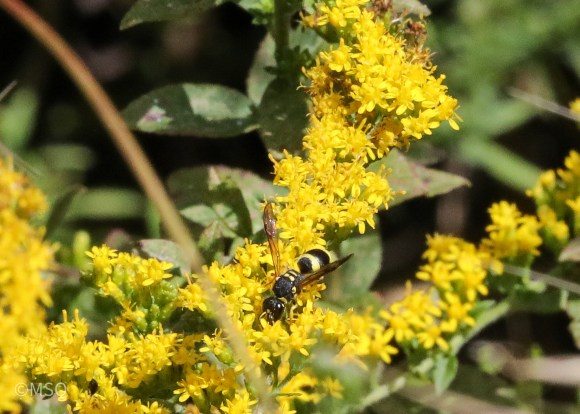
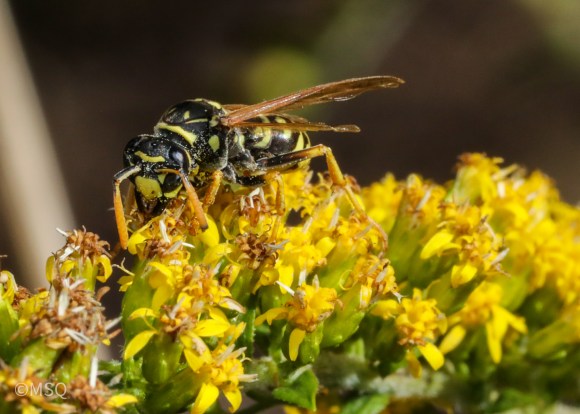
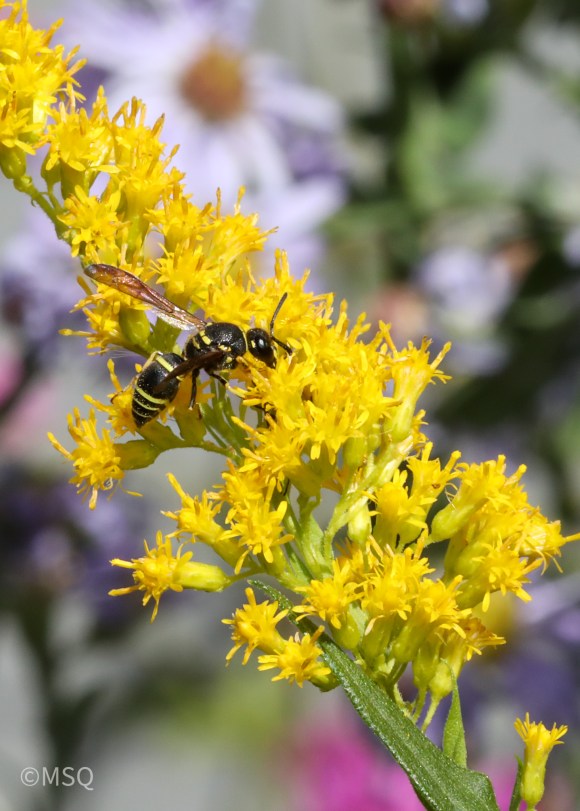
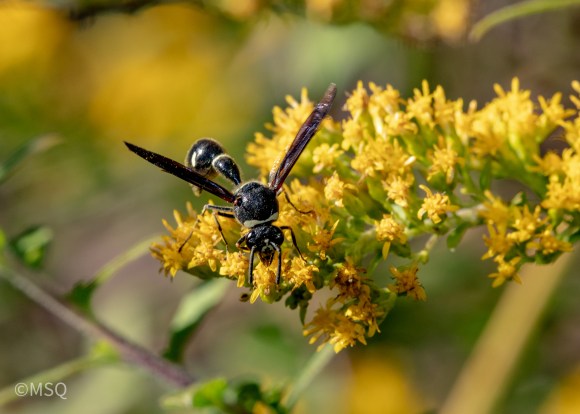
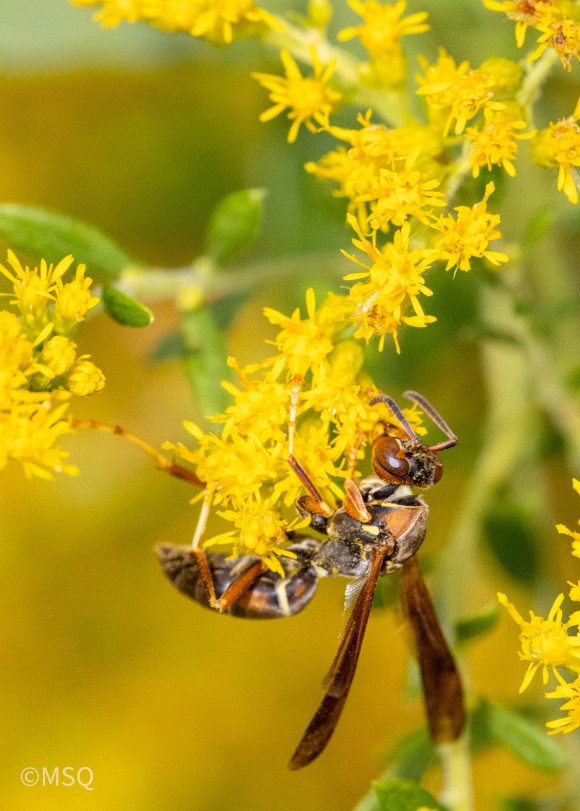
Solidago rugosa ‘Fireworks’ attracts numerous native wasps.  Indeed, unlike asters, I find wasps visiting my ‘Fireworks’ goldenrod in equal numbers with the bees.  These wasps serve as beneficial insects preying on or parasitizing pests that damage plants.  They also contribute to pollination as they drink nectar and, occasionally, eat pollen.  Native wasps spend the winter in different ways:  some as mated females called foundresses, some as young and some we don’t know yet.  The foundresses find dry, warm spots to hide in.  Other nesting locations are similar to bees including stems, wood, underground and old nests built by other wasps or bees.3

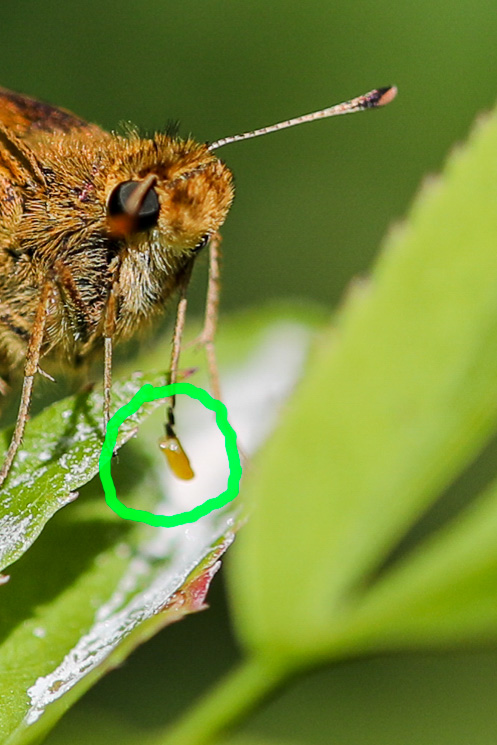
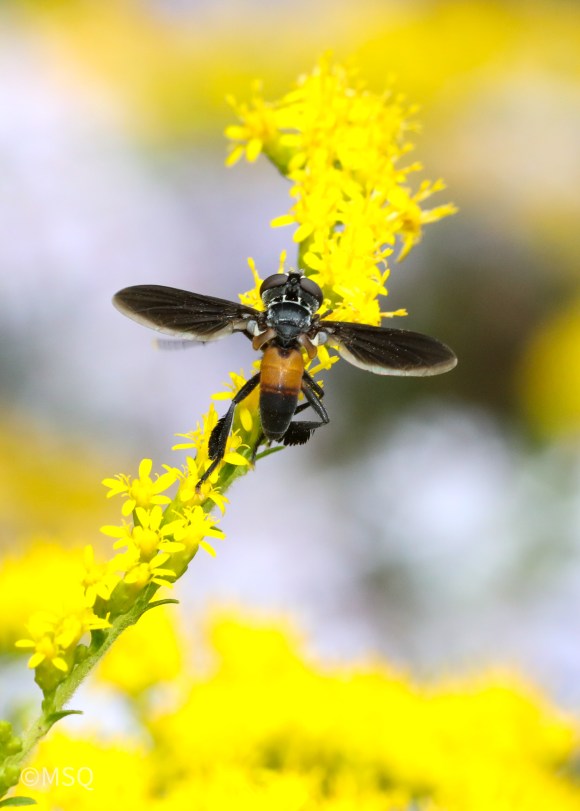
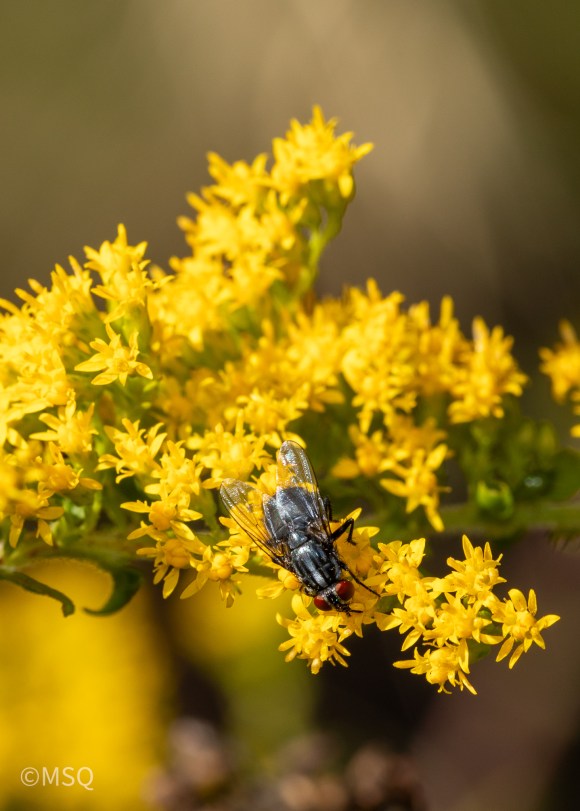
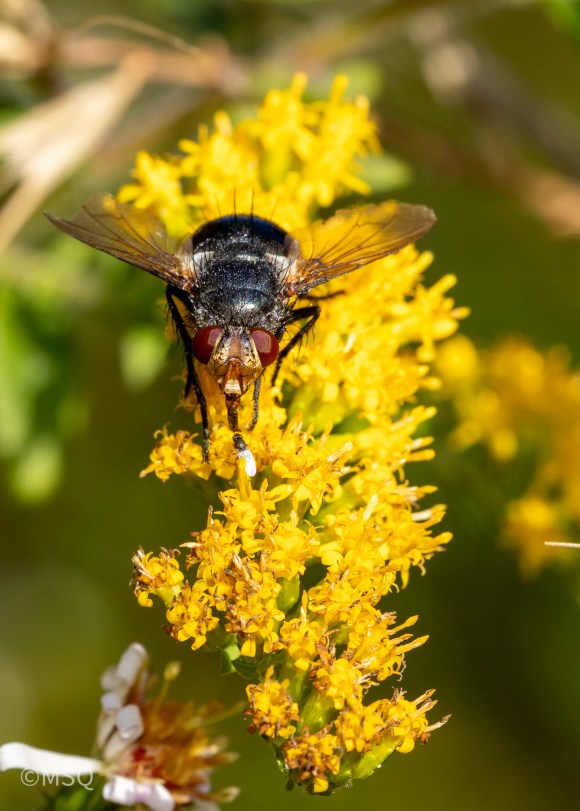
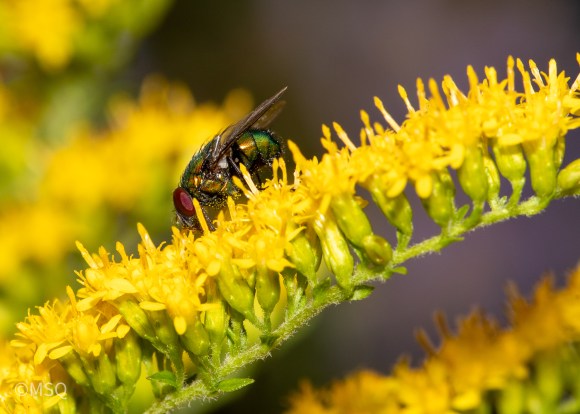
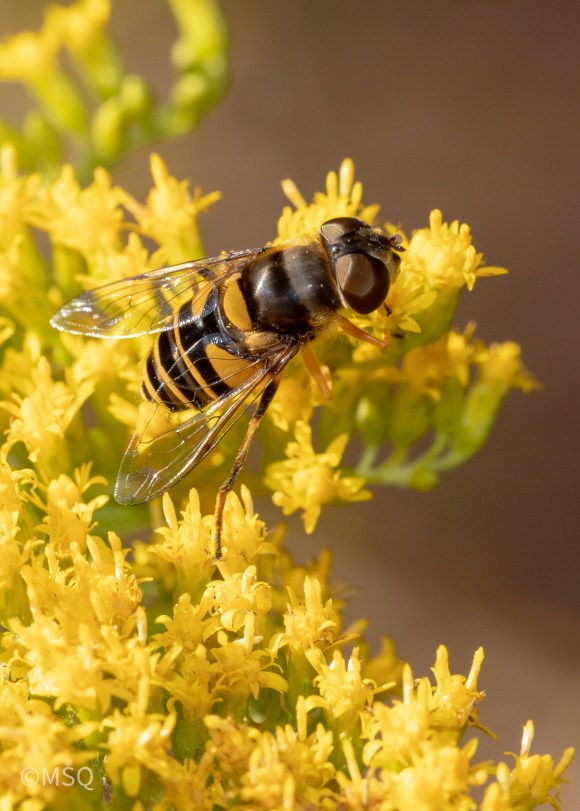
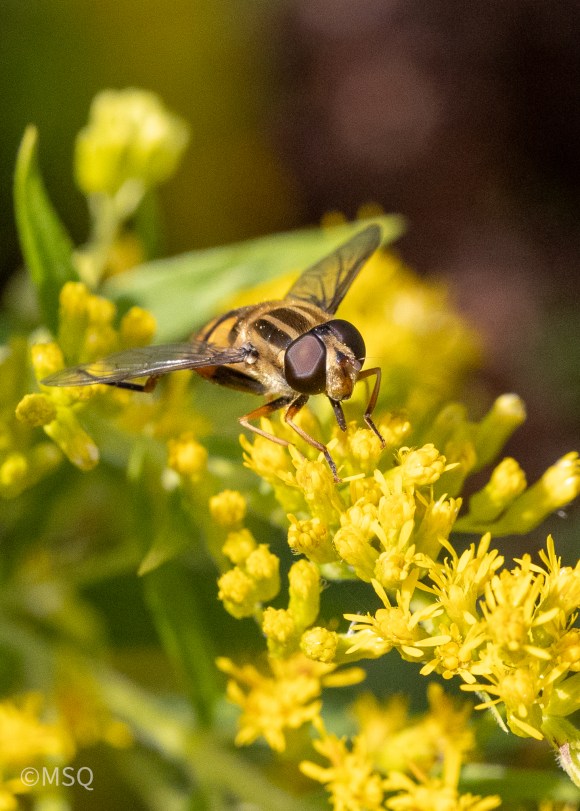
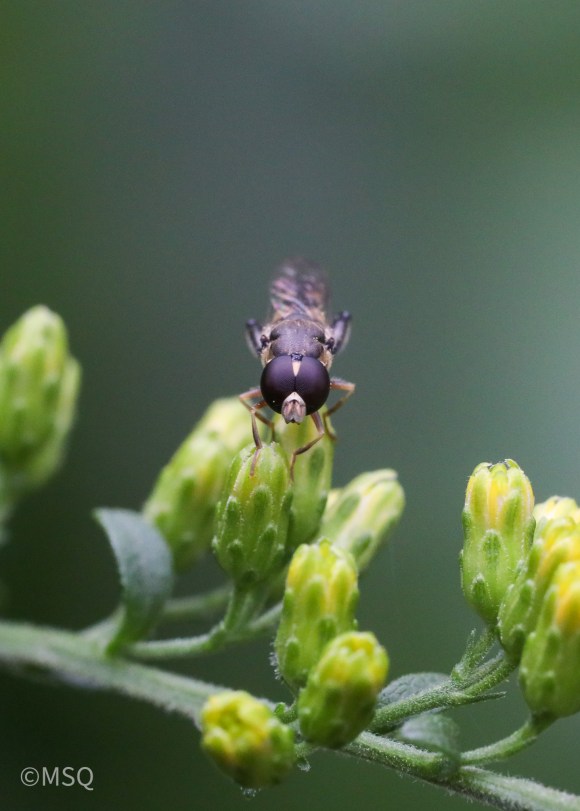
Many flies visit ‘Fireworks’ goldenrod to drink nectar and, incidentally, pollinate the flowers. The larval stage of some Tachinid and Syrphid flies are beneficial insects. Tachinid flies parasitize leaf eating insects. They over winter in the larval or pupal stage often in the shell of their host. The larvae or pupae can be found in piles of leaves or bush or burrowed into the soil.

Syrphid fly larva are excellent early and late season predators. They consume dozens of aphids each day. Most spend the winter as pupae or larvae in dead leaves or piles of brush.

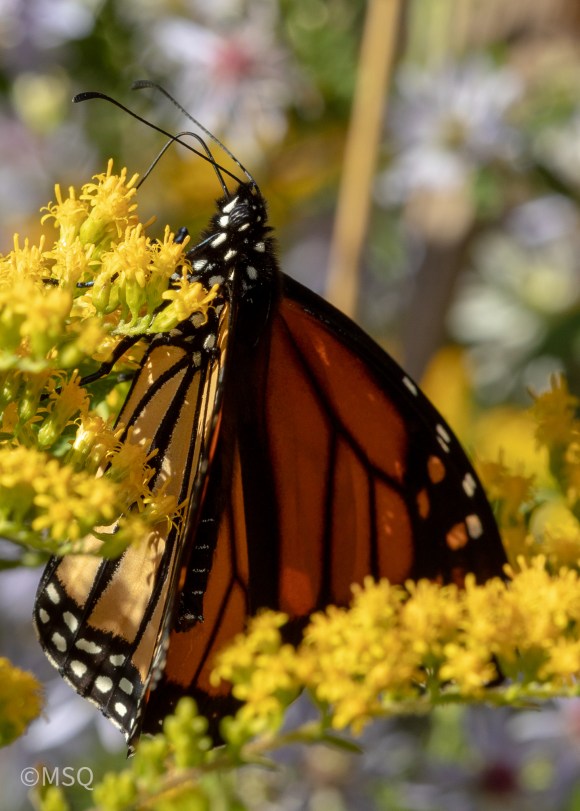
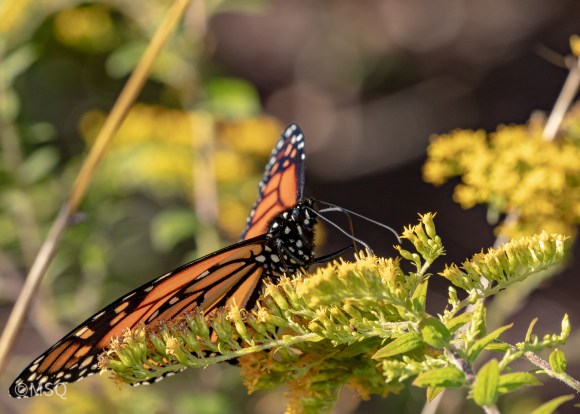
Butterflies use goldenrod for nectar.  Monarchs fuel up for their migration and other butterflies build fat stores to hibernate as adults.  Not all butterflies overwinter as adults,  they can spend the cold months as eggs, caterpillar, chrysalis, or adults depending on the species.  The eggs are laid close to a spring food source.  Caterpillars deliberately hid in curled leaves, soil or under rocks for protection.  If becoming a chrysalis, the caterpillar will choose a protected location, for instance, under an overhang or deep in a shrub.  Adult butterflies and moths are very diverse when hiding.  Spaces under bark, crevices in trees, cracks in rock and the fall leaves all host butterflies and moths.6

Solidago serves as a larval host for 104 butterfly and moth caterpillars.  One unusual moth is the Wavy-Lined Emerald.  The caterpillar has a fascinating adaptation.  It decorates itself with the leaves or flowers from its host plant.  This camouflage hides it from predators.  The twirler moths (Gelechiidae), Geometer moths, Owlet Moths (Noctuidae), and Tortrix Moths also use Solidago.

The take home for today: Leaves are not Litter!  Stems Stand Tall!  Don’t Do that Digging!

Just take a rest, drink some cider, and enjoy those Fall colors!

References:

  1. Keystone Plants by Ecoregion, The National Wildlife Federation, https://www.nwf.org/Garden-for-Wildlife/About/Native-Plants/keystone-plants-by-ecoregion
  2. National Wildlife Federation, Gardening for Wildlife, Keystone Native Plants Eastern Temperate Forests – Ecoregion 8, https://www.nwf.org/-/media/Documents/PDFs/Garden-for-Wildlife/Keystone-Plants/NWF-GFW-keystone-plant-list-ecoregion-8-eastern-temperate-forests.ashx?la=en&hash=1E180E2E5F2B06EB9ADF28882353B3BC7B3B247D
  3. Holm, H., 2021 Wasps:  Their Biology, Diversity, and Role as Beneficial Insects and Pollinators of Native Plants, Minnetonka, MN, Pollination Press LLC.
  4. Morris, S. (2018, October 10). Where Do Pollinators Go In The Winter? Xerces Society for Invertebrate Conservation.  https://xerces.org/blog/where-do-pollinators-go-in-winter#:~:text=Most%20native%20bee%20species%20will,help%20to%20survive%20until%20spring.
  5. Hogeback, J. Where Do Honeybees Go In The Winter?  Britannica.  https://www.britannica.com/story/where-do-honeybees-go-in-the-winter
  6. Grisak, A. (2022, November 04). How Does A Butterfly Survive Winter? Birds & Blooms. https://www.birdsandblooms.com/gardening/attracting-butterflies/butterflies-in-winter/