Part 2
And we’re back for Part II of The Summer Cornucopia! Today the focus is on insects and how they use Common Milkweed. If you missed Part I and are interested in the plant and pollination, here’s a link: https://wordpress.com/post/wildthingsinthe.garden/1831.
Asclepias syriaca draws an abundance of insects. The sap, leaves and flowers are all used for food while blooms provide nectar to many insects. Common Milkweed supports different life stages of flies, wasps, bees, butterflies, moths, skippers, plant bugs and beneficial insects. Even hummingbirds try to sip nectar although they can’t reach it.1,7
The most famous visitor to Common Milkweed is the Monarch butterfly (Danaus plexippus). Monarchs can only use milkweeds (Asclepias) to feed their caterpillars. Growing milkweed supports the generations of Monarchs that hatch over the summer months. When the last summer generation is born and transforms into an adult, they’ll drink nectar from milkweed and other flowers for food and fuel for their migration.8
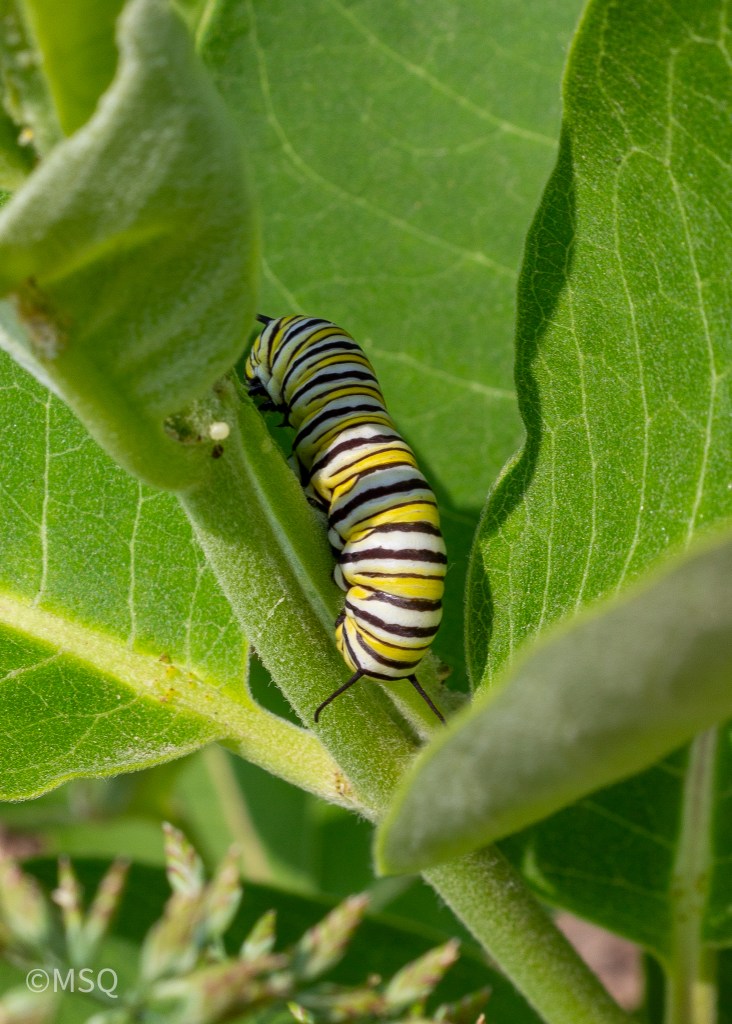
Growing native milkweeds helps preserve the existing Monarch population. If you’re interested in helping Monarchs, Monarch Watch has excellent information on creating Monarch Waystations at https://www.monarchwatch.org/waystations/ . Here are the highlights of the plan!8

How big does a waystation have to be? Any size will help the Monarchs (and other pollinators!). If possible, a 100 square foot waystation is highly effective. The area doesn’t have to be all in one spot. There can be several plantings throughout a property.
Sun is important for Monarchs. Like other insects, they need heat and sunlight to warm themselves for flying and daily activities. An area with six or more hours of sunlight is required. Coincidentally, most milkweeds thrive under those conditions.
Milkweed also grow well in well-drained soil. Place Monarch Waystations in low clay areas with fast draining soils.
Place plants close together (although not closer than recommended). Monarchs and their caterpillars need shelter and protection from predators and the weather.
What about milkweed? At least ten plants are recommended preferably with two or more types of milkweeds. This planting scheme gives an extended season of bloom and allows the Monarchs longer access to the milkweed plants and nectar. One type of milkweed is okay if more than ten plants are included.
Establish continuous supply of nectar plants. Use annual, biennial and perennial plants. Native plants are a great choice. These plants also benefit the other pollinators.
Finally, create a management plan. How will the waystation be maintained? The plan contains basic garden maintenance: mulching, fertilizing, removing invasive plants. Additionally, it includes Monarch specific items: eliminate insecticides, add more features like a water source or puddling spot.
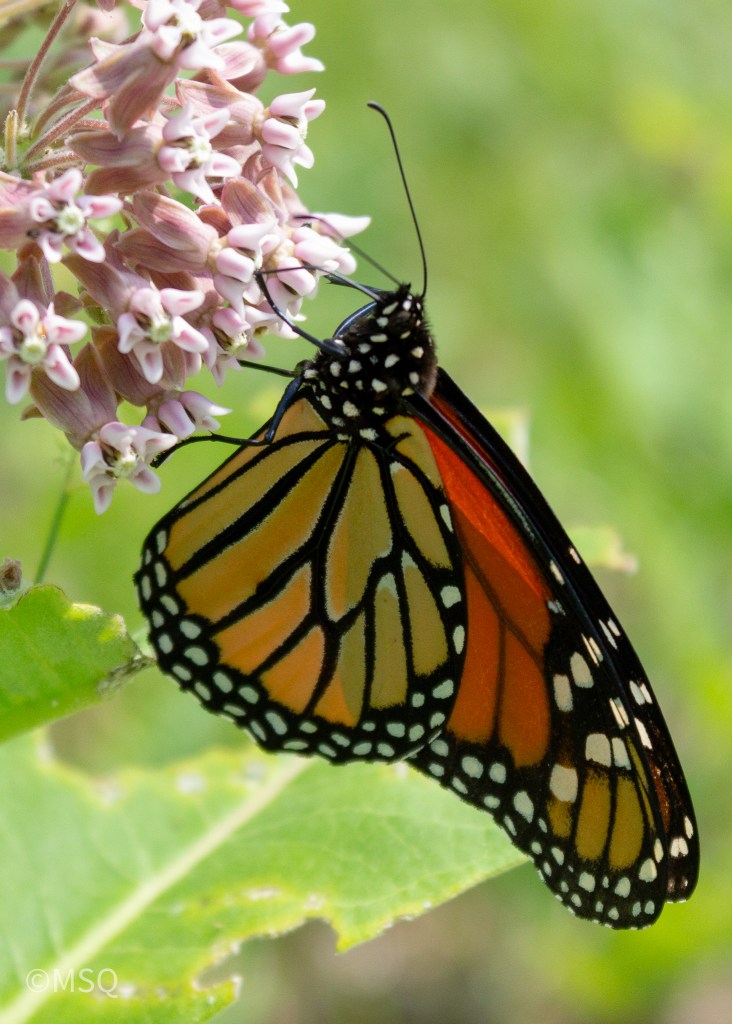
Again, for more information on Monarch Waystations and other resources, including free milkweed programs, go to https://www.monarchwatch.org/waystations/
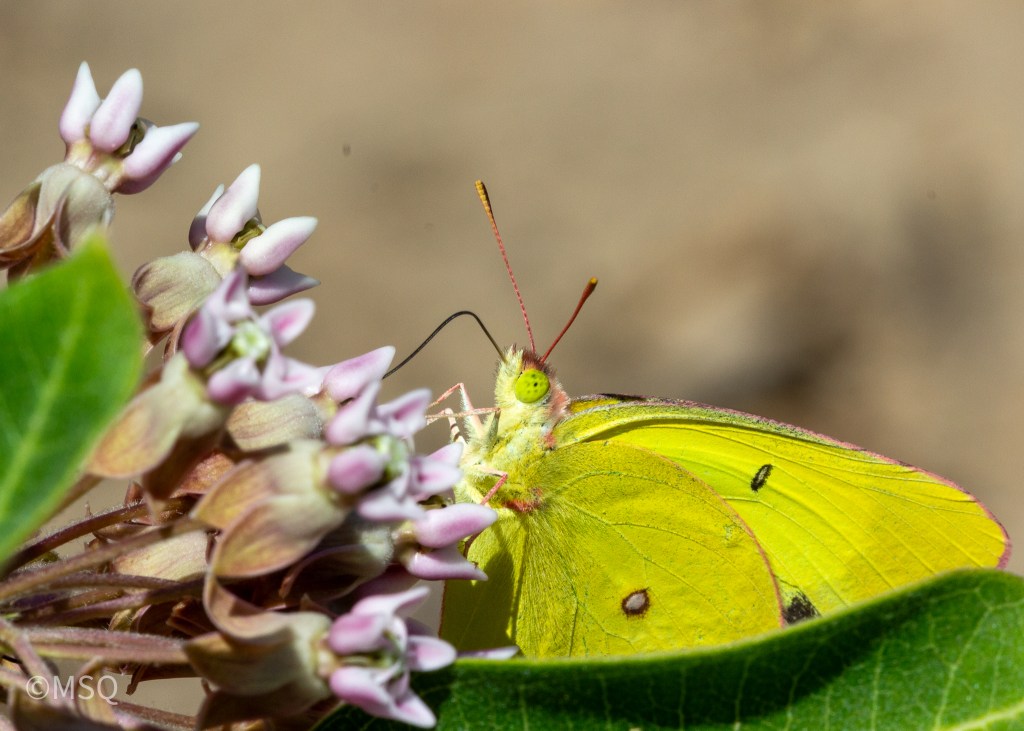
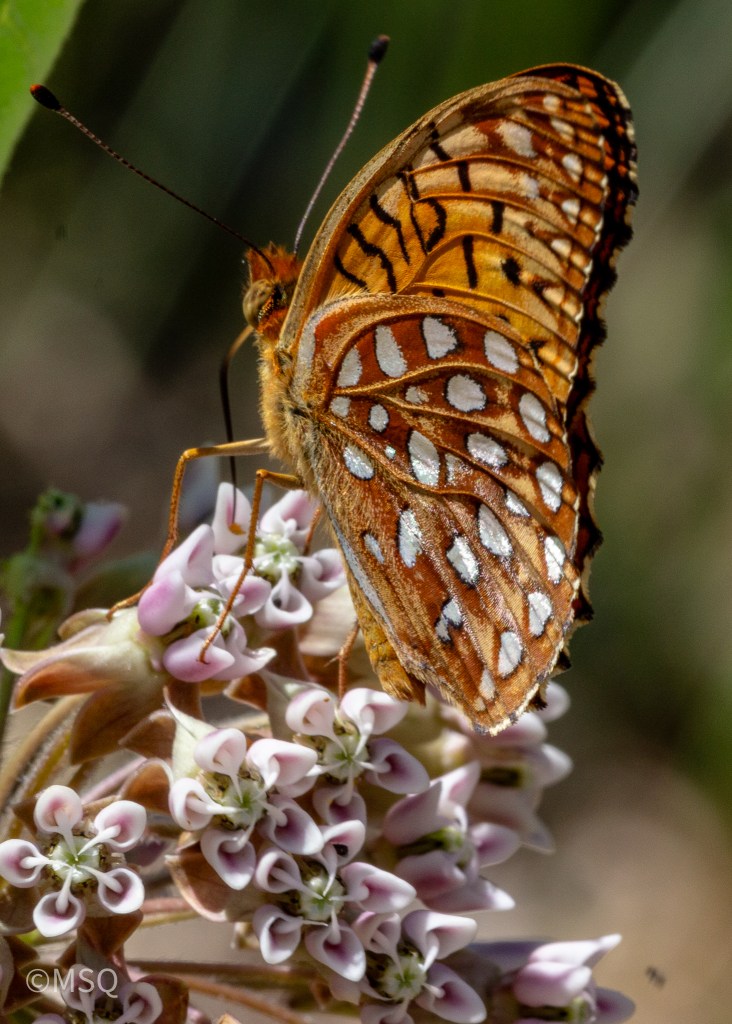
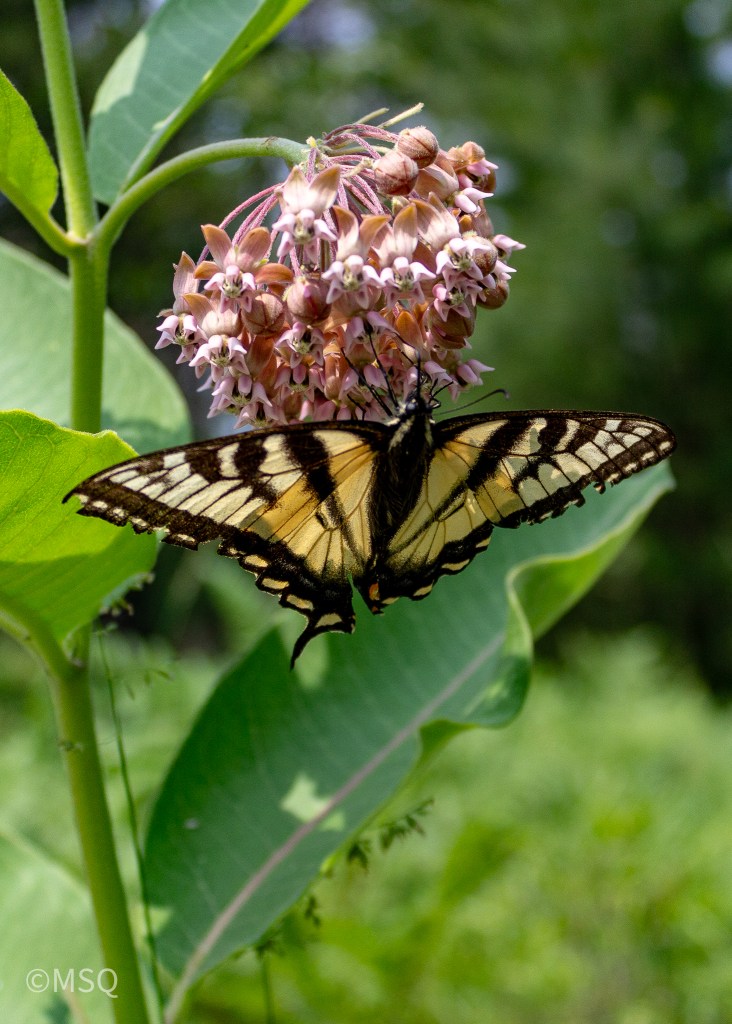
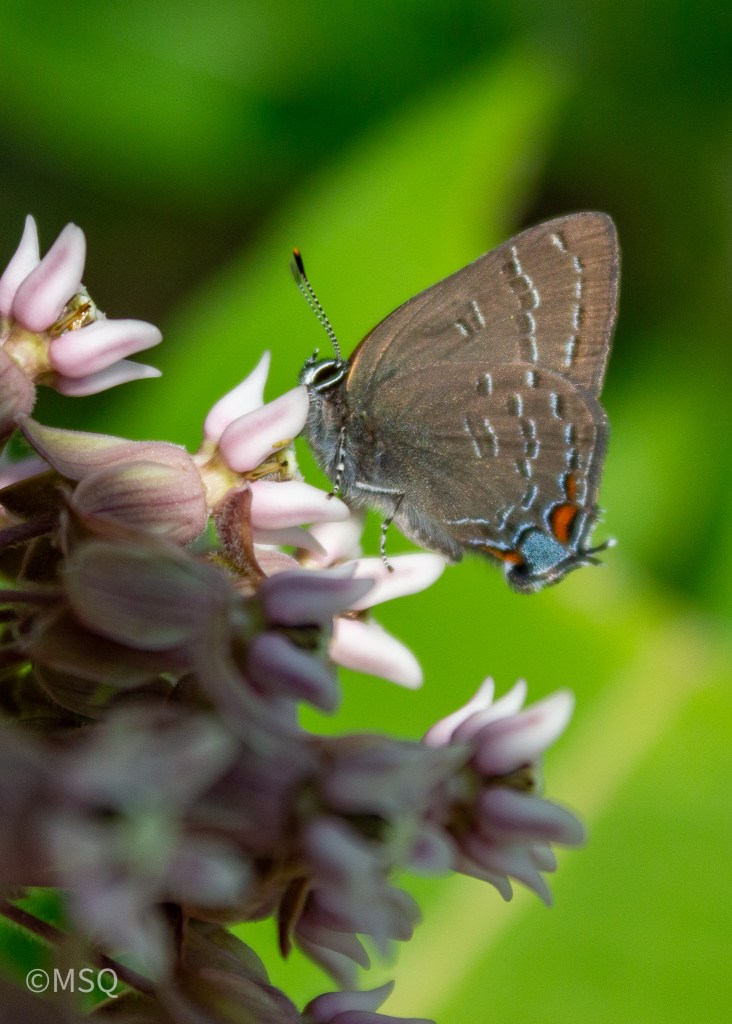
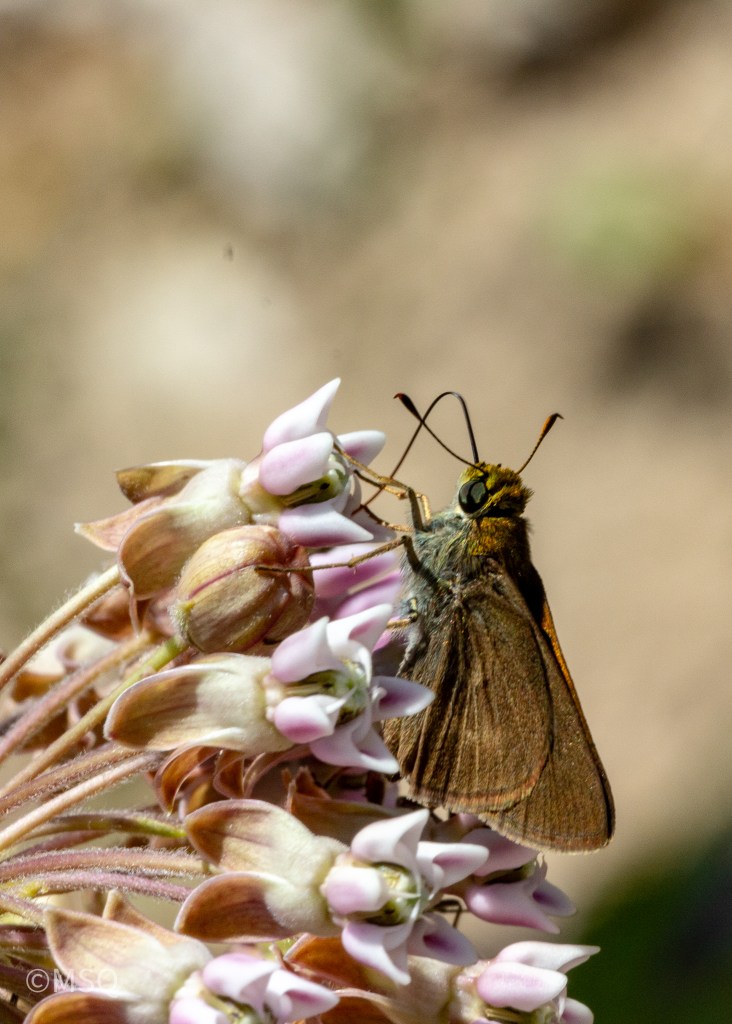
In addition to Monarchs, swallowtails (Papilio), fritillaries (Speyeria), viceroy butterflies (Limenitis), sulfurs (Pieris), and other butterflies also visit Asclepias syriaca. Skippers use Asclepias syriaca for nectar including Ancyloxipha.1,7
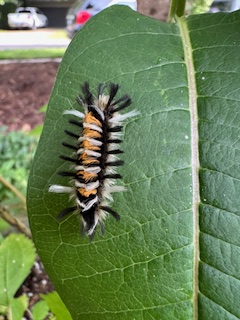
Common Milkweed is a larval host for the striking Milkweed Tussock Moth (Euchaetes egle) caterpillar, the Unexpected Cycnla (Cycnia inopinates) and the Delicate Cycnia (Cycnia tenera). All are part of the group Artiinae or Tiger Moths.1
The Delicate Cycnia (Cycnia tenera) lacks the usual aposematic coloration It has a soft tan larva and a charming white adult with just a touch of orange on the head and wing edges. Instead, it emits aposematic ultrasound calls when caught! Bats release their prey when they hear the calls. During the day, their color variation seems to keep birds away.1,9
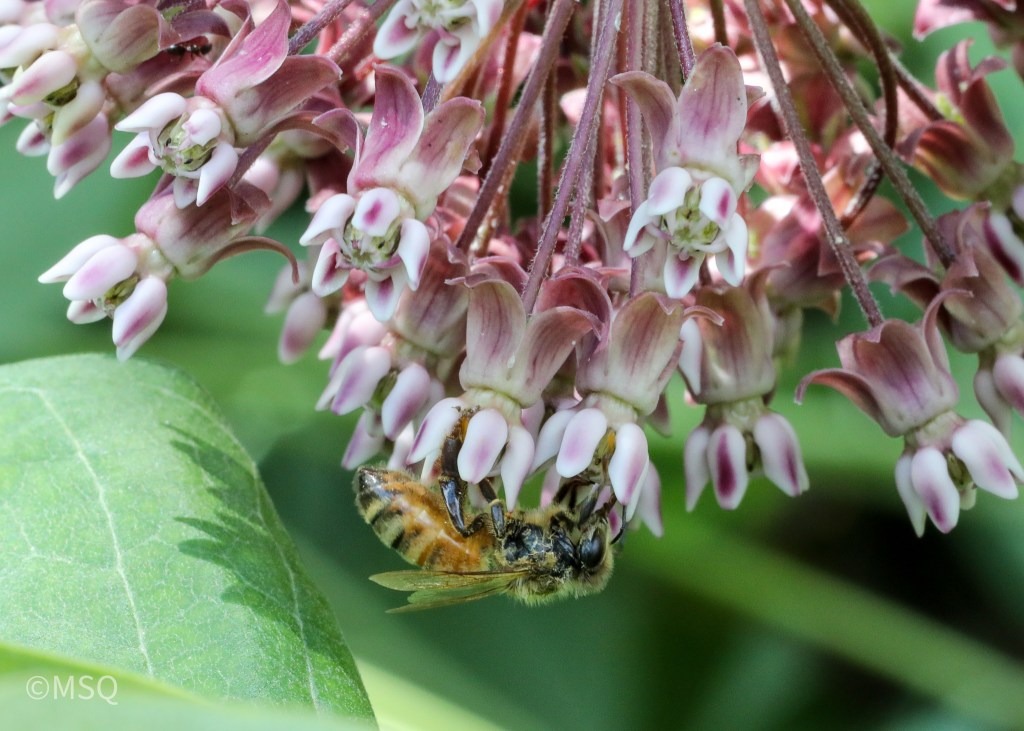
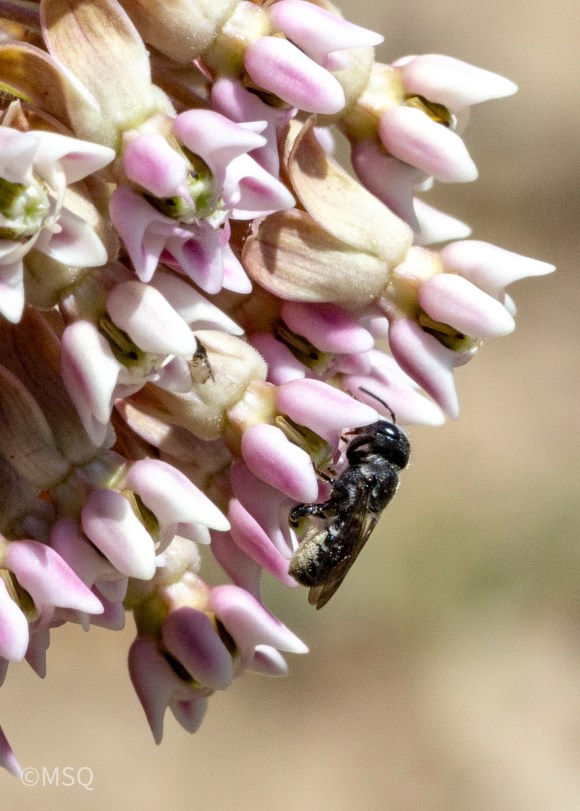
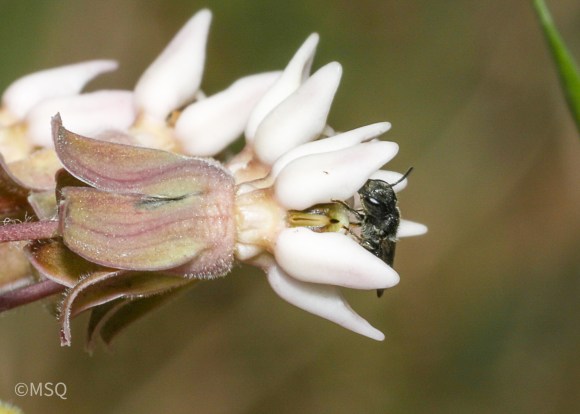
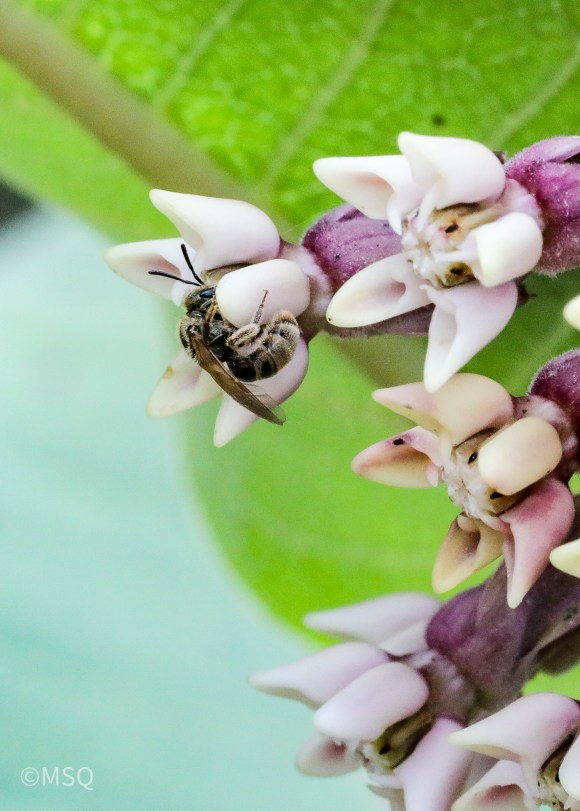
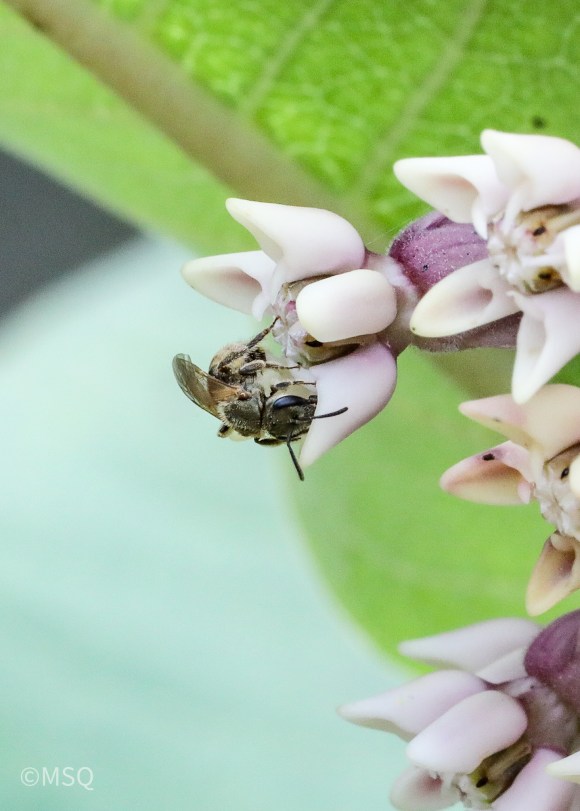
Both long-tongued and short-tongued bees visit Common Milkweed for nectar. These include honeybees (Apis),
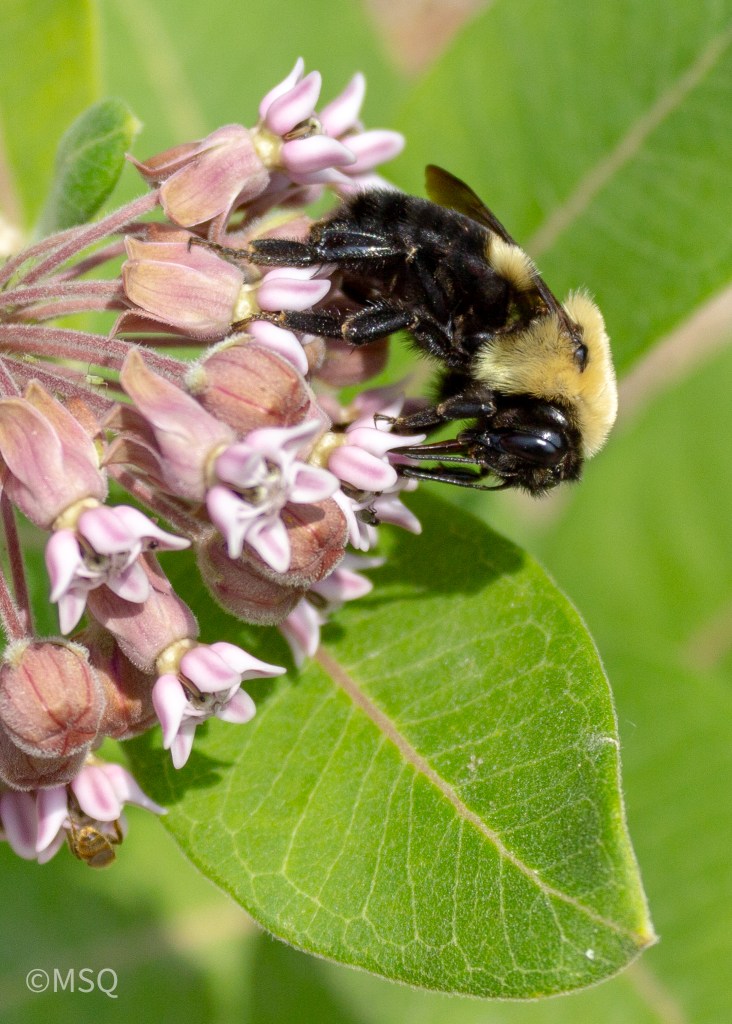
Bumble Bees (Bombus),
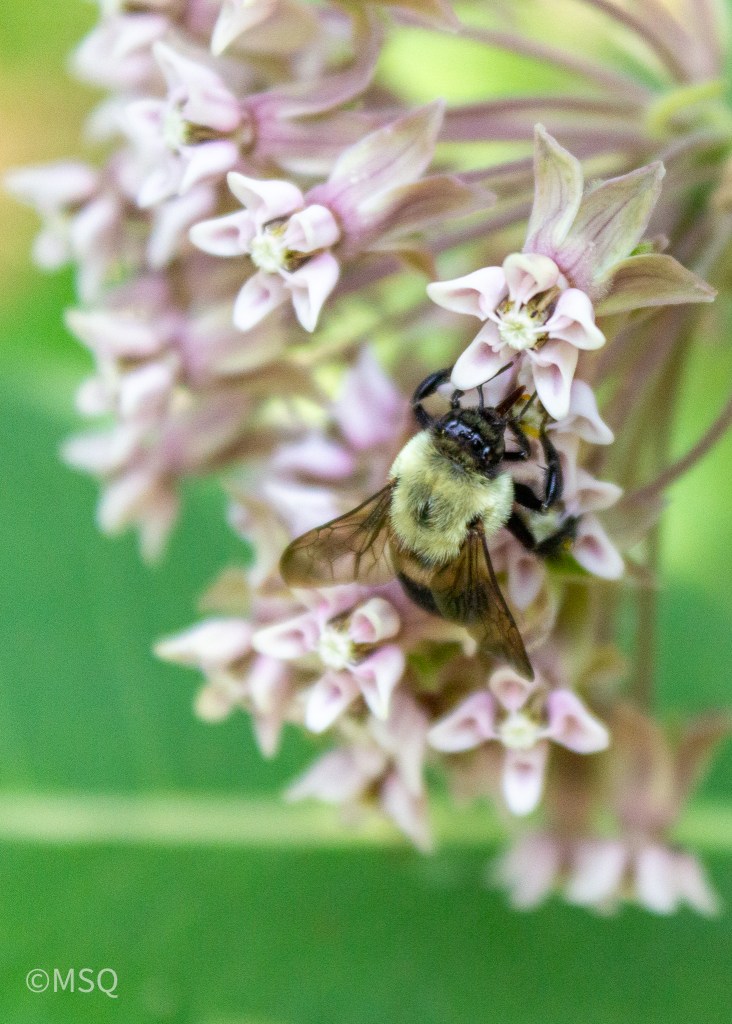
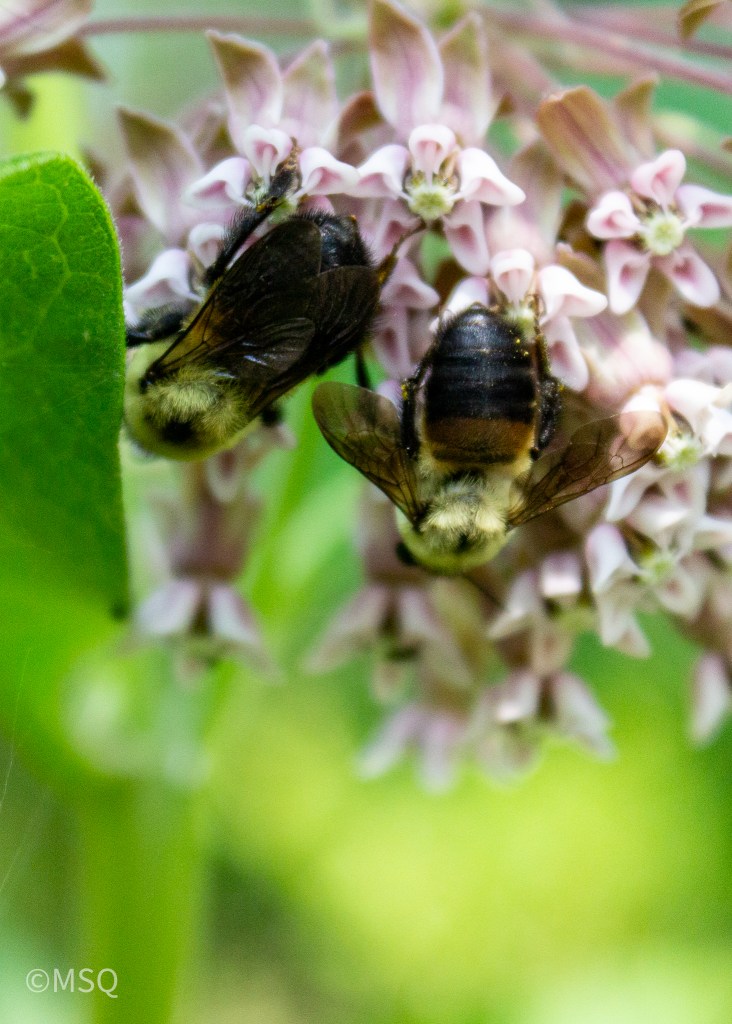
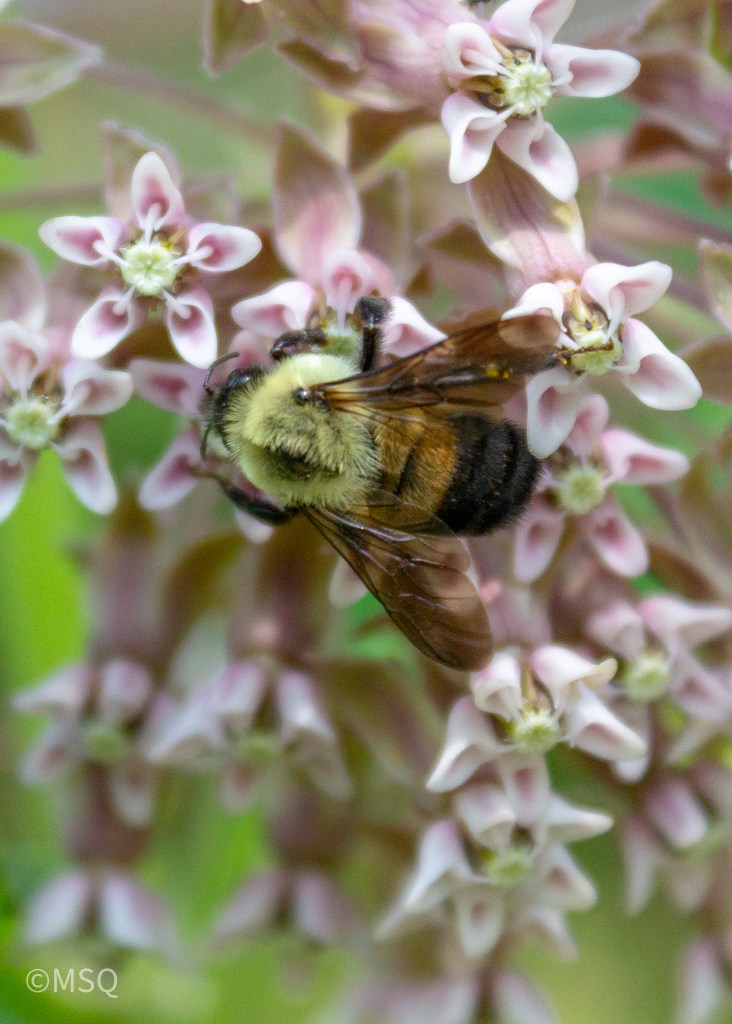
leaf-cutter bees (Megachile),
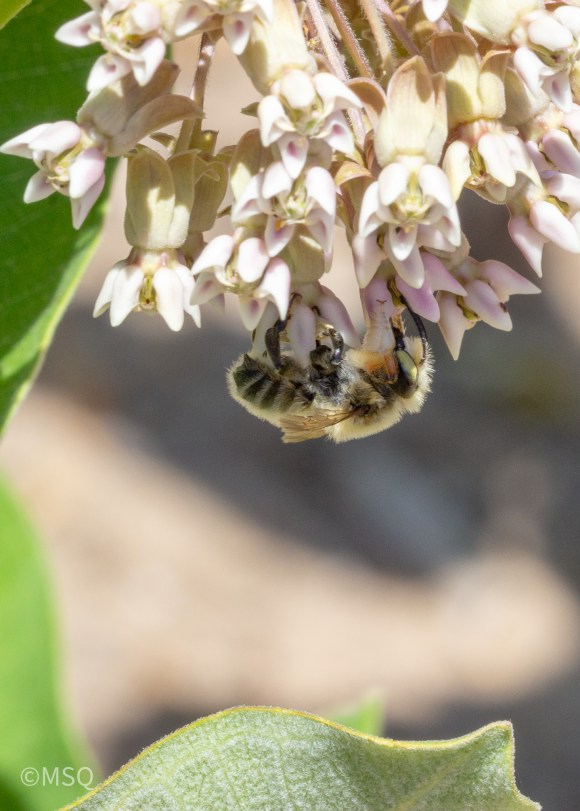
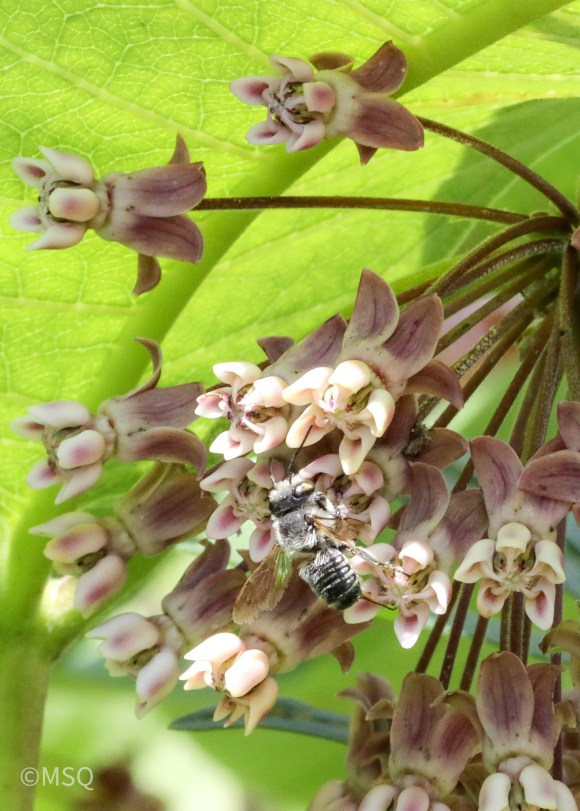
cuckoo bees (Coelioxys), small carpenter bees (Ceratina)
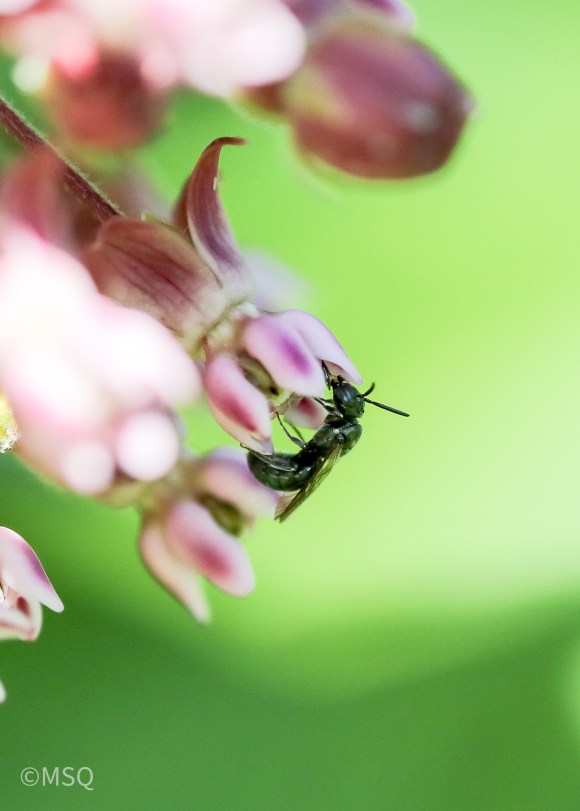
and sweat bees (Halictus and Lasioglossum).1,7,10
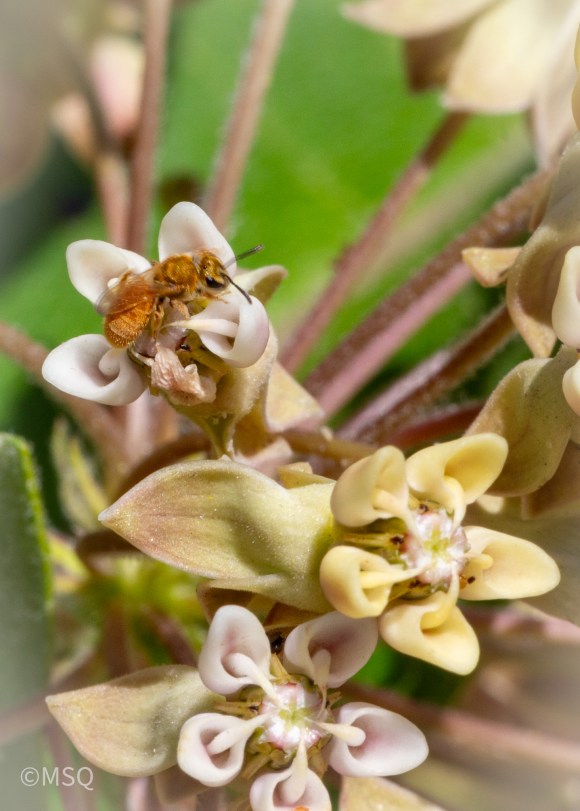
Many wasps enjoy nectaring at Milkweed flowers especially Sphex, Tachytes, Polistes, Myzinum, and ichneumon wasps. Sphex ichneumoneus is a known pollinator of Common Milkweed.1,7
Numerous beneficial insects visit Asclepias syriaca including the delicate and diverse ichneumon wasps. The adult wasps use milkweeds’ nectar for fuel while searching for insect prey. They’re considered parasitoids and the females lay eggs inside grubs and caterpillars.
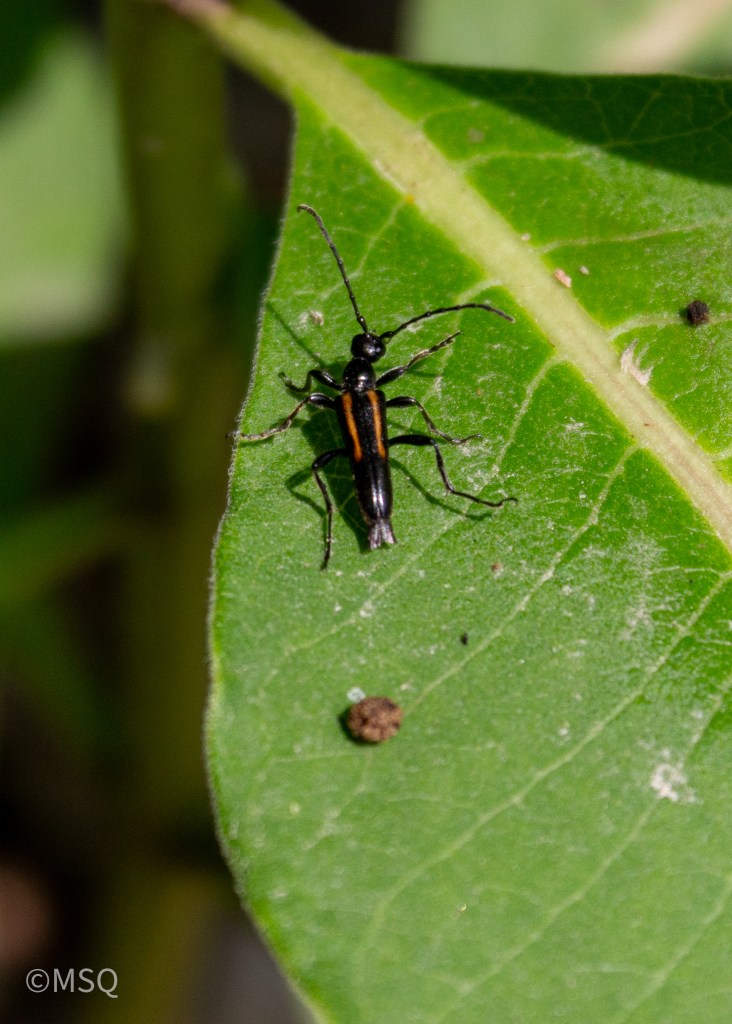
Young of boll weevils, tomato hornworms and wood borers are all food for ichneumon wasps. In addition to garden pests, adults hunt large insects such as spiders and butterflies.
In general, ichneumon wasps help reduce the number of insects that reach reproductive age. Many of these prey insects damage trees. In this way, the wasps help keep trees healthy.11
Bembix americana, a predatory sand wasp, also gathers nectar from Common Milkweed. B. americanafeeds their young true flies (Diptera). Diptera include house flies, gnats and mosquitos.
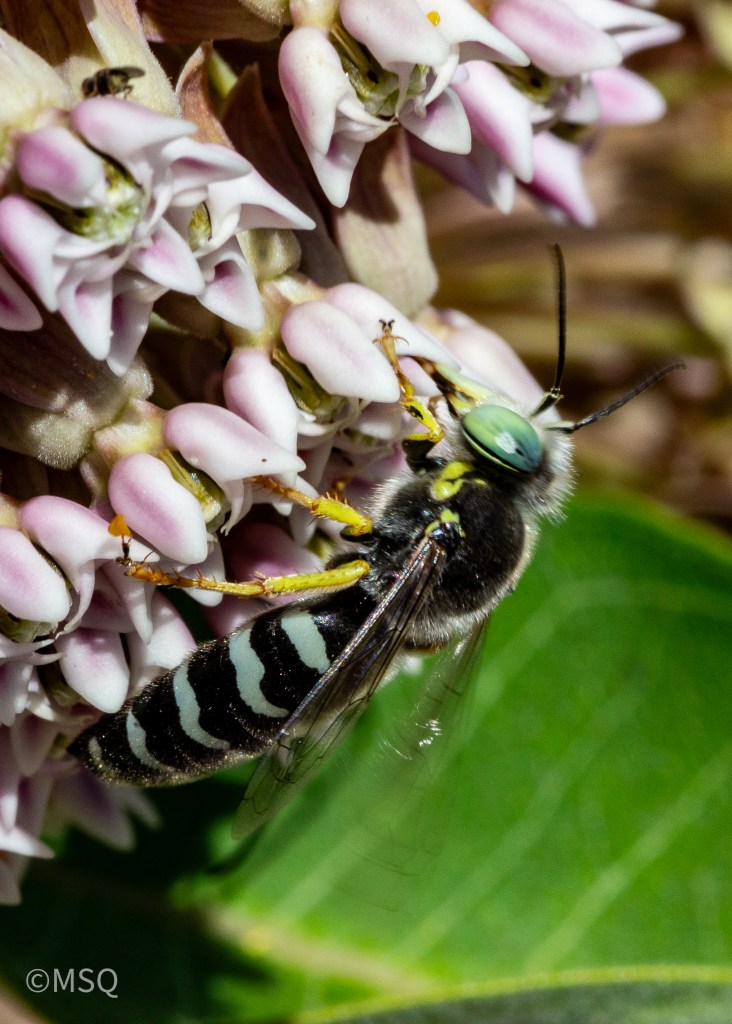
As populations of flies increase, B. americanas numbers rise. A single larvae can eat two dozen flies. B. americana uses a different strategy for provisioning its young. Other wasps paralyze their prey and stock each cell with the required (living but paralyzed) insects. This sand wasp kills the flies and adds more food as needed.12
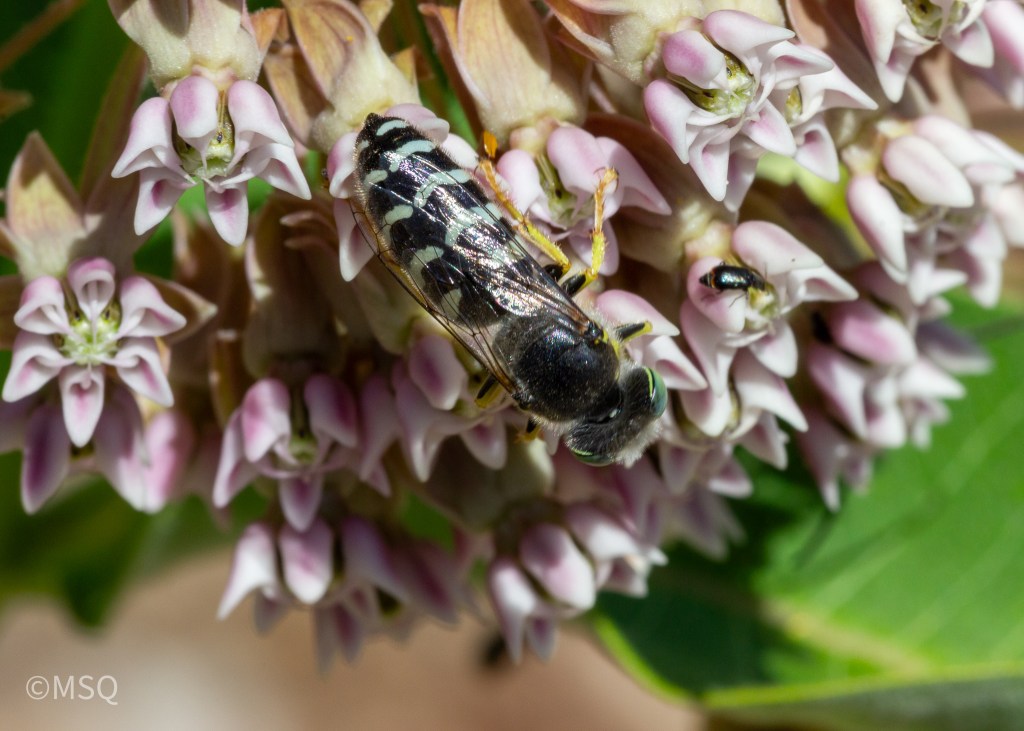
Asclepias syriaca hosts predatory stink bug larvae. Stink bugs have a terrible reputation especially since the arrival of the invasive Brown Marmorated Stink Bug. But predatory stink bugs are a whole different category. These are beneficial insects that hunt insect prey.
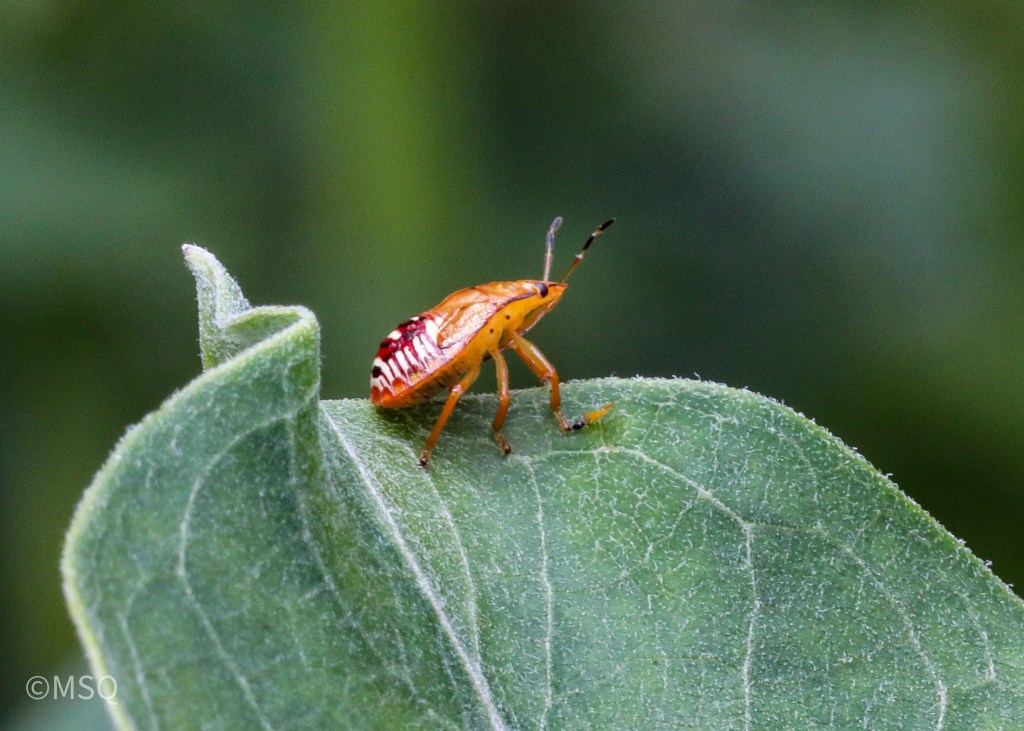
Above, is a photo of a Spined Soldier Bug larvae on milkweed. There are five larval stages (instars) and all eat insects. Their preferred foods include Mexican bean beetle, Colorado potato beetle, and imported cabbageworm.
Look for the adult Spined Soldier Bug on plants where prey may be located. These plants include the melons/squash/cucumber (cucurbit), broccoli, cauliflower, kale, etc. (cruciferous) and tomatoes, peppers, eggplant (solanaceous) crops.
If you’re looking for eggs, they’re an incredible metallic bronze color with a row of spines like a crown. Just hatched larvae, cluster around the eggs eating necessary bacteria. Spined Soldier Bug can be purchased commercially.13
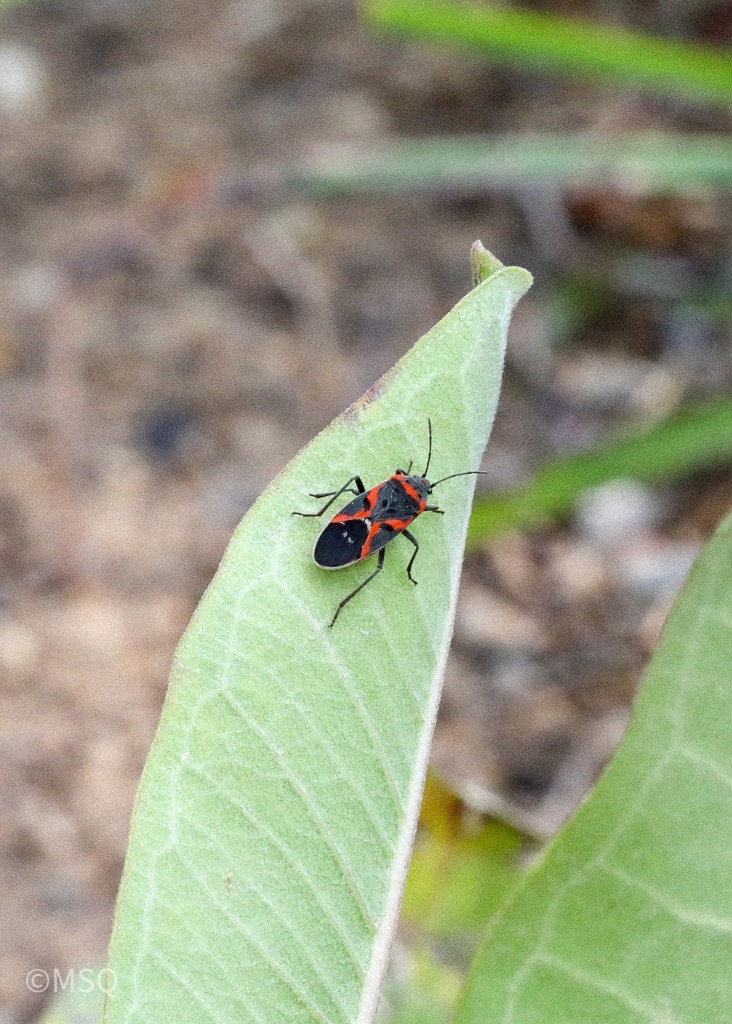
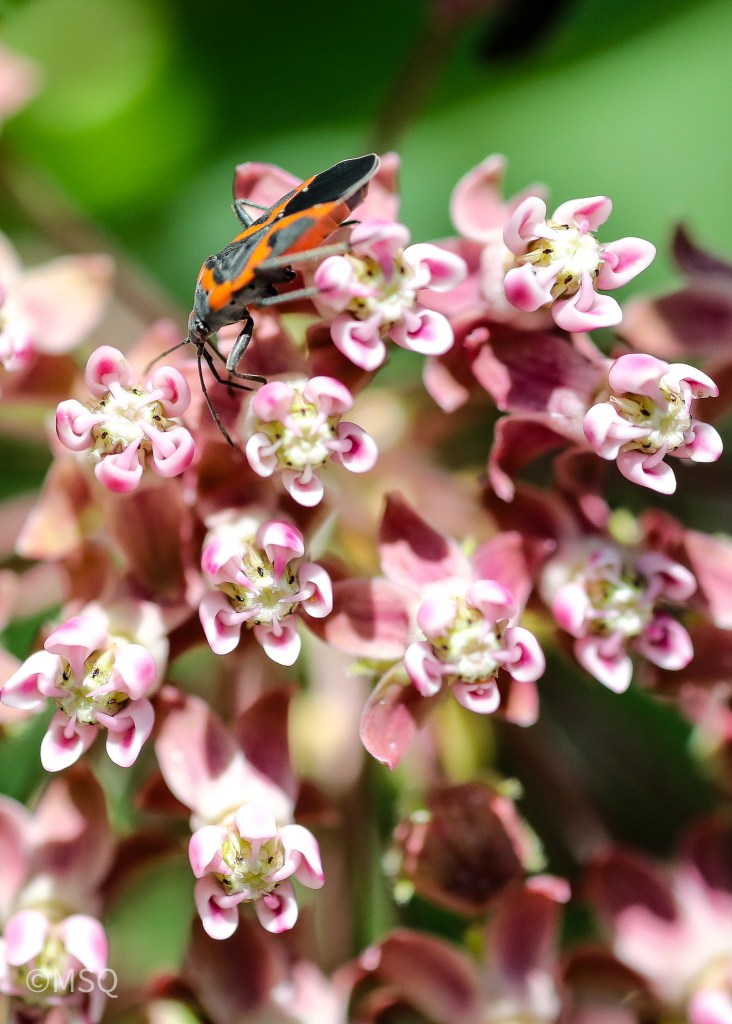
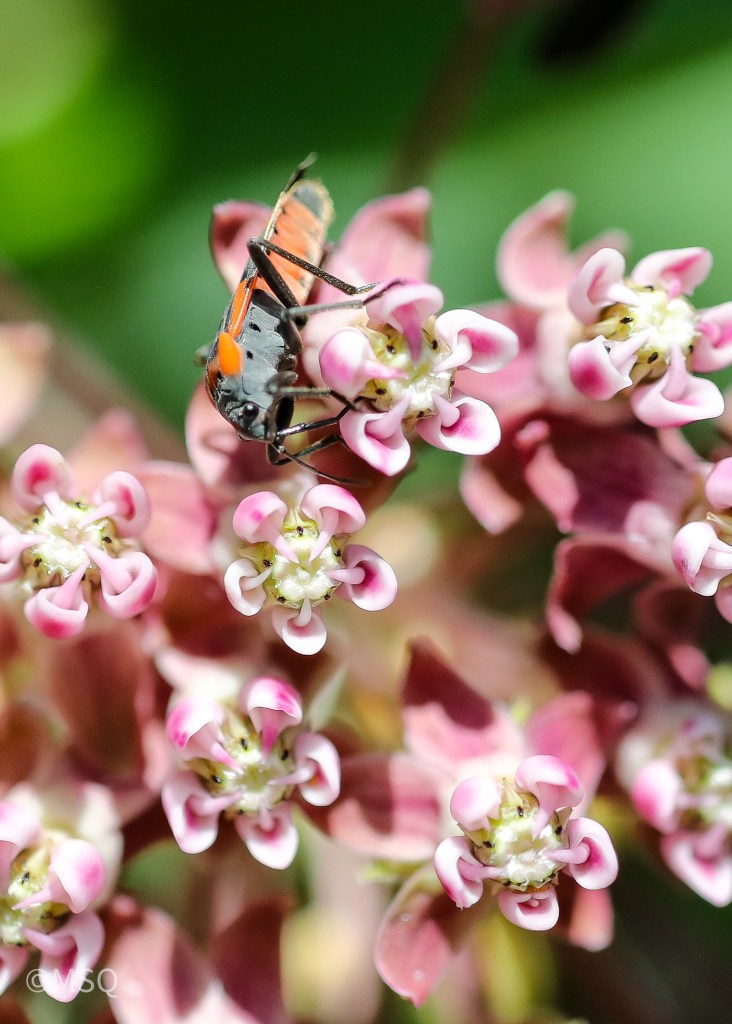
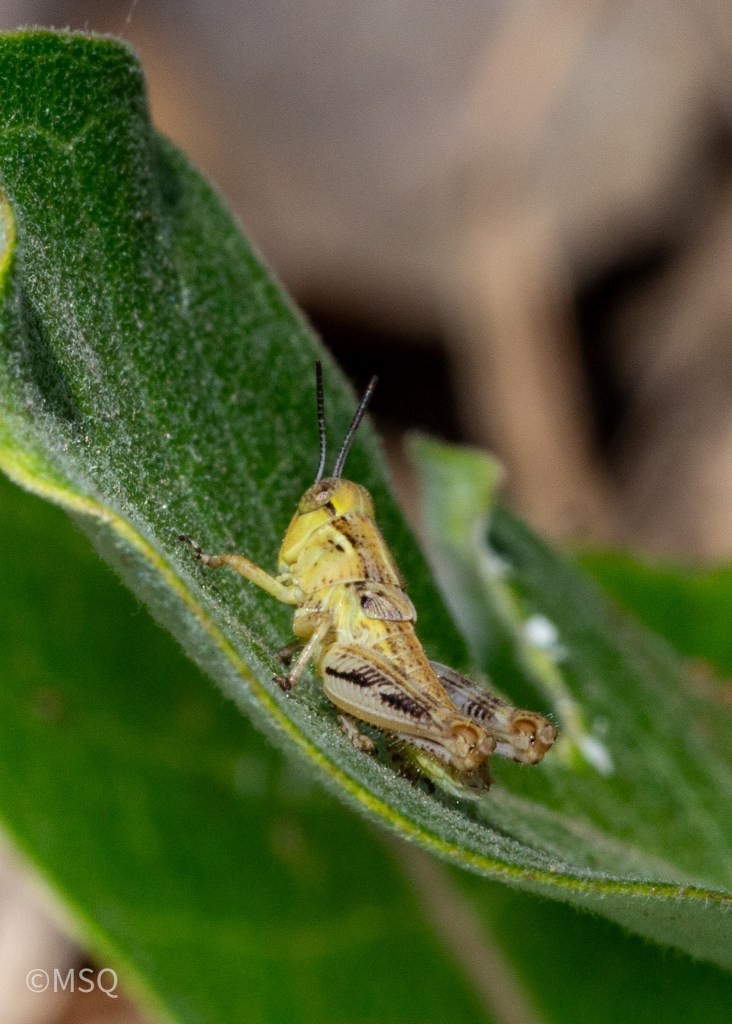
In addition to all these, Asclepius syriaca hosts many beetles and bugs,

grasshoppers,
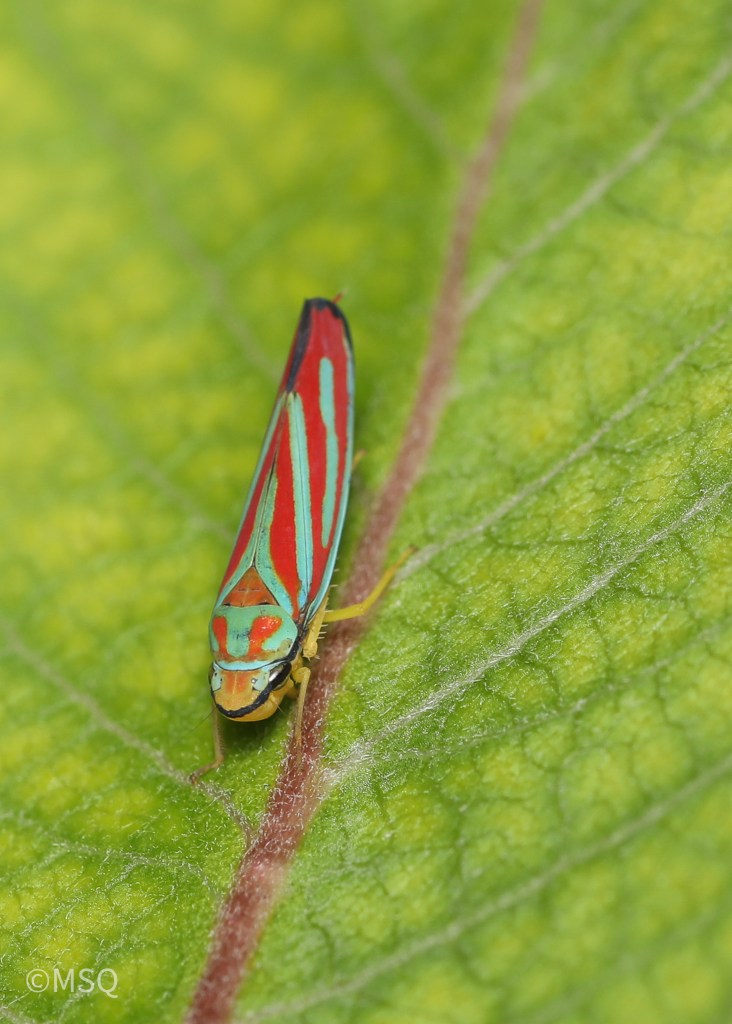
and leafhoppers
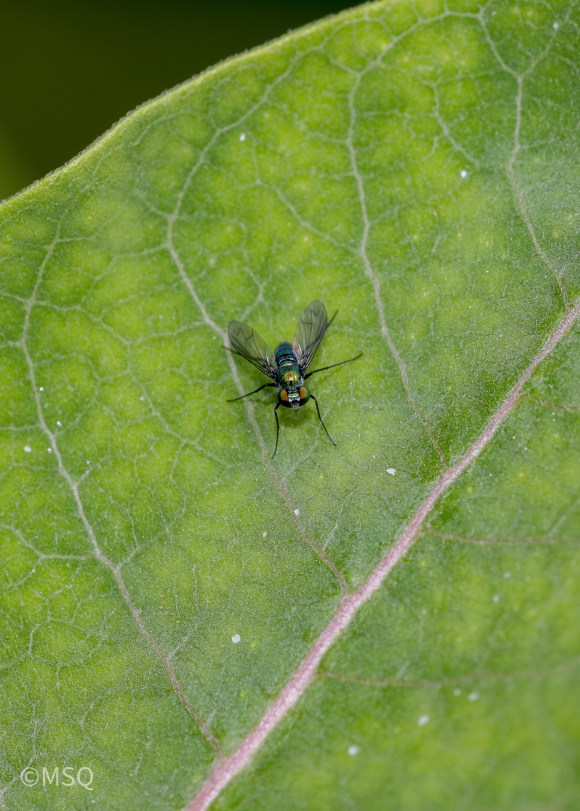
Finally, flies, including beneficial ones, nectar on Asclepius syriaca.
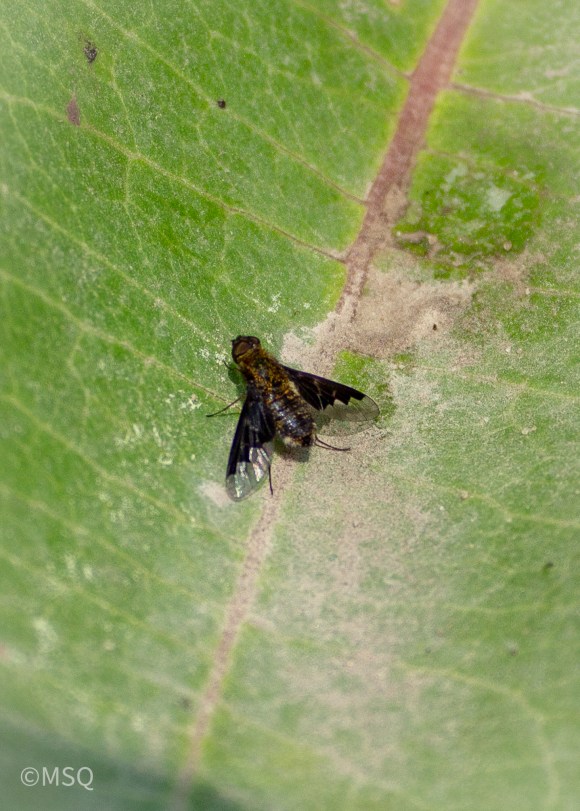
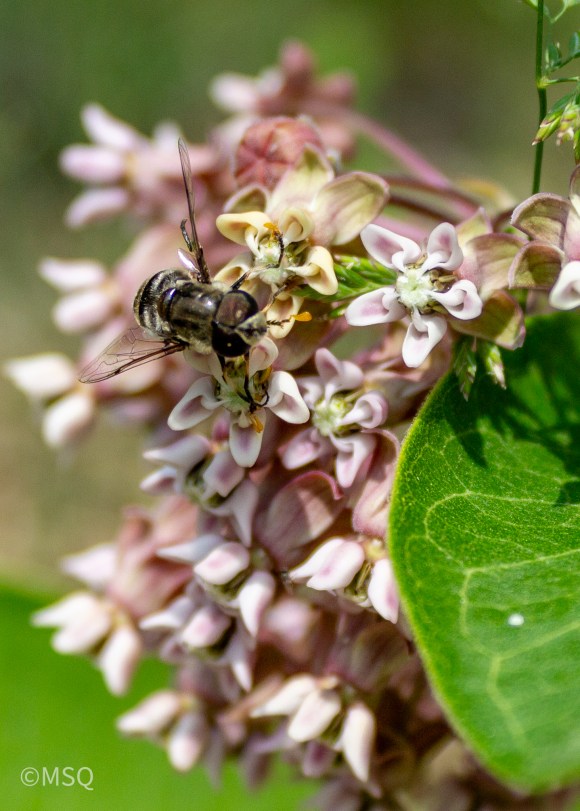
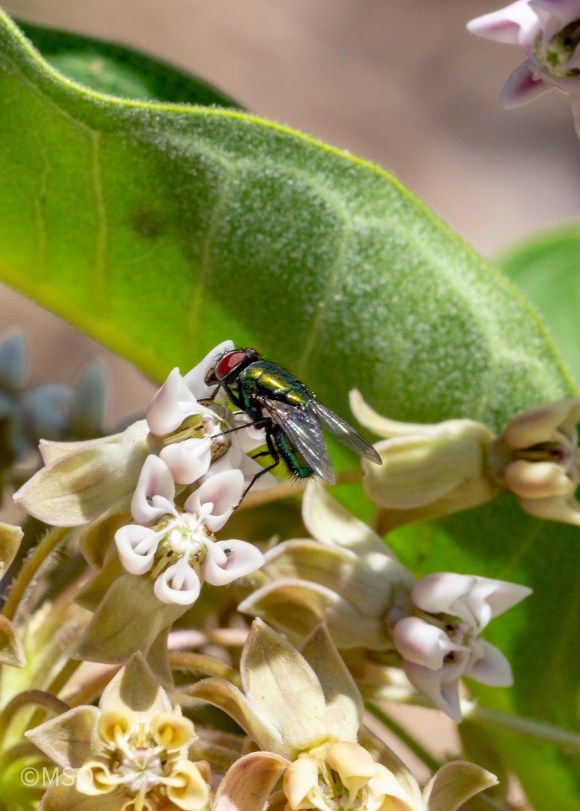
I hope you’ve enjoyed this exploration of the insects found on Common Milkweed. Pollinators and beneficials all enjoy Asclepias. It’s always worth stopping to see who’s home in the milkweed patch with or without flowers!
Happy Gardening, Mary
References
- Hilty, J., n.d., Common Milkweed, Asclepias syriaca, Milkweed family, (Asclepiadaceae), https://www.illinoiswildflowers.info/weeds/plants/cm_milkweed.html
- Berkov, A., 28.October.2010, Plant Talk: Inside the New York Botanical Garden; Plant Profile: The Extraordinary Common Milkweed, How Do Insects Feed on this Plant with Sticky White Latex? https://www.nybg.org/blogs/plant-talk/2010/10/science/plant-profile-the-extraordinary-common-milkweed/#:~:text=Plants%20in%20the%20genus%20Asclepias,Asklepios%2C%20the%20ancient%20Greek%20physician.
- Bowe, Scott, 11.September.2018, Milkweed is More Than Just a Common Weed, WXPR, https://www.wxpr.org/natural-resources/2018-09-11/milkweed-is-more-than-just-a-common-weed
- Nelson, M. and Alfuth, D., 24.February.2021, Milkweed (Ornamental Plants Toxic to Animals), X-number: XHT1276, https://hort.extension.wisc.edu/articles/milkweed-ornamental-plants-toxic-to-animals/
- Taylor, David, n.d., Common Milkweed, (Asclepias syriaca L.), Plant of the Week, https://www.fs.usda.gov/wildflowers/plant-of-the-week/asclepias_syriaca.shtml
- Eldredge, E.P., 2015,11,00, Milkweed Pollination Biology, Plant Materials Technical Note NV-58, Natural Resources Conservation Service, https://www.nrcs.usda.gov/plantmaterials/nvpmctn12764.pdf
- Betz, R.F., Struven, R.D., Wall, J.E. & Heitler, F.B., 1994, Insect Pollinators 12 Milkweed (Asclepias) Species, T.B. Bragg and J. Stubbendieck (eds.) Proc. Of the Thirteenth North American Prairie Conference. Univ. of Nebraska, Lincoln, NE.
- No author, n.d., Monarch Waystation Program, https://monarchwatch.org/waystations/
- Geere, Duncan, 2010. August.19, Tiger Moths Scare Bats with Ultrasonic Clicks, Wired, https://www.wired.com/2010/08/moth-jamming/
- Holm, Heather, 2017, Bees: An Identification and Native Plant Forage Guide, Pollination Press LLC
- No author, n.d., Ichneumon Wasps, Discover Nature>Field Guide: Missouri Department of Conservation, https://mdc.mo.gov/discover-nature/field-guide/ichneumon-wasps
- No author, n.d., Sand Wasps, Discover Nature>Field Guide: Missouri Department of Conservation, https://mdc.mo.gov/discover-nature/field-guide/sand-wasps
- Berish, Chelsea, n.d., Spined Soldier Bug in Kentucky, ENTFACT-325: SPINED SOLDIER BUG IN KENTUCKY, University of Kentucky Department of Entomology, Martin Gatton College of Agriculture, Food and Environment
 Wild Things in the Garden