Categories
native plants Pollinator gardening

Feathery Purple Bobbles

Missouri Ironweed (Vernonia missurica)

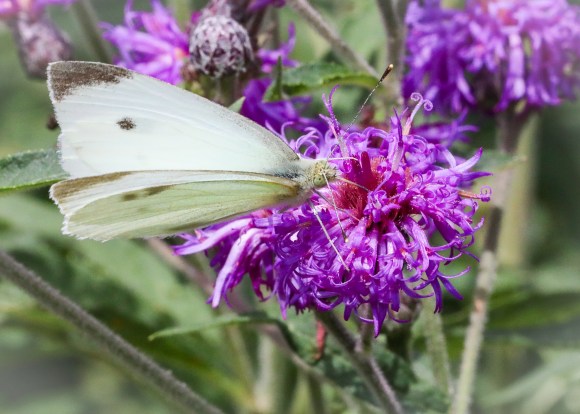
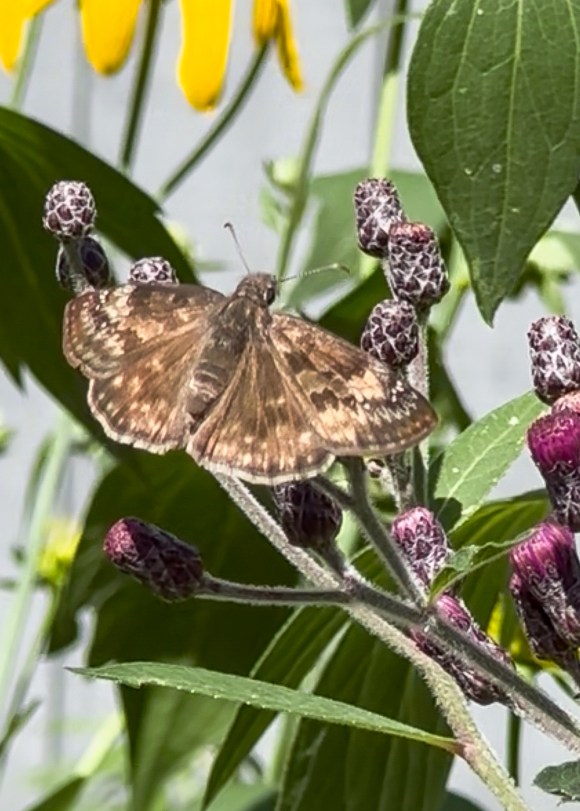
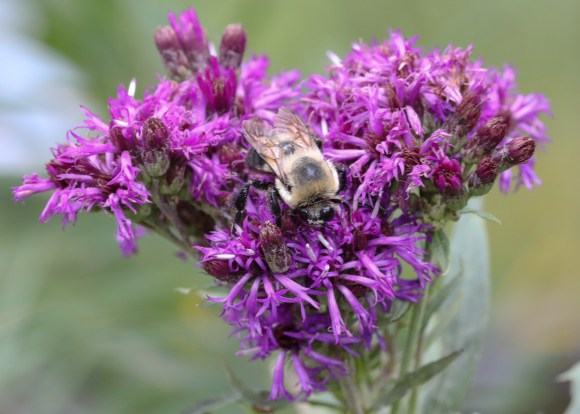
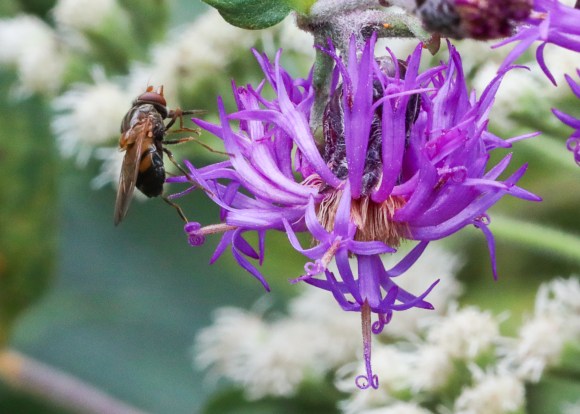
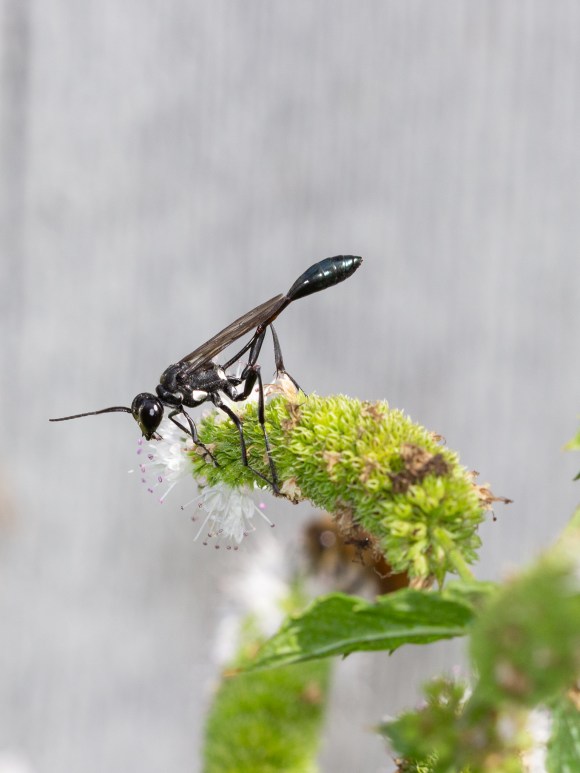
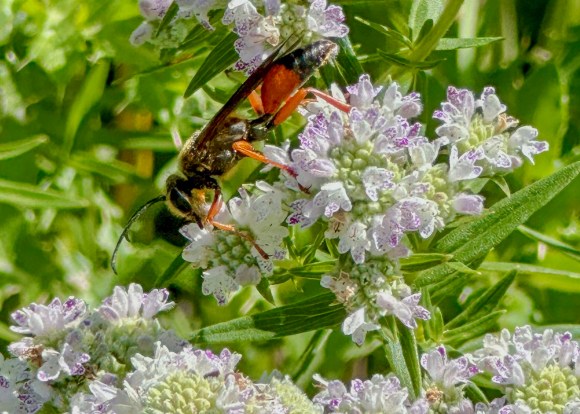
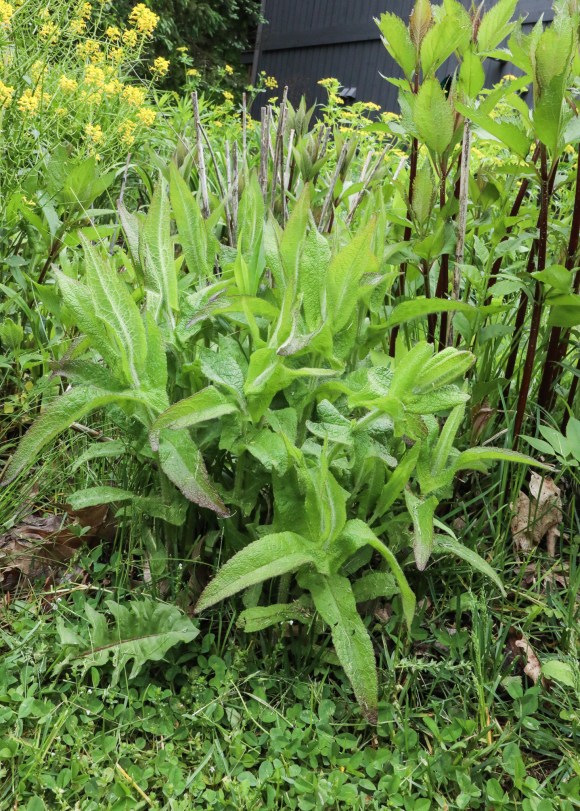
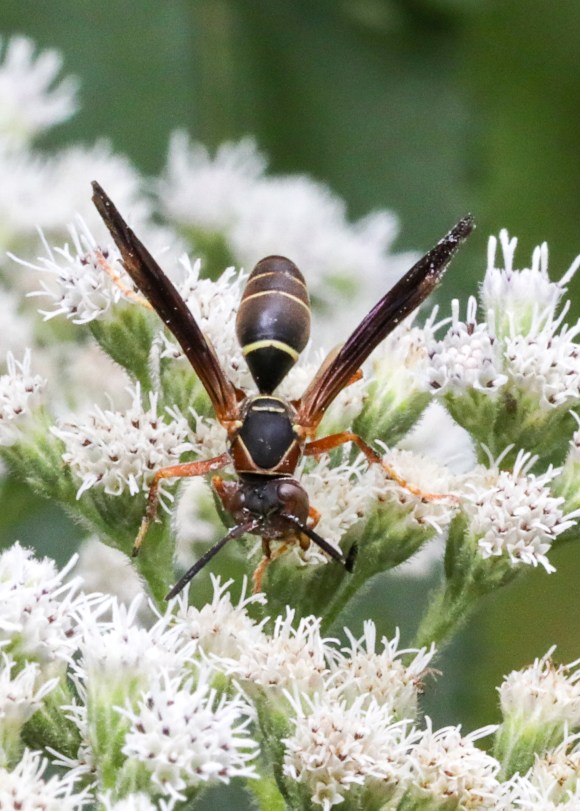
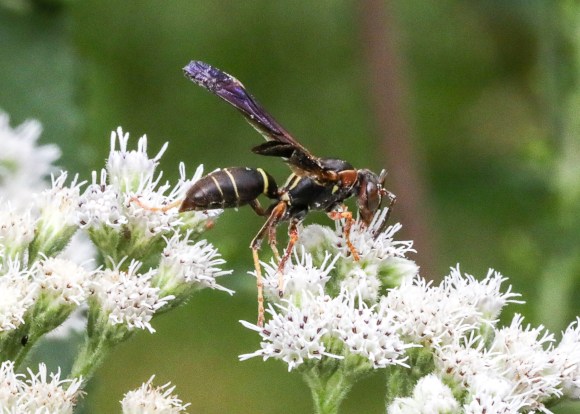
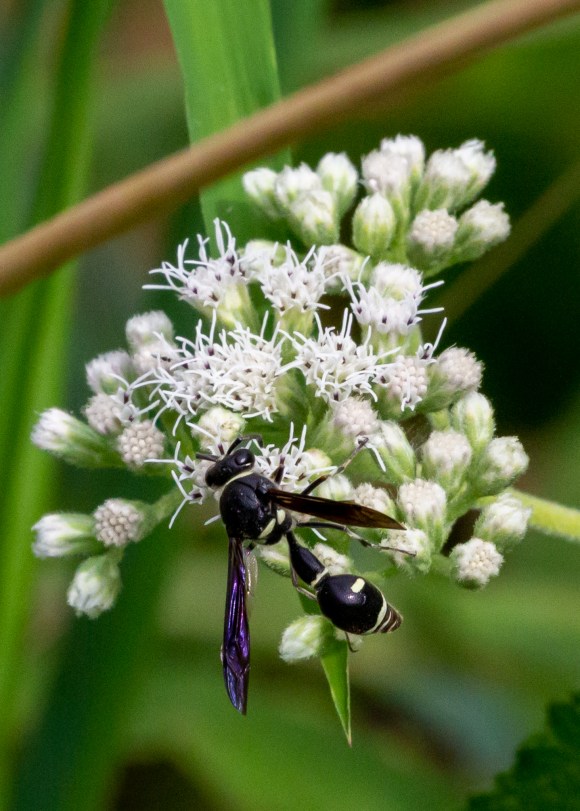
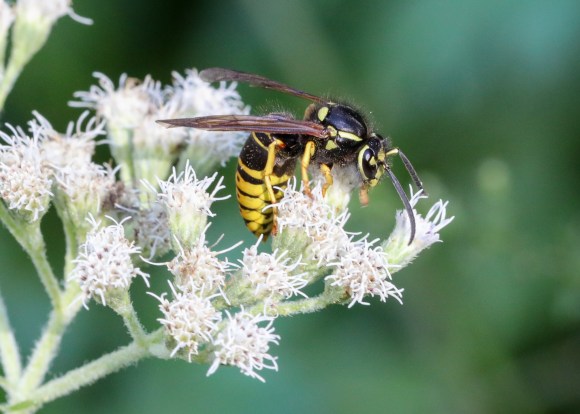
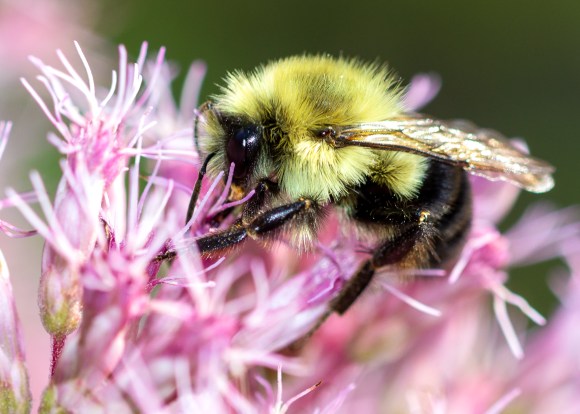
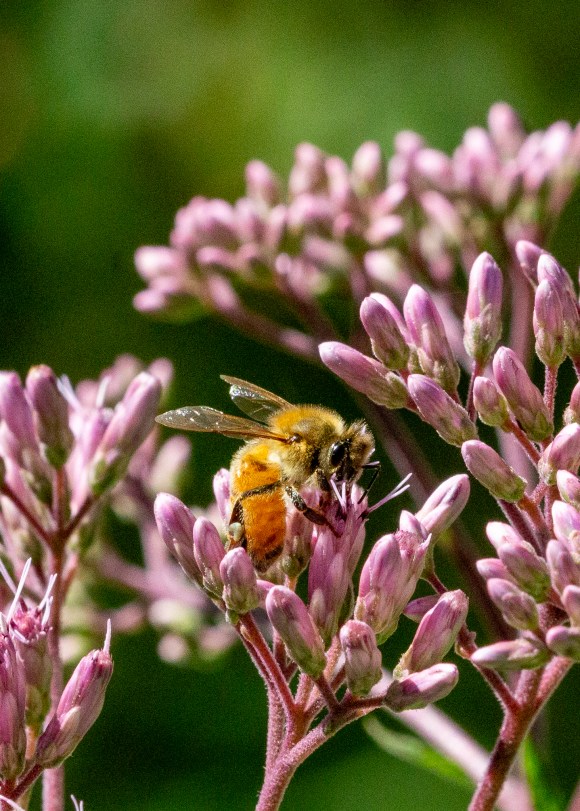
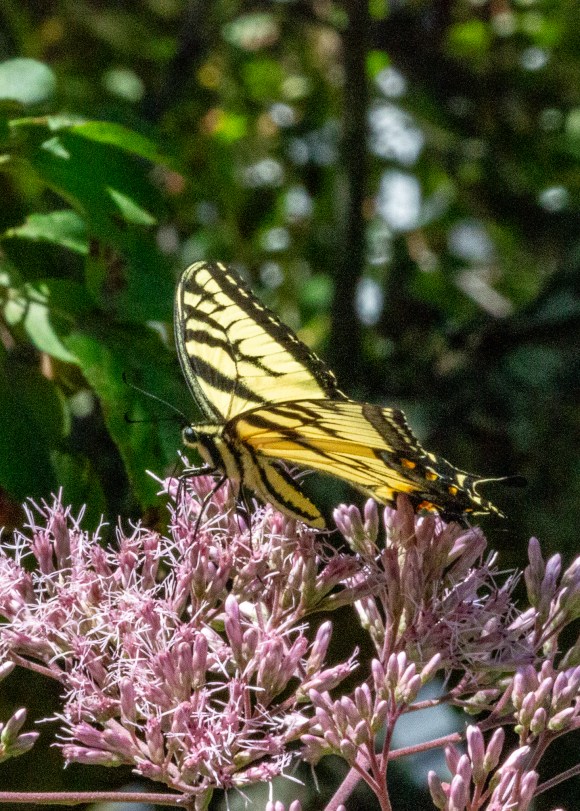
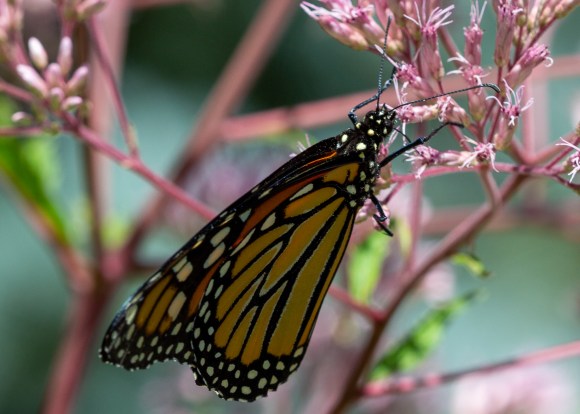
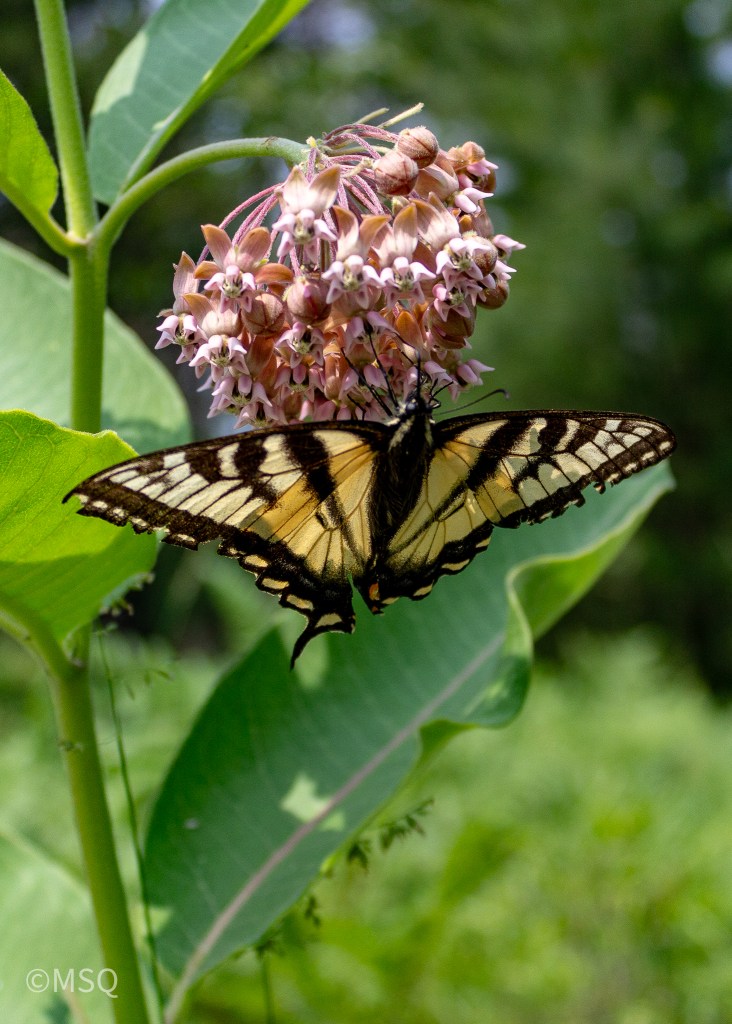
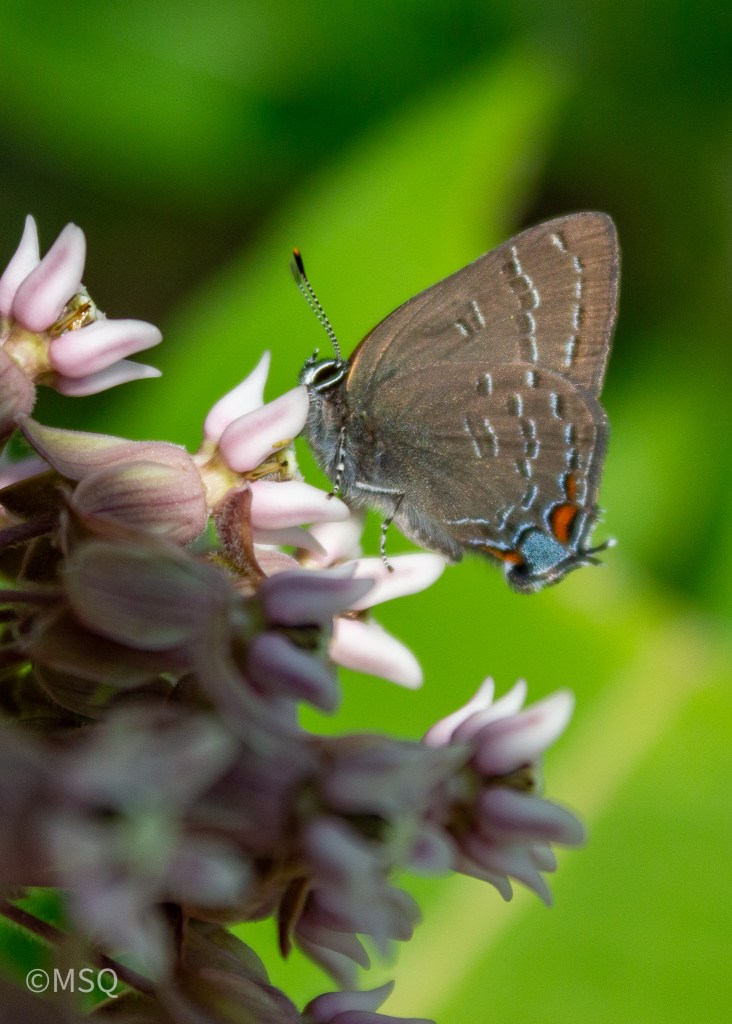
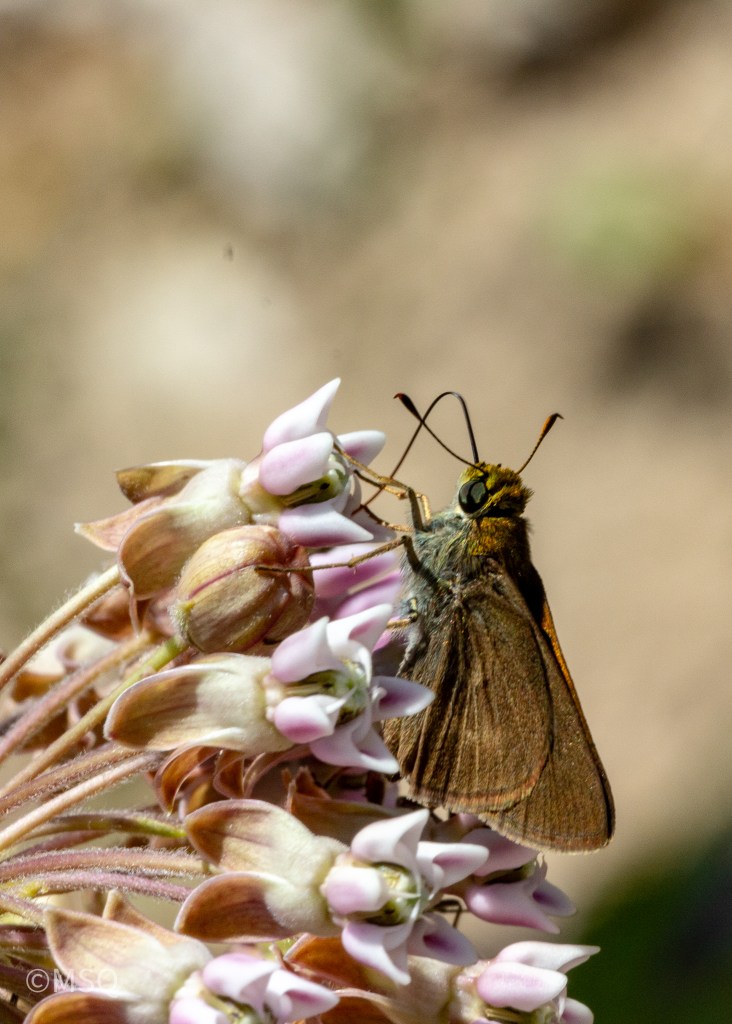
Late summer brings the furry, plum blooms of Missouri Ironweed (Vernonia missurica).  These vibrant flowers draw crowds of bees, wasps, and flies.  Butterflies, moths and skippers gather nectar at its flowers.

North America has several different species of Ironweed.  I have Missouri Ironweed in my garden.  This Ironweed is hardy from Zone 4 to 9.  It grows from 3 to 6.5 feet and spreads from 3 to 4 feet.  Missouri Ironweed tends to grow taller in wetter sites. 4,5,6  
Vernonia missurica is a prime candidate for the June haircut.  The June haircut method involve cutting a plant back by one-third to one-half at the end of June or the beginning of July.  No later than July 4th in a Zone 5 garden.  

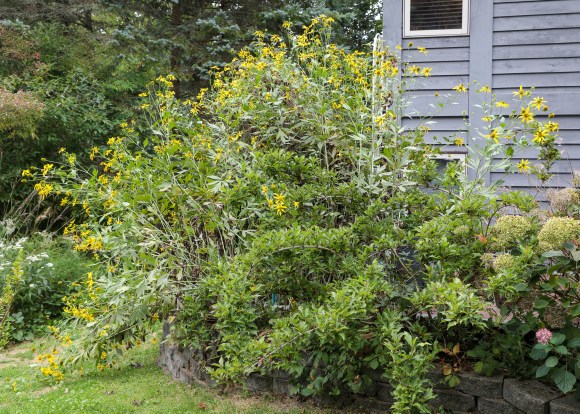
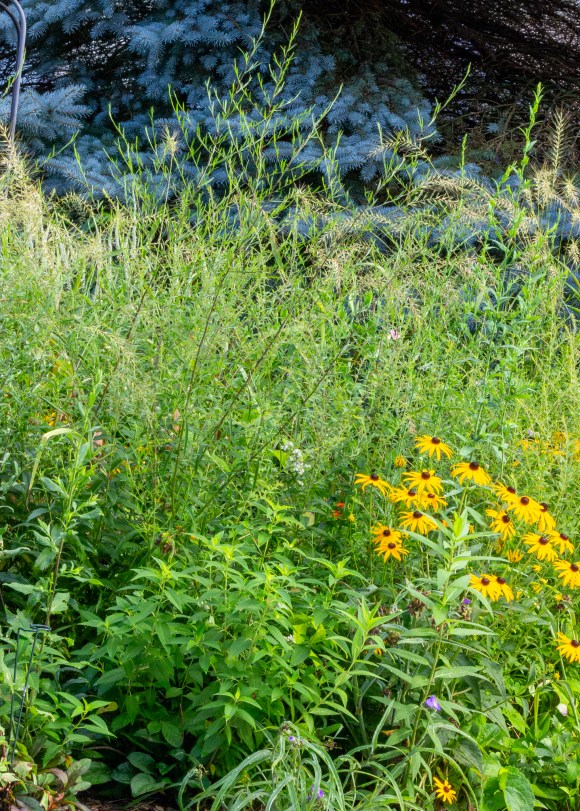
Below is a grouping of Cut-Leaf Coneflower that didn’t have a June haircut.

Several things happen after the haircut.  The plant sprouts several shoots from the cut.  These shoots become flowering stalks—more flowers.  The plant flowers slightly later.  Finally, the overall plant height is shorter.  The shorter height has sturdier, stronger stems less likely to fall over.
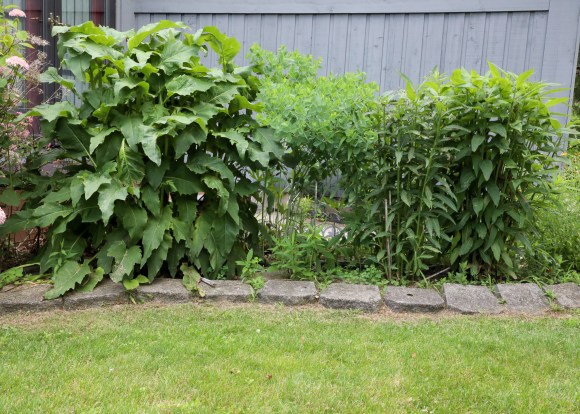
This method has made a real difference in my garden.  I used to spend hours staking and caging plants in the summer and fall.  Now they form beautiful, upright groupings.
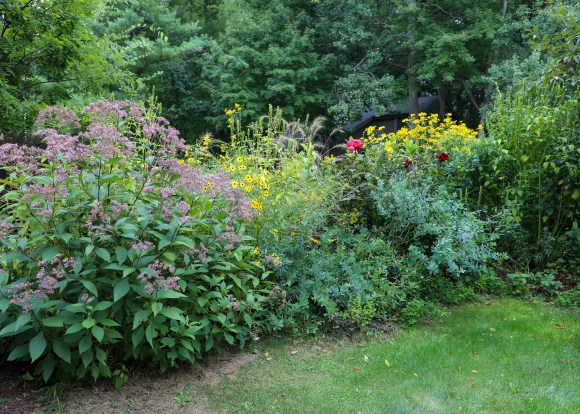
Missouri Ironweed thrives in full to part sun.  It enjoys average to moist soil conditions with fertile loam.  Ironweed also tolerates clay loam with grit or gravel.5

Ironweed accepts a variety of soil moistures.  Vernonia missurica does well in a rain garden since it tolerates flooding.  It also survives short periods of drought so can live in a drier location.5,6

Missouri Ironweed is another native with rhizomatous roots.  They are densely fibrous.  In time, Vernonia missurica forms small colonies.5

Missouri Ironweed’s dark green leaves grow alternately on its stem.  The lanceolate or ovate foliate can grow up to 7 inches long and 2 inches wide.  The lower side is paler with dense white, longish hairs.  Conveniently, these leaves are bitter tasting.  Livestock and other herbivores avoid eating it.5
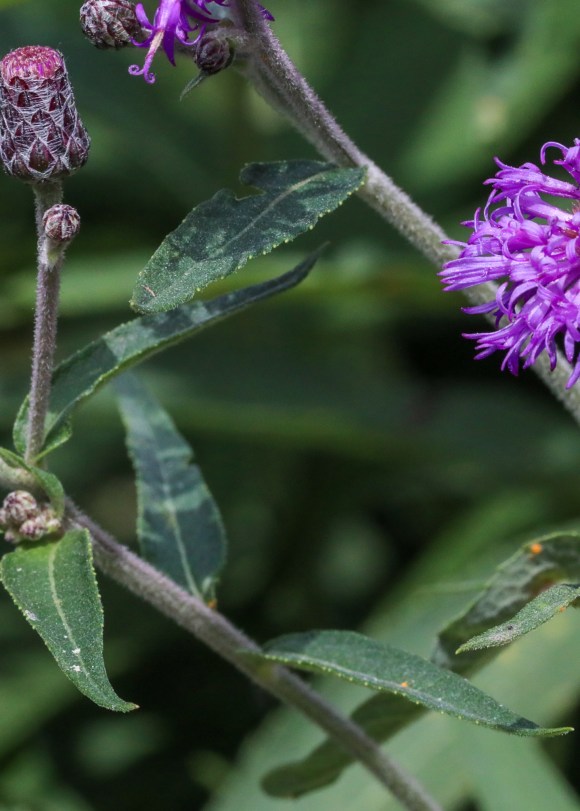
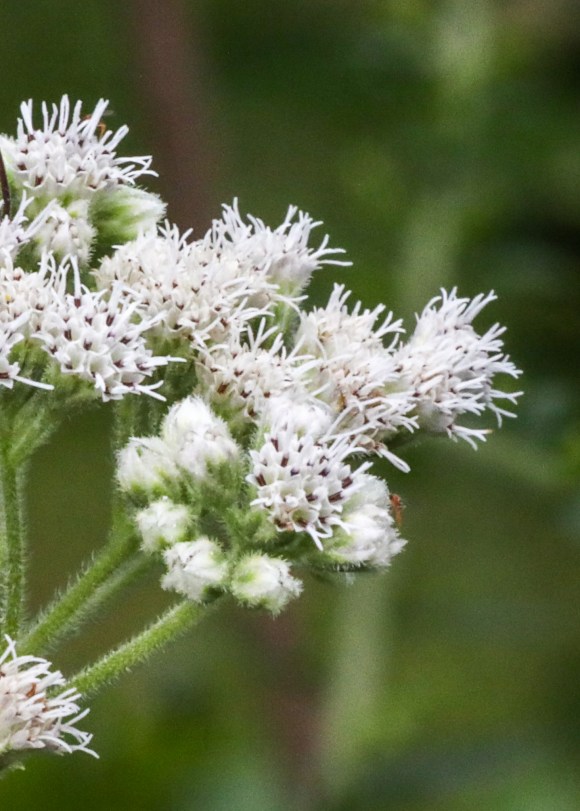
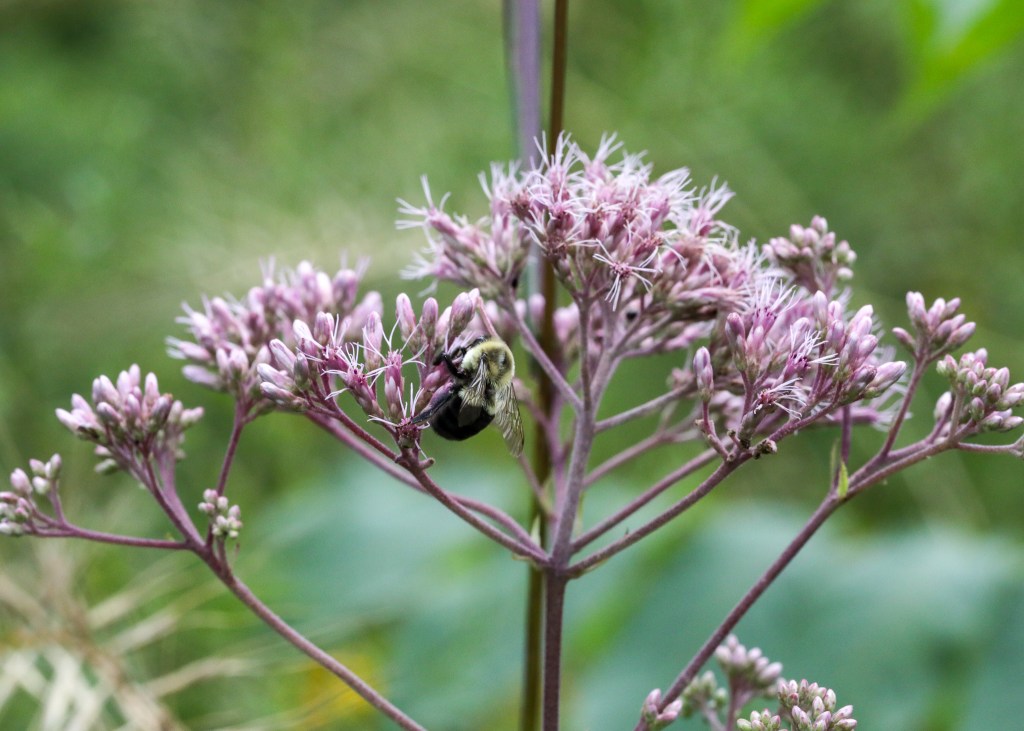
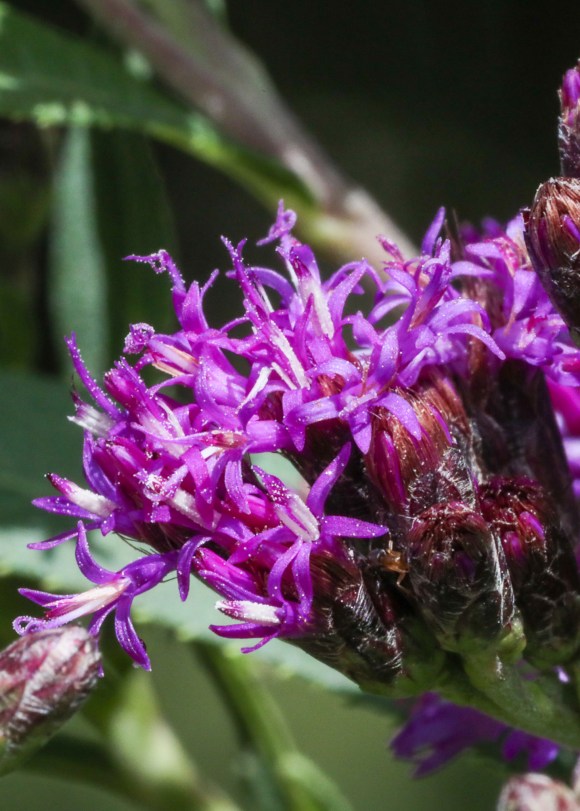
The magenta/purple flowers bloom at the top of the plant.  The buds form a corymb of many blossoms 6 to 16 inches across.  A corymb is a flat-topped or domed cluster of flowers.4,5,6,9

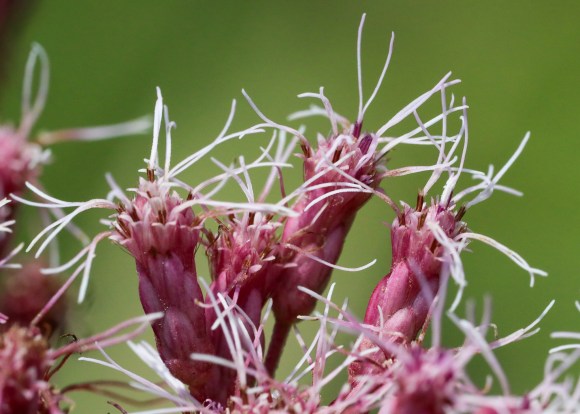
Vernonia missurica’s blossoms don’t have ray florets.  This means no petals.  Like Sweet Joe-Pye Weed (Eutrochium purpureum, https://wildthingsinthegarden.wordpress.com/wp-admin/post.php?post=2170&action=edit) and Boneset (Eupatorium perfoliatum, https://wildthingsinthe.garden/2025/05/30/a-white-frilly-flower/), these flowers have a fuzzy appearance.  30 to 60 disk florets make-up each bloom.4,5,6,9

Missouri Ironweed flowers in late summer.  The ½ to ¾ inch blooms usually open over a month.  Blossoms are usually magenta to purple but, rarely, white. 4,5,6,9

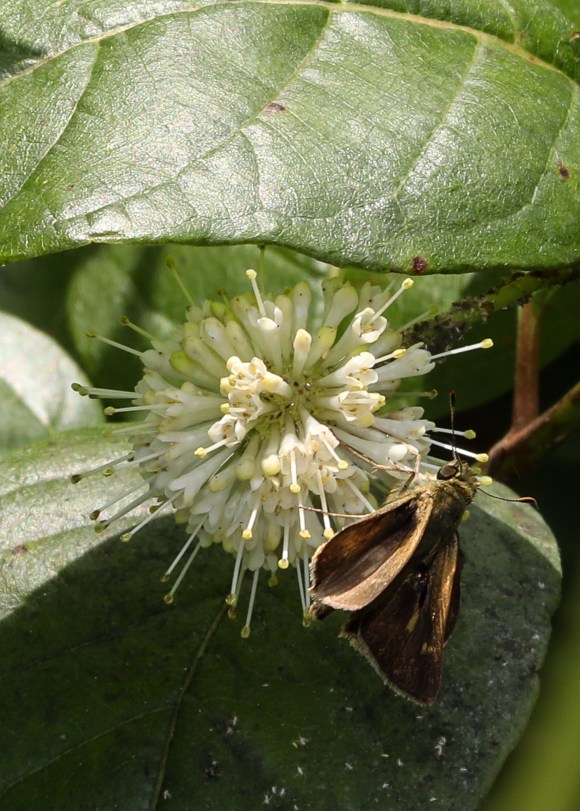
Late season pollinators and beneficial insects all harvest resources from Vernonia missurica.  Butterflies, moths and skippers gather nectar from the blooms.  
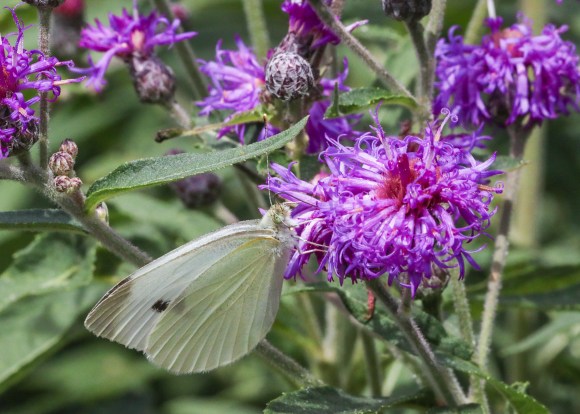
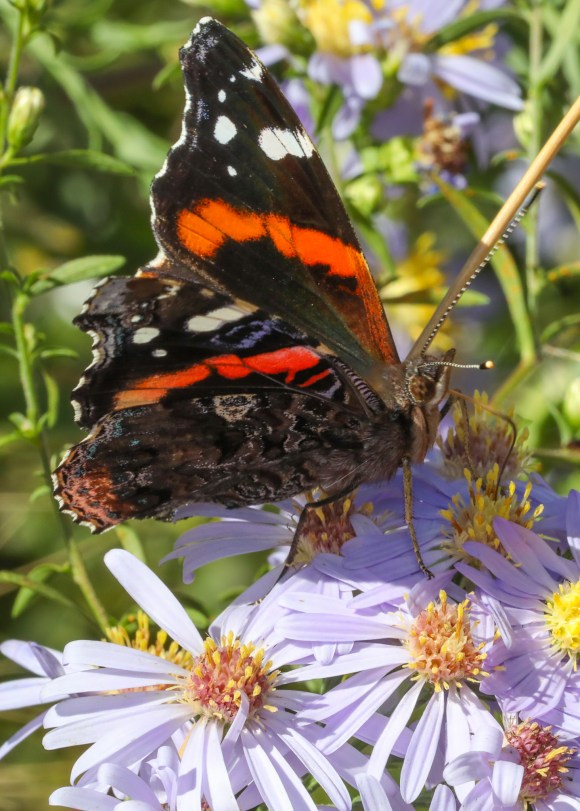
Missouri Ironweed serves as a larval host for the American Painted Lady Butterfly (Vanessa virginiensis).3,4,5,6

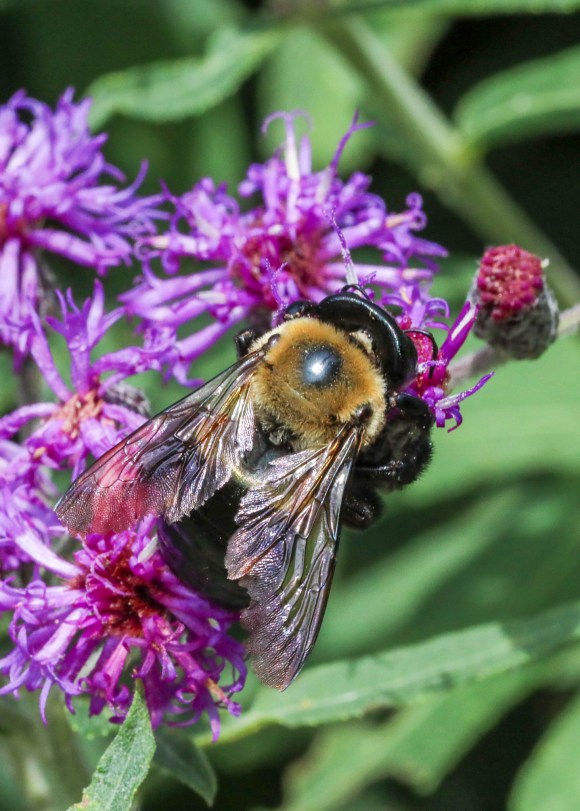
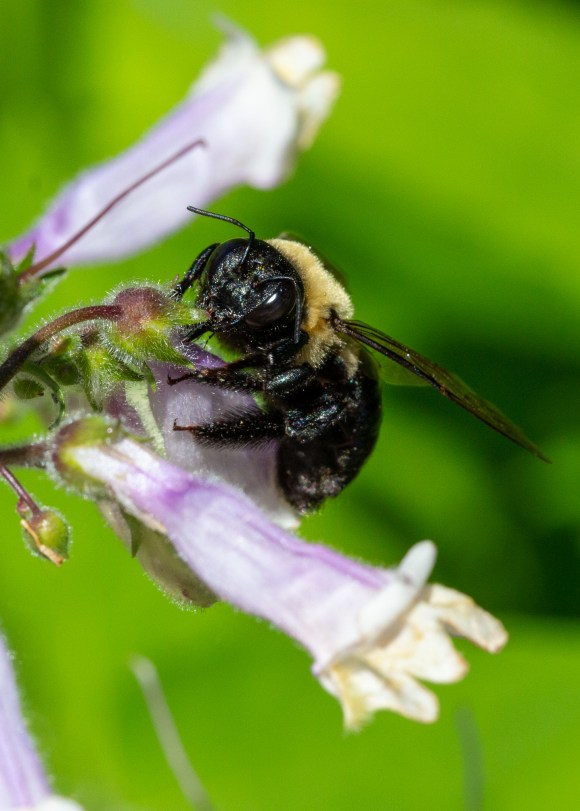
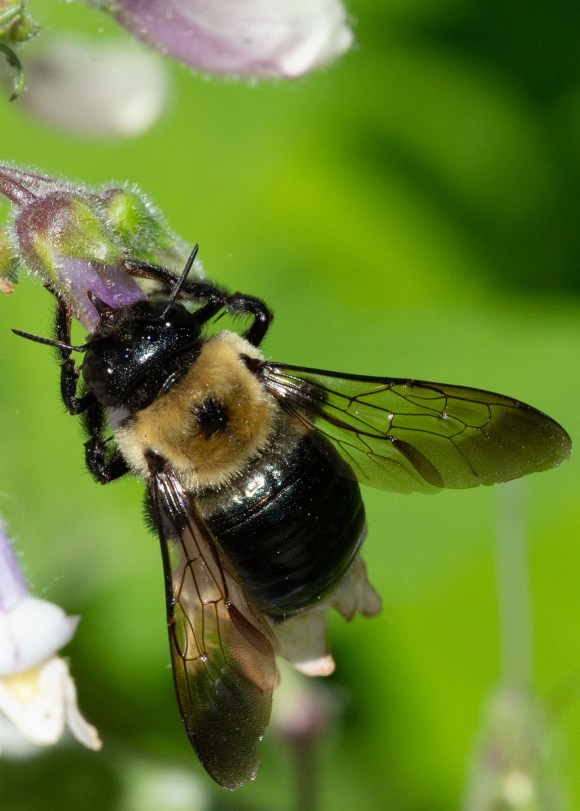
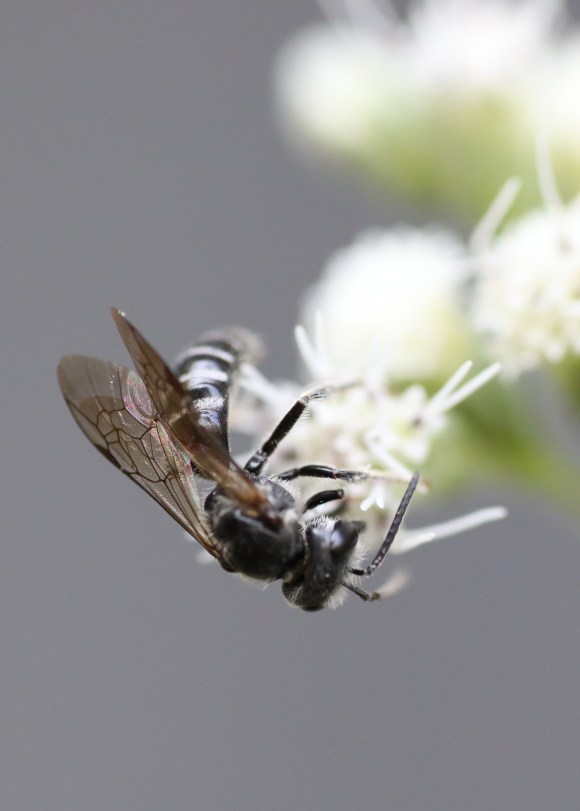
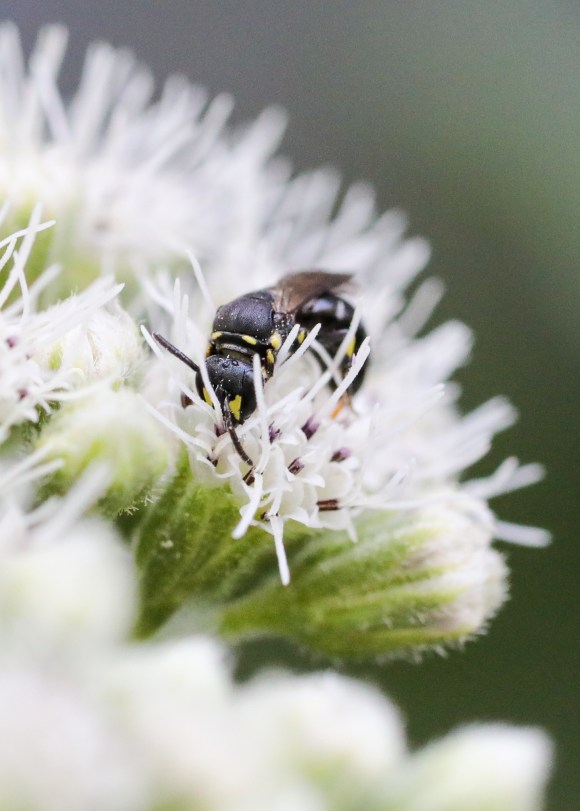
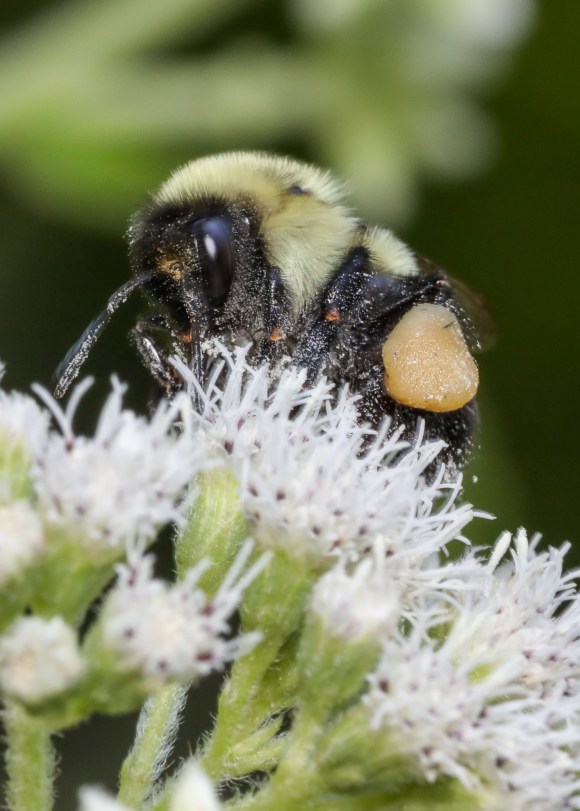
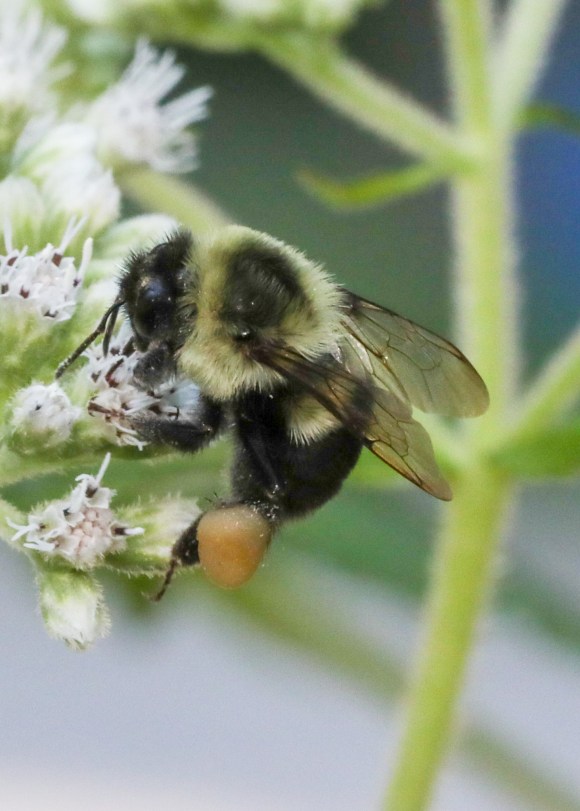
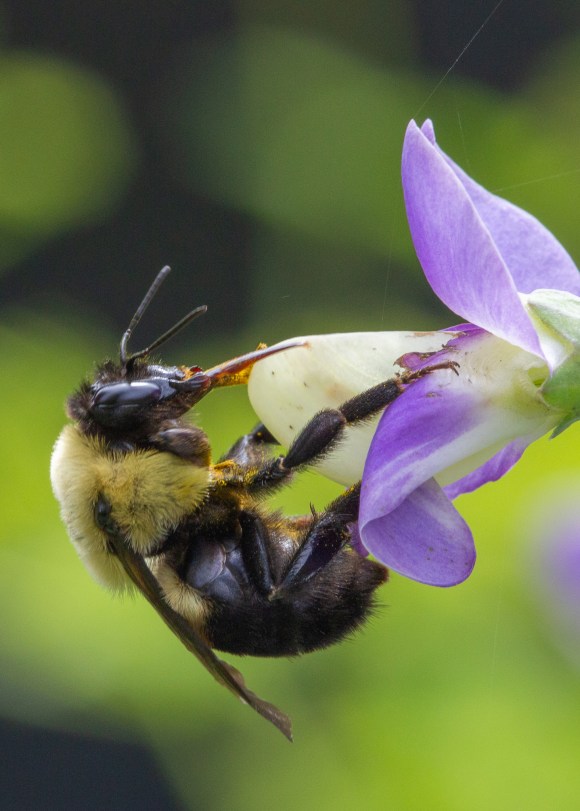
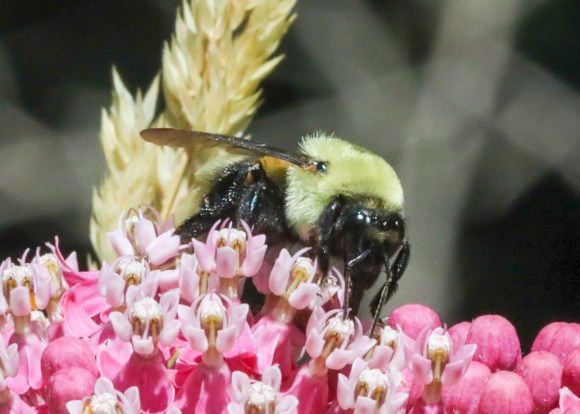
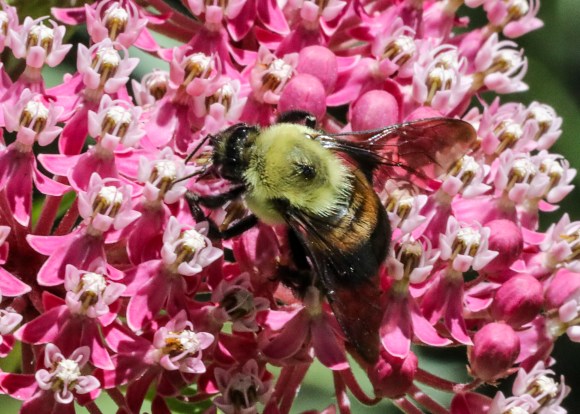
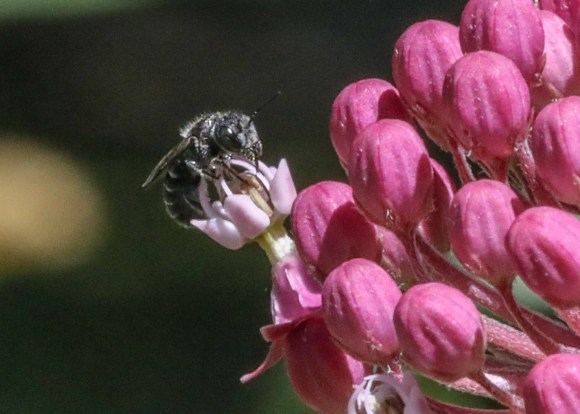
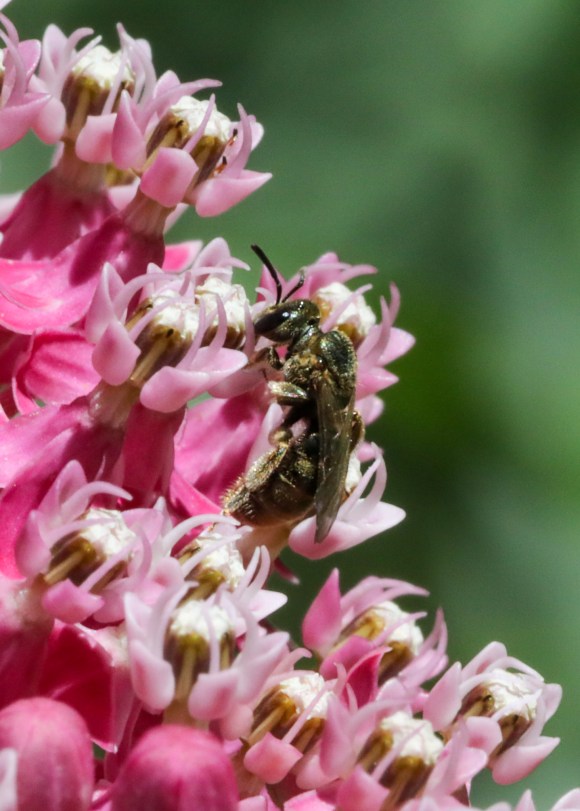
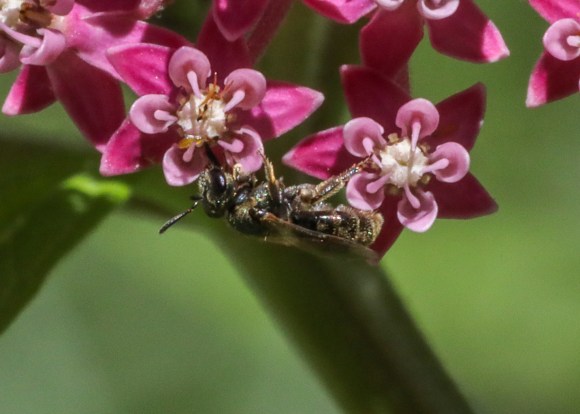
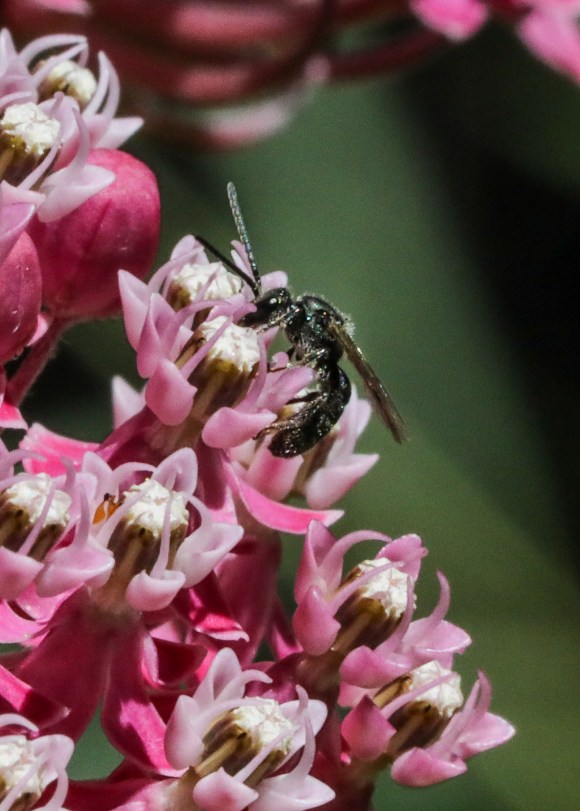
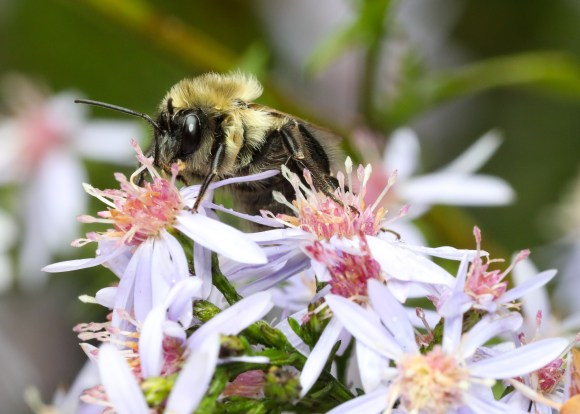
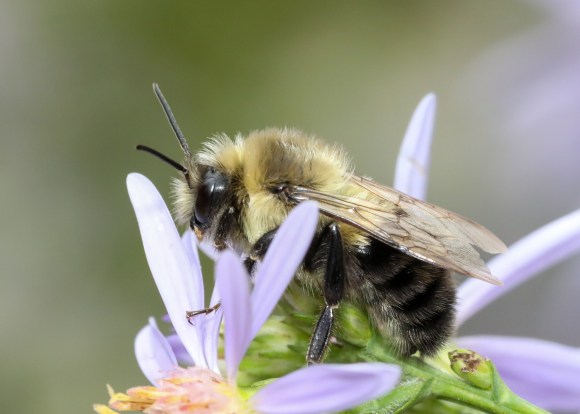
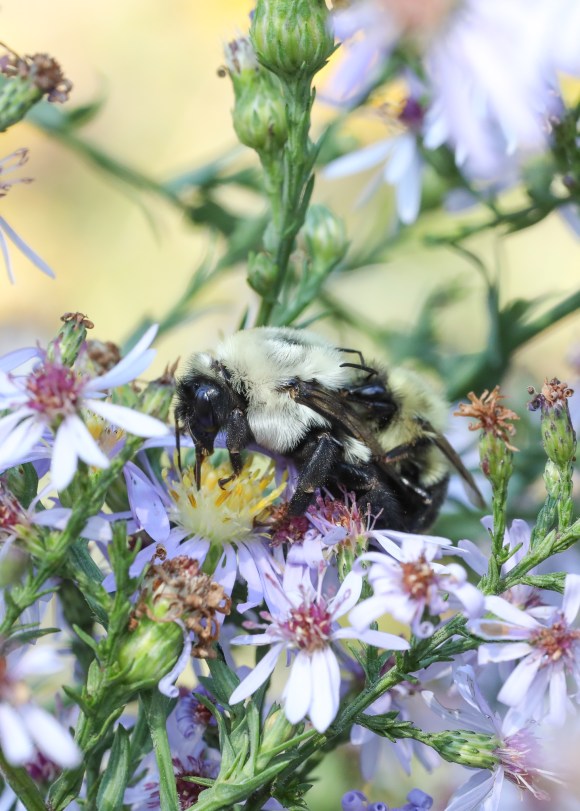
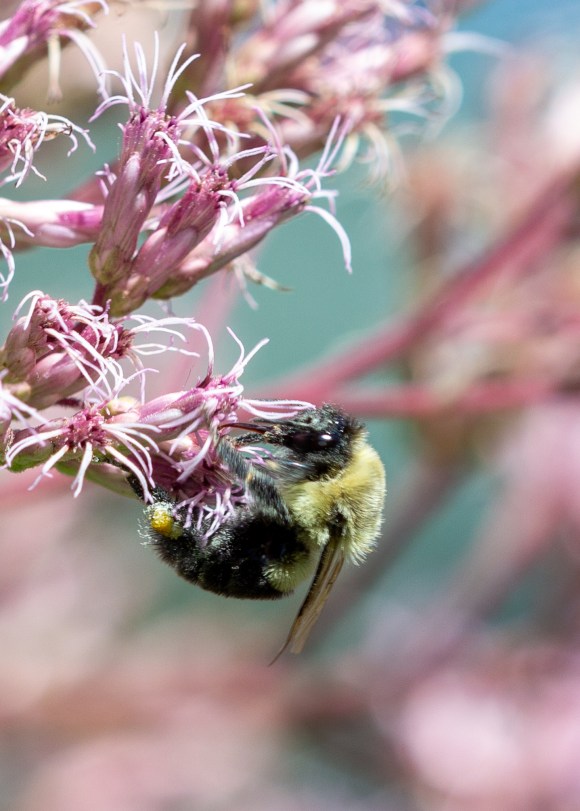
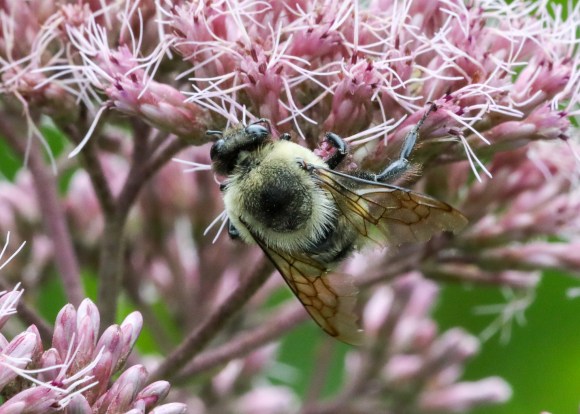
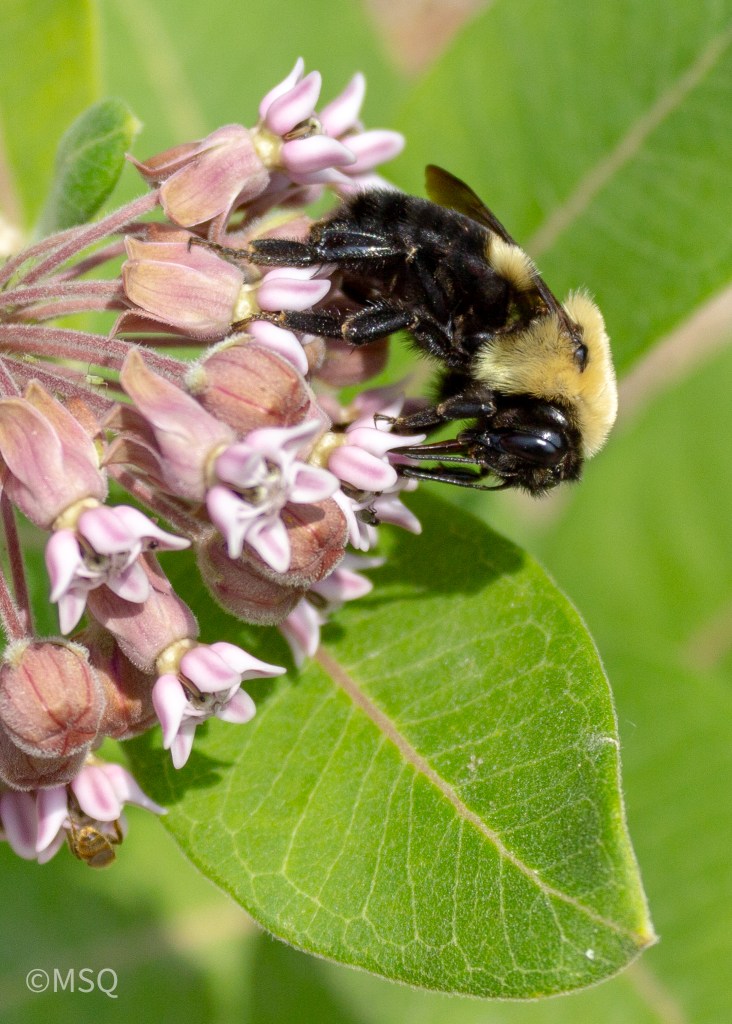
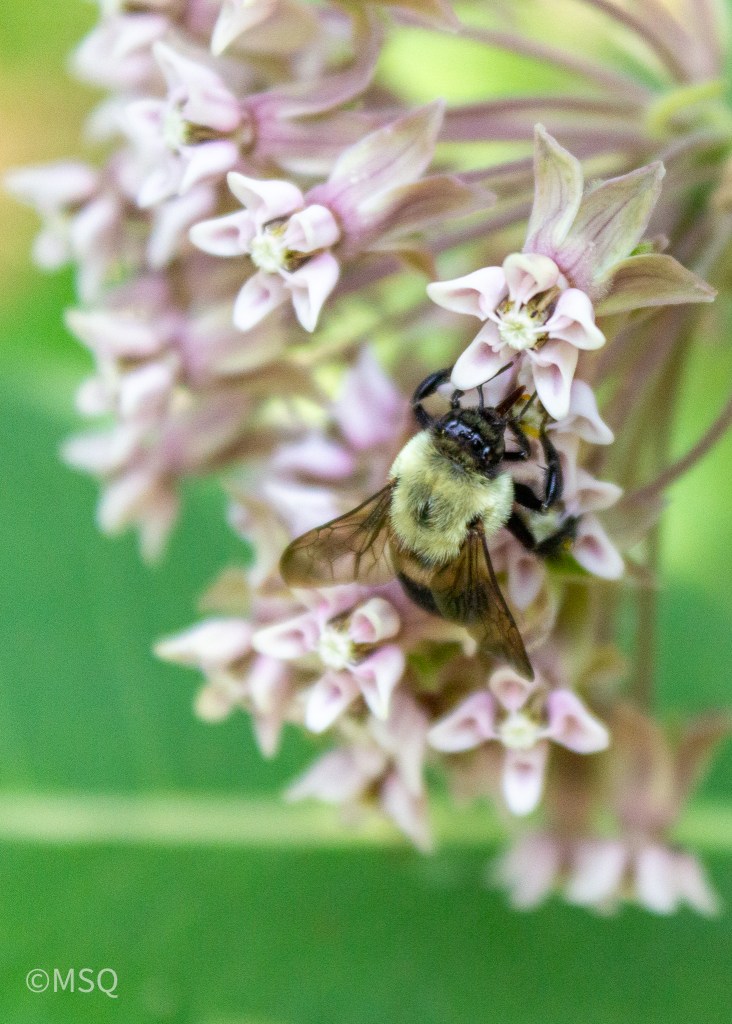
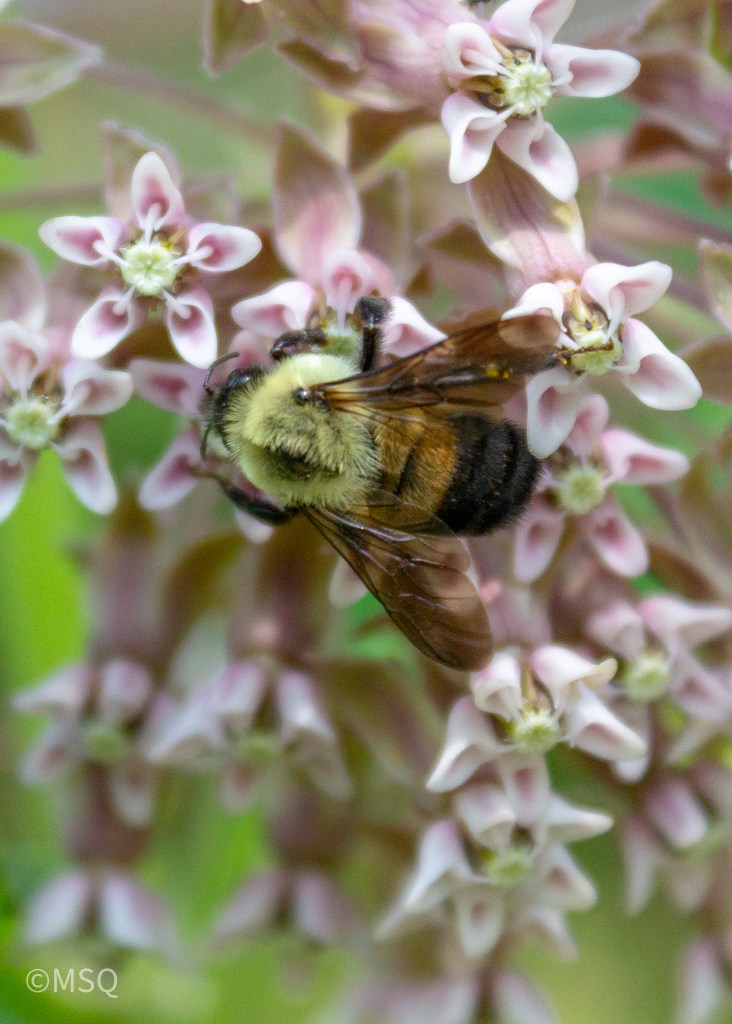
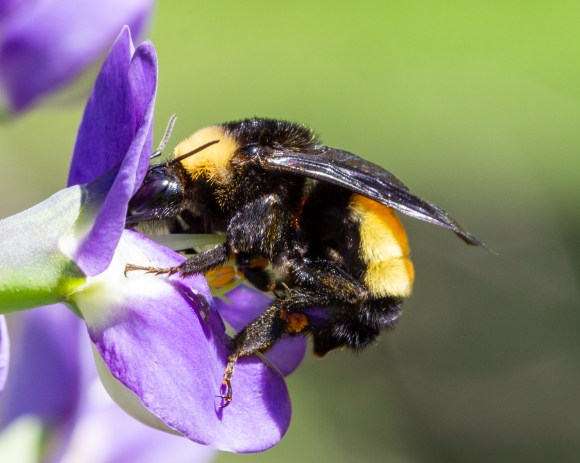
Bees gather pollen and nectar from Ironweed.  These bee visitors include Bumblebees (Bombus spp.),
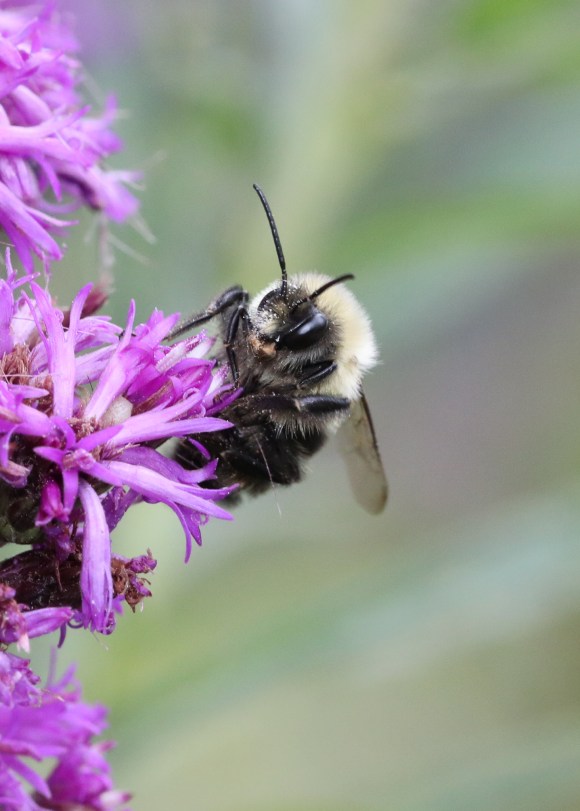
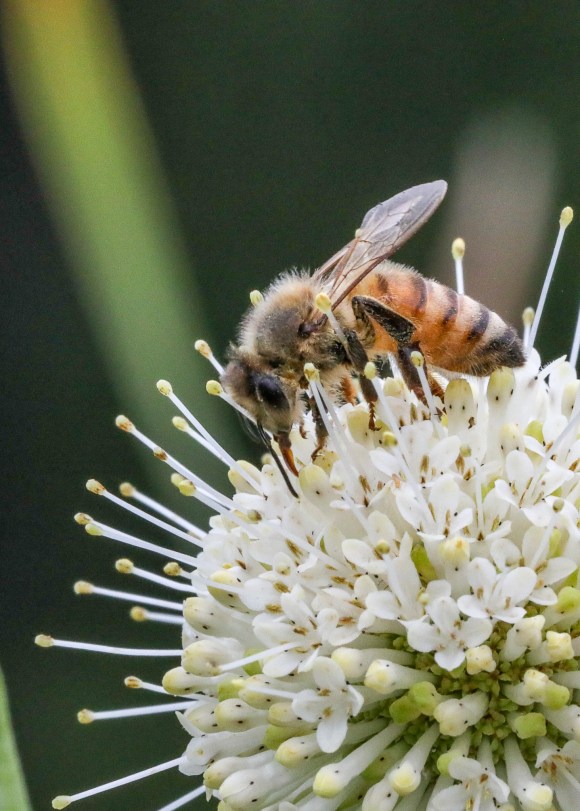
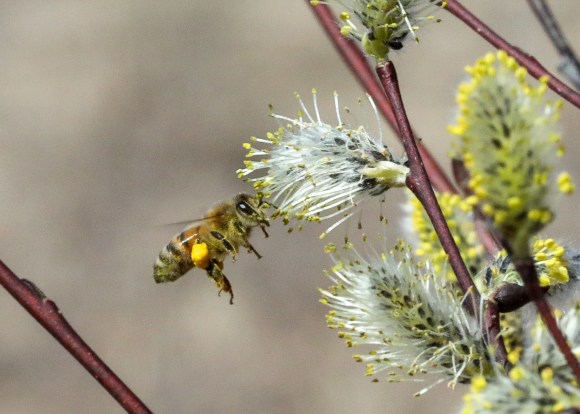
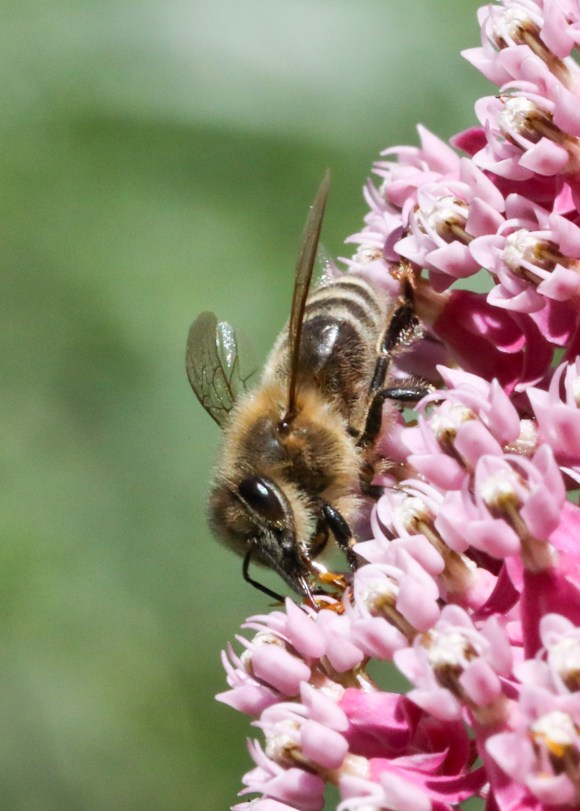
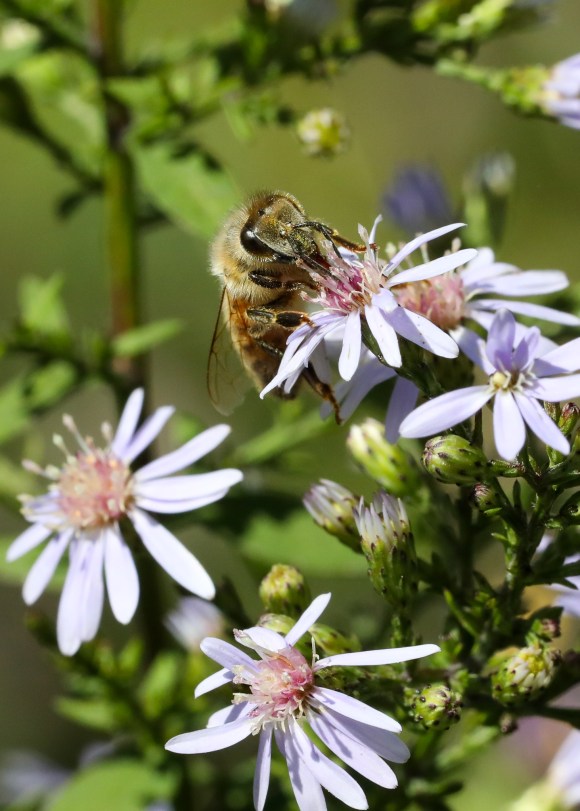
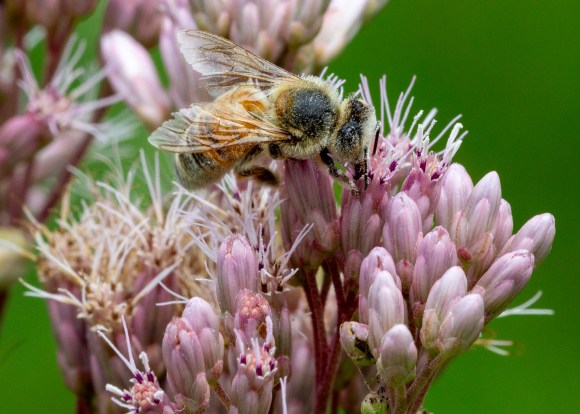
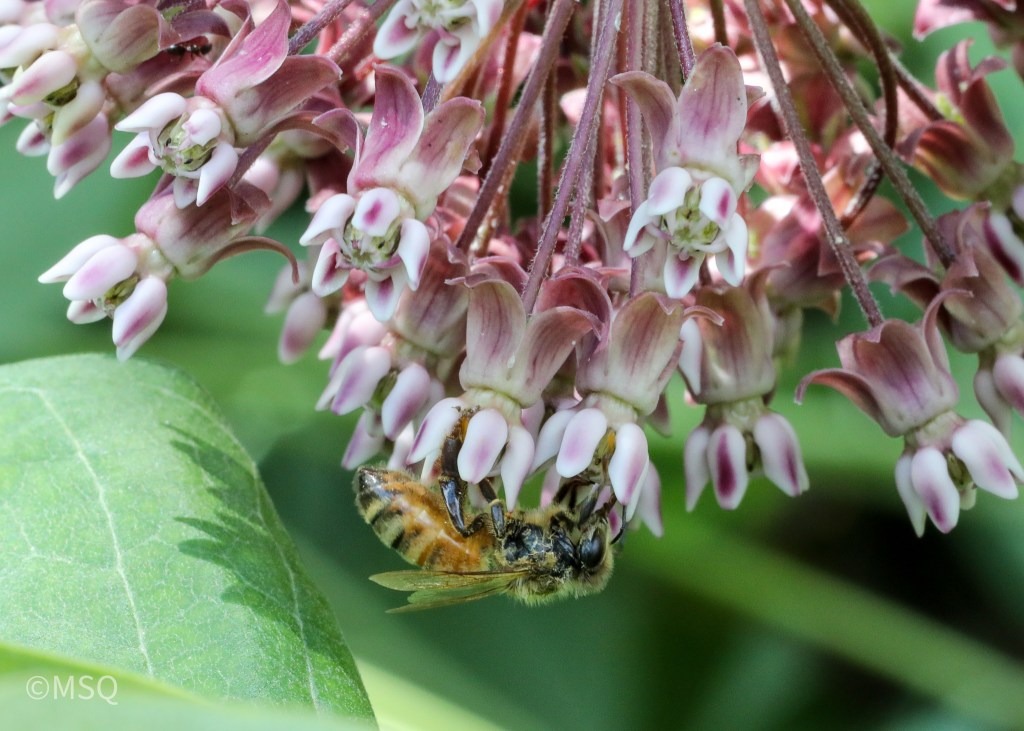
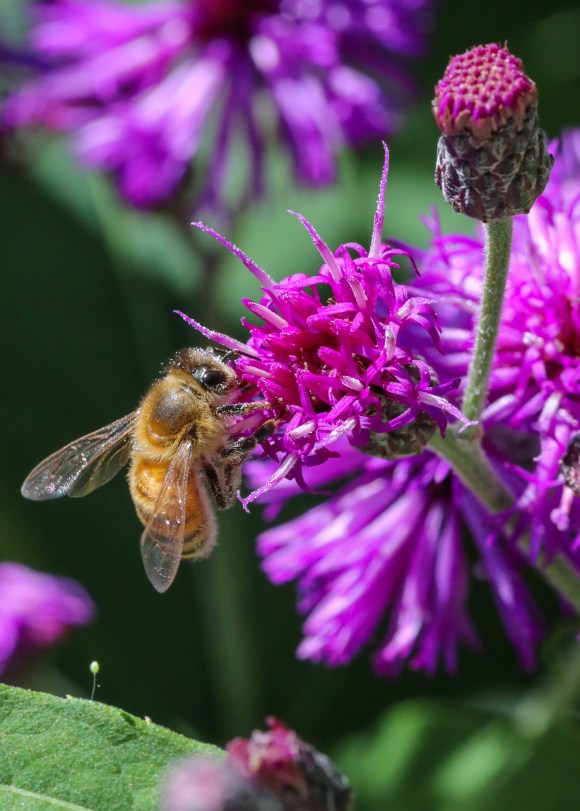
Honeybees (Apis spp.),
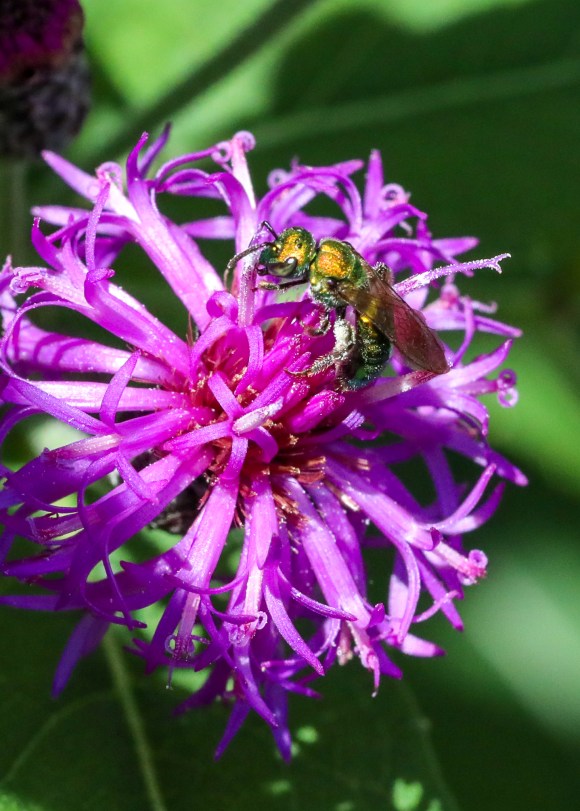
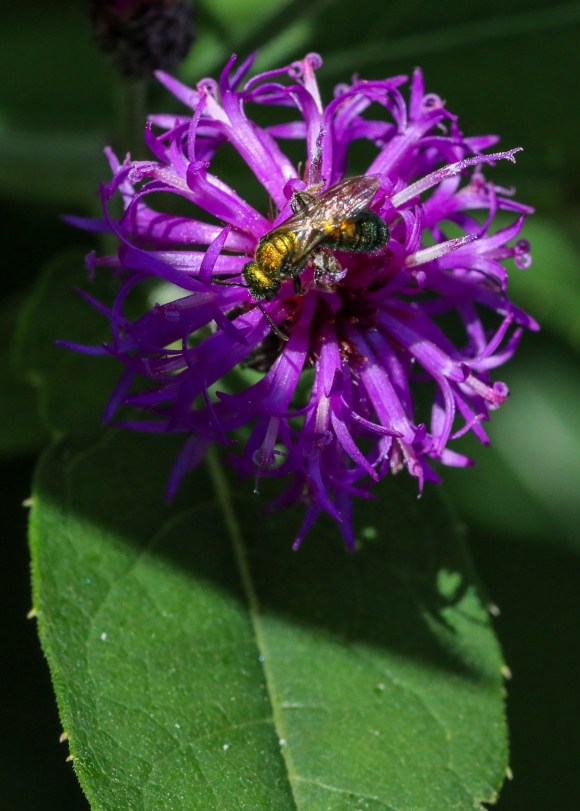
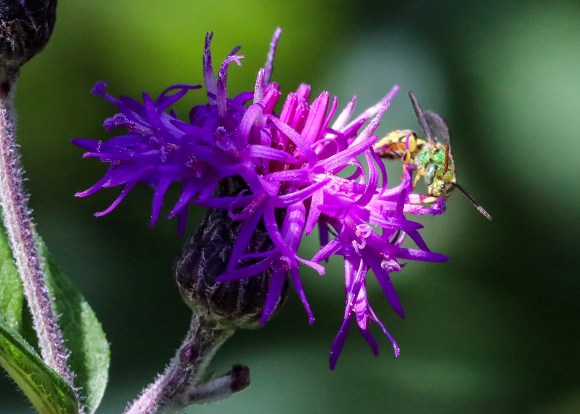
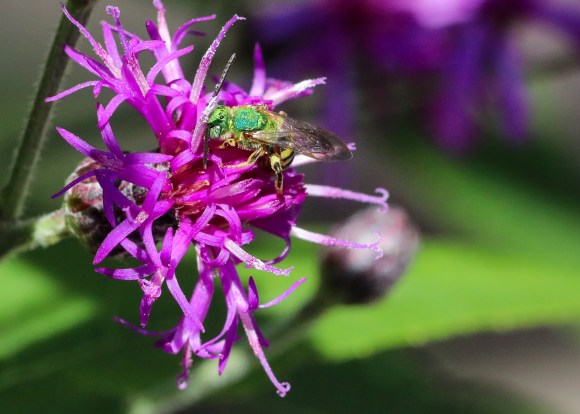
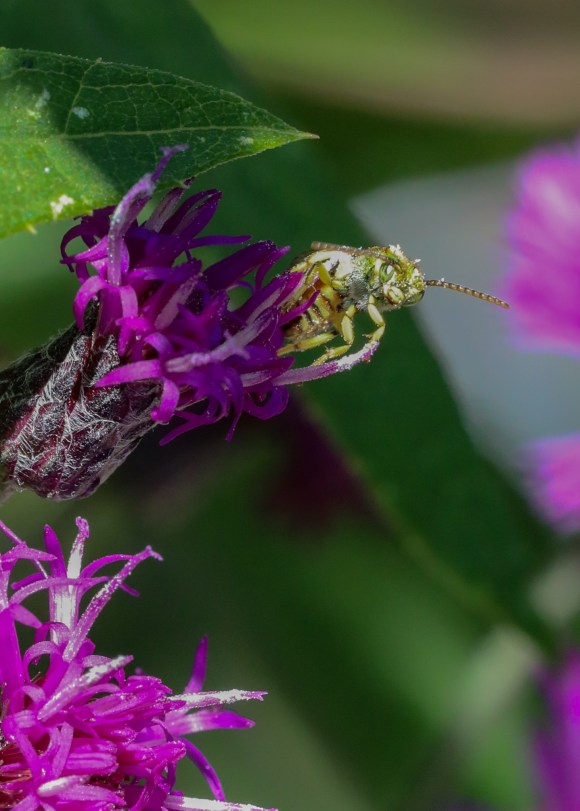
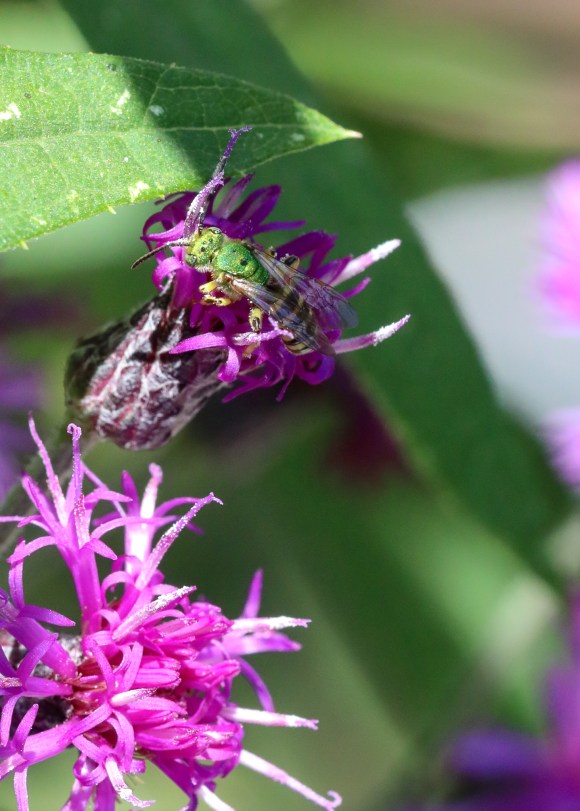
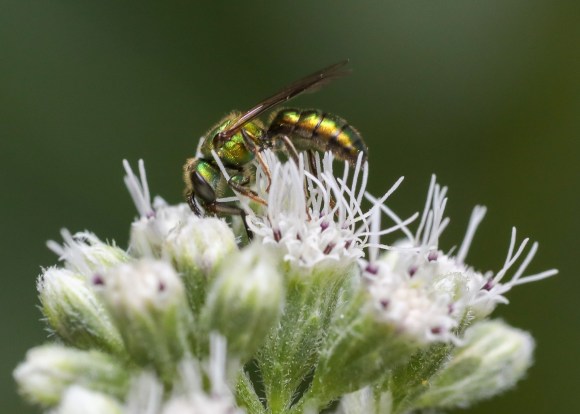
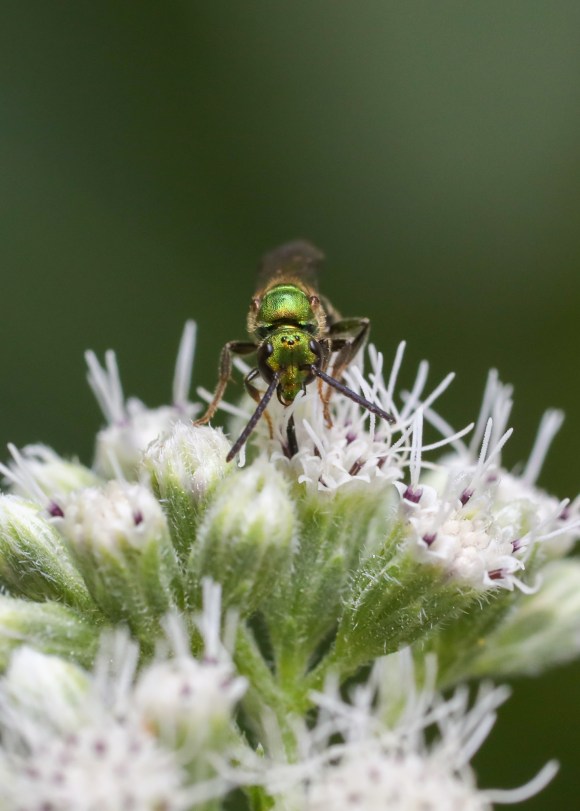
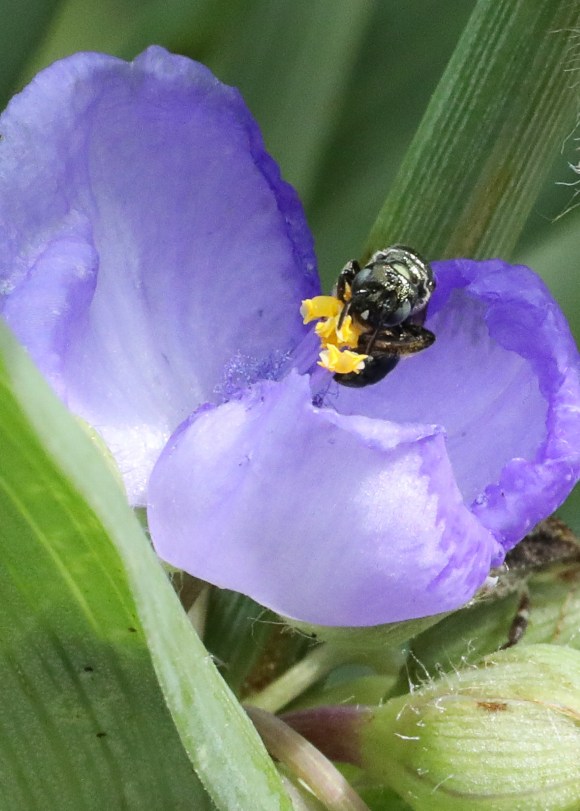
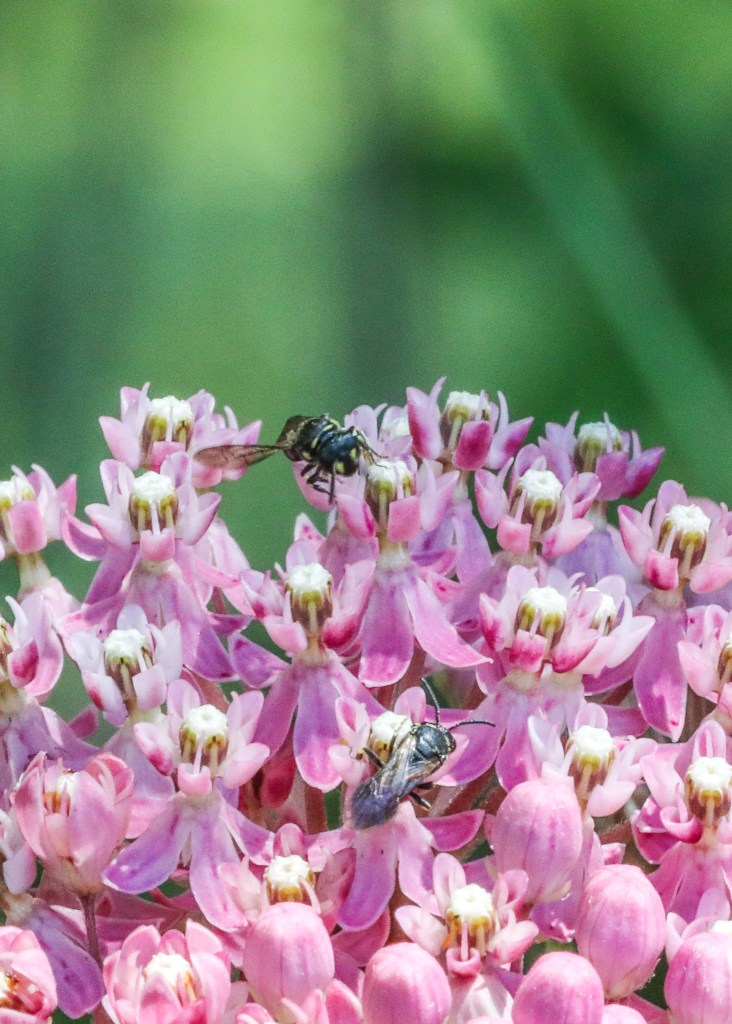
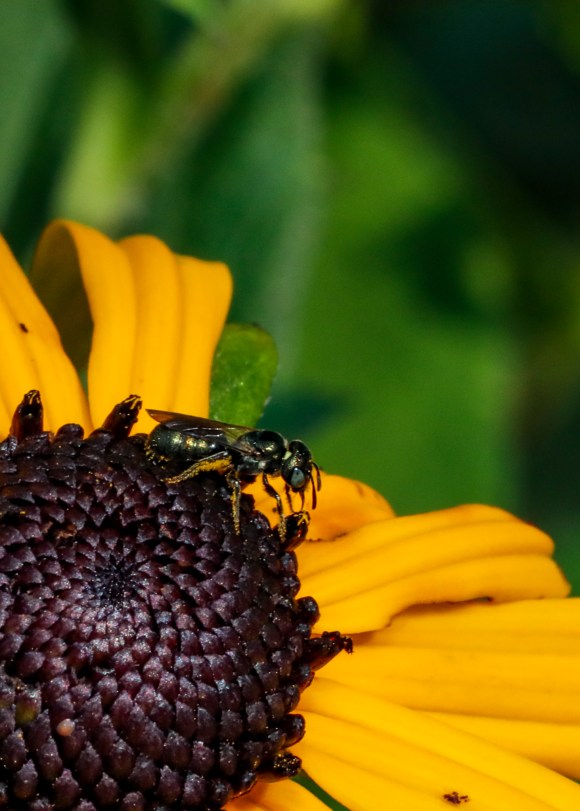
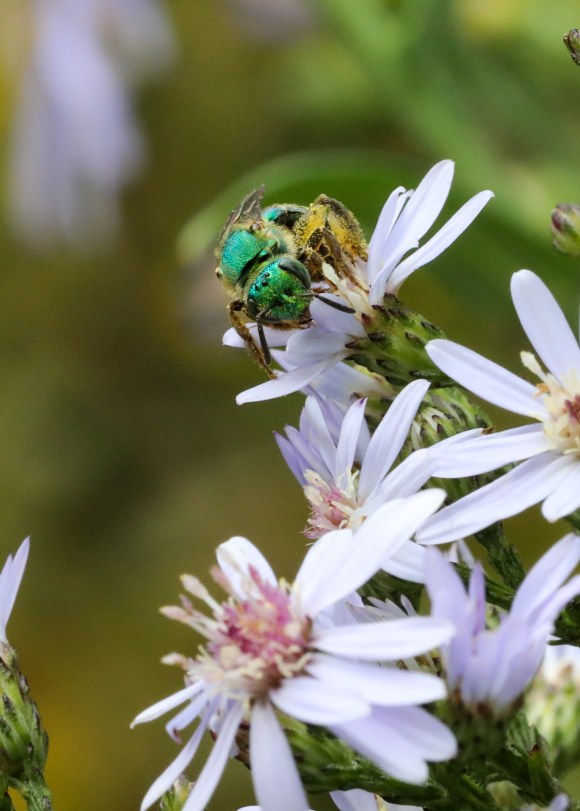
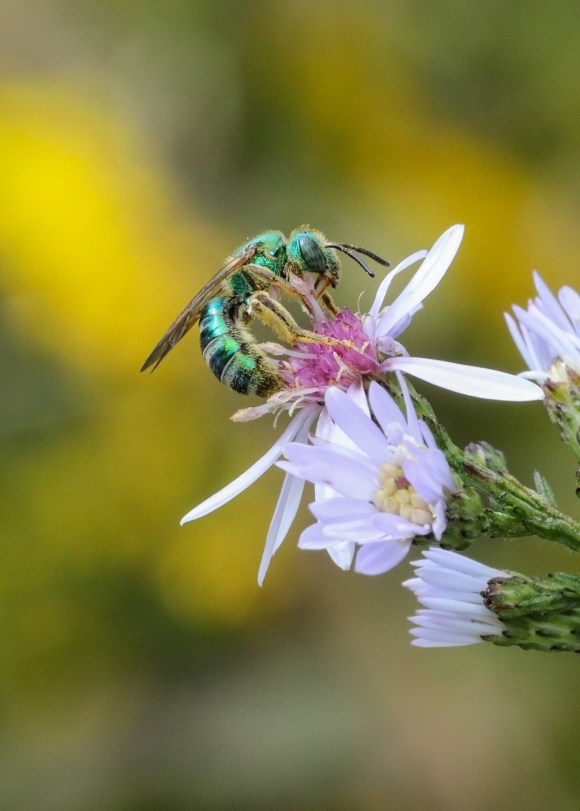
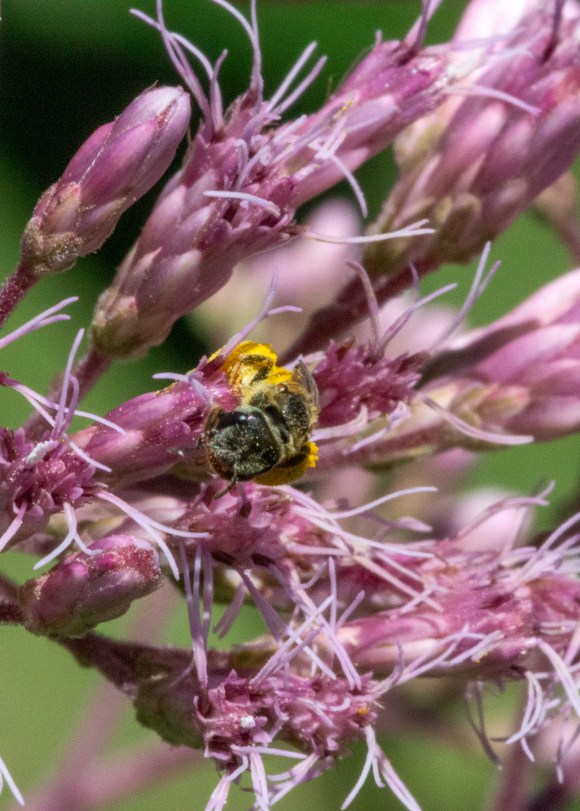
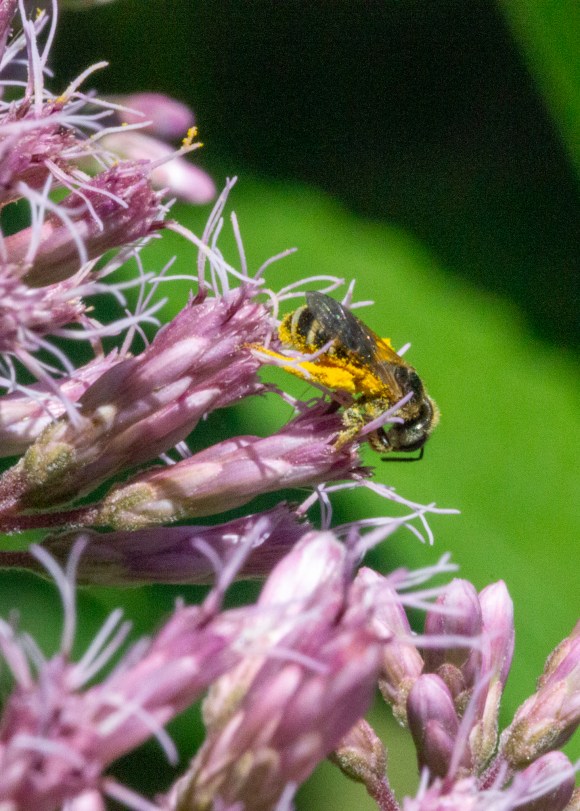
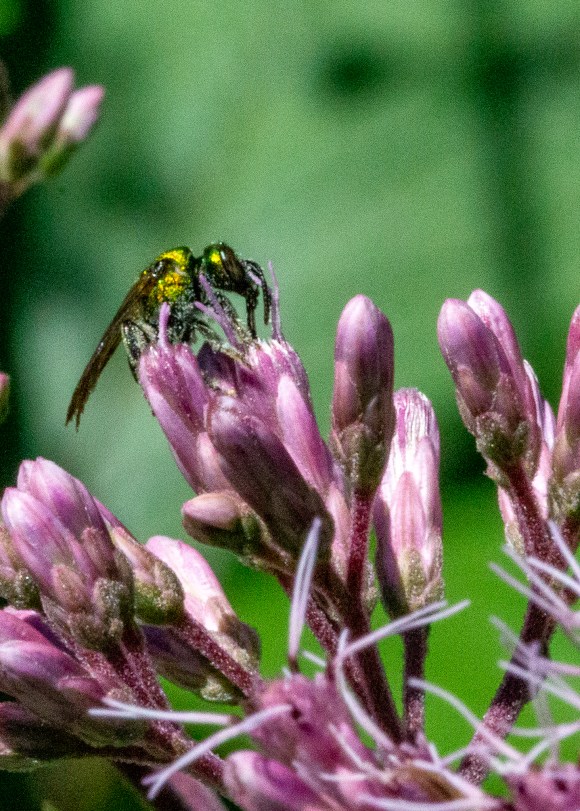
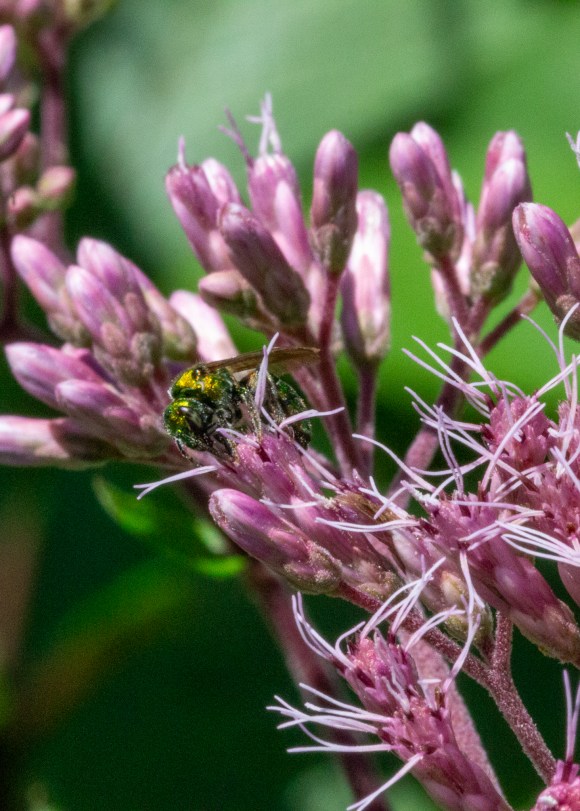
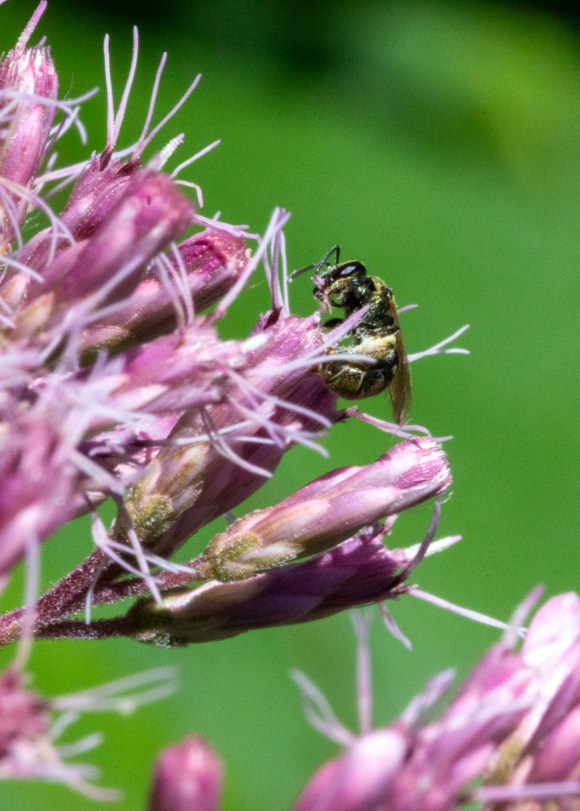
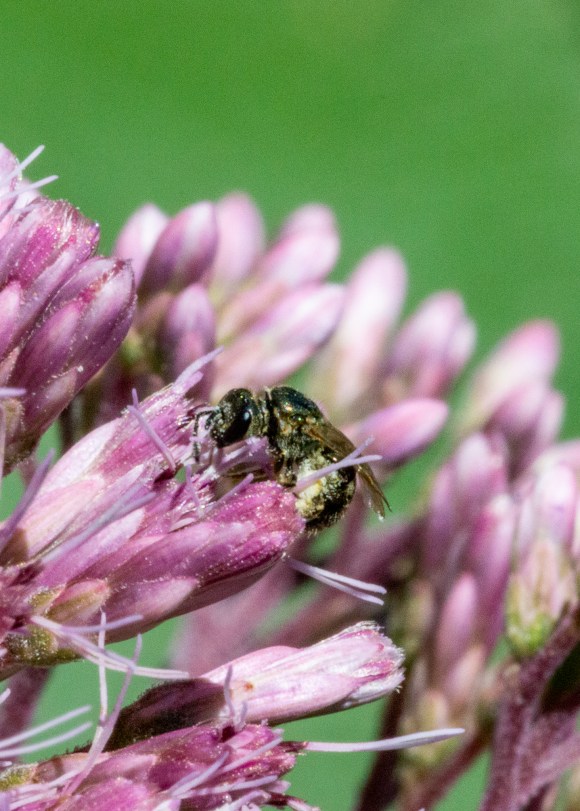
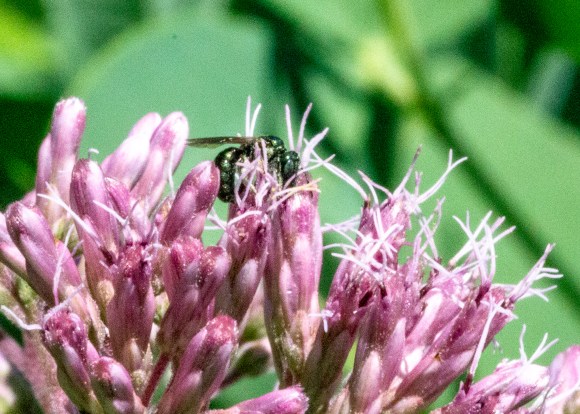
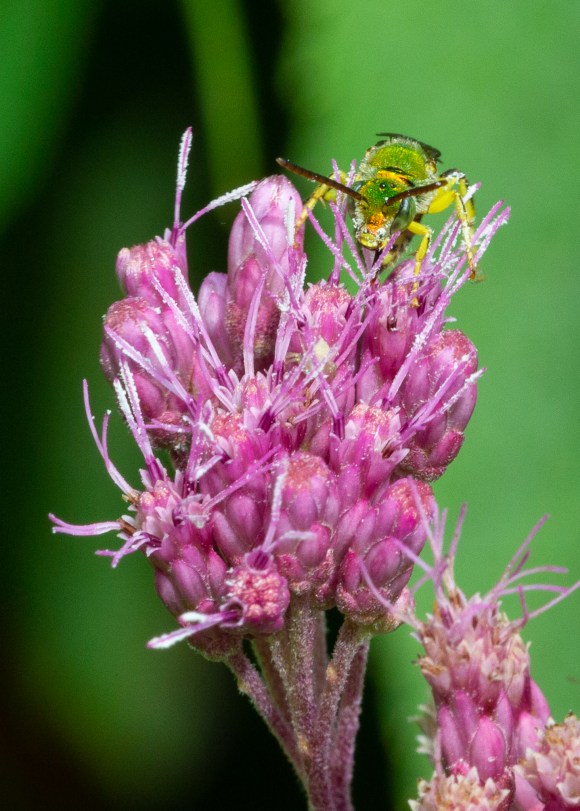
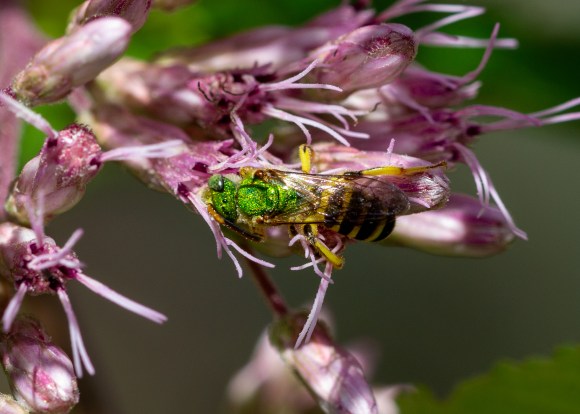
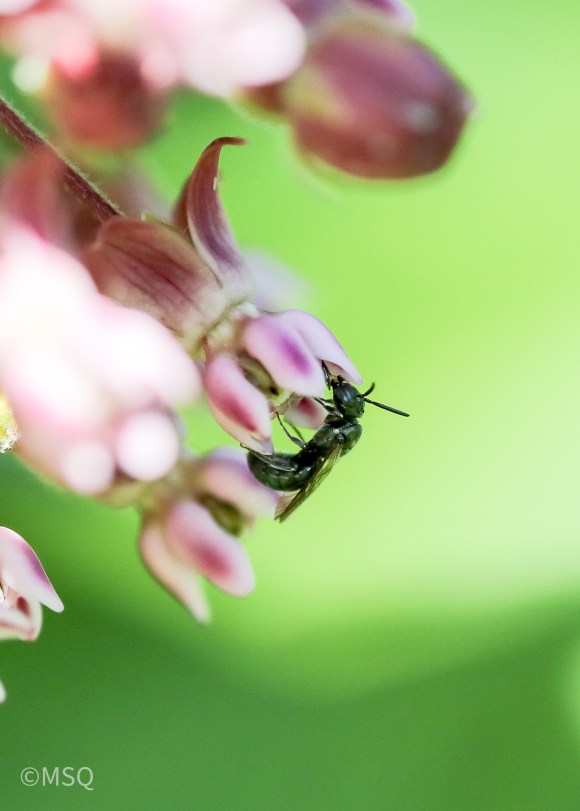
sweat bees (Halictus spp. and Lasioglossum spp), Metallic Green Sweat Bees,
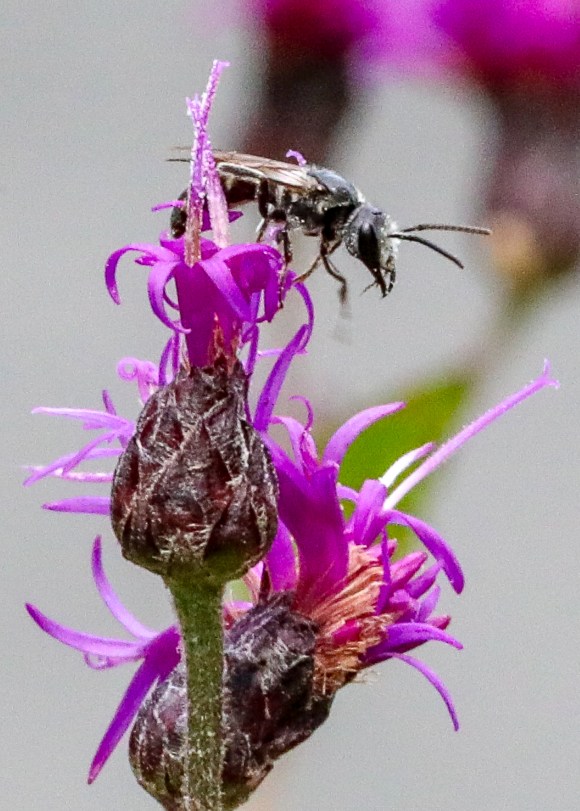
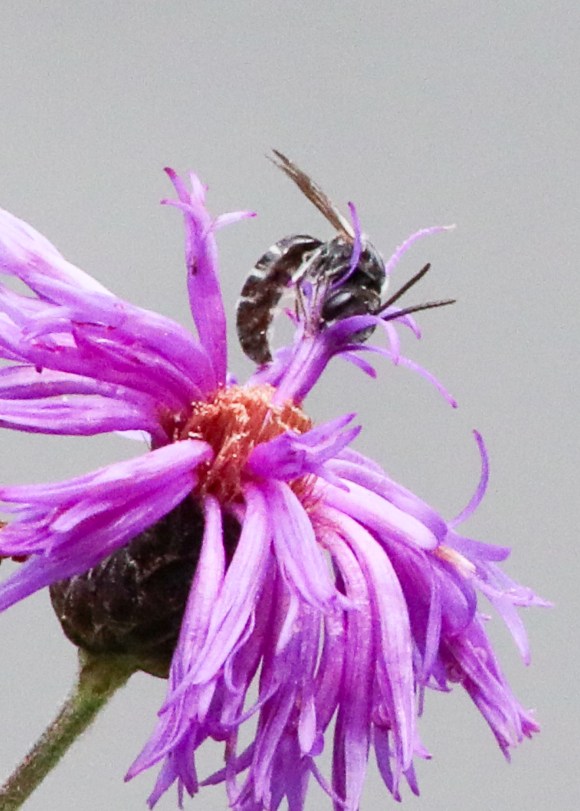
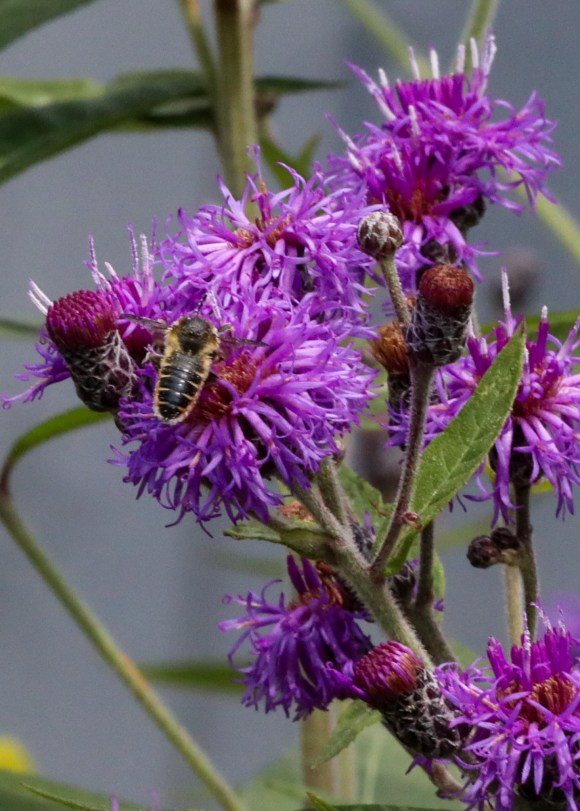
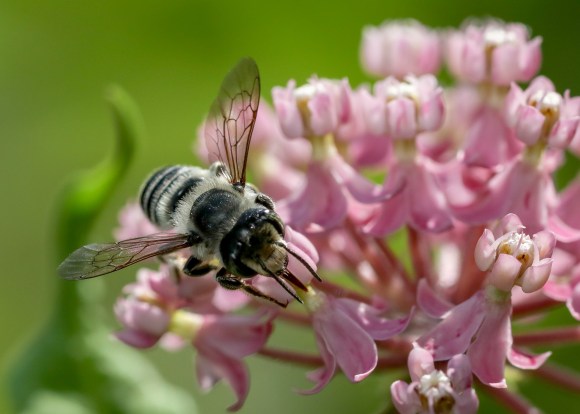
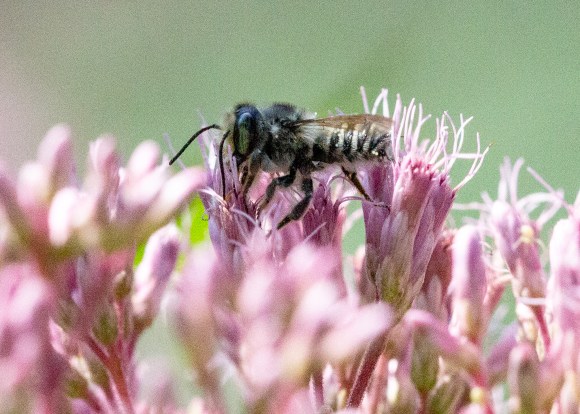
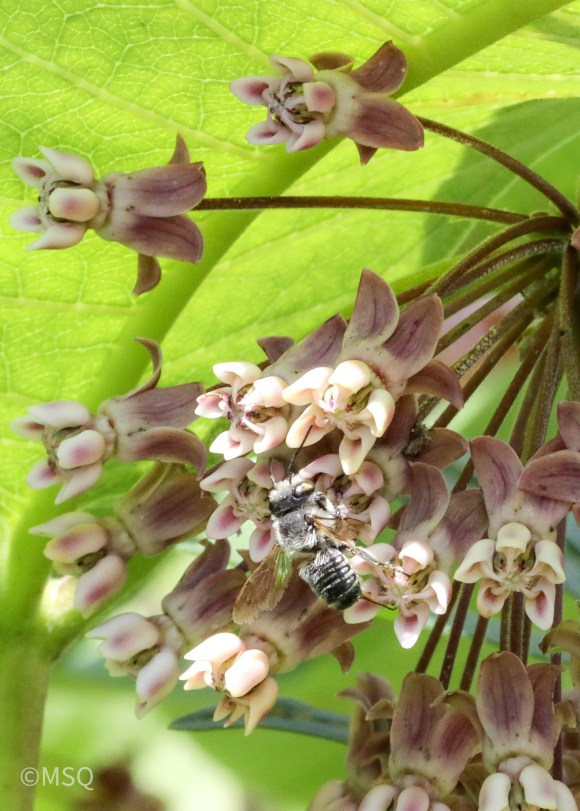
leafcutter bees (Megachile spp.),
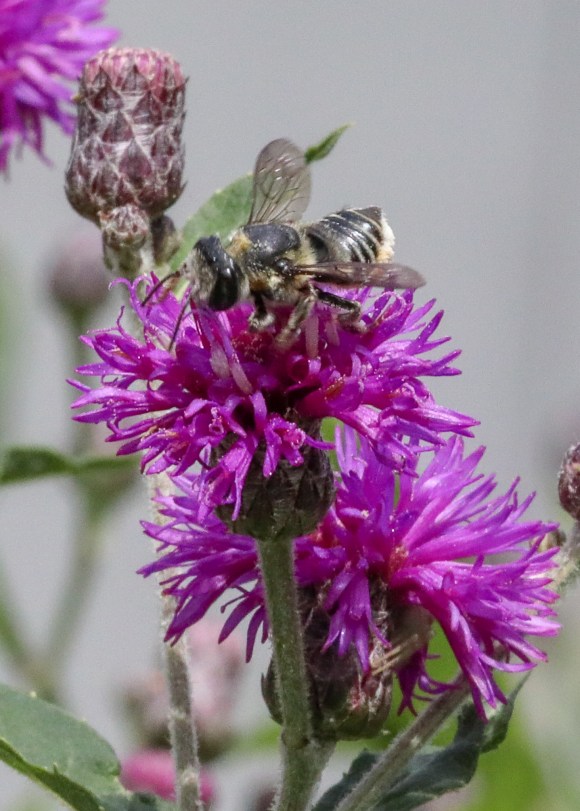
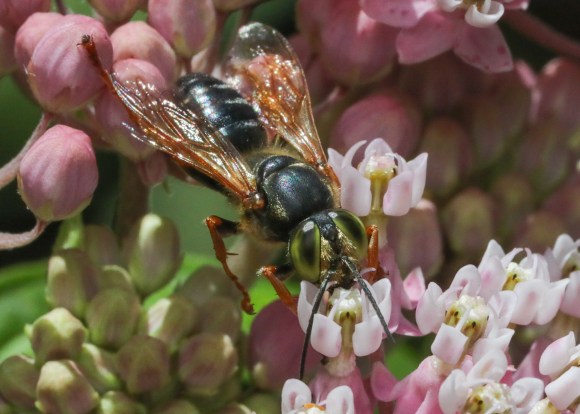
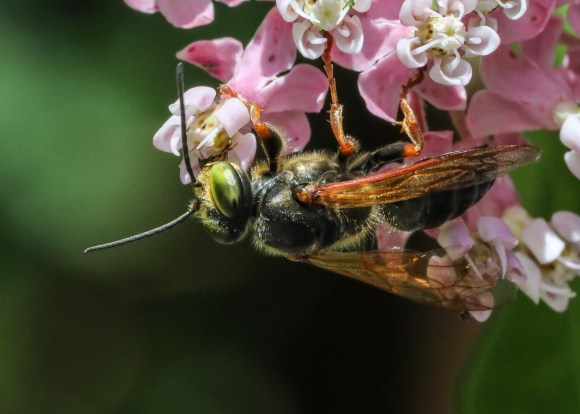
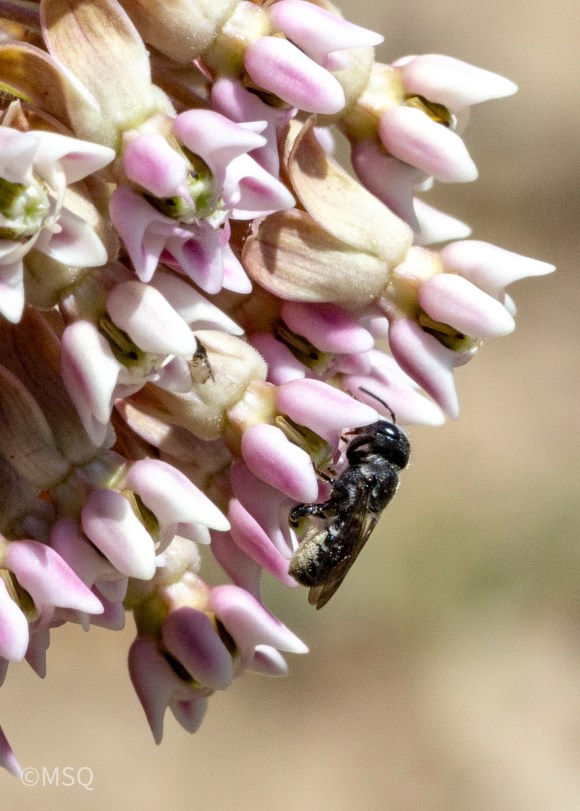
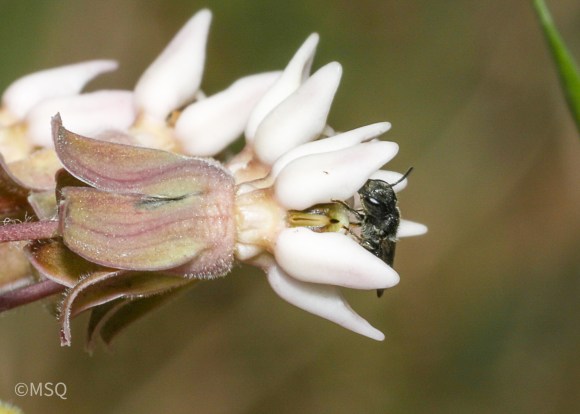
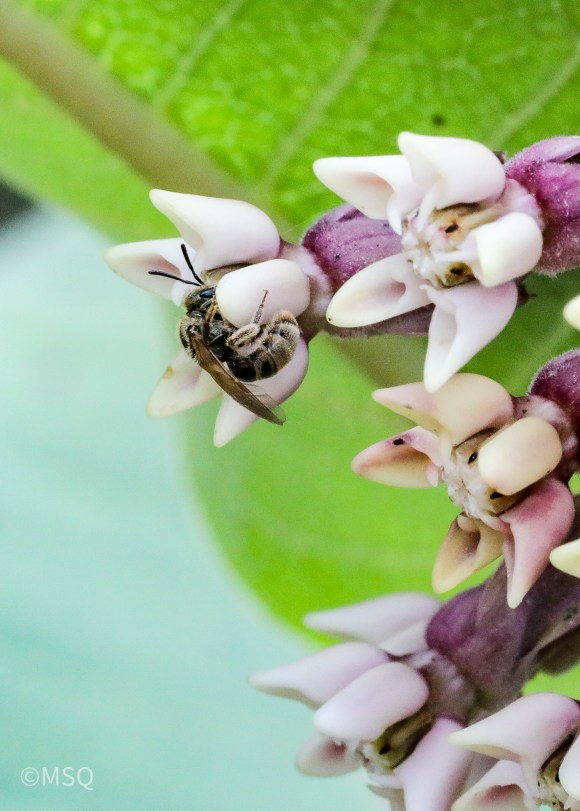
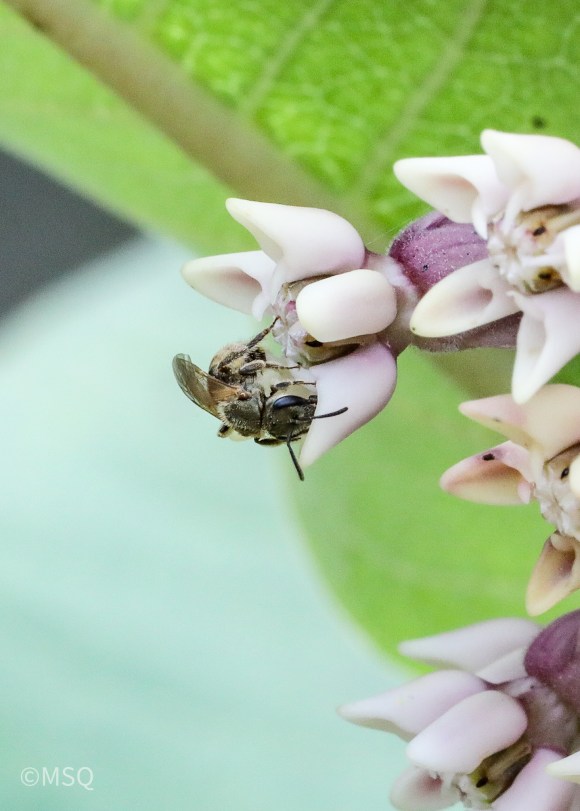
cuckoo bees, small carpenter bees (Ceratina spp.),
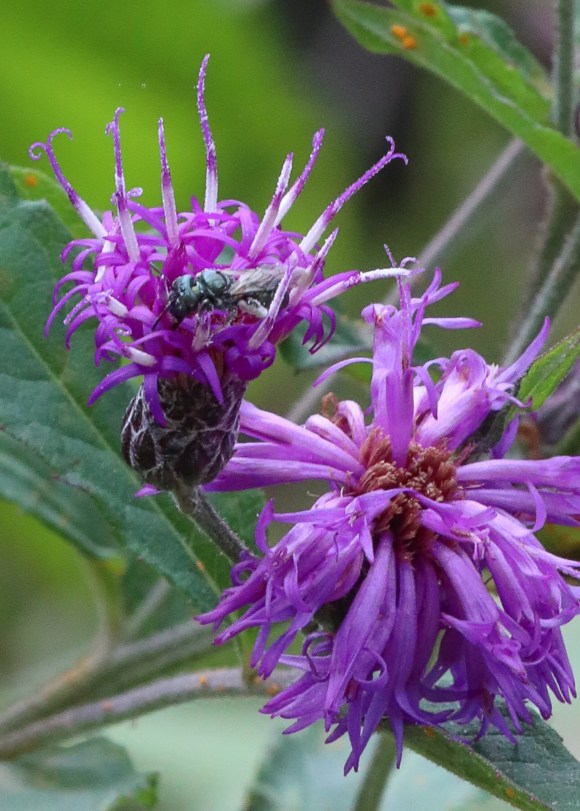
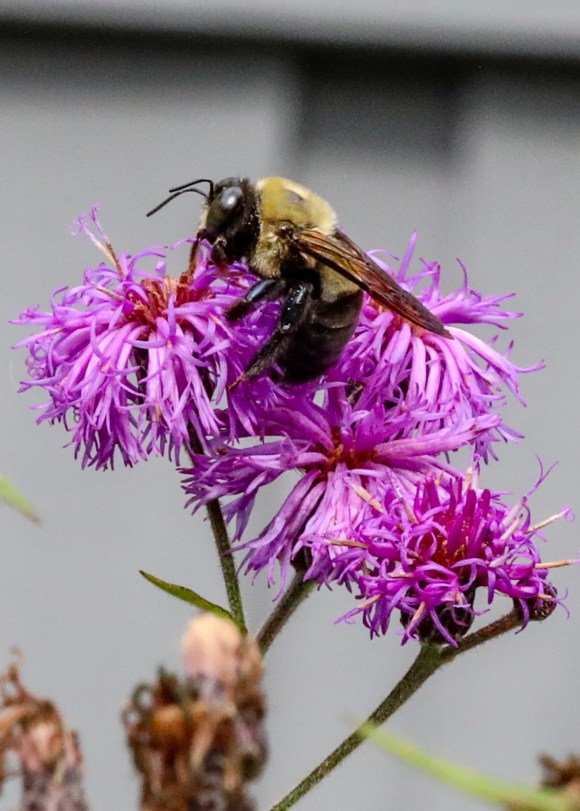
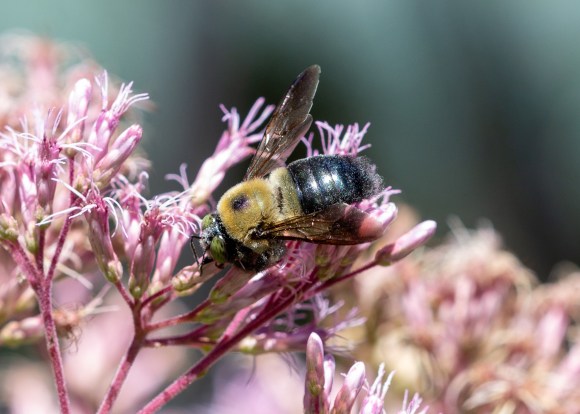
and large carpenter bees (Xylocopa spp.).  

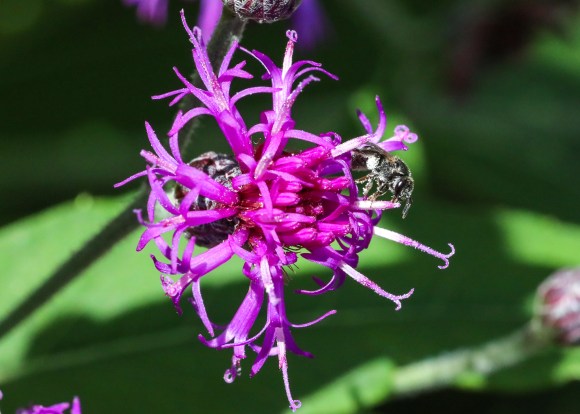
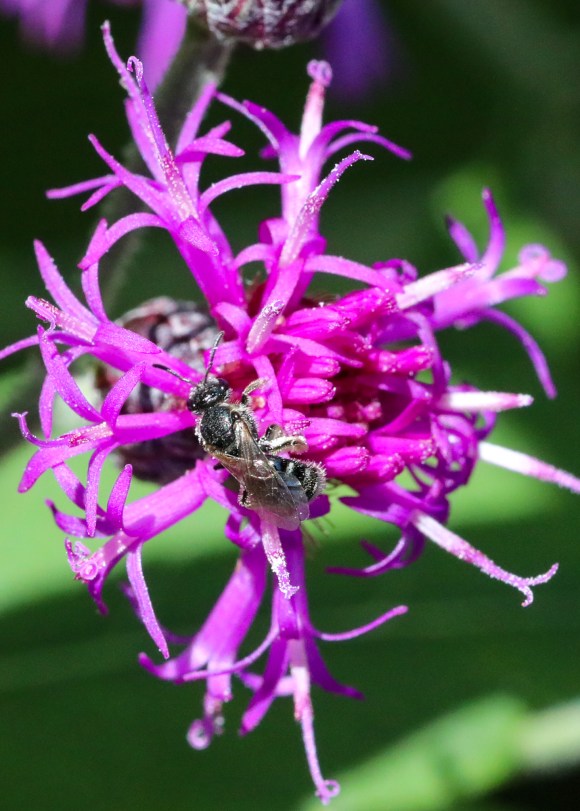
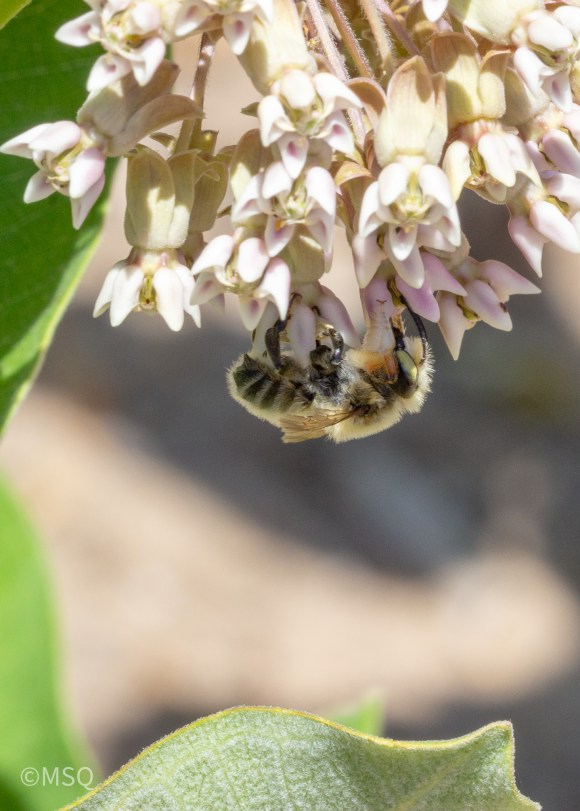
The Confused Long-Horned Bee (Melissodes confusiformis incondita) and the Denticulate Long-Horned Bee (Melissodes denticulatus) are specialist bees for Vernonia missurica.2,4,5

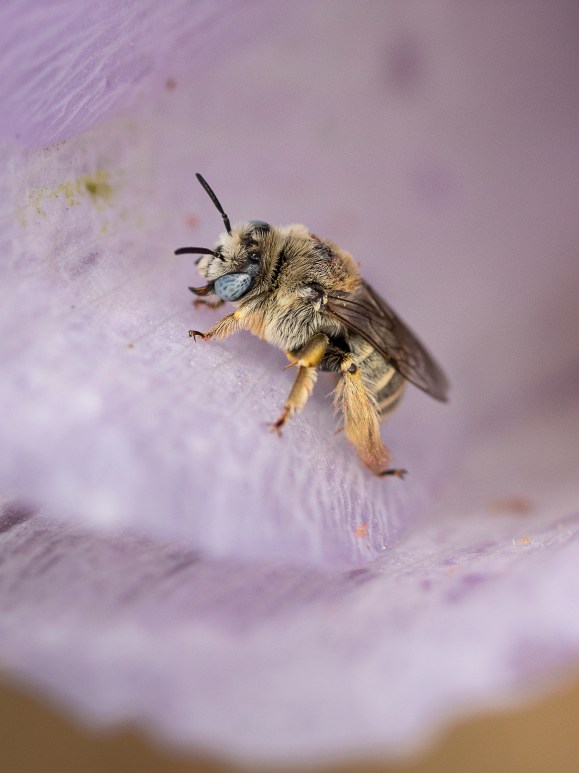
The Denticulate Long-Horned Bee is an oligolectic bee or a bee with just a few pollen sources.  The females have remarkably long antennae or “horns”.  Males’ antennae resemble other bees.1,2

Photo of Melissodes spp.

Melissodes Blue Eyed Bee Shot in Encinitas, San Diego County, California.

Melissodes denticulata flies from summer to early fall emerging in time for Ironweed’s bloom period.  They carry pollen on a hairy structure on their back legs called a scopa.  Look for Ironweed’s white pollen on their scopa, bodies and faces. 1,2  

These bees are solitary, ground-nesting bees.  Denticulate Long-Horned Bees line their nests with a waxy substance from their Dufour’s gland.  Located near the ovipositor, the Dufour’s gland discharges pheromones and secretions.  Bees mix secretions with food and/or use them to waterproof their nests.  M. denticulata’s young overwinter in the nest. 1,2

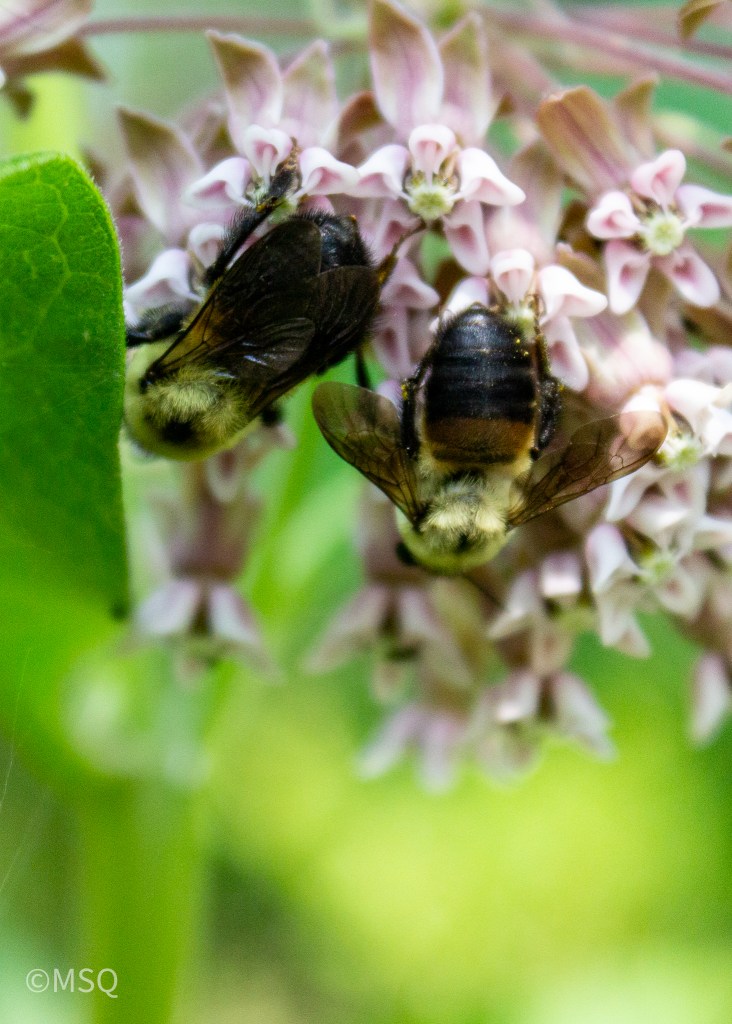
Once hatched, male M. denticulata don’t return to their home nest.  They spend their time eating and mating.  The male bees have an interesting behavior of gathering in groups on leaves or flowers overnight.  They cling there using their legs, mandibles, or both. 1,2

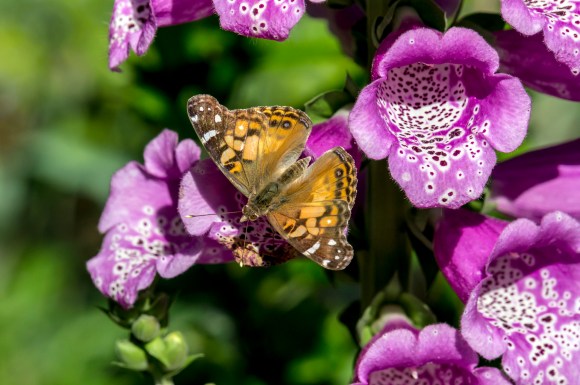
Missouri Ironweed acts as a larval host for the American Painted Lady Butterfly (Vanessa virginiensis).  The American Painted Lady or American Lady Butterfly overwinter as adults.  But they don’t survive very cold winters. 3,4

In colder areas, the population migrates from the south in the early spring.  The adults drink nectar from different plants.  They also visit tree wounds for sap and seek out the juices of decaying fruit. 3,4

American Painted Lady or American Lady (Vanessa virginiensis) butterfly

During mating periods, the males move to higher areas—hilltops or tops of large plants. These male butterflies keep watch for potential mates.  They also guard and defend their territory from other males. 3,4

Females lay eggs one at time on plant leaves.  When the larvae hatch, they use their silk to connect leaves together and make a shelter.  This is usually at the top of the plant.  The caterpillar stays in the tent eating and growing. 3,4  

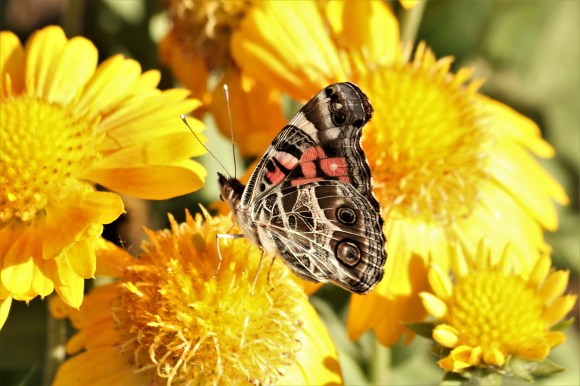
The American Painted Lady Butterfly looks like the Painted Lady butterfly (Vanessa cardui).  To identify them, look at the eyespots on the underside of the hindwing.  The American Painted Lady Butterfly has 2 large eyespots.  The Painted Lady Butterfly has 4 smaller eyespots. 3,4

Close-up of an American Lady butterfly, with wings folded, on bright yellow gaillardia flowers.

Eyespots are fascinating in nature.  Currently, they’re thought to direct a predator away from the head.  And, in fact, wing damage is often seen on butterfly’s with eyespots. 3,4

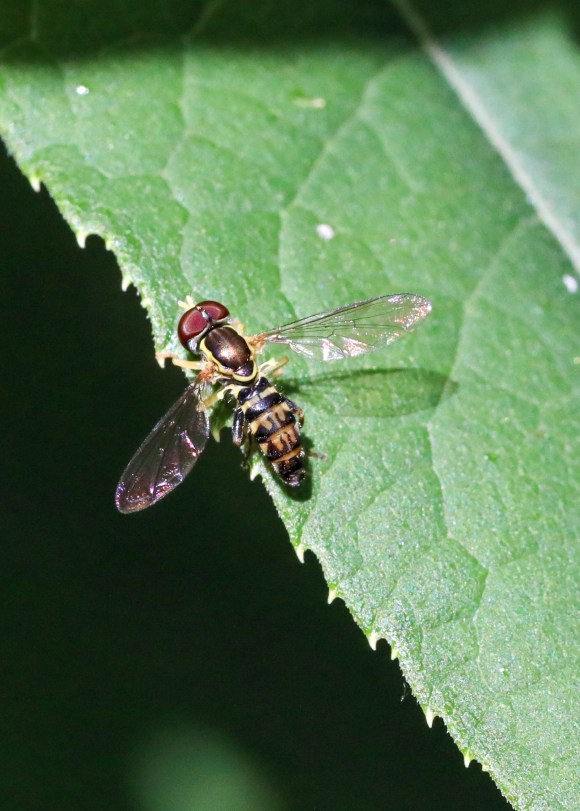
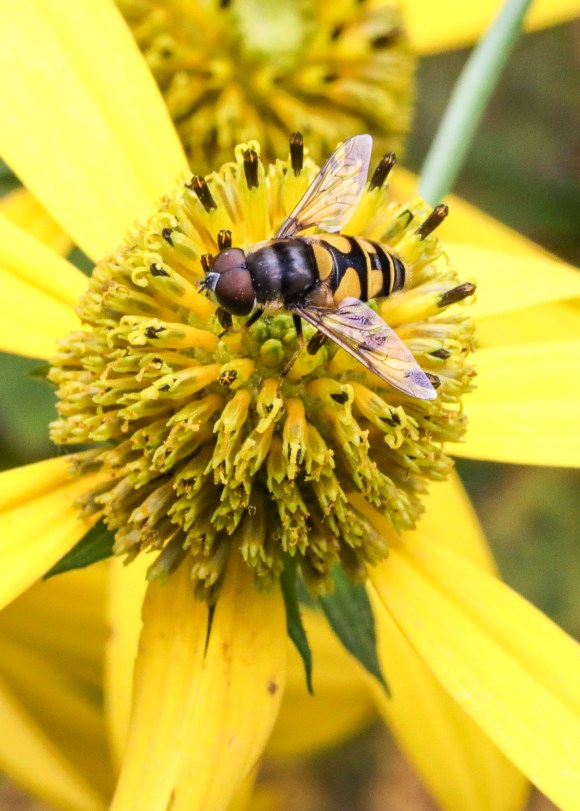
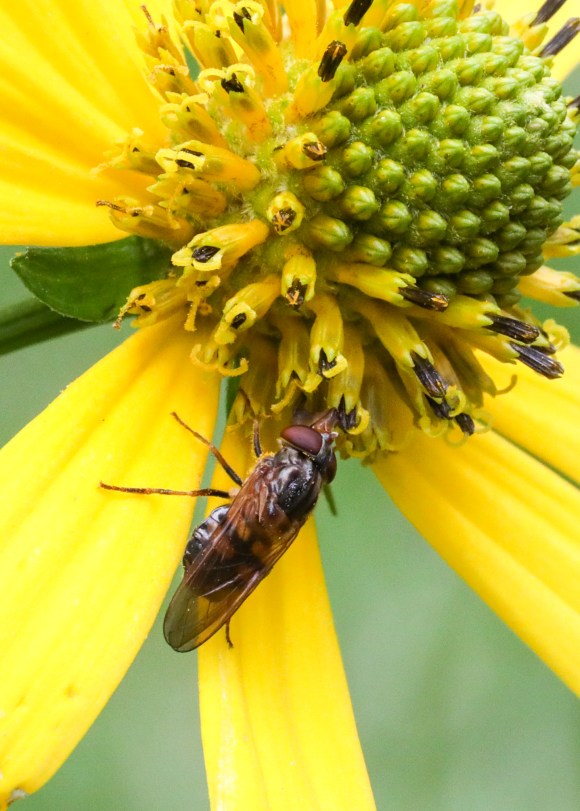
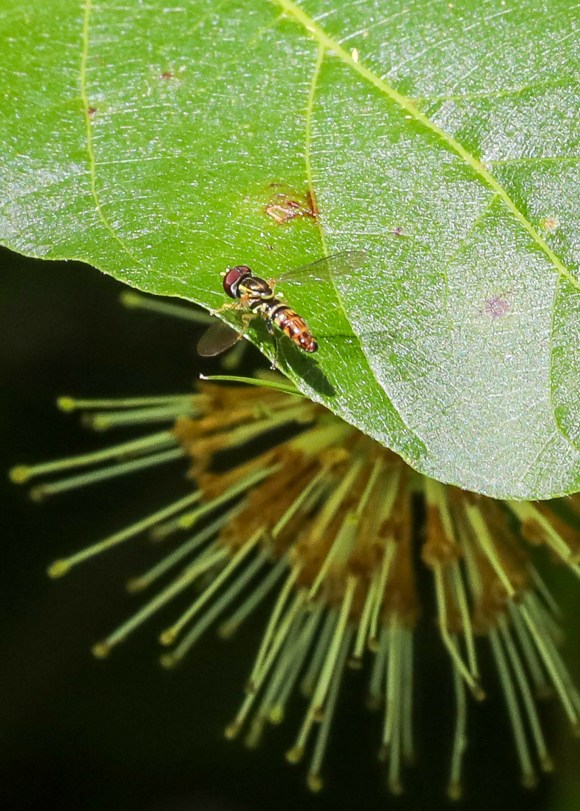
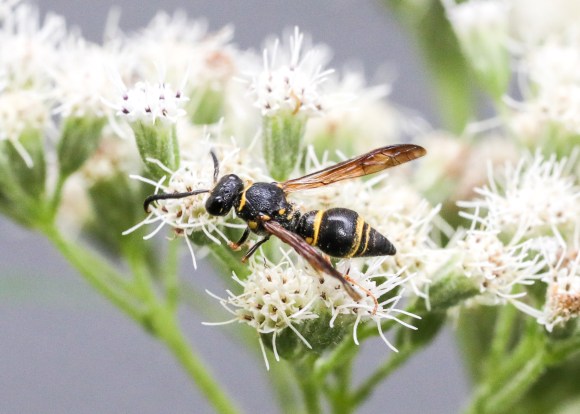
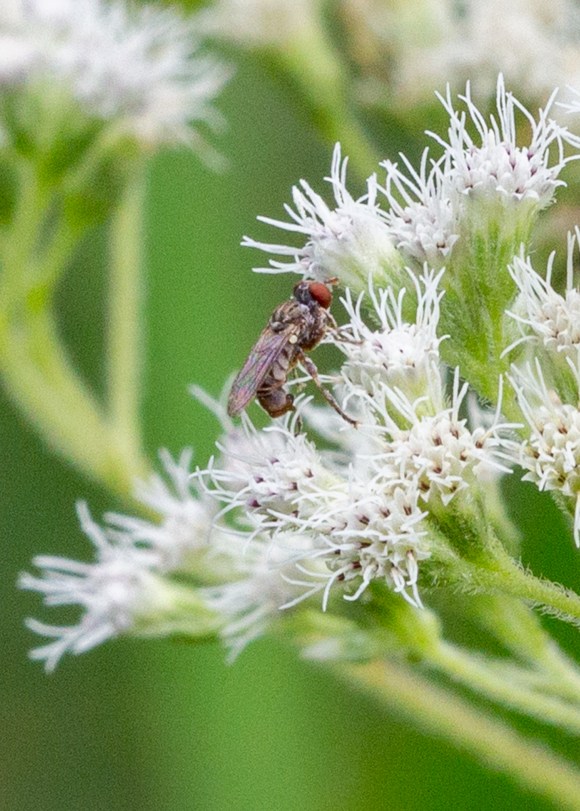
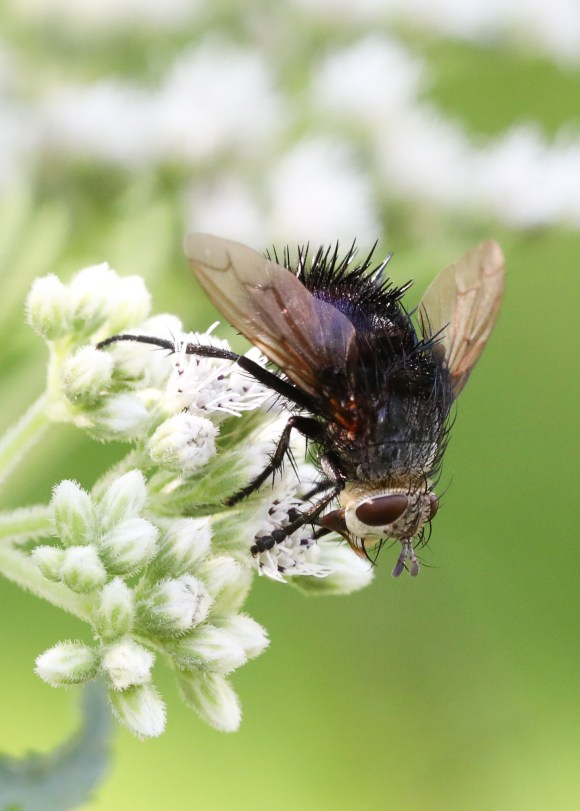
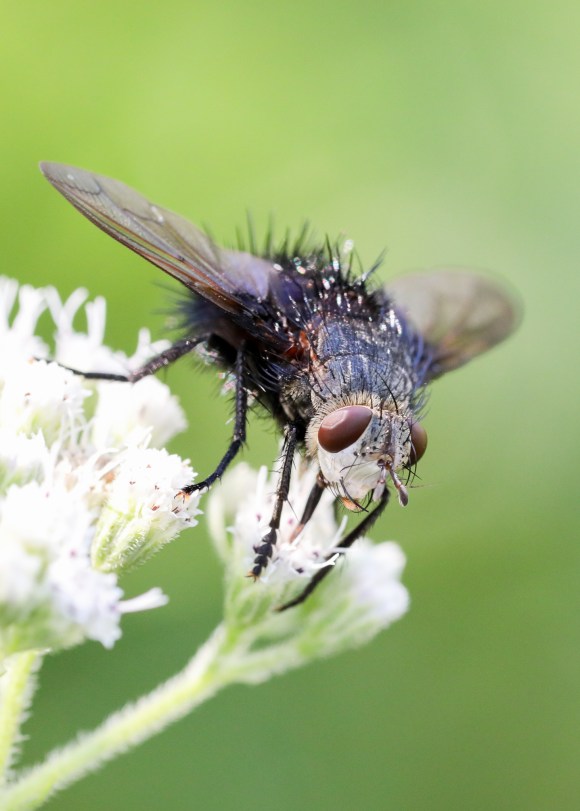
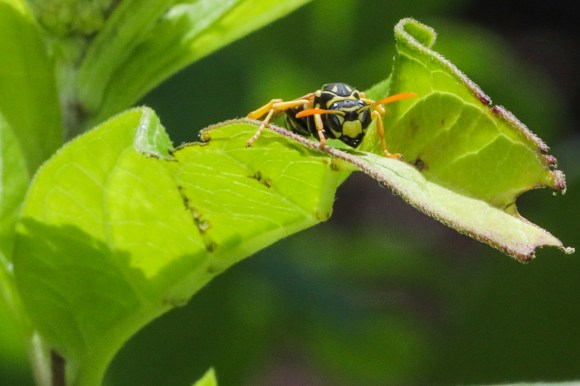
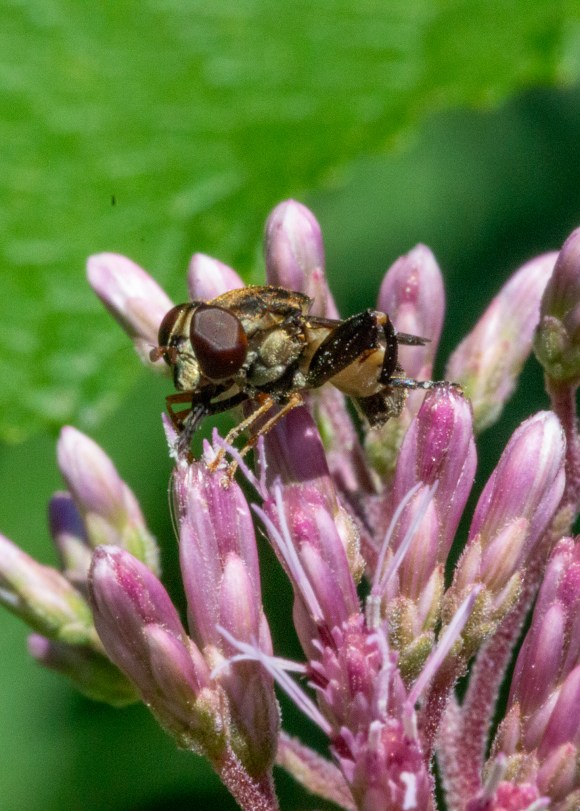
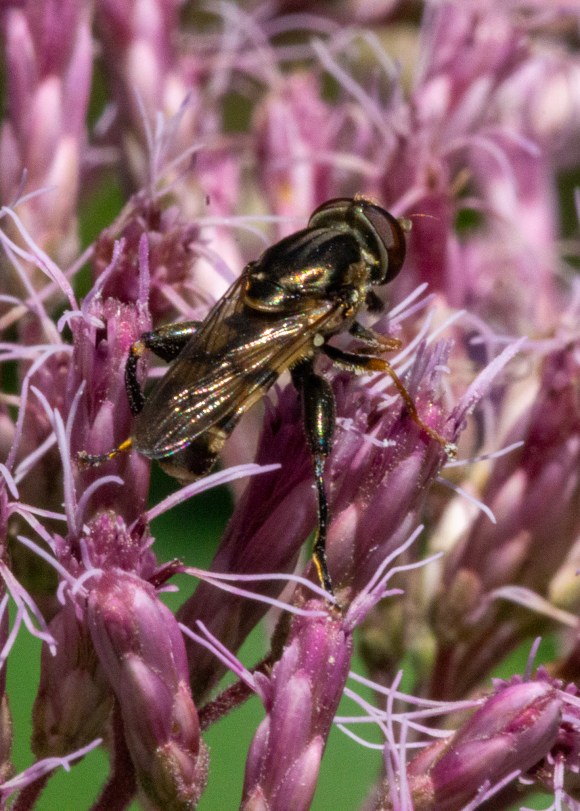
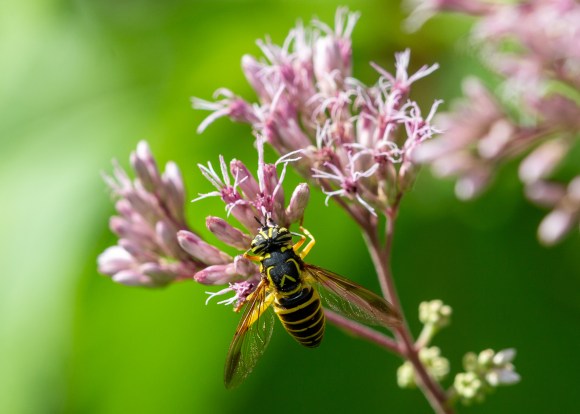
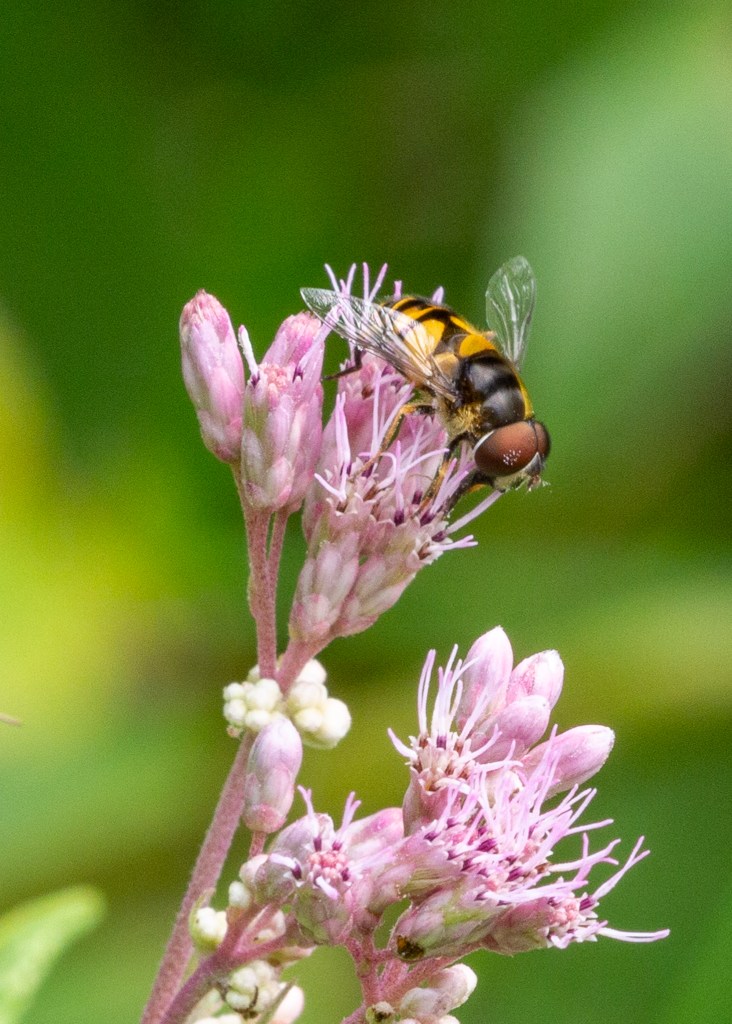
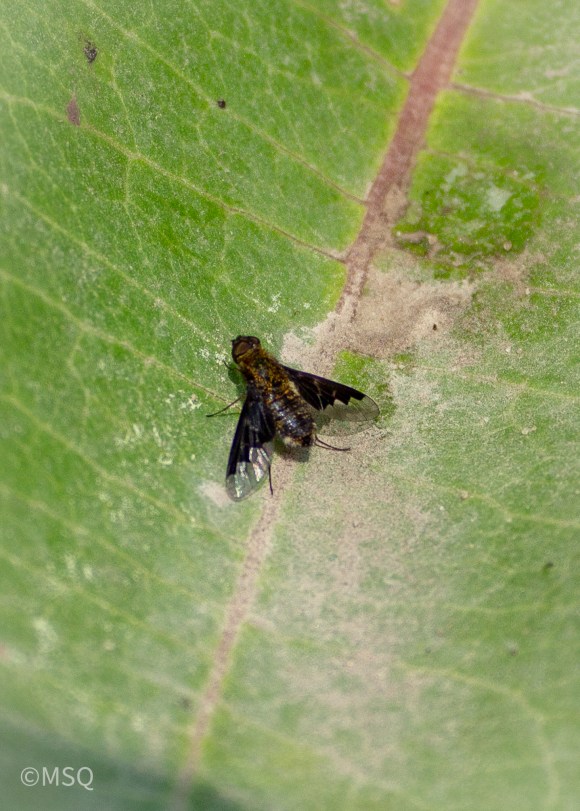
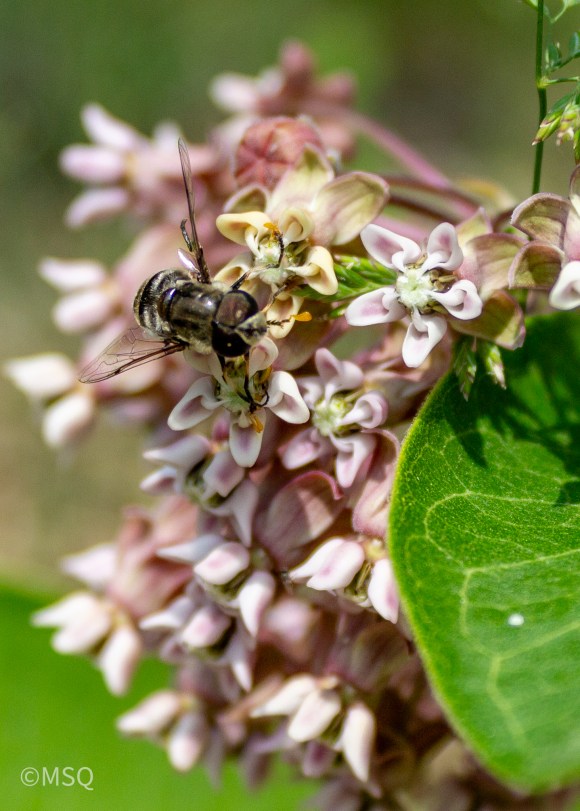
Flies also visit Vernonia missurica. These visitors include syrphid flies.

Hope you enjoyed this look at Missouri Ironweed and the creatures that share it.  I’d love to hear from you with a question or comment.  Hope all is going splendidly in your garden!

Warm Regards,

Mary

BIBLIOGRAPHY:

  1. Holm, Heather. 2017. Bees:  An Identification and Native Plant Forage Guide. Pollination Press LLC.
  2. “Ironweed Part 2: An Ironweed Specialist Bee.” 2023. August 15. https://bygl.osu.edu/index.php/node/2227.
  3. Missouri Department of Conservation. 2024. “American Lady.” March 7. https://mdc.mo.gov/discover-nature/field-guide/american-lady.
  4. Missouri Department of Conservation. n.d. “Missouri Ironweed.” Accessed October 28, 2025. https://mdc.mo.gov/discover-nature/field-guide/missouri-ironweed.
  5. “Missouri Ironweed (Vernonia Missurica).” n.d. Accessed October 28, 2025. https://www.illinoiswildflowers.info/prairie/plantx/ms_ironweedx.htm.
  6. “Vernonia Missurica – Plant Finder.” n.d. Accessed October 28, 2025. https://www.missouribotanicalgarden.org/plantfinder/PlantFinderDetails.aspx?taxonid=277486.
  7. “Vernonia Missurica (Missouri Ironweed).” n.d. Mt. Cuba Center. Accessed October 29, 2025. https://mtcubacenter.org/trials/vernonia/missurica/.
  8. “Where Do Wild Bees Go in Winter?” n.d. Accessed November 3, 2025. https://sites.tufts.edu/pollinators/2021/11/where-do-wild-bees-go-in-winter/.
  9. “You Can Never Have Too Much IRONWEED! Part 1.” 2023. August 15. https://bygl.osu.edu/index.php/node/2226.
Categories
native plants Pollinator gardening

Green-Eyed Starbursts

Cutleaf Coneflower (Rudbeckia laciniata)

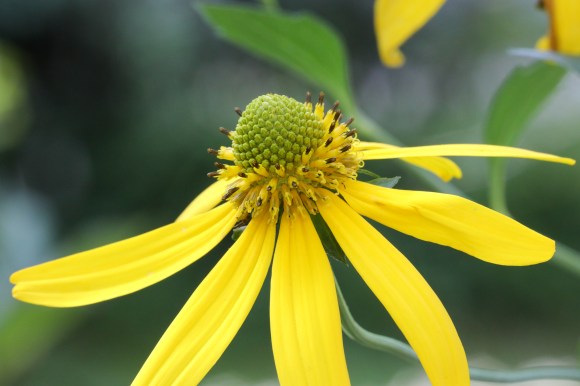
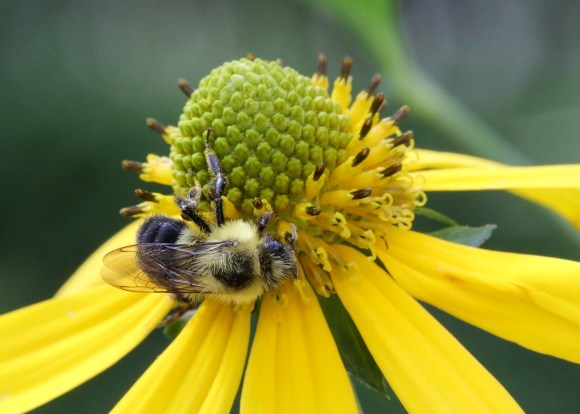
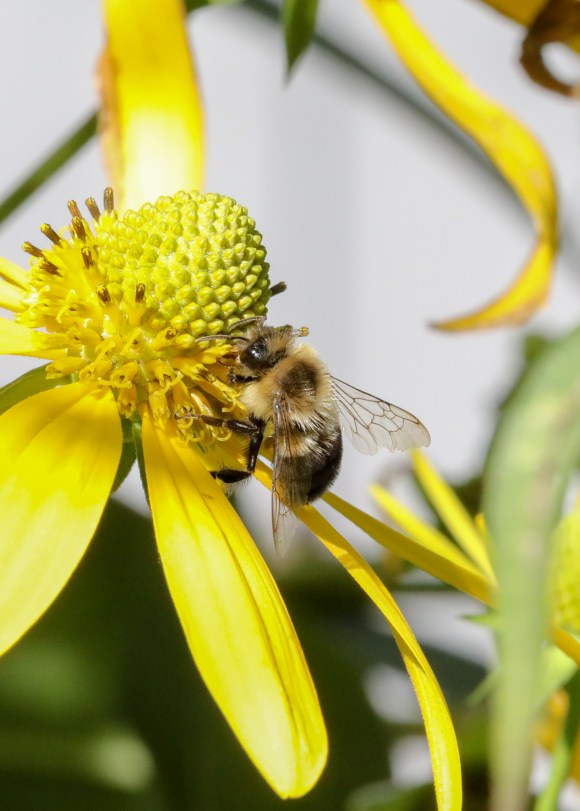
Rising above the garden, bright yellow, green-coned flowers light up the garden.  Magnets for bees of all sizes, Cutleaf Coneflowers (Rudbeckia laciniata) invite insects for pollen and nectar rewards.  Chosen as 1995 North Carolina Wildflower of the Year, its blooms brighten the garden from mid-summer to early fall.1,11

Cutleaf Coneflower grows over a wide climate range, thriving in Zones 3 through 9.  It can reach 10 feet in height although it often only grows to 3 feet.  Individual plants spread from 1.5 to 3 feet.1,10,12  
 
The best growing conditions include full sun to part shade.  It likes moist conditions and slightly acidic, fertile loam or silt-loam.  In fact, Rudbeckia laciniata is happy in poorly drained, shaded areas with occasional flooding.  If it’s too sunny and dry, the leaves droop and wither.1,10,12

Cutleaf Coneflower lives in a variety of moist natural habitats.  These include bottomland forests, woodland borders, moist meadows in wooded areas, sloughs in moist areas, moist thickets, low areas along rivers, partially shaded riverbanks, alluvial thickets, calcareous seeps, low, rich woods, and margins of poorly drained fields and pastures.1
 
When this Coneflower is too happy, it spreads aggressively.  The roots are fibrous and rhizomatous, and it can form large clonal colonies.  Control this with division.  Encourage rebloom by cutting spent summer flowers.1,10,12

Despite what I’ve said so far, I grow this plant in a raised bed with no irrigation.  Why?  It grows happily there!  It does tolerate some drying out.  Yes, it loses a few leaves but it’s much easier to control those rhizomatous roots.  In addition, it can withstand hot, humid summers.12
 
Rudbeckia laciniata’s foliage varies in shape.  Leaves have 3 to 7 lobes with the number increasing toward the bottom of the stalk.  At the plant’s base, some leaves may even be pinnate(with separate leaflets).  The flower stalks have smaller, oval or lanceolate foliage.1
 
Leaves grow alternate on the stem and tend to droop.  They can reach 12 inches long and 12 inches across.  The edges range from smooth to coarsely toothed.  The upper surface is dark green and hairless to slightly hairy.  The lower surface is pale to medium green and smooth to lightly hairy.1
 
Sunny yellow flowers top this Coneflower.  The flowers sit atop an upper stem or are part of a group of flower stalks which often open at different times.  Each flower stalk can be 1 to 2 feet long.1,10  


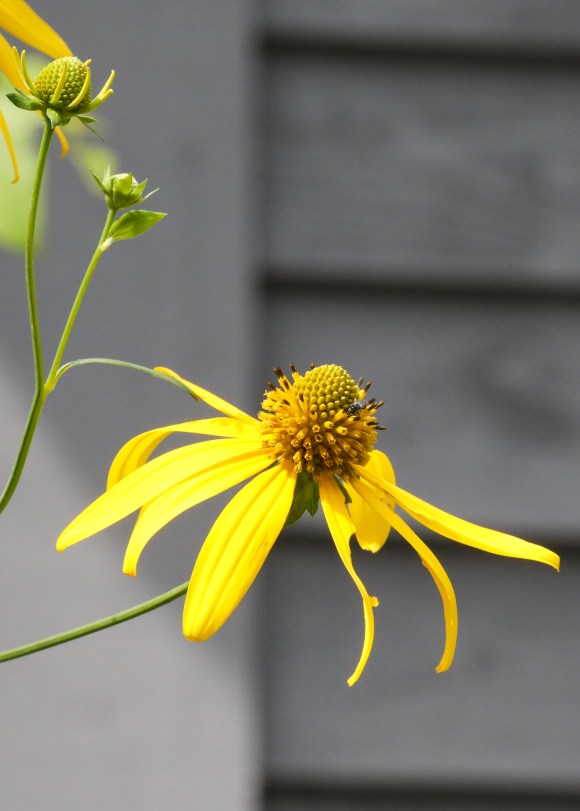
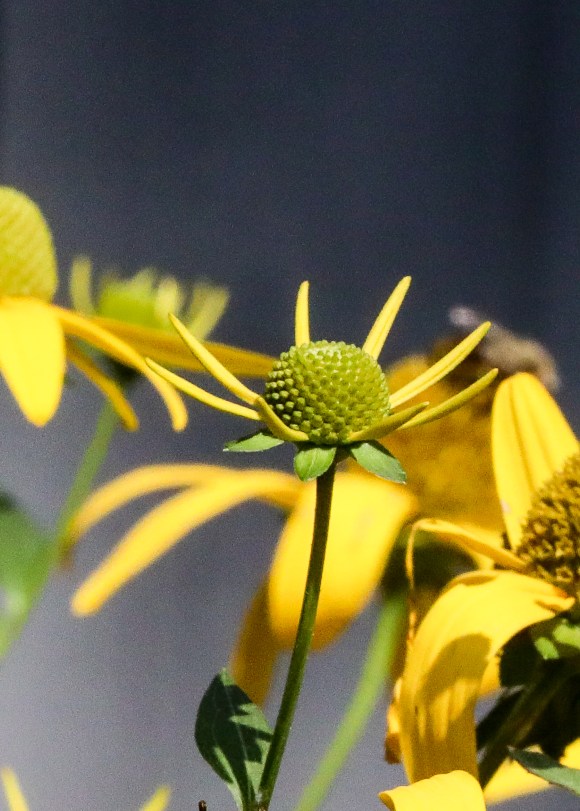
The daisy-like flowerheads open to 2 to 4 inches and have a rounded cone.  6 to 12 drooping petals (ray florets) frame the center.  The cone starts as a bright green and then turns a greenish yellow as the disc florets open.  Disc florets form tubular corollas producing a pin cushion like appearance.  Seeds form from these florets.1

Cutleaf Coneflower blooms form mid-summer to early fall.  Flowering period last from 1 to 2 month.  The time is extended by buds opening at different times.1,10,12
 
Rudbeckia is one of the top 20 Keystone plants for EcoRegion 8.  The Commission for Environmental Cooperation created theses EcoRegions.  This commission is a multinational group including Canada, the United States and Mexico.  EcoRegion 8 includes the eastern part of the United States through Wisconsin and Illinois and South to the border.  The very tip of Florida and the Gulf coast of Texas are excluded.13

Keystone plants support specialist bees and/or are larval hosts for butterflies, moths and skippers.  Cutleaf coneflower appears on both lists.  It feeds 29 specialist bees and 20 different types of butterfly/moth/skipper larva.5
 
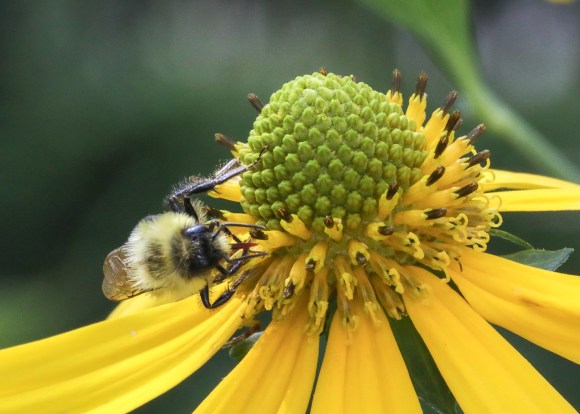
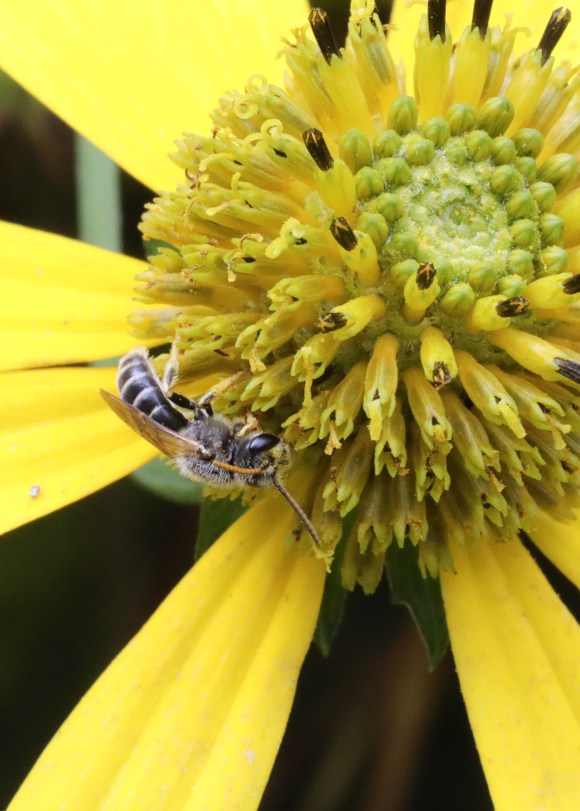
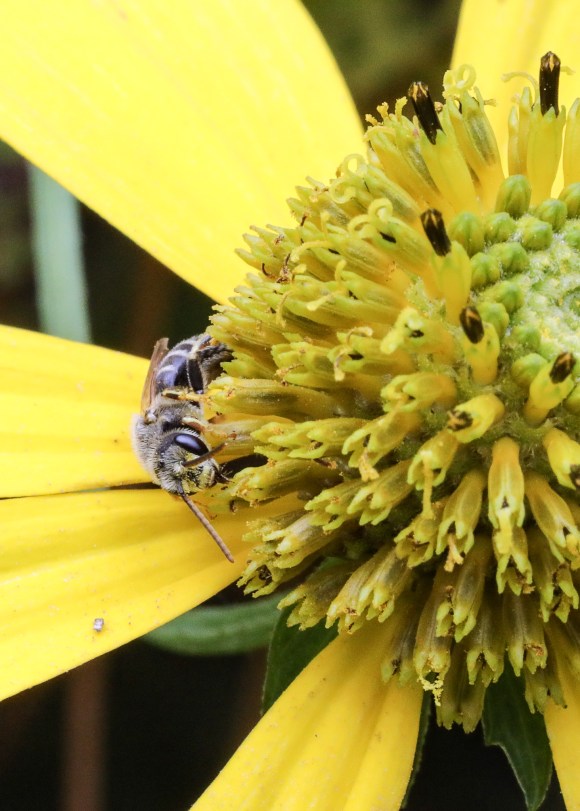
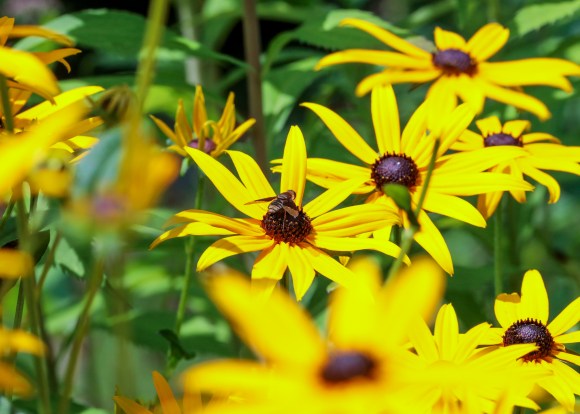
Rudbeckia laciniata attracts long- and short-tongued bees.  It’s been designated of Special Value to Native Bees and Special Value to Honey Bees by the Xerces Society for Invertebrate Conservation.  Bee visitors include bumblebees (Bombus),

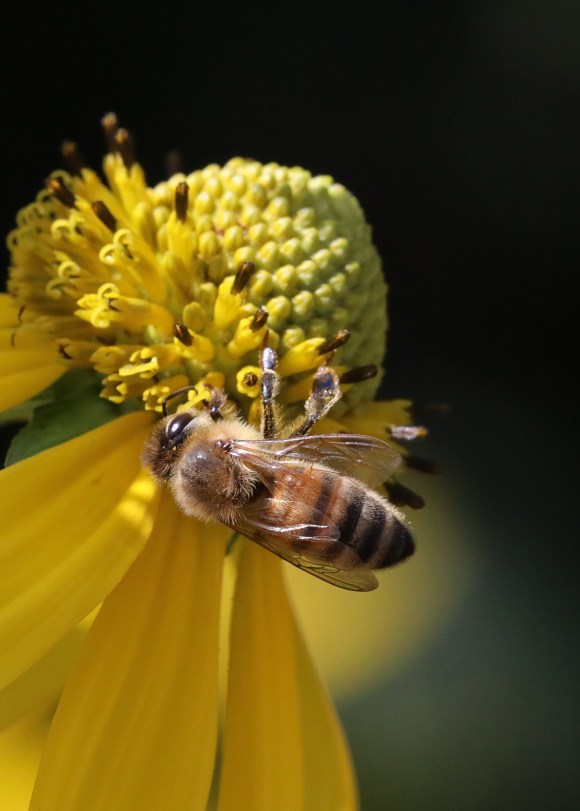
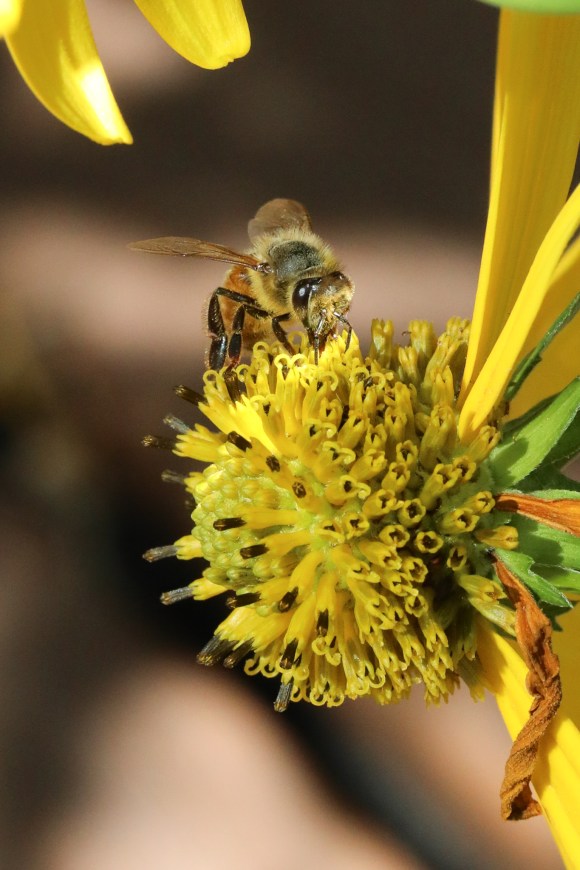
honeybees (Apis mellifera),

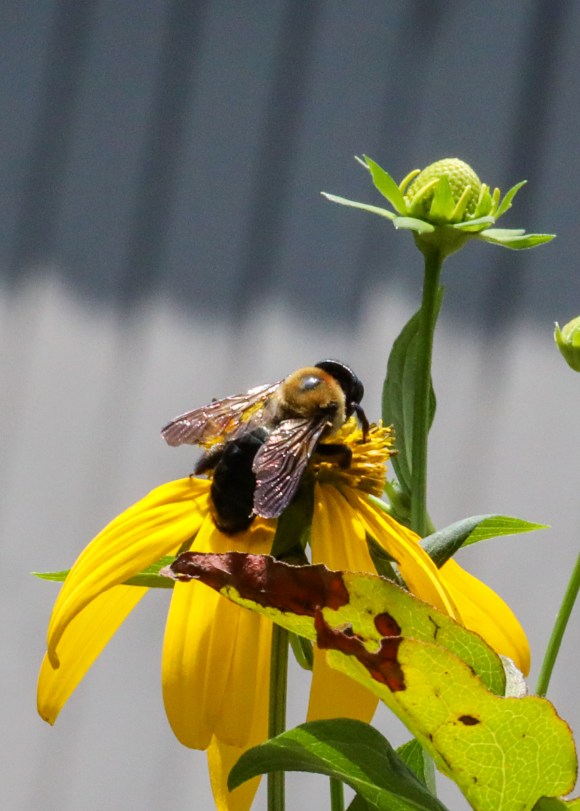
large carpenter bees (Xylocopa spp.),

Halictid bees (Halictus spp.),

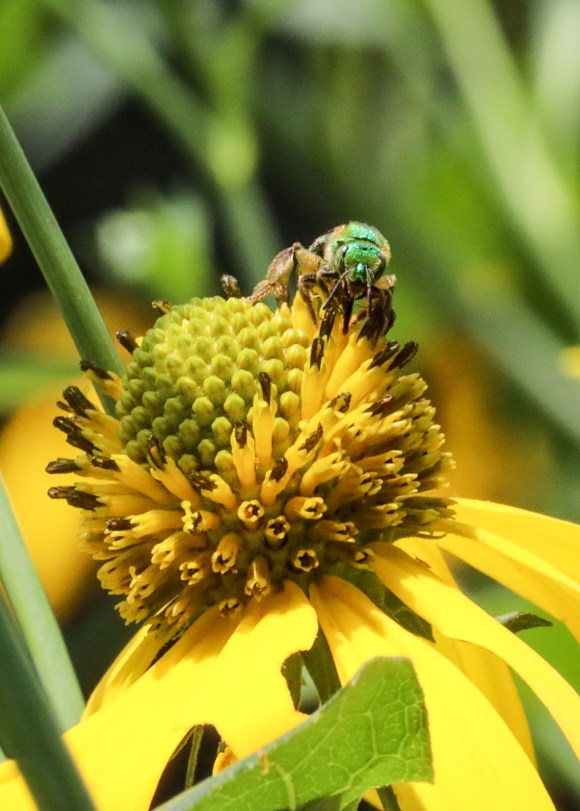
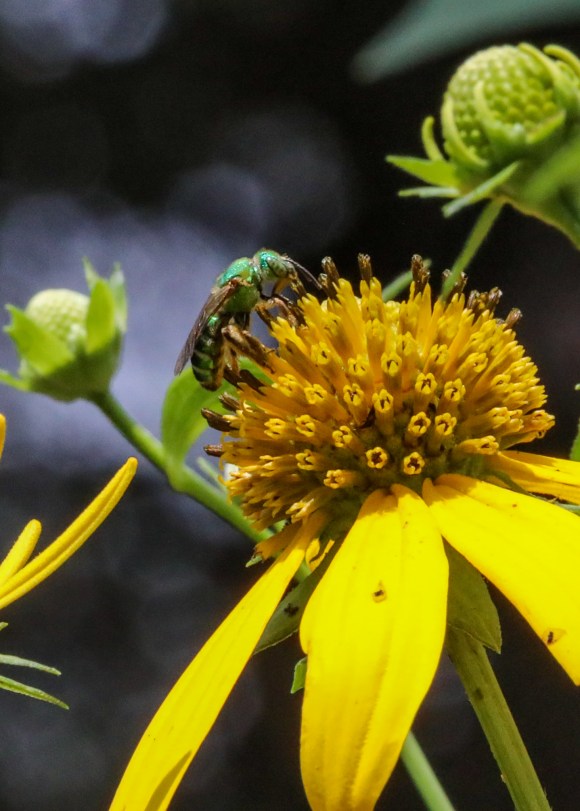
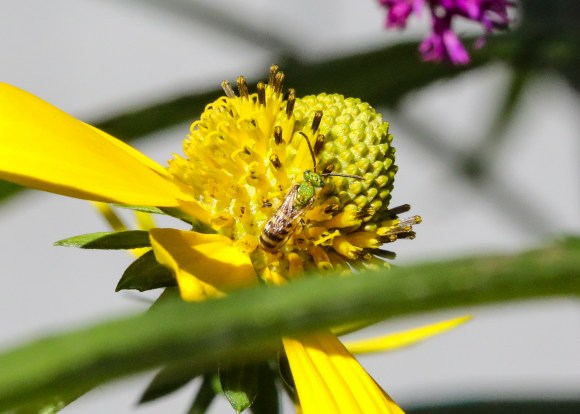
Green Sweat Bees (Agapostemon spp.) and

small carpenter bees (Ceratina spp.)1,2,12


Agapostemon spp., a green metallic sweat bee, are charming.  With an iridescent green thorax, these bees can have a green abdomen or a striped black and white abdomen.  They are generalists but enjoy flowers from the Asteraceae family.  These bees are active from mid-spring to mid-fall.  With fewer blooms available in spring, overwintering females often visit a greater variety of flowers then.3

These green sweat bees are solitary or communal.  When communal, the nests are spread out.  They nest in the ground with 1 or 2 generations per year in the Midwest, Great Lakes and Northeast.3
 
The offspring sex ratio changes depending on the number of generations.  With 2 generations, mated females emerge in mid-spring.  This group lay mostly female eggs.3  

Of the first-generation brood, some won’t mate at all.  These lay unfertilized (male) eggs.  Mated females lay a balanced proportion of males and females.  When these young emerge, the second-generation brood forage until mid-fall, mate, and then fertilized females spend the winter underground.3

When there’s one generation, the male to female ratio is much closer.  They appear in early summer.  These bees live throughout the growing season and mate in mid-fall.  Then fertilized females spend the winter underground.3

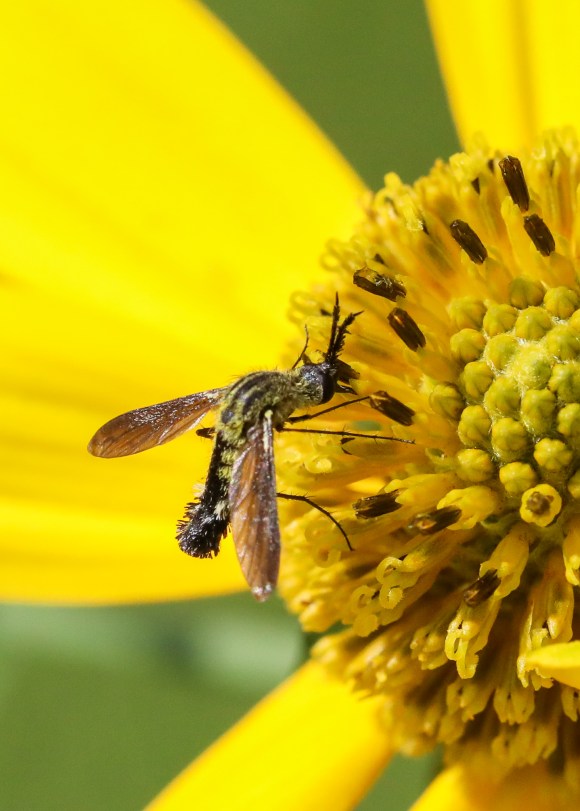
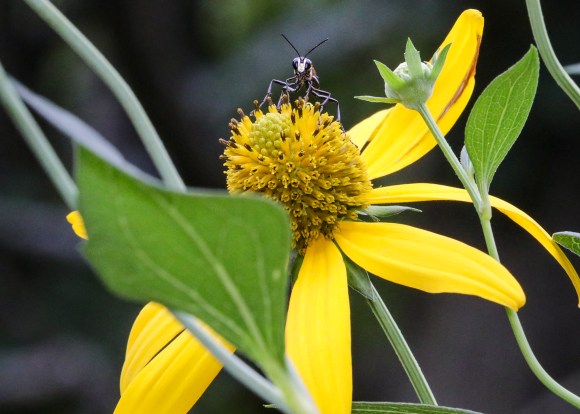
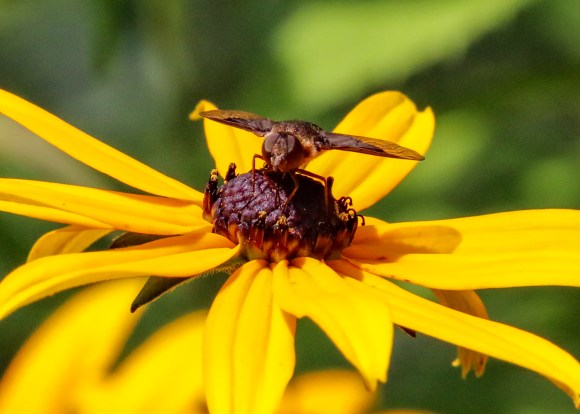
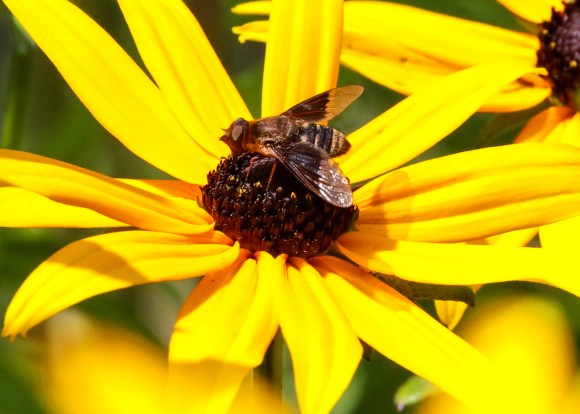
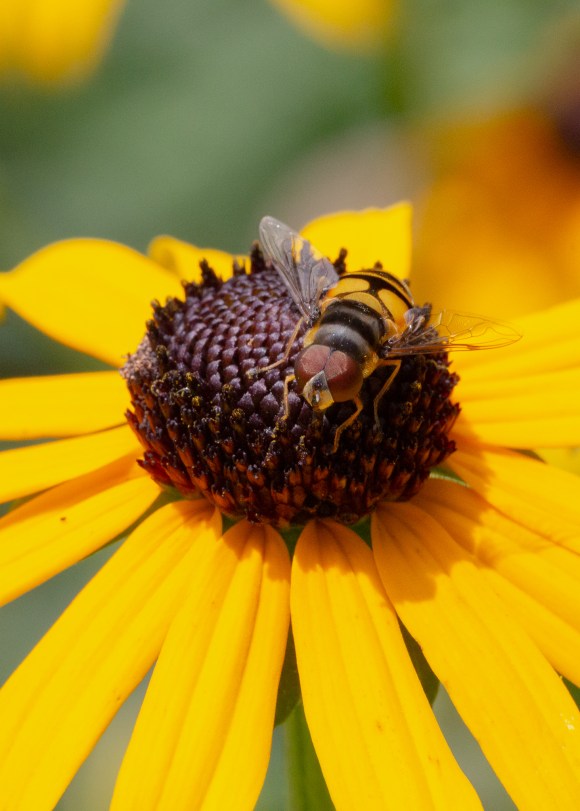
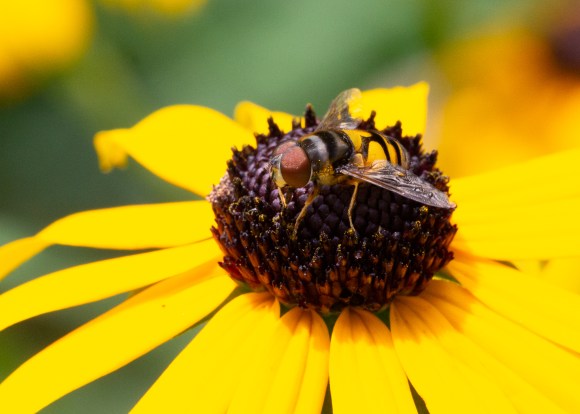
Flies also visit Cutleaf Coneflower.  Bee flies (Family:  Bombyliidae), Hoverflies (Rhingia) and Syrphid flies (Eristalis spp.) harvest resources.2

Predatory wasps also gather nectar from Rudbeckia laciniata.  These include thread-waisted wasps, sand wasps, mason wasps and bee wolves.1,2
 
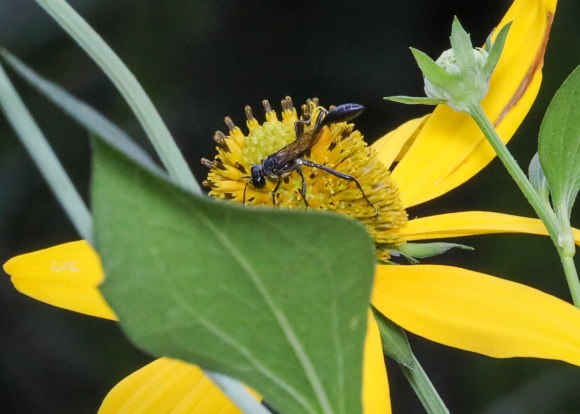
Eremnophila aureonotata or Gold-marked Thread-waisted Wasp is the only Eremnophila in North America.  An elegant wasp, it has fine gold or silver hairs on its head and thorax.  There are also white or silver spots on the thorax.4

Gold-marked Thread-waisted Wasp nests in compacted sandy-loam or loam soil.  The nesting area is vegetated, concealed and located near a wooded area.  The wasp digs a hole 2 inches deep for its nest.  When leaving, she covers the entrance with fragments of plants.4 

Eremnophila aureonotata hunts caterpillars to supply her nests.  She searches on plant leaves for larva.  Once captured, the wasp paralyzes it by stinging.  She carries the caterpillar back to the nest and sets it outside.4  
 
The wasp removes the vegetation from the entrance and flies it away. Then she drags the caterpillar into her burrow and lays one egg on it.   The wasp closes the entrance with soil and pieces of plants.  She tamps the entrance closed with her head.4

Gold-marked Thread-waisted Wasps act as beneficial insect by hunting caterpillars.  They harvest noctuid moths (Noctuidae), prominent moths (Notodontidae), and sphinx moths (Sphingidae).  Noctuid moths are a large and varied group.  Cutworms, armyworms, corn earworms, and iris borers all belong in this group.  Cutworms eat the seedling off at soil level and pull it underground to eat.  Armyworms eat turf grass and cereal crops like millet and rice.4,7,8,9
 
The sphinx moths (Sphingidae) family include tomato and tobacco hornworms, pink-spotted hawk moth, and Pandora, Achemon, and Virginia Creeper Sphinx moth.  The tomato and tobacco hornworm larva eat tomato, potato, pepper, eggplant, tobacco and other nightshade family plants.  Pink-spotted hawk moth caterpillars consume sweet potato vines.  Pandora, Achemon, and Virginia creeper sphinx moth caterpillars are pests in vineyards.  Eremnophila aureonotata gathers all these larvae.8
 
Butterflies, Moths and Skippers nectar from Rudbeckia’s flower while some use it as a larval host.  Common Eupithecia (Eupithecia miserulata), Wavy-Lined Emerald Moth (Synchlora aerata), Southern Emerald Moth (Synchlora frondaria) and Silvery Checkerspot Butterfly (Chlosyne nycleis) all use this Coneflower to feed their young.1,2

I hope you enjoyed this exploration of Cutleaf Coneflower and the insects it supports.  An easily grown plant, Rudbeckia laciniata makes a wonderful addition to the moist garden.  Enjoy dreaming about next year’s garden!
 
Happy Gardening,
Mary Quinlan
 
BIBLIOGRAPHY:

  1. “Cutleaf Coneflower (Rudbeckia Laciniata).” n.d. Accessed September 29, 2025. https://www.illinoiswildflowers.info/savanna/plants/cl_coneflower.htm.

2. Holm, Heather. 2014. Pollinators of Native Plants:  Attract, Observe and Identify Pollinators and Beneficial Insects with Native Plants. Pollination Press LLC

3. Holm, Heather. 2017. Bees:  An Identification and Native Plant Forage Guide. Pollination Press LLC.

4. Holm, Heather. 2021. Wasps:  Their Biology, Diversity, and Role as Beneficial Insects and Pollinators of Native Plants. Pollination Press LLC.

5. Keystone Native Plants – Eastern Temperate Forests – Ecoregion 8. n.d.  Accessed September 29, 2025.  https://www.nwf.org/-/media/Documents/PDFs/Garden-for-Wildlife/Keystone-Plants/NWF-GFW-keystone-plant-list-ecoregion-8-eastern-temperate-forests.pdf.

6. Native Plants for Pollinators & Beneficial Insects: Midwest. Accessed September 29, 2025. 2023 The Xerces Society for Invertebrate Conservation.  https://xerces.org/sites/default/files/publications/22-025_01_NPPBI—Midwest_web.pdf.

7. Missouri Department of Conservation. n.d. “Noctuid Moths.” Accessed October 1, 2025. https://mdc.mo.gov/discover-nature/field-guide/noctuid-moths.

8. Missouri Department of Conservation. n.d. “Sphinx Moths (Hawk Moths).” Accessed October 1, 2025. https://mdc.mo.gov/discover-nature/field-guide/sphinx-moths-hawk-moths.

9 “Noctuidae – Wikipedia.” n.d. Accessed October 1, 2025. https://en.wikipedia.org/wiki/Noctuidae.

10. “Rudbeckia Laciniata – Plant Finder.” n.d. Accessed September 29, 2025. https://www.missouribotanicalgarden.org/plantfinder/PlantFinderDetails.aspx?taxonid=277226.

11. “Rudbeckia Laciniata (Cutleaf Coneflower, Green-Head Coneflower, Green Headed Coneflower, Tall Coneflower, Wild Goldenglow) | North Carolina Extension Gardener Plant Toolbox.” n.d. Accessed September 29, 2025. https://plants.ces.ncsu.edu/plants/rudbeckia-laciniata/.

12. “Rudbeckia Laciniata (Green-Headed Coneflower) | Native Plants of North America.” n.d. Accessed September 29, 2025. https://www.wildflower.org/plants/result.php?id_plant=rula3.

13. US EPA, ORD. 2015. “Ecoregions of North America.” Data and Tools. December 13, 2024. https://www.epa.gov/eco-research/ecoregions-north-america.
 

Categories
native plants Pollinator gardening

Moons in the Wetlands

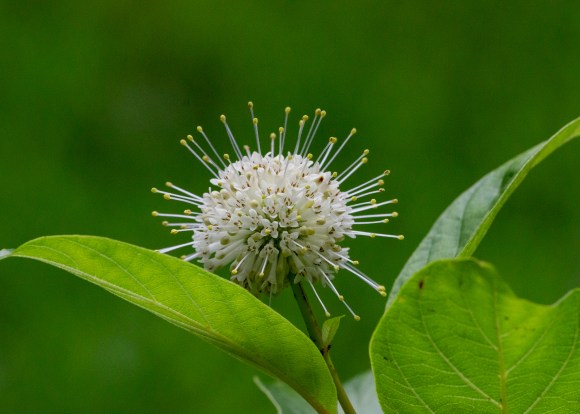
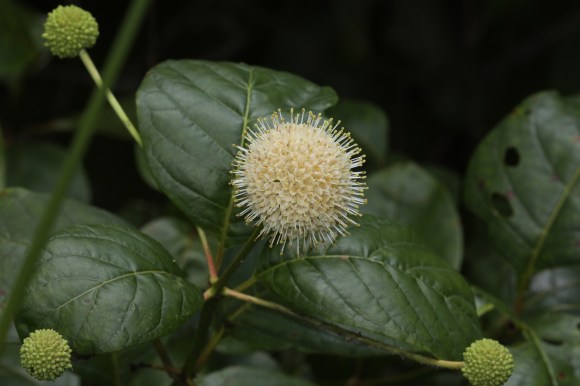
The glowing spheres of Buttonbush blooms shine in its dark foliage.  The 2023 North Carolina Wildflower of the Year, Buttonbush (Cephalanthus occidentalis) thrives in difficult wet, low spots, even shallow standing water.  It supports pollinators, beneficial insects and is a larval host.   Cephalanthus occidentalis is also a rare mid-summer blooming shrub.

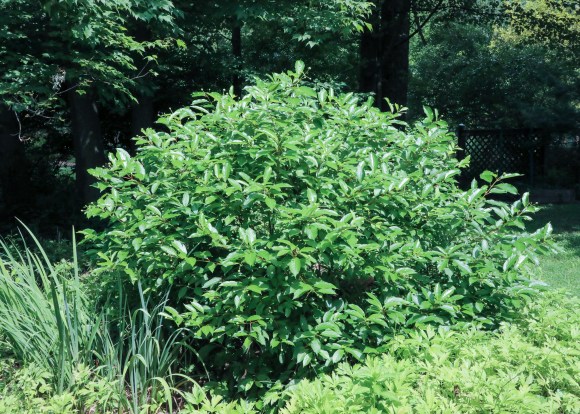
Buttonbush grows in zones 4-8.  It generally measures between 4 and 8 feet tall and spreads between 4 and 8 feet.  C. occidentalis enjoys full sun to part shade.  It flourishes in medium moisture to wet soils including shallow standing water and areas with occasional flooding.  Humusy soils, clay, loam, sand, shallow rocky soil, limestone soil, sandy loam, medium loam and clay loam all support Buttonbush.2, 3

Buttonbush grows in diverse wet habitats in nature.  These locations include wet open areas, low woods, floodplain forests, vernal pools in wooded areas, wet thickets, shrubby swamps, upland sinkholes, wet depressions in black soil prairies, marshes, bogs, seeps, seasonal wetlands, ponds, pond margins, lakes-often in water up to 3 inches, prairie swales, dry limestone bluffs, ditches, and borders of rivers, and streams.2,4

In addition to flourishing in wet conditions, Buttonbush tolerates various challenges.  It’s moderately deer resistant since its foliage contains a toxin.  This shrub works for erosion control.  Its swollen base stabilizes the plant.  It also survives competition, fire, and heat.4,12

If the species shrub becomes too big, rejuvenation pruning in early spring makes it more manageable.  Rejuvenation pruning is a technique used on multi-stemmed, twiggy shrubs.  The shrub is cut back to between 6 and 12 inches above the ground.  The individual stems are cut ¼ inch above a bud.  Cuts slope down and away from the bud at a 450 angle.   Remove dead wood as close to the ground as possible.  This method also works well Red-Twig Dogwood (Cornus sericea) and Pussy Willows (Salix discolor).7

If the species Cephalanthus occidentalis is still too large or unruly for your space, there is a smaller nativar. Buttonbush Sugar Shack grows to approximately 5 feet by 5 feet at maturity.  Sugar Shack is ball-shaped with compact growth.6

It enjoys the same conditions as the species-full to part sun and moist to wet soils.  The white flowers are similar in size and bloom from early to late summer (beginning to last blossom).  The seeds pods are red, becoming brown over the winter.  The foliage changes to burgundy in the fall.6

Foliage of Cephalanthus occidentalis is medium to dark green.  The leaves sit opposite each other in pairs or, occasionally, in whorls of 3.  They grow up to 6 inches long and 2.5 inches across.2

Each leaf has a smooth margin and an ovate or ovate-oblong shape.  Their upper surface is glossy, and the most common variety is hairless.  A pubescent (covered with soft, short hairs) variety also exists.  The foliage changes to yellow in the autumn.2

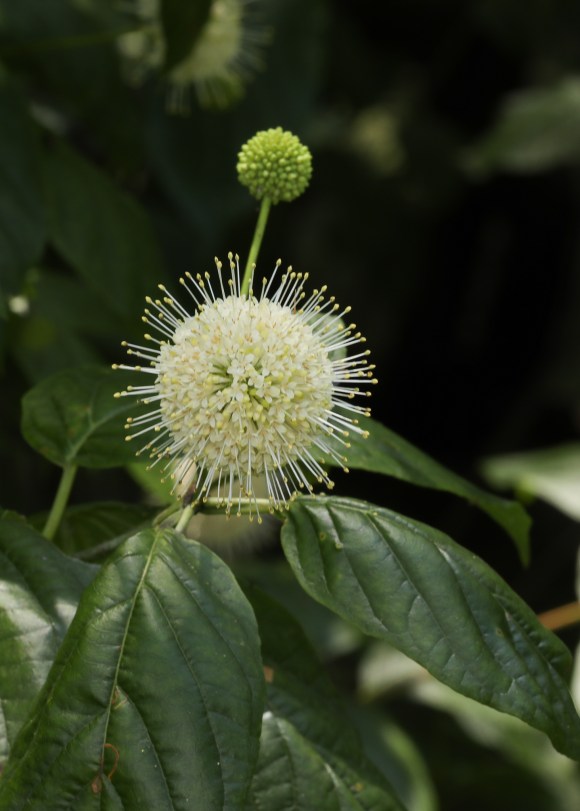
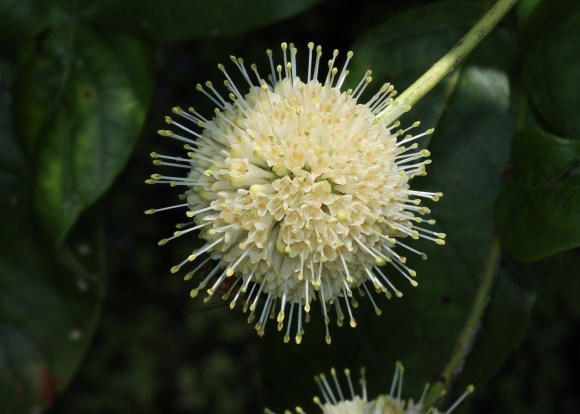
The spherical flowers start the show with Buttonbush.  They’re located at the top of branches or emerge from leaf axils.  These flowerheads grow from 1 to 2 inches across and are white or cream colored.2

Within the flowerhead, each floret consists of an approximately 1/3-inch-long corolla. It has 4 lobes at the opening.  There are 4 stamens and 1 undivided, white style.  The style extends beyond the floret opening.2

Buttonbush is self-incompatible and has an unusual way of releasing its pollen.  The stamens emerge first.  They shed pollen while the florets are still closed.  Then the florets open.  While the style elongates, it carries along the pollen and makes it accessible to bees and insects.

Cephalanthus occidentalis blooms for about 1 month.  The flowers are followed by red, round seedheads.  These remain throughout the winter turning brown and giving winter interest.2

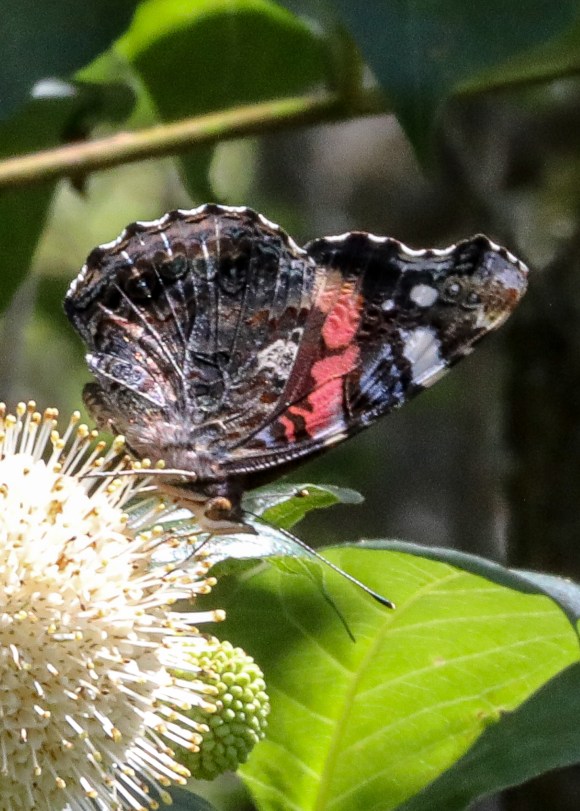
Buttonbush feeds numerous creatures.  For the insects, C. occidentalis provides nectar and pollen and is of Special Value to Native Bees, of Special Value to Bumble Bees and Special Value to Honey Bees. XERCES Butterflies, moths and skippers, also, harvest resources from the flowers as well as wasps and flies. It’s also a larval host for many moths including the spectacular Titan Sphinx Moth (Aellops titan).2

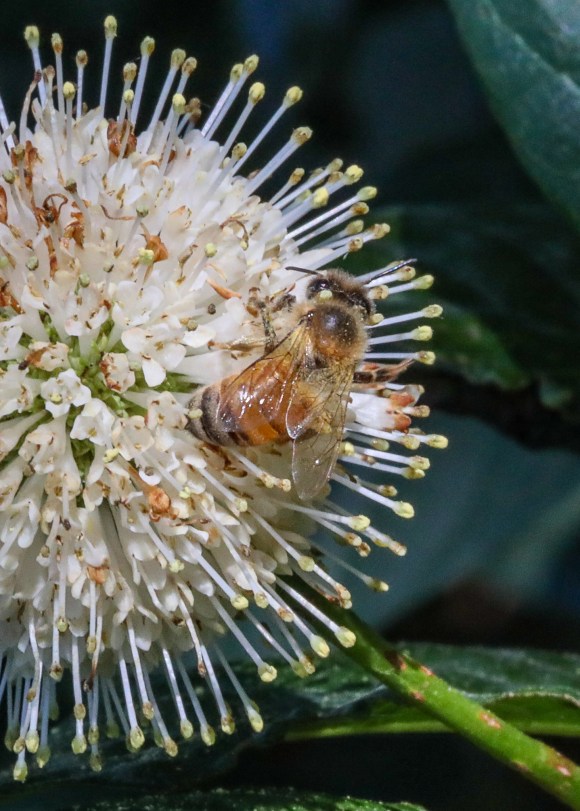
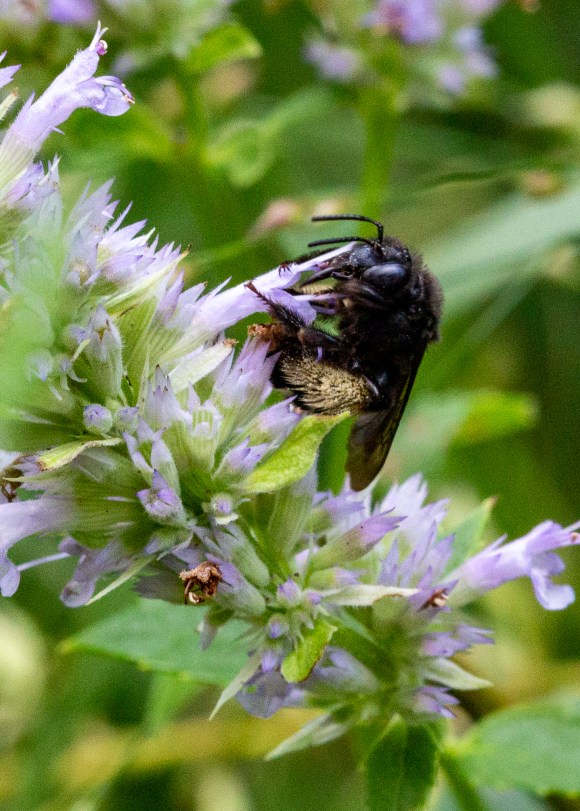
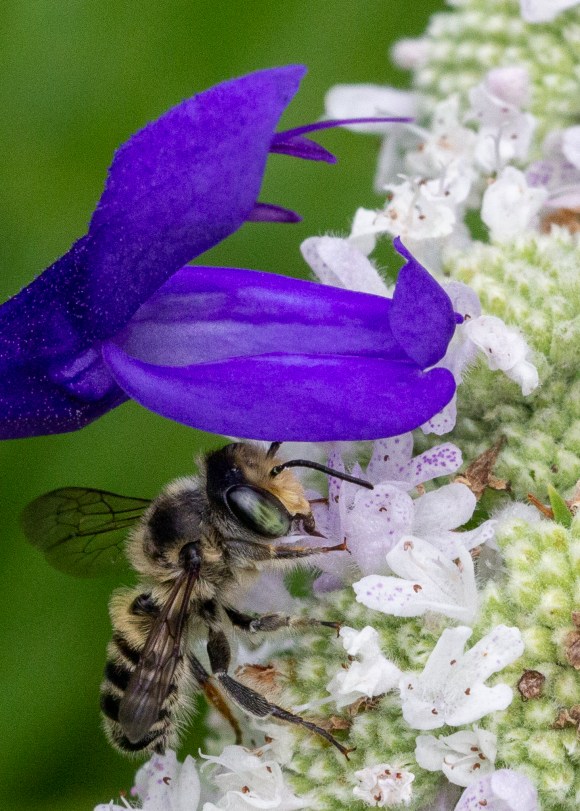
Many different bees gather nectar from Cephalanthus occidentalis.  These include  Honeybees (Apis mellifera), bumblebees (Bombus), cuckoo bees (Triepeolus spp.), long-horned bees (Melissodes spp.), leaf-cutting bees (Megachile spp.), green metallic bees (Agapostemon spp.), small carpenter bees (Ceratina spp.), yellow-faced bees (Hylaeus spp.) and large carpenter bees (Xylocopa spp.).2

In the past,  Buttonbush support a large beekeeping industry along the lower Mississippi River floodplain where the shrub thrived.  It’s still known by the common names of Honeybush, Honeybells and Honeyballs.  Honeybees continue to seek out its nectar and pollen.13

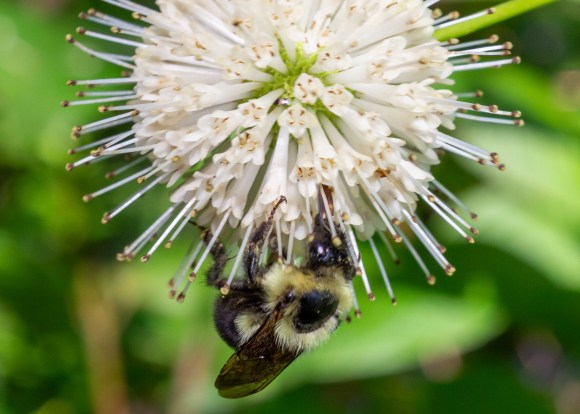
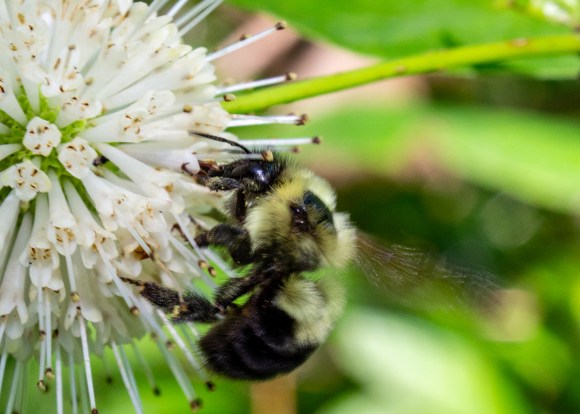
Bumble bees frequently visit C. occidentalis when it’s flowering.

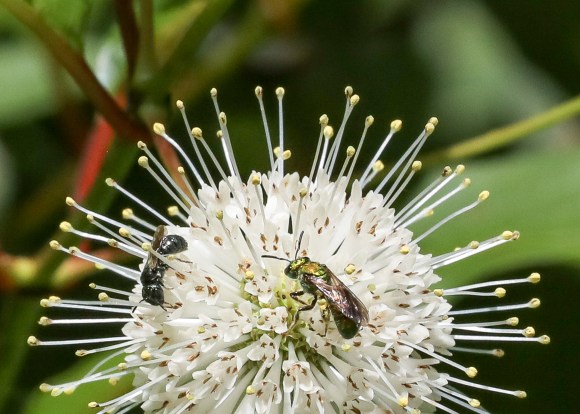
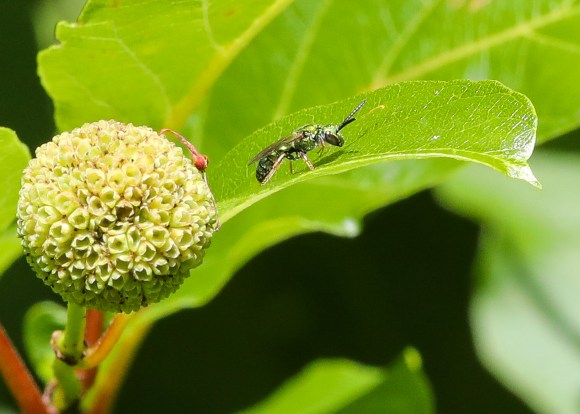
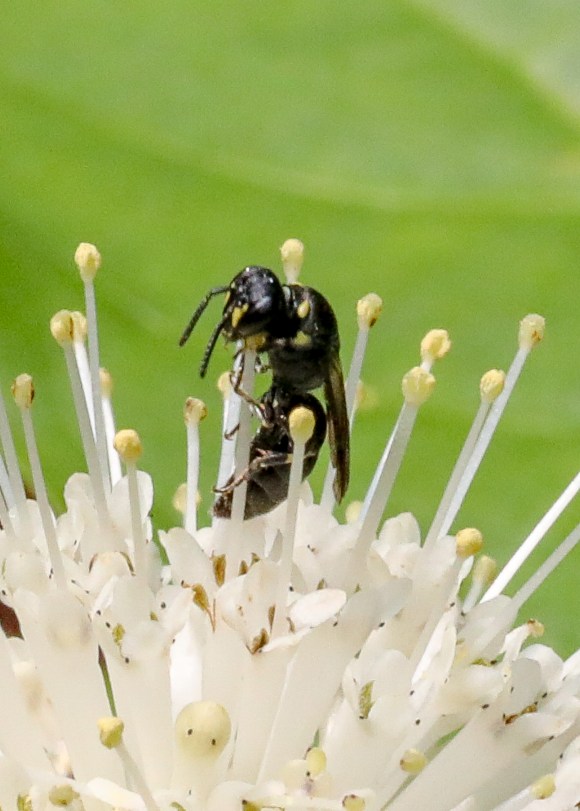
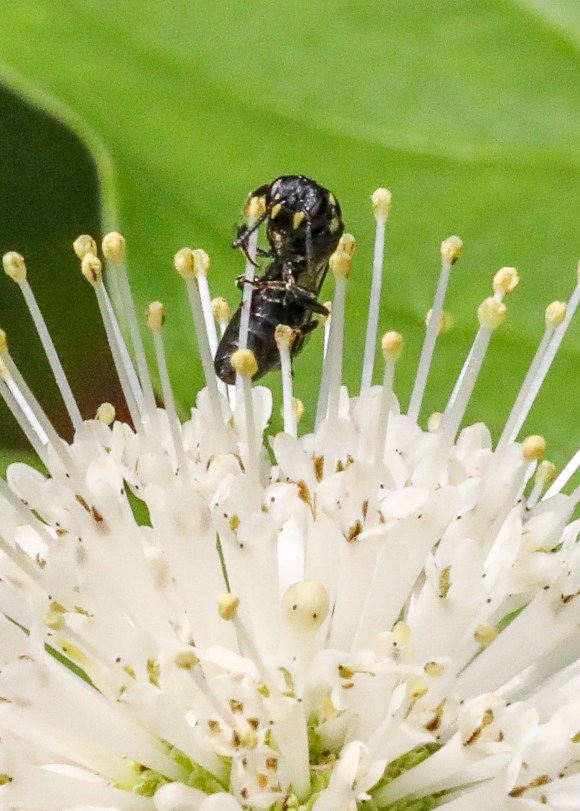
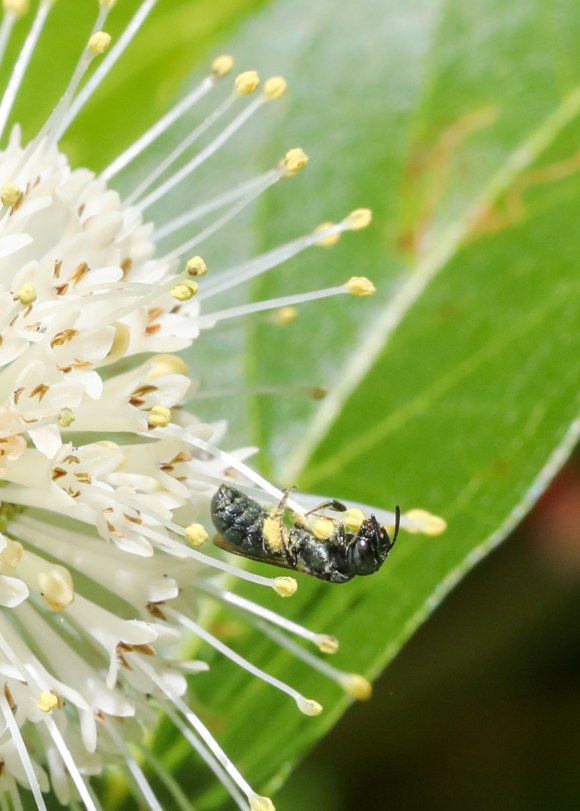
Small bees gather resources at Buttonbush, climbing in and out of the florets.  These pollinators include small carpenter bees (Ceratina spp.), green metallic bees (Agapostemon spp.), and yellow-faced bees (Hylaeus spp.).

There are 366 species of small carpenter bees (Ceratina spp.) throughout the world (except Oceania).  27 species live in the United States with 5 in the Eastern US and Canada.8,11  Despite their name, they’re not closely related to the carpenter bee, Xylocopa. 

 Ceratina are stem nesting bees that need pithy centers.  They nest in perennials and woody stems.  The female excavates a long nesting tunnel and uses the stem pith to create cell divisions.  Once the nest is full, the female guards the entrance.  She makes a yellow, strongly citral-scented secretion that is excreted from her mandibles (“jaws”).  The mother smears this on the nest entrance to repel predators.8,11

Ceratina show some unusual and fascinating social behaviors.  Unlike other bees, small carpenter bees live a long time, 12 to 16 months.  In temperate climates like the Northeast and Great Lake, this means through the winter.  

These bees care for their young throughout this time.  The mother removes the nest partitions each evening and grooms her young.  This behavior is believed to reduce parasites and remove any developing fungal infections from the nest.  These mother-offspring interactions separate Ceratina from other solitary bees and are considered subsocial.8,11

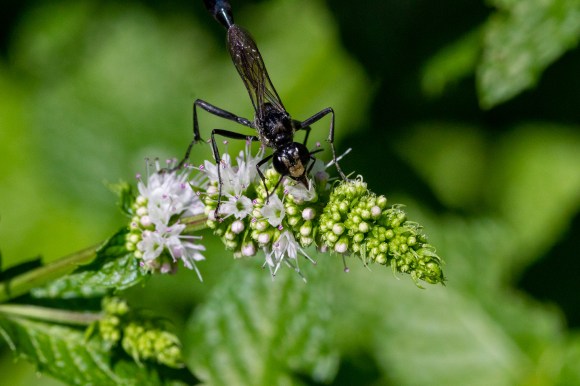
Various wasps drink nectar from Cephalanthus occidentalis.  Scoliid wasps (Dielis spp.), Carrot or Gasteruption wasps (Gasteruption spp.), and  Thynnid Flower wasps (Myzinum spp.) are solitary, parasitic or parasitoid wasps which visit Buttonbush.  In addition, the solitary wasps, Mason wasps (Monobia spp.), Cuckoo wasps (Parnopes spp.), (Pseudodynerus spp.), and Thread-Waisted wasp (Sphex spp). also use C. occidentalis.   Finally, the very social yellow jacket, (Vespula spp.) gathers nectar from this shrub.9

The Great Golden Sand Digger Wasp (Sphex ichneumoneus) is a beautiful, beneficial wasp.  This digger wasp hunts cicadas and true crickets to provision its nests.  The female constructs a vertical nest with 2 or 3 side cells for eggs. She lays her egg on the first prey and adds 1 to 5 more.  The number of nests per year vary depending on the length of growing season.  Like other solitary wasps, the Great Golden Sand Digger Wasp is not aggressive, and, in fact, the male doesn’t have a stinger.9,10

Thick-headed flies and Syrphid flies gather nectar from Buttonbush flowers.2

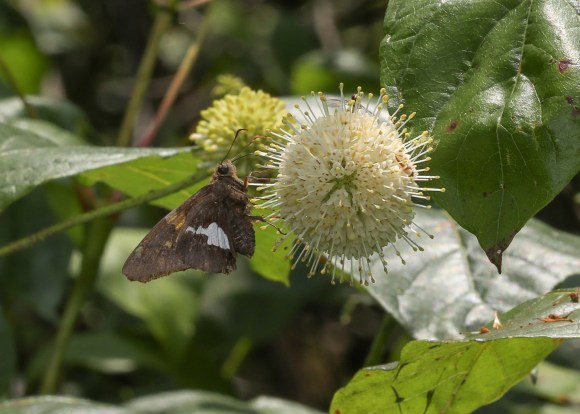
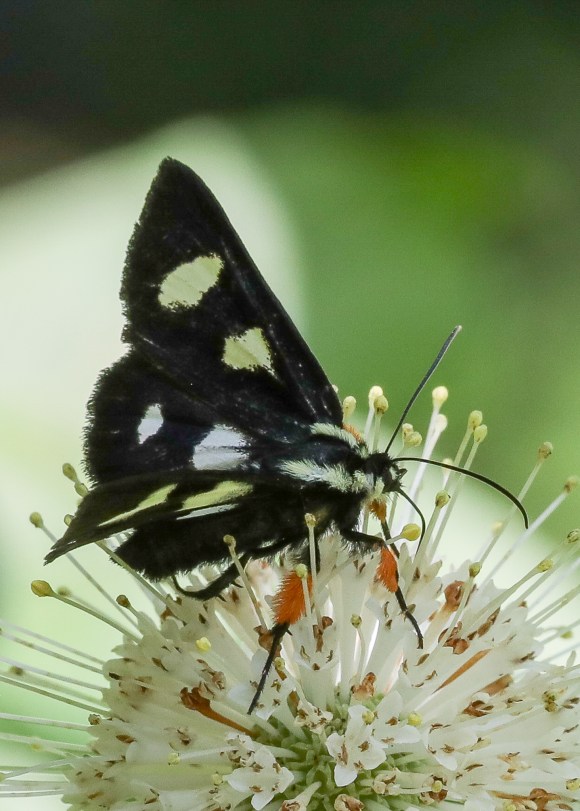
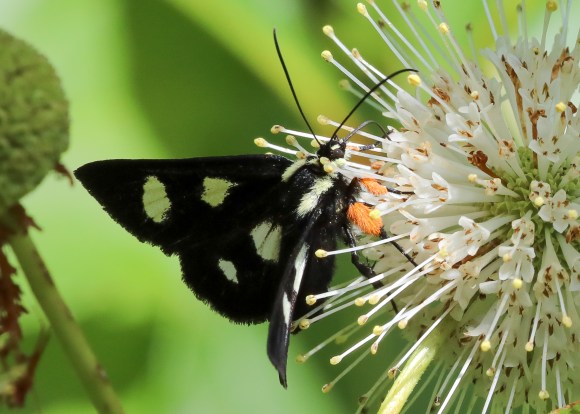
Buttonbush serves adult butterflies, moths and skippers.2,5,13  They visit its blooms for nectar.

Several moths use this shrub as a larval host including some spectacular ones.  The Titan Sphinx (Aellops titan), the Hydrangea Sphinx (Darapsa versicolor), and the  Royal Walnut Moth (Cithermia regalis) larvae all feed off the Cephalanthus occidentalis plant.2,5,13

Hope you’ve enjoyed this dive into Cephalanthus occidentalis!  Look for it blooming when you’re near water.  Check for it at the edges of wetlands by roadside ditches. 

Enjoy Summer and Happy Gardening,

Mary

BIBLIOGRAPHY:

  1. “Bird Table (Cephalanthus Occidentalis).” Accessed July 1, 2025. https://www.illinoiswildflowers.info/trees/tables/table283.html.
  2. “Buttonbush (Cephalanthus Occidentalis).” Accessed July 1, 2025. https://www.illinoiswildflowers.info/trees/plants/buttonbush.htm.
  3. “Cephalanthus Occidentalis – Plant Finder.” Accessed July 1, 2025. https://www.missouribotanicalgarden.org/PlantFinder/PlantFinderDetails.aspx?kempercode=g830.
  4. “Cephalanthus Occidentalis (Buttonbush, Button Bush) | North Carolina Extension Gardener Plant Toolbox.” Accessed July 1, 2025. https://plants.ces.ncsu.edu/plants/cephalanthus-occidentalis/.
  5. “Cephalanthus Occidentalis (Common Buttonbush) | Native Plants of North America.” Accessed July 1, 2025. https://www.wildflower.org/plants/result.php?id_plant=ceoc2.
  6. “Cephalanthus Occidentalis ‘SMCOSS’ SUGAR SHACK – Plant Finder.” Accessed July 1, 2025. https://www.missouribotanicalgarden.org/PlantFinder/PlantFinderDetails.aspx?taxonid=443503&isprofile=0&.
  7. Fogerty, Elane, New Jersey Agricultural Experiment Station.  Pruning Flowering Shrubs.  Cooperative Extension Fact Sheet FS1221.  December 2013.
  8. Holm, Heather. Bees:  An Identification and Native Plant Forage Guide. Minnetonka, MN: Pollination Press LLC, 2017.
  9. Holm, Heather. Wasps:  Their Biology, Diversity, and Role as Beneficial Insects and Pollinators of Native Plants. Minnesota: Pollination Press LLC, 2021.
  10. Missouri Department of Conservation. “Great Golden Digger Wasp.” Accessed July 1, 2025. https://mdc.mo.gov/discover-nature/field-guide/great-golden-digger-wasp.
  11. Rehan, Sandra M. “Small Carpenter Bees (Ceratina).” In Encyclopedia of Social Insects, edited by Christopher K. Starr, 1–4. Cham: Springer International Publishing, 2020. https://doi.org/10.1007/978-3-319-90306-4_106-1.
  12. Wennerberg, Sarah. USDA NRCS. Plant Guide:  Common Buttonbush, Cephalanthus occidentalis L. Plant Symbol=CEOC2, Last edit:  05 June 2006, https://plants.usda.gov/DocumentLibrary/plantguide/pdf/pg_ceoc2.pdf
  13. Xerces Society. “Planting for Pollinators: Button Bush.” Accessed July 1, 2025. https://www.xerces.org/blog/planting-for-pollinators-button-bush.
Categories
native plants Pollinator gardening

A White, Frilly Flower

Fluffy and flexible, Eupatorium perfoliatum (Boneset or Thoroughwort) thrives in the garden.  It adapts to a multitude of growing conditions so it’s able to fill tough spots.  Best of all, pollinators and beneficial insects flock to the frothy, white blooms.

Chosen 2003 North Carolina Wildflower of the Year, E. perfoliatum grows in zones 3 through 8.  The plants range in height from 2 feet to 6 feet.  They spread from 2 feet to 4 feet across.2,9,10

Boneset prefers sun to part sun, moist to wet soils with organic matter and continuous moisture.  But it tolerates shade, periodic flooding, sand and clay soils.  I have a beautiful plant growing in the backfill sand next to my house–in complete shade!2

In natural settings, Eupatorium perfoliatum grows from the East Coast almost all the way west to the Rocky Mountains. Its natural habitats include openings in floodplain forests, poorly drained areas of black soil prairies, various wetlands—marshes, bogs, fens, seeps, edges of rivers, edges of ponds, sand flats, thickets, stream banks, wet meadows, wet prairies and ditches.  Boneset enjoys disturbed areas.  It flourishes on the edges of rain and water gardens.1,2

E. perfoliatum’s leaves are light green in color and have a rough, wrinkled texture.  They’re smooth on top and hairy on the bottom.  The foliage grows opposite on the stem.1   

The leaf bases wrap around the stem so it looks like the stem pierces them.  They are lance-shaped with toothed edges.  They can grow up to 8 inches long and 2 inches across.1,9

Boneset’s flowerhead crown the plant.  Groups of florets combine to form a 2- inch to 8-inch flower.  The individual florets are 1/6 inch or 4 mm across.  They have about 15-disc floret but no ray florets (or petals).1

Each disc floret has 5 spreading lobes, a brown column of stamens and a divided style.  Other Eupatorium spp. have the same flower structure including Joe-Pye Weed (Eupatorium maculatum,https://wildthingsinthe.garden/2024/10/31/a-fabulous-fuzzy-flower/).  Eupatorium perfoliatum blooms from late summer to early fall.  The overall bloom time for a clump is 1 to 2 months.  The flowers have a pleasant scent.1,9

Boneset has fibrous roots.  Plants usually spread by rhizomes.   If happy, they form large colonies.  In good conditions, E. perfoliatum self-seeds.  My garden has areas that flood regularly when it rains especially in the spring.  I’ve had Boneset appear in these areas and in pots.

Eupatorium perfoliatum draws masses of pollinators and beneficial insects.  The Xerces Society for Invertebrate Conservation designates it of ‘Special Value to Native Bees’ and states it ‘Supports Conservation Biological Control’.  Boneset also serves as a larval host for numerous moths.

Multitudes of bees, big and small, visit Boneset.  The little bees include Yellow-Faced Bees (Hylaeus spp.),  Sweat bees (Lasioglossum spp.  and Halictus spp.), Augochlora pura, Green Sweat Bees (Agapostemon spp.), Mining Bees (Andrena spp.),  and Bumble Bees ( Bombus spp.).

Eupatorium perfoliatum strongly supports wasps of all kinds.  At least 102 different species gather nectar from it.  Many of these wasps contribute to the garden as beneficial insects.  Some examples are Sand Wasps (Bicyrtes spp.), Paper wasps (Polistes spp.), Bald-Faced Hornets (Dolichovespula spp.), Bee Wolves (Philanthus spp.), Beetle Wasps (Cerceris spp), Potter Wasps (Eumenes spp.), Grass-Carrying Wasps (Isodontia spp.), Thynnid Wasp (Myzinum spp.), Cuckoo Wasp (Hedychrum spp.), and Thread-Waisted Wasps (Eremnophila aureonotata). 

While supporting biological controls, Boneset plays host to some unusual flies, beetles and other insects.  Flies include Tachinid flies (Gymnoclytia spp., Archytas spp., Trichopoda spp.,  Juriniopsis adusta), Syrphid Flies (Eristalis spp. and Helophilus spp.), Thick-Headed Flies (Physocephala spp.) and Bee Flies (Villa spp.).

Tachinid flies are beneficial insects in their role as parasitoids.  As parasitoids, their larvae feed on, and eventually kill, other insects.  These flies lay eggs on leaves or on the insect itself.  If an egg hatches outside the host, the maggot eats its way inside.  An insect may also eat the egg.  Then the larvae hatches inside the prey’s body.5

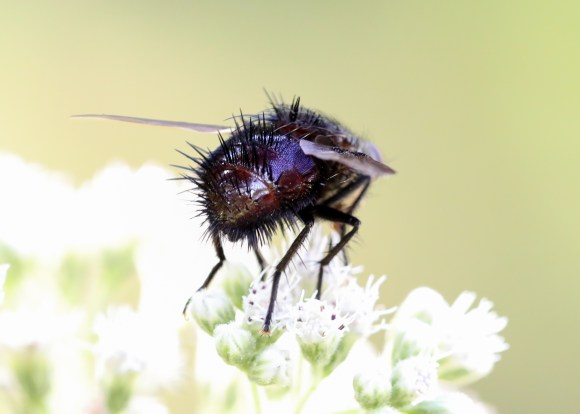
While many tachinid flies look like plump, spiny houseflies, there are some wonderfully strange and fantastic species.  Two examples are Juriniopsis adusta and Trichopoda spp.5

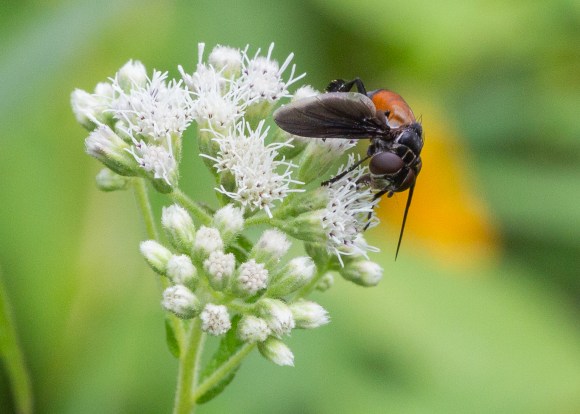
 Juriniopsis adusta (no common name) is a ghostly-looking fly with a red abdomen covered in black bristles.  It’s a quick fly that rarely lights for a long time.  The larvae eat caterpillars.  I chased this one for 2 years before I got the photos I wanted.5

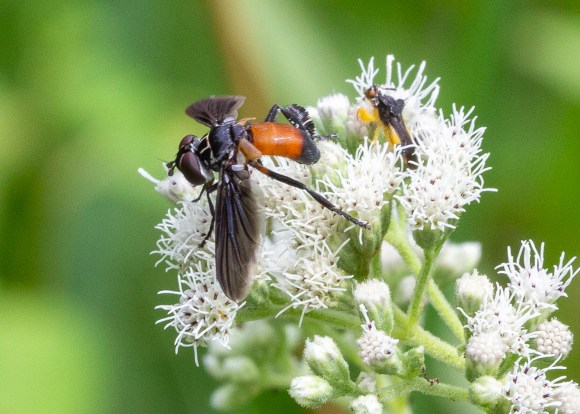
Trichopoda spp.  or Feather-Legged Flies are bee mimics.  They’re a stunning fly with feathery bristles on the hind legs to mimic a pollen basket and jet-black wings with clear edges.  The males have bright orange abdomens.  The young of Feather-Legged Flies are parasitoids of true bugs including squash bugs, plant bugs, stink bugs, leaf-footed bugs and shield-backed bugs.3,5

Entomologists at Michigan State University studied insects attracted to Eupatorium perfoliatum.  They found that it was 20 times more attractive to beneficial insects than the grass control.  Boneset was Highly Attractive for Insidious Flower Bug (Orius insidiousus), Plagiognathus politus- a flower bug, (Chalcidoidea), and soldier beetles (Cantharidae).  At the Moderately Attractive level, it drew crab spiders (Thomisidae) and Cynipoidea-a family of parasitoid and gall-forming wasps. Finally, E. perfoliatum was Mildly Attractive for Sphecid wasps, lady beetles (Coccinellidae), Jumping Spiders (Salticidae), Braconidae-a parasitic wasp family and damsel bugs (Nabidae).4  

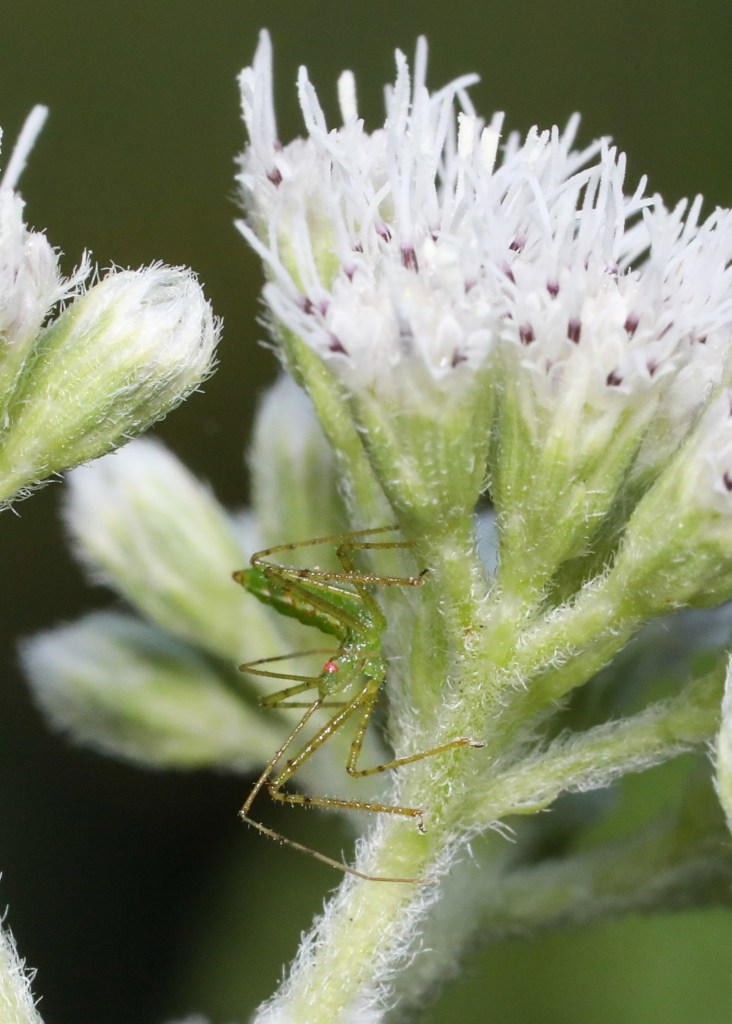
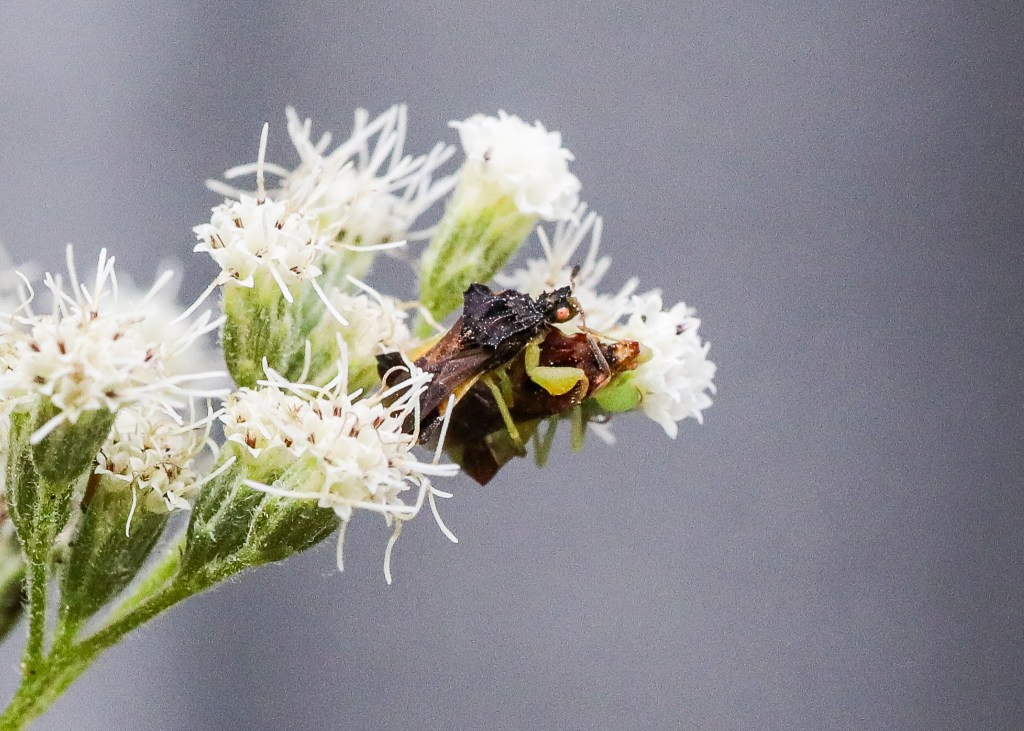
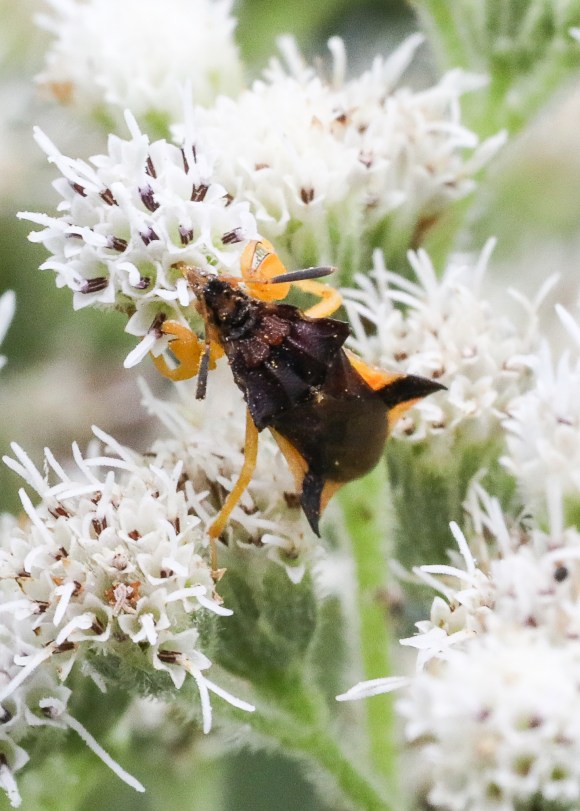
Not mentioned in the MSU study, the jagged ambush bug (Phymata spp.) happily lives and breeds on my blooming Boneset.  This fierce bug has huge raptor-like front legs.  Like its name, the jagged ambush bug hides in flowers and ambushes its prey.6,7 

Using speed and the raptor-like legs, it captures insects up to 10 times its size.  Once caught, the ambush bug uses venom to paralyze the prey and liquify the internal organs.  Then, it drinks the bodily fluids with a straw-like mouth part.6.7

The adult ambush bugs hunt from the flowers while the immature bugs (called nymphs) use other parts of the plant.  The adults and nymphs eat mites, aphids, leafhoppers, thrips, caterpillars, mealybugs, beetles, scale insects, insect eggs.  Adults also eat flies, bees and wasps.6,7

Eupatorium perfoliatum acts as a larval host for several moth species.  Their larvae use different parts of the plant.  They include Geometrid Moths (Semiothisa continuata), Clymene Moth (Haploa clymene ), Three-Lined Flower Moth (Schinia trifascia), Blackberry Looper Moth (Chlorochlamys chloroleucaria), Burdock Borer Moth (Papaipema cataphracta ), and Lined Ruby Tiger Moth (Phragmatobia lineata).1,10

Eupatorium perfoliatum is the plant for many places.  An adaptable garden plant, it’s happy living in a variety of growing conditions.  It adds blooms to the late season garden with its white, fluffy flower heads.  Boneset serves as a pollen and nectar source and as a larval host, drawing pollinators and beneficial insects alike!

I hope you’ve enjoyed this latest blog.  I’d love to hear from you with a question or a comment.  Hope everyone is enjoying the new garden season!

Happy Gardening,

Mary 

Bibliography:

  1. “Common Boneset (Eupatorium Perfoliatum).” Accessed May 30, 2025. https://www.illinoiswildflowers.info/prairie/plantx/cm_boneset.htm.
  2. “Eupatorium Perfoliatum – Plant Finder.” Accessed May 30, 2025. https://www.missouribotanicalgarden.org/PlantFinder/PlantFinderDetails.aspx?taxonid=277187.
  3. Missouri Department of Conservation. “Feather-Legged Flies.” Accessed May 30, 2025. https://mdc.mo.gov/discover-nature/field-guide/feather-legged-flies.
  4. Native Plants and Ecosystem Services. “Common Boneset.” Accessed May 30, 2025. https://www.canr.msu.edu/nativeplants/common_boneset.
  5. Missouri Department of Conservation. “Parasitic Flies (Tachinids).” Accessed May 30, 2025. https://mdc.mo.gov/discover-nature/field-guide/parasitic-flies-tachinids.
  6. “Predatory Bugs : Ambush Bugs | Hortsense | Washington State University.” Accessed May 30, 2025. https://hortsense.cahnrs.wsu.edu/fact-sheet/predatory-bugs-ambush-bugs/.
  7. Galveston County Master Gardeners. “Jagged Ambush Bug,” May 31, 2025. https://txmg.org/galveston/beneficials-in-the-garden-and-landscape/jagged-ambush-bug/.
  8. Lady Bird Johnson Wildflower Center. “Lady Bird Johnson Wildflower Center – The Botanic Garden of Texas,” June 1, 2025. https://www.wildflower.org/.
  9. “Eupatorium Perfoliatum (American Boneset, Boneset, Bonset, Feverwort, Thoroughwort) | North Carolina Extension Gardener Plant Toolbox.” Accessed May 30, 2025. https://plants.ces.ncsu.edu/plants/eupatorium-perfoliatum/.
  10. United States Department of Agriculture-Natural Resources Conservation Service, Plant Fact Sheet, Common Boneset, Eupatorium perfoliatum L., USDA-NRCS.
Categories
Pollinator gardening

Furry Little Tails

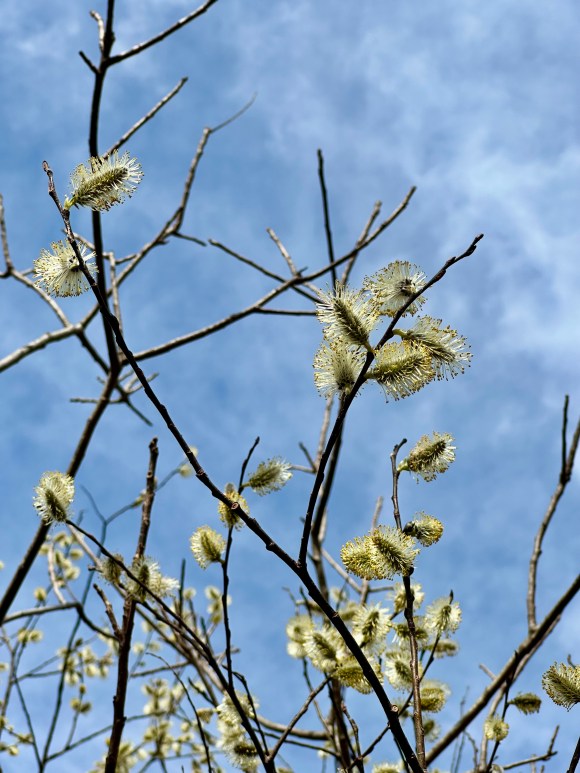
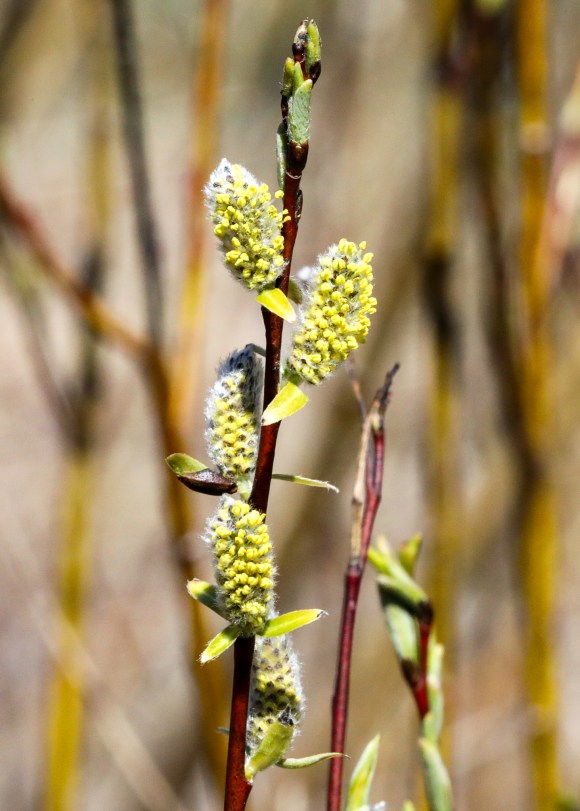
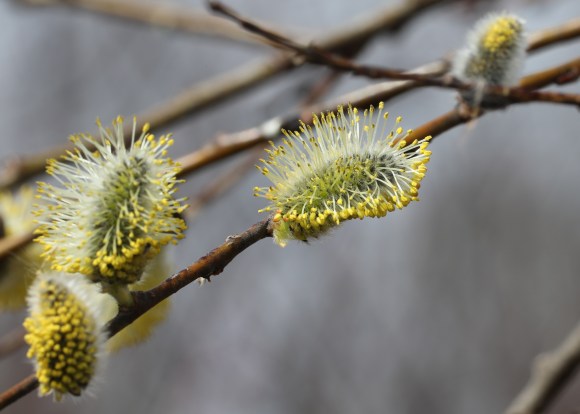
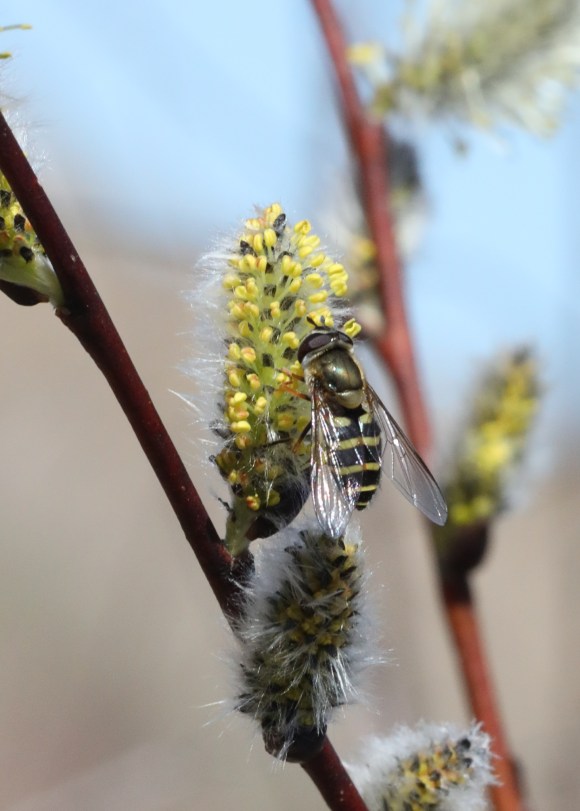
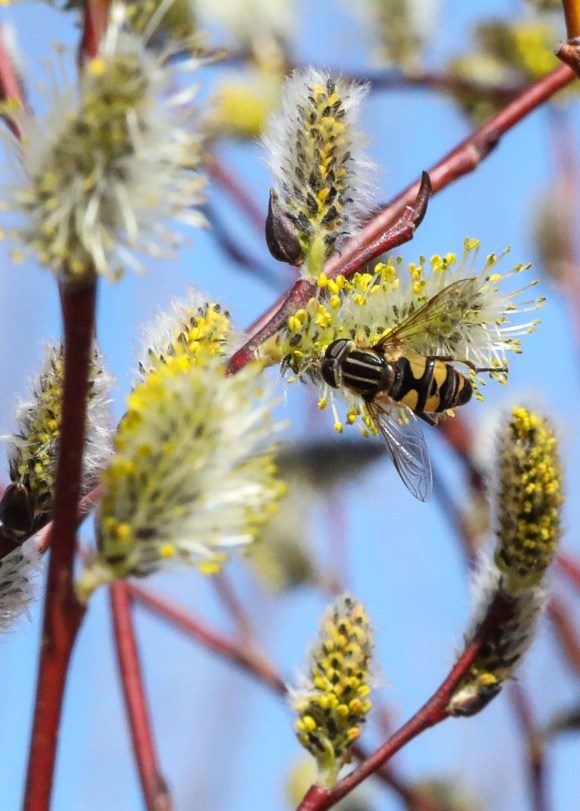
Just as the snow disappear, the small bumps on Pussy Willow (Salix discolor) branches lengthen into soft, furry, gray catkins.  Soon they burst into bright yellow blooms before spring ephemerals and other early trees and shrubs.  Their nectar and pollen draw early bees, flies, wasps, adult butterflies and other insects. 4,9

 Later, this willow is a larval host to many butterflies, moths and skippers.  In addition, many insects feed on and/or use this plant.  The caterpillars and insects support an abundance of bird life especially during nesting season.9

Salix discolor thrives in zones 2 through 8.  It generally grows from 6 to 15 feet and spreads from 4 to 12 feet.  For a smaller shrub, cut it back every 3 to 5 years after flowering.  This pruning encourages lots of new growth.5,6

Pruning is especially important when Salix is growing in wet conditions.  Pussy willow forms suckers freely.  Cutting helps control the suckers also.5,6,7

Pussy willows love wet soils but do tolerate medium moisture soils.  They grow in sandy and non-sandy soils with around neutral pH and some decaying matter.  Salix discolor enjoys part to full sun.  They’re resistant to deer, erosion and Black Walnuts (Juglans nigra).5,6

Its natural habitats include soggy thickets, fens, wet prairies, low ground, floodplain forests, marshes, low areas along rivers and other bodies of water, ditches, and shrub swamps.  If too many trees grow, the Pussy Willows die out.9

Salix discolor has male and female flowers on different shrubs, also called dioecious.  Males are yellow with pollen, females are green. The specific epithet discolor comes from the two different colored flowers.  Blooms develop on second year twigs.7,9

The male bloom starts as a furry pearl-gray catkin.  The soft dense hairs protect the florets from the cold.  As they open, tight round stamens poke through the fur.  When the stamens are fully extended, the male blossoms turn bright yellow.  Each floret has 2 stamens. The catkin grows up to 1 inch long.9

Spikey and green, the female catkins mature from 1 to 4 inches long.  Each floret has 1 pistil with a pair of tiny stigmata at the top.  The pistil forms a narrow lance-like shape and had tiny, fine, grayish-white hairs.9

Pussy Willow leaves are more oval than other willows.  They grow up to 4 inches long and 1.5 inches across and alternate on the stem.  The edges are irregularly toothed to smooth.  The leaves themselves are medium to dark green and hairless on top.  Underneath, they are hairless, covered with a greenish-white bloom and whitened.  Petioles are up to ¾ inches long and range from smooth to slightly hairy.9  

A few plant facts:  some petioles have stipules where they join the stem.  A stipule is a small structure at the base of a leaf and can be helpful in identifying a plant.  Pussy Willow have largish stipules on both sides of the petiole—1/4 inch long and across.  They are heart-shaped and toothed or lobed.

Salix discolor is a handful.  It’s known to grow tall and wide.  Why choose it for you garden?

S. discolor is a keystone plant and an outstanding one at that. For the Eastern Temperate forests, my area, Salix spp. appears on the Top Keystone Plant Genera list, Top 30 Keystone Plant Genera for Butterfly and Moth Caterpillars and Top 30 Native Host plants for Pollen Specialist Bees.  Keystone plants play an essentially role in their Ecoregions sustaining generalist and specialist pollinators.4

The Xerces Society for Invertebrate Conservation designates Salix discolor as of Special Value to Native Bees, Special Value to Bumble Bees and Special Value to Honey Bees.  While this Willow can become large, it is possible to contain it to a smaller site.  Other native Willows are trees which become much taller and aren’t suited to compact areas.6

A note to readers:  Usually I use all my own photos for my blogs.  Sadly, I don’t have all the images I want for this month.  I’ll be including pictures of pollinators and other insects on other plants and some stock photos.  Thank you for your patience!

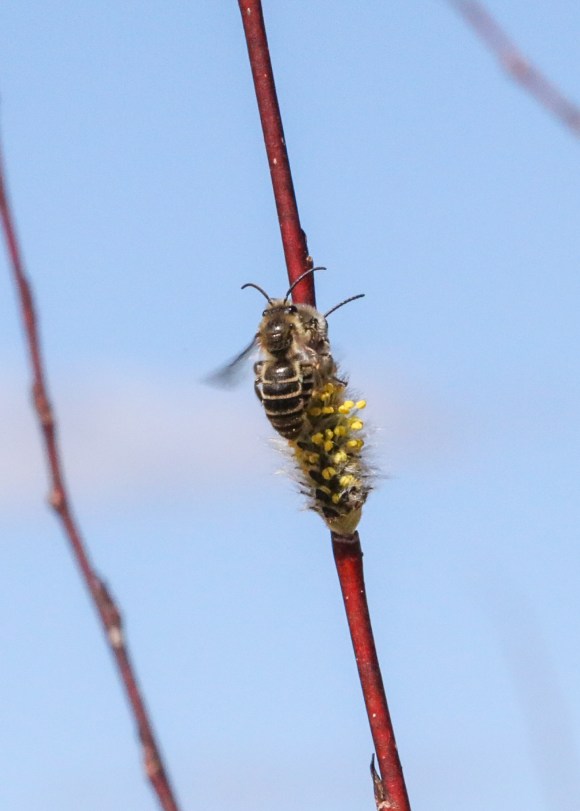
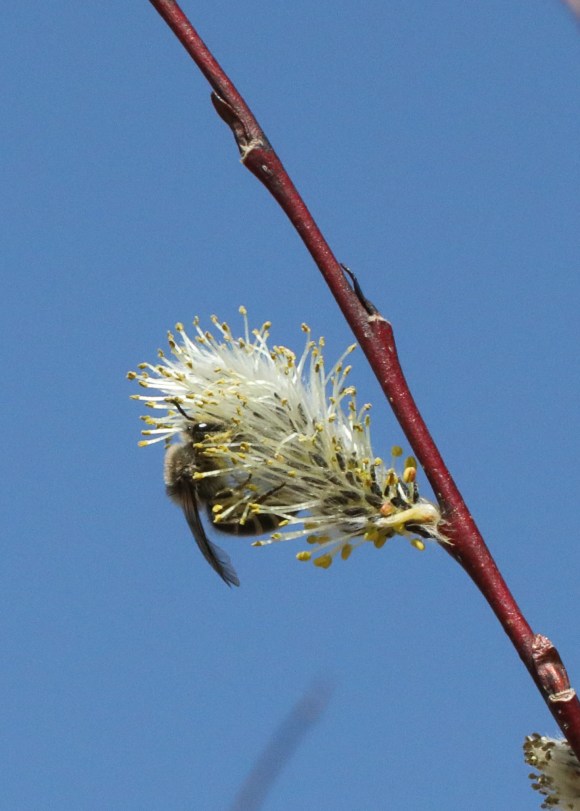
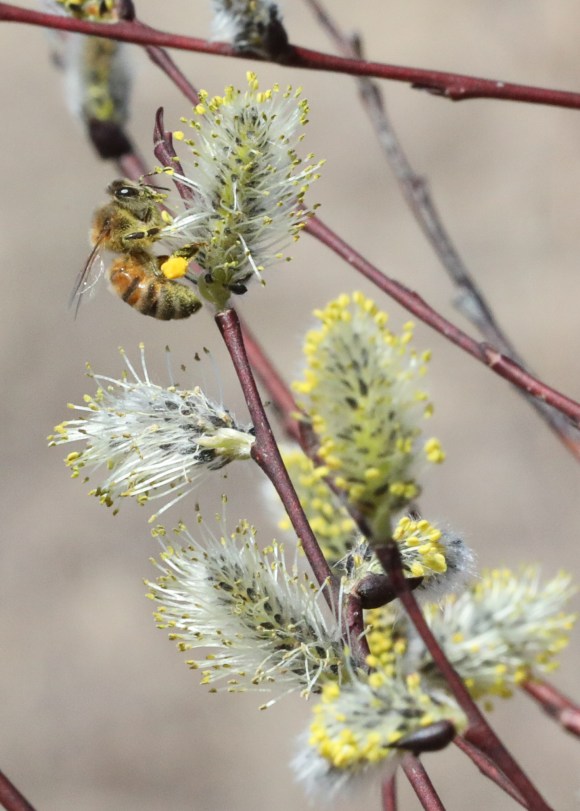
Insects are abundant on the Pussy Willow.  Many pollinators feed on the nectar and pollen.  Bee guests include honeybees, bumblebees, little carpenter bees (Ceratina spp.), cuckoo bees (Nomada spp.), mason bees (Osmia spp.), Halictid bees (including green metallic bees) and Andrenid bees (Andrena spp).

Several Andrenid bees are specialists of willows.  Specialists (aka oligoleges) collect pollen from only one genus or species or only a few genera or species.  These Andrenid bees include:  Andrena (Parandrena) andrenoides, Andrena (Thysandrena) bisalicis, Andrena (Tylandrena) erythrogaster, Andrena (Andrena) frigida, Andrena (Micrandrena) illinoiensis, Andrena (Andrena) macoupinensis, Andrena (Trachandrena) mariae, Andrena (Parandrena) nida, Andrena (Micrandrena) nigrae, Andrena (Micrandrena) salictaria, Andrena (Parandrena) wellesleyana.7,9

In addition to these oligoleges, generalists also collect resources from Salix discolor.  Honeybees and bumblebees are among them.

Small bees gather pollen and nectar from Pussy Willows including little carpenter bees (Ceratina spp.), mason bees (Osmia spp.) and Halictid bees (including green metallic sweat bees).

Ichneumonid wasps harvest pollen and nectar from  S. discolor.  These parasitoid wasps prey on immature stages of many insects and spiders.  They help control populations in natural and semi-natural systems.2

Willows are larval hosts for 289 different species of butterflies, skippers and moths.  Examples include many butterflies (i.e., Nymphalis spp. and Polygonia spp. ),  hairstreak butterflies (Satyrium spp.), Viceroy butterflies (Limenitis archippus) and other brush-footed butterflies (Nymphalidae).4,9

The Viceroy has a special relationship with willows.  Its larvae feed at night on the catkins and then the leaves after flowering.  Unlike other butterflies, adults don’t visit flowers.  They drink from tree sap, rotting fruit, honeydew-an excretion from aphids, animal droppings, and mud puddles.8

Large leaf being eaten by viceroy butterfly caterpillar

Honeydew is an excretion from sap-eating aphids.  These aphids concentrate the sap they drink to harvest the protein.  They excrete the excess liquid and sugars as honeydew.  Willows host 22 species of aphids providing an excellent place for Viceroys to hunt for food.3,8

Viceroy Butterfly feeding on nectar from a wildflower.

Moth larvae also consume Salix spp. including tiger moths (Arctiidae), Geometer moths, leaf blotch miner moths (Gracillariidae), slug caterpillar moths (Limacodidae), Lyonet moths, owlet moths (Noctuidae), prominent moths (Notodontidae), giant silk moths (Saturniidae), and Sphinx moths (Sphingidae).9

In addition, hordes of other kinds of insects use willows in various ways.  Among these are flies, beetles, borers, weevils, gall flies, various true bugs, thrips, sawflies, and 22 different kinds of aphids.  You can see a full list in the Insect Table from Illinois Wildflowers (https://www.illinoiswildflowers.info/trees/tables/table65.html).3  

OK, this doesn’t sound like great news.  But, because of all these insects, birds gather many resources from willows.  Wood Duck, Northern Pintail, Mallard, Common Redpoll, Evening Grosbeak, Pine Grosbeak, American Goldfinch, Common Grackle, and Ruffed Grouse all visit willows.  (Bird Table, https://www.illinoiswildflowers.info/trees/tables/table66.html)1

Even Salix discolor’s rapid growth is good news.  A variety of animals use or consume parts of the willow.  Prairie Voles, Meadow Voles, Fox Squirrels and Black Bears eat leaves, buds and/or catkins.  Cottontail Rabbits and Muskrats feed on the bark.  Beavers eat bark and wood and use the branches for dams and lodges.    Snapping Turtles and Wood Turtles forage on fallen leaves.9

There’s so much life around the Pussy Willow!  From the very beginning of Spring through the year, this shrub nurtures insects and animals.  What a grand addition to any garden!

I hope you enjoyed this blog!  Please send me your stories and questions. I’d love to hear from you!

Happy Gardening!

Mary

Bibliography:

  1. “Bird Table (Salix Spp.).” Accessed April 30, 2025. https://www.illinoiswildflowers.info/trees/tables/table66.html.
  2. Missouri Department of Conservation. “Ichneumon Wasps.” Accessed April 30, 2025. https://mdc.mo.gov/discover-nature/field-guide/ichneumon-wasps.
  3. “Insect Table (Salix Spp.).” Accessed April 30, 2025. https://www.illinoiswildflowers.info/trees/tables/table65.html.
  4. National Wildlife Federation. “Keystone Native Plants, Eastern Temperate Forests-Ecoregion 8.  Accessed April 29, 2025.  https://www.nwf.org/-/media/Documents/PDFs/Garden-for-Wildlife/Keystone-Plants/NWF-GFW-keystone-plant-list-ecoregion-8-eastern-temperate-forests.ashx?la=en&hash=1E180E2E5F2B06EB9ADF28882353B3BC7B3B247D
  5. “Salix Discolor – Plant Finder.” Accessed April 28, 2025. https://www.missouribotanicalgarden.org/PlantFinder/PlantFinderDetails.aspx?kempercode=c808.
  6. “Salix Discolor (Pussy Willow) | Native Plants of North America.” Accessed April 28, 2025. https://www.wildflower.org/plants/result.php?id_plant=sadi.
  7. “Salix Discolor (Pussy Willow) | North Carolina Extension Gardener Plant Toolbox.” Accessed April 28, 2025. https://plants.ces.ncsu.edu/plants/salix-discolor/.
  8. Missouri Department of Conservation. “Viceroy,” January 31, 2024. https://mdc.mo.gov/discover-nature/field-guide/viceroy.
  9. “Pussy Willow (Salix Discolor).” Accessed April 28, 2025. https://www.illinoiswildflowers.info/trees/plants/pussy_willow.htm.
Categories
native plants Pollinator gardening

A Delicate Pink Star

The elaborate blooms of Asclepias incarnata (a.k.a. Swamp Milkweed or Rose Milkweed) draws crowds of pollinators and beneficial insects.   Like other milkweeds, Rose Milkweed feeds Monarch butterfly caterpillars.  This milkweed received the 2005 North Carolina Wildflower of the Year award.  The North Carolina Botanical Garden and the North Carolina Garden Club co-sponsor this award.3

 Asclepias incarnata varies in height from 2 to 5 feet but is typically 3 to 4 feet.  It spreads from 2 to 3 feet.  Rose milkweed grows in zones 3 through 9.3

Although it thrives in medium to wet, neutral to slightly acidic soils with full sun, it adapts to a variety of conditions.  Rose milkweed is one of the few ornamentals that grows in mucky clay.  It tolerates average to occasionally wet soils. high organic matter soils and loam (silt) soils.3,4,5,6,7

In nature, Rose milkweed is found in sunny openings and edges of swamps, river bottomlands, wet meadows, marshes, bogs, fens, open areas along stream banks and ditches, open to partly shaded areas in floodplain forests, thickets, moist black soil prairies, low areas around rivers and ponds, seeps, fens and marshes.  It grows in both natural and disturbed areas.3,7

I’ve grown Rose Milkweed for several years.  Moisture varies across my garden from with average to wet.  In the average soils, Asclepias incarnata plants grow to gorgeous specimens 4 feet high and across.  Unfortunately, then it dies back to one or two shoots.  I never lose it completely though since it reseeds several new plants every year.

I’ve created a rain garden including Rose Milkweed.  The rabbits ate it the first year so I’m waiting to see how this milkweed recovers.  It’s unusual for herbivores to bother Asclepias incarnata.  This plant has the same milky latex sap as other milkweeds.  This sap has bitter tasting cardiac glycosides which taste bad and can make animals ill.3,7

The foliage of Rose Milkweed is medium to dark green on light green, smooth stems.  Its leaves are opposite and touching or clasping the stem.  They are usually 3 inches long and 0.5 inch wide but can grow up to 6 inches long and 1.5 inches wide.3

The leaves are narrowly lanceolate or oblong-lanceolate in shape.  Their edges are smooth (entire).  When the plants are stressed, in sunny, dry conditions, the leaves may turn yellowish-green or pale green.3,7

The wonderfully intricate flowers of Asclepias incarnate resemble those of other milkweeds.  They can be pink, purple or, rarely, white and bloom from early Summer to early Fall.  The umbels of florets form at the top of stems.  Each floret is 0.25 inch across with 5 upright lighter colored hood petals and 5 surrounding darker petals shape, fused stigmas (the female parts) form the column.2,3,7

Like other milkweeds, Rose milkweed carry their pollen in waxy sacs called pollinia.  Pollinarium (Pollinaria plural) is the structure that holds the pollinia.  Each pollinia has 2 pollinia attached to translator arms.2  

In the center is a blackish-brown gland (corpusculum) with a slit.  At the end of the translator arm, just before each sac, is a 900 bend.  This bend lets the sacs rotate during pollination.  Pollinaria sit in a slit in stigmatic column. The corpusculum rests on the outside.2

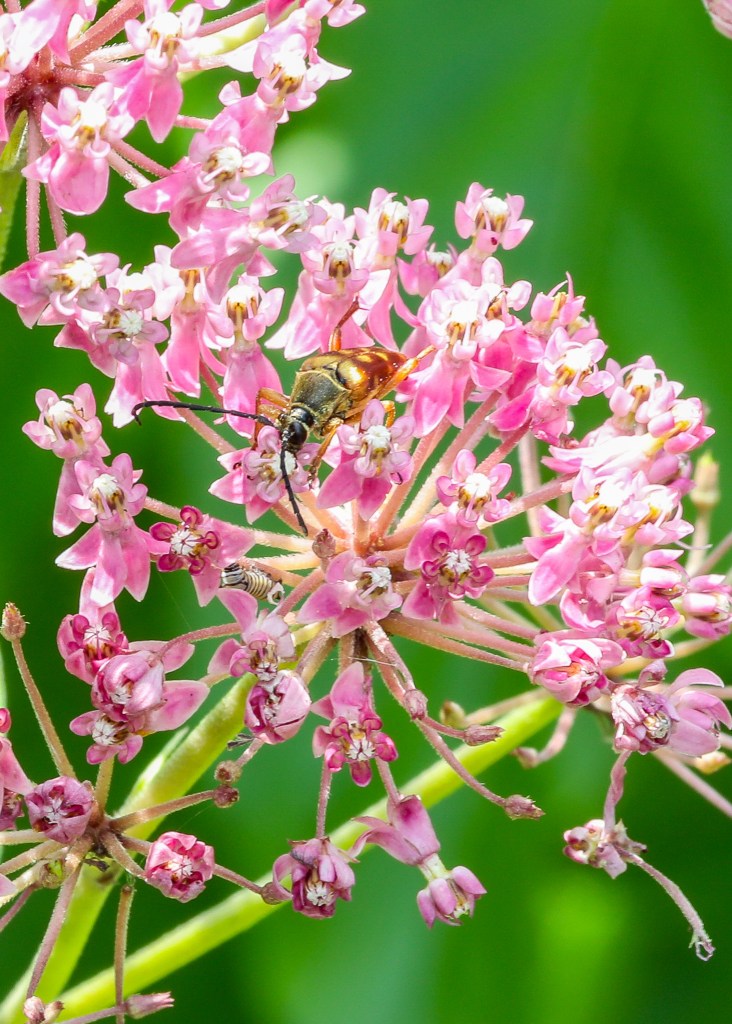
Insects land on  Asclepias incarnata looking for nectar.  The five intricate upright petals have cup-like nectar reserves and downward-curved horns.  Insects sometimes slip on the horns and a leg slides between two petals into the stigmatic slit.2  

Large Carpenter Bee with pollinaria on front legs.

As it tries to get free, bristles in the chamber keep it from going back down.  Not all insects escape.  Small insects can be trapped and die.  Others lose legs.  But medium to large size bees, wasps and butterflies do remove pollinarium and go on to pollinate other milkweed plants.2

How does pollination actually occur?  I’m glad you ask because it’s amazing!  After it’s removed, the pollinarium starts drying out.  The sacs rotate 900 as it dries.  The rotation moves them into the correct position for pollination.2

Once the sacs are in position, the knee bend (not the center oval) slides into the space between the petals.  The arm follows the pollinial sac into the space in the stigmatic column. Then the arm breaks off releasing the insect and pollination is complete.2

An intricate and delicate process where timing (for drying) and the mechanics of the insect’s motion and the pollinaria all play a crucial role!

Like other milkweeds, Asclepias incarnata  supports numerous insects including pollinators and beneficial insects.  The Xerces Society for Invertebrate Conservation classifies Rose Milkweed as of Special Value to Native Bees, Special Value to Bumble Bees, and Special Value to Honey Bees.  In addition, they declare it Supports Conservation Biological Control (beneficial insects).  Milkweeds are also the only larval host for the Monarch butterfly (Danaus plexippus).3,5

Bee visitors include bumblebees (Bombus spp.),

honeybees (Apis),

long-horned bee (Melissodes ssp, Svastra spp.), Yellow-Faced Bees (Hylaeus spp.), Sweat Bees (Lasioglossum spp.), Halictid Bees, Green Sweat Bees (Augochlorini Tribe), Small Resin Bees (Heriades spp.)

and Leafcutter Bees (Megachilespp).5,7,8,9

Wasps also harvest nectar from Rose Milkweed.  They include Sphecid wasps, Vespid wasps (Vespulaspp.), Tiphiid wasps, Spider wasps, Paper Wasps (Polistes spp.) and Square-Headed Wasps (Tachytesspp.).  The Great Black Wasp (Sphex pensylvanicus) and Great Golden Digger Wasps (Sphex ichneumoneus) are two Sphecid wasps that use the nectar.5,7,9

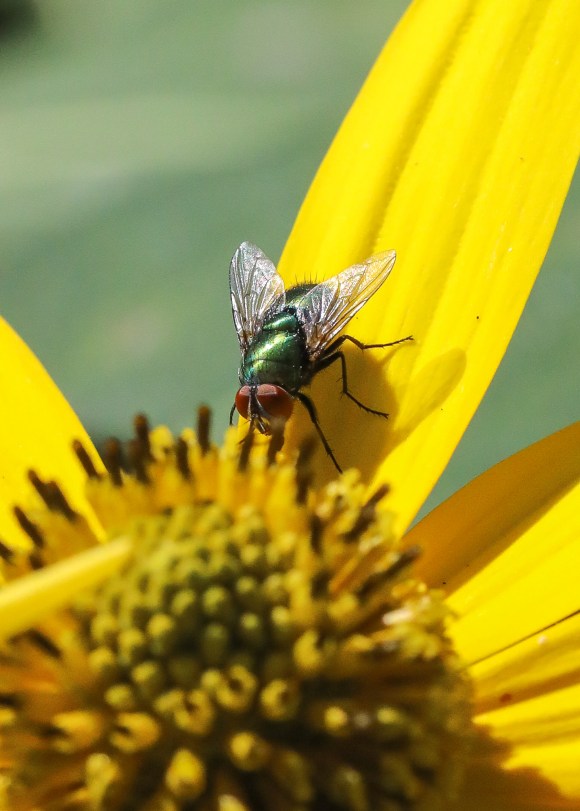
Flies gather nectar from Asclepias incarnata.  Mydas flies, thick-headed flies, Tachinid flies (Archytas spp.), Bee flies (Bombylius spp. and Villa spp.), Green Bottle flies (Lucilia spp.) and Syrphid flies (Tropidiaspp.).5,7,9

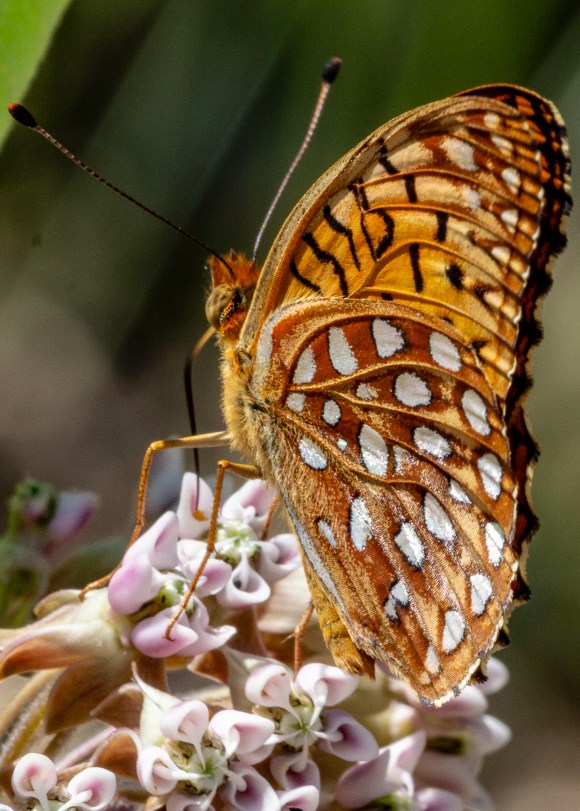
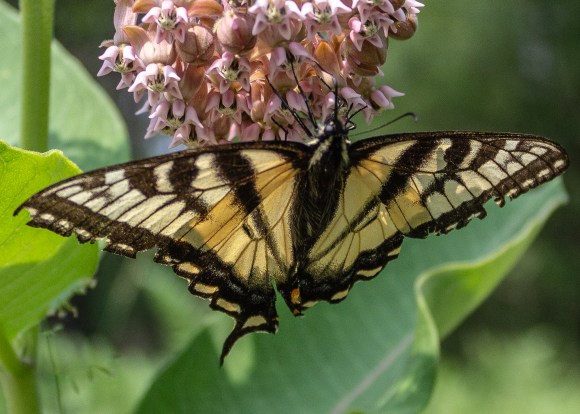
Butterflies, moths and skippers seek out Rose Milkweed for nectar and as a larval host.  Swallowtail butterflies, Greater Fritillaries, Great Spangled Fritillaries (Speyeria cybele), Red Admiral (Vanessa atalanta), Hummingbird Clearwing Moth (Hemaris spp.), Monarch butterflies, and skippers including the Family Hesperiidae.3,4,5,7

Monarch Butterfly on Common Milkweed
Fritillary butterfly on Common Milkweed
Eastern Tiger Swallowtail on Common Milkweed.

Another occasional visitor of the flowers is the Ruby-Throated Hummingbird.4,5,7

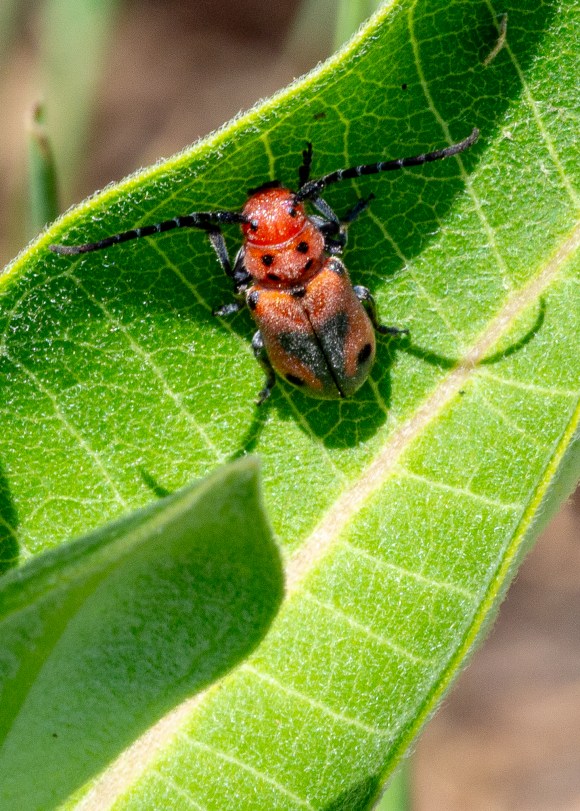
Various insect feed on parts of Asclepias incarnata including leaves, flowers and seeds.  These insect feeders include Labidomera clavicollis (Swamp Milkweed Leaf Beetle), Tetraopes spp. (Red Milkweed Beetles), Oncolites fasciatus (Large Milkweed Bug), and Aphis nerii (Yellow Milkweed Aphid).5,7,9 

Milkweed Bug on Common Milkweed

I hope you’ve enjoyed this adventure with Rose Milkweed.  All the insects love a milkweed and it’s always worth stopping by the milkweed patch to see whose around!

Hope you’re enjoying Spring!

Happy Gardening,

Mary

BIBLIOGRAPHY

  1. Borders, B., Casey, A., Row, J., Wynia, R., King, R., Jacobs, A., Taylor, C., & Mader, E., Pollinator Plants of the Central United States:  Native Milkweeds (Asclepias spp.), 2013.
  2. Eldredge, Eric. “Milkweed Pollination Biology,” n.d.
  3. Asclepias Incarnata (Marsh Milkweed, Swamp Butterfly Weed, Swamp Milkweed) | North Carolina Extension Gardener Plant Toolbox.” Accessed April 1, 2025.  https://plants.ces.ncsu.edu/plants/asclepias-incarnata/.
  4. “Asclepias Incarnata – Plant Finder.” Accessed April 1, 2025. https://www.missouribotanicalgarden.org/PlantFinder/PlantFinderDetails.aspx?kempercode=g410
  5. “Asclepias Incarnata (Swamp Milkweed) | Native Plants of North America.” Accessed April 1, 2025. https://www.wildflower.org/plants/result.php?id_plant=asin.
  6. “Plant of the Week:  Swamp Milkweed (Asclepias incarnata L.).” Accessed April 1, 2025. https://www.fs.usda.gov/wildflowers/plant-of-the-week/asclepias_incarnata.shtml.
  7. “Swamp Milkweed (Asclepias Incarnata).” Accessed April 1, 2025. https://www.illinoiswildflowers.info/wetland/plants/sw_milkweed.htm.
  8. Holm, Heather. Bees:  An Identification and Native Plant Forage Guide. Minnetonka, MN: Pollination Press LLC, 2017.
  9. Holm, Heather. Pollinators of Native Plants:  Attract, Observe and Identify Pollinators and Beneficial Insects with Native Plants. Minnesota: Pollination Press LLC, 2014.
Categories
native plants Pollinator gardening

Sunny Faces

Dedicated to Dad who taught me the names of all the wildflowers.

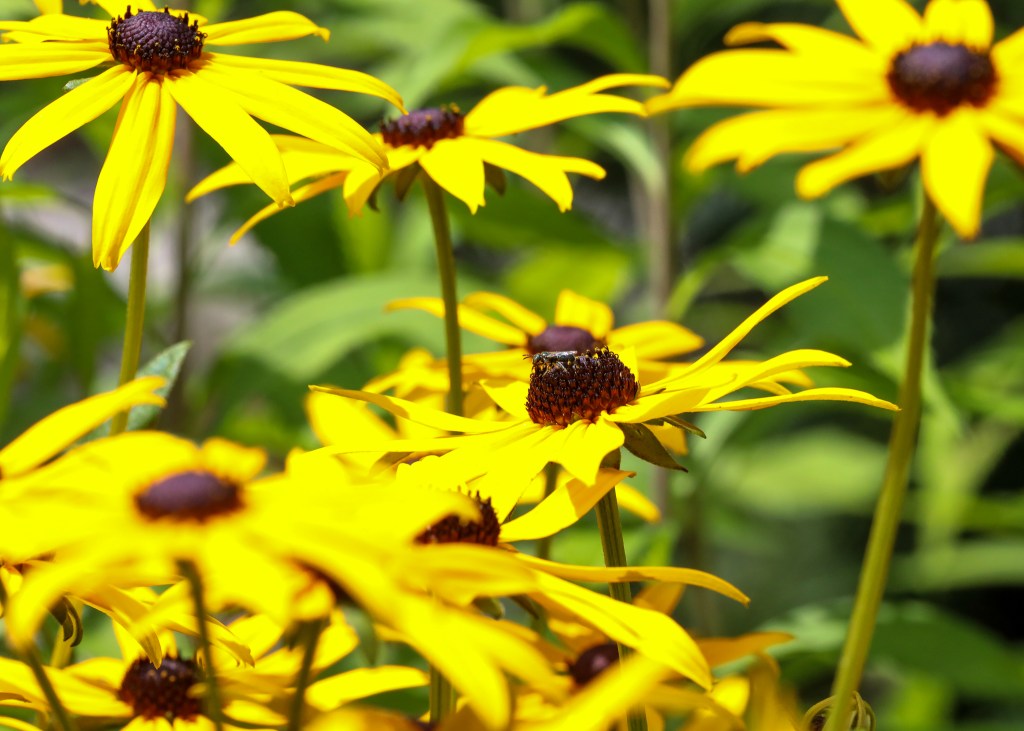
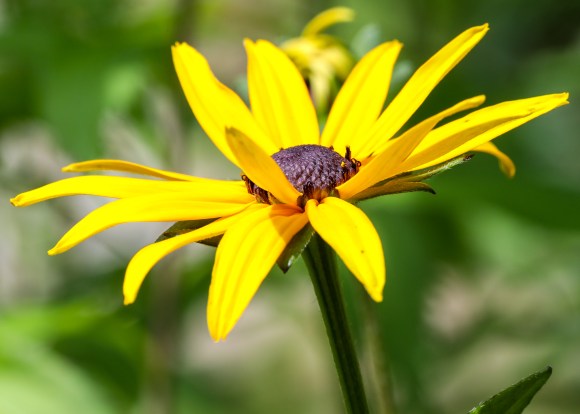
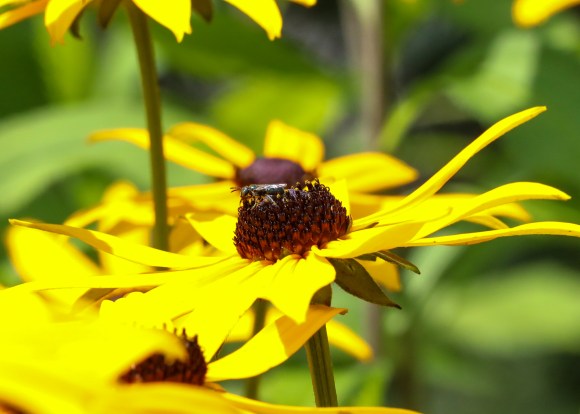
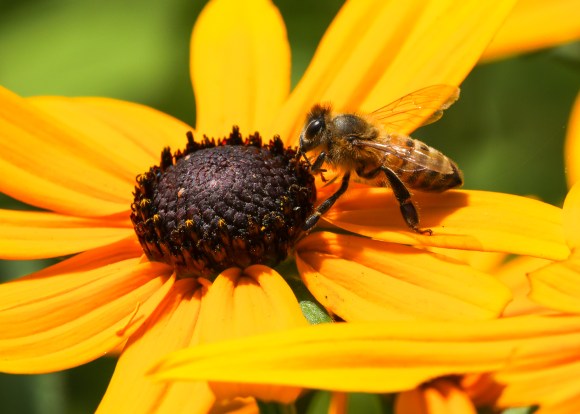
Sunny faces shine from summer into fall on the Black-eyed Susans (Rudbeckia hirta).  Their long bloom season and tidy habit makes them a super star of the native plant world.  R. hirta has long been popular in landscaping but works well in the wild garden and in land restorations.  On top of all this, it supports pollinators and beneficial insects with its pollen and nectar and serves as a larval host.  

Rudbeckia hirta grows in Zones 3 through 8.  It reaches from one to three feet and spreads between one and two feet.  R. hirta’s height is a real bonus.  It’s difficult to find native plants in that middle height range.  Another reason to use it in a planned garden.2,3,4

Black-eyed Susans adapts to a variety of conditions but does enjoy some ideal conditions.  Full sun and slightly moist to moderately dry soil with moderate fertility gives the best bloom to foliage ratio.3  

But Black-eyed Susans also grow in moist, well-drained clay, loam or sandy soil.  Any fairly fertile soil will do.  Too many nutrients, such as near a fertilized lawn, encourage leaves over flowers.

In natural areas, Rudbeckia hirta lives in mesic to dry prairies, woodland edges and openings, mesic to dry upland forests–particularly rocky areas, meadows, limestone glades, plains and savannas.  In developed areas, Black-eyed Susans grow along railroads and roadsides, in waste areas, on eroded clay slopes, pastures, abandoned fields and assorted waste areas.  They thrive on disturbed sites and recover well from fire.4

In the garden, Rudbeckia hirta grows quickly from seed and often flowers the first year.  Each plant is short-lived acting as an annual, biennial or short-lived perennial depending on the growing conditions.  Black-eyed Susans remain in the garden by reseeding.  They don’t reproduce by rhizomes.

It’s a good plant for prairie restorations and wildflower gardens since it blooms the first year.  In the beginning, R. hirta appears to dominate the plantings.  Longer lived perennials generally outcompete it for a better balance.

For those interested is in restoration or land management, the USDA-Forest Service has  excellent resources in their Fire Effects Information System (FEIS).  The publications are peer-reviewed.  Four types of publications are created at the USDA-FS with information drawn from peer-reviewed sources.  Lists of reference articles are available.1

Two document types help when looking for information on a specific species.  I used a Species Review to find associate plants for Black-eyed Susans in natural ecosystems.  There are 1,100 Species Reviews available.1

In addition, FEIS has Fire Studies.  These contain much information on the fire itself but also how different species react to fire.  The best way to find information is to search the species name on the FEIS home page.  It’s also possible to do an advance search for the species in the Species Reviews or Fire Studies.1

The Species Reviews have a section on Habitat Types and Plant Communities that provides lists for plant associates.  This information could be useful for creating more natural wild gardens, restorations and in land managements.  One example is a wet prairie in southwest Michigan included Black-eyed Susans with goldenrods (Solidago spp.), sedges (Carex spp.), Indian grass (Sorghastrum nutans), marsh fern (Thelypteris palustris), queen-of-the-prairie (Filipendula rubra), purple meadowrue (Thalictrum dasycarpum), prairie cordgrass (Spartina pectinata), and cowbane (Oxypolis pectinata).1

In addition to natural communities, the USDA-Forest Service FEIS document discusses several restorations using R. hirta.  It covers this plants’ reactions to pollutants like ozone and cadmium and a great deal more.  The FEIS material is an excellent resource for anyone interested in Rudbeckia hirta either in the garden, in managing lands or in a nature area.1

Disease and pests don’t usually bother Black-eyed Susans.  They may have powdery mildew especially when planted in moist places and in the Fall.  Slugs and snails are also occasionally a problem.  Deer and other herbivore rarely eat it since the stems, leaves and phyllaries are covered in tiny hairs and it has little food value.

The greyish-green leaves of Rudbeckia hirta alternate along the stem.  Covered in stiff, short hairs, they grow up to 7 inches long and 2 inches wide. These hairs provide part of its name.  Hirta means hairy.

The foliage is lanceolate, oblanceolate or ovate in shape.  Leaf margins may or may not have blunt teeth and are fringed with tiny hairs.  Long petioles attach lower leaves while middle and upper leaves have short petioles or clasp the stem.

Black-eyed Susans blooms from early Summer into the Fall and blooms are carried singly on each stem.  As composite flowers, each is made up of disc florets and ray florets.  Many dark brown disc florets fill the center of each flower.  They start out as a tightly packed, flattened disc.  As each one opens, the anthers appear.  The yellow pollen creates a ring that moves up as the florets open.   The disc of florets expands until it forms a cone.

Each bloom has 8 to 20 bright yellow ray florets a.k.a. The whole flower is 2 to 3 inches across.  They last a long time since the bright yellow petals  continue after the disc florets finish blooming.  In hot areas, plants flower longer with some afternoon sun.

Black-eyed Susans host numerous insects providing pollen and nectar.  It serves as a larval host.  Bees and flies, some wasps, beetles and butterflies visit it.5,6  

Rudbeckia hirta is one of those flowers with nectar guides or landing zones for bees.  Bees  see into the ultraviolet zone unlike humans.  Certain flowers have special marking to lead the bees to their resources.5,6  

Possible markings include lines going to the flower center or spots near the center.  R. hirta has patches forming a ring around the center.  This area absorbs UV and has a dark brown color in UV light.  This visual clue can be seen from a distance to advertise the floral resources.5,6

Numerous middle-sized bees visit the Black-eyed Susans.  These include Honeybees (Apis spp.), Long-Horned Bees (Melissodes spp.), Leafcutter Bees (Megachile spp.), and Cuckoo Bees (Coelioxys spp.)  Long-Horned Bees (and others) collect pollen by following the ring of open florets around the cone.5,6

It also has several specialist bees including Andrena rudbeckiae, Pseudopanurgus albitarsis, P. rudbeckiae, Melissodes denticulatus, M. druriellus, M. illatus, Megachile pugnata, and M. xylocopoides.

Many references list Bumble Bees (Bombus spp.) using Rudbeckia hirta.  In my garden, I see mostly small bees and flies.  I wonder if this because I have Bumble bee magnets like  Coreopsis, Silphium, Monarda, Veronicastrum, Agastache and Rudbeckia lanciata.5,6

The small bees visiting Black-eyed Susans included Sweat Bees (Halictus spp.), Green Sweat Bees (Agapostemon spp., Augochlorini Tribe), and Small Carpenter Bees (Ceratina spp.).5,6

Many wasps use Rudbeckia hirta including Bee Wolves (Philanthes spp.), sand wasps, mason wasps, thread-waisted wasps .6

Bee flies visit Black-eyed Susans especially those from the family Bombyliidae. They gather both pollen and nectar.6

In addition, Syrphid flies harvest pollen and nectar.  They use their front legs to hold the anthers.  Then they lap up the pollen with their mouthparts.6

Rudbeckia hirta serves as a larval host for both moths and butterflies.  Wavy-Lined Emerald Moth ( Synchlora aerata) and Southern Emerald Moth (Synchlora frondaria),  Common Eupithecia (Eupithecia miserulata), Gorgone Checkerspot Butterfly (Chlosyne gorgone), Bordered Patch Butterfly (Chlosyne lacinia) and Silvery Checkerspot Butterfly (Chlosyne nycteis) all lay eggs on R. hirta.4,6

The Silvery Checkerspot Butterfly is an intricately marked, 1.25- to 2-inch-wide butterfly.  It’s part of the Brush-footed family (Nymphalidae)—the largest family of butterflies in the world.  Brush-footed butterflies include monarchs, fritillaries, crescents, anglewings, ladies, admirals, emperors, satyrs, and more.7

The name comes from the brush-like hairs on their short forelegs.  These hairs are sensitive to taste and touch.  Females use them to find larval host plants.  These brush feet also locate nectar and other high sugar liquids the adult butterflies need for food.7

The Silvery Checkerspot Butterfly uses many members of the aster family for larval hosts including Black-eyed Susans, native asters (Symphyotrichum), and sunflowers (Helianthus).  Females lay eggs on the bottoms of leaves.  

Young caterpillars stay in groups with up to 50 on a leaf.  They eat the entire leaf except the veins and then move on.  The third-instar larvae winter over.7

I hope you enjoyed reading about Black-eyed Susans as much as I have.  I’d love to hear about your plant adventures in the garden or the wild!  Please feel free to contact me with a story, comment or question! 

Happy Gardening,

Mary

BIBLIOGRAPHY:

  1. “Rudbeckia Hirta.” Accessed March 4, 2025. https://www.fs.usda.gov/database/feis/plants/forb/rudhir/all.html.
  2. “Rudbeckia Hirta – Plant Finder.” Accessed March 4, 2025. https://www.missouribotanicalgarden.org/PlantFinder/PlantFinderDetails.aspx?taxonid=277225.
  3. “Rudbeckia Hirta (Black Eyed Susan, Black-Eyed Susan, Gloriosa Daisy) | North Carolina Extension Gardener Plant Toolbox.” Accessed March 4, 2025. https://plants.ces.ncsu.edu/plants/rudbeckia-hirta/.
  4. “Rudbeckia Hirta (Black-Eyed Susan) | Native Plants of North America.” Accessed March 4, 2025. https://www.wildflower.org/plants/result.php?id_plant=ruhi2.
  5. Holm, Heather. Bees:  An Identification and Native Plant Forage Guide. Minnetonka, MN: Pollination Press LLC, 2017.
  6. Holm, Heather. Pollinators of Native Plants:  Attract, Observe and Identify Pollinators and Beneficial Insects with Native Plants. Minnesota: Pollination Press LLC, 2014.
  7. Missouri Department of Conservation. “Silvery Checkerspot,” January 31, 2024. https://mdc.mo.gov/discover-nature/field-guide/silvery-checkerspot.
  8. NC State News. “What Colors Do Bees See? And How Do We Know?,” July 27, 2024. https://news.ncsu.edu/2024/07/27/wms-what-bees-see/
Categories
native plants Pollinator gardening

A Constellation of Blue

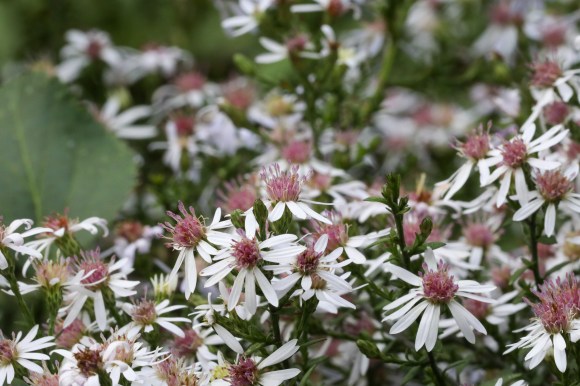
A constellation of pale blue flowers tops each Heart-Leaved Aster (AKA Blue Wood Aster or Symphyotrichum cordifolium).  Like all asters, it offers precious pollen and nectar to pollinators and beneficial insects at summer’s end.  The plant itself is a larval host for butterflies and moths.1

In nature, Heart-Leaved Aster grows in moist to dry deciduous woodlands, woodland borders, next to woodland paths, rocky wooded slopes, upland meadows, thinly wooded bluffs, shaded stream banks, and upland forests.1,5

Highly adaptable, Symphyotrichum cordifolium accepts clay, loam and sandy soils.  It grows from one to three feet tall and spreads from eighteen inches to two feet.  This aster thrives in zones three to eight.  It grows in light shade to part sun and moist to dry conditions.1

The leaves of Symphyotrichum cordifolium are highlighted by its scientific name.  Unlike the thin, lance-shaped leaves of most asters, this plant has broader, heart shaped ones.  Cordifolium  means heart-shaped and (cordi-)  means leaves (folium).  And so, the Heart-Leaved Aster!  

The leaves can reach five inches long and three inches across.  They become smaller moving up the plant. The lower leaves are fully heart-shaped (or cordate).  But the upper leaves become more oval and may be fully ovate.  They are medium green and smooth.1

The flowerheads are the highlight of the Heart-Leaved Aster!  Ranging from six inches to eighteen inches long, these conical heads shine with lavender, light-blue violet or white florets.  Each of these half inch florets has seven to fifteen petals (ray florets) and a yellow center of disc florets.1  

Once the disc florets are fertilized, the center turns a mauve pink adding visual interest to the flowerhead.  Floral bracts cover the base of each floret.  The bracts are pale with dark green tips.1

One of the first natives in my garden, I’ve grown this plant for close to 20 years.  I’ve always found is covered with flowers, pollinators and beneficials of all kinds.  That said, it has a few challenges.

It spreads by runners and by self-seeding.  When Heart-Leaved Aster’s happy, it can really colonize a garden.  It is easy to pull, and you can clip the seed heads to prevent self-seeding.1

Poorly drained soil can lead to powdery mildew, leaf spots and rust.  If the weather is too hot and dry, this aster often loses its lower leaves.  I plant it in the middle of the bed.  This location hides leaf loss and helps cover any trouble on the other leaves.4

Finally, like other asters, herbivores love it.  Rabbits, deer, ground hogs, etc., eat it, especially in the Spring.  Use whatever repellents preferred.  I also plant asters among plants animal don’t like, such as, iris.

The free herbivore pruning helps later in season though.  In fact, Symphyotrichum cordifolium benefits from pruning back several times before mid-summer.  This attention helps increases bushiness, controls height and might even eliminate the need to stake it!4

Heart-Leaved Aster draws crowds of pollinators and beneficial insects.  Like all Symphyotrichum, it is a keystone plant.  There are two types of keystone species:  one type acts as hosts for butterfly and moth caterpillars and the other feeds specialist bees.  The bee associated keystone plants also serves generalist bees.  Asters are both.2

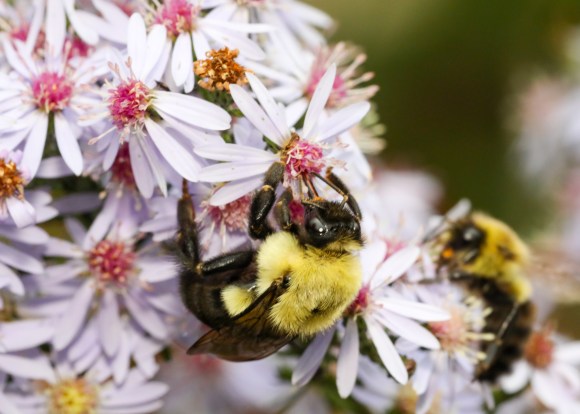
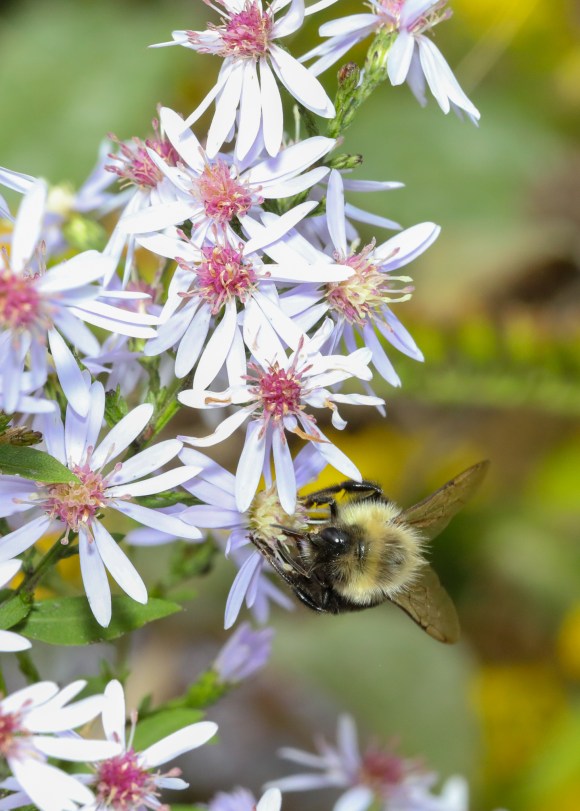
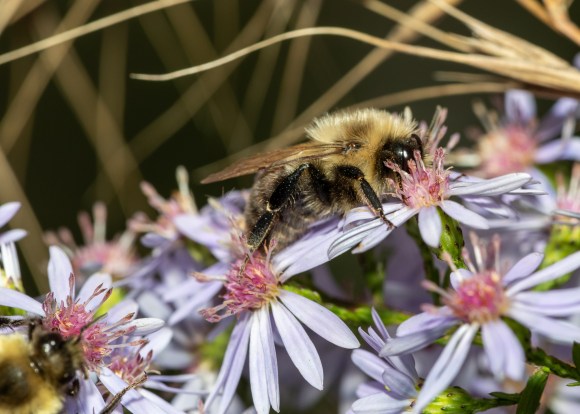
Long-tongued bees, short-tongued bees, butterflies, moths, skippers, wasps and beetles all seek out its nectar and pollen.  The Xerces Society for Invertebrate Conservation designate Symphyotrichum cordifoliumof Special Value to Native Bees and state it Supports Conservation Biological Control.  Bumblebees find it especially helpful.1,6 

S. cordifolium blooms when new bumblebee queens emerge, males hatch and mating flights occur.  I find males sleeping on the plants on cool late summer and early autumn mornings.  The flowers provide important energy resources for successful mating flights and overwintering queens.

Heart-Leaved Aster support many specialist bees.  As a keystone plant for pollen specialist bees, the Symphyotrichum genus feeds several mining bees in the Andrena genus.   Specifically, these include Andrena (Callandrena s.l.) asteris, Andrena (Callandrena s.l.) asteroides, Andrena (Cnemidandrena)hirticincta, Andrena (Cnemidandrena) nubecula, Andrena (Callandrena s.l.) placata, Andrena (Callandrena s.l.simplex, and Colletes simulans.5

Heart-Leaved Aster is also visited by metallic green sweat bees, Halictus (sweat bees), Ceratina (small carpenter bees) and honeybees (Apis).

Numerous adult butterflies and skippers nectar at the Heart-Leaved Asters including migrating Monarchs (Danaus plexippus) and Red Admirals (Vanessa atalanta).  In its role as a keystone plant, it feeds many caterpillars from butterflies and, especially, moths.  Different larvae eat every part of the plant.1

By supporting moths, Symphyotrichum cordifolium contributes to pollination of wild plants overall.  Some flowers evolved a plant pollinator relationship with moths.  These flowers usually open at night, are white or pale, and have a stronger fragrance at night.  Moths use scent to find food and mates.  Yucca is a well-known example.7  

However, moths provide much more extensive pollination services.  Like generalist bees, some moths also visit different types of flowers.  Most of these plants aren’t larval hosts.  Some are also pollinated by bees.  When they’re bee pollinated, moths supplement the bee’s work.7

In addition, moths are more efficient than bees in some cases.  In the past, studies only measured pollen on mouthparts.  But moths carry a lot of pollen on their hairy underbelly.  When they land on a flower, their belly presses against the stigma to transfer pollen.7,8

Moths usually fly over longer distances than bees.  Bees tend to stay near their nest when possible.  Moths add genetic diversity by bringing pollen from distant plant populations.7

A variety of moth and butterfly caterpillars use Symphyotrichum cordifolium.  Different larvae eat flowers, seeds, and leaves while others bore through stems and/or roots.  I’ve detailed some different species and which plant parts they eat in the next few paragraphs.3

Chlosyne nycteis (Silvery Checkerspot butterflies) and Phyciodes tharos (Pearl Crescent butterflies) consume foliage.  Some moths also devour the leaves, such as, Pale-Banded Dart (Agnorisma badinodis(syn. Xestia badinodis)), Sharp-Stigma Looper Moth (Ctenoplusia oxygramma (syn. Agrapha oxygramma)), Halloween Paint (Cucullia alfarata), Rusted Paint (Cucullia postera), Confused Eusarca (Eupithecia confusaria), Lost Sallow (Euplexia devia), Green Leuconycta (Leuconycta diphteroides), Small Brown Quaker (Pseudorthodes vecors) and Dimorphic Gray (Tornos scolopacinarius).3

Leaf miners include Gracillarlid Moth sp. (Acrocercops astericola), Tischeriid Moth sp. (Astrotischeria astericolaI), Scythridid Moth sp. (Landryia impositellaI) and Bucculatricid Moth sp. (Bucculatrix staintonella).3

Some feed on developing seeds and/or flowers including Blackberry Looper (Chlorochlamys chloroleucaria), White-Dotted Groundling (Condica videns (syn. Platysenta videns)), Common Pug (Eupithecia miserulata), Spotted Straw (HeIliothis turbatus), Tortricid Moth sp. (Phaneta parmatana), Tortricid Moth sp. (Phaneta tomonana), Common Tan Wave (Pleuroprucha insulsaria), Arcigera Flower Moth (Schinia arcigera), Goldenrod Flower Moth (Schinia nundina), Northern Flower Moth (Schinia septentrionalis), Wavy-Lined Emerald (Synchlora aerate) and Striped Garden Caterpillar (Trichordestra legitima).  Some moths consume foliage in addition to developing seeds and/or flowers.  These include Black Arches (Melanchra assimilis) and Dark-Spotted Palthis (Palthis angulalis).3

And finally, moth larva that bore through stems and/or roots are  Aster Borer Moth (Carmenta corn) , Tortricid Moth sp. (Eucosma robinsonana), Burdock Borer Moth (Papaipema cataphracta), Aster Borer Moth (Papaipema impecuniosa), Tortricid Moth sp. (Phaneta essexana) and Tortricid Moth sp. (Sonia canadana).3 

I hope you enjoyed this look at the Heart-Leaved Aster as much as I have.  I’d love to hear about your plant adventures in the garden or the wild!  Please feel free to contact me with a story, comment or question!

Happy Gardening,

Mary

Bibliography:

  1. “Blue Wood Aster (Symphyotrichum Cordifolium).” Accessed December 1, 2024. https://www.illinoiswildflowers.info/woodland/plants/bl_woodaster.htm. Accessed December 1, 2024.
  2. “Keystone Native Plants:  Eastern Temperate Forests-Ecoregion 8.” https://www.nwf.org/-/media/Documents/PDFs/Garden-for-Wildlife/Keystone-Plants/NWF-GFW-keystone-plant-list-ecoregion-8-eastern-temperate-forests.ashx?la=en&hash=1E180E2E5F2B06EB9ADF28882353B3BC7B3B247D
  3. “Moth Table (Symphyotrichum Spp.).” Accessed December 1, 2024. https://www.illinoiswildflowers.info/woodland/tables/table29.html.
  4. “Symphyotrichum Cordifolium – Plant Finder.” Accessed December 1, 2024. https://www.missouribotanicalgarden.org/PlantFinder/PlantFinderDetails.aspx?kempercode=a788.
  5. “Symphyotrichum Cordifolium (Blue Wood Aster, Common Blue Wood Aster, Heart-Leaved Aster) | North Carolina Extension Gardener Plant Toolbox.” Accessed December 1, 2024. https://plants.ces.ncsu.edu/plants/symphyotrichum-cordifolium/.
  6. “Symphyotrichum Cordifolium (Broad-Leaved Aster) | Native Plants of North America.” Accessed December 1, 2024. https://www.wildflower.org/plants/result.php?id_plant=syco4.
  7. Xerces Society. “The Night Shift: Moths as Nocturnal Pollinators.” Accessed December 1, 2024. https://xerces.org/blog/the-night-shift-moths-as-nocturnal-pollinators.
  8. “Moths are more efficient pollinators than bees, shows new research.”  Accessed December 1, 2024. Ellis, Lauren, https://www.sussex.ac.uk/broadcast/read/60568.
Categories
native plants Pollinator gardening

A Fabulous, Fuzzy Flower

Big, bold and filled with butterflies, Sweet Joe-Pye Weed (Eutrochium purpureum) stands out in any garden.  Large mauve-purple flowers feed masses of pollinators.  Not only do butterflies, moths and skippers nectar at the blooms but various caterpillars feed on it.10

Eutrochium purpureum grow in zones four to nine.  It usually ranges from three to seven feet tall.  In a drier location, it can flower at only one foot high and, in an ideal spot, can reach eight to ten feet.2,3,10  

It prefers partial shade to full sun and moist to medium, even moisture conditions.  Rich, loamy soil is ideal.  Eutrochium purpureum spreads by seeds and runners.  

In nature, it’s found in open woodlands, partially shaded seeps, savannas, partially shaded riverbanks and streambanks, thickets, in open woodlands, wet meadows, wooded slopes and low moist ground.2,3,8,10

Given these natural habitats, Sweet Joe-Pye weed easily adapts to wildflower gardens, naturalized landscapes and perennial borders.  Its moisture tolerance means  Eutrochium purpureum enjoys the edges of rain or water gardens.  Recently, Sweet Joe-Pye Weed began self-seeding near my rain gardens.  Finally, it suits both formal and informal settings.

Sweet Joe-Pye Weed will react to less-than-ideal conditions.  In full shade, it becomes leggy and may  fall over.  If it dries out, its leaves turn yellowish green.  

In my garden, it grows tallest in a rainy year.  In partial shade, the plants thrive even without extra water.  In full sun, the plants are more likely to need staking possibly from too little water. 1,2,3,10    

If a shorter plant is preferred, Sweet Joe-Pye Weed can be cut back to approximately two feet in late spring or early summer.  These plants usually bloom around the same time as those that haven’t been cut.  The flowers are a generally a little smaller than usual.1

Don’t give up on this one in the Spring!  It tends to sleep late and the stems develop randomly.  But it has been a very reliable grower in my garden—returning with full and abundant growth each year.

Chicago Botanic Garden grew a variety of Eutrochium spp. and related plants in an evaluative study between 2001 and 2013.  They trialed each genus between four and six years.  Eutrochium purpureum performed well each year with flowers up to twelve inches across.  It suffered from powdery mildew one year but not in others.1

Sweet Joe-Pye Weed has a straight, unbranched, light green stem giving the plant an outstanding erect habit.  The leaf nodes are enlarged and naturally purple.  Some plants have more purple on the stem than others. 2,3,10    

Shallow, fibrous roots support the plant.  Sweet Joe-Pye weed spreads as a clump as well as self-seeding.  If it grows in an unwanted place, the plants are easy to pull.

Eutrochium purpureum’s leaves form an attractive whorl around its stem.  Growing in groups of three to five, the medium green, the matte leaves are ovate to lanceolate with lightly serrated edges.  The lower surface is pale green and may be slightly hairy.  Some ecotypes have vanilla-scented foliage.10

In mid-summer to early fall, Sweet Joe-Pye Weed’s magnificent flowers grace the garden.  The main bloom sits  at the top of the stem.  On established plants, side blossoms form below this head adding to the show. 

Each compound head can measure up to 12 to 18 inches across and are made up of one or more panicles.  In my Southern Michigan garden,  Eutrochium purpureum’s flowerheads range from five inches to twelve inches across.  They are most often between five and eight inches.

Blooms range from whitish pink to purplish pink.  I find the more sun, the deeper the flower color.  Plants growing in deep shade have almost white flowers.  Flowers carry a vanilla scent.

These superb blooms have five to eight disk florets per panicle and no ray florets.  The overall flowerhead is slightly dome shaped. Each floret has a series of overlapping pink, oblong bracts.  As they open, a divided white style is strongly exerted (extended past the floret) giving the bloom a fuzzy look. 2,3,8,10  

Numerous pollinators forage on the compound flowerheads of Sweet Joe-Pye Weed.  Most seek out nectar.  Eutrochium purpureum secretes its nectar at the base of the style.  Each tiny, blooming floret offers a supply.2,3,8,10  

The Xerces Society for Invertebrate Conservation declared Eutrochium purpureum of Special Value to Native Bees.2  Visiting bees include Bombus spp. (bumblebees), Melissodes spp. (miner bees), Coelioxys (cuckoo bees), Agapostemon (metallic green sweat bees) and Megachile spp. (leaf-cutting bees).    In my garden, I’ve also seen other sweat bees like Halictus spp., honey bees (Apis app.) and large and small carpenter bees, Xylocopa spp. and Ceratina spp.

Most of these bees collect nectar.  But Bombus spp. (bumblebees) and Melissodes spp. (miner bees) also gather pollen.8,10

Butterflies, moth, and skippers seek out Sweet Joe-Pye Weed in the mid-summer to early fall.  Celastrina(Azure Butterflies), Epargyreus clarus (Silver Spotted Skipper), Limenitis arthemis arthemis (White Admiral Butterflies), Nymphalis urticae (Milbert’s Tortoiseshell Butterflies), Papilio glaucus (Eastern Tiger Swallowtail Butterflies), and Danaus plexippus (Monarch Butterflies) sip the nectar from the fluffy, pink flowerheads.

Eutrochium purpureum is also a larval host supporting several moth caterpillars.  These eat its leaves and other parts.  Emmelina monodactyla (Common Plume Moth), Perigea xanthioides (Red Groundling), Phragmatobia fuliginosa (Ruby Tiger Moth), and Eupithecia miserulata (Common Pug) all feed on Sweet Joe-Pye Weed’s leaves. Carmenta bassiformis (Eupatorium Borer Moth) consumes the roots.  Schinia trifasciata (Three-Lined Flower Moth) relies on its flowers. 4,5,6,8,9,10

Beneficial insects are not particularly attracted to Eutrochium purpureum.  Flies, thread-waisted and sand wasps occasionally visit. Instead, these short-tongued beneficials flock to another Eutrochium—the white blooming Boneset (Eupatorium perfoliatum).8 But that’s the subject for another blog!

I hope you’ve enjoyed hearing about Sweet Joe-Pye weed—a stunning, versatile and useful plant.  Eutrochium purpureum is easily available at most native plant nurseries.  Next year those big, fuzzy flowers could be blooming in your garden!

If you’ve enjoyed this blog and would like to leave a comment or share a story, please contact me in the box below!

Warm Regards,

Mary

References:

  1. Hawke, Richard. “A Comparative Study of Joe-Pye Weeds (Eutrochium Spp.) and Their Relatives,” n.d.
  2. “Eutrochium Purpureum (Gravel Weed, Indian Sage, Joe-Pye Weed, Marsh Milkweed, Motherwort, Pride of the Meadow, Purple Joe-Pye Weed, Sweet Joepyeweed) | North Carolina Extension Gardener Plant Toolbox.” Accessed October 20, 2024. https://plants.ces.ncsu.edu/plants/eutrochium-purpureum/.
  3. “Eutrochium Purpureum (Purple Joepyeweed) | Native Plants of North America.” Accessed October 20, 2024. https://www.wildflower.org/plants/result.php?id_plant=eupu21.
  4. “Minnesota Seasons – Common Eupithecia.” Accessed October 30, 2024. http://www.minnesotaseasons.com/Insects/common_eupithecia.html.
  5. Missouri Department of Conservation. “Plume Moths.” Accessed October 30, 2024. https://mdc.mo.gov/discover-nature/field-guide/plume-moths.
  6. Missouri Department of Conservation. “Three-Lined Flower Moth.” Accessed October 30, 2024. https://mdc.mo.gov/discover-nature/field-guide/three-lined-flower-moth.
  7. Perigea Xanthioides.” In Wikipedia, January 8, 2023. https://en.wikipedia.org/w/index.php?title=Perigea_xanthioides&oldid=1132346411
  8. Holm, Heather. Pollinators of Native Plants:  Attract, Observe and Identify Pollinators and Beneficial Insects with Native Plants. Minnesota: Pollination Press LLC, 2014.
  9. “Species Phragmatobia Fuliginosa – Ruby Tiger Moth – Hodges#8156.” Accessed October 30, 2024. https://bugguide.net/node/view/41933.
  10. “Sweet Joe-Pye Weed (Eutrochium Purpureum).” Accessed October 20, 2024. https://www.illinoiswildflowers.info/savanna/plants/sw_joepye.htm.
Categories
native plants Pollinator gardening

A Summer Cornucopia

Part 2

And we’re back for Part II of The Summer Cornucopia!  Today the focus is on insects and how they use Common Milkweed.  If you missed Part I and are interested in the plant and pollination, here’s a link: https://wordpress.com/post/wildthingsinthe.garden/1831.

Asclepias syriaca draws an abundance of insects.  The sap, leaves and flowers are all used for food while blooms provide nectar to many insects.  Common Milkweed supports different life stages of flies, wasps, bees, butterflies, moths, skippers, plant bugs and beneficial insects.  Even hummingbirds try to sip nectar although they can’t reach it.1,7  

The most famous visitor to Common Milkweed is the Monarch butterfly (Danaus plexippus).  Monarchs can only use milkweeds (Asclepias) to feed their caterpillars. Growing milkweed supports the generations of Monarchs that hatch over the summer months.  When the last summer generation is born and transforms into an adult, they’ll drink nectar from milkweed and other flowers for food and fuel for their migration.8  

Growing native milkweeds helps preserve the existing Monarch population.  If you’re interested in helping Monarchs, Monarch Watch has excellent information on creating Monarch Waystations at https://www.monarchwatch.org/waystations/ .  Here are the highlights of the plan!8

How big does a waystation have to be?  Any size will help the Monarchs (and other pollinators!).  If possible, a 100 square foot waystation is highly effective.  The area doesn’t have to be all in one spot.  There can be several plantings throughout a property.

Sun is important for Monarchs.  Like other insects, they need heat and sunlight to warm themselves for flying and daily activities.  An area with six or more hours of sunlight is required.  Coincidentally, most milkweeds thrive under those conditions.

Milkweed also grow well in well-drained soil.  Place Monarch Waystations in low clay areas with fast draining soils.

Place plants close together (although not closer than recommended).  Monarchs and their caterpillars need shelter and protection from predators and the weather.

What about milkweed?  At least ten plants are recommended preferably with two or more types of milkweeds.  This planting scheme gives an extended season of bloom and allows the Monarchs longer access to the milkweed plants and nectar.  One type of milkweed is okay if more than ten plants are included.

Establish continuous supply of nectar plants.  Use annual, biennial and perennial plants.  Native plants are a great choice.  These plants also benefit the other pollinators.

Finally, create a management plan.  How will the waystation be maintained?  The plan contains basic garden maintenance:  mulching, fertilizing, removing invasive plants.  Additionally, it includes Monarch specific items:  eliminate insecticides, add more features like a water source or puddling spot.

Again, for more information on Monarch Waystations and other resources, including free milkweed programs, go to https://www.monarchwatch.org/waystations/

In addition to Monarchs, swallowtails (Papilio), fritillaries (Speyeria), viceroy butterflies (Limenitis), sulfurs (Pieris), and other butterflies also visit Asclepias syriaca.  Skippers use Asclepias syriaca for nectar including Ancyloxipha.1,7  

Common Milkweed is a larval host for the striking Milkweed Tussock Moth (Euchaetes egle) caterpillar, the Unexpected Cycnla (Cycnia inopinates) and the Delicate Cycnia (Cycnia tenera).  All are part of the group Artiinae or Tiger Moths.1  

The Delicate Cycnia (Cycnia tenera) lacks the usual aposematic coloration  It has a soft tan larva and a charming white adult with just a touch of orange on the head and wing edges.  Instead, it emits aposematic ultrasound calls when caught!  Bats release their prey when they hear the calls.  During the day, their color variation seems to keep birds away.1,9

Both long-tongued and short-tongued bees visit Common Milkweed for nectar.  These include honeybees (Apis),

Bumble Bees (Bombus),

leaf-cutter bees (Megachile),

cuckoo bees (Coelioxys), small carpenter bees (Ceratina)

and sweat bees (Halictus and Lasioglossum).1,7,10

Many wasps enjoy nectaring at Milkweed flowers especially Sphex, Tachytes, Polistes,  Myzinum, and ichneumon wasps.  Sphex ichneumoneus is a known pollinator of Common Milkweed.1,7

Numerous beneficial insects visit Asclepias syriaca including the delicate and diverse ichneumon wasps.  The adult wasps use milkweeds’ nectar for fuel while searching for insect prey.  They’re considered parasitoids and the females lay eggs inside grubs and caterpillars.  

Young of boll weevils, tomato hornworms and wood borers are all food for ichneumon wasps.  In addition to garden pests, adults hunt large insects such as spiders and butterflies.  

In general, ichneumon wasps help reduce the number of insects that reach reproductive age.  Many of these prey insects damage trees.  In this way, the wasps help keep trees healthy.11

Bembix americana, a predatory sand wasp, also gathers nectar from Common Milkweed.  B. americanafeeds their young true flies (Diptera).  Diptera include house flies, gnats and mosquitos.  

As populations of flies increase, B. americanas numbers rise.  A single larvae can eat two dozen flies.  B. americana uses a different strategy for provisioning its young.  Other wasps paralyze their prey and stock each cell with the required (living but paralyzed) insects.  This sand wasp kills the flies and adds more food as needed.12

Asclepias syriaca hosts predatory stink bug larvae.  Stink bugs have a terrible reputation especially since the arrival of  the invasive Brown Marmorated Stink Bug.  But predatory stink bugs are a whole different category.  These are beneficial insects that hunt insect prey.  

Above, is a photo of a Spined Soldier Bug larvae on milkweed.  There are five larval stages (instars) and all eat insects.  Their preferred foods include Mexican bean beetle, Colorado potato beetle, and imported cabbageworm.  

Look for the adult Spined Soldier Bug on plants where prey may be located.  These plants include the melons/squash/cucumber (cucurbit), broccoli, cauliflower, kale, etc. (cruciferous) and tomatoes, peppers, eggplant (solanaceous) crops.  

If you’re looking for eggs, they’re an incredible metallic bronze color with a row of spines like a crown.  Just hatched larvae, cluster around the eggs eating necessary bacteria.  Spined Soldier Bug can be purchased commercially.13

In addition to all these, Asclepius syriaca hosts many beetles and bugs,

grasshoppers,

and leafhoppers

Finally, flies, including beneficial ones, nectar on Asclepius syriaca.

I hope you’ve enjoyed this exploration of the insects found on Common Milkweed.  Pollinators and beneficials all enjoy Asclepias.  It’s always worth stopping to see who’s home in the milkweed patch with or without flowers!

References

  1. Hilty, J., n.d., Common Milkweed, Asclepias syriaca, Milkweed family, (Asclepiadaceae),  https://www.illinoiswildflowers.info/weeds/plants/cm_milkweed.html
  2. Berkov, A., 28.October.2010, Plant Talk:  Inside the New York Botanical Garden; Plant Profile:  The Extraordinary Common Milkweed, How Do Insects Feed on this Plant with Sticky White Latex? https://www.nybg.org/blogs/plant-talk/2010/10/science/plant-profile-the-extraordinary-common-milkweed/#:~:text=Plants%20in%20the%20genus%20Asclepias,Asklepios%2C%20the%20ancient%20Greek%20physician.
  3. Bowe, Scott, 11.September.2018, Milkweed is More Than Just a Common Weed, WXPR, https://www.wxpr.org/natural-resources/2018-09-11/milkweed-is-more-than-just-a-common-weed
  4. Nelson, M. and Alfuth, D., 24.February.2021, Milkweed (Ornamental Plants Toxic to Animals), X-number:  XHT1276, https://hort.extension.wisc.edu/articles/milkweed-ornamental-plants-toxic-to-animals/
  5. Taylor, David, n.d., Common Milkweed, (Asclepias syriaca L.), Plant of the Week, https://www.fs.usda.gov/wildflowers/plant-of-the-week/asclepias_syriaca.shtml
  6. Eldredge, E.P., 2015,11,00, Milkweed Pollination Biology, Plant Materials Technical Note NV-58, Natural Resources Conservation Service, https://www.nrcs.usda.gov/plantmaterials/nvpmctn12764.pdf
  7. Betz, R.F., Struven, R.D., Wall, J.E. & Heitler, F.B., 1994, Insect Pollinators 12 Milkweed (Asclepias) Species, T.B. Bragg and J. Stubbendieck (eds.) Proc. Of the Thirteenth North American Prairie Conference. Univ. of Nebraska, Lincoln, NE.
  8. No author, n.d., Monarch Waystation Program, https://monarchwatch.org/waystations/
  9. Geere, Duncan, 2010. August.19, Tiger Moths Scare Bats with Ultrasonic Clicks, Wired, https://www.wired.com/2010/08/moth-jamming/
  10. Holm, Heather, 2017, Bees:  An Identification and Native Plant Forage Guide, Pollination Press LLC
  11. No author, n.d., Ichneumon Wasps, Discover Nature>Field Guide:  Missouri Department of Conservation, https://mdc.mo.gov/discover-nature/field-guide/ichneumon-wasps
  12. No author, n.d., Sand Wasps, Discover Nature>Field Guide:  Missouri Department of Conservation, https://mdc.mo.gov/discover-nature/field-guide/sand-wasps
  13. Berish, Chelsea, n.d., Spined Soldier Bug in Kentucky, ENTFACT-325: SPINED SOLDIER BUG IN KENTUCKY, University of Kentucky Department of Entomology, Martin Gatton College of Agriculture, Food and Environment