Fluffy and flexible, Eupatorium perfoliatum (Boneset or Thoroughwort) thrives in the garden. It adapts to a multitude of growing conditions so it’s able to fill tough spots. Best of all, pollinators and beneficial insects flock to the frothy, white blooms.
Chosen 2003 North Carolina Wildflower of the Year, E. perfoliatum grows in zones 3 through 8. The plants range in height from 2 feet to 6 feet. They spread from 2 feet to 4 feet across.2,9,10
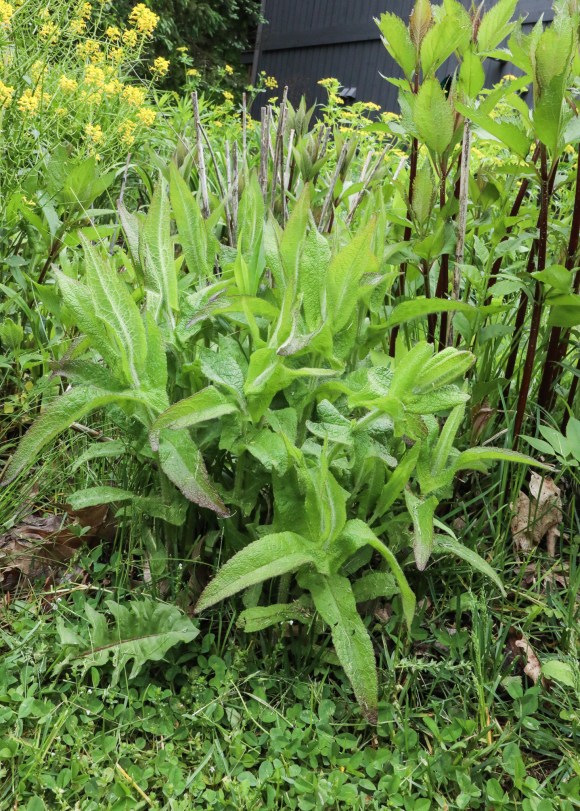
Boneset prefers sun to part sun, moist to wet soils with organic matter and continuous moisture. But it tolerates shade, periodic flooding, sand and clay soils. I have a beautiful plant growing in the backfill sand next to my house–in complete shade!2
In natural settings, Eupatorium perfoliatum grows from the East Coast almost all the way west to the Rocky Mountains. Its natural habitats include openings in floodplain forests, poorly drained areas of black soil prairies, various wetlands—marshes, bogs, fens, seeps, edges of rivers, edges of ponds, sand flats, thickets, stream banks, wet meadows, wet prairies and ditches. Boneset enjoys disturbed areas. It flourishes on the edges of rain and water gardens.1,2
E. perfoliatum’s leaves are light green in color and have a rough, wrinkled texture. They’re smooth on top and hairy on the bottom. The foliage grows opposite on the stem.1

The leaf bases wrap around the stem so it looks like the stem pierces them. They are lance-shaped with toothed edges. They can grow up to 8 inches long and 2 inches across.1,9
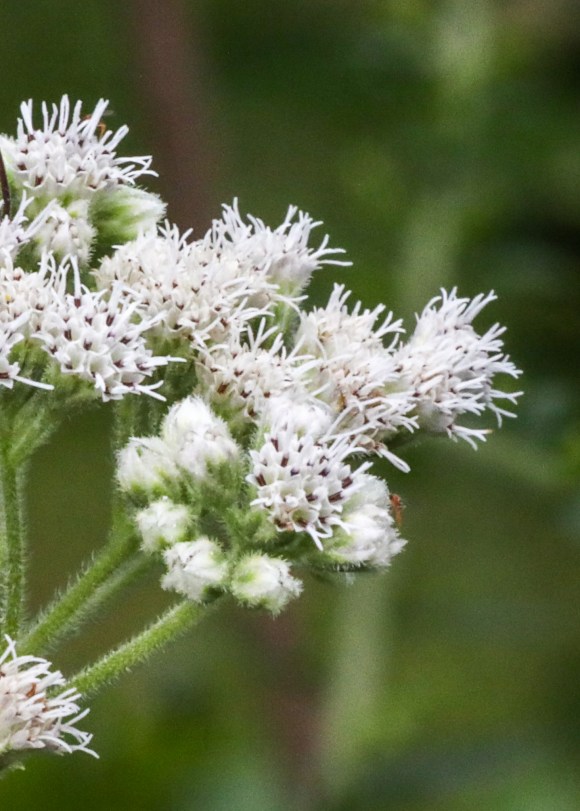
Boneset’s flowerhead crown the plant. Groups of florets combine to form a 2- inch to 8-inch flower. The individual florets are 1/6 inch or 4 mm across. They have about 15-disc floret but no ray florets (or petals).1
Each disc floret has 5 spreading lobes, a brown column of stamens and a divided style. Other Eupatorium spp. have the same flower structure including Joe-Pye Weed (Eupatorium maculatum,https://wildthingsinthe.garden/2024/10/31/a-fabulous-fuzzy-flower/). Eupatorium perfoliatum blooms from late summer to early fall. The overall bloom time for a clump is 1 to 2 months. The flowers have a pleasant scent.1,9
Boneset has fibrous roots. Plants usually spread by rhizomes. If happy, they form large colonies. In good conditions, E. perfoliatum self-seeds. My garden has areas that flood regularly when it rains especially in the spring. I’ve had Boneset appear in these areas and in pots.
Eupatorium perfoliatum draws masses of pollinators and beneficial insects. The Xerces Society for Invertebrate Conservation designates it of ‘Special Value to Native Bees’ and states it ‘Supports Conservation Biological Control’. Boneset also serves as a larval host for numerous moths.
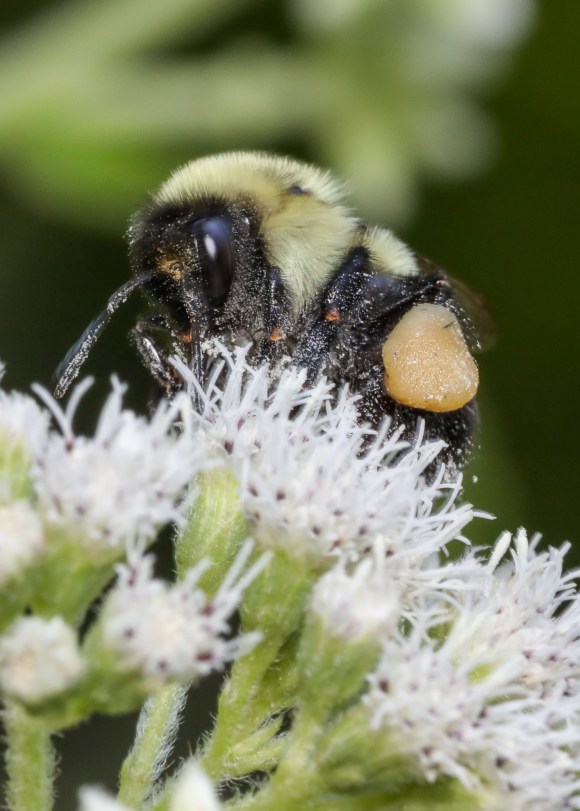
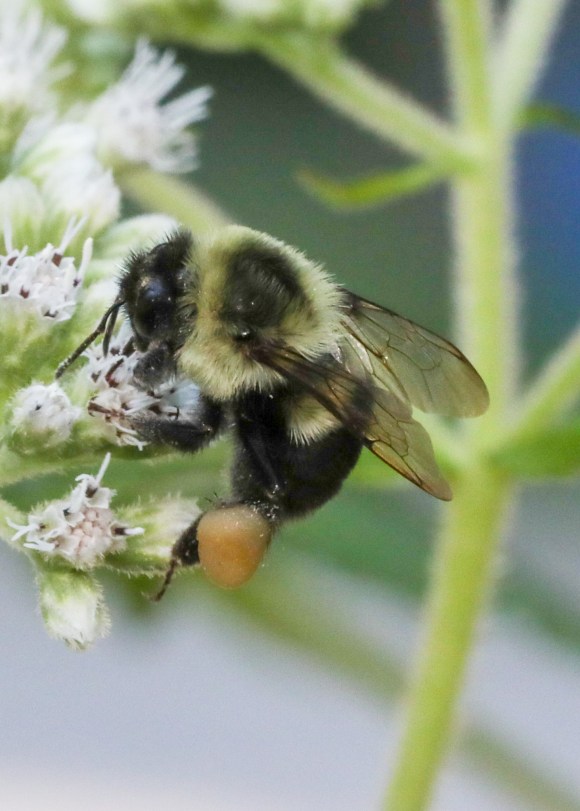
Multitudes of bees, big and small, visit Boneset. The little bees include Yellow-Faced Bees (Hylaeus spp.), Sweat bees (Lasioglossum spp. and Halictus spp.), Augochlora pura, Green Sweat Bees (Agapostemon spp.), Mining Bees (Andrena spp.), and Bumble Bees ( Bombus spp.).
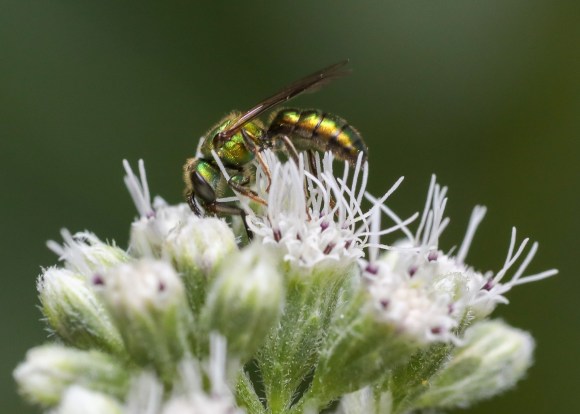
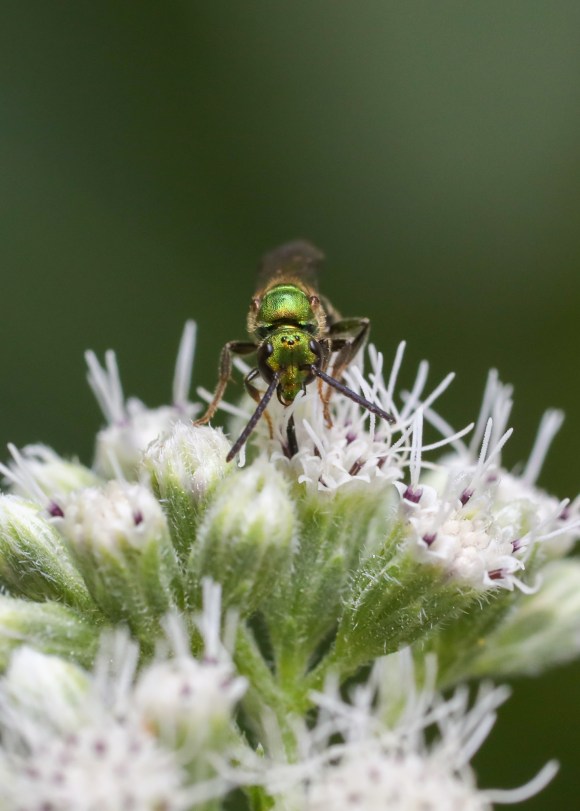

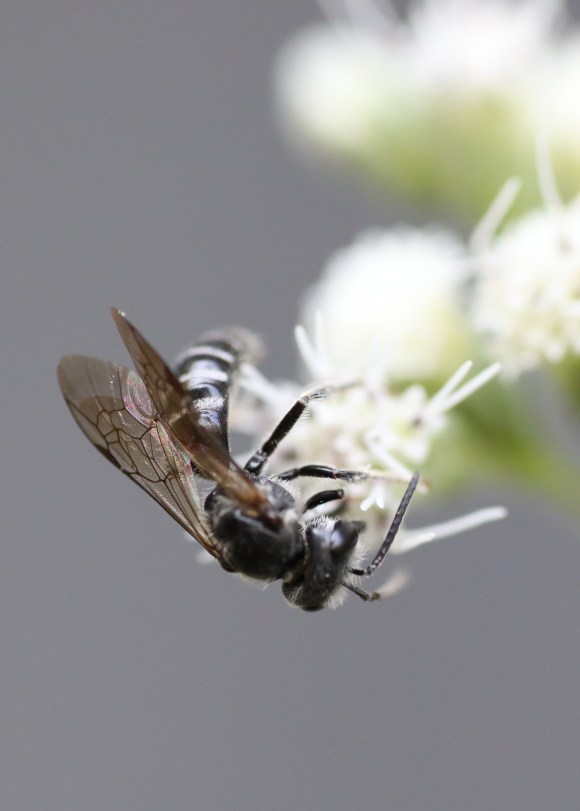
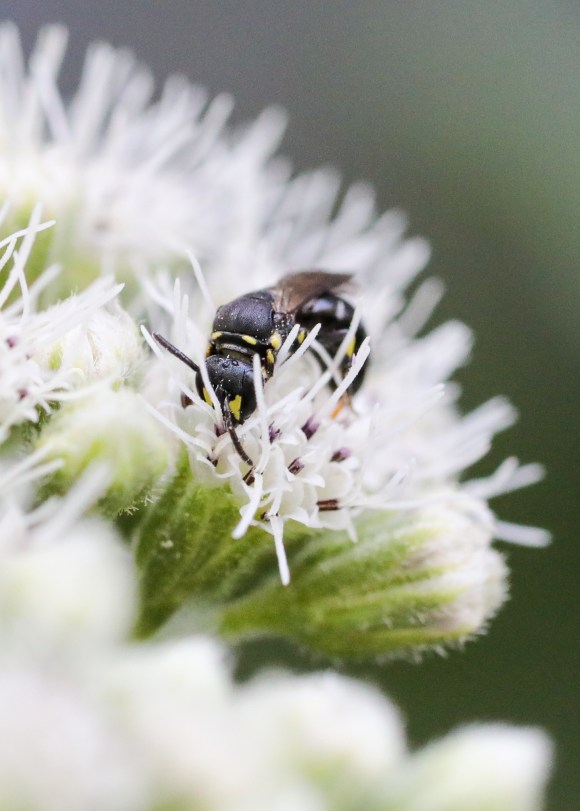
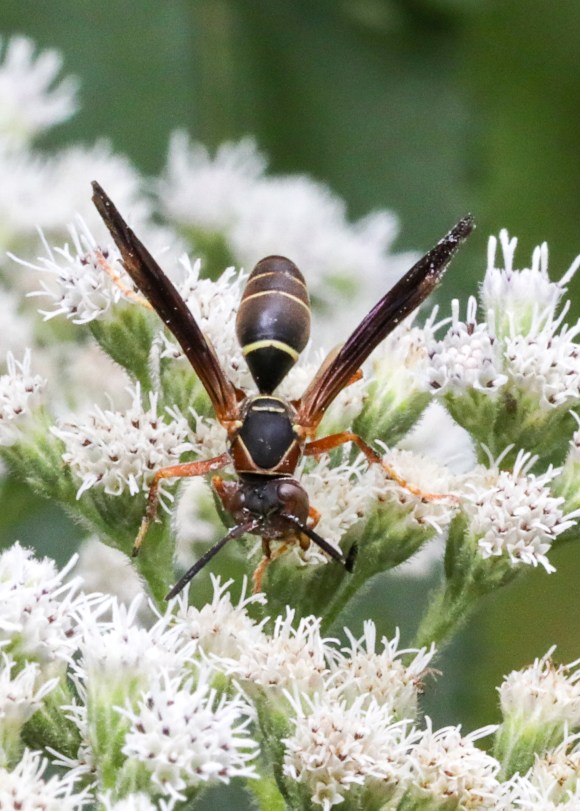
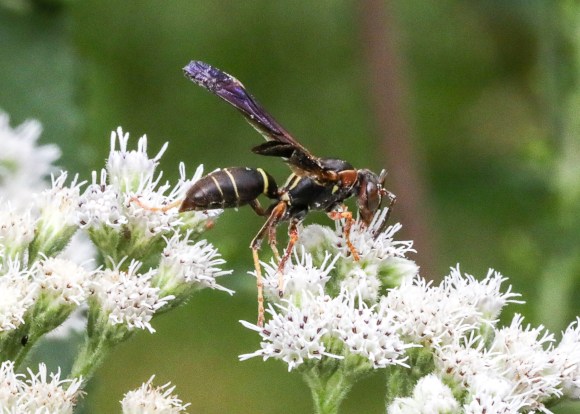
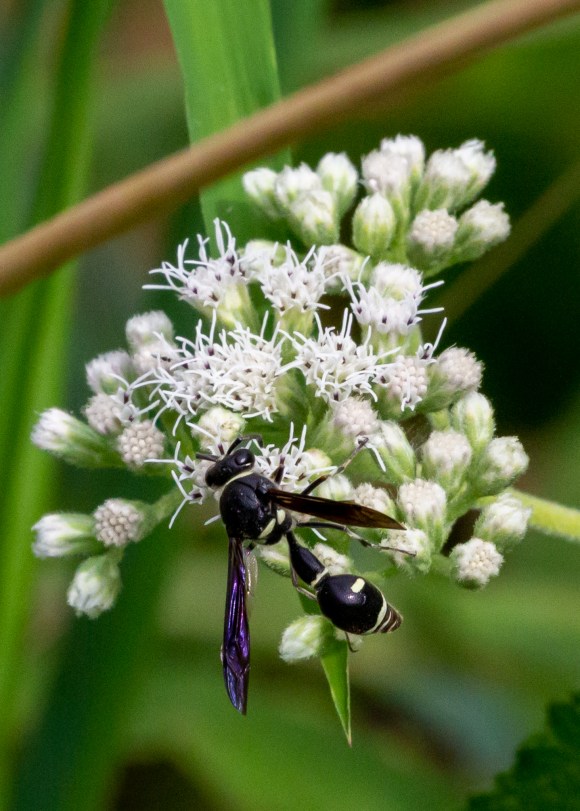
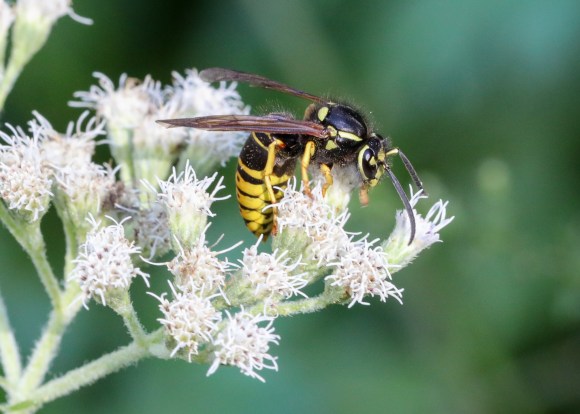
Eupatorium perfoliatum strongly supports wasps of all kinds. At least 102 different species gather nectar from it. Many of these wasps contribute to the garden as beneficial insects. Some examples are Sand Wasps (Bicyrtes spp.), Paper wasps (Polistes spp.), Bald-Faced Hornets (Dolichovespula spp.), Bee Wolves (Philanthus spp.), Beetle Wasps (Cerceris spp), Potter Wasps (Eumenes spp.), Grass-Carrying Wasps (Isodontia spp.), Thynnid Wasp (Myzinum spp.), Cuckoo Wasp (Hedychrum spp.), and Thread-Waisted Wasps (Eremnophila aureonotata).
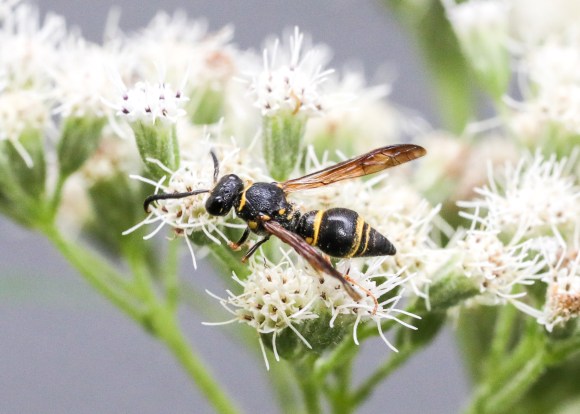
While supporting biological controls, Boneset plays host to some unusual flies, beetles and other insects. Flies include Tachinid flies (Gymnoclytia spp., Archytas spp., Trichopoda spp., Juriniopsis adusta), Syrphid Flies (Eristalis spp. and Helophilus spp.), Thick-Headed Flies (Physocephala spp.) and Bee Flies (Villa spp.).
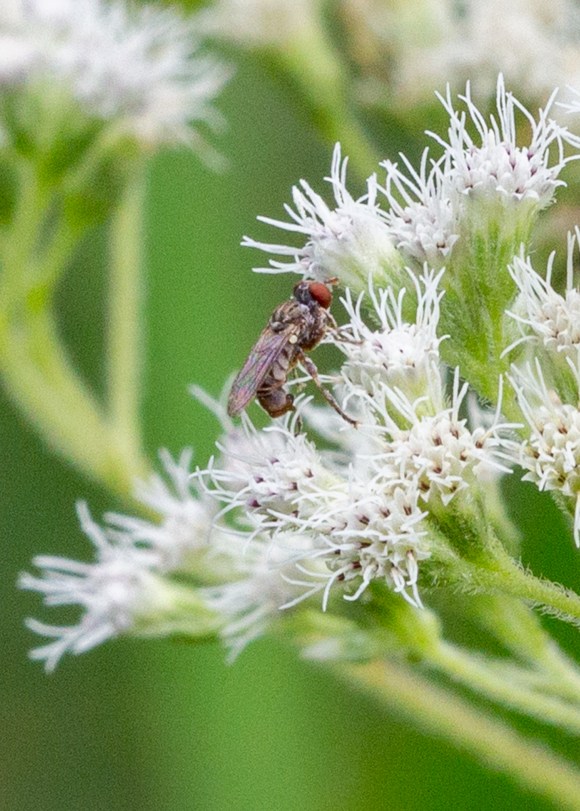


Tachinid flies are beneficial insects in their role as parasitoids. As parasitoids, their larvae feed on, and eventually kill, other insects. These flies lay eggs on leaves or on the insect itself. If an egg hatches outside the host, the maggot eats its way inside. An insect may also eat the egg. Then the larvae hatches inside the prey’s body.5
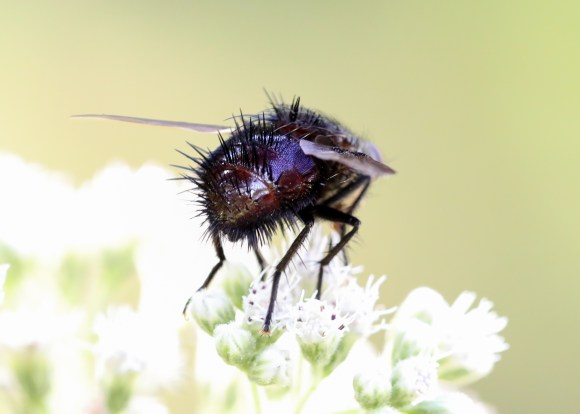
While many tachinid flies look like plump, spiny houseflies, there are some wonderfully strange and fantastic species. Two examples are Juriniopsis adusta and Trichopoda spp.5
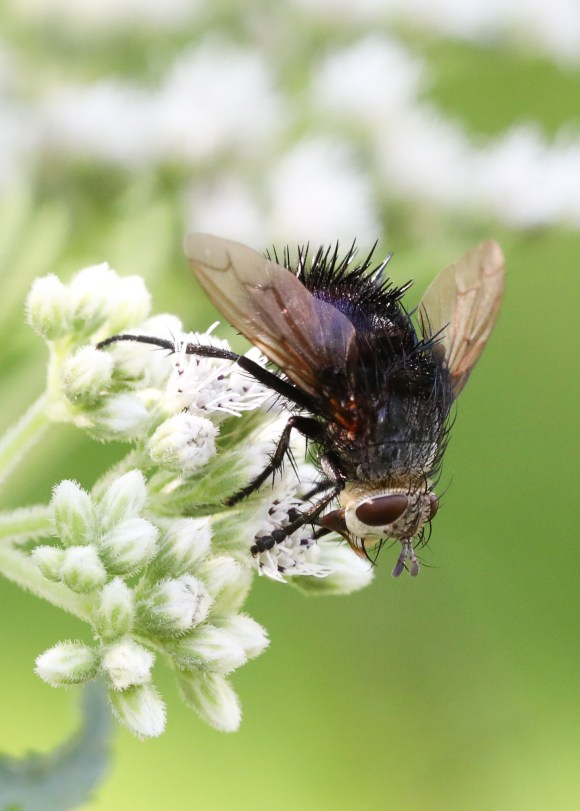
Juriniopsis adusta (no common name) is a ghostly-looking fly with a red abdomen covered in black bristles. It’s a quick fly that rarely lights for a long time. The larvae eat caterpillars. I chased this one for 2 years before I got the photos I wanted.5
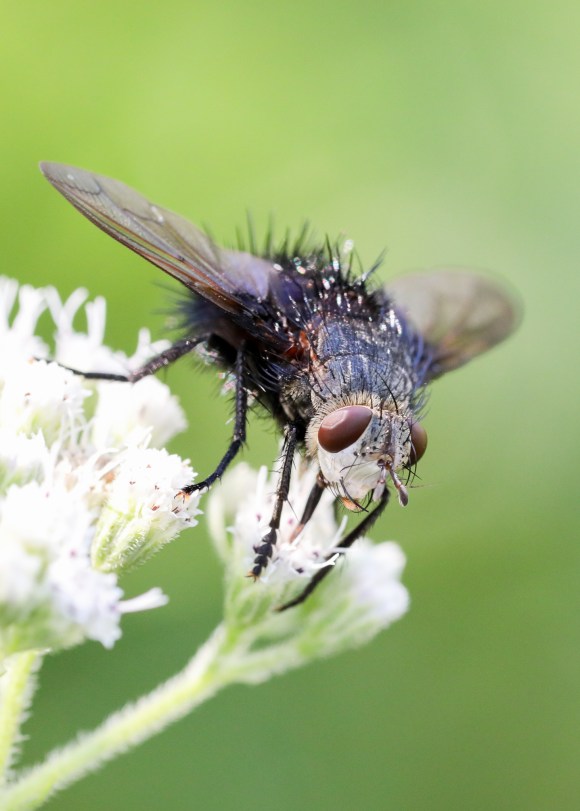
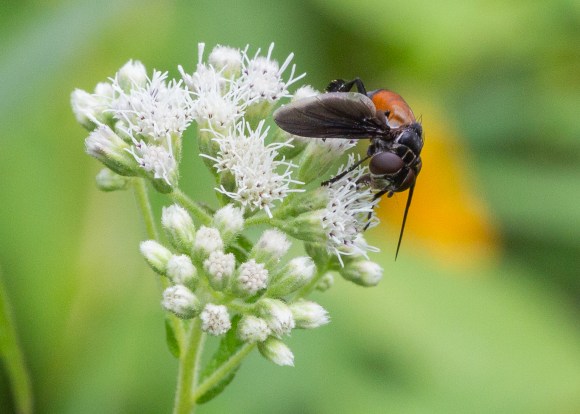
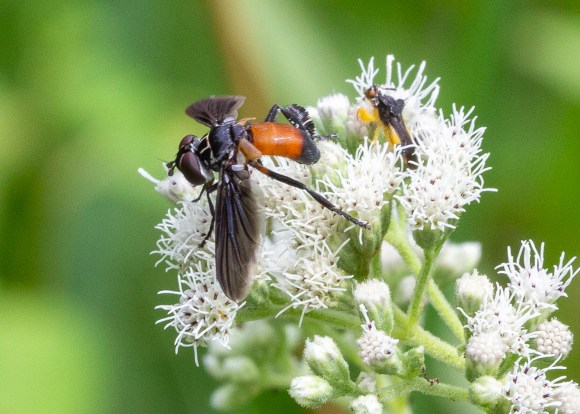
Trichopoda spp. or Feather-Legged Flies are bee mimics. They’re a stunning fly with feathery bristles on the hind legs to mimic a pollen basket and jet-black wings with clear edges. The males have bright orange abdomens. The young of Feather-Legged Flies are parasitoids of true bugs including squash bugs, plant bugs, stink bugs, leaf-footed bugs and shield-backed bugs.3,5
Entomologists at Michigan State University studied insects attracted to Eupatorium perfoliatum. They found that it was 20 times more attractive to beneficial insects than the grass control. Boneset was Highly Attractive for Insidious Flower Bug (Orius insidiousus), Plagiognathus politus- a flower bug, (Chalcidoidea), and soldier beetles (Cantharidae). At the Moderately Attractive level, it drew crab spiders (Thomisidae) and Cynipoidea-a family of parasitoid and gall-forming wasps. Finally, E. perfoliatum was Mildly Attractive for Sphecid wasps, lady beetles (Coccinellidae), Jumping Spiders (Salticidae), Braconidae-a parasitic wasp family and damsel bugs (Nabidae).4
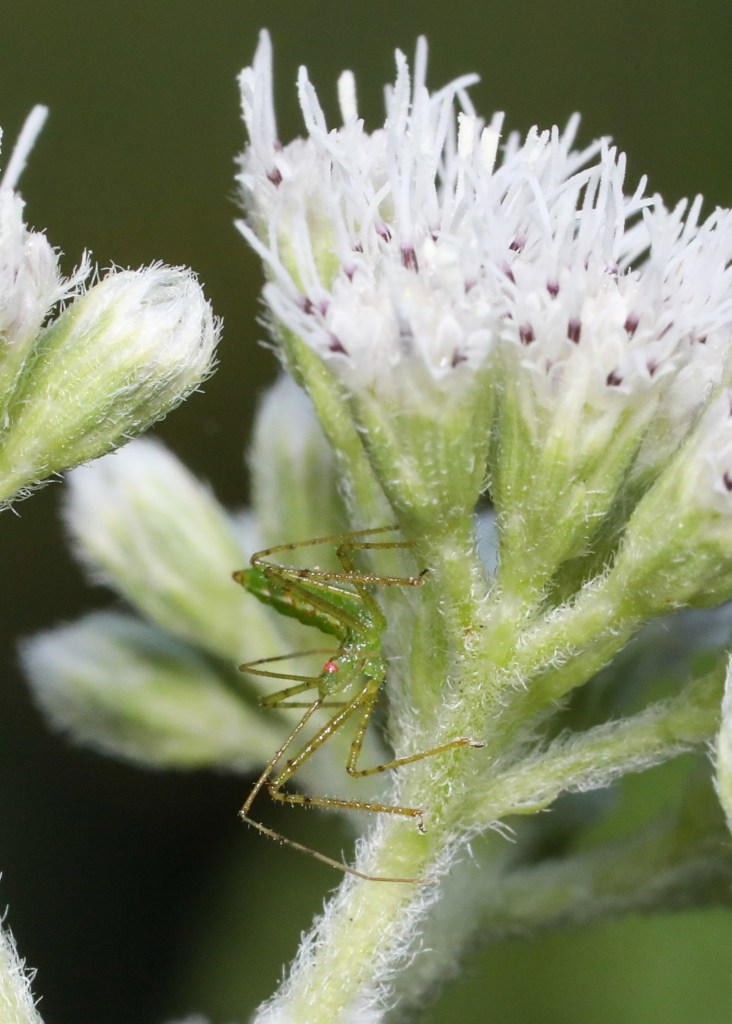
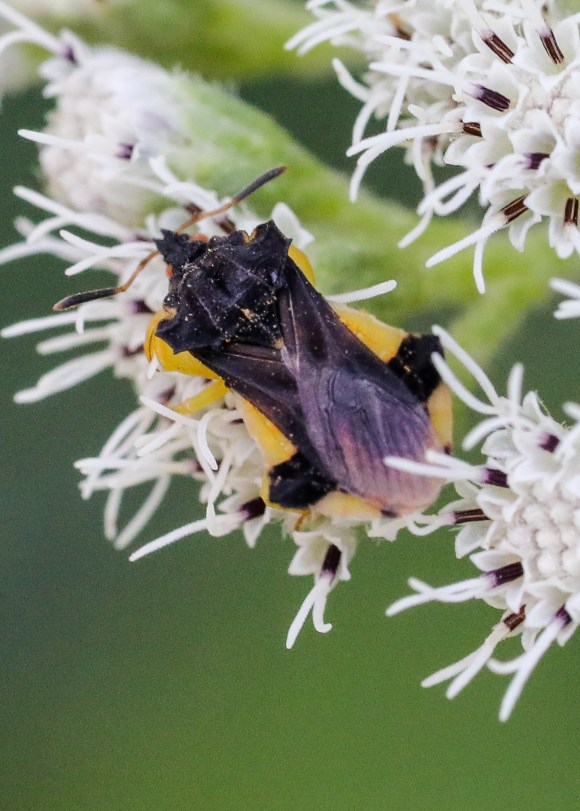
Not mentioned in the MSU study, the jagged ambush bug (Phymata spp.) happily lives and breeds on my blooming Boneset. This fierce bug has huge raptor-like front legs. Like its name, the jagged ambush bug hides in flowers and ambushes its prey.6,7
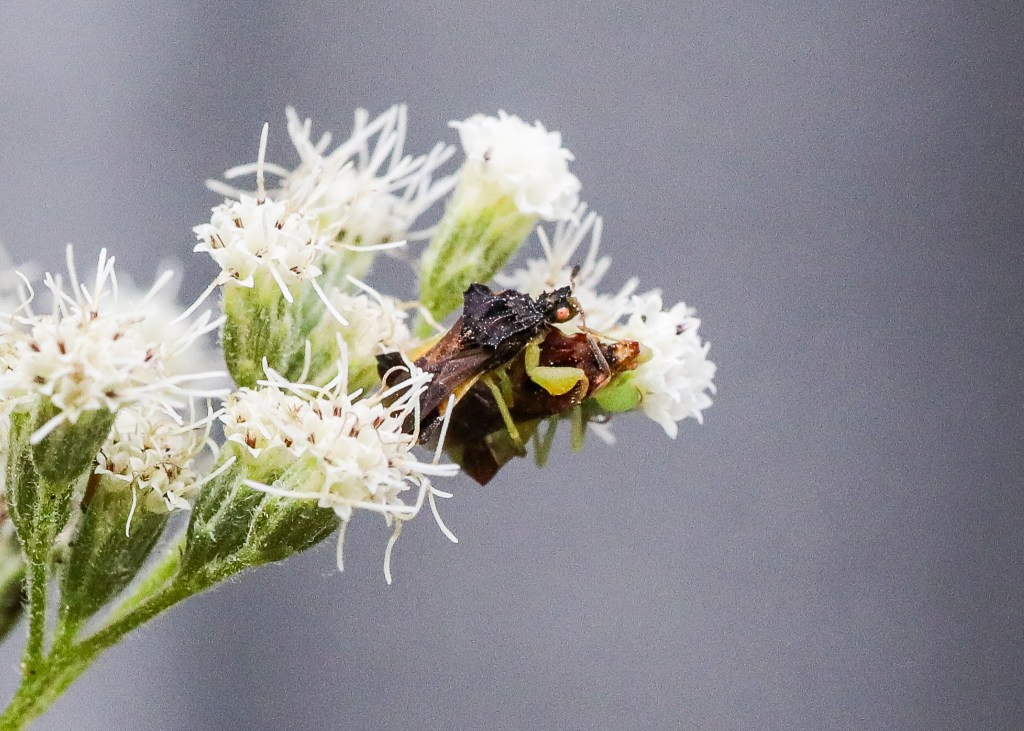
Using speed and the raptor-like legs, it captures insects up to 10 times its size. Once caught, the ambush bug uses venom to paralyze the prey and liquify the internal organs. Then, it drinks the bodily fluids with a straw-like mouth part.6.7
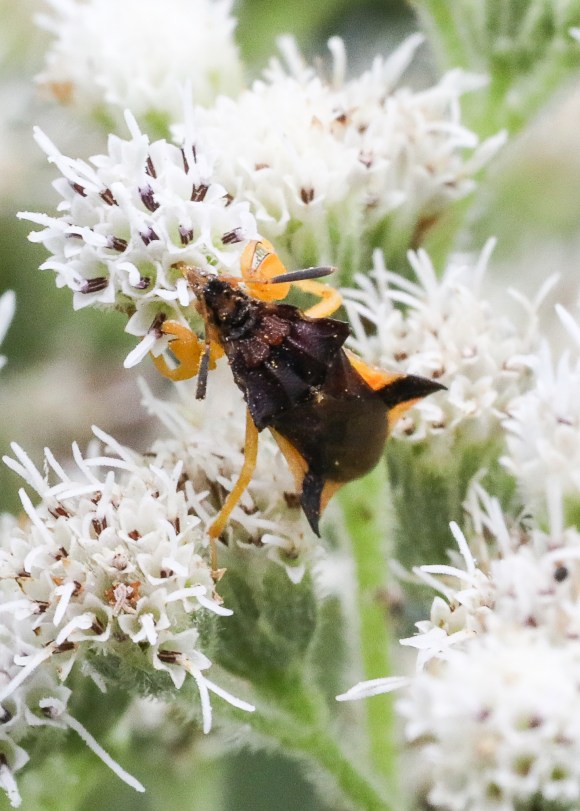
The adult ambush bugs hunt from the flowers while the immature bugs (called nymphs) use other parts of the plant. The adults and nymphs eat mites, aphids, leafhoppers, thrips, caterpillars, mealybugs, beetles, scale insects, insect eggs. Adults also eat flies, bees and wasps.6,7
Eupatorium perfoliatum acts as a larval host for several moth species. Their larvae use different parts of the plant. They include Geometrid Moths (Semiothisa continuata), Clymene Moth (Haploa clymene ), Three-Lined Flower Moth (Schinia trifascia), Blackberry Looper Moth (Chlorochlamys chloroleucaria), Burdock Borer Moth (Papaipema cataphracta ), and Lined Ruby Tiger Moth (Phragmatobia lineata).1,10
Eupatorium perfoliatum is the plant for many places. An adaptable garden plant, it’s happy living in a variety of growing conditions. It adds blooms to the late season garden with its white, fluffy flower heads. Boneset serves as a pollen and nectar source and as a larval host, drawing pollinators and beneficial insects alike!
I hope you’ve enjoyed this latest blog. I’d love to hear from you with a question or a comment. Hope everyone is enjoying the new garden season!
Happy Gardening,
Mary
Bibliography:
- “Common Boneset (Eupatorium Perfoliatum).” Accessed May 30, 2025. https://www.illinoiswildflowers.info/prairie/plantx/cm_boneset.htm.
- “Eupatorium Perfoliatum – Plant Finder.” Accessed May 30, 2025. https://www.missouribotanicalgarden.org/PlantFinder/PlantFinderDetails.aspx?taxonid=277187.
- Missouri Department of Conservation. “Feather-Legged Flies.” Accessed May 30, 2025. https://mdc.mo.gov/discover-nature/field-guide/feather-legged-flies.
- Native Plants and Ecosystem Services. “Common Boneset.” Accessed May 30, 2025. https://www.canr.msu.edu/nativeplants/common_boneset.
- Missouri Department of Conservation. “Parasitic Flies (Tachinids).” Accessed May 30, 2025. https://mdc.mo.gov/discover-nature/field-guide/parasitic-flies-tachinids.
- “Predatory Bugs : Ambush Bugs | Hortsense | Washington State University.” Accessed May 30, 2025. https://hortsense.cahnrs.wsu.edu/fact-sheet/predatory-bugs-ambush-bugs/.
- Galveston County Master Gardeners. “Jagged Ambush Bug,” May 31, 2025. https://txmg.org/galveston/beneficials-in-the-garden-and-landscape/jagged-ambush-bug/.
- Lady Bird Johnson Wildflower Center. “Lady Bird Johnson Wildflower Center – The Botanic Garden of Texas,” June 1, 2025. https://www.wildflower.org/.
- “Eupatorium Perfoliatum (American Boneset, Boneset, Bonset, Feverwort, Thoroughwort) | North Carolina Extension Gardener Plant Toolbox.” Accessed May 30, 2025. https://plants.ces.ncsu.edu/plants/eupatorium-perfoliatum/.
- United States Department of Agriculture-Natural Resources Conservation Service, Plant Fact Sheet, Common Boneset, Eupatorium perfoliatum L., USDA-NRCS.
 Wild Things in the Garden