Summer comes with a tidal wave of pollinators in all shapes and sizes. The garden itself explodes in a celebration of flowers. With so many plants blooming in July and August–Why add more? Because this native shines. It serves a huge number of pollinators, flowers for weeks and pairs well with a diversity of other colors. The pale flowers literally glow in the dazzling summer sun or in dusky evening light.
Mountain Mint, Pycnanthemum virginianum, begins opening its blooms in early July. The flowers grow as flat-topped clusters of many tiny lavender-spotted florets. The florets open from the outermost ring to the center. This pattern of florets opening one by one prolongs the bloom time.
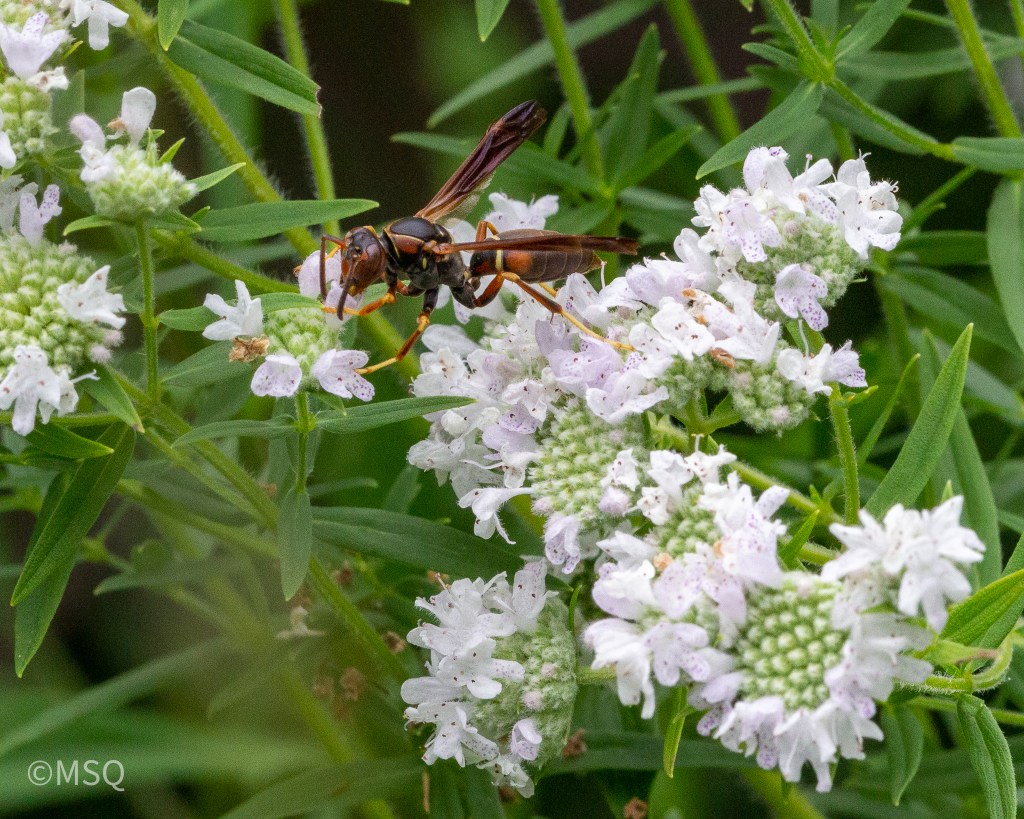
The plant provides a wonderfully stiff, erect form in the garden. The leaves can be up to two inches with a thin, lance shape and a strong center vein, almost a crease. They have a spicy, minty fragrance. Overall, Pycnanthemum virginianum has fine textured foliage with medium green color. Liatris spicata grows beautifully with Mountain Mint. The dense, purple pillars of the Liatris blooms offset Mountain Mint’s flat white flowers.
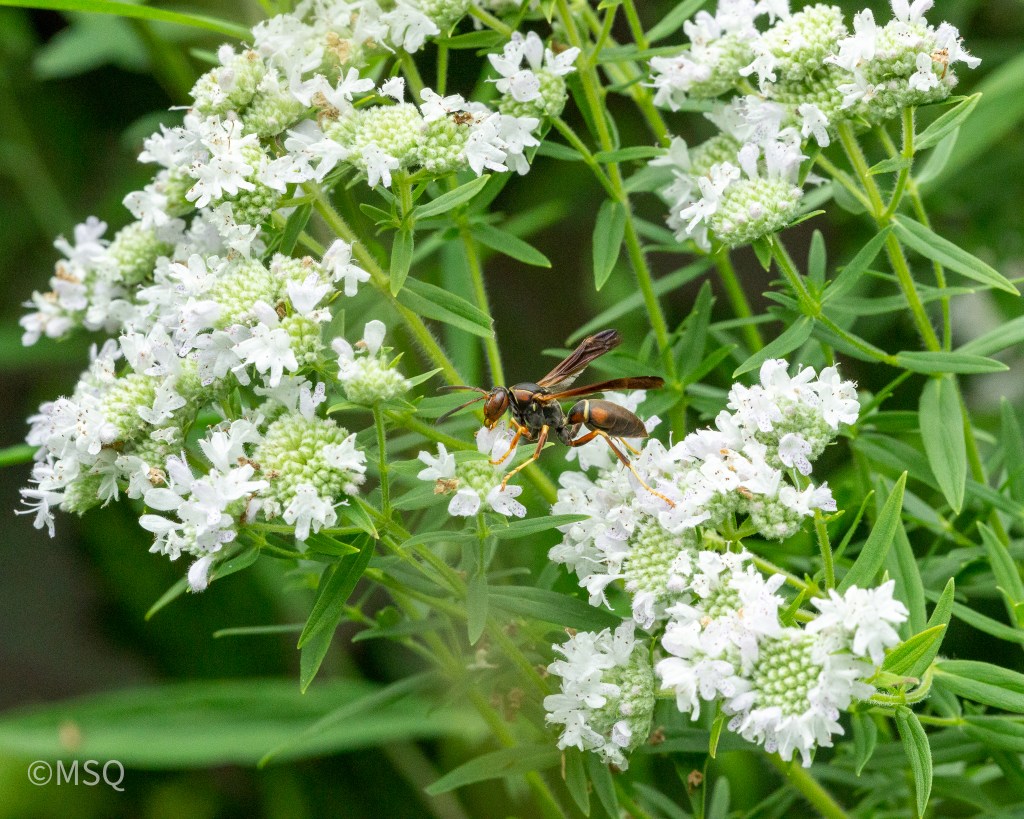
Mountain Mint enjoys growing in zones 3 through 7 in full to part sun. It will grow two to three feet high and should be spaced 12 to 18 inches apart. It grows in wet to medium-dry soil. I grow one clump next to my south-facing sidewalk with some afternoon shade. It’s thriving and only occasionally needs staking on the sidewalk side.
This plant will self-seed once mature. Pull seedlings immediately if you don’t want the plant. They have deep, tough roots even when young. Also, there are reports of Mountain Mint taking over gardens with humous rich, wet soils. If that’s the case, plant it in sunken pots as you might do with other mints.
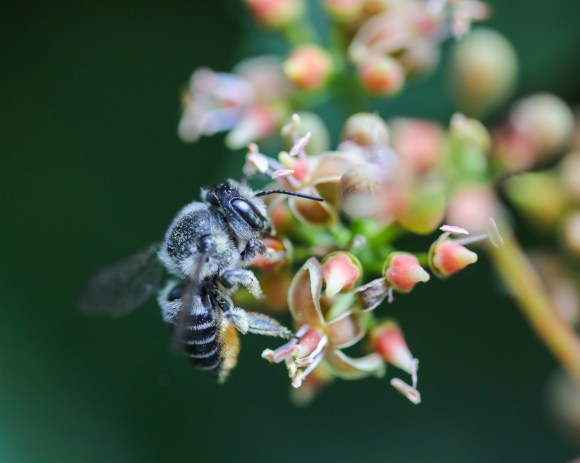
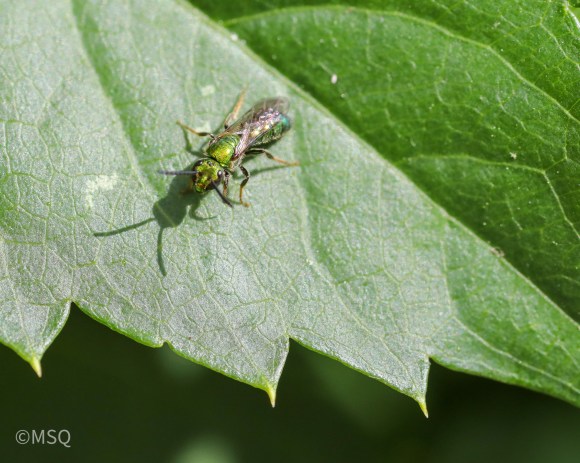
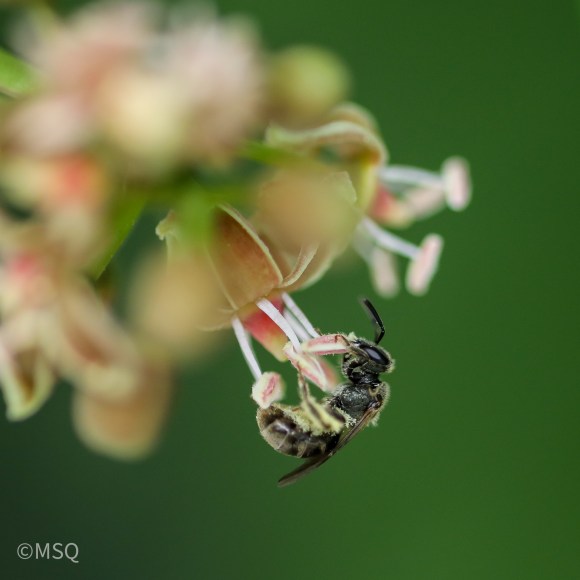
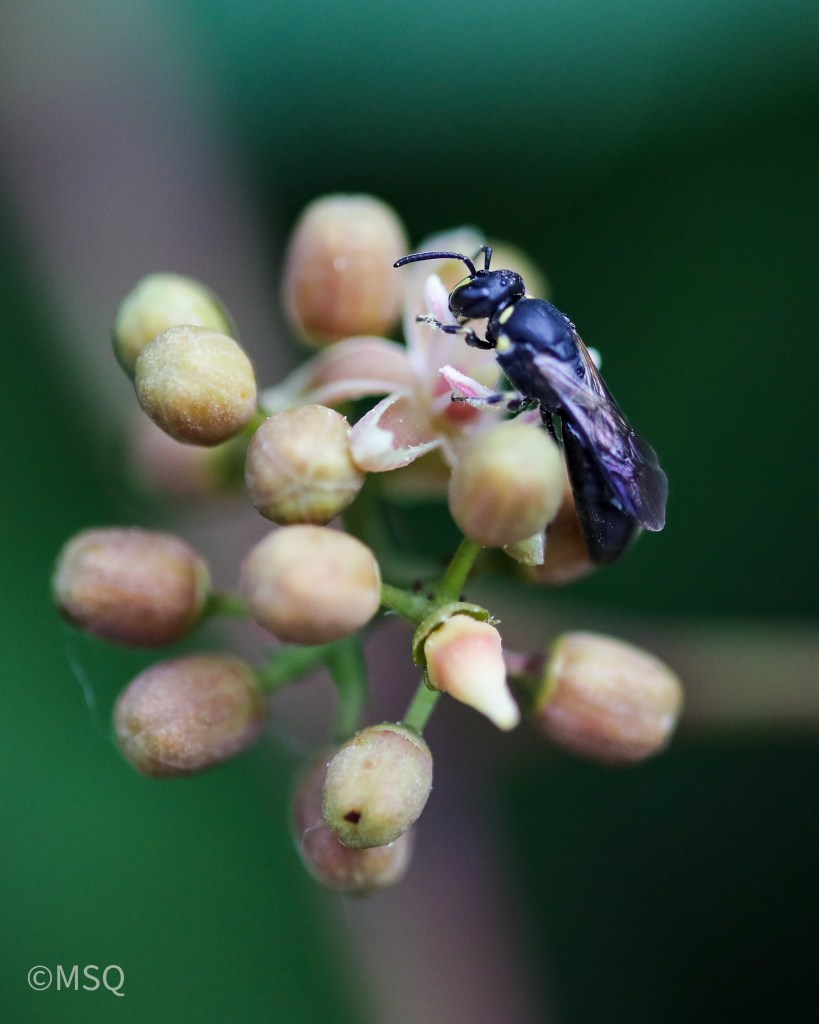
While a brilliant plant all on its own, Mountain Mint is also hugely popular with pollinators and beneficial insects, large and small. It’s visited by yellow-faced bees (Hylaeus), metallic green sweat bees (Agapostemon and Aurochloropsis), and small resin bees (Heriades)—all tiny bees.
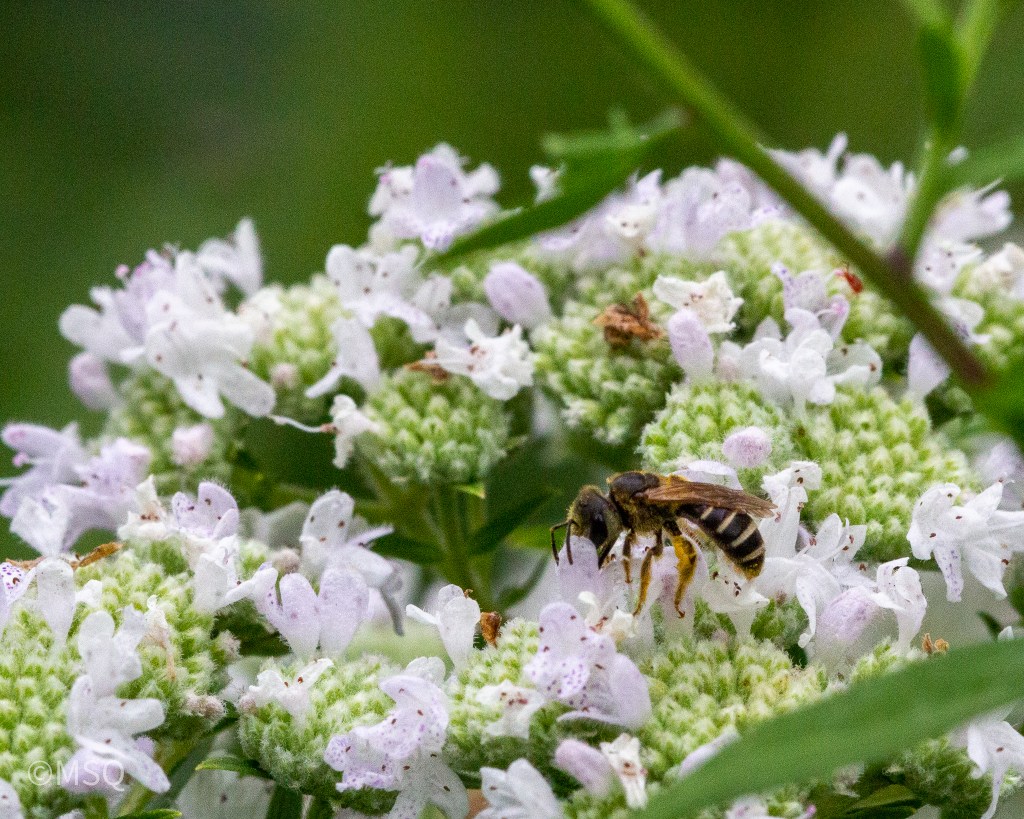
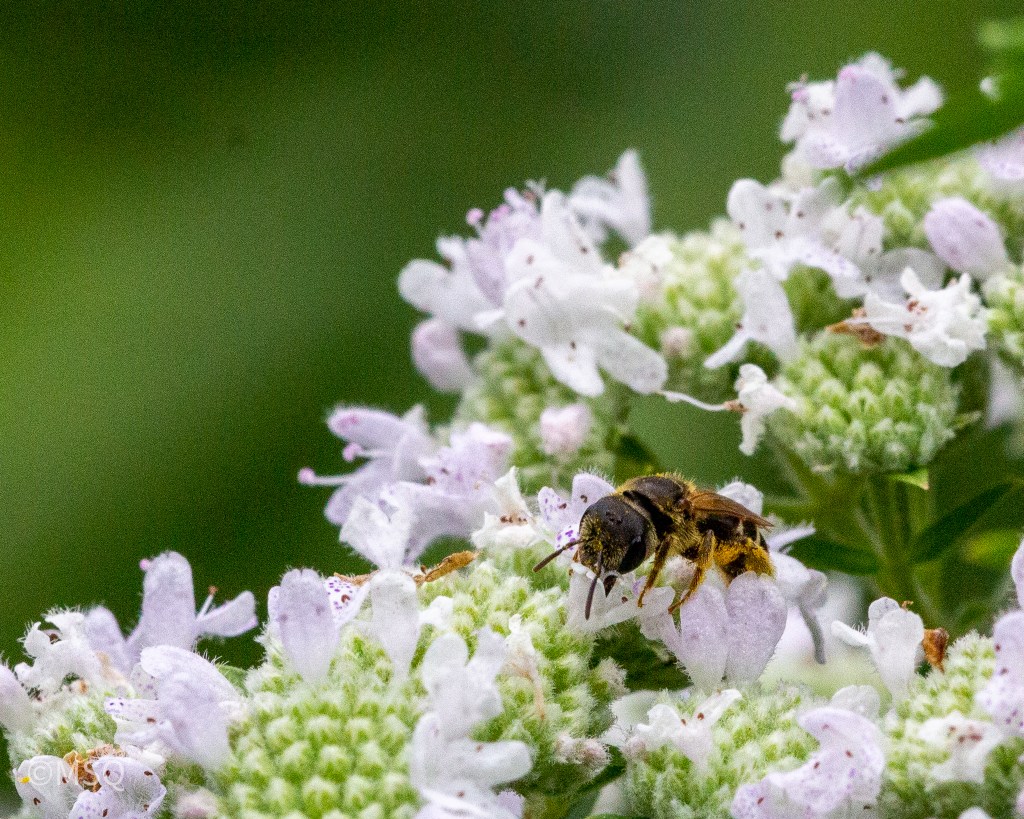
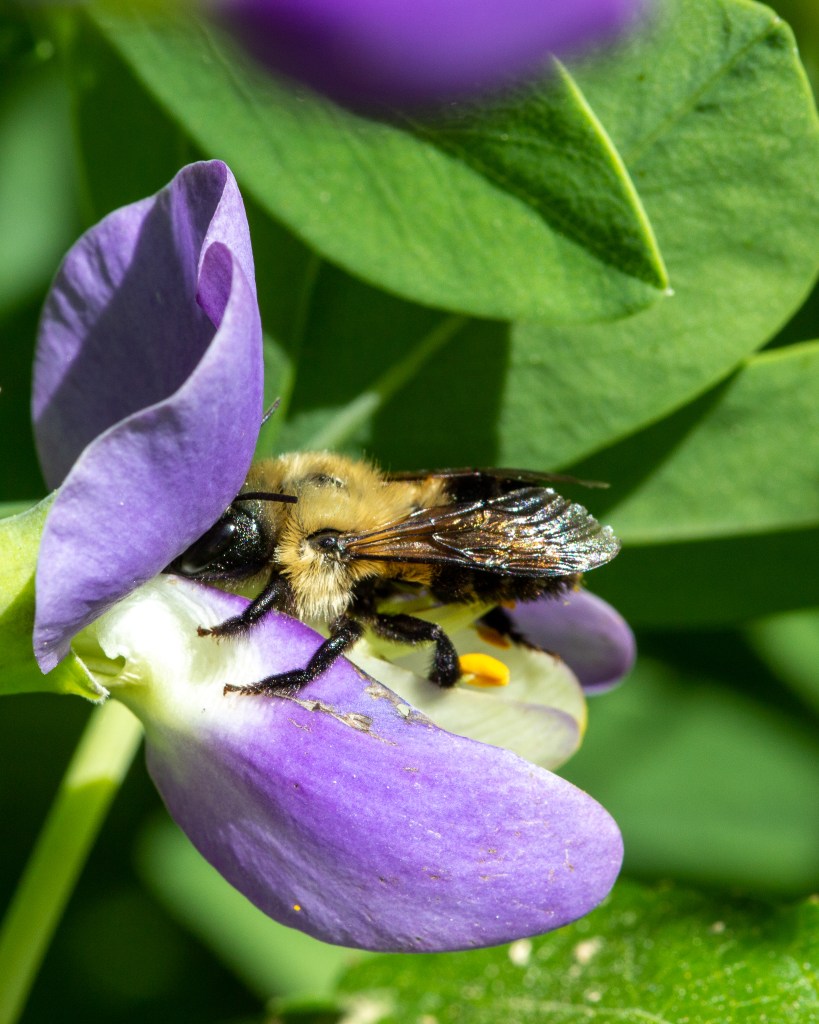
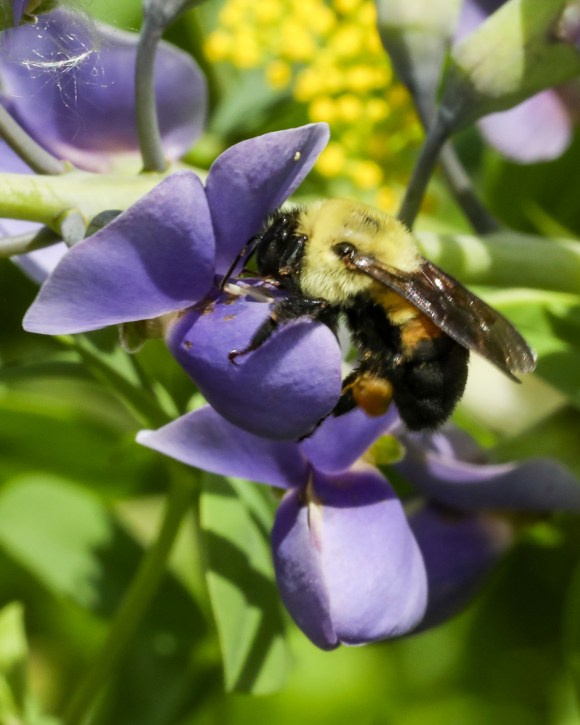
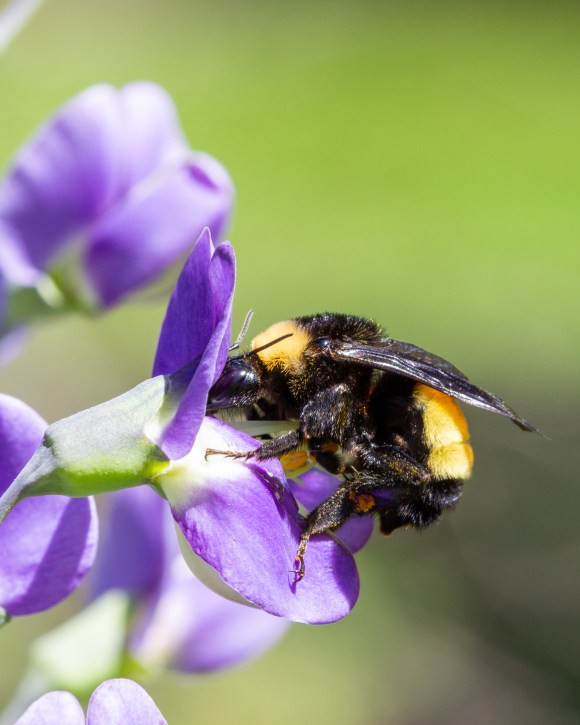
Carpenter bees enjoy Mountain Mint. These gentle bees concentrate on gathering nectar and pollen for their young. Carpenter bees pollinate wild plants while gathering food.The males cannot sting and the female rarely do.
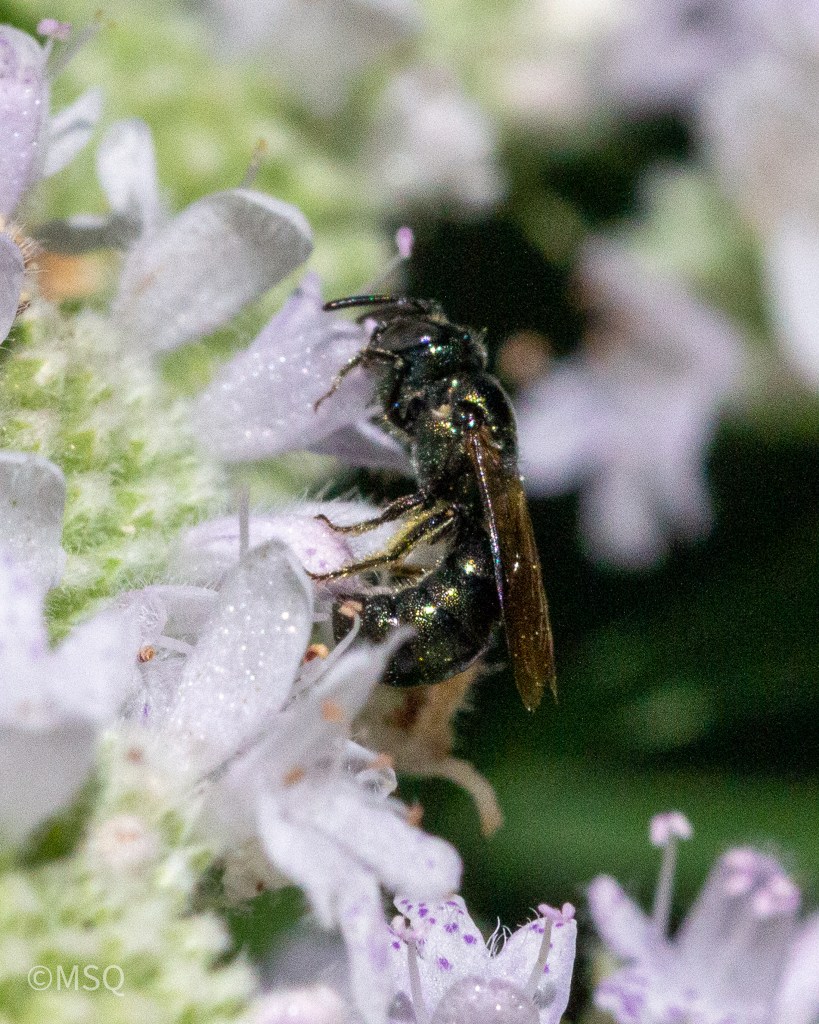
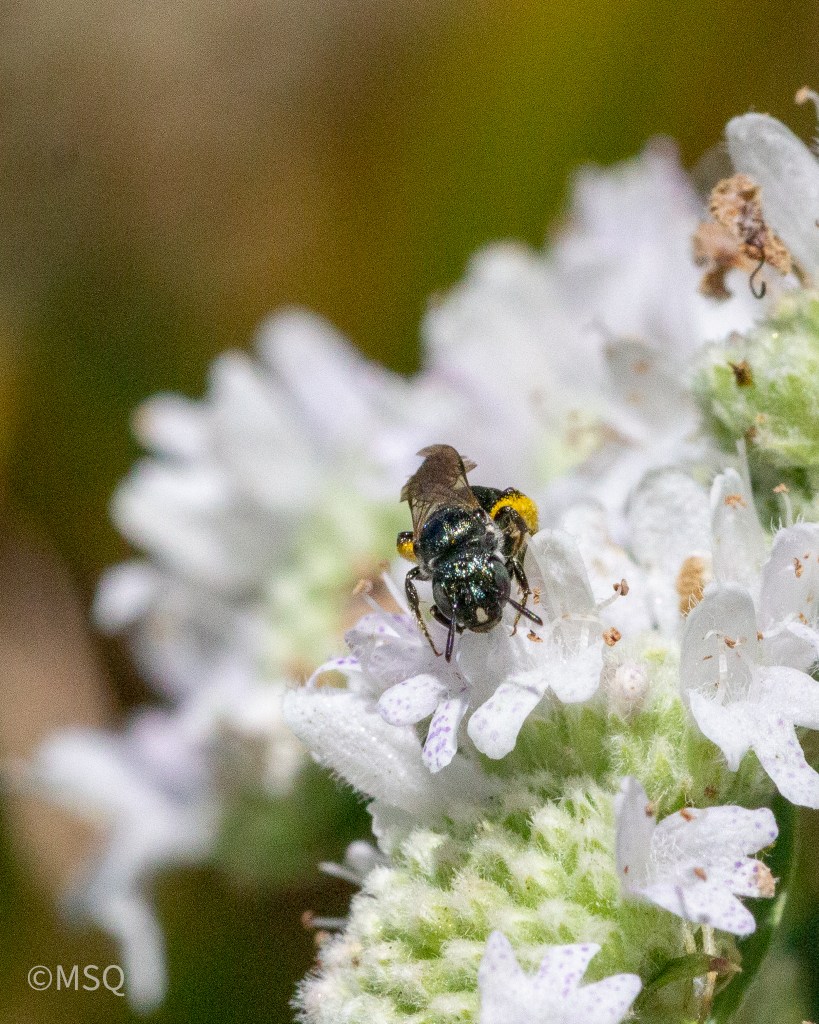
In nature, these bees nest in soft wood and pithy plant stems. They can be pests if they nest in the wood of a house and seem to like cedar, redwood, pines, and other soft woods. If they are nesting in your siding, eaves, deck, etc., it’s because the wood is weathered or unfinished. Keep your wood painted or stained regularly and carpenter bees shouldn’t bother you.
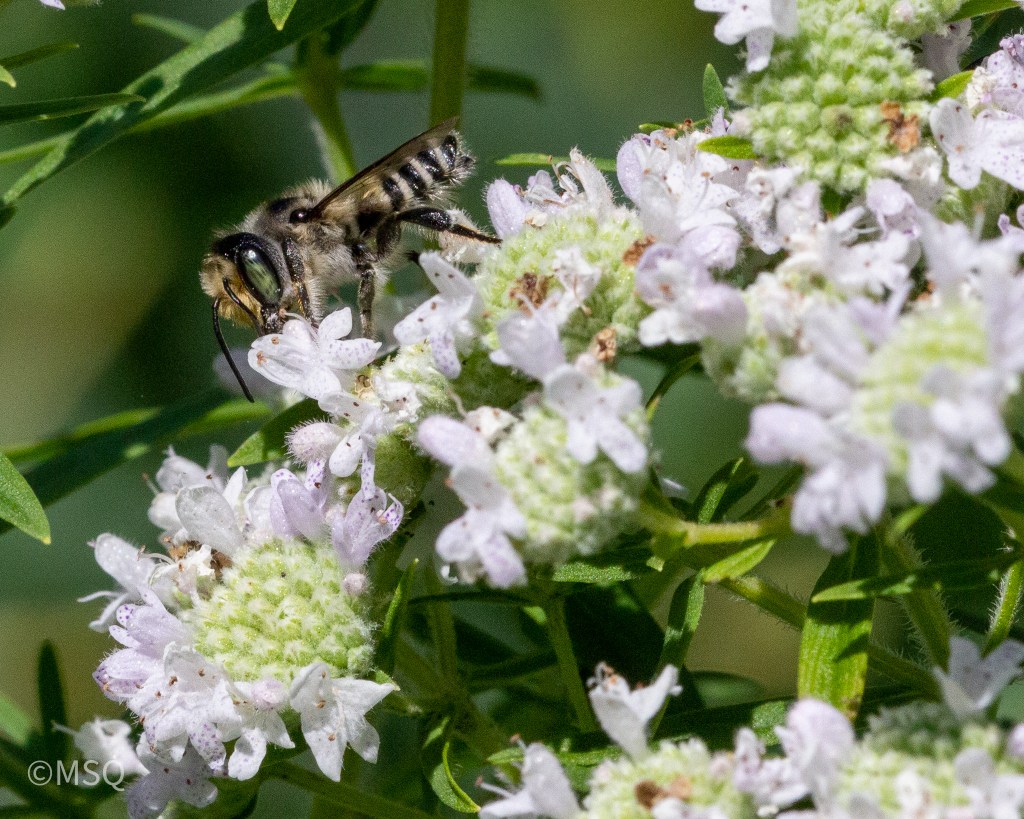
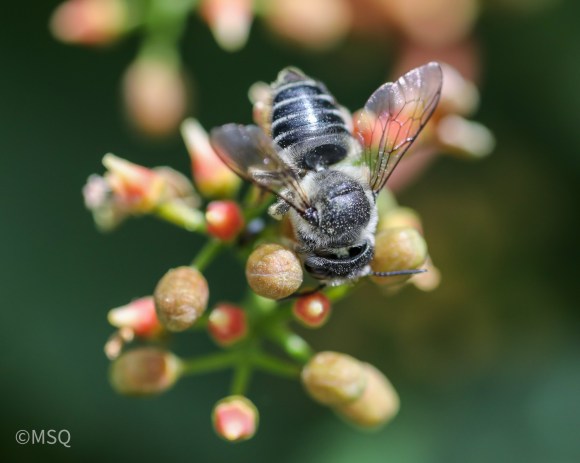
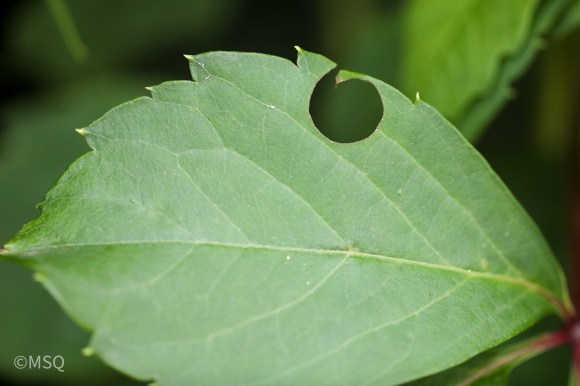
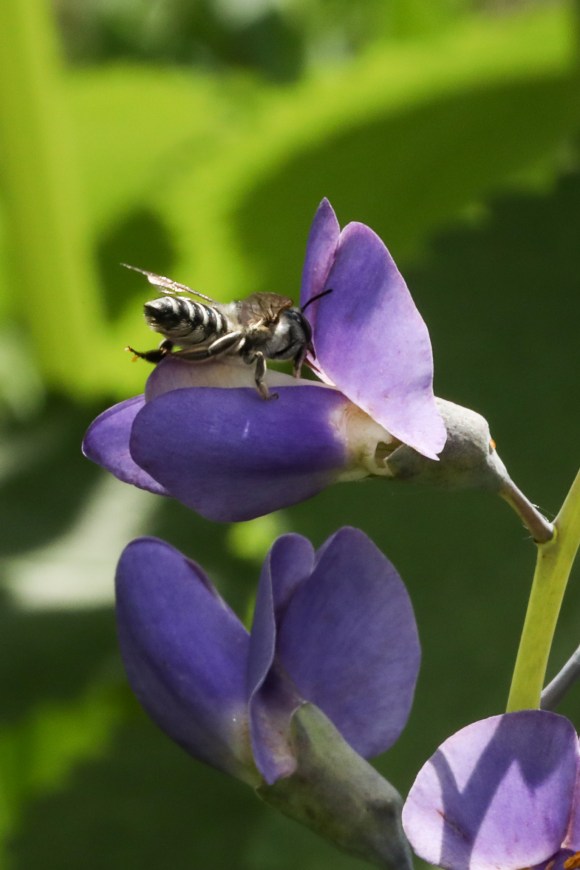
Leaf Cutter Bees also visit Pycnanthemum virginianum for food. These medium-sized bees use P. virginianum for food. Their name comes from using pieces of soft leaves to create nest cells.
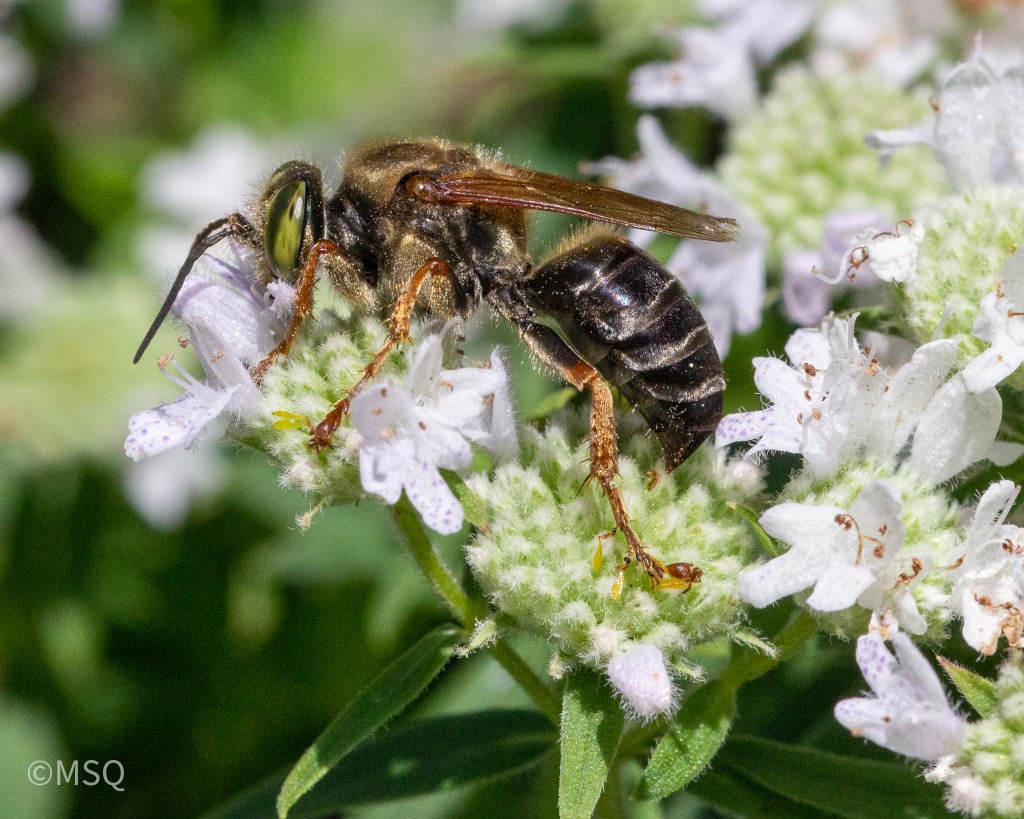
Mountain Mint also hosts a variety of wasps. Some of these wasps serve as beneficial insects feeding pests to their young. The Tachytes wasp or Sand Wasp hunts katydids and grasshoppers. They use either nymphs (young) or adult insects depending on what’s available. These wasps most frequently nest in sandy soil.
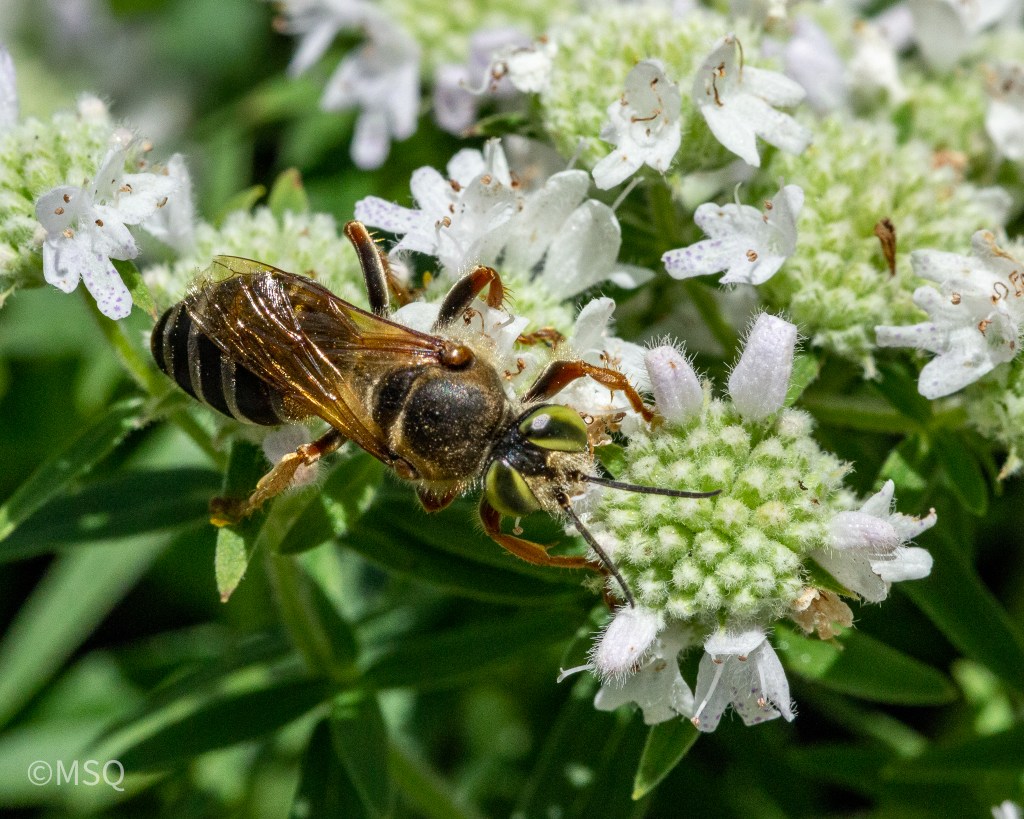
The Gold-marked Thread-waisted Wasp, Eremnophila aureonotata, is a gorgeous wasp with metallic markings and a strikingly triangular face. I usually see silver-marked individuals whose spots look white in some lights. This handsome pair is on their mating flight. The larger female in on the bottom. Eremnophila aureonotata is one of the thread-waisted wasps. These wasps have reduced their “waist” to a thin tube called a petiole. The shape of the petiole helps with identification.
Isodontia mexicana, Mexican Grass-carrying Wasp, is another thread-waisted wasp. Despite its name, Isodontia mexicana is native to all North America. In addition, it’s been accidentally introduced into Europe. It hunts tree crickets or katydids—both nymphs and adults. This wasp builds its nest in hollow cavities and lines the nest with pieces of grass. Grass-carrying wasp can nest in screen windows.
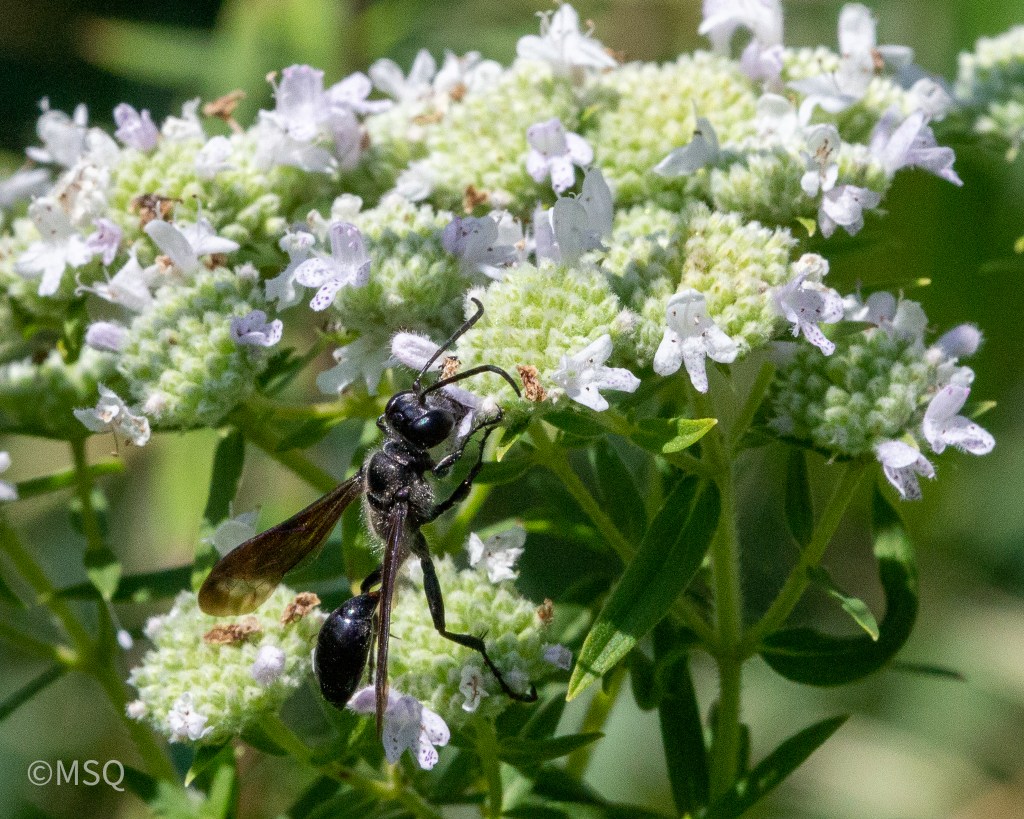
Interestingly, several bee predators also come to my Mountain Mint. The bee fly, Lepidophora lepidocera, and the bee wolf, Philanthus. I had mixed feelings about them when I realized they were bee hunters. But then I remembered, predators are a sign of a healthy ecosystem. The garden has enough bees to also support them.
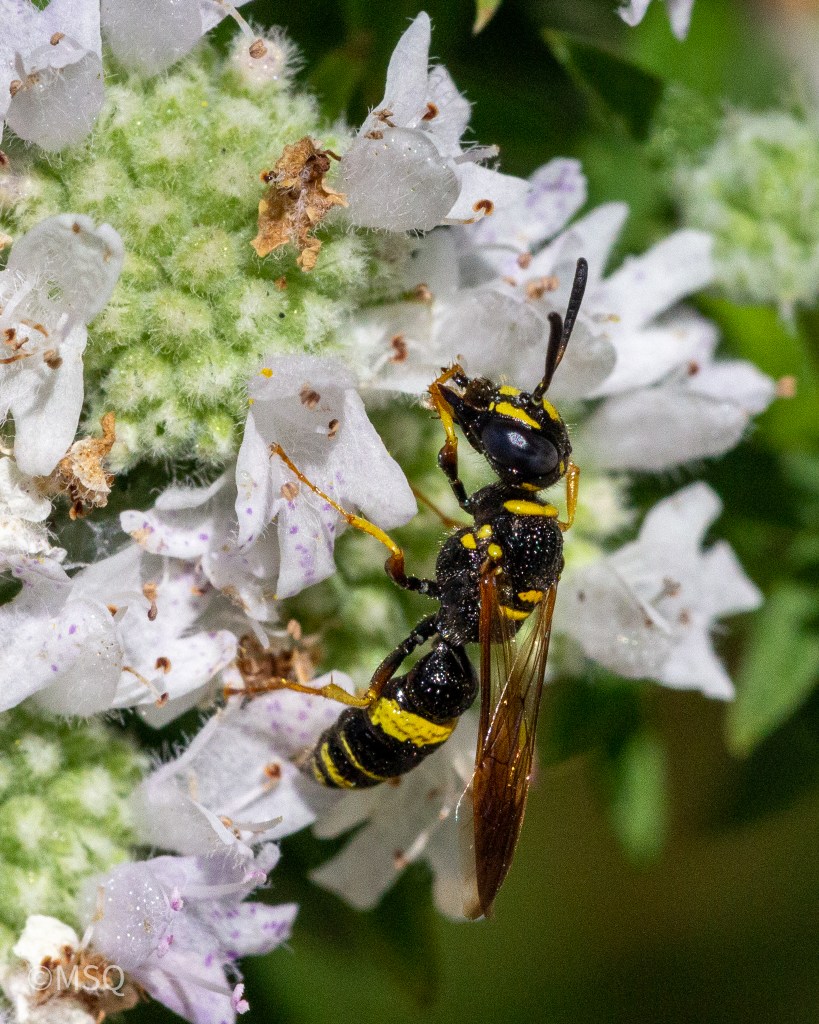
The bee fly is an active and efficient pollinator of early spring wildflowers such as Spring Beauty, Claytonia virginica. They visit some of the same flowers that bees do but make many more trips. In this way, these flies may be even more effective pollinators.
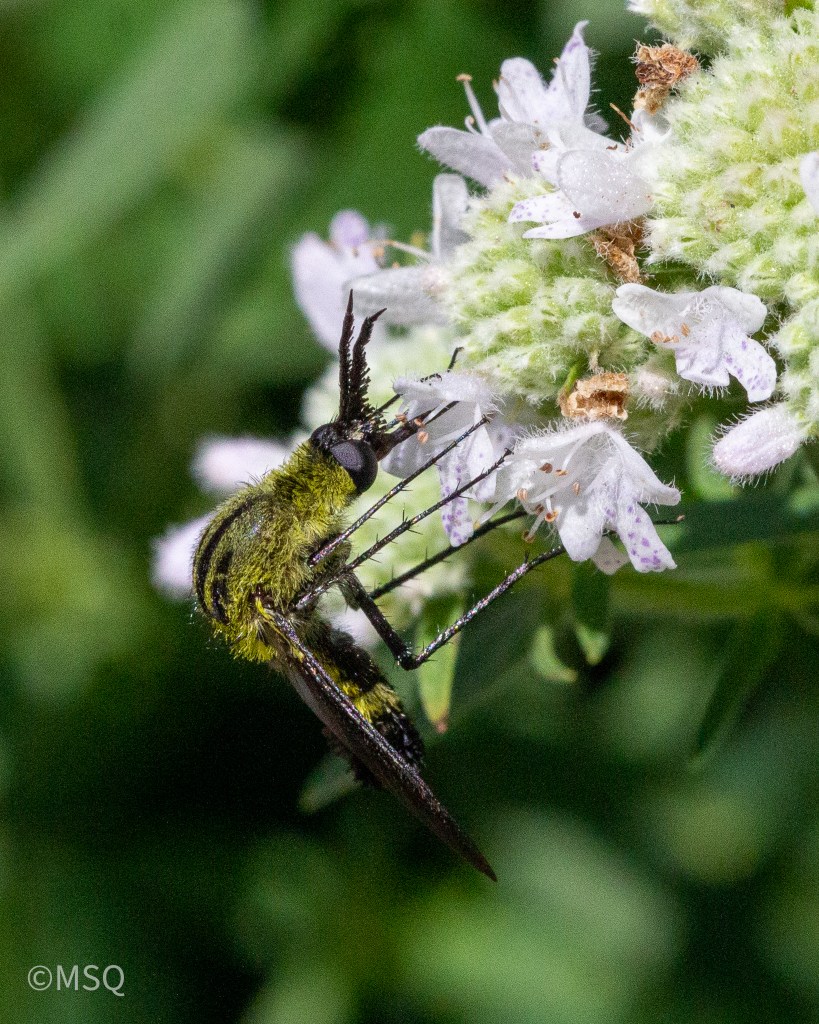
Here’s the downside of Lepidophora lepidocera—it eats bee’s larva! And uses an extraordinary tactic to deposit its egg. The fly covers its egg with sand or dirt, possibly for camouflage. It hovers around the nest entrance until the bee leaves. The fly flips an egg in or near the nest with its abdomen. Then larva eat both stored pollen and the bee larva. The maggot pupates in the burrow waiting until next Spring to emerge.
What an amazing diversity of insects on one plant! Alone it can increase pollinator visits to any garden. With its long-lasting bloom, easy care needs and versatile color, Mountain Mint makes a wonderful addition for the summer garden.

 Wild Things in the Garden