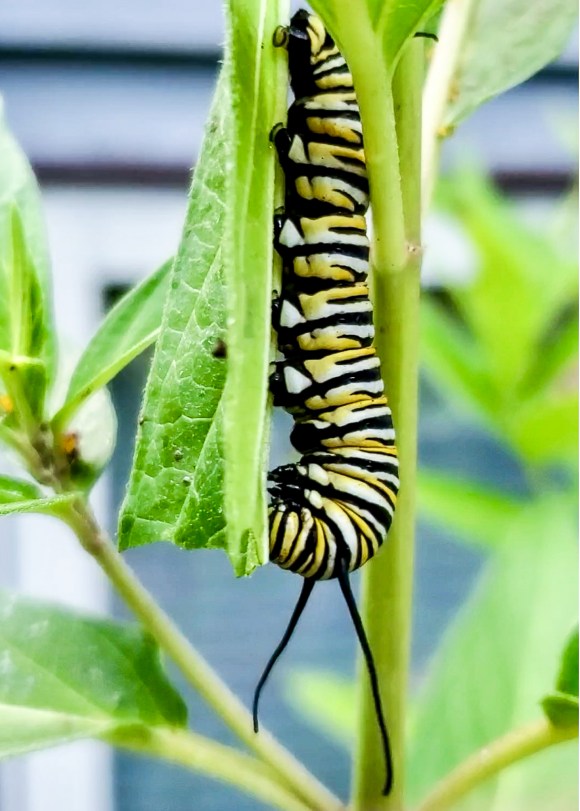
The elaborate blooms of Asclepias incarnata (a.k.a. Swamp Milkweed or Rose Milkweed) draws crowds of pollinators and beneficial insects. Like other milkweeds, Rose Milkweed feeds Monarch butterfly caterpillars. This milkweed received the 2005 North Carolina Wildflower of the Year award. The North Carolina Botanical Garden and the North Carolina Garden Club co-sponsor this award.3
Asclepias incarnata varies in height from 2 to 5 feet but is typically 3 to 4 feet. It spreads from 2 to 3 feet. Rose milkweed grows in zones 3 through 9.3
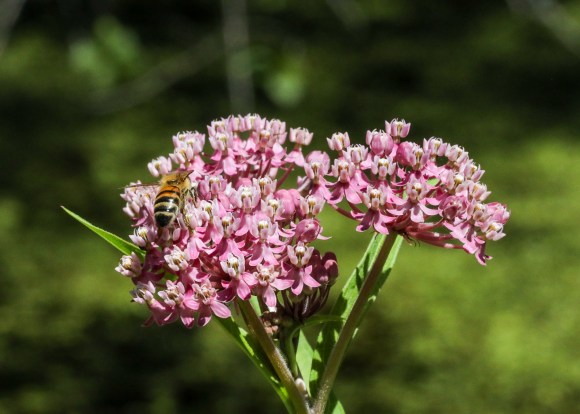
Although it thrives in medium to wet, neutral to slightly acidic soils with full sun, it adapts to a variety of conditions. Rose milkweed is one of the few ornamentals that grows in mucky clay. It tolerates average to occasionally wet soils. high organic matter soils and loam (silt) soils.3,4,5,6,7
In nature, Rose milkweed is found in sunny openings and edges of swamps, river bottomlands, wet meadows, marshes, bogs, fens, open areas along stream banks and ditches, open to partly shaded areas in floodplain forests, thickets, moist black soil prairies, low areas around rivers and ponds, seeps, fens and marshes. It grows in both natural and disturbed areas.3,7
I’ve grown Rose Milkweed for several years. Moisture varies across my garden from with average to wet. In the average soils, Asclepias incarnata plants grow to gorgeous specimens 4 feet high and across. Unfortunately, then it dies back to one or two shoots. I never lose it completely though since it reseeds several new plants every year.
I’ve created a rain garden including Rose Milkweed. The rabbits ate it the first year so I’m waiting to see how this milkweed recovers. It’s unusual for herbivores to bother Asclepias incarnata. This plant has the same milky latex sap as other milkweeds. This sap has bitter tasting cardiac glycosides which taste bad and can make animals ill.3,7
The foliage of Rose Milkweed is medium to dark green on light green, smooth stems. Its leaves are opposite and touching or clasping the stem. They are usually 3 inches long and 0.5 inch wide but can grow up to 6 inches long and 1.5 inches wide.3
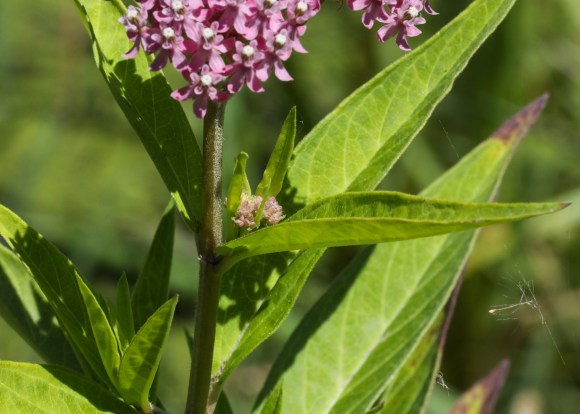
The leaves are narrowly lanceolate or oblong-lanceolate in shape. Their edges are smooth (entire). When the plants are stressed, in sunny, dry conditions, the leaves may turn yellowish-green or pale green.3,7
The wonderfully intricate flowers of Asclepias incarnate resemble those of other milkweeds. They can be pink, purple or, rarely, white and bloom from early Summer to early Fall. The umbels of florets form at the top of stems. Each floret is 0.25 inch across with 5 upright lighter colored hood petals and 5 surrounding darker petals shape, fused stigmas (the female parts) form the column.2,3,7
Like other milkweeds, Rose milkweed carry their pollen in waxy sacs called pollinia. Pollinarium (Pollinaria plural) is the structure that holds the pollinia. Each pollinia has 2 pollinia attached to translator arms.2
In the center is a blackish-brown gland (corpusculum) with a slit. At the end of the translator arm, just before each sac, is a 900 bend. This bend lets the sacs rotate during pollination. Pollinaria sit in a slit in stigmatic column. The corpusculum rests on the outside.2
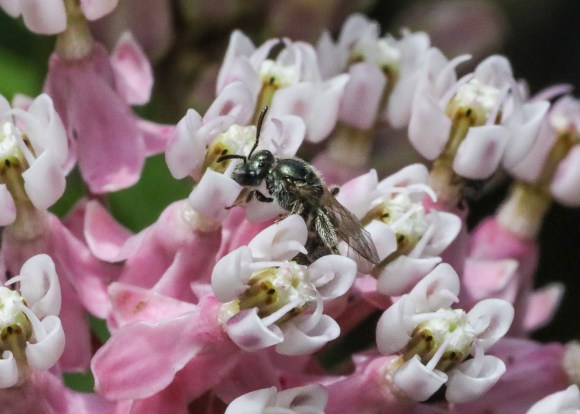
Insects land on Asclepias incarnata looking for nectar. The five intricate upright petals have cup-like nectar reserves and downward-curved horns. Insects sometimes slip on the horns and a leg slides between two petals into the stigmatic slit.2
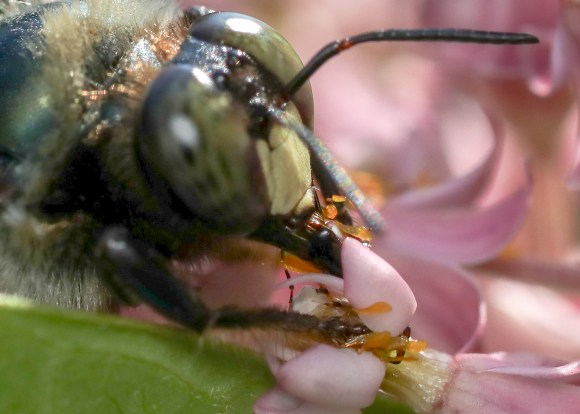
As it tries to get free, bristles in the chamber keep it from going back down. Not all insects escape. Small insects can be trapped and die. Others lose legs. But medium to large size bees, wasps and butterflies do remove pollinarium and go on to pollinate other milkweed plants.2
How does pollination actually occur? I’m glad you ask because it’s amazing! After it’s removed, the pollinarium starts drying out. The sacs rotate 900 as it dries. The rotation moves them into the correct position for pollination.2

Once the sacs are in position, the knee bend (not the center oval) slides into the space between the petals. The arm follows the pollinial sac into the space in the stigmatic column. Then the arm breaks off releasing the insect and pollination is complete.2
An intricate and delicate process where timing (for drying) and the mechanics of the insect’s motion and the pollinaria all play a crucial role!
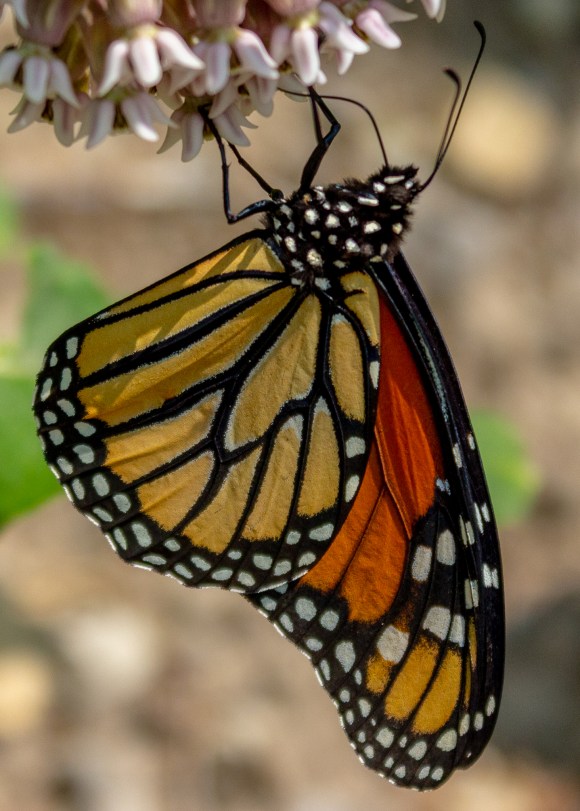
Like other milkweeds, Asclepias incarnata supports numerous insects including pollinators and beneficial insects. The Xerces Society for Invertebrate Conservation classifies Rose Milkweed as of Special Value to Native Bees, Special Value to Bumble Bees, and Special Value to Honey Bees. In addition, they declare it Supports Conservation Biological Control (beneficial insects). Milkweeds are also the only larval host for the Monarch butterfly (Danaus plexippus).3,5
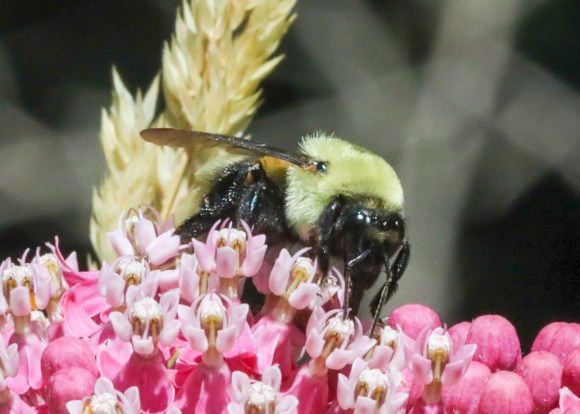
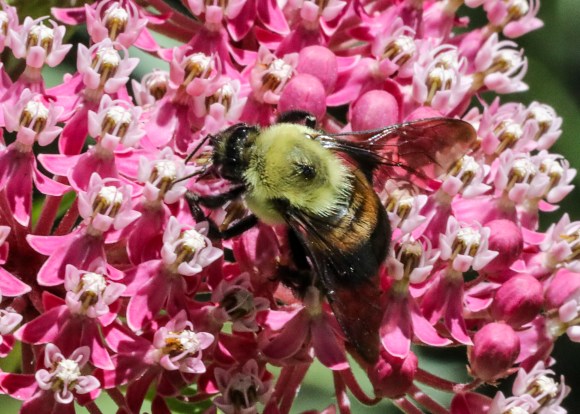
Bee visitors include bumblebees (Bombus spp.),
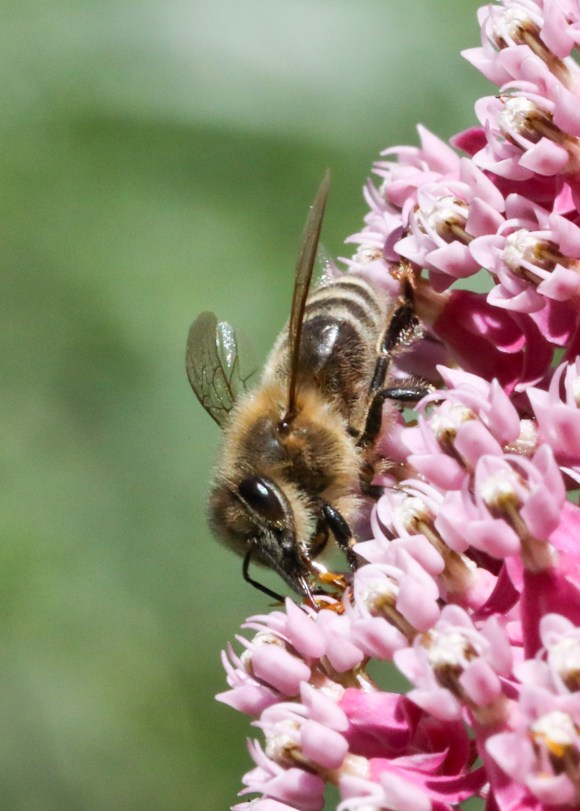
honeybees (Apis),
long-horned bee (Melissodes ssp, Svastra spp.), Yellow-Faced Bees (Hylaeus spp.), Sweat Bees (Lasioglossum spp.), Halictid Bees, Green Sweat Bees (Augochlorini Tribe), Small Resin Bees (Heriades spp.)
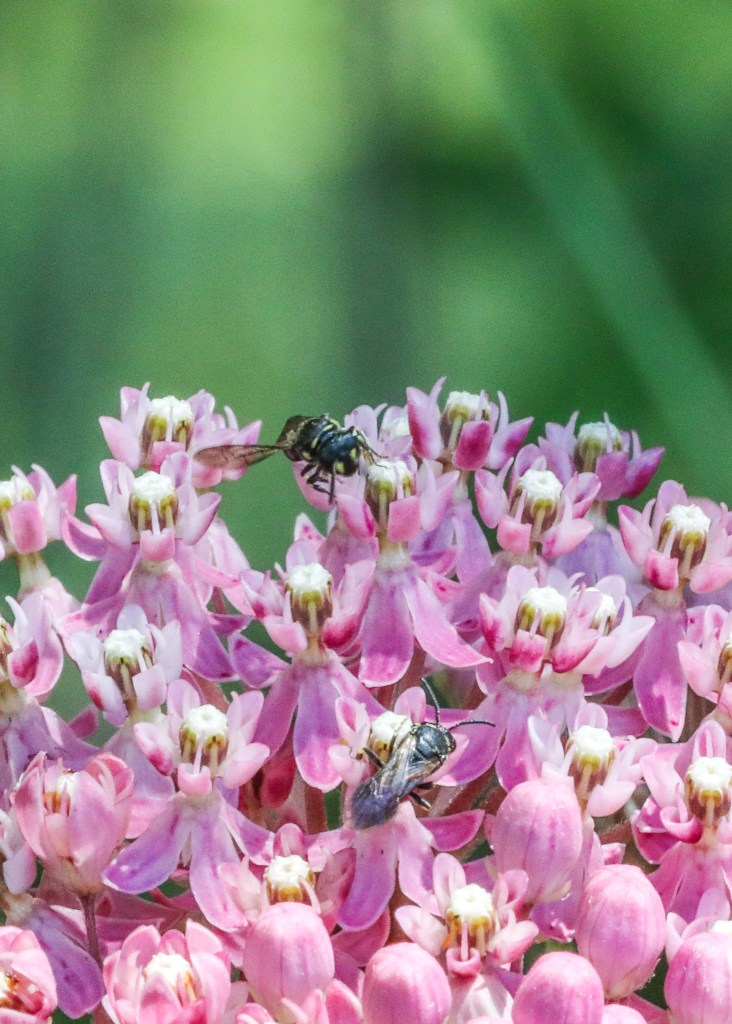
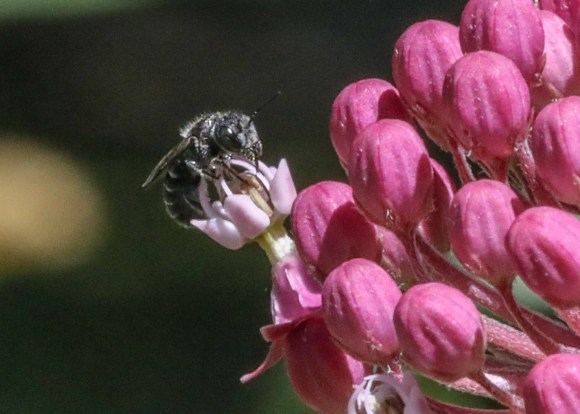
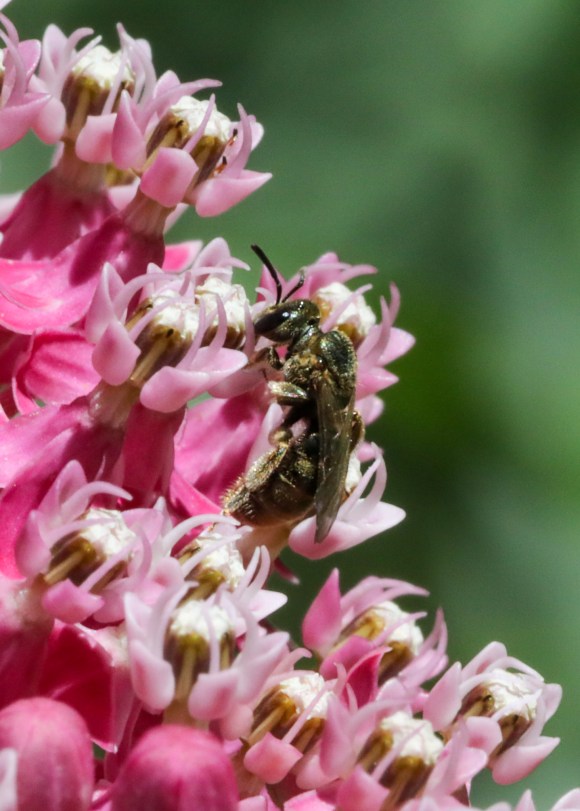
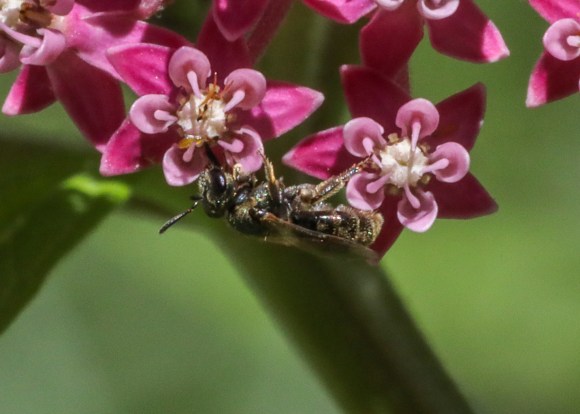
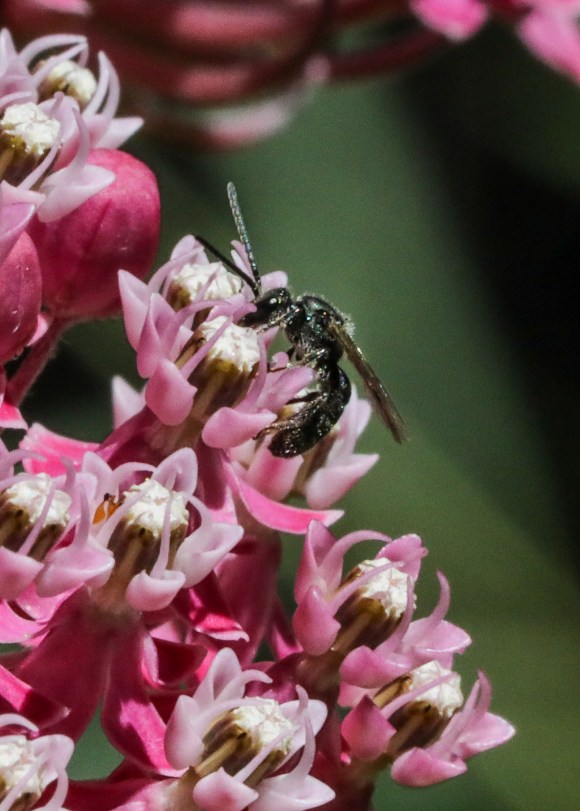
and Leafcutter Bees (Megachilespp).5,7,8,9
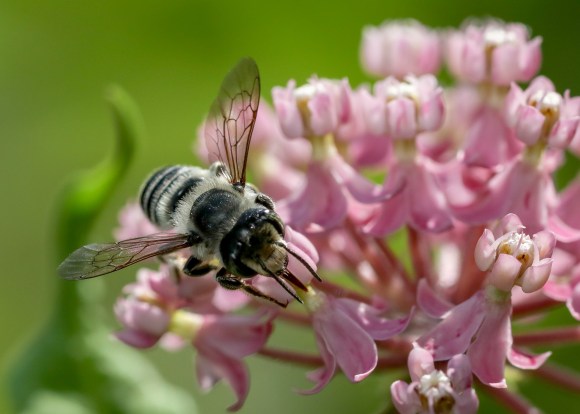
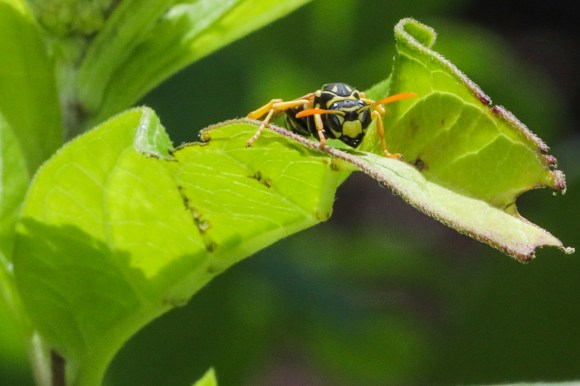
Wasps also harvest nectar from Rose Milkweed. They include Sphecid wasps, Vespid wasps (Vespulaspp.), Tiphiid wasps, Spider wasps, Paper Wasps (Polistes spp.) and Square-Headed Wasps (Tachytesspp.). The Great Black Wasp (Sphex pensylvanicus) and Great Golden Digger Wasps (Sphex ichneumoneus) are two Sphecid wasps that use the nectar.5,7,9
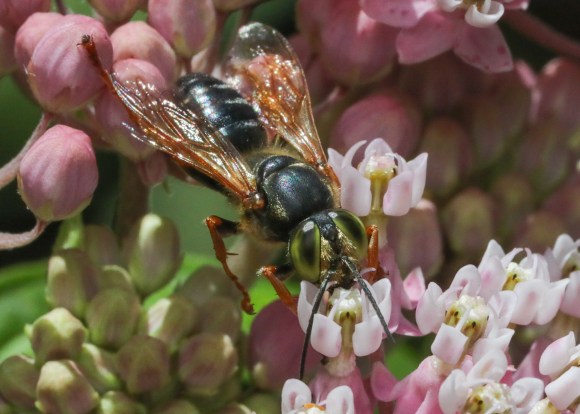
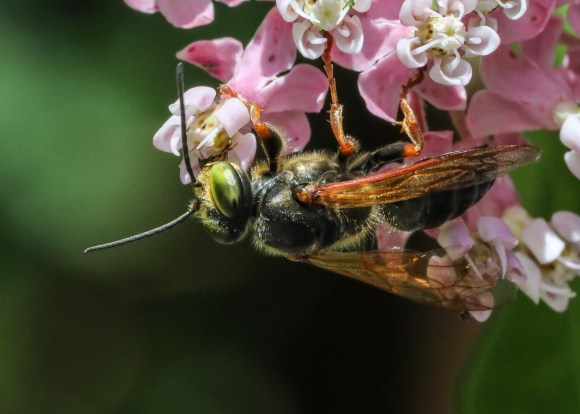
Flies gather nectar from Asclepias incarnata. Mydas flies, thick-headed flies, Tachinid flies (Archytas spp.), Bee flies (Bombylius spp. and Villa spp.), Green Bottle flies (Lucilia spp.) and Syrphid flies (Tropidiaspp.).5,7,9
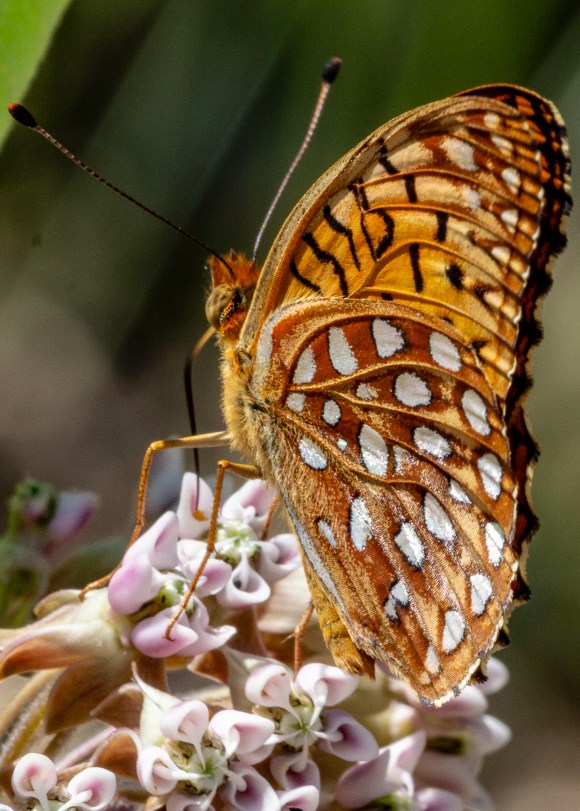
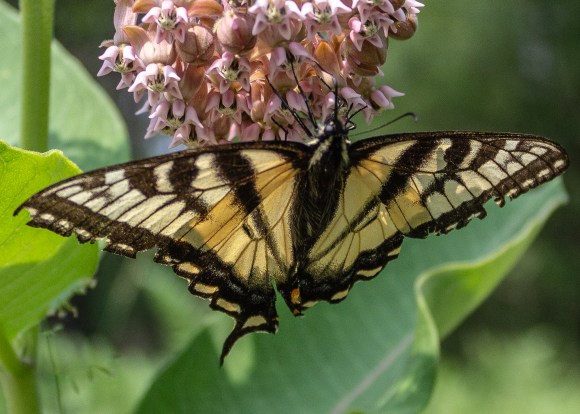
Butterflies, moths and skippers seek out Rose Milkweed for nectar and as a larval host. Swallowtail butterflies, Greater Fritillaries, Great Spangled Fritillaries (Speyeria cybele), Red Admiral (Vanessa atalanta), Hummingbird Clearwing Moth (Hemaris spp.), Monarch butterflies, and skippers including the Family Hesperiidae.3,4,5,7
Another occasional visitor of the flowers is the Ruby-Throated Hummingbird.4,5,7
Various insect feed on parts of Asclepias incarnata including leaves, flowers and seeds. These insect feeders include Labidomera clavicollis (Swamp Milkweed Leaf Beetle), Tetraopes spp. (Red Milkweed Beetles), Oncolites fasciatus (Large Milkweed Bug), and Aphis nerii (Yellow Milkweed Aphid).5,7,9
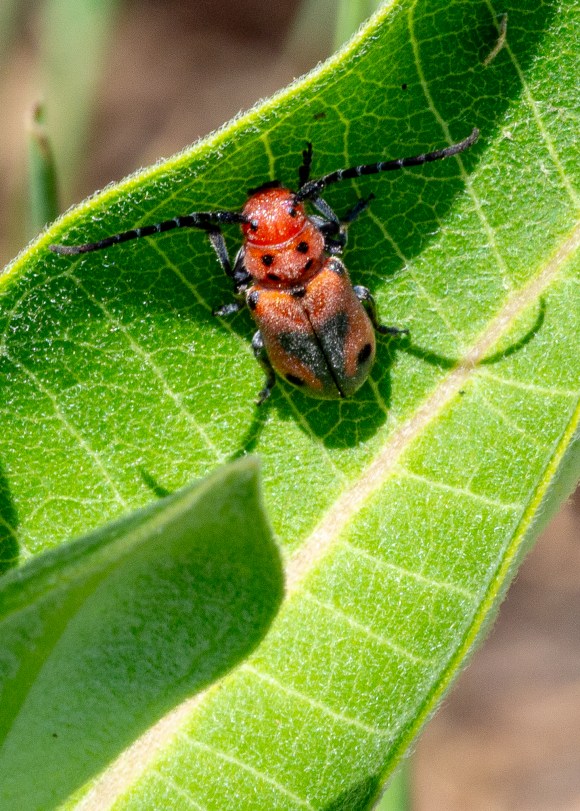
I hope you’ve enjoyed this adventure with Rose Milkweed. All the insects love a milkweed and it’s always worth stopping by the milkweed patch to see whose around!
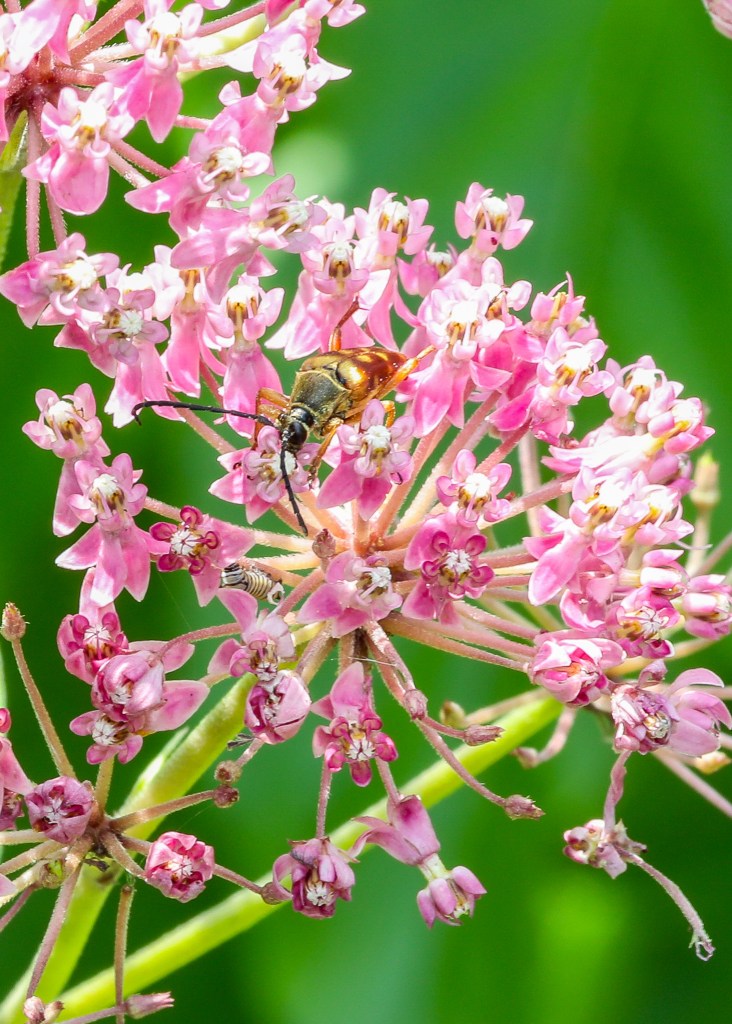
Hope you’re enjoying Spring!
Happy Gardening,
Mary
BIBLIOGRAPHY
- Borders, B., Casey, A., Row, J., Wynia, R., King, R., Jacobs, A., Taylor, C., & Mader, E., Pollinator Plants of the Central United States: Native Milkweeds (Asclepias spp.), 2013.
- Eldredge, Eric. “Milkweed Pollination Biology,” n.d.
- Asclepias Incarnata (Marsh Milkweed, Swamp Butterfly Weed, Swamp Milkweed) | North Carolina Extension Gardener Plant Toolbox.” Accessed April 1, 2025. https://plants.ces.ncsu.edu/plants/asclepias-incarnata/.
- “Asclepias Incarnata – Plant Finder.” Accessed April 1, 2025. https://www.missouribotanicalgarden.org/PlantFinder/PlantFinderDetails.aspx?kempercode=g410
- “Asclepias Incarnata (Swamp Milkweed) | Native Plants of North America.” Accessed April 1, 2025. https://www.wildflower.org/plants/result.php?id_plant=asin.
- “Plant of the Week: Swamp Milkweed (Asclepias incarnata L.).” Accessed April 1, 2025. https://www.fs.usda.gov/wildflowers/plant-of-the-week/asclepias_incarnata.shtml.
- “Swamp Milkweed (Asclepias Incarnata).” Accessed April 1, 2025. https://www.illinoiswildflowers.info/wetland/plants/sw_milkweed.htm.
- Holm, Heather. Bees: An Identification and Native Plant Forage Guide. Minnetonka, MN: Pollination Press LLC, 2017.
- Holm, Heather. Pollinators of Native Plants: Attract, Observe and Identify Pollinators and Beneficial Insects with Native Plants. Minnesota: Pollination Press LLC, 2014.
 Wild Things in the Garden