Fall–the finale of the gardening and the pollinator season! It’s time to fill your garden with the frothy, bright flowers of asters and the cheerful yellow plumes of goldenrod. This month, asters are the stars and the Smooth Blue Aster, Symphyotrichum laeve, is our focus. These Fall flowers provide invaluable resources to pollinators preparing for the quiet season of winter and for Monarchs preparing to migrate.
Not as common as other asters, Smooth Blue Aster is a lovely plant growing up to four feet. It spreads from one to two feet wide. The plants can be spaced anywhere from one to three feet apart. It tolerates a wide variety of soils including clay, loam (silt) and sand. This aster thrives in dry to medium moisture conditions with well-drained soils and can tolerate drought. Smooth Blue Aster enjoys part shade to full sun and grows in zones 4 through 8. In the garden, S. laeve provides an erect plant with medium-textured leaves.
In natural areas, Smooth Blue Aster grows in dry open woods, thickets, clearings in the woods, borders, roadsides, prairies and especially in fields and meadows. Several sources say it doesn’t like to grow in wet areas, but I’ve seen it thriving in wet meadows. It can be used in Butterfly Gardens, Pollinator Gardens, Drought Tolerant Gardens, and/or Perennial Borders.
The leaves of Symphyotrichum laeve are part of its Latin name. In taxonomy, the specific epithet is the second part of the binomial name and often refers to a characteristic of the plant. These descriptions could be physical traits (like leaf texture), colors (like bimaculatus) or the location where the plant was first identified (like virginianum) among many others. The specific epithet of Symphyotrichum laeve comes from the leaves. Laeve means smooth and its leaves are without hairs or wrinkles or other textures. I always enjoy looking at specific epithets because they’re usually directly related to the individual plant. This contrasts with the genus name which looks at broad groups and may or may not be easily linked to the plant.
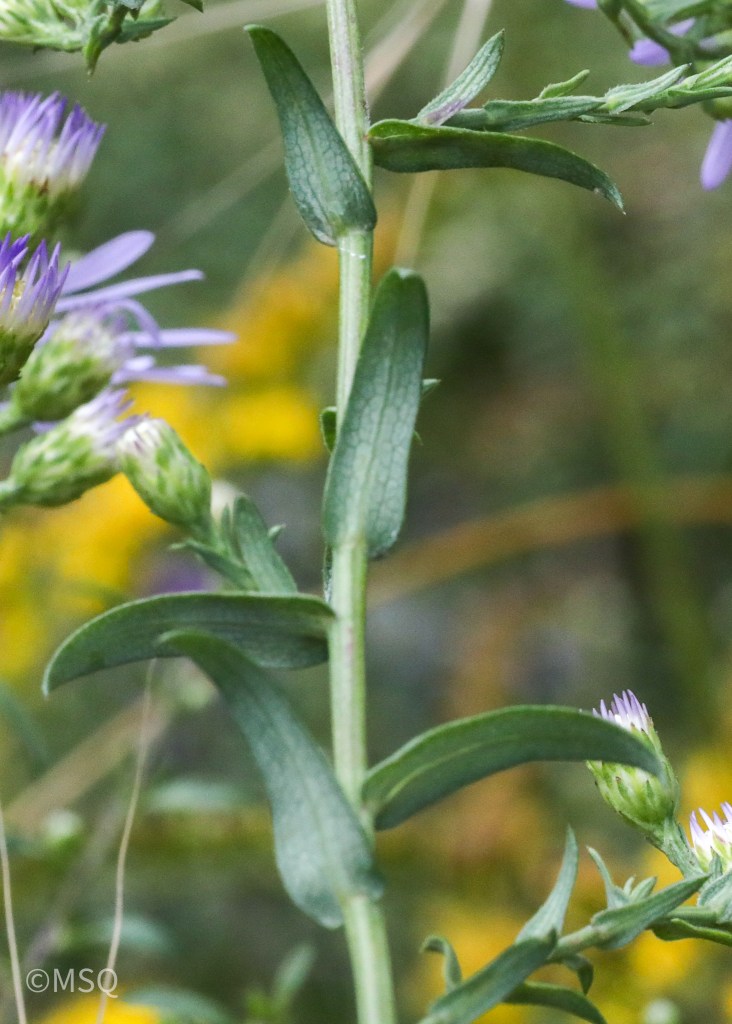
In addition, this aster’s leaves are blue green with a grayish frost and clasp the stem. Lanceolate to ovate in shape, they alternate along the stem. Additional flowering stems grow from the leaf axils at the top of the plant.
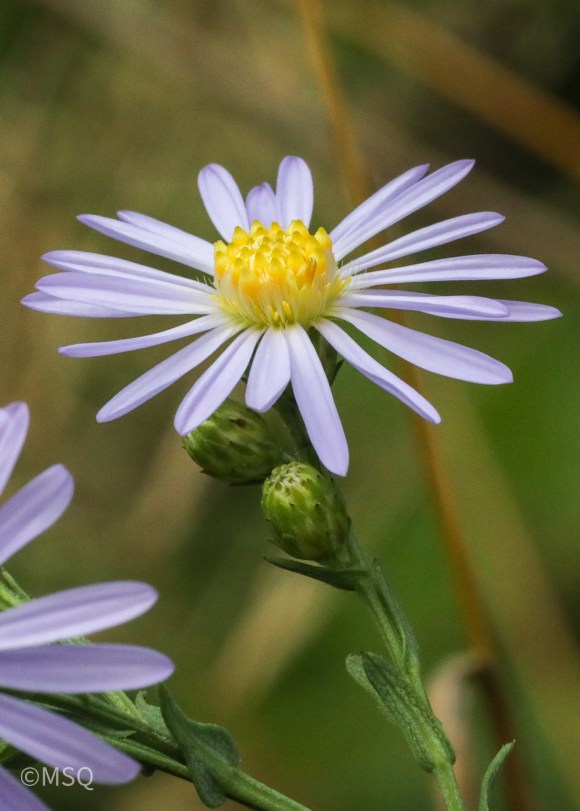
The flowers are not large—one half to one inch across. Classic aster flowers, these blooms have a yellow center with many slender petals surrounding it. The petal color ranges from pale violet to blue. The showiness of this aster comes from many flowers blooming on the stalks, all at the same time, and lasting a long time. As the flowers age, the center turns from yellow to pinkish purple.
In the garden, the Smooth Blue Aster behaves well and doesn’t spread excessively. In my experience, rabbits enjoy eating the tender shoots in the Spring. They stop browsing as the plant grows larger. I’ve used several strategies to protect this and my other treasured asters. When possible, I plant them behind or among plants that rabbits do not like. Irises are good for this, as are ornamental grasses and scented plants like Monarda. Herbivore deterrents, like sprays and powders, work but add more garden chores at a busy time of year. Finally, I have an aster that just spreads like crazy. For Spring and early Summer, I let it grow in paths and inconspicuous areas so the bunnies can graze on it rather than my favorite asters.
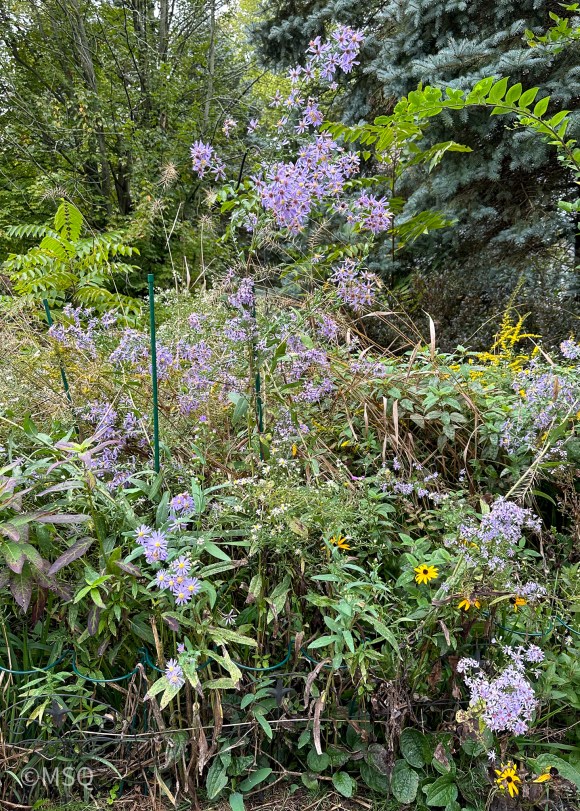
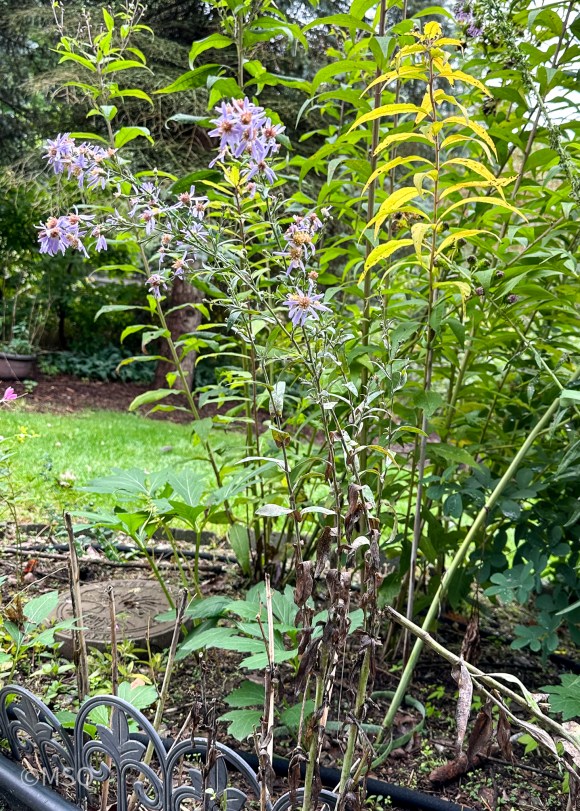
Rabbit nibbling leads us to the June Hair Cut. This cut is a pruning technique used on asters to increase bloom while decreasing height and flopping. In some plants like asters, trimming stems causes more stems to grow but overall height is sacrificed. In the case of the S. leave, less height is a good thing. I find the tall plants, over five feet in some cases, definitely sprawl. And they really flop during a rainy fall as the water weighs down the flowers.
These plants can be staked but it must be done individually. In the garden bed pictured on the top, the Smooth Aster (five feet, two inches tall) is supported and hides the Goldenrod ‘Fireworks’ behind it. On the bottom, the local rabbits pruned the Smooth Aster. It is three feet, one and half inches tall and stands on its own. The pruned aster works well as a front or middle bed plant. If I take on this chore, I’ll plan to do it at the end of June or the first part of July. This timing gives the plants time to recover, grow and bloom during their usual season in my zone 5 garden.
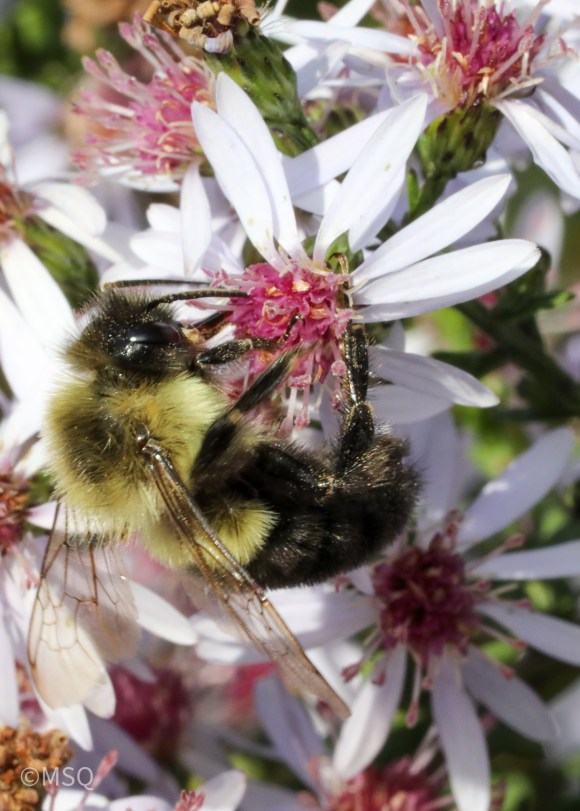
The Xerces Society for Invertebrate Conservation has designated Symphyotrichum laeve of Special Value to Native Bees. It provides nectar and pollen to pollinators and other insects. Long- and short-tongued bees, honeybees, bumblebees, bee flies and butterflies all visit this plant. Monarchs use Smooth Aster during their migration. Like other Symphyotrichum, Smooth Blue Aster has several specialized bees (oligoleges). These bees forage from members of the Asteraceae family and include Andrena asteris, A. asteroides, A. placata, A. simplex, Cnemidandrena hirtcincta, C. nubecula, and Colletes simulans. This aster also serves as a larval host for the Pearly Crescent Butterfly (Phyciodes thanos).
Bumblebees are the some of the long-tongue bees foraging on Smooth Blue Aster.
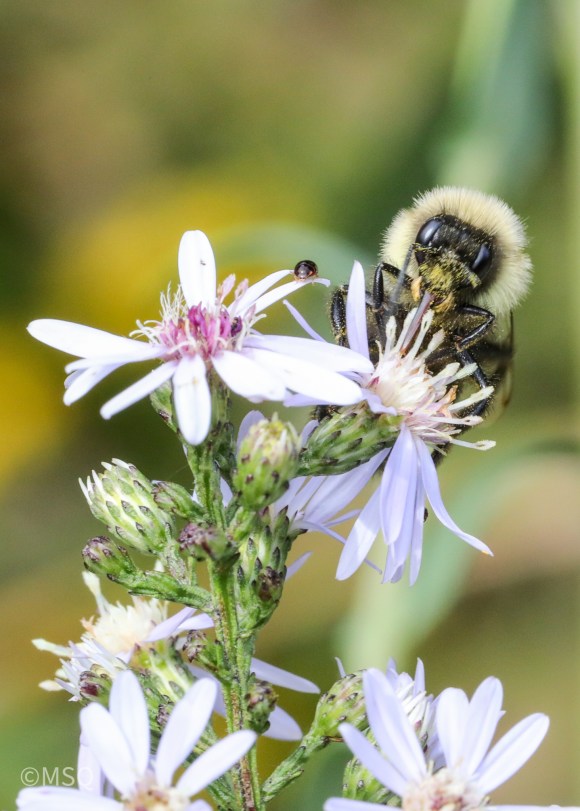
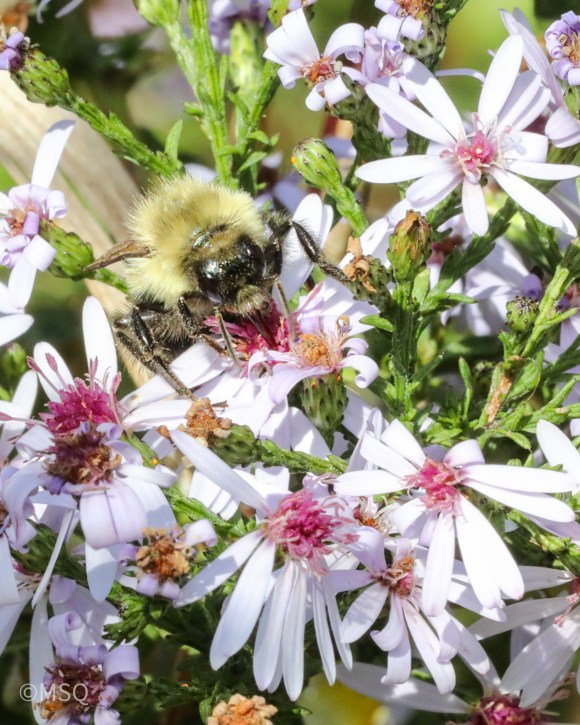
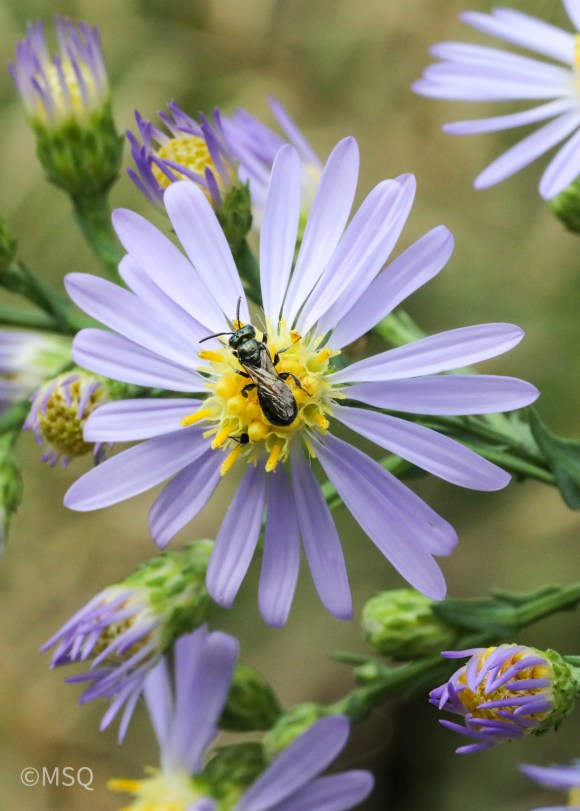
Short-tongued bees include metallic green and gold sweat bees, Halictus, and small carpenter bees–Ceratina.
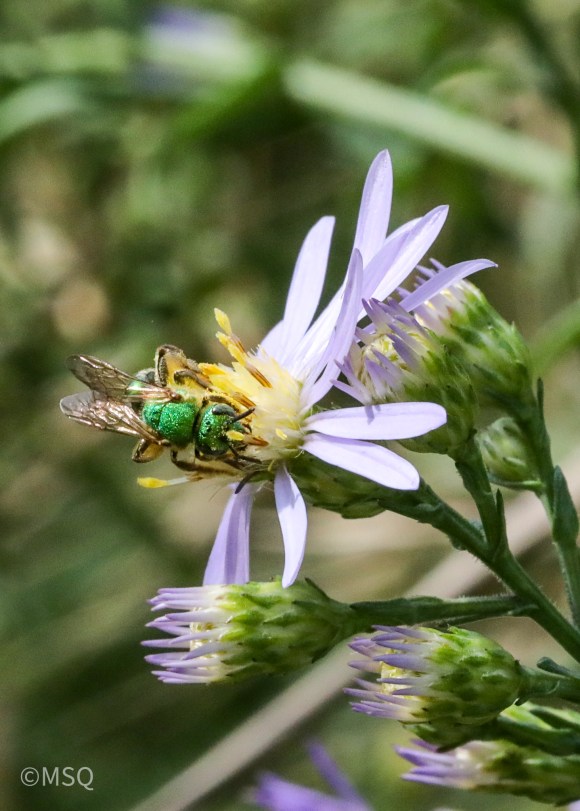
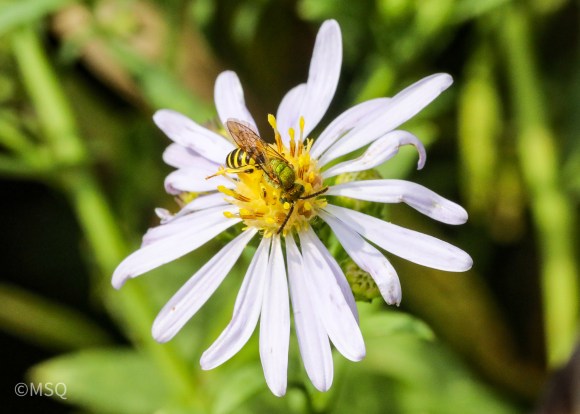
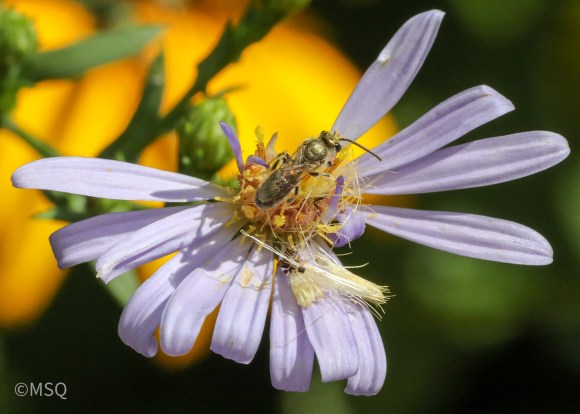
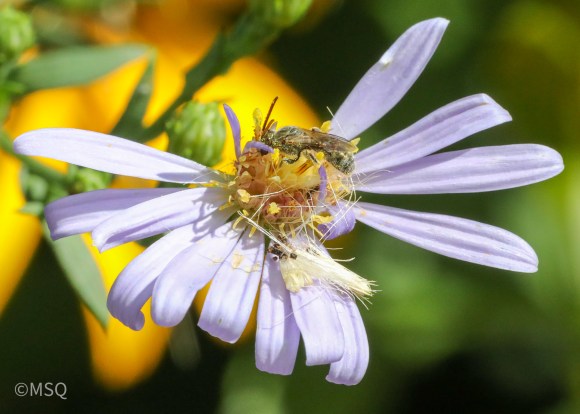
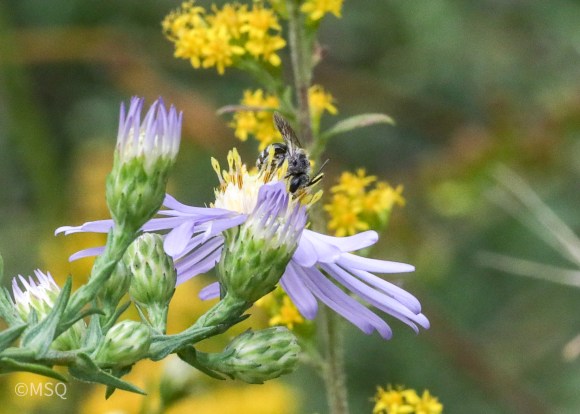
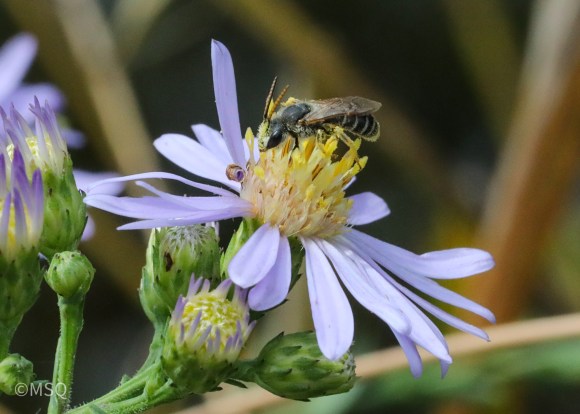
Symphyotrichum laeve also plays host to a variety of late season beneficial insects. Soldier Beetles (Chauliognathus spp.) harvest both pollen and nectar from this aster. The larval phase act as beneficials eating aphids, fly larvae, small caterpillars, beetle larvae, small caterpillars, and grasshopper eggs.
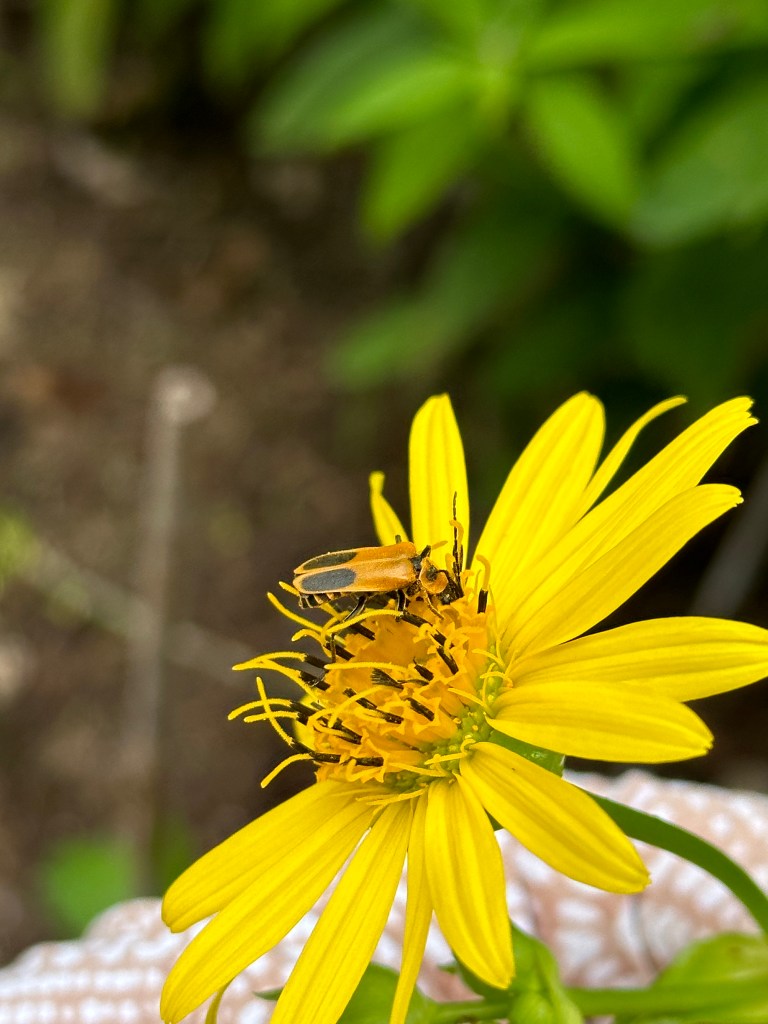
Insidious Flower Bug (Prius insidious) also frequents Smooth Blue Aster. The Insidious Flower Bug eats many different plant and crop pests including: plant-eating mites and their eggs, various insect eggs and other soft-bodied insects–thrips, spider mites, small caterpillars. It’s an important biological control and is sold commercially for thrips. This bug will feed on pollen and plants if it can’t find enough prey.
Finally, chalcid wasps enjoy S. laeve. This 1.5 to 3 mm long wasp searches for prey on the late blooming flowers. It parasitizes moth, fly, beetle and butterfly larvae.
Smooth Blue Aster is a charming addition to the garden with its unusual blue-green leaves and violet flowers. It provides an extended season of interest–first offering resources to bees, butterflies, and other insects. Then, when blooms transform into seeds, birds and small mammals visit to prepare for and endure the cold winter months.
I hope you’ve enjoyed this month’s blog! I’d love to hear about your experiences with this plant or in your garden. Please leave a comment below and tell me about it!
 Wild Things in the Garden